
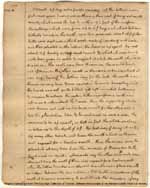
A trench 41 deep and 4. f. wide was dug. at the
bottom were put small green bushes, and on them a thin coat of dung and earth
mixed, which raised the bed to within 2 1/2 feet of the surface. the cuttings
which were from 3 1/2 to 6. f. long, and which had been
hitherto buried in the earth, were then produced, about 18. 1. of their butts
were dipt into a thick paste made of cowdung and
water and then planted in the bottom, the Raisins 3. f.
apart, the rest about 21 having a stick stuck by each to which it was bound
with bear grass in order to support it while the earth should be drawn in. The
earth was then thrown in, the mould first, and
afterwards the other earth in the same order in which it was dug, leaving the
bottom clay for the last. the earth was thrown in very loose & care was
taken to avoid trampling in it. the trench was not quite filled, but left
somewhat hollowing to receive & retain the water, & the superfluous
earth was left on each side without the trench. then the supporting sticks were
drawn out and would have served for the other rows had the plantation been to
be continued. in such a case, the rows are to be 4 f.
apart, so that in fact the whole surface is taken up to the depth of 41 the
best way of doing it is to dig every other trench, and leave the earth which is
thrown out exposed for a twelve month. then the vines may be planted at any
time from the middle of November to the first week in April. afterwards dig the
other alternate trenches, and leave the earth of these also exposed for a
twelvemonth. when the latter trenches are planted, leave the superflous earth
in ridges between the rows of vines till by the subsidence of the earth it
becomes necessary to pull it into the trenches. if any
Searched in for fut 26 credits Visitez le site Buyfc26coins.com Procédure d
Searched in for fut 26 credits Visitez le site Buyfc26coins.com Procédure d