
By Susan Martin, Senior Processing Archivist
This is the fifth part of a series. Read Part I, Part II, Part III, and Part IV to catch up.
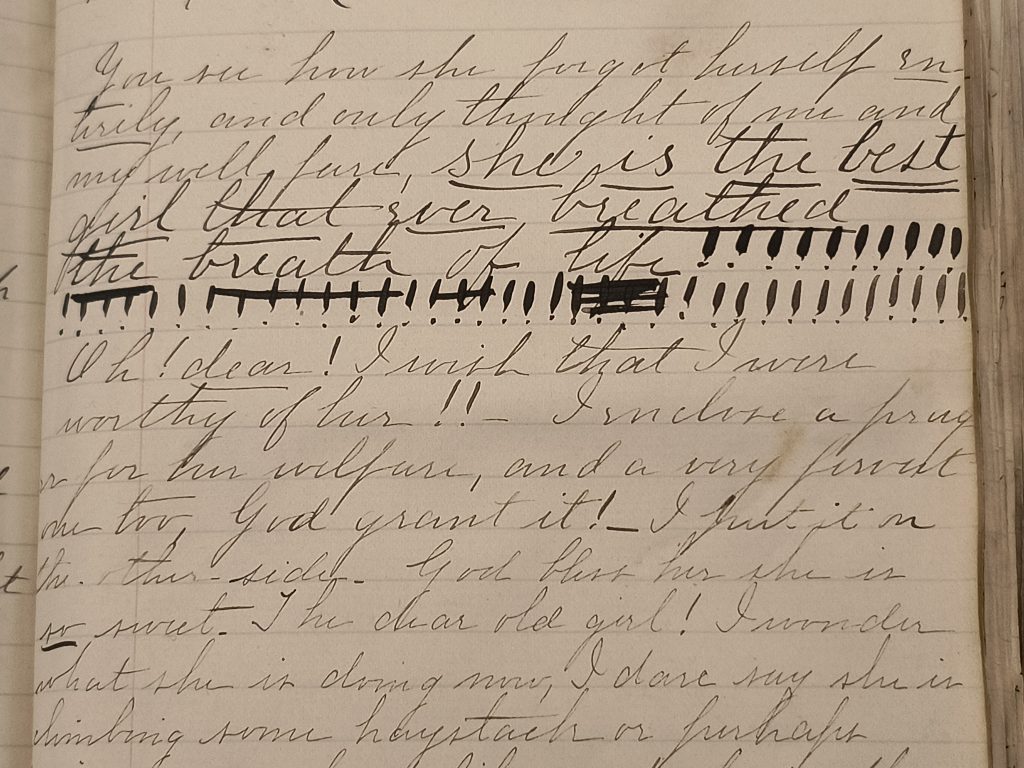
Today I return to the diary of 13-year-old Henrietta Schroeder, part of the Stout family papers here at the MHS. Henrietta has made a big impression on me, with her unfiltered, exuberant, and irreverent writing style. She seems so relatable, so much like a teenager today. I hope you’ve been enjoying getting to know her, too.
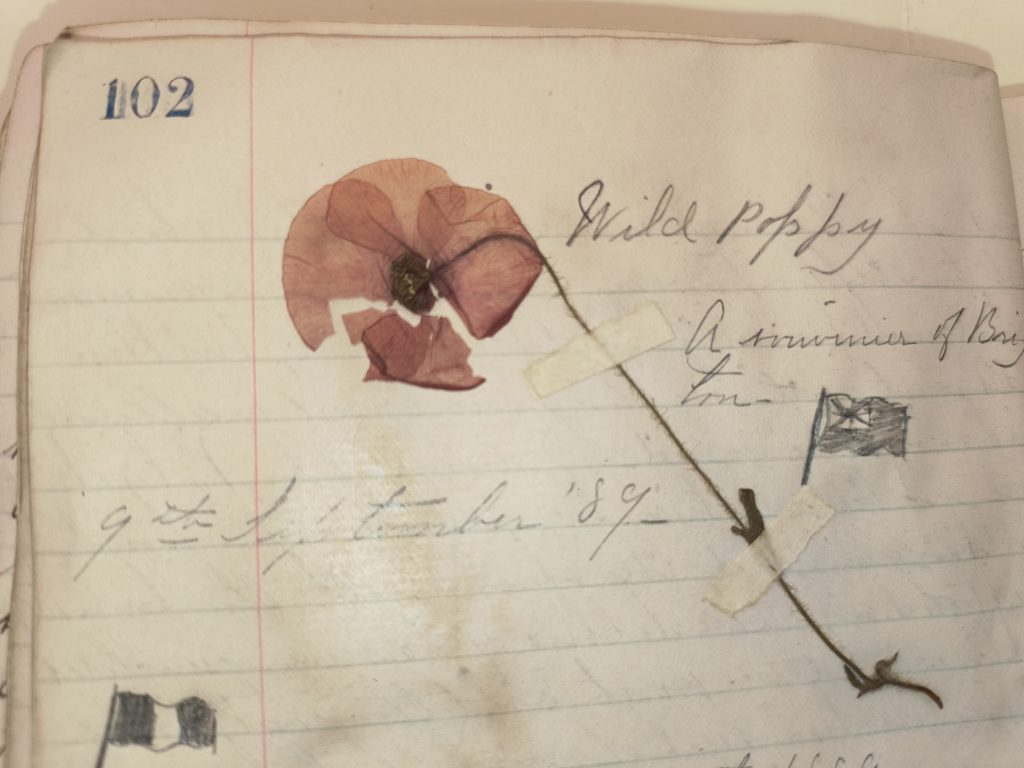
We pick up our story on September 11, 1889. After spending the summer in the U.K., Henrietta and her family visited the continent, first France and then Switzerland. They landed at Dieppe, where Henrietta wrote in her diary (her “Cher Confidante”), “Now, surrounded by French people gabbling off French I really feel as though I were abroad.” She made herself right at home, polishing off three glasses of claret at one dinner.
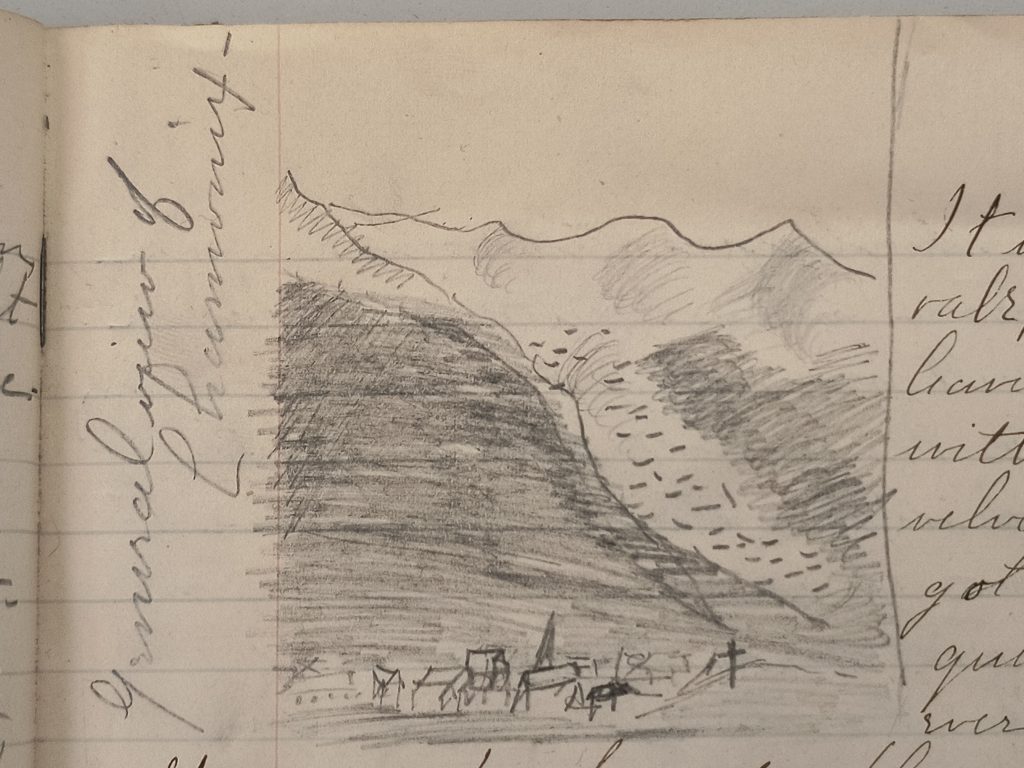
From Dieppe, the Schroeders went south to Rouen and Paris. They visited Rouen Cathedral, the burial place of Richard I’s “lion” heart and of “Henry the something of England,” as Henrietta put it. In Paris, they spent 5-6 days touring the famous Exposition Universelle, including the brand-new Eiffel Tower. Henrietta did ride the elevator to the top, but not until a few weeks later, so I’ll talk about that in a future post. She also saw Mont Blanc at Chamonix, France, which inspired her first original sketch in the diary.
But October 1889 was a relatively quiet month for the Schroeders, spent mostly at the Grand Hotel in Montreux, Switzerland. The hotel still exists today. It was there Henrietta spent her fourteenth birthday on October 9. Among her presents was a small ivory letter opener from her best friend Lina, which she cherished.
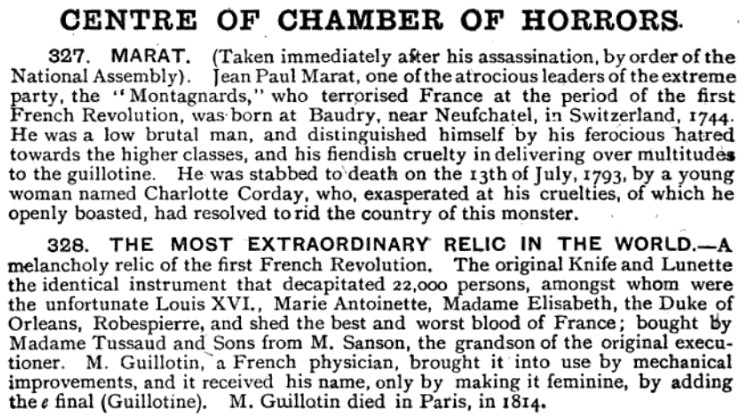
It was also on her birthday that the family toured Chillon Castle, where François Bonivard was imprisoned back in the sixteenth century. The castle seems to have genuinely spooked Henrietta. She wrote, “For the rest of the day I had the horrors. […] The Gallows were there, and a lot of other horrible things which I don’t want to write about.”
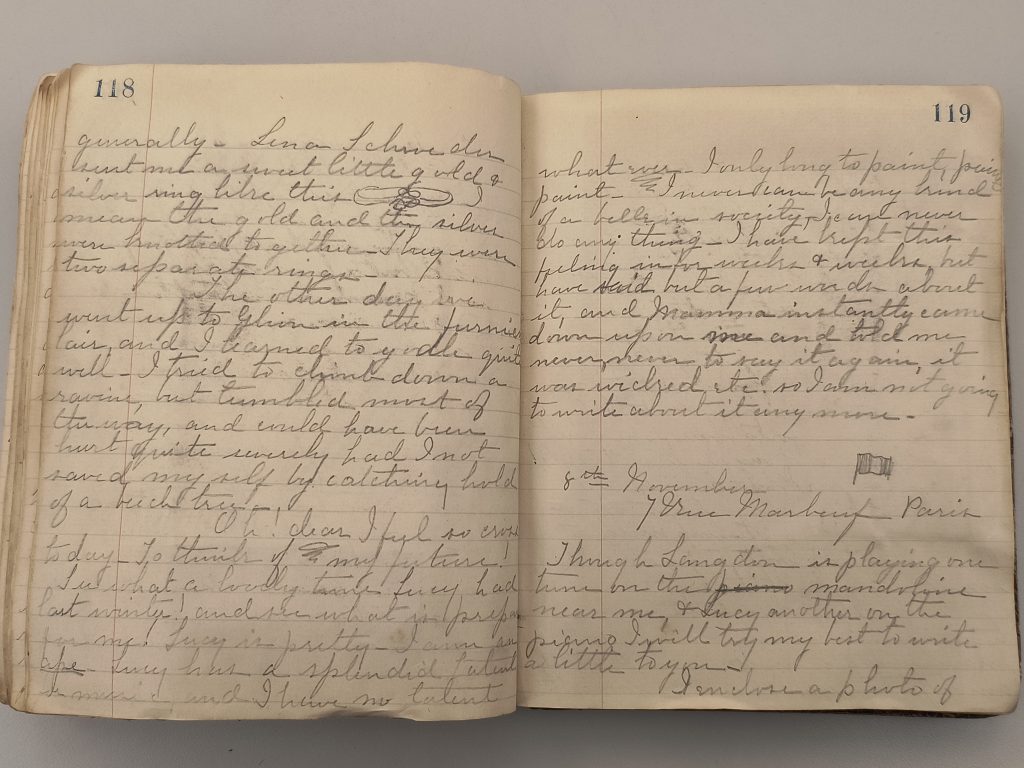
During this month-long pause at Montreux, Henrietta wrote in her diary a little more often and in a more introspective vein. Occasionally some of her fears and insecurities came through. While she was enjoying her European sojourn, she was also thinking about the future, which to her looked bleak.
Her older sister Lucy had “come out”—that is, debuted in society—the previous winter after her eighteenth birthday. Henrietta, five years younger, wondered what was in store for her. This passage made me want to give her a hug.
Oh! dear I feel so cross today – To think of my future! See what a lovely time Lucy had last winter! and see what is prepared for me! Lucy is pretty – I am an ape. Lucy has a splendid talent for music, and I have no talent what ever. I only long to paint, paint, paint – I never can be any kind of a belle in society – I can never do any thing – I have kept this feeling in for weeks & weeks, but have said but a few words about it, and Mamma instantly came down upon me and told me never, never to say it again, it was wicked etc. so I am not going to write about it any more.
I hope you’ll join me for my next post in this series here at the Beehive.