Notice: Undefined index: HTTP_ACCEPT in /var/www/incl/mobile_detect.php on line 95

Notice: Undefined index: HTTP_ACCEPT in /var/www/incl/mobile_detect.php on line 95

Environmental History Seminar

New in 2012! Subscribe to this seminar series for $25, and you will receive access to the seminar papers for THREE series: the Boston Area Early American History Seminar, the Boston Environmental History Seminar, and the Boston Immigration and Urban History Seminar. We recognize that topics frequently resonate across these three fields; now, mix and match the seminars that you attend!

Join us for an in-depth exploration of cutting-edge scholarship.

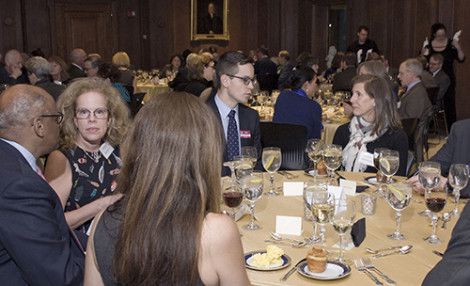
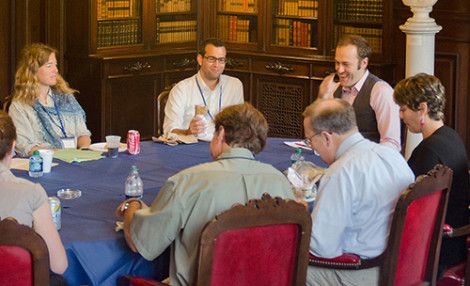
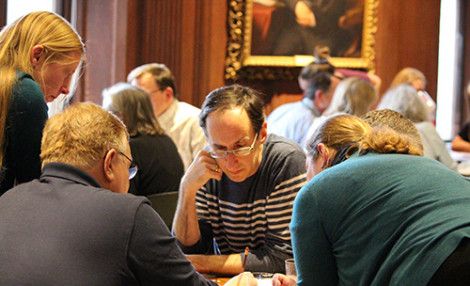
The Boston Environmental History Seminar is an occasion for scholars as well as interested members of the public to discuss aspects of American environmental history from prehistory to the present day. Presenters come from a variety of disciplines including history, urban planning, and environmental management. Six to eight sessions take place annually during the academic year, and most focus on works in progress.

Seminar meetings revolve around the discussion of a precirculated paper. Sessions open with remarks from the essayist and an assigned commentator, after which the discussion is opened to the floor. After each session, the Society serves a light buffet supper.

Environmental History Seminar "Guests of the Nation": American Camping and Designs for Public Nature, 1920s-'40s 9 October 2012. Tuesday, 5:15 PM - 7:30 PM Seminars are free and open to the public; RSVP required. Phoebe S. K. Young, University of Colorado at Boulder Comment: James C. O'Connell, National Park Service

This seminar paper explores how camping embodies the ways in which Americans envisioned access to nature as linked to notions of civic belonging, public culture, and political voice. It is drawn from Young’s book in progress.

details
Environmental History Seminar “Many Bulldozers are Drooling”: The Urban Origins of Rail Trails 13 November 2012. Tuesday, 5:15 PM - 7:30 PM Seminars are free and open to the public; RSVP required. Silas Chamberlin, Lehigh University Comment: Julia O’Brien, Massachusetts Department of Conservation and Recreation

This history of rail trails highlights the increasingly fractious relationship among urban constituencies and sheds light on the meaning of recreational trails as spaces of potential conflict between groups of walkers, landowners, policymakers, and residents.

details
Environmental History Seminar Changes in the Water: Early Modern Settler Society Impacts on the Connecticut River and Long Island Sound 11 December 2012. Tuesday, 5:15 PM - 7:30 PM Seminars are free and open to the public; RSVP required. Strother Roberts, Brown University Comment: John T. Cumbler, University of Louisville

This seminar paper explores how the commodity production activities of early settlers impacted the land- and waterscapes of New England’s longest river. It is the capstone chapter to a book project on the environmental history of the colonial Connecticut Valley.

details
Environmental History Seminar “Whither Have All the Forests Gone": A Case of Land Preservation in Suburban Washington 15 January 2013. Tuesday, 5:15 PM - 7:30 PM Seminars are free and open to the public; RSVP required. John Spiers, Boston College Comment: James Levitt, Harvard Forest

This paper examines a frustrating question for those concerned with environmental issues: Why has land preservation been such a challenge for suburbs in the late 20th century?

details
Environmental History Seminar “To clear the herring brook": Fluvial Control, Common Rights, and Commercial Development in Plymouth County, Massachusetts, 1660-1860 12 February 2013. Tuesday, 5:15 PM - 7:30 PM Seminars are free and open to the public; RSVP required. Ben Cronin, University of Michigan Comment: William F. Hanna III, author of A History of Taunton, Massachusetts

By examining towns of Plymouth County, particularly Pembroke and Middleboro, this project shows how political, economic, and at times military power flowed from effective control of the waterways.

details
Environmental History Seminar The First Local Food Movement: Elizabeth Lowell Putnam and Boston’s Campaign for Clean Milk 12 March 2013. Tuesday, 5:15 PM - 7:30 PM Seminars are free and open to the public; RSVP required. Sarah Sutton, Brandeis University Comment: Kendra Smith-Howard, SUNY-Albany

In 1909, Elizabeth Lowell Putnam formed the Massachusetts Milk Consumers’ Association with the intent of tackling what was then known as “the milk question.” Using the MMCA as a case study, this paper argues that Boston milk reformers’ understanding of the new science of bacteriology fundamentally shaped their perceptions of the relationship between the rural environment, the food city dwellers consumed, and the health of human bodies.

details
Environmental History Seminar "Good Meat & Good Skins": Winter Game and Political Ecology on the Maritime Peninsula, 1620-1727 9 April 2013. Tuesday, 5:15 PM - 7:30 PM Seminars are free and open to the public; RSVP required. Thomas Wickman, Trinity College Comment: Neal Salisbury, Smith College

The search for a heterogeneous menu of game animals allowed northeastern Indians a flexible pattern of winter mobility. After 1704, however, English soldiers patrolled Indians’ winter hunting grounds, interfering with native reliance on wild animals. Political ecology—how power affects people’s access to routes and resources—mattered more than environmental degradation to the fate of the winter hunt on the Maritime Peninsula.

details
More events
9 October 2012 Seminars are free and open to the public; RSVP required. Environmental History Seminar

"Guests of the Nation": American Camping and Designs for Public Nature, 1920s-'40s

5:15 PM - 7:30 PM
Phoebe S. K. Young, University of Colorado at Boulder Comment: James C. O'Connell, National Park Service

This seminar paper explores how camping embodies the ways in which Americans envisioned access to nature as linked to notions of civic belonging, public culture, and political voice. It is drawn from Young’s book in progress.

13 November 2012 Seminars are free and open to the public; RSVP required. Environmental History Seminar

“Many Bulldozers are Drooling”: The Urban Origins of Rail Trails

5:15 PM - 7:30 PM
Silas Chamberlin, Lehigh University Comment: Julia O’Brien, Massachusetts Department of Conservation and Recreation

This history of rail trails highlights the increasingly fractious relationship among urban constituencies and sheds light on the meaning of recreational trails as spaces of potential conflict between groups of walkers, landowners, policymakers, and residents.

11 December 2012 Seminars are free and open to the public; RSVP required. Environmental History Seminar

Changes in the Water: Early Modern Settler Society Impacts on the Connecticut River and Long Island Sound

5:15 PM - 7:30 PM
Strother Roberts, Brown University Comment: John T. Cumbler, University of Louisville

This seminar paper explores how the commodity production activities of early settlers impacted the land- and waterscapes of New England’s longest river. It is the capstone chapter to a book project on the environmental history of the colonial Connecticut Valley.

15 January 2013 Seminars are free and open to the public; RSVP required. Environmental History Seminar

“Whither Have All the Forests Gone": A Case of Land Preservation in Suburban Washington

5:15 PM - 7:30 PM
John Spiers, Boston College Comment: James Levitt, Harvard Forest

This paper examines a frustrating question for those concerned with environmental issues: Why has land preservation been such a challenge for suburbs in the late 20th century? It considers how land preservation occurs by offering a case study of a grassroots environmental movement in Fairfax County that formed around 1970 in response to plans for a single-family residential development adjacent to the Potomac River.

12 February 2013 Seminars are free and open to the public; RSVP required. Environmental History Seminar

“To clear the herring brook": Fluvial Control, Common Rights, and Commercial Development in Plymouth County, Massachusetts, 1660-1860

5:15 PM - 7:30 PM
Ben Cronin, University of Michigan Comment: William F. Hanna III, author of A History of Taunton, Massachusetts

By examining towns of Plymouth County, particularly Pembroke and Middleboro, this project shows how political, economic, and at times military power flowed from effective control of the waterways. The shift in what might be called “water regimes” was a crucial location of what Charles Sellers has called the Market Revolution.

12 March 2013 Seminars are free and open to the public; RSVP required. Environmental History Seminar

The First Local Food Movement: Elizabeth Lowell Putnam and Boston’s Campaign for Clean Milk

5:15 PM - 7:30 PM
Sarah Sutton, Brandeis University Comment: Kendra Smith-Howard, SUNY-Albany

In 1909, Elizabeth Lowell Putnam formed the Massachusetts Milk Consumers’ Association with the intent of tackling what was then known as “the milk question.” Using the MMCA as a case study, this paper argues that Boston milk reformers’ understanding of the new science of bacteriology fundamentally shaped their perceptions of the relationship between the rural environment, the food city dwellers consumed, and the health of human bodies.

9 April 2013 Seminars are free and open to the public; RSVP required. Environmental History Seminar

"Good Meat & Good Skins": Winter Game and Political Ecology on the Maritime Peninsula, 1620-1727

5:15 PM - 7:30 PM
Thomas Wickman, Trinity College Comment: Neal Salisbury, Smith College

The search for a heterogeneous menu of game animals allowed northeastern Indians a flexible pattern of winter mobility. After 1704, however, English soldiers patrolled Indians’ winter hunting grounds, interfering with native reliance on wild animals. Political ecology—how power affects people’s access to routes and resources—mattered more than environmental degradation to the fate of the winter hunt on the Maritime Peninsula.


Top