First Peter J. Gomes Memorial Book Prize Awarded
Mary Babson Fuhrer recognized for the compelling story of small-town New England transformed between 1815 and 1848 as told in her book A Crisis of Community
At an award ceremony on 29 October 2015, the Massachusetts Historical Society presented the first Peter J. Gomes Memorial Book Prize to Mary Babson Fuhrer for her book A Crisis of Community: The Trials and Transformation of a New England Town, 1815-1848, published in 2014 by the University of North Carolina Press. The Peter J. Gomes Memorial Book Prize is given to the best nonfiction work on the history of Massachusetts published during the preceding year.
read more
Terra Firma: The Beginnings of the MHS Map Collection on View at the MHS
The MHS map collection—one of the Society’s most diverse and interesting—includes landmarks of map publishing.
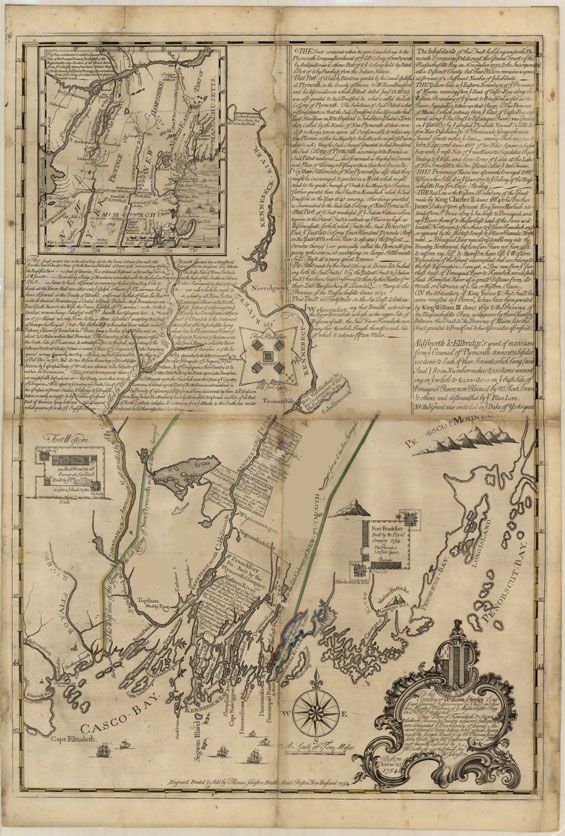 As the MHS approaches its 225th anniversary, Terra Firma celebrates the beginnings of one of its most diverse and interesting collections. Among the maps on display are landmarks of map publishing that include the first published map of New England, the first map of Massachusetts published in America, and a unique copy of the earliest separate map of Vermont, as well as maps of important battles and maps and atlases from the United States and beyond. The exhibition is on display at the Society through 9 January 2016, Monday through Saturday, from 10:00 AM to 4:00 PM.
read more
God Save the People! From the Stamp Act to Bunker Hill Opens at the MHS on 27 February
Immerse yourself in the tumultuous times leading to revolution with an exhibition of letters, diaries, political cartoons, newspapers, maps, artifacts, and portraits.
 To tell the story of the coming of the American Revolution in Boston, God Save the People! From the Stamp Act to Bunker Hill follows the evolution of colonial thought and political action through the letters and diaries of men and women caught up in the conflict, together with political cartoons, newspapers, maps, artifacts, and portraits. The exhibition is on display at the Society February 27 through September 4, Monday through Saturday, from 10:00 AM to 4:00 PM.
The story of the coming of the Revolution in Boston is found not only in records that tell us the views of political opponents and military leaders; it also appears in letters and diaries that indicate what events meant to the ordinary men and women who experienced them. Along with celebrated Sons and Daughters of Liberty, this is the story of forgotten patriots who died for a country-to-be, brothers who served against each other in the courtroom, propagandists and war profiteers, merchants whose enterprise was threatened by political chaos, young lovers divided by battle lines, and a teenage African American poet who had to sail to England to secure her freedom.
read more
MHS Announces Publication of What's New About the "New" Immigration? Traditions and Transformations in the United States since 1965
 BOSTON, January 2014—As debates over immigration reform echo from local communities to the halls of Congress, the Massachusetts Historical Society is pleased to announce the publication of What's New about the "New" Immigration? Traditions and Transformations in the United States since 1965, co-edited by professors Marilyn Halter of Boston University, Marilynn S. Johnson of Boston College, and Director of Research Conrad Edick Wright and Research Coordinator Katheryn P. Viens of the MHS. The book is available from the publisher Palgrave MacMillan.
read more