
By Emilie Haertsch, Publications
Twelve years ago at this time Vice President Al Gore ran against governor of Texas George W. Bush, leading to chaotic election results. The votes were so close that one candidate won the popular vote while another won the electoral vote. That was right about the time that people across America began asking, what is the Electoral College, and how can a candidate win the popular vote and still lose the election? Who would create such a system? Many are still asking these questions as we approach another close presidential election in November, and historian Ray Raphael has the answers.
Raphael is currently a Senior Research Fellow with Humboldt State University in Northern California. He authored the acclaimed People’s History of the American Revolution as well as many other books on the founding of the United States, and his latest book is Mr. President: How and Why the Founders Created a Chief Executive. Raphael visited the Society on Monday, September 24, to present “The Curious Creation of the Electoral College: What the Founders Didn’t Want and Didn’t See Coming.”
“Welcome, fans of the Electoral College,” Raphael began, to the laughter of the audience. He went on to explain the roots of the electoral system in the Federal Convention of 1787 and the ways in which even the founders viewed it as an imperfect solution. The Virginia Plan, an outline of government proposed by the Virginia delegates, called for an undetermined number of members of an executive branch chosen by the legislature. James Wilson of Virginia, however, proposed a single executive elected by the people. Although the members of the convention agreed upon the idea of a single executive, with very limited powers, they disliked the idea of a popular vote to decide the election. Wilson outlined an electoral system as an alternative, but it was rejected. The feeling of the convention was that Congress should be involved in selecting the president. Why the opposition to a popular vote?
“They wanted government by the people,” Raphael said, “but not the people ruling on a daily basis.”
Finally, the question of how to elect the executive was referred to a committee, which became known as the “Grand Committee.” They created the electoral system we know today, which does not involve Congress directly in presidential elections. The committee also gave the president powers of treaty and appointment. The electoral system and the greater powers allocated to the president were contrary to the sentiments of the convention as a whole, but nonetheless the electoral system was ratified as part of a final effort to complete the Constitution. As a result, electors representing each state, which are equal in number to its Congressional representation, elect the president. Although Maine and Nebraska count their electoral votes proportionally, the rest have a winner-take-all system. In winner-take-all states all the electoral votes go to the candidate who had the most votes in that state, which in four cases has resulted in a candidate winning the popular vote and losing the electoral vote, as we saw in 2000—and which came very close to happening again in 2004.
The committee designed the Electoral College to avoid corruption. They believed that if the electors, who were chosen by the state legislatures, voted at a distance they would be less likely to succumb to the dangers of intrigue and faction. The founders expected the electors to behave nobly and do what was best for the nation. But it only took eight years for national political parties to take hold, resulting in electors having no discretion in voting. Their votes were pre-committed to their parties.
“It’s Oedipal,” said Raphael. “In trying to escape your fate, you create it.”
The Electoral College has evolved considerably from the original intent of the founders, which was to protect the election of the executive from corruption. But even after the collapse of the election process in 2000, Raphael believes it is unlikely to be changed by a constitutional amendment. Voters in rural states, with small populations, and voters in swing states are courted because their votes have added electoral weight, so they prefer this electoral system.
“Isn’t it amazing?” asks Raphael. “Humans are stuck with their own contrivances for centuries.”
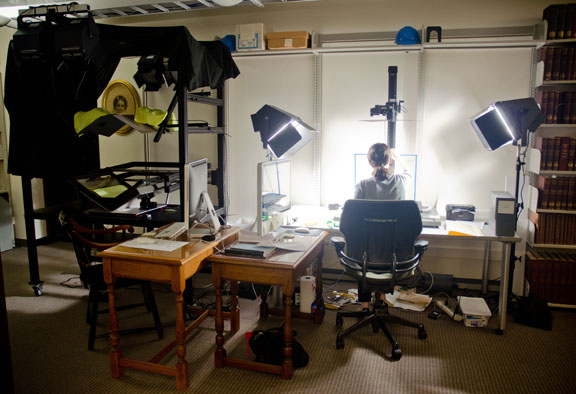 to supply somewhere in the neighborhood of 55,000 manuscript pages to a forthcoming multi-archive digital publication, China, America and the Pacific: Trade and Cultural Exchange. Adam Matthew has contracted, in turn, with Luna Imaging in Los Angeles to do the scanning. In late August, Luna shipped all of the equipment shown here and sent a representative to install and test it and train a scanning technician. The technician, shown here, is now hard at work scanning correspondence, account books, ships’ logs, and letterbooks from multiple collections, including the extensive Forbes Family Papers. Other highlights of the final product, scheduled for release in late 2013, will include the manuscript of Richard Henry Dana’s seminal work, Two Years Before the Mast, and Robert Haswell’s log of the Columbia-Rediviva, the first vessel to circumnavigate the globe
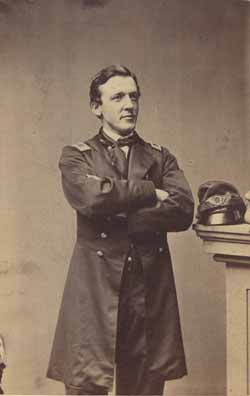 to tell portions of the story. MHS materials feature prominently in two segments of the film. In the segment “Dying” a letter written by Wilder Dwight to his mother Elizabeth Dwight (
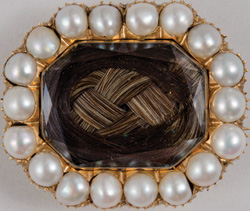 had their own ways of commemorating loved ones. In Death Lamented: The Tradition of Anglo-American Mourning Jewelry, an upcoming exhibition at the MHS by jeweler Sarah Nehama and MHS Curator of Art Anne Bentley, examines the practice from the 17th through the 19th century of commissioning and wearing rings, bracelets, brooches, and other jewels to honor the dead.
 available for purchase on
  A French citizen, Lafayette began his career as a musketeer in the king’s regiment and married into a wealthy, well-connected French family. The reports of Americans fighting for liberty moved him, and in 1777 he bought a ship and sailed for America. Upon arrival, Lafayette earned an honorary commission as major general in the Continental Army. Gen. George Washington became his mentor, and Lafayette was devoted to him. Lafayette earned fame for his courage on the battlefield, and he used his family connections to obtain crucial material aid from France for the American cause. His support for the Revolution, especially as a foreigner, captured the imagination and admiration of Americans. He was beloved in the United States for the rest of his life.
 Lafayette’s legacy is apparent in the Society’s collections, which include correspondence, artifacts, and memorabilia from the time of the American Revolution and his celebrated return trip to the States in 1824-1825. The portrait gallery also features Jospeh Boze’s well-known portrait of Lafayette. Thomas Jefferson commissioned this work for his gallery of American heroes in honor of Lafayette’s contributions to the American Revolution. The portrait depicts Lafayette at the pinnacle of his career. He wears the uniform of the French National Guard and a confident expression as he gazes off into the distance. Even at 255, he still looks good. A happy birthday to him.