

By Meg Szydlik, Visitor Services Coordinator
Content warning: use of 19-century terminology to describe individuals with disabilities.
I’ve written before on Dorothea Dix’s writings regarding those she referred to as the “insane” here in Massachusetts. Since she was a very prolific writer and advocate in the 19th century, I was curious what else the MHS had of hers. When exploring the MHS library catalog, Abigail, I found that we held three additional addresses to state legislatures—New York, Pennsylvania, and Tennessee, out of the twelve total she wrote.
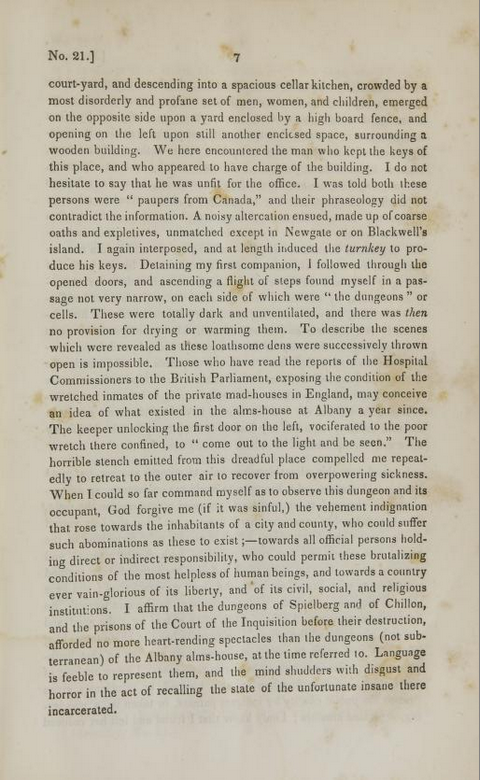
Curious if they were similar to her statement to the Massachusetts legislature, I examined their contents. And while each address was related to a different state and focused on slightly different arguments, her message of humanization and care is consistent throughout the four speeches. Her legacy in driving the creation of asylums and hospitals for disabled people, ultimately, is mixed, but her intentions are clear. She pulled no punches, saying that “God forgive me (if it was sinful,) the vehement indignation that rose towards the inhabitants of a city and county, who could suffer such abominations as these to exist;— towards all official persons holding direct or indirect responsibility, who could permit these brutalizing conditions of the most helpless of human beings.”
In her Memorial: To the Legislature of Massachusetts, Dix devoted a lot of time to the slow and careful unveiling of the ways the state, counties, and cities had failed the “insane” and the “idiots” (her terms, using the technical language of the 19th century). And there were many. She tracked the brutalization and cruelty exerted against people deemed insane, a thread that continued in her other texts as well, though none so intensely as in her statement to the Massachusetts legislature. The descriptions of cages, chains, beatings, and intentional isolation were meant to horrify and therefore motivate the different legislatures to make monumental policy changes. She called on the Massachusetts legislature to “commit to [the legislature] this sacred cause. Your action upon this subject will affect the present and future condition of hundreds of thousands.” This call-to-action rang across the states and even rings into today.
Her arguments were effective, particularly when it came to her calls for states and counties to open hospitals and asylums to care for disabled people, and they were heeded in state after state. Her position was certainly logical, since the primary institutions previously used for this purpose were jails and almshouses. She repeatedly argued that a hospital would allow those whose insanity was “curable”—and thus could be made into something palatable—to recover and become productive members of society.
It is interesting to read these arguments in favor of insane asylums and mental hospitals with the knowledge of what these institutions ultimately became. Her statements about almshouses in New York that “language is feeble to represent them, and the mind shudders with disgust and horror in the act of recalling the state of the unfortunate insane there incarcerated,” could also be said of many mental hospitals. Even the Metropolitan State Hospital here in Massachusetts has a long, ugly history of abuse, covered here by WBUR. Hospitals are just as dependent as other institutions on the ethics of those in charge, and, as Dix wrote, “if public institutions are not guarded from such shameful abuses, I do not know why they should not be fully exposed; what people are not careful to prevent, they must not be too delicate to hear declared.”

(Credit: Juniper Johnson)
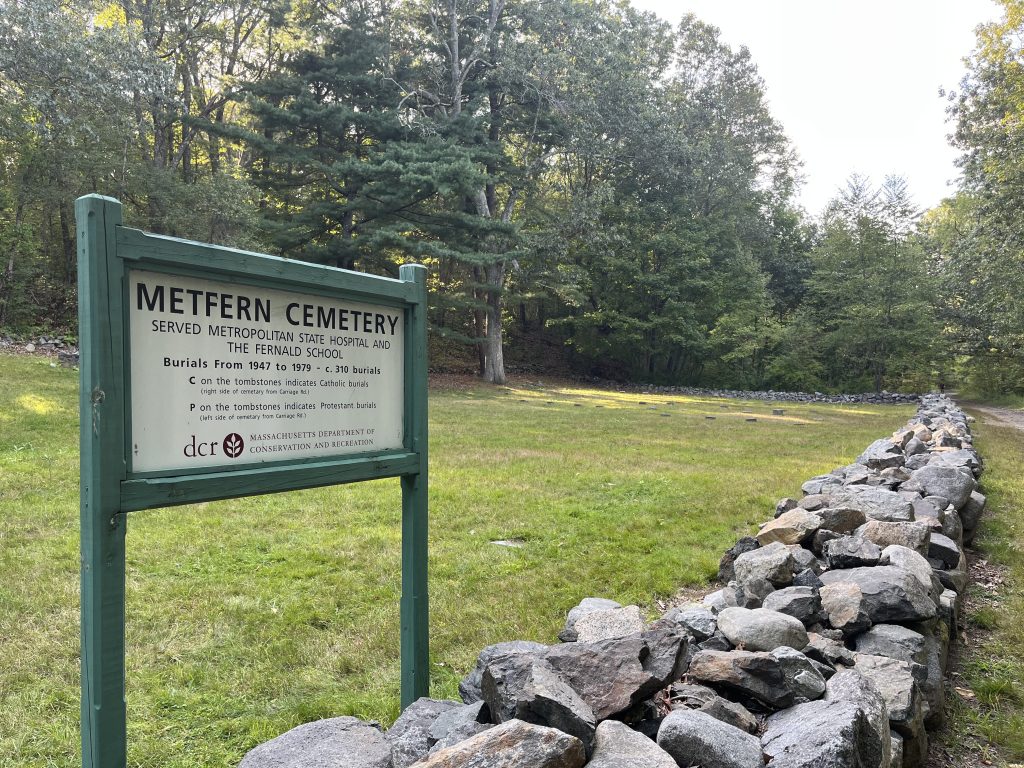
Well-meaning advocates, like Dorothea Dix, who do not actually involve the people who are having the experience, frequently have impacts they do not intend. “Nothing about us without us” remains a salient point, even today. I am confident that Dix would be truly horrified at the results of her advocacy for hospitals. Insane asylums being a regular feature in the horror genre does not come from nowhere, after all, and reports that come out of psych hospitals and other care institutions even today can feel uncomfortably similar to what Dix was trying to avoid. Studying Dix brings to mind things like the Disability Day of Mourning, which honors disabled people killed by their caretakers. The tragedy is that disabled people are still abused in many ways and ableism is alive and well. However, there has been a lot of incremental progress towards disabled people taking the agency so long denied to them, from laws like the Americans With Disabilities Act to more public knowledge and acceptance of mental illness and neurodivergence. I certainly hope we continue to move in that direction.