
The Diaries of Henrietta Maria Schroeder Stout, Part III

By Susan Martin, Senior Processing Archivist

This is the third part of a series. Read Part I and Part II to catch up.

I hope you’ve been enjoying the diaries of 13-year-old Henrietta Schroeder as much as I have. In early July 1889, she and her family were staying at Keswick, in England’s beautiful Lake District, part of their grand tour of Europe. After Keswick, they spent the summer traveling up and down Great Britain, hitting all the tourist hotspots.

As I mentioned in Part II, Henrietta described events a little out of order, frequently backtracking to catch up, so it’s sometimes difficult to pinpoint her location. I’ve done my best to trace her route from July to the middle of August on this map.
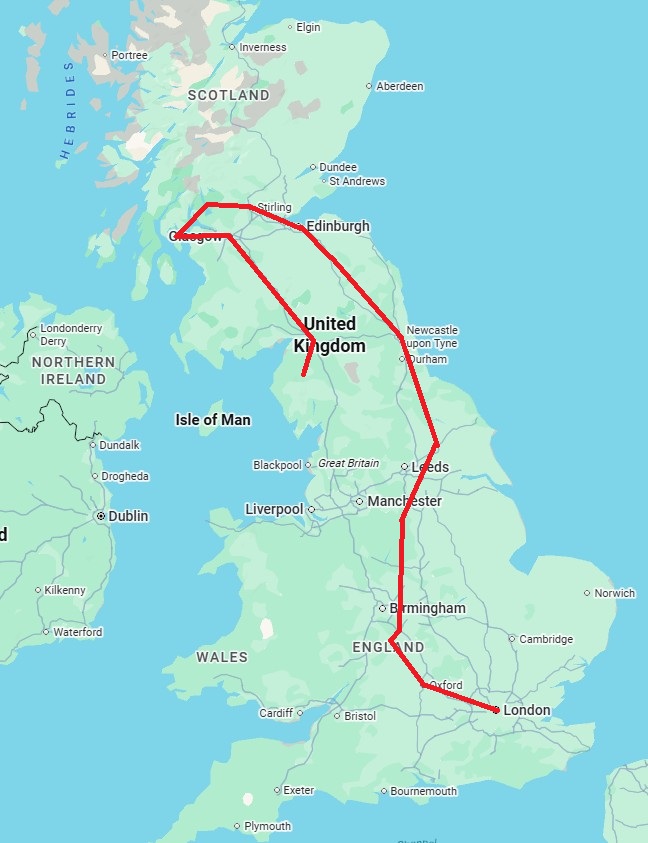
Color screenshot of Great Britain, with a red line tracing up the west coast of the island to Scotland and then down the east coast to London.
Map of Henrietta’s route

The cities and towns the Schroeders visited included Carlisle, Glasgow, Rothesay, Rowardennan, Stirling, Edinburgh, Melrose, Newcastle upon Tyne, York, Rowsley, Warwick, Stratford-upon-Avon, Oxford, and finally London. It’s no wonder she often fell behind in her diary!

I enjoy how Henrietta addressed her diary as if it were another person, calling it “my dear old Journal,” “my darling Journal,” “dearest Companion,” or “my dearest Confidante,” and apologizing when she neglected it. It feels like you, the reader, are having a conversation with her. But she also had another audience in mind: her best friend Caroline “Lina” Wetherill, who she mentioned frequently and missed terribly.

In fact, on July 6, when she received three letters from Lina, she was overjoyed, writing:

You see how she forgot herself entirely, and only thought of me and my well fare, she is the best girl that ever breathed the breath of life!!!!!!!!!!!!!!!!!!!!!!!!!!!!!!!!!!!!!!!!!!!!!! Oh! dear! I wish that I were worthy of her!! . . . God bless her she is so sweet. The dear old girl! I wonder what she is doing now, I dare say she is climbing some haystack or perhaps swimming about like a duck in the water. I wonder if she ever thinks of me. Oh! I love her so!!!!!
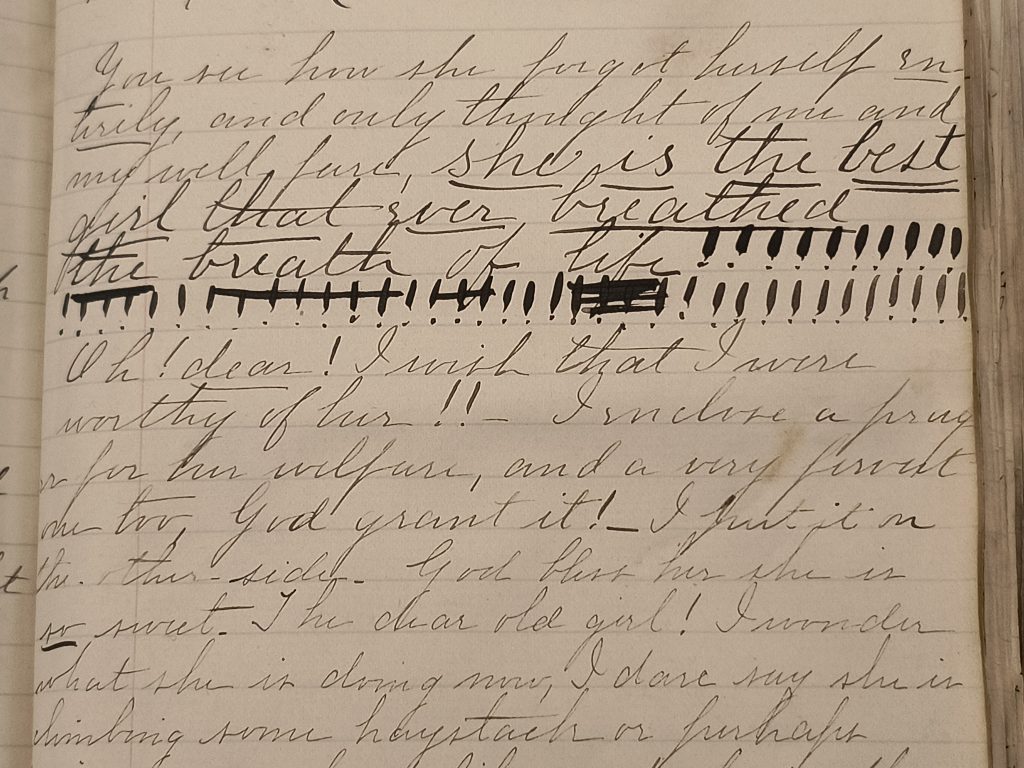
Close-up color photograph of one page of a manuscript volume. The text is written in black ink and contains underlining, exclamation points, and smudges.
Excerpt from Henrietta Schroeder’s diary, July 6, 1889

The Schroeders were energetic tourists. Here are some of the sights they saw during this period: the Castlerigg stone circle, Carlisle Cathedral, Carlisle Castle, Rothesay Castle, Dunoon Castle, Loch Eck, Loch Katrine, Edinburgh Castle, Holyrood Palace, Melrose Abbey, Abbotsford, Newcastle Cathedral, Durham Castle, Durham Cathedral, York Minster, Haddon Hall, Chatsworth House, Kenilworth Castle, Warwick Castle, St. Mary’s Church in Warwick, Trinity Church in Stratford-upon-Avon, William Shakespeare’s house, and Christ Church and Magdalen Chapel in Oxford.

What I like most about Henrietta is her combination of exuberance and irreverence. From making up songs to chipping off pieces of castles as keepsakes to complaining about her bedtime, she feels real. Her diary is also just plain funny. One entry mentions “that nasty old Cromwell,” like he was a schoolyard bully. And this dismissive aside made me laugh: “My window looks right down on the city, the Cathedral & a ruin of some abbey or something.”

But Henrietta was also growing up. I think we get a glimpse of this in the following passage, about a distant family relation the Schroeders happened to meet in Glasgow.

He has three awfully nice looking boys (they are young men though) and I am going to make a mark on one I know, for he stares at me so already. (Don’t say a word, we must make great friends with them, they are as rich as Croesus.[)]

I’ll pick up the next installment of Henrietta’s story in London.
The Society to Encourage Studies at Home Teaches Me How to Get off My Phone

By Abba Connally, Library Resident

It is the season for many of us to begin making and implementing our 2026 New Year’s Resolutions. Considering the average person today spends 47 hours a week on their phone, I’m sure many others are also considering a resolution to spend less time on their mobile devices. As I look into going more “analog,” I’ve been searching the past to find enjoyable ways to pass the time. One of the examples that I have seen for this is self-paced learning. Some people online call this a “personal curriculum,” and they are meant to be a way to enjoy education for fulfillment rather than work.

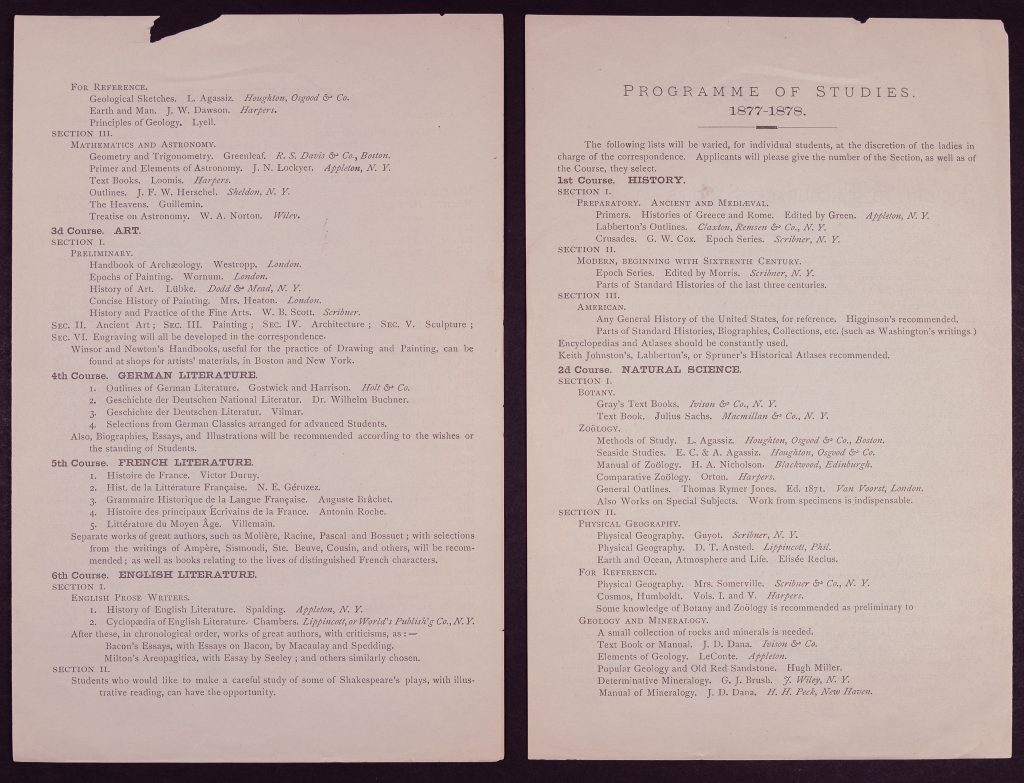
As I work on my current project at the MHS, a subject guide on 19th-century intellectual culture in Beacon Hill, I was amazed to run into a self-guided program of study made for women that feels incredibly ahead of its time, not only in its audience, but in the method of instruction. The Society to Encourage Studies at Home, founded in 1873 by Anna Eliot Ticknor, was the first correspondence school in America and functioned as a network of women teaching other women by mail. The purpose was surprisingly conservative; the goal of providing secondary education was not to further women’s careers but to offer them more fulfillment from the home.

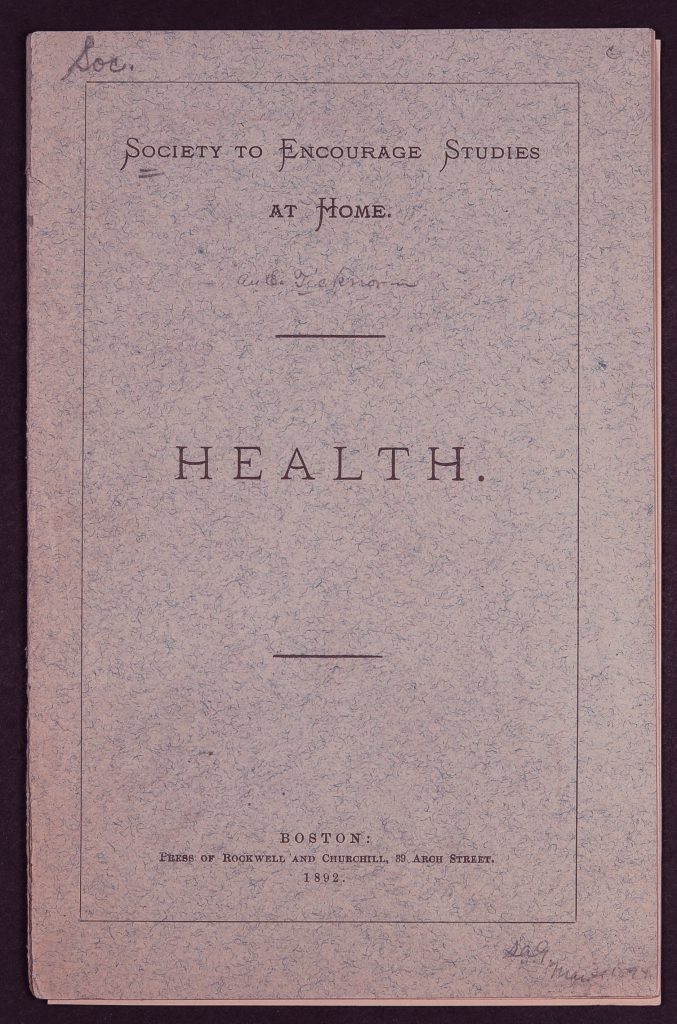
The MHS collection houses a variety of materials from the Society to Encourage Studies at Home, including its offered courses, lending library catalog, and a pamphlet entitled “Health,” which gives advice for a healthy and fulfilled life. Looking at these items has given me ideas as to some ways that I can spend my time learning and engaging in hobbies when I’m not at work.

a spread from a printed document with lists of courses and textbooks, including history, natural sciences, art, German literature, French literature, and English literature
Some of the courses offered by the Society

In “Health,” there is a section on how to achieve what may today be called a work-life balance. It discusses how women can balance sedentary work, manual work, exercise, and learning, and argues that all are necessary for balanced wellness.  Something that was particularly notable to me was how the author emphasized the importance of life-long education, stating that many women fall out of the habit and “sink into depression. . . . and may even become insane. They are mentally starved to death.” They also warn against learning too much and advise hobbies for those who are struggling to find balance.

Title page of pamphlet printed with title "Health"
Pamphlet titled “Health,” 1892

As someone who is both a full-time student and works a lot of library desk shifts, I find that I spend a lot of my time sitting. If, like me, this is what your workday looks like, this pamphlet advises that “for those whose work is sedentary, a study of botany or geology is excellent, as it calls them from their houses, and gives a pleasant interest to their walks” Although the weather is cold right now, I may try to get a head start and do some natural science reading for my spring walks.

Looking at the Society to Encourage Studies at Home has helped me build out more of my “personal curriculum” instead of scrolling on social media. I am always reminded of how amazing it is to have such a wealth of information and educational materials constantly within reach, but finding quiet structured time to build mindfulness and find balance is something I am excited to work on in the new year.  In addition to the advice found here, I’m linking items in our collection that relate to tech-free hobbies, and of course, botany and geology.

“If I could put in words my thoughts of you”: What Only Poetry Can Confess 

By Jolivette Shevitz, Library Assistant 

This is the first in a series I am calling “What Only Poetry Can Confess” that will pull out poetry used in diaries or personal letters from the collection and discuss how people have used poetry to express themselves. As an avid poetry writer and reader, I am drawn to exploring how people rely on poetry to say what they may struggle to fully articulate otherwise. Through these poems, whether they are famously well known or have only been seen by their author, we will get a small look into the lives of people in the collection here at the Massachusetts Historical Society.

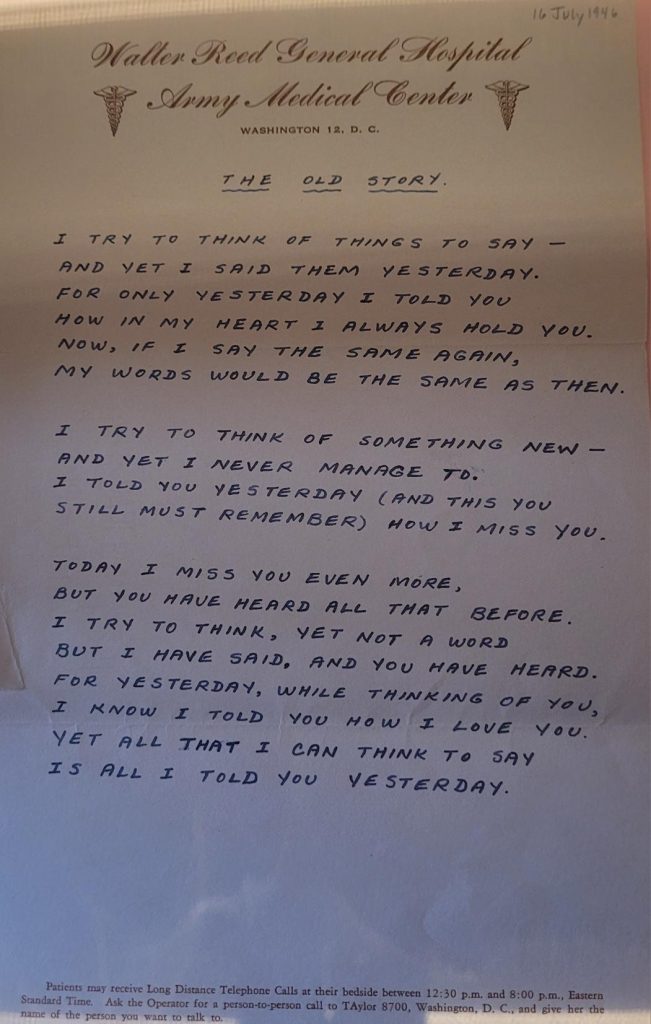
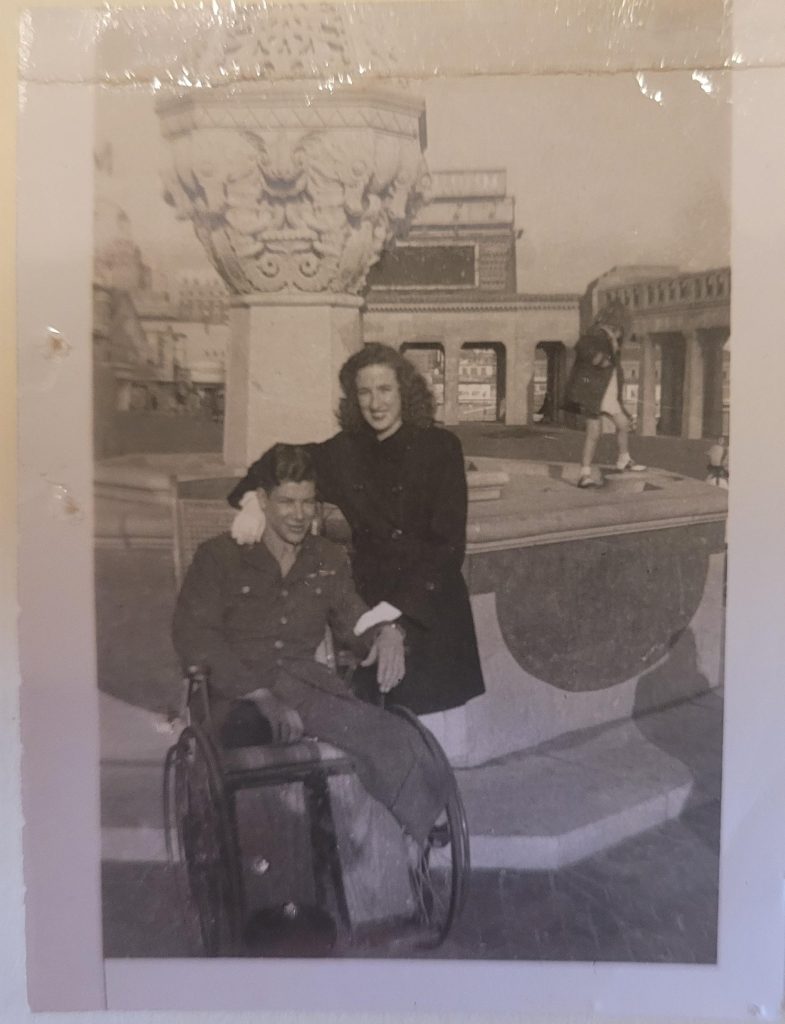
For this first entry in the series I looked at the Samuel L. Barres papers. Samuel L. Barres has been written about on this blog before, once by Meg Szydlik in her series on disability in the archives and also by Susanna Sigler about Jewish American Soldiers in World War II. Samuel L. Barres trained and served in World War II until his injury during the lead-up to the Battle of the Bulge (Ardennes), losing both of his legs while serving with the 80th Infantry Division. He wrote and received many letters from his future wife Bernice while recovering until they got married in 1946. I want to highlight two poems out of the 10-15 poems that were sent between the two of them in these letters.

Poem "The Old Story" written in ink on paper with letterhead "Walter Reed General Hospital". Poem begins "I try to think of things to say - And yet I said them yesterday. For only yesterday I told you how in my heart I always hold you. Now, if I say the same again, my words would be the same as then."
Letter written by Samuel to Bernice with poem “The Old Story”

The first poem is from Samuel to Bernice, called “The Old Story”, (author unknown). It discusses how repetitive and insignificant all of these declarations of love and missing one another feel in comparison to how great these feelings are. This poem caught my heart as I also live far away from family and often feel the same way. The poem is a beautiful expression of the fact that even though Samuel might be repeating himself in many of his letters, he wants Bernice to know his feelings extend much more than what words exist to say.

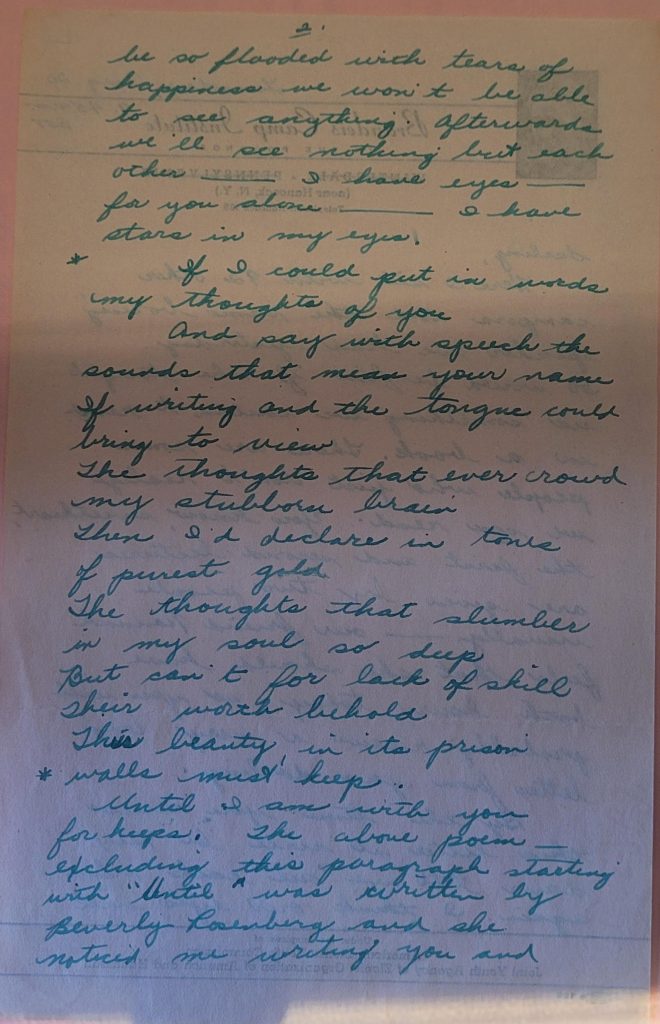
Handwritten letter in ink, including a poem that begins "If I could put in words my thoughts of you And say with speech the sounds that mean your name If writing and the tongue could bring to view The thoughts that ever crowd my stubborn brain Then I'd declare in tone of purest gold The thoughts that slumber in my soul so deep..."
Letter written by Bernice to Samuel

The second poem is from Bernice to Samuel. It’s the only poem that she writes to him that echoes a similar message to poem “The Old Story”. This poem was written by a friend of Bernice, Beverly Rosenburg, who saw Bernice writing to Samuel and gave her the poem. Once again the poem seeks to attempt and fail at expressing the deepness of the love Bernice feels for Samuel. It’s very sweet how both of them seem to say the same thing to each other at different times, frustrated almost over their inability to find words for their love.

Black and white photo shows man wearing uniform sitting in a wheelchair and a woman in dark coat standing beside him with arm around shoulder. In the background is what appears to be a decorative fountain.
Samuel and Bernice in front of a fountain.

These poems are just a small piece of their writings to each other, and I encourage anyone to come visit the MHS and read through them all. Both of them have so much life in their letters and it truly was a joy to get a glimpse into their lives.