Making & Unmaking a Military Myth: John Adams & the American Riflemen

By Thomas A. Rider II, University of Wisconsin – Madison, Military Historical Society of Massachusetts Short Term Fellow at the MHS

Tom is currently writing a PhD dissertation on the Continental Army’s evolving approach to petite guerre or partisan warfare during the American War for Independence. The Adams Family Papers at the MHS have provided important insights into a critical aspect of this evolution – the use of frontier riflemen in support of Washington’s army.

In the early stages of the Revolutionary War, no soldiers recruited in the American colonies generated greater anticipation than the frontier riflemen. Armed with the Pennsylvania rifle, a weapon that in the hands of a skilled marksman was far more accurate than the smoothbore muskets most 18th-century soldiers carried, and skilled in the Native-American way of war, the riflemen seemed to promise a valuable augmentation to George Washington’s nascent army besieging Boston. It is not an exaggeration to suggest that even before the Continental Congress authorized the creation of rifle companies from the Pennsylvania, Maryland, and Virginia backcountries that these soldiers took on a mythological status. Congressional delegate John Adams had a role in making these myths and his correspondence offers a unique window into the naive expectations that he and others imagined for the riflemen. His correspondence also shows just how deceptive this mythology could be when the unruly and insubordinate frontiersmen dashed these expectations and instigated innumerable disruptions in Washington’s army.

In the summer of 1775, Adams undoubtedly viewed the riflemen as a godsend. Since the engagements at Lexington and Concord, New England had borne the brunt of the fighting against the British. Adams and other northern representatives in Congress were thus eager for southern troops to both reinforce the provincial army surrounding Boston and to demonstrate inter-colonial support for armed resistance.[1] Adams was undoubtedly thrilled, therefore, to hear southern delegates tell of the exotic frontiersmen and their extraordinary shooting and Indian-fighting exploits.[2] He soon convinced himself that the riflemen possessed all the martial prowess and civic virtue necessary to unite the colonies and defeat the ministerial troops in Boston and made his hopes known in a series of letters back to Massachusetts.[3] To Elbridge Gerry, Adams described the riflemen as “exquisite marksmen,” able “to send sure destruction to great distances.”[4] To James Warren, he lauded the backcountry soldiers as “Men of Property and Family, some of them of independent Fortunes, who go from the purest Motives of Patriotism and Benevolence into this service.”[5] To his wife Abigail, he labeled them “an excellent Species of Light Infantry” and “the most accurate Marksmen in the World.”[6]

Unfortunately, as the riflemen reached the Boston siege lines, they failed to live up to the myths that swilled around them. While the New England regiments had discipline problems of their own, the frontiersmen proved particularly unruly, insubordinate, and even dangerous to the good order of Washington’s developing army. They assumed for themselves a privileged status and refused to perform camp duties. They passed between the lines in defiance of orders to take ineffective pot shots at British sentries. In September, Pennsylvania riflemen staged a veritable mutiny in an effort to break a comrade out of confinement. This mutiny had to be suppressed at bayonet point.[7]

Adams, who had wholeheartedly supported the riflemen, soon received a barrage of letters from New England officers dismayed by the frontiersmen’s conduct. From William Heath he learned that “the Riflemen so much Boasted of … before their arrival, have been Guilty of as many Disorders as any Corps in the Camp and there has been more Desertions to the Enemy from them than from the whole Army Besides, perhaps Double.” Heath tempered his criticism a bit by admitting that there were some good soldiers among the riflemen and that “it would be ungenerous to characterize the Troops of any colony from the conduct of a few Scoundrels.”[8] John Thomas, an experienced veteran of the colonial wars, was less generous. In his opinion, the riflemen were “as Indifferent men as I ever served with, their Privates Mutinous & often Deserting to the Enemy, Unwilling for Duty of any Kind, Exceedingly Vicious, and I think the army here would be as well without as with them.”[9]

Eventually, Washington and his fellow officers got the riflemen under control and developed something of an unwritten doctrine to make use of their unique capabilities. By 1777, Daniel Morgan’s Rifle Corps proved highly effective in reconnaissance and harassment missions against the British in both New Jersey and northern New York.[10] The riflemen, however, never quite lived up to the myths that surrounded them in the summer of 1775 – myths that John Adams helped create.


[1] Among the New England congressional delegation, Adams was hardly alone in his enthusiasm for the riflemen. See, for example, Eliphalet Dyer to Jonathan Trumbull, Sr., June 16, 1775 in Paul H. Smith, ed. Letters of Delegates to Congress, 1774-1789 (Washington, DC: Library of Congress, 1976-2000), 1: 496; John Hancock to Elbridge Gerry, June 18, 1775 in ibid., 507; John Hancock to Joseph Warren, June 18, 1775 in ibid., 508.

[2] For the influence of southern delegates on Adams with regard to the riflemen see John Adams to James Warren, June 27, 1775 in ibid., 545; John Adams to James Warren, July 6, 1775 in ibid., 590.

[3] Historian Charles Royster has suggested that in the Revolution’s early stages, Americans believed that superior “virtue,” “benevolence,” “disinterestedness,” and “native courage” when combined with home-grown tactics, would compensate for deficiencies in military discipline and precision. In his letters, Adams seems to describe the riflemen in this context. See Charles Royster, A Revolutionary People at War: The Continental Army and American Character, 1775-1783 (Chapel Hill, NC: University of North Carolina Press, 1979), 11-12, 22-30, 33-35.

[4] John Adams to Elbridge Gerry, June 18, 1775 in Smith, ed. Letters of Delegates to Congress, 1: 503.

[5] John Adams to James Warren, July 6, 1775 in ibid., 590.

[6] John Adams to Abigail Adams, June 17, 1775 in ibid., 497.

[7] For an excellent account of this mutiny see Jesse Lukens to John Shaw, Jr., in Lindsay Swift, ed. Historical Manuscripts in the Public Library of the City of Boston (Boston: Public Library of the City of Boston, 1900), 1: 23-25. Adams learned of the mutiny in a letter from James Warren. See James Warren to John Adams, September 11, 1775, Adams Family Papers, Massachusetts Historical Society.

[8] William Heath to John Adams, October 23, 1775 in ibid.

[9] John Thomas to John Adams, October 24, 1775 in ibid.

[10] For the exploits of Morgan’s Rifle Corps during the 1777 campaigns see Albert Louis Zambone, Daniel Morgan: A Revolutionary Life (Yardley, PA: Westholme Publishing, 2018), 109-155.


“True religion needs no mystery, no veil, no cloud to hide it”:[1] Isaac Harby and the Roots of Reform Judaism in America

By Judith Maas, Library Assistant

“I have to thank you for the copy you have been so kind as to send me of your discourse before the reformed society of Israelites. I am little acquainted with the liturgy of the Jews or their mode of worship but the reformation proposed and explained in the discourse appears entirely reasonable. Nothing is wiser than that all our institutions should keep pace with the advance of time and be improved with improvement of the human mind.”

Thomas Jefferson, Monticello, 6 January 1826

“The honour of a letter from Mr. Jefferson was beyond my most pleasing anticipations….You, Sir, stand as a pillar of light directing the march of our country through the darkness of political bondage, into the cheerful, the tropical morn of political emancipation. To you, therefore, the theme on which I have presumed to touch, possesses its full interest.”

Isaac Harby, Charleston, South Carolina, 14 January 1826[2]

This exchange of letters took place at the dawn of what would become the largest denomination of Judaism in America, the Reform movement. The occasion was the publication of a speech delivered by Harby, a teacher, playwright, and journalist, before Charleston’s Reformed Society of Israelites in November 1825. The published speech, as well as two plays by Harby, are part of the MHS collections.

The Reformed Society was an outgrowth of a group made up of 47 Jewish men who had first gathered in late 1824, with the mission of adapting the liturgy of the city’s Congregation Beth Elohim to the needs and conditions of modern American life. Among other reforms, the group had called for shorter services, the reading of prayers in Hebrew and English, and a weekly sermon conducted in English that would relate the Scriptures to everyday life.

In December 1824, the group submitted a petition to Beth Elohim’s governing board outlining its proposals–these were promptly rejected. In response, the petitioners established the Reformed Society, whose goal was to align the “prevailing system of worship” with the “enlightened state of society.”[3] Harby’s speech served as the keynote address at the organization’s first anniversary event. Once it was ready in pamphlet form, he proudly distributed copies to newspaper publishers and to well-known figures of the day, including, it appears, Jefferson.

On a trip to Charleston a few years ago, I toured Beth Elohim, which was established in 1749, and I remember the tour guide talking about the battling congregants. Finding Harby’s Discourse in the MHS collections has given me a chance to learn more about the synagogue and its history; the earliest beginnings of Reform Judaism in the United States; and Jewish life in colonial and antebellum America.

Jewish settlers began arriving in Charleston in large numbers in the 1740s, many from England or English colonies. During the Revolutionary era, the Jewish population supported the cause of independence, having found greater liberties in their new home than they had experienced in England. In 1790, South Carolina’s constitution formally granted the Jews “the free exercise and enjoyment of religious profession and worship, without discrimination or preference.”[4] By the early nineteenth century, many of Charleston’s Jews were employed as retailers, brokers, and auctioneers. Harby’s father, Solomon, migrated to the city in 1781, from England by way of Jamaica, and worked as an auctioneer.

Born in Charleston in 1788, Harby grew up at a time when the city was a flourishing, cosmopolitan center of trade and a home to theaters, clubs, and learned societies. Harby enjoyed a liberal education, studying Greek, Latin, and French literature at a private academy.  His devotion to literature shaped his career choices. After a stint as a legal apprentice, he became an itinerant man of letters, trying his hand at teaching, journalism, criticism, and playwriting. As both an editorial writer and a literary critic, he celebrated the promise of America, viewing the new nation as a beacon of freedom, and promoting the work of American authors; this optimistic view of the country would be echoed in his Discourse.

Isaac Harby's Discourse
A Discourse, Delivered in Charleston, South Carolina (1825), by Isaac Harby, pages 6-7 and pages 10-11

By the 1810s and 1820s, Charleston’s preeminence as a port city was on the decline. For Harby, engaging in intellectual pursuits and earning a living came into increasing conflict. It was at this low point that he found a new calling as a reformer of the Jewish liturgy, though his devotion to the cause is puzzling, as he had previously taken little part in the Charleston’s Jewish affairs. Harby and his colleagues were aware of the Jewish reform movements taking place in Europe, but their commitment seems to have been inspired mainly by local circumstances.

Harby’s biographer, Gary Phillip Zola, suggests several reasons for Harby’s involvement, including the emergence in the United States of evangelical societies seeking to convert Jews to Christianity; the appearance in the press of anti-Semitic articles; the fierce debate generated by a bill in Maryland to grant Jews in the state full civil and political equality; and the realization that many Jews in America, himself included, knew little about their religion and were thus unable to withstand attacks on Judaism. Furthermore, in Harby’s view, intolerance and bigotry were vestiges of the old world, with no place in the new.[5]

Written in the florid style characteristic of the era, the Discourse argues for the Society’s desired reforms while affirming its bonds with Jewish beliefs and traditions. Permeating the document is the idea of America’s special destiny as a bastion of freedom and tolerance in contrast with backward Europe: “We, in this free country can worship God in what language and what mode we think proper…. With what pride and pleasure must the happy few who composed our immediate forefathers—the happy few who were sufficiently enlightened to leave oppression, and go in quest of liberty—with what indescribable sensations must these pilgrims of the world have hailed the dawn of freedom as it illumined the western horizon.”[6] I see in the Discourse the desire of an immigrant’s son to achieve a sense of belonging, to be part of a pluralistic America and to honor his Jewish roots.

By 1826, the Society had lost hope in winning over Beth Elohim and made plans to build its own synagogue. In preparation, Harby and two others developed a reform prayer book, the first published in the United States. But within a few years, the Society had dissolved, and many members rejoined Beth Elohim. Harby’s struggles to earn a living continued and, seeking better prospects, he moved to New York, where he died of typhoid fever in 1828.

In the late 1830s, more controversy roiled Beth Elohim. After a fire in 1838 destroyed the synagogue and plans were being made for a new building, a group of congregants asked that “an organ be erected in the synagogue to assist in the vocal part of the service.”[7] The leadership dismissed the idea, arguing that playing the organ during services constituted a violation of the Sabbath. This time, however, the congregation prevailed, and the installation of an organ became the first of a series of reforms, many in keeping with the original proposals of the Reformed Society. The old guard faction went on to found its own congregation, Shearith Israel, or “the Remnant of Israel.”[8] But after enduring the hardships of the Civil War, the two congregations finally decided to merge, and today Beth Elohim describes itself as a “cornerstone of American Reform Jewish practice.”[9]

[1] Isaac Harby, A discourse, delivered in Charleston, (S.C.) on the 21st of Nov. 1825 : before the Reformed Society of Israelites, for promoting true principles of Judaism according to its purity and spirit, on their first anniversary, Charleston, printed by A.E. Miller, 1825, 12.

[2] Quoted in L.C. Moise, Biography of Isaac Harby with an account of the Reformed Society of Israelites of Charleston, S.C., 1824-1833 (Macon: Central Conference of American Rabbis, 1931), 95, 97.

[3] Gary Phillip Zola, Isaac Harby of Charleston, 1788-1828: Jewish Reformer and Intellectual (Tuscaloosa: The University of Alabama Press, 1994), 122.

[4] Ibid., 4.

[5] Ibid., 115-119.

[6] Harby, A discourse, 11, 26-27.

[7] Quoted in Michael Feldberg, “Isaac Harby,” My Jewish Learning, accessed April 3, 2020, https://www.myjewishlearning.com/article/isaac-harby/.

[8] Ibid.

[9] “Our History,” Kahal Kaddosh Beth Elohim, accessed April 3, 2020, https://www.kkbe.org/ourhistory.

Sources:

“Charleston, South Carolina.” Encyclopedia of Southern Jewish Communities. Accessed April 3, 2020. https://www.isjl.org/south-carolina-charleston-encyclopedia.html.

Feldberg, Michael. “Isaac Harby.” My Jewish Learning.  Accessed April 3, 2020. https://www.myjewishlearning.com/article/isaac-harby/.

Harby, Isaac, 1788-1828

A discourse, delivered in Charleston, (S.C.) on the 21st of Nov. 1825 : before the Reformed Society of Israelites, for promoting true principles of Judaism according to its purity and spirit, on their first anniversary / by Isaac Harby.

Charleston [S.C.] : Printed by A.E. Miller … 1825.

“Our History.” Kahal Kadosh Beth Elohim. Accessed March 4, 2020. https://www.kkbe.org/.

Moise, L. C. Biography of Isaac Harby with an account of the Reformed Society of Israelites of Charleston, S.C., 1824-1833. Macon: Central Conference of American Rabbis, 1931.

Rosengarten, Theodore, and Dale Rosengarten, eds. Portion of the People: Three Hundred Years of Southern Jewish Life. Columbia: University of South Carolina Press, 2002.

Zola, Gary Phillip. Isaac Harby of Charleston, 1788-1828: Jewish Reformer and Intellectual. Tuscaloosa: The University of Alabama Press, 1994.

“The number of visitors to the Garden is rapidly increasing”: Charles Sprague Reports to Harvard University on the condition and progress of the Botanic Garden and Arboretum, 1878.

By Anna Clutterbuck-Cook, Reference Librarian

Arnold Arboretum
Arnold Arboretum, photo by Anna Clutterbuck-Cook

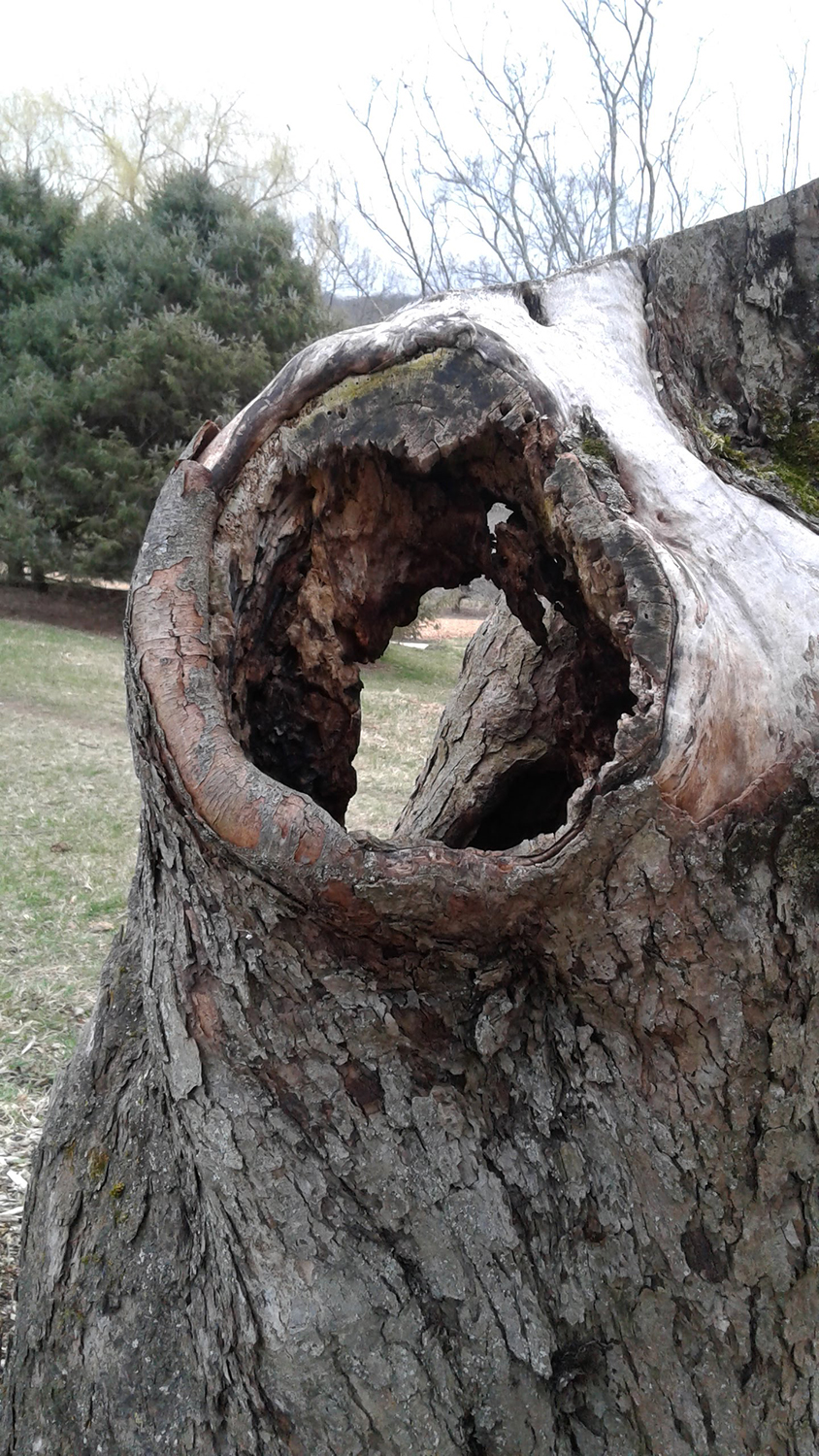
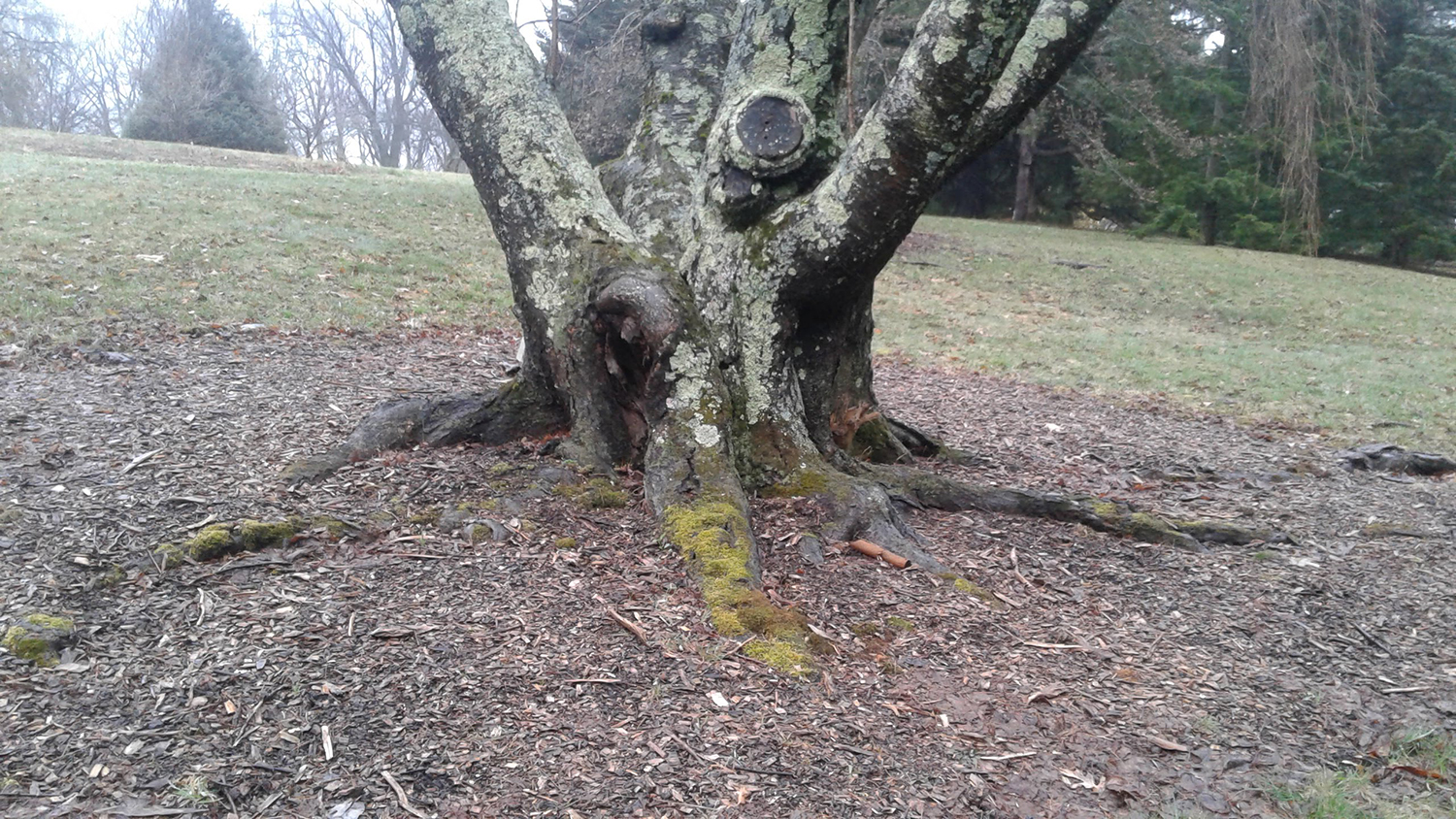
Since the Massachusetts Historical Society closed its building at 1154 Boylston to staff and the public on 11 March, I have been working from home on a street in Roslindale that runs alongside the Arnold Arboretum. In these days of social distancing and Governor Baker’s stay at home orders, my wife and I have been grateful for our daily morning walks along the Arboretum’s wide, sweeping boulevards. Established in 1872, the Arnold Arboretum of Harvard University is a living research collection and also one jewel in the chain known as the Emerald Necklace — a series of green spaces designed by Frederick Law Olmstead in the late 19th century and maintained by the City of Boston for the benefit of residents and visitors alike.

Arnold Arboretum photo
Arnold Arboretum, photo by Anna Clutterbuck-Cook

In looking to see what the Massachusetts Historical Society’s collections might hold about the Arnold Arboretum, I found the Report upon the condition and progress of the Botanic Garden and Arboretum during the year ending August 31, 1878… prepared by Charles Sprague Sargent (1841 -1927), the first director of the arboretum, which offers a glimpse into the first decade of the arboretum’s operations. The academic year of 1877-1878 had been a busy one for the Botanic Garden and Arboretum. Among many accomplishments, Sargent noted that “the work of re-arranging the hardy plants in the Garden has been continued,” “the old rockery of the Garden has been entirely rebuilt and replanted,” and “the artificial bog has been enlarged, and entirely remodelled and replanted … with satisfactory results.” Along with the industry of its gardeners, the Arboretum also saw an increase in visitors:

The number of visitors to the Garden is rapidly increasing, and probably twice as many persons have entered its gates during the past year as during any previous twelve months since its establishment.

This enthusiastic reception by general public, however, appeared to be in tension with what Sargent viewed as his primary purpose: to cultivate a premier collection of plants from around the world, each with a suitable habitat. “The difficulties of making a proper plan for laying out the Arboretum have always appeared very great to me,” he groused.

The site, while offering exceptional beauties, perhaps, for a public park, offers exceptional topographical difficulties for the object to which it is to be devoted; namely, a museum, in which as many living specimens as possible are to find their appropriate positions. In such a museum, every thing should be subservient to the collections, and the ease with which these can be reached and studied; and none of those considerations of mere landscape effect, should be allowed to interfere with these essential requirements of a scientific garden, however desirable such effects undoubtedly are.

To aid him in his efforts to meet these dual needs of scientific study and public pleasure, Sargent recommended — likely with prior approval — the engagement of Frederick Law Olmstead for the sum of two thousand dollars to design. “The foremost of landscape architects,” Sargent noted in his report, shortly before raising the question of funds, “he brings to this undertaking the largest experience and the wisest judgement; and I shall be satisfied that the plan he finally offers will be the very best attainable under the circumstances.” Is it just me, or does the very best attainable under the circumstances come with an audible sniff at having to compromise scientific objectives for “mere landscape effect”?

Arnold Arboretum photo
Arnold Arboretum, photo by Anna Clutterbuck-Cook

Whether or not Olmstead’s design was a compromise that satisfied Sprague is research for another day. However, it was a compromise that has continued to serve the residents of — and visitors to — Boston across more than a century as we step out for our daily constitutionals and are lucky enough to be surrounded by the trees that Sprague and his staff planted.

Stay safe, and enjoy a walk.

Sprague’s report can be read in full online via the Google Books project.

Bread and Stones

by Susan Martin, Processing Archivist & EAD Coordinator

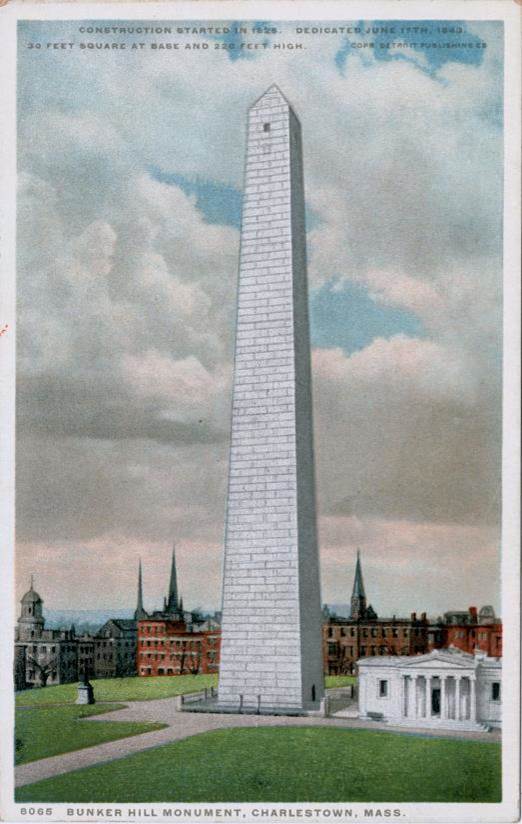
Bunker HIll Monumnet
Bunker Hill Monument, Charlestown, Mass.

A few years ago, I posted to the Beehive about Noah Worcester of the Massachusetts Peace Society and his objections to the way battles were commemorated. Worcester believed, in short, that we should celebrate peace, not war. He interested me because, although a Revolutionary War veteran himself, he took an unpopular but principled stand against the hyper-nationalism and bravado that he believed only served to further divide people from each other.

In the records of the Bunker Hill Monument Association, I recently came across another compelling letter by a Revolutionary War veteran who dissented from prevailing opinion. His name was Caleb Stark, and his language was so powerful I decided to investigate further.

If it’s possible to have military service in your blood, Caleb Stark had it. His father was Maj. Gen. John Stark, and his mother Molly worked as a nurse to the troops during a smallpox epidemic. Caleb was only 15 when he ran away in 1775 to join his father at the front lines, and he arrived on the eve of the Battle of Bunker Hill. He would serve through the rest of the war, eventually attaining the rank of major.

He was a natural choice for membership in the Bunker Hill Monument Association. The BHMA was founded in 1823, as the fiftieth anniversary of Bunker Hill was approaching, and its mission was to design, fund, and build a monument to those who had served in the battle. The association’s officers wrote to Stark to notify him of his election to membership. His answer, dated 10 April 1825, was possibly not what they were expecting.

I have powerful national objections to the adoption of this project, for the  following reasons. First those who made this notable stand on this sanguinary hill, have almost all passed to those shades where military honors are not more highly appreciated than they have been in the United States.

In other words, the monument was too little too late. Most survivors of the battle had died in the intervening years. But Stark was just getting started.

Secondly, the actors in this bloody scene (the Revolutionary war) after having performed their part in a manner, perhaps unparalleled in antient or modern history, were refused by the government the rewards that were so solemnly promised in the hour of the most critical danger, & while the government has found ways & means to satisfy all other legal, & many illegal demands, they still continue a deaf ear to the crying demands for justice claimed by the disbanded officer & soldier. And now Sir in room of giving them the bread (that was solemnly promised), the debt is to be paid by a stone!!

I assumed Stark was referring to military pensions. In a biographical sketch written in 1860 by his son, Stark is described as an advocate on that issue, and his “testimony secured pensions to all whose cases he represented at the war department.”

Stark continued:

It is not to be denied that after a lapse of forty years 14,000 of the soldiers who were state paupers have been transfered to the United States, but the utmost care has been taken to preclude all others from the just claims due by the high national compact on the one side, & the discharged soldier on the other. These considerations have induced me to think that it would redound more to the honor of this rising powerful nation, to obliterate every vestige of the revolution, rather than have such a foul stain of ingratitude & injustice, coupled with the heroick deeds, privations, & suffering of the authors of the revolution.

Forceful words: better to forget the Revolution entirely than to neglect or mistreat its veterans and their families and then try to placate them with a monument.

What specifically were the “rewards” and “just claims” that Stark referred to? His son’s biography answers this question. It includes the text of a long article written by Stark and published in a local newspaper in 1835. Here is one of the relevant passages:

How have they [the United States] fulfilled their contract with the soldiers of the revolution? When it was necessary to continue the army in 1776, Congress, by a resolve of September 16, promised the soldier, in addition to his pay, one hundred acres of land in case they would join the officers and conquer the country. They closed with these terms, and by unparalleled suffering, exertions, and consummate bravery, in eight years cleared the country of its enemies, leaving the United States government in quiet possession of our immense public domain. Two years after the peace, May 20, 1785, resolves were passed for furnishing the soldiers the promised lands; but especial care was taken to saddle the law with a supplement, requiring the lands to be located in plats of six miles square, so that if two hundred and thirty soldiers could not be collected, and induced to combine in the location, they could not obtain their land.

The similarities between his language here and that of his letter to the BHMA indicate, I think, that this was Stark’s primary grievance. And he couldn’t hide his disgust at Congress’ self-dealing.

But Congress, farther to exhibit their love of justice and honor, enacted a law that the soldier might assign his right to the honorable fraternity of speculators, many of whom were members of the honorable Congress.

Stark goes into great detail about the maneuvers used to cheat veterans in favor of wealthy speculators, from reducing the size of land awarded to instituting a statute of limitations for claims. In fact, when he wrote the article, he had already spent nine years prosecuting his claim against the U.S. government for family land in Ohio. He ultimately won that fight, but learned in the process that “gratitude is a virtue often spoken of with apparent sincerity, but not so frequently exhibited in practice.”

In spite of his refusal to join the Bunker Hill Monument Association and his bitterness about promises broken, Stark did attend the ceremony for the laying of the monument’s cornerstone in Charlestown, Mass. on 17 June 1825. At 65, he was reportedly the youngest survivor of the battle of the 190 veterans in attendance. Noah Worcester of the Massachusetts Peace Society was not there.

I like to highlight the dissenting opinions of people like Stark and Worcester because they provide a fuller understanding of historical events that often come down to us simplified and sanitized. History is messy, and the closer you look, the more layers of compexity you find.


Select Bibliography

Bunker Hill Monument Association records, Massachusetts Historical Society.

Colby, Fred Myron. “Stark Place, Dunbarton.” The Granite Monthly, a New Hampshire Magazine, Devoted to History, Biography, Literature and State Progress, vol. 5, 1882, pp. 80-88.

Stark, Caleb. Memoir and Official Correspondence of Gen. John Stark, with Notices of Several Other Officers of the Revolution. Concord, N.H.: G. Parker Lyon, 1860. pp. 344-

Stearns, Ezra S., ed. Genealogical and Family History of the State of New Hampshire: A Record of the Achievements of Her People in the Making of a Commonwealth and the Founding of a Nation, vol. 1. New York: Lewis Publishing Company, 1908. pp. 438-439.

Warren, George Washington. The History of the Bunker Hill Monument Association During the First Century of the United States of America. Boston: James R. Osgood and Company, 1877.

“Continuing the Work,” Boston Women & Aid to Civil War Veterans & Families

by Patrick T.J. Browne, Mellon Short-term Research Fellow, Boston University

In the summer of 1865 as soldiers returned home, the United States Sanitary Commission gradually terminated most of its activities. Over the course of the Civil War, the Sanitary Commission had become the nation’s largest relief agency, addressing a host of issues relating to the care of Union soldiers and sailors. To accomplish this, the Sanitary Commission relied on a vast network of local soldiers’ aid societies across the North—most of which were administrated by women.

Historians have noted that when the Sanitary Commission shut down, the women of local aid societies, in many cases, expressed a desire to continue their work on behalf of the returning veterans.[1] This was particularly true of the New England Women’s Auxiliary Association in Boston. While it is evident from their monthly published reports that the women of the NEWAA desired to keep up their work after the war, sources informing us as to what they actually did are scarce.

For this reason, I was particularly pleased during my time as a Mellon Research Fellow at the Massachusetts Historical Society to come across a small, handwritten minute-book documenting Executive Committee meetings of the NEWAA from 1865 to 1868. My dissertation project at Boston University focuses on the “Ordeal of Homecoming” for northern Civil War veterans and the social response on the part of northern civilians to the disruptions in their communities during the aftermath of the war. In researching the secondary literature I have found that local efforts to aid disabled veterans and their families have sometimes been written off haphazard and ineffective. This minute book helps to put this work in a different light.

Led by Abby Williams May, the Executive Committee met on July 18, 1865 to reorganize and develop a plan for continuation of their efforts. The scope of their work would be narrower than before, to be sure. Whereas the organization had once been the hub of supplies to the Sanitary Commission from towns throughout New England, they would now focus strictly on Boston veterans and their families. They decided to maintain their offices at 18 West Street as a place where those in need might apply for aid.

Their minutes suggest a large network of cooperation among numerous organizations (including the Boston Discharged Soldiers Home, the Overseers of the Poor, and the Boston Police) and provide an interesting glimpse of the mechanisms of local aid before national programs were instituted. Local missionaries seem to have been especially helpful in locating homes for widows and orphans.

Each week, the minutes end with a tantalizing remark, “The record of cases was read and acted upon.” Unfortunately, the minutes do not provide a list of applicants for aid nor any indication of what was done for each one. There are, however, general remarks in the minutes on larger matters which required the Committee’s attention, including drives to procure clothing for residents of the Discharged Soldiers’ Home and efforts to reach out to mill owners to secure employment for women whose disabled husbands could not work.

Evidently, there were limits to the NEWAA’s generosity. Two curious sentences appear in the December 5, 1865 minutes: “Miss Bailen’s case up again!!” and “Miss Shannon to be requested not to come to the rooms anymore.” We are left to wonder how these women apparently tried the Committee’s collective patience. It seems there was a perceived lack of self-sufficiency on their part and a prevailing sense that they were asking too much of the organization.

While the precise scope of their work is difficult to determine from the minutes it is clear that, nearly a year after the war’s end, the NEWAA office was quite busy. In January 1866 they voted to extend their hours and add staff. In February, they requested $3,000 from the treasury of the Sanitary Commission (which still held funds) to continue their work. They received only $1,000 which was enough to keep them active until June 1866 when they stopped taking on new cases. After that, they stopped meeting regularly and finally opted to discontinue the organization in 1868.

Though their post-war activity covers a relatively brief span of time, the NEWAA minute-book book provides a rare window on the work of a local soldiers’ aid society during a crucial period for veterans and their families.


[1] Judith Giesberg, Civil War Sisterhood, (Boston: Northeastern University Press, 2000), 144-150; Jeanie Attie, Patriotic Toil: Northern Women and the American Civil War, (Ithaca: Cornell University Press, 1998), 255-256.

Happy Birthday, Maine!

by Hannah Elder, Reproductions Coordinator

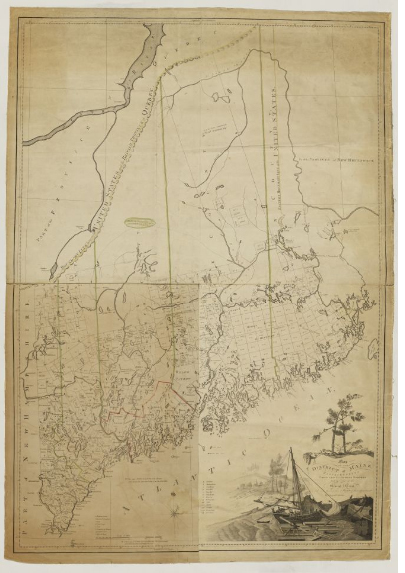
This Sunday, 15 March, marks the 200th anniversary of Maine’s statehood.  Maine had been a district of Massachusetts since the 1650s, and though secessionist sentiment was strong in the district from shortly after the Revolution, it was not until 1819 that Massachusetts allowed Maine to become its own state. The move was formalized in 1820 as a part of the Missouri compromise.

Osgood Carleton Map of Maine
Map of the District of Maine, Massachusetts; Compiled from Actual Surveys made by Order of the General Court. Map by Osgood Carleton; engraved by J. Callender and S. Hill.

Some of our collections explore the relationship between Maine and Massachusetts, including Maine’s journey to statehood. One such collection is the Vaughan Family Papers. Ebenezer T. Warren, the father-in-law of William Manning Vaughan, was a lawyer and politician who lived in Hallowell, Maine in the first quarter of the nineteenth century. Much of his correspondence discussed the developing statehood of Maine. When the Society’s library reopens, consider stopping by to check it out!

In the meantime, take a look through some of our online resources. Can you find any Maine connections?

“Adventures by Sea & Land”: A Disabled Veteran Tells His Own Story

by Susan Martin, Processing Archivist & EAD Coordinator

Part of my job cataloging manuscripts here at the MHS involves revisiting older catalog records to improve descriptions and access. I recently revised the catalog record for the Lewis Augustine Horton papers, which the MHS acquired back in 1988, and I found a lot more in the collection than I’d expected.

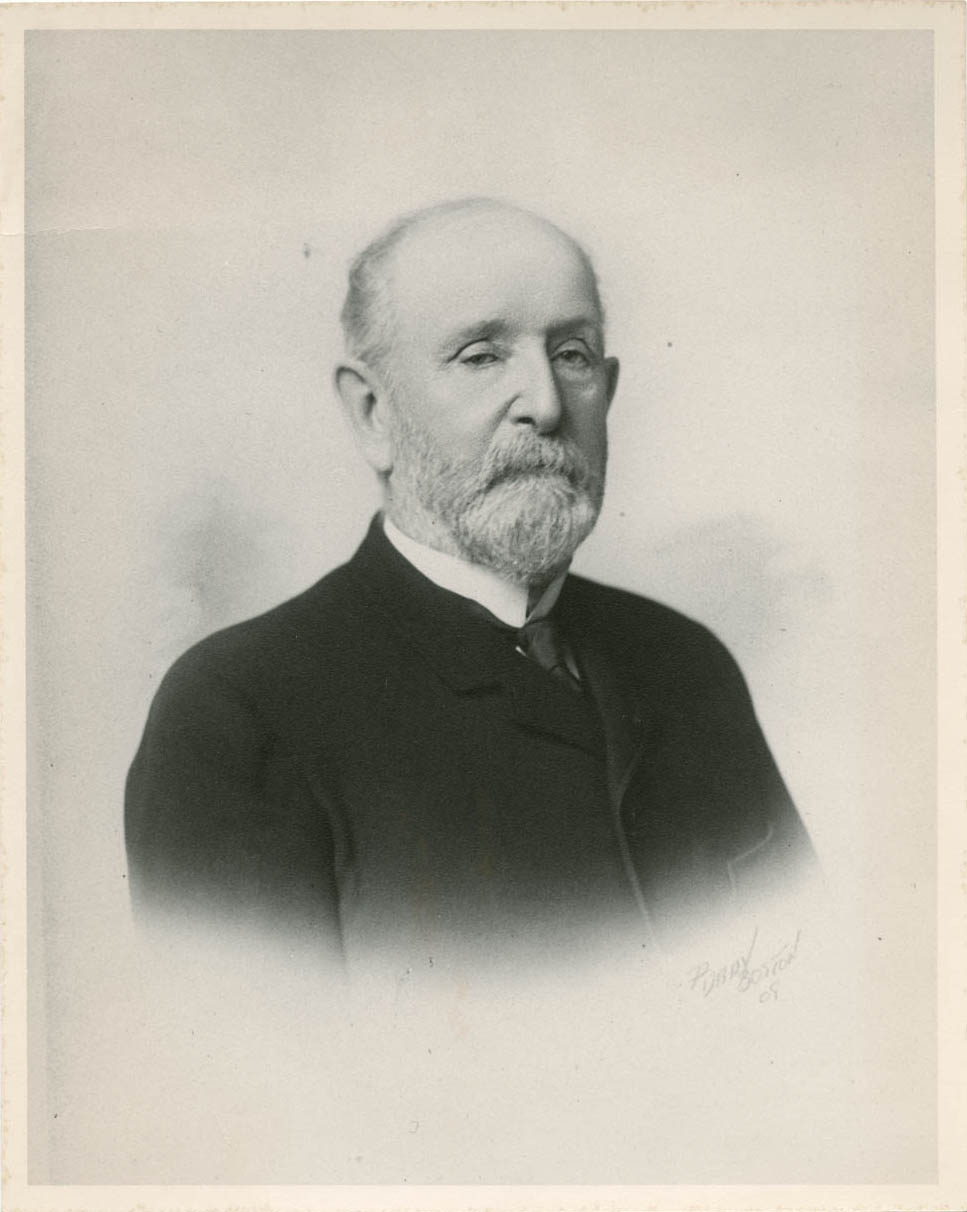
Portrait of Lewis Augustine Horton, 1908
Lewis Augustine Horton, 1908

Horton served in the Union Navy during the Civil War, and his story is really remarkable. He received the Congressional Medal of Honor for helping to save the lives of crewmen of the U.S.S. Monitor when it sank in a storm on 30 December 1862. He spent some time as a prisoner of war, including at the notorious Libby Prison. And on 3 November 1863, he suffered a terrible accident on board the U.S.S. Rhode Island, when a cannon he was loading discharged prematurely and blew him backward into the sea. Miraculously, he survived, but his arms were so badly injured they had to be amputated above the elbows.

On 24 March 1864, Lewis Horton married Frances Goodwin, and the couple had three children: Florence, Luella, and Aubin. Lewis was an avid yachtsman and worked for many years at the Boston Custom House, dying in 1916 at the age of 74.

The papers include very little original manuscript material. The bulk of the collection consists of a typed manuscript and photocopies of secondary material, somewhat disorganized but apparently compiled for a biography of Horton that was never published. The manuscript was written by “Mrs. Lewis A. Horton”—not Horton’s own wife, but Lois Ormes Horton, the wife of his grandson and namesake. It probably dates from the second half of the twentieth century.

Lois made a few factual errors in her biography of her grandfather-in-law—for example, his middle name and the date of his death—but she very helpfully annotated most of her material and identified images with captions. She was also the person who donated the papers to the MHS 32 years ago.

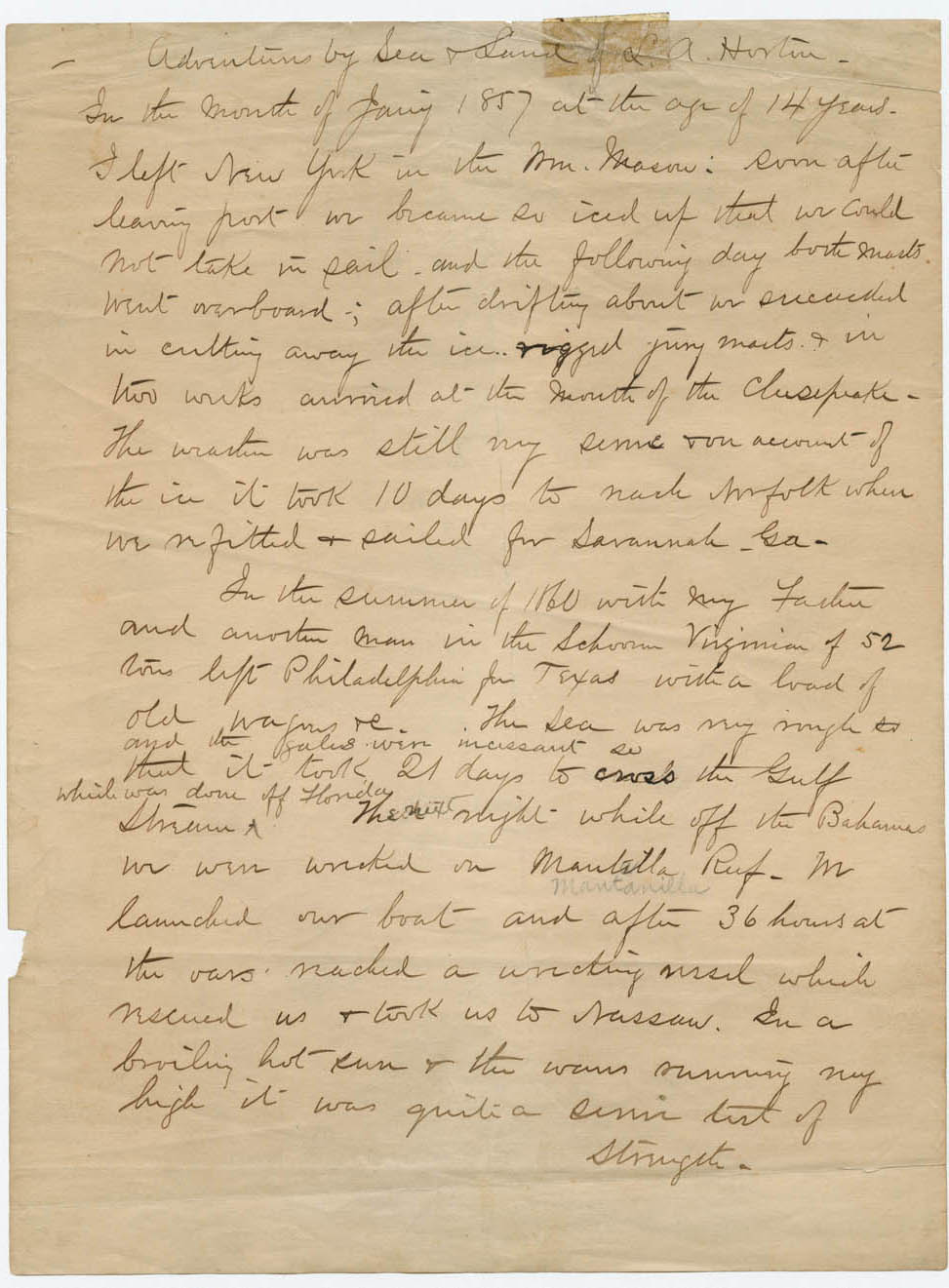
The most intriguing item is a 16-page original manuscript titled “Adventures by Sea & Land, L. A. Horton.” It begins: “In the month of Jan’y 1857 at the age of 14 years I left New York in the Wm. Mason…”

Page from “Adventures by Sea & Land” by Horton
First page of “Adventures by Sea & Land”

The manuscript describes incidents in Horton’s life, particularly during the war, but the fact that it was written in the first person gave me pause. Was this a transcription by Lois? A dictation? At first I missed its significance. Then I came across a newspaper clipping about Horton from the Boston Sunday Herald, dated 27 December 1959. One passage mentions a memoir: “the now-faded pages on which [Horton] had penned a modest account of his Civil War days.”

Could this be a reference to the very same pages I had in front of me? On closer inspection, I saw that the writing didn’t match Lois’s at all. I did a little more research and found several sources asserting that Horton could, in fact, write very legibly—by holding a pen in his mouth. But I still wasn’t sure I could definitely attribute this particular manuscript to him.

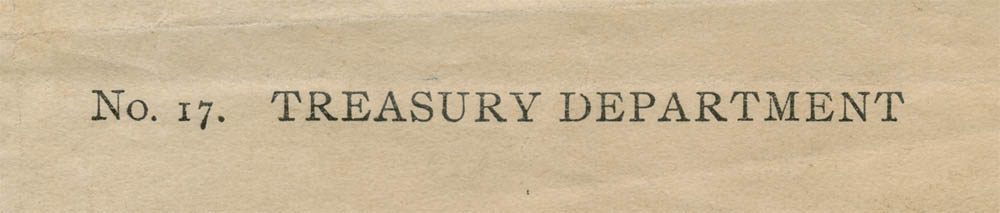
Two final clues clinched it for me. First, a photocopy of an 1870 document (Horton’s application for reimbursement for prosthetic arms) contains very similar writing. And second, the memoir is written, in part, on letterhead of the U.S. Treasury Department, the agency that administered the customs service and therefore Horton’s employer.

Stationery used by HOrton
Detail of stationery used for Horton’s memoir

Here are a couple of excerpts to whet your appetite:

The name of one brute is indelibly impressed upon my mind as one of the officers of the prison. He was a brother of the wife of President Lincoln, Lieut [David Humphreys] Todd; usually drunk he thought nothing of sticking a man with his sword if his orders were not immediately obeyed.

[After the accident in which he lost his arms] The first impression was that I was torn into a thousand pieces, but coming to the surface & treading water, kept up until a boat could reach me & rescue me just in time, for I was growing weak from loss of blood & the sharks were attracted by the blood.

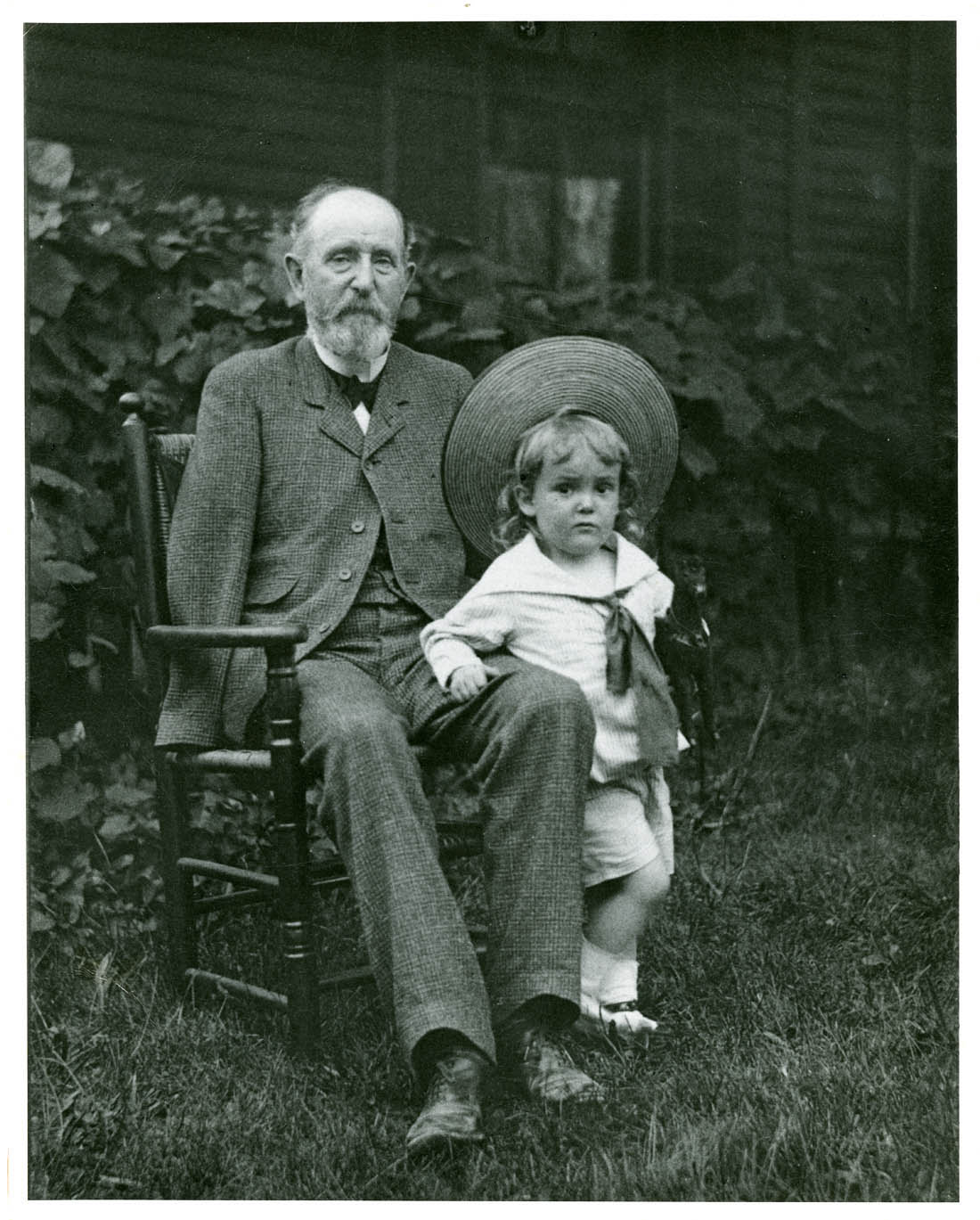
The 1959 Herald article indicates that Horton’s grandson, Lewis Aubin Horton, inherited the manuscript. When he died in 1973, it passed into the hands of his widow, Lois.

Photo of Horton and grandson ca. 1903

Lewis Augustine Horton and his grandson Lewis Aubin Horton, ca. 1903

For more information about Lewis Horton, I recommend this terrific piece by William F. Hanna of the Old Colony History Museum, published just two months ago. And of course, please visit the MHS library to look at the collection yourself!

Revisiting the Boston Massacre, 250 Years Later

by Laura Williams, Visitor Services Coordinator

When thinking back on the American Revolution, we return to the state of Massachusetts, its capital city of Boston, and the numerous pivotal events that took place there which shaped American history. One such event which comprises this famed coup is the Boston Massacre of 1770. A present-day popular tourist stop along The Freedom Trail, the site of the Boston Massacre is preserved for all to see in a rough recreation outside The Old State House. This momentous confrontation between British soldiers and the citizens of Boston marked a turning point for the American people and the beginning of a series of battles for independence from the British regime. After 250 years, we at the MHS are commemorating this event and highlighting pieces from our collections within the exhibit, Fire! Voices of the Boston Massacre, on display through June 2020.

On the evening of 5 March 1770 on King Street in Boston, a small riot among the civilians led to bloodshed when British soldiers fired into the unruly crowd. With five of those civilians killed and others injured, the event soon became known as the Boston Massacre. This event was preceded by many clashes involving the British soldiers stationed in Boston and the growing tension and unrest surrounding the British tax acts on the American people. Boston citizens were already participating in nonconsumption and nonimportation efforts; the fight between Tories and Patriots was growing; and the British soldiers who were meant to protect the Customs Commissioners had long been wary of their place there.

Witnesses of the Boston Massacre share their experiences of that fateful night in this video from the exhibition:

Notably, only two of the eight British soldiers who were arraigned were found guilty of manslaughter (rather than murder). This verdict sent waves through the community, and yearly commemorations of the occurrence would follow in Boston until 1783 when the celebration of Independence Day would take precedence. Had the events on the evening of 5 March been prevented, many other historic clashes including the Boston Tea Party, Battle of Bunker Hill, etc. may look very different today. This violent culmination of tension between Bostonians and the British played a significant role in the larger sentiment among the entire country.

Included in our collections are artistic renditions of the event itself, letters, diary entries, court documents, and many more pieces which describe and manifest the “Massacre” and its legacy 250 years later. With sources such as these, we are able to recognize the larger impact that this event had on the American population and the road towards the American Revolution. Our additional companion websites which accompany our exhibition are linked below, and explore a detailed history of the various events leading up to the Massacre, the many perspectives of the American citizens, and finally the consequent forging of the nation. The exhibition is on display at the MHS through 30 June 2020, Monday Wednesday, Thursday, and Friday from 10:00 AM to 4:00 PM, Tuesday from 10:00 AM to 7:00 PM, and Saturday from 10:00 AM to 3:30 PM.

Companion websites:

Commemorating the 250th Anniversary of the Boston Massacre

Perspectives on the Boston Massacre

The Coming of the American Revolution: 1764 to 1776

The Kass Teacher Fellowship 2019: Locating New England Loyalists in the Archive

by Kate Melchior, MHS, and Michael Ryan

Every year, the MHS awards the Kass Teacher Fellowship to one or more K-12 educators. The is designed to offer K-12 teachers the opportunity to focus on historical research that will support their classroom efforts, discovering new primary sources to use in their classroom and deepening their understanding of history and humanities.

In 2019, Michael Ryan of Pollard Middle School in Needham MA was awarded a Kass Fellowship to pursue research into the Loyalist experience during the Revolutionary War.  Michael spent several months pouring through the MHS archives and creating a new collection of primary sources for teachers to use when teaching the Loyalist experience.  Here we have shared excerpts from Michael’s final report on his experience and his findings at the MHS.

The Experience of New England Loyalists During the Era of the American Revolution
Michael Ryan

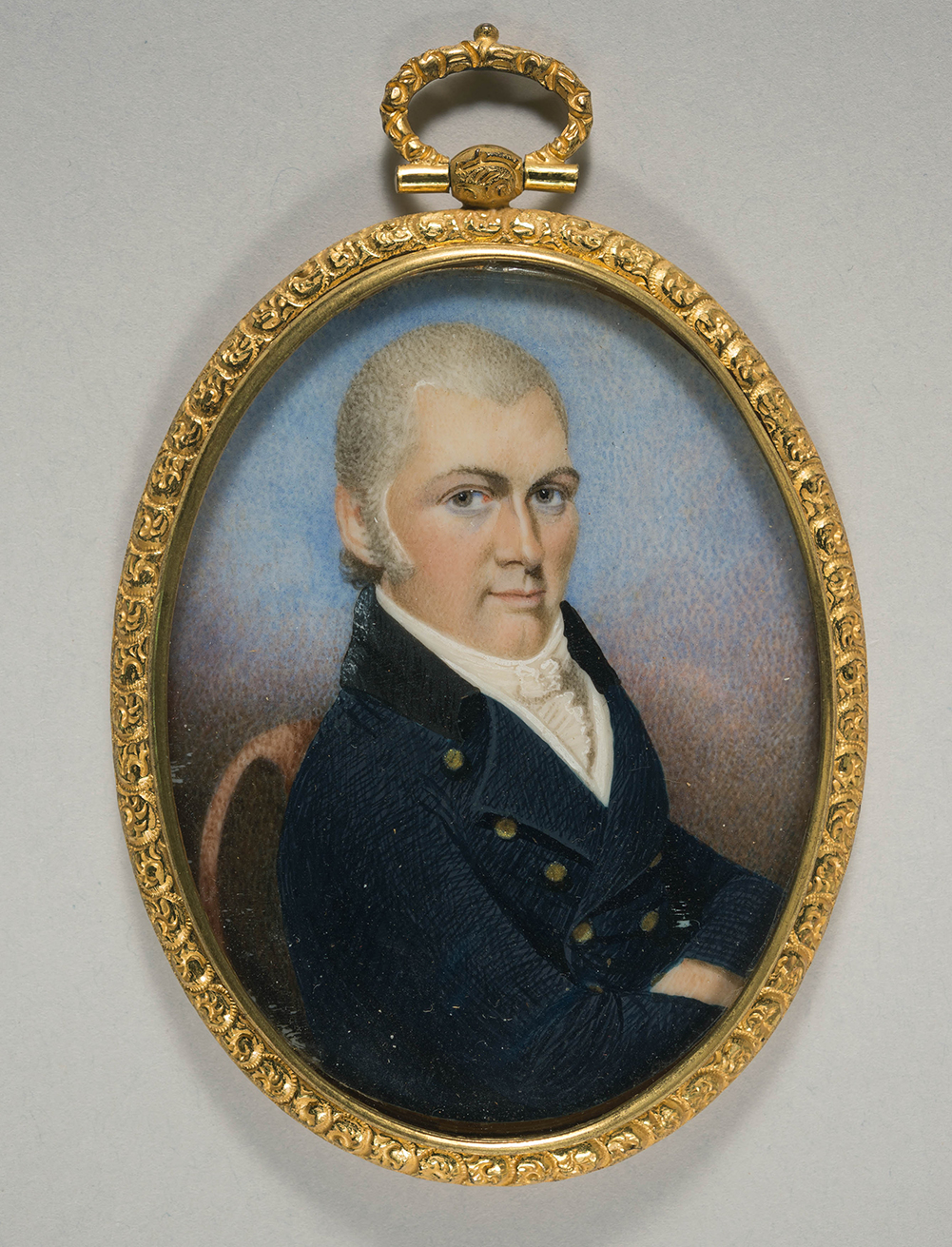
Miniature portrait of Capt. Israel Williams
Captain Israel Williams, unidentified artist, c. 1800-1810


In the summer of 2019, I was awarded a Kass Fellowship to conduct research at the Massachusetts Historical Society. My proposed topic of research was the New England loyalist experience during the era of the American Revolution. The time that I spent at the MHS was one of the great experiences of my life.

As an instructor, I knew that I had never successfully integrated the loyalist story into my class narratives. One of my professional objectives is to present a complex, nuanced version of history—rarely can we understand events or people in simplistic terms. However, my own understanding of loyalism was itself superficial so I needed to learn more before I could genuinely attempt to construct meaningful lessons on the subject for my students. This past summer allowed me the opportunity to methodically dig through the incredibly rich archives held by the MHS on the topic. I accumulated a large amount of primary sources that I can use directly in the American History class that I teach in the Needham Public Schools. I am currently curating these documents into a collection that can be used in Needham classrooms.

In the following paragraphs, I briefly summarize several of the archives that I consulted for this project.

Meshech Weare Papers

Meshech Weare was perhaps the most active New Hampshire Patriot leader during the American Revolution. Throughout the war, he served as head of New Hampshire’s committee of safety, a position from which he corresponded with some of the most prominent figures of the era. After perusing Weare’s papers, I chose four different documents that I believe are illustrative of some of the larger themes of the war. The first two, while they do not focus upon loyalism directly, they offer evidence of the  overwhelming amount of responsibilities that committees on the home front were forced to address.

The first is from July 23, 1777, and is a letter from Weare to a Lieutenant Colonel Wentworth. It is alarmist in nature as it tells of a planned British naval attack on “some part of the New England states” and that Wentworth should prepare his men for this. Of course, such an attack never occurred and this is why the letter is invaluable. It reminds the reader that very little about this war was indeed inevitable and various scenarios could have played out, possibly changing the outcome of the war. Leaders like Weare had to be hyper-vigilant against all potential attacks.

In September of 1777, Weare received a letter from an officer in Philadelphia. The topic concerns the recent Congressional resolution that commissioned tickets for a lottery. It makes dire reference to the fact that if this undertaking failed it would “have a most unfavourable impact upon our public affairs…it will wound our public reputation, discourage our Creditors at home and our friends abroad and be argued by our enemies of our weakness.” This document offers evidence that financing was a major concern throughout the war, and that as early as its third year Patriot leaders were greatly concerned about the detrimental effect of a poor public credit.

An undated letter to Weare from the town of Derry’s Committee of Safety addresses the complexity of identifying and punishing potential counterrevolutionaries. A man by the name of Benjamin Hall was imprisoned for desertion from the Continental Army and his alleged pro-British sympathies. Hall was apparently to be released on bail, but the four men on the Derry committee pleaded with Weare to reconsider this action. Weare, as head of the state’s committee of safety, had the executive authority to overrule this decision. In their strongly-worded letter, the Derry group argued that Hall “ought not to be Liberated…as we find he is to the Great Grief and Dissatisfaction of every true friend of America.” Although I could not determine how this matter was resolved, this document helps us understand the Revolution as civil war; neighbor against neighbor and the gray area that existed between people who simply wanted no part of the conflict and those that were called out as Tories.

Finally, on June 22, 1778, Weare sent a letter, under a flag of truce, to the Royal governor of Nova Scotia concerning prison exchange, a topic rarely referenced in textbooks or survey courses. It is important because it addresses one of the many logistical challenges faced by both armies. Once prisoners were taken, how did those in charge locate and administer adequate facilities? The logistical challenges faced by the war’s leaders are usually ignored, yet students tend to be fascinated by this information. Weare was eager to conduct an exchange with his British counterpart, requesting that an American officer by the name of Sherburne return from the meeting with as many American prisoners as he “can conveniently bring home with him.” In return, he promised that the same number of equal ranks” would be returned to the British.

The Israel Williams Papers

Massachusetts native Israel Williams exited the French and Indian War as representative of the brilliance of the imperial relationship. A colonel in the militia, Williams demonstrated great managerial skills in his majesty’s campaign to permanently expel the French from North America. His correspondence from the war portrays an individual who, if his passions had taken him in a different direction, may very well have ended up among the pantheon of local Founding Fathers. However, as his correspondence with Thomas Hutchinson indicated, he would choose the path of loyalty to empire.

These documents I will excerpt for use in my class to illustrate the complexity of choosing sides during the conflict. In 1778 a committee of safety in western Massachusetts charged Williams with a plan to “to obstruct and hinder all Salutary measures which the People universally throughout this Continent have adopted and are adopting to obtain a restoration of their constitutional rights and privilege.” Williams was placed under house arrest and spent over a year in this state of ostracization and ridicule. The documents relating to Williams’s experience are fantastic as they convey a man who honestly believed that he had committed no act of transgression, and that prior to the crisis, had presumably been exalted as a hero in his community. Fascinatingly, Williams did rehabilitate himself and did reintegrate into post-war Massachusetts society. It is important for students to recognize that after the war, not all Loyalists self-exiled or remained that way—former adversaries had to learn to live as neighbors once again.

Mary Robie-Sewall Diary

Box three of the Robie-Sewall papers contains the 1783 diary of teenager Mary Robie, the daughter of Boston merchant exiles living in Nova Scotia. This is apparently the original copy and it is fascinating as it offers a snapshot of loyalist life that is largely unconcerned with either of the great political questions that would have preoccupied her elders at the time: The Treaty of Paris and the manner by which, if indeed at all, her people would reintegrate into the life of their former community of Boston, Massachusetts.

I went through the entire six months of the extant diary and selected excerpts that I believe give a fairly representative view of Mary’s experiences and feelings during her exile. Not surprisingly, Mary writes often of her close relationship with both her family and fellow exiles so her reflections paint a detailed portrait of the daily experiences of  Bostonians living in exile as they anxiously awaited whether they would return “home” and become citizens of this new republic whose cause they had earlier spurned.

Other Loyalist Research

The following research also produced sources and stories about the Massachusetts loyalist experience. I will include selections from each in the booklet that I create for classroom use:

  • Winslow Family Papers, Correspondence, 1775. (Boxes 1 and 2.)
  • The Charles Ward Apthrop Papers, Correspondence, 1773-1791. (Box 3)
  • Boylston Family Papers, Correspondence, 1775. (Box 7)
  • King’s Chapel Records, founding through reorganization after the war. (Box 5) Savage Family Papers, 1775-1799. (Boxes 1, 2, and oversized.)
  • Richard Frothington Charlestown Papers, 1812-1880. (Box 3)
  • Divided Hearts: Massachusetts Loyalists 1765-1790: A Biographical Directory


If you are interested in learning more about the Kass Teacher Fellowship or any of our other programs, please visit the Center for the Teaching of History website or e-mail us at education@masshist.org.  We look forward to hearing from you!

Brattleboro Weekly News

by Florentina Gutierrez, Library Assistant

Browsing through processed archival collections can sometimes lead to unexpected surprises. Recently, I was going through a box of the Channing Family Papers (1685-1956), looking for a particular letter that a patron inquired about. Because I did not have a specific date, only subject matter and year range, it meant looking at almost every document that met those general criteria. Out of the countless letters, a five-page long handwritten newspaper stood out to me.

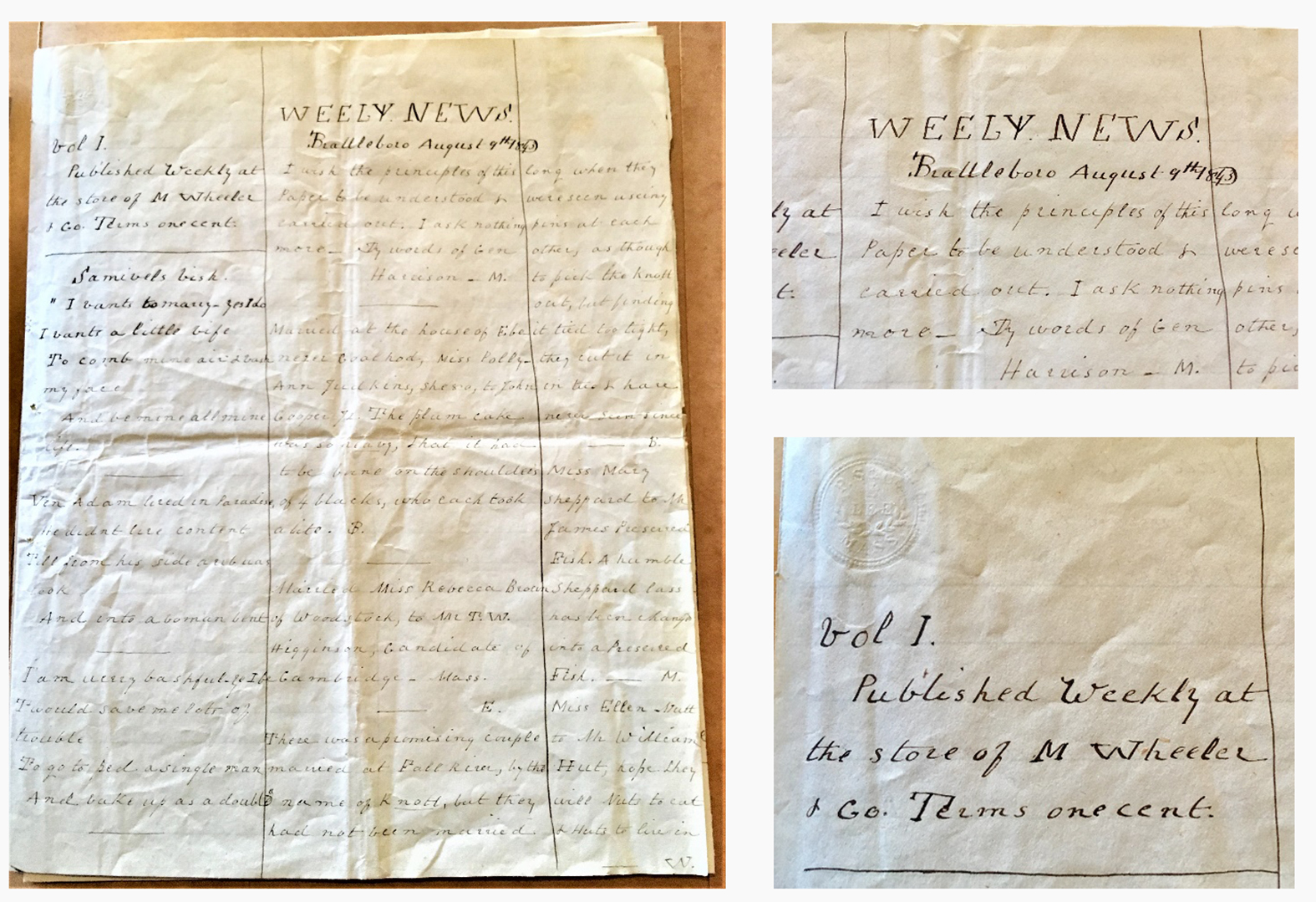
I have never seen a handwritten newspaper, outside of the context of an elementary school assignment where I was asked to create one. The top of this particular newspaper says “Weekly News: Brattleboro” and was dated August 9th, 1843. Below that, to the left, it also says “Vol. I. Published Weekly at the store of M. Wheeler & Co. [Terms?] one cent.” At first, I thought that perhaps someone in the town of Brattleboro produced handwritten newspapers to distribute throughout the town, which I could only imagine was extremely time consuming. I wondered, how many copies of these were written? And were they written every week?

Weekly News: Brattleboro
Image of Weekly News: Brattleboro, August 9th, 1843. from Channing Family Papers (1685-1956).

Actually, a handwritten newspaper is not such a crazy idea, even after the invention of the printing press. There are many examples of handwritten newspapers from the 19th century, some were likely created because of a lack of resources, and others perhaps because they were considered the most appropriate way to communicate. I found some examples at The Handwritten News Project website; the ones referenced there are mainly from North America and date to the 19th century.

Reading through this newspaper, it quickly became apparent that this was not meant as a particularly serious/factual “newspaper” and was likely not one that was distributed to the public. The contents of it are varied, including marriage announcements, short stories, advertisements for goods and services, and lost and found items. Nevertheless, weaved among what appear to be real events in the town are a lot of snippets clearly meant to come off as humorous and witty, and that are overall quirky.

Here are a few lines, transcribed as they were written in the document:

“Miss Ellen Nutt to Mr. William Hut, hope they will Nuts to eat & Huts to live in. -W.”

“Sale at the store of Peter Grimes a wonderful mixture, which will not only make persons sneeze, cough, laugh, & cry at pleasure, but it effects the heart so deeply as to make a man fall in love with the first girl that goes round the corner. -B.

I can bear witness to the efficacy of Peter Grimes medicine, for I never should have been married, if I had not turned the corner. -Ellen Hut.”

“I have got a darned hole in my stocking [Mom?]… I am very glad my son, I shall not have to mend it. -M.”

“Lost a beautiful white cat, with blue spots, & a black tail, anyone who finds it, shall be rewarded with a bite from the cat. -Lizzy.”

“Just published, the life of the remarkable man, who waded across Charles river & was drowned just as he was getting in to the stage on dry land. -Reb.”

“Fire broke out at Melissa Simons’s, it broke out in the toe of her shoe, for she was in the habit of keeping her matches inside of her shoe. -M.”

“I am not as cool as I ought to be, as the boiled cucumber said. -W.”

Almost every section is signed off with an initial. The ones appearing most often were B, M, W. Reading through the Channing Family Paper collection guide, it is likely that those initials refer to Barbara H. Channing (1786-1876) and William Ellery Channing (1817-1901), both the children of Dr. Walter Channing, and to Mary E. Channing Higginson, related to the Channings by marriage and with who Barbara may have been close to as there is remaining correspondence that was sent between them.

While the newspaper is not addressed to anyone in particular, I think it likely was meant as a type of letter to a close relative or friend of the Channings in order to provide them with an update/”gossip” of the town. In a time without texting or social media or even the ease of transportation we currently enjoy, it makes sense that people would find creative ways to communicate with each other while having a little fun.

If you are interested in learning more about handwritten news, you can check out a list of resources put together by The Handwritten News Project here.