
An Anxious Christmas

By Amanda M. Norton, Adams Papers

Christmas 1798 was an anxious one for the Adams family. President John Adams faced a new congressional session and the continued threat of war with France, a presidential cabinet of unknown loyalty, and a fiercely partisan Congress. The situation in his personal life was scarcely more cheery—John marked the day alone in Philadelphia as his dearest friend, Abigail, recuperated from a life-threatening illness in Quincy, and winter weather making her joining him unsafe. Moreover his youngest son, Thomas Boylston, was overdue to arrive in a winter voyage across the Atlantic home to the United States after over four years in Germany.

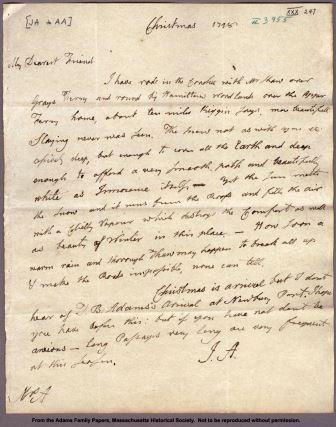
John had already written to Abigail once on Christmas morning, but picked up his pen a second time later in the day. While the upcoming volume of Adams Family Correspondence will include the first of these letters as it is more detailed and substantial, this second letter will be omitted. In his brief second letter, he told her about the ride he took through what he describes as a picturesque winter wonderland around Philadelphia on a sunny day. He also tried to reassure Abigail from afar that there was no need to worry if no news of their son’s arrival had yet reached her:

I have rode in the Coaches with Mr [William Smith] shaw over Grays Ferry and round by Hamiltons Woodlands over the Upper Ferry home, about ten miles [James] Kiggin says. more beautifull Slaying never was seen. The snow not as with you excessively deep, but enough to cover all the Earth and deep enough to afford a very smooth path and beautifully white as Innocence itself. Yet the sun melts the snow and it runs from the Roofs and fills the air with a Chilly Vapour which destroys the Comforts as well as beauty of Winter in this place.— How soon a warm rain and thorough Thaw may happen to break all up & make the Roads impossible, none can tell.

Christmas is arrived but I dont hear of T. B. Adams’s Arrival at Newbury Port. I hope you have before this: but if you have not dont be anxious—long Passages very long are very frequent at this season.

Although the Adamses did not celebrate Christmas the way it is commonly celebrated today, it was still a day that brought a short respite from work if not from worry with an eye toward an approaching new year.


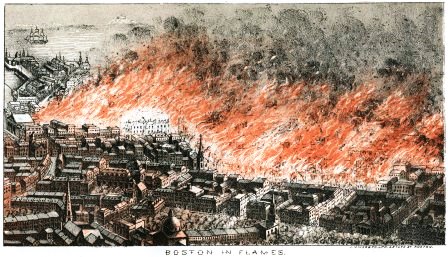
“A fearful time for old Boston”: The Great Fire of 1872

By Susan Martin, Collections Services

It was with extreme surprise and pain that I learned on going out onto the street yesterday morn of the extensive conflagration sweeping th[r]o the business part of Boston. It seemed impossible that fire could get such headway among those solid granite buildings which one would think were almost fire proof.

This passage comes from a letter in the new MHS collection of Hatch family papers. It was written by Charles H. Hatch in St. Paul, Minn. to his brother Edward on 12 November 1872, two days after the Great Boston Fire devastated much of the city’s financial district. Edward worked for Allen, Lane & Co., dry goods commission merchants on Devonshire Street. He wasn’t hurt in the fire, which broke out shortly after 7:00 p.m. on a Saturday night, but Allen, Lane & Co. lost $250,000.

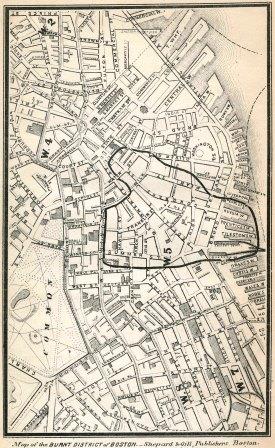
Here’s a map of the affected area from The Story of the Great Fire, published by Shepard & Gill in 1872, and an artist’s rendering from Russell H. Conwell’s History of the Great Fire in Boston (1873).


Charles Hatch was suffering from an unspecified illness, possibly consumption, and had only recently left Boston for the Midwest. He regretted being so far away from his older brother Edward, affectionately nicknamed “Boz.”

The fire & its results form the chief topic of conversation here and all manifest the deepest sympathy for suffering Boston and take the greatest interest in the reports as they come. […] I wish I had been there during the fire Boz and wish I was even now. It must have been a grand and terrible sight.

Eager for news and frustrated by “somewhat conflicting and very vague” accounts, Charles wrote again at 8:00 a.m. the following day.

Dear Boz I can hardly realize that the best part of the business centre of Boston is a pile of smouldering ruins. The news comes so contradictory and uncertain that I scarce know what to believe. It is a terrible blow to Boston and it must take a long time for her to recover from it. […] I am waiting most anxiously a letter from you to know how and to what extent you will be affected by it.”

Other MHS material related to the Great Fire includes letters in the Higginson family papers II. On 10 November, James J. Higginson in New York wrote to his father George, “I scarcely know what to say to you in face of the horrible tidings that the news-boys are shouting in one’s ears.” The next day, he complained, “The most alarming rumors were spread around here yesterday, and even late in the evening very little seemed known accurately.”

Some of the most detailed descriptions of the fire and its aftermath come from the journals of merchant William Gray Brooks. Unlike Charles Hatch and James Higginson, he wrote as a first-hand witness to what he called “a fearful time for old Boston.” His entry for 16 November 1872 reads: “One week this evening since the great fire. What a week! The ‘burnt district’ is still smouldering and smoking and the walls are being taking [sic] down.”


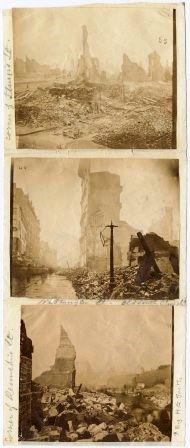
(These three photographs are taken from the Wigglesworth family photographs II. The third depicts Devonshire Street, the street on which Edward Hatch worked. See also our before-and-after stereoviews of Pearl and Washington Streets.)

While laborers worked to clear the rubble and relief efforts got underway, residents feared the fire’s return. In fact, two additional fires did break out, one on 19 November near the Custom House and another the next day in Cornhill, very close to Brooks. He wondered in his journal if Boston was a “doomed city.” However, the streets thronged with visitors, and the financial district was soon rebuilt.

On 26 November 1872, Mayor William Gaston appointed a commission to investigate the cause and management of the fire, as well as factors contributing to its spread. The commission’s report begins:

The fact is painfully familiar, that on the 9th of November last, on a calm and mild evening, a fire broke out in the building numbered 83 and 85 Summer Street, and raged without control till the afternoon of the following day, spreading through the best business portions of Boston, covering sixty-five acres with ruins, destroying 776 buildings, assessed at the value of $13,500,000, and consuming merchandise and other personal property estimated at more than sixty millions of dollars. (p. iii)

Unfortunately…

To the more important question how the fire began, no answer can be given. There is no evidence whatever criminating any of the occupants of the building, nor is there anything to show that it caught from the furnace or the boiler, except the fact that it began in that portion of the building. (p. iv)

Brooks probably spoke for many Bostonians when he wrote in his journal on 30 November 1872, “The last day of November, a month that will mark an era in the history of Boston. What a different city it is since the beginning of the month.”

Christmas with the Poets: Traditions and Superstitions

By Shelby Wolfe, Reader Services

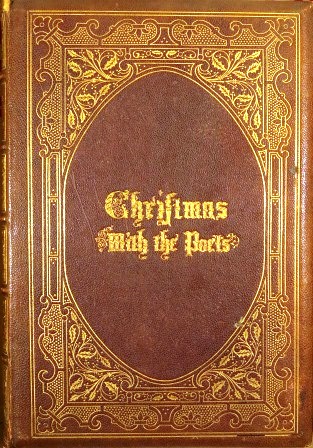
Now that it’s December and Thanksgiving is long behind us, we’re hopefully in the clear to indulge in Christmas songs. To get in the holiday spirit, I pulled out our copy of Christmas with the Poets, a selection of “songs, carols, and descriptive verses relating to the festival of Christmas, from the Anglo-Norman period to the present time,” edited by Henry Vizetelly and published in 1851. 


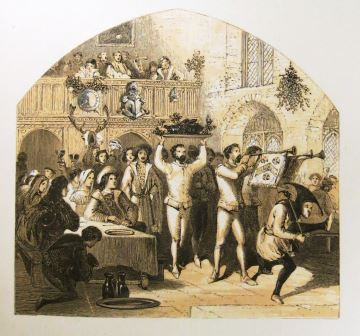
Along with the traditional carols celebrating the birth of Jesus and festivities of the season, the collection includes lesser-known songs and poems with their own weight of tradition. One section I found particularly interesting is aptly titled “Boar’s Head Carols.” The editor notes, “There is no more interesting, and, by the way, no more hacknied, feature connected with the celebration of Christmas in the olden time, than the custom of bringing in the Boar’s Head with minstrelsy.” Regal banquets served the boar’s head ceremoniously as the first course, a tradition which is said to have originated at Queen’s College, Oxford.


Another unusual selection of poems falls under “Superstitions regarding Christmas Day.” Vizetelly introduces two poems from the same Harley manuscript at the British Library with the note, “The following poems are, perhaps, more curious than interesting.” As Christmas falls on a Sunday this year, here is a superstitious warning for us:


If Christmas day on the Sunday be,

A troublous winter ye shall see,

        Mingled with waters strong ;

Good there shall be without fable,

For the summer shall be reasonable,

        With storms at times among.


Though this may sound somewhat ominous—and bringing up the notion of a “troublous” winter in New England is probably a dangerous thing to do—these are mild predictions compared to the superstitions that follow. I won’t get into the details, but the succeeding verses throughout the week involve increasingly harsh weather, shipwrecks, pestilence, sickness, and death.

Vizetelly’s collection of poems ends with Alfred, Lord Tennyson’s “The Death of the Old Year.” Throughout the poem, a personified “Old year” lies dying as the poem’s speaker reminisces on his fading friend. The final stanza reads:


His face is growing sharp and thin.

            Alack! Our friend is gone.

Close up his eyes : tie up his chin :

Step from the corpse, and let him in

            That standeth there alone,

                        And waiteth at the door.

                        There’s a new foot on the floor, my friend,

                        And a new face at the door, my friend,

                        A new face at the door.


Visit the library to read carols, poems, and songs from Christmas with the Poets and similar books in full, and best wishes for a festive final month of 2016 before the year comes to a close!


Margaret Russell’s Diary, December 1916

By Anna J. Clutterbuck Cook, Reader Services

 Messianic Era (1919) by John Singer Sargent (1856-1925). Boston Public Library.


Today, we return to final month of 1916 in the line-a-day diary of Margaret Pelham Russell (1858-1924). You can read previous installments here:

January | February | March | April | May | June | July | August | September | October | November

The final month of 1916 ends on a quiet and rather somber note for Margaret Russell. She remains close to home and although she enjoys a regular schedule of social calls and cultural events she also struggles with a “bad throat” and worries about the health of an ailing friend Mrs. Hodder. Interspersed with notes about botany lessons and concerts and club activities is the terse notation, “Paper says Germany suggests peace.” The newspaper was reporting on a public offer to negotiate made by Germany and her allies in early December. The war would continue for almost two more years until the armistice of 11 November 1918 finally brought an end to the fighting.

Margaret spent Christmas Eve and Christmas Day at charity events — a tree at the House of the Good Samaritan on the 24th and another at Massachusetts Eye & Ear infirmary on the 25th. She attended church services both days and dined with family and friends.

The day before New Year’s Eve, Margaret Russell goes down to the Boston Public Library at Copley Square to view the latest murals painted by John Singer Sargent, works that would eventually become part of his piece Triumph of Religion (1890-1919). “Messianic Era,” depicted above, is one of the ten sections installed in 1916.

 * * *

December 1916*


1 Dec. Friday – Church. Errands. Took a drive & paid some calls.

2 Dec. Saturday. The H.G.C’s went with me to Worcester to see Art Museum & lunch at the Bancroft. Nice day.

3 Dec. Sunday. Church – took walk with Georgie. Lunched H.G.C’s. Mr. Woods came to see me. Family to dine, all but Nellie who is ill.

4 Dec. Monday – Hosp. Meeting, Mary, lunch with Marian. First botany lesson then walk with Miss A–.

5 Dec. Tuesday – First Friday Club Meeting. Left early & went to hear Morton P. lecture. Walked home with F. P.

6 Dec. Wednesday – Went out to see Steve[illegible] & then a few other calls. Throat suddenly hurt me.

7 Dec. Thursday – First meeting of lunch club here. Felt poorly & stayed at home.

8 Dec. Friday – Had Dr. Smith who says I have a bad throat & took culture. Feverish & uncomfortable.

9 Dec. Saturday – Better but ready to stay on couch. Throat clearing.

10 Dec. Sunday – Better but not feeling like myself. Family to dine.

11 Dec. Monday – Still in the house but improving. Raining hard. Botany lesson. Fine day.

12 Dec. Tuesday – Raining hard. Dr. came for last time. Paper says Germany suggests peace.

13 Dec. Wednesday – Went out to dine & glad to be out.

14 Dec. Thursday – Chilton Meeting, walked home. Lunched early & went to Swampscott. Old stump has fallen.

15 Dec. Friday – [illegible], errands in the morning & to see Aunt Emma. Fine concert. Edith lunched & went with me.

16 Dec. Saturday – Errands, quite deep snow. Broke mud guard. To see the The Great Lover with Annie & Horatio.

17 Dec. Sunday – Church – lunched at Mr. Chapin’s with the H.G.C’s & Dr. Bigelow & Mrs. Sears. Family to dine.

18 Dec. Monday – C.D. Meeting where Nellie P. was elected. Lunched at Mariners. Botany lesson & did not go out again.

19 Dec. Tuesday – Went to the Bazaar for the first time. Tuesday Club met here.

20 Dec. Wednesday – Errands – Mrs. W’s lecture. Went to Swampscott & Nahant with bundles.

21 Dec. Thursday – Meeting at South End – lunch club at Jennie’s.

22 Dec. Friday – Wonderful concert! Light symphony with chorus & Paderewski (Schumann Con.) Frances P. went with me.

23 Dec. Saturday – Lunched at Edith Wendell’s. Delivering presents.Cold & windy. Wonderful concert with Paderewski. Mrs. Sears went.

24 Dec.Sunday – Church. Lunched at H.G.C’s. Tree at Good Samaritan at 4.30 & service. Miss Ahler went. Family to dine.

25 Dec. Christmas. Tree at E. & E. Infirmary  at 10. Beautiful service at the Cathedral afterwards. Lunched with Marian, dined at C’s.

26 Dec. Tuesday – Mary – Miss Harmen came to play. Out to see Aunt Emma & to Mabel Walker’s tea – to see Lyman children.

27 Dec. Wednesday – Raining & freezing. Walked downtown for errands. Mrs. Ward’s lecture. Lunched at club. So slippery I stayed P.M. at home.

28 Dec. Thursday – Went to Sampscott. Easy going & not cold.

29 Dec. Wednesday – Snowing & high wind – errands for a little while & then home for the rest of the day – dined with Mrs. Sears & went to the theatre.

30 Dec. Saturday – To see new Sargent pictures at the Library – out to S. Framingham to see Mrs. Hodder who is quite ill & I am worried about her. Cold.

31 Dec. Sunday – Miss A– went to the Cathedral with me. Lunched at H.G.C’s. To call on Perrys. Family to dine but only three.


* * *

I hope you have enjoyed this year in the life of Margaret Pelham Russell. If you are interested in viewing the diary in person in our library or have other questions about the collection, please visit the library or contact a member of the library staff for further assistance.
 

*Please note that the diary transcription is a rough-and-ready version, not an authoritative transcript. Researchers wishing to use the diary in the course of their own work should verify the version found here with the manuscript original.


From the Case Notes of Robert Treat Paine: The Prison Ship Riot

By Christina Carrick, Publications

Serving in his official role before the Superior Judicial Court for Suffolk County in August 1780, Atty. Gen. Robert Treat Paine prosecuted a complicated wartime case. On the docket was murder; at stake was legal precedent in a new nation. In the midst of the Revolutionary War, Paine had to confront a challenging question: should enemy combatants—or prisoners of war, in this case—be treated and tried as citizens of the country? Or should they be removed into the jurisdiction of independent military courts, subject to separate laws and rights?

In this particular situation, the homicide charge arose from a conflict between British prisoners incarcerated on a ship in Boston Harbor and the American servicemen guarding them; the conflict expanded when more Americans approached the ship to discover what was wrong. That night, August 10, Maj. John Rice took a small boat from Boston to investigate a reported riot on the prison ship. A British prisoner with a gun and bayonet leaned over the rail as Rice’s boat pulled alongside. The armed man “dam’d” Rice and “swore he wd. blow [his] brains out.” Rice quickly saw that he should take the bayonet-wielding prisoner at his word. The ship’s guards had been disarmed, and one, Sgt. Thomas Beckford, lay dead from a gunshot to the neck.

Lt. Isaac Morton later gave a detailed account of the incident:

            I was Lieut. & officer of the day.  I heard a gun fired on board the Prison ship just before sun down  I went along side heard a disturbance on board.  Serjt. said the centry was disarmed; I askd the Pris: how they fared, they sd. the Guard had not abused them Thos. Lynch damd me for a Rebel & if I came to the assistance of the Guard I was no better than they & he would throw me over board: McGregor sd. you are not better than the guard you Yankey Rogue, & struck me on the head with his fists. Michael Hay said you shall not abuse him  McGregor came with Gun & Bayonet & threatned to run me through, & threatned me to throw me over board & all of us; McGregor said he brought his Gun from Ireland, he said he disarm’d the Guards to make an Escape: Major Rice came along side, & bid me step into the boat. McGregor having a Gun in his hand sd. if you offer to go into the boat Ill blow your brains out, there was a cry of fire fire blow their brains of the damd Rebell out  Major Rice bid us shove off, they cryed on board the ship fire blow their Damd brains out & immediately they fired & a man dropt, a billet of wood then from the ships knock’d me over board


Paine’s notes on Lt. Isaac Morton’s testimony before the Superior Judicial Court

The ship ran aground near shore and multiple boats from Boston quickly suppressed the uprising. The rioting prisoners were moved from the prison ship into the city jail, where they awaited trial.

In terms of evidence, the case was straightforward: Major Rice and several guards from the ship had witnessed the riot. It was not completely clear who had fired the shot that killed Beckford, but the rioters were consistently named from testimony to testimony. The fundamental legal question was not who had fired the killing shot but whether prisoners of war should be tried in civilian court at all.

The nine defendants sent a petition to the court, claiming that they did not lie within its jurisdiction. They argued that they “ought not to be compelled to answer to sd. Indictment” because

Homicides & other offences committed by the Subjects of one State against the Government & People of another State while an open War is subsisting between them, ever have & of right ever ought to be enquired of heard & determined by the Courts Martial in the Country or place where such Homicide or Offences may be committed, agreeable to the laws of Nations & the laws of War *

In this, they insisted they should be tried in a court martial and not by “municipal laws, Customs & statutes” as American residents.

Despite their petition, the case went to trial. Paine, as attorney general, made the commonwealth’s case for prosecution. Increase Sumner, a Boston lawyer and future Massachusetts governor, argued for the defense. Sumner tried to convince the jury that since the defendants “were Prisoners by force they had right to regain their liberty by force.” This addressed another central question that hung over the proceedings: when did enemy combatants lose the rules-of-war right to act combatively? Did they have a legal or natural right to revolt against their imprisonment? These questions would not be clearly answered during the trial, but Paine scoured his legal texts to find precedent.

Paine’s notes from the case included references to many of the major legal texts of his time: Vattel’s The Law of Nations, Coke’s Reports, Hale’s Historia placitorum coronae (History of the Pleas of the Crown), and Blackstone’s Commentaries, among others. He noted from Vattel that “the right of war gives right to kill whenever they can” and from Blackstone that “an Alien Enemy is intitaled to no protection.” Nonetheless, he asked himself if it would “be murder if Congress should order all the Prisoners to be hung up at the Yard arm.”

Ultimately, the jury declared the defendants not guilty. The prisoners fade into the historical record, and it is not clear how they fared for the remainder of their captivity. The case, however, would later be cited as a supplement in the state’s Supreme Judicial Court reports, and the questions raised about the legal status of enemy combatants continued to plague the nation throughout its growing pains.

For the full trial story and Paine’s other legal endeavors, check out the Robert Treat Paine Papers collection at MHS and the published Papers of Robert Treat Paine. The Massachusetts State Judicial Archives also holds records on this case, including the above petition. Paine’s notes for this case will be printed in full in volume 4 of the Papers, forthcoming from the MHS Publications Department in 2017 thanks to a generous grant from the National Historical Publications and Records Commission (NHPRC).


*Massachusetts Judicial Archives Suffolk Files 102707, quoted with permission from the Massachusetts State Archives.


Pilgrims of Pompeii

By Sara Georgini, Adams Papers

The skeletons and the state representative first met on a warm fall afternoon in West Medford, 1862. Two day-laborers, sifting the topsoil with an ox-shovel, nearly hit bone. They ran to alert landowner Francis Brooks, a well-known lawyer and amateur naturalist. Peering over the pit in his backyard, Brooks saw raw history sewn into the earth below: five skeletons, some loose iron arrowheads, a costly-looking soapstone and copper pipe. The Brooks family had held the land—once as vast as 400 acres, now 50—since 1660, and the Native Americans lying before him all dated from the early seventeenth century.

The largest skeleton, as Francis thought, might even be that of Wonohaquaham (d. 1633).

A sachem better known as “Sagamore John,” Wonohaquaham once governed the swath of settlement that spanned Charlestown and Chelsea. Within Boston’s circle of gentleman scholars, Francis Brooks’ local find made a ripple of news. The Massachusetts Historical Society published a detailed account of the “Indian necropolis” found near Mystic Pond.

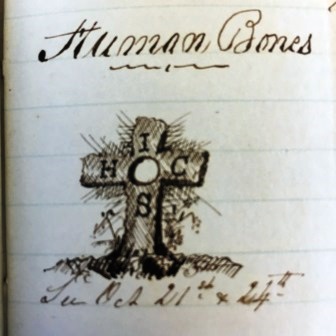
“I admit. I am all excitement for more bones,” Brooks wrote in his farm journal on 21 October. “I have now two baskets full which ornament the entry table. By and by they shall be put back to rest. With some stone over them in the old place.” Exercising “intelligent care,” he and wife Louise bundled up the bones and carried them across the Charles to a Harvard friend, Louis Agassiz, for use in his new museum of comparative anatomy. Unfazed that his ancestral estate was planted squarely in the half-hidden heart of a Native American burial ground, Francis Brooks quietly returned to farming and law.

But, when he could, Brooks (1824-1891) dabbled in digging around for ancient history. Growing up in Boston, Brooks read the eclectic popular science offerings in the antebellum press. Newspaper squibs of archeological finds and snippets of scientific lore laced through his daily headlines, alongside word of abolition, women’s rights, secession, and Civil War. Many of the articles that he saw dealt with gauging the earth’s age, by tweaking geology to conform with Protestant Christianity. Headlines included the race to decode Egyptian hieroglyphics, and the rise of learned societies to stir up “science talk.” Like many Victorian Americans who spent the century rooting around in the distant past, Francis Brooks’ first efforts were amateur but diligent. He joined a vanguard of “citizen scientists” who kept weather diaries, went on naturalist hikes, funded new museums, lingered in private “bone rooms,” and marveled at “wonder shows” of ancient mummies.

To men and women like Francis Brooks, modern science served as spectacle and oracle. Armed with the private money and public momentum needed to launch new institutions, urbane Americans like Brooks made popular science thrive, on and off the printed page. The Boston Society of Natural History opened its doors in 1830 and evolved into the modern Museum of Science. The Society swept up human crania, skeletons, botanical specimens, and a glittering array of raw minerals. At Ford’s Theatre, a floor above the box where John Wilkes Booth shot President Abraham Lincoln, curators lined shelves with specimens in 1866, forming the Army Medical Museum . But as the war claimed lives within Francis Brooks’ hometown ranks, his gaze moved past backyard finds. With Civil War America encased in ashes daily, Brooks’ focus pivoted to ancient Pompeii.

What did early Americans know of Pompeii’s history and story? From afar, Brooks and his antebellum peers savored the historical snapshot of a lush city, frozen in fallen glory. In August 79 A.D., the eruption of Mount Vesuvius destroyed Pompeii and nearby Herculaneum, swiftly burying residents and homes in 13 to 20 feet of volcanic ash. Such a sudden loss ripped at the ancient region’s heart. Staring hard through the toxic smoke barreling across the Bay of Naples to his evacuation point, Pliny the Younger said that it was “as if the lamp had been put out in a closed room.” Centuries’ worth of writers, ancient and modern alike, wrote and reframed the tragedy. By 1599, archeologists began excavating the towns’ riches. Looters followed. Overall, they found stray wine bottles, an aqueduct, bath-houses, and villas packed with papyri. Rose-red and evergreen-tinged frescoes filled the halls where 11,000 Pompeiians had lived and loved, worked and died.

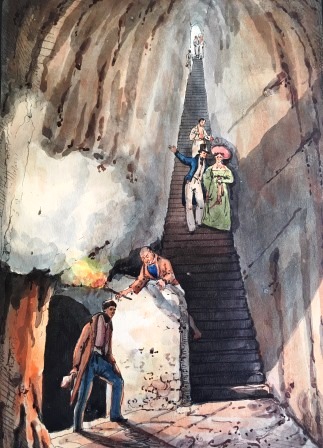
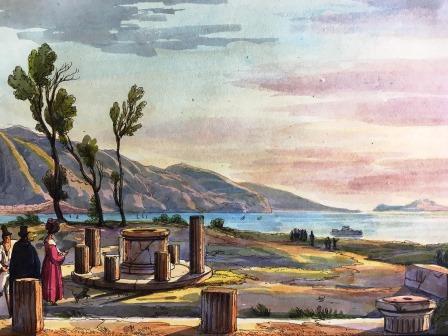
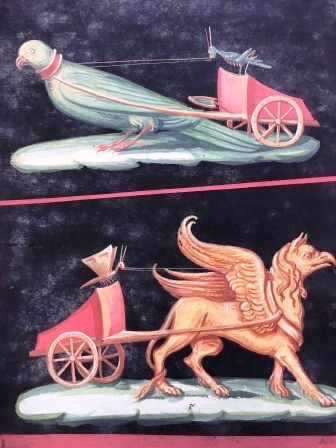
For Americans like Francis Brooks, who studied Latin and Greek classics, Pompeii was a scientific goldmine. Hiking the partially excavated city was a “must” on the grand tour of fashionable gentlemen and adventurous debutantes alike. Pompeii’s fossils of vice–brothels, pagan temples, slave chains–intrigued Victorian reformers championing temperance, Protestant values, and abolitionism. In the early 1870s, as part of a philanthropic mission through Europe, Francis Brooks finally made it to see the distant past in person. At home, he kept farm journals documenting crop growth, his children’s birthdays, and the Brahmin party circuit. Once abroad, Brooks started (briefly) a thick sketchbook, “Views of Pompeii,” held here in the Massachusetts Historical Society. There, Brooks copied foreign frescoes in precise, vivid gouache. Under his brush, the city’s half-eaten columns again soared up to a calm sky. Brooks posed his travel companions in parlor-room vignettes, making 80 paintings in total. Pompeii’s exotic panorama of pagan altars, opal sunsets, and fantastic beasts, supplied Francis Brooks with a rich backdrop for his art–and a new way to see how monuments can embody memory.

Early in autumn 1882, the skeletons and the state representative met for one last time. Several of Francis Brooks’ workers, busy digging a cellar on the West Medford estate, came upon roughly 18 Native American skeletons, including that of “Sagamore John.” Brooks’ rage for “more bones” had quieted a bit after seeing Pompeii. When he gazed out over the family grounds, Francis Brooks saw rows of potatoes and corn, plus a 70-foot-long brick wall built by slaves 200 years earlier. He added a plain granite monument, inscribed, “TO SAGAMORE JOHN AND THOSE MYSTIC INDIANS WHOSE BONES LIE HERE.” Lessons from ancient history, as Brooks learned in Pompeii, still guided modern steps. 


1816: the Year Without a Summer

By Alex Bush, Reader Services

As November wears on and the weather grows colder, many Bostonians are digging their coats and sweaters out of storage in anticipation of the long winter ahead. As if winter isn’t long enough already, imagine for a moment that temperatures started to drop in May instead of November. In April of 1815, the eruption of the volcano Mount Tambora rocked modern-day Indonesia. The blast, nearly 100 times as large as that of Mount St. Helens in 1980, sent a massive cloud of miniscule particles into the atmosphere. As the particle cloud blew its way around the globe it reflected sunlight, causing a meteorological phenomenon to which we now refer as the “year without a summer.”

From May to August of 1816, weather across the globe was unseasonably cold. It regularly snowed in New England and London was pelted with hail. It was during this freezing volcanic winter that Mary Shelley drafted the dark tale Frankenstein while on holiday in Switzerland. In his daily diary entry from July 4th of 1816, John Quincy Adams complained that he was confined to his house in London all day due to freezing rain showers and thunder. Many of his subsequent entries that summer contain similar lamentations.

There was Thunder at intervals, and Showers of rain almost incessant through the whole day… I attempted a walk; but was twice overtaken with Showers ingoing to Ealing Church and returning.

While scientists are now nearly positive that the “year without a summer” and Mount Tambora’s eruption are connected, it took until the 1970s to piece together the clues. Many people at the time blamed the volatile weather on sunspots, having seen more than usual leading up to the cold snap. By looking back at patterns in sunspots, scientists now hypothesize that while Mount Tambora’s eruption happened to coincide with the appearance of several large sunspots, the two phenomena were not connected. It is also possible that the eruption’s resulting haze allowed for easier viewing of the sun without the aid of eye protection, which led more people to notice the spots and connect them to the odd weather.

Hannah Dawes Newcomb, who endured the freezing summer weather with her family in Keene, New Hampshire, kept a diary with short daily reports on her everyday life. Starting in around May, her daily comments on the weather start to reflect the strange weather patterns of 1816.

May, 1816

13 – Cold but pleasant.

14 – Cold weather.

15 – Very cold.

16 – The weather remains very cold.

17 – Very cold, have to keep a large fire in the parlor to keep comfortable.

18 – Very hard frost last night, very cold this morning.

19 – Very cold for the season.

By July, things only get worse for the family. Newcomb seems especially concerned with the constant need to keep a fire going in the hearth. Throughout June and July, she complains of crops freezing on the vine and farm animals dying from the cold. In late July, she mentions seeing sunspots after attending church with her family.

July 6 – “Weather continues very cold – all nature appears encircled in gloom – Grass very thin.  Corn so backward it does not appear probably there will be food sufficient for man or Beast.  Our only hope arises from the promise of seed time and Harvest.  We daily keep fire in the parlor.”

Elsewhere on the East Coast, the Philadelphia Society for Promoting Agriculture held an October 1816 meeting following the destructively cold summer. The Society’s curators resolved to compile and distribute a newsletter that would aid farmers in selecting and cultivating crops that could best survive the cold, as well as provide instructions in the event of future “uncommon occurrences.”

In performing this useful service, [the Curators] will designate the Trees, Grasses, and other Plants, and especially those cultivated, on which the Season has had either beneficial or injurious influence, and the local situations in which it has operated more or less perniciously, with the view to ascertain, (among other beneficial results,) the hardy or tender Grains, Grasses, or Plants, more proper for situations exposed to droughts, wet, or frost.

Relevant MHS materials:

Hannah Dawes Newcomb’s diary

At a Special Meeting of the ”Philadelphia Society for promoting agriculture” October 30th, 1816

John Quincy Adams’ diaries

Other sources

http://www.nytimes.com/2015/08/25/science/mount-tambora-volcano-eruption-1815.html?_r=0

The Year Without Summer: 1816 and the Volcano That Darkened the World and Changed History, by William K. Klingaman and Nicholas P. Klingaman

Six Degrees of Paul Revere

By Susan Martin, Collections Services

While processing the Fay-Mixter family photographs, I came across this small tintype.


A note on the back of the photograph, probably written by a relative, identifies the subject as “Joseph W. Revere / about 18 yrs old.” I wondered if he was one of the Reveres, so I did a little genealogical research.

The Fay-Mixter photograph collection contains 277 photographs depicting members of several interrelated families, including Fays, Mixters, Spooners, Galloupes, Torreys, and others. (The MHS also holds a collection of Fay-Mixter family papers.) After building multiple family trees and tracing the intersections, I finally hit on a Revere.

There have been several Joseph W. Reveres, but this particular one is Joseph Warren Revere (1848-1932) of Boston and Canton, Mass. He was connected to the Fays, etc. through his mother, Susan Tilden (Torrey) Revere, who was the first cousin of Elizabeth Elliot (Torrey) Spooner. Elizabeth’s daughter married Henry Howard Fay.

And yes, Joseph was a direct descendant—a great-grandson—of the legendary Paul Revere. The MHS holds a portrait of Paul Revere, painted ca. 1823 by Chester Harding after a Gilbert Stuart original.


What I find remarkable is not the connection itself (eleven of Paul Revere’s sixteen children survived to adulthood, so he’s bound to have descendants far and wide), but that the connection is so recent. Joseph was the grandson and namesake of Paul’s eleventh child, Joseph Warren Revere (1777-1868). Two centuries but only four generations separate Paul’s birth in 1735 and Joseph’s death in 1932. Paul was born 20 years before the French and Indian War, and his great-grandson died in the midst of the Great Depression.

Tintype photographs were first introduced in the 1850s, soon after daguerreotypes and ambrotypes, and reached the height of their popularity in the 1860s-70s. If Joseph Warren Revere was 18 years old when he sat for this portrait, it was taken around 1866. The tintype measures 9 cm x 6 cm, although the image above is cropped. If you look closely, you’ll see that some color has been added to his cheeks.

Joseph became a mining engineer and worked with the Dominion Coal Company in Glace Bay, Nova Scotia. He married Anna Peterson in 1893, and the couple had four children, the last of whom died in 1988 at the age of 92.


Margaret Russell’s Diary, November 1916

By Anna J. Clutterbuck Cook, Reader Services

Today, we return to the line-a-day diary of Margaret Russell. You can read previous installments here:

January | February | March | April | May | June | July | August | September | October

As winter approaches, Margaret Russell’s activities shift from the north shore back to Boston, where she attends lectures and concerts on a regular basis as well as noting a regular round of visits to family and friends.

On November 8th she notes that she spent time packing in the morning and then left for New York City on the five o’clock train. Her destination was ultimately Hot Springs, North Carolina where she found “pleasant rooms” waiting for her, “lovely weather,” and “very pleasant people.” She stayed for almost two weeks enjoying the balmy weather and sunshine before returning to the “bitter cold” of Boston via New York. On the 29th she attended the theatre, seeing the romantic comedy The Great Lover which had had its run on Broadway from November 1915 to June 2016. “Very amusing” our diarist notes.

As we round out this year in the life of Margaret Russell, I have begun exploring my options for a 1917 diary to transcribe; stay tuned for a December blog post introducing our 2017 diarist and diary before we see what the year 1917 brings for our chosen Bostonian.

In the meantime, without further ado, here’s Margaret in her own words.

 * * *

November 1916*

1 Nov. Wednesday – All Saint’s Service. Mrs. Ward’s opening talk. First Holman meeting at Mrs. Allen’s. Ward reception for Perkins girl.

2 Nov. Thursday – Shopping. Went to Swampscott. Dined at Mrs. Bell’s.

3 Nov. Friday – Went to Milton & called at Sarah Hughes & Hester Cunningham. Dined at S. Bradley with Mr & Mrs Locke.

4 Nov. Saturday – Errands. To see Aunt Emma, Stephen Wild’s [sic] & Mrs. Walcott. Country still very beautiful.

5 Nov. Sunday – Church – Lunched at H.G.C’s.

6 Nov. Monday – Mary. Lunched with Marian.

7 Nov. Tuesday.

8 Nov. Wednesday – Packing. Went H. Cushing’s memorial exhibition. Left for N.Y. on five o’ck. Went to Colony Club.

9 Nov. Shopping – Lunched at Mary Amory’s. Met Mrs. [illegible] on five oc to Hot Springs.

10 Nov. Arrived 9.30 (hour late) Pleasant rooms. Have cold so kept quiet. Mrs. S. busy with baths – Movies in the evening.

11 Nov. Saturday – Lovely weather keep out as much as possible. Very pleasant people.

12 Nov. Rainy – Went to church. Most of P.M. in my room.

13 Nov. Monday – Walked up Delafield Path. Warm & lovely. Took beautiful drive round mountain.

14 Nov. Tuesday- Cloudy & cold. Wrote letters & rested. Walked with Mr. Chapin to dairy.

15 Nov. Wednesday – We walked to Boone Cabin & lunched […] sun on ground. Feeling better.

16 Nov. Thursday. Still very cold. Took long walk. We drove to Flag Rock in P.M. but it was too hazy to see far.

17 Nov. Friday – Warmer. Took walk in the morning. Drove to Dunn’s Gap.

18 Nov. Saturday. Drove to Healing Springs & walked through Cascades, home to lunch. Sat out in the sun.

19 Nov. Sunday – Church & then walked to Tall Gate. Took the jungle drive. Concert in the evening.

20 Nov. Monday – Walked up Sunset Hill. Sat in piazza in the sun with pleasant people.

21 Nov. Tuesday – Drove to [illegible] for lunch, took Miss Newell.

22 Nov. Wednesday – Took a long walk in morn. After lunch sat in sun. Movies in the evening. Like early autumn.

23 Nov. Packing. Heavy showers so did not go out. Tea at five with Mrs. Berwind & all our friends. Left at 6.30 for N. Y.

24 Nov. Friday – Arrived in N. Y. 9.30. Mrs. Sibley drove me to Colony Club but had no room. Took walk & left on 1 oc for home.

25 Nov. Saturday – Shopping & doing errands. Drove to Swampscott, bitter cold. Lovely concert in the evening.

26 Nov. Sunday – Church. Lunched at HGC. Short walk still cold. Family to dine.

27 Nov. Monday – Mary, lunch with Marian. Went out to see Aunt Emma & leave flowers for Mrs. J. M. Cadman.

28 Nov. Tuesday – Errands on foot & meeting at E&E. Took long drive & dined at C’s. Meeting of new opera co.

29 Nov. Wednesday – Went to see the Great Lover with the Parkmans. Very amusing.

30 Nov. Thursday. Church then to dine at Sallie A’s. Raining so drove back with Marian. Dined at HGC’s. Four Neilsons came.


* * *

If you are interested in viewing the diary in person in our library or have other questions about the collection, please visit the library or contact a member of the library staff for further assistance.
 

*Please note that the diary transcription is a rough-and-ready version, not an authoritative transcript. Researchers wishing to use the diary in the course of their own work should verify the version found here with the manuscript original.


Clearing the Seas with Fire and Steam

By Rhonda Barlow, Adams Papers

In the spring of 1787, two men wrote to America’s representative in London recommending naval inventions that they thought would help the United States fight the Barbary pirates in the Mediterranean. One of those writers was Andrew Quin, a gunner aboard the Dutch warship, Batavier; the other was Patrick Miller, a Scottish banker and inventor who experimented with cannons, water wheels, and steam power. The American representative just happened to be John Adams, then serving as American minister to Britain.

In his 30 May letter, Andrew Quin recommended that American warships use “burning shot” as effective ammunition against the Barbary pirates, and offered his assistance:

“Sir I am of oppinion if any force was sent out to protect the trade I could be of great service to them. by making a burning shot That whould disstroy them or put them to the flight.”

“Burning shot,” more commonly known as “red-hot shot,” or simply “hot shot,” refers to cannonballs that were heated in a furnace before being loaded into the cannons and fired. These cannonballs not only damaged a ship, but threatened to set it on fire.

Quin also told Adams about his two sons, his financial troubles, and the challenge of emigrating to America. He wrote with a legible hand, and although the words do not rhyme and the sentences flow across the page, he imitated the poetic convention of capitalizing the first letter in each line.


Adams was familiar with the Batavier and with her former captain, Wolter Bentick, who died from the wounds he sustained during the 1781 Battle of the Dogger Bank between the Dutch and British navies. But he had probably never heard of Quin, and this letter appears to be the only letter Quin wrote to John Adams. We have no reply from Adams, and found no evidence that Adams took any action beyond retaining the letter.

In contrast, there are two letters to John Adams from Patrick Miller, who was experimenting with steam propulsion for navigation. With his 14 April 1787 letter, Miller included an essay on naval architecture: Elevation, Section, Plan, and Views of a Triple Vessel (Edinburgh, 1787); and on 30 April, Adams wrote a short note to him:

“I have received the elegant volume you did me the honor to address to me, and shall take the first favorable opportunity to transmit it to Congress at New York, in conformity to your desire.”

Adams took action, forwarding the essay to Congress. On 19 Nov. 1787 Miller wrote to Adams again, and included a report describing his experiment in the Firth of Forth, near Edinburgh, Scotland, on 2 June, when a ship reached speeds of over four miles per hour as five men operated a winch connected to his water wheel. In further experiments, Miller employed a steam engine and achieved speeds of 8 miles per hour.

Miller had already made improvements to a light and effective cannon, the carronade, and wrote that ships outfitted with paddle wheels, and thus capable of propulsion regardless of the lack of wind, were America’s answer to the Barbary pirates:

“Five or six such Ships would clear the Seas of all the African Cruizers.— In Calms or light Winds, very frequent in the Mediterranean Sea during the Summer Months, they would be superiour to any number of Ships of the present Construction of whatever force—”

Adams forwarded Miller’s report to Congress too. Based on Adams’ interactions, Miller’s letters will appear in the Papers of John Adams, volume 19 (Belknap Press, HUP, 2018), and Andrew Quin’s will not. But omitting the letter does not mean that we discard it. Andrew Quin’s original letter remains in the Adams Family Papers archive. You can view the manuscript on the Adams Papers microfilm, reel 370. A rough transcription is freely available on Founders Online.