Happy Presidents’ Day

By Elaine Grublin

Most people who are familiar with the MHS know that two of our most well-known collections are the Adams Family Papers and the Coolidge Collection of Thomas Jefferson Manuscripts.  Between these two collections, the MHS holds a large corpus of papers belonging to three American presidents: John Adams, Thomas Jefferson, and John Quincy Adams.  These collections contain items written by the individual men and members of their families throughout their lifetimes, including the years they served as President of the United States.   

But did you also know that the MHS holds some volume of manuscript material written by each man that has held the office of president through to George Herbert Walker Bush?

We most definitely do.  Although we do not hold documents written by all of these men during their presidential terms, we do have materials authored by them during their lifetimes sprinkled throughout our collections.  Most of these items are letters held in the individual collections of the men and women that received them.  Other items are materials collected by third parties contained in autograph collections.   

On this Presidents’ Day as you think about the lives of the men that have held this highest office, take a few minutes to peruse the Presidential Letters at the Massachusetts Historical Society.  This collection guide, completed in 2010, is a roadmap to finding manuscript materials authored by American presidents in our collections.  If you have any questions about any materials in this guide — if you would like to plan a visit to view any of the items, or would like to request copies to be sent to you — please contact our library staff at library@masshist.org.  


If only MHS had “survived the troubles of civil war”

By Jeremy Dibbell

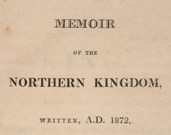
In the Summer 2010 issue of the Journal of the Early Republic I was pleased to find a new, edited version of one of the most fascinating pamphlets published in the early nineteenth century: it’s called Memoir of the Northern Kingdom, Written, A.D. 1872, By the late Rev. Williamson Jahnsenykes, LL.D. and Hon. Member of the Royal American Board of Literature, in six letters to his son, and the imprint reads Quebeck: A.D. 1901. See the full title page here.

The 48-page pamphlet (actually written in 1808 and published at Boston) is a bit hard to describe (and I’m hopeful that a full digital version will be available soon for all to read), but basically it’s a thinly-veiled criticism of the Jefferson Administration’s policies in the form of a counterfactual history of America. As the author tells it, due to the commercial policies of Jefferson the Union came to be dissolved into a French-dominated imperial South, a British/Canadian-controlled New England under a British viceroy, and the Illinois Republick (the last bastion of democratic government in America). In a series of six letters the author “reflects” on the breakup of the United States into these separate fiefdoms.

While the essay is often studied because of its “prediction” of the North-South split, it’s interesting for many other reasons as well, not the least of which is the fascinating level of detail its author goes into when describing the political and social changes that resulted from the conflict between the states during the period of tumult. A phrase immediately sprang out at me as I was reading this time: at the start of the fifth letter, which covers the history of New England, the author writes the following:

“Had that valuable library of domestick history, collected by the friends and associates of Belknap and Minot, survived the troubles of civil war, it would have been needless for me to leave you any hints of the antient history of New England. It was doubtless a politick measure of his Majesty’s lieutentants to suppress also the publication of those patriotick details of history, which could serve only to renew the memory of a different form of government from the present, and of purer times, those those, in which we live.”

Wait a moment, I thought, “that valuable library of domestick history, collected by the friends and associates of Belknap and Minot” – that’s the MHS! Jeremy Belknap and George Richards Minot were two key founders of the Historical Society, and both contributed significantly to the MHS’ early collections.

But who was the author of this curious tract, this Williamson Jahnsenykes? Not surprisingly, that was a pseudonym: he was one Rev. William Jenks (1778-1866), and although he was not yet a member of the MHS when he wrote Memoir of the Northern Kingdom, he was elected to the Society in 1821 (at the same time as Daniel Webster), and served as Librarian from 1823 to 1832.

Jenks graduated from Harvard in 1797, served as a Congregational minister at Bath, Maine and taught Oriental and English literature at Bowdoin College until 1818, when he returned to Boston and opened a school. Jenks was active in the Society for the Religious and Moral Instruction of the Poor, and later took up the pastorship of a church on Green Street, where he preached for nearly a quarter-century. He was a member and officers of the American Antiquarian Society and a founding member of the American Oriental Society. His magnum opus was the Comprenhensive Commentary on the Holy Bible, published in six volumes between 1834 and 1838, but he composed many other works, including a eulogy to James Bowdoin, several memoirs in the MHS Proceedings, and a historical account of the MHS (Collections, 3d Series, Volume VII).

When Jenks died in 1866 he was the second-oldest member of the Historical Society, at the December meeting that year MHS president Robert C. Winthrop remembered Jenks for his services and publications, and makes mention particularly of Memoir of the Northern Kingdom, calling it “a political jeu d’esprit, of no common felicity, written during the party heats which attended the close of Mr. Jefferson’s Presidency, and was designed to portray the danger of a dissolution of the Union, and the overturn of our republican institutions. Meeting our venerable friend in the street, on New-year’s Day, 1863, – after exchanging the salutations of the season, – I told him I had found a copy of a pamphlet bearing this title, among my father’s books; and I ventured to ask him, through that ponderous ear-trumpet, – which was the badge of the only infirmity he had, – whether he was the author of it. He replied, without an instant’s hesitation, that he was.”

Among the MHS collections are Jenks’ diaries and fifty boxes of his papers, so I dug in a little bit to see if I could find any reference to the composition or publication of Memoir of the Northern Kingdom. In a partial letterbook covering the period 1806-1811 I found a particularly exciting letter, written by Jenks to Messrs Farrand, Mallory & Co. of Boston:

“Gentlemen, The inclosed little work is committed to you, in preference to other Booksellers of this town, to be published for your own emolument – if emolument arise from the publication – if not, at your risque.

It is however requested, since the design of it is the public good, that if it should prove sufficiently advantageous to you, & should bring in more, than might be necessary to defray your expenses & give you a comfortable profit, you would, in such case, deposit a sum, of whatever amount beyond $100 you please, with the Selectman of the town of Boston, to be awarded to the writer of the best ‘Essay on the best means of perpetuating the Federal compact of the United States of America.’

As to typographical execution, it is requested to be in a good & neat style, that it may form a large sized duodecimo volume of about, perhaps, 100 pages – paragraphs & lines well distanced, paper & size of type such, as might befit a book from ‘the Royal press at Quebeck.’ Not too costly, however, for a general perusal.

On no account must an item of the title page, or a sentence of the work, be altered. And, Gentlemen, you are requested that, after it be prepared for the bookstore, it may immediately find its way to Washington, Baltimore, Charleston, Philadelphia, New York, Albany, New Haven, Portland, &c. N.B. Orthography Johnsonian.

It hardly needs be added, that all the effect, which the writer expects from this effort of anxious patriotism, depends upon secrecy & suddenness of appearance.

It need not appear but to have come immediately from Canada.

I am, Gentlemen, with respect, Your (at present) unknown humble servant, Pomponius ‘Atticus’*.

P.S. Would it not be well to advertise ‘Messrs &c. expect to receive’ (forsooth, from the printers) ‘in a few days a New Work, entitled ‘Memoir of the Northern Kingdom‘ Quebeck 1901?”

Unfortunately Jenks’ diaries for 1808 aren’t part of the collection (and they aren’t mentioned in any of the other Jenks collections around either, so if anyone knows of them I’d be delighted to hear of it), but we do hold his diary for 1809, and I uncovered an entry there from the day Jenks received the printed copies of his essay. On 18 January, upon receiving copies of the pamphlet in the mail, Jenks writes: “At length my ‘Memoir’ has arrived, & with it the ‘Review.’ I took the package from the office with a palpitating heart, & have read with mingled emotions. I did expect certainly a more detailed notice, but perhaps it is not prudent to bring into too open discussion the questions I had prepared [or proposed?] to handle.” On 21 January he reports that of late his thoughts had been preoccupied with thoughts of poor health, death, and Heaven. “Such were my feelings, views & wishes till my ‘Memoir’ arrived on tuesday & with it the last no. of the Anthology containing a review of it. The reading of these, & the several readings & reflections consequent upon them & connected with them banished from my mind those pious efforts, to which alone I had before attended. The world, literary refutations, scientific labor, & learned research became again interesting.”

Jenks’ efforts were at least somewhat successful. The correspondent who sent Jenks’ copies notes “by the way in several places lately I have heard much said about a northern Kingdom, leads me to believe that this book is not unnoticed.” The pamphlet quickly attracted some attention in Boston: the members of the Anthology Society (precursor to the Boston Athenaeum) had received a copy by the time of their 29 November meeting, when it was assigned to Mr. [William] Tudor for review (which he read to the Society on 13 December). The short review, printed in the December 1808 issue of the Monthly Anthology (pp. 683-684), reads:

“This is a production generated by the temper of the times. The pretended author, whose barbarous name it is too much trouble to copy, undertakes, towards the close of this century, to give an account to his son of the troubles, which had previously taken place in the United States, and which ended by the formation of a Southern and Northern Kingdom, while the middle states constituted a republick. Were we to occupy ourselves in speculations of this kind, we should not be disposed to predict the future fate of the country exactly as the author has done, even if we admitted the notion of the destruction of the present Union. The idea of anticipating the events of futurity, is not new, but this opens a wide field for ingenuity and political sagacity, if it be lawful even to think on the subject. The style of this publication is very good, but it has been too hastily written to preserve more than a momentary existence. The author possesses of affect the candour, which is natural, when treating about the political characters of past times.”

It is advertised (price 25 cents) in several New England newspapers in late November and early December 1808, (Portsmouth NH Gazette on 29 November; Boston Gazette and Independent Chronicle on 5 December; Newburyport Herald and Salem Gazette on 13 December). It is headlined as “Interesting PAMPHLET” in the Boston Repertory of 20 December and as “A Peep into Futurity” in the 27 December Connecticut Herald. By January 1809 copies could be had in Portland, ME and Walpole, NH, and an Albany bookstore advertises its availability in late May. I’m sure a more detailed study of newspapers would be useful in tracking its spread. Unfortunately the Memoir may have met an unfortunate end: the 14 December 1811 issue of the Boston Centinel reports that 532 copies in sheets were to be sold as part of a sheriff’s sale, and what happened to them after that is unknown. At any rate, my supposition is that Messrs. Farrand and Mallory did not end up sponsoring the essay prize Jenks recommended in his letter to them.

In doing a little sleuthing for this post I found a 1942 footnote suggesting that perhaps the manuscript of Jenks’ Memoir was in his papers here at the MHS at that time, but I have not had any luck in locating it thus far (if it’s in there, it’s hiding very well). Nonetheless, I was somewhat surprised to find even the references I did, and am pleased to be able to add a little bit to the story of this interesting work. When I started working on this post it was just going to be about the little oblique reference to the MHS in Jenks’ essay, but, as these things tend to do, the story got much more interesting than that!


* Jenks’ pseudonym in the letter to his publishers, Pomponius Atticus, probably refers to the Roman writer Titus Pomponius Atticus (109-32 BCE)

“Boston Harbor a tea-pot tonight”

By Jeremy Dibbell

To mark the anniversary of the Boston Tea Party, some related highlights from the MHS collections:

The Boston Tea Party page from our Coming of the American Revolution site. Read broadsides, diary accounts, and reactions to the dumping of the tea.

Manuscript minutes of the meetings held 14-16 December 1773, during the run-up to the Tea Party.

Our bottle of tea leaves gathered from the shore of Dorchester Neck on the morning after.

From the Adams Papers, John Adams’ 17 December 1773 letter to James Warren, with its wonderful opening line: “The Dye is cast: The People have passed the River and cutt away the Bridge: last Night Three Cargoes of Tea, were emptied into the Harbour. This is the grandest, Event, which has ever yet happened Since, the Controversy, with Britain, opened!”

Siege of Boston Digital Collection Launched

By Jeremy Dibbell

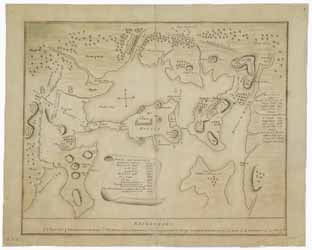
As promised, we’ve launched a new digital collection, The Siege of Boston. Featuring more than a dozen eyewitness accounts and reports from Boston during the siege (April 1775 – March 1776), this collection brings together a wide range of materials from the Society’s holdings, and provides hi-res images and transcriptions of each. Several maps are also included.

This digital project was made possible by a grant from the Massachusetts Society of the Cincinnati, and implemented by our digital projects team: Nancy Heywood, Bill Beck, Peter Steinberg, and Laura Wulf. Enjoy!

Letters Shed New Light on Henry Adams

By Natalie Dykstra

[Note: the following is a guest contribution from Natalie Dykstra, former MHS research fellow, Associate Professor of English at Hope College and the author of a forthcoming biography of Marian Hooper “Clover” Adams. The new collection she refers to below has been cataloged as the Henry Adams letters to Annie (Palmer) Fell (catalog record), and copies are available for consultation here at the library anytime during our regular hours. You can read more about the letters in Lane Lambert’s 19 November article on the collection in the Quincy Patriot-Ledger. Many thanks to Natalie for this contribution to The Beehive. – JBD]

At a White House luncheon celebrating the publication of the first four volumes of the Adams Family Papers, President John F. Kennedy commented on the “extraordinary and important qualities” given to the country by the two Adams Presidents, namely “courage-the courage of those who look to other days and other times.” Then he added: “The Adams family intimidates us all.”

It’s true. They are intimidating. As the author of a forthcoming biography of Clover Adams, wife of Henry Adams, to be published by Houghton Mifflin Harcourt in 2012, I marvel at this family: brilliant, hard-working, accomplished, so often heartbroken by life. As historian and writer, Henry Adams – like his grandfather, John Quincy Adams, and his great grandfather, John Adams – intimidates with his erudition, the sheer amount and scale of what he knew. And like his forbearers, his temperament can also push you back on your heels. John Quincy described himself this way: “reserved, cold” with “forbidding manners,” and his political adversaries called him “a gloomy misanthrope.” Henry may not have had his grandfather’s tundra-like austerity, but his far-seeing Pulitzer Prize-winning autobiography, The Education of Henry Adams, was written in the third person, holding the reader at a safe remove from his inner life. His close friend, John Hay, playfully called him “Porcupinus Angelicus.”

All of which makes the recent acquisition by the MHS of 13 newly discovered letters written by Henry Adams to Anne Palmer Fell between 1885 and 1890 such an extraordinary literary find. Of the thirteen letters, ten were written after Clover’s death in 1885 and one letter only five weeks following. We get to see up close something of what Henry hid from view, confirming what John Hay knew about his friend – that his spiky Adams façade was a cover that protected a great store of feeling.

Henry Adams was a prodigious letter writer-his correspondence runs to six thick published volumes. He knew so damn much. But he didn’t parade. He’d make reference to Shakespeare or Hegel or Lewis Carroll to make his point more pointed or a quick aside quicker-all part of the badinage for which he was known. (Come to the MHS to see one of his letters in manuscript form for yourself! His handwriting is meticulous, clear and upright on every single page, with each letter of the alphabet looking as if it were in typescript.) And like his autobiography, his published correspondence doesn’t reveal much about his personal feelings. In the Education, Henry omits any mention of his wife; so too in his published letters, he hardly writes at all about Clover after her suicide in December 1885.

But in these newly acquired letters to Anne Palmer Fell, Henry unburdens himself in the months following Clover’s death. Perhaps he felt he could, knowing how close Anne and Clover had been since they first met in Washington in 1877. The two women had been remarkably compatible, sharing a quick wit and a passion for art. Out of a total of twenty-one letters to Anne in Henry’s published correspondence, there are only two letters, neither very revealing, written to her between 1885 and 1890. This new collection fills that gap. One can detect in a letter dated March 2, 1885 a distinct foreboding. Henry felt sick with worry about how Clover might react to losing her father, who was close to death. “The winter has worn us out,” Henry told Anne. A year and a half later, on the eve of the first anniversary of Clover’s suicide and two days after he buried his father, Charles Francis Adams, Henry reached out to Anne in grief, writing that “during the last eighteen months I have not had the good luck to attend my own funeral, but with that exception I have buried pretty nearly everything I lived for.” He was grateful, too, for Anne’s news that she’d given her new baby daughter Clover’s birth name, Marian. He assured her he could “manage to keep steady now, within as well as without,” but admitted that her letter “gave me a wrench. I am more than grateful to you for your loyalty to Clover, and I shall love the fresh Marian dearly.” This is the only record we have of Henry’s stunned reaction to Anne’s announcement that she’d named her daughter after Clover. He’d be devoted to Anne’s Marian the rest of his life.

For me, as Clover’s biographer, the astonishing letter of the collection is the one Henry wrote less than five weeks after Clover’s suicide. His silence about her after she died has been interpreted so often as unfeeling or an indictment of their marriage or evidence of his emotional bankruptcy. But the story is far more complicated than that and this letter reveals some of that complexity.

There’s nothing quite like this letter in Henry’s published correspondence, a crucial piece of evidence in the vast manuscript collections at the MHS from which I’ve fashioned my forthcoming biography of Clover. Nowhere else does Henry talk about his inability to “get rid of the feeling that Clover must, sooner or later, come back, and that I had better wait for her to decide everything for me.” He changes the subject several times-from a Florida land deal to rattlesnakes and lemons-as if he can’t quite get his thoughts together. But then he turns back to what he’s wrestling with, dropping the ironic pose that would so distinguish his approach to life and the tone of much of his writing. Shock and grief had cracked Henry Adams wide open. Now what? He admonishes Anne to “get all the fun you can out of life.” He worries whether he and Clover were as happy as they could have been. He reveals a mix of doubt, guilt, self-recrimination, sadness, and a love lost. But his lines also reveal how his powerful intellect put borders around his loss, borders he could live within. Henry Adams decided to hold onto whatever happiness he and Clover did have, writing to Anne in a sentence of great balance and with an Adams courage: “The world may come and the world may go but no power yet known in earth or heaven can annihilate the happiness that is past.”

Henry would keep quiet about Clover’s death, believing that silence is wisdom. But to Clover’s friend, Anne, he spoke fully and from the heart.

The Lives of Two Irish Immigrants: The Holden Family Papers Rediscovered

By Tracy Potter

Several months ago a researcher visited the library and requested a small collection entitled: Holden family bills and accounts, 1842-1861. When retrieving the one box that made up the collection, Assistant Reference Librarian Jeremy Dibbell found that all the manuscripts were folded into tight packets except for one folder containing eight documents. Since this type of storage and use of the manuscripts in their current folded state was not only a danger to the documents, but also a pain for the researcher, the collection was taken to Collection Services, where it could be  unfolded and rehoused in folders. As for the researcher, he was given the one folder that contained the unfolded documents and was told we would notify him when the rest of the collection was ready for viewing. We hope we’ll see him again soon!

As the title of the collection implies, it was thought by the current staff that this collection was only made up of William and Bridget Lawler Holden’s business records from their shoemaking shop in Lenox, Massachusetts with a few exceptions of personal wills and inventories of their estates. When Kendra Ciccone, one of our volunteers, began unfolding the documents she discovered that all was not as it seemed.

Kendra found that there was a citizenship record for William Holden written in 1842. The record states Holden’s former citizenship in Carlo(w), Ireland, his new citizenship in America, and his trade (shoemaker). There were also deeds of land purchases made by Bridget Lawler Holden in Lenox, Mass and six personal letters to William and Bridget Lawler Holden from Bridget’s family and friends of the family back in Ireland. These letters date from 1852-1855, in the aftermath of the Irish potato famine and they paint a pretty gloomy picture of the state of Ireland during these years as shown in a letter from Bridget’s brother, John Lawler, written on 17 March 1855, asking again for Bridget to send money to help the family:

“…therefore I am going for to say and let you no that I tuck a farm of land and fulishly built and made great improvement – But all my money was all out and the times in the country got so bad that the farmer with 2 horses and 6 cows and like so in every other thing belonging to farmer – you wole see them in this apperence on this day on on this morning fallaun that same farmer wold be in Liverpoole this is what brook me and many others in this country”

Although the majority of the collection is still accounts and receipts for the Holdens’ shoemaking business, there is now just enough personal information to make the Holden family story even more intriguing. This collection provides the briefest of glimpses into the life of an Irish immigrant family that is not always seen in the history books: a family that emigrated young and prior to the devastating famine, a family that had a trade upon arrival in the new country, a family that had the means to leave the city and strike out on their own, and a family in the later years that had the wife in charge of the finances.

Like many collections donated to the Society in its earlier years, very little paperwork exists to help determine when and where this collection came from. It is suspected that it came through the Sedgwick family as the majority of William Holden’s estate was left to the children of William Ellery Sedgwick. As to the relationship between the Holden and Sedgwick families, very little is known, except that William Ellery Sedgwick was the executor of both William and Bridget’s wills.

Since this discovery, we have updated the catalog description of these papers to truly represent the collection. The collection has been renamed the Holden family papers (catalog record) to represent both the personal and the business portions of the collection, and the new description highlights both the personal and business aspects of the collection. Finally, with all the unfolding, the papers now reside in two boxes rather than one.

Life in Besieged Boston

By Jeremy Dibbell

Our November Object of the Month is a diary kept by Boston merchant William Cheever (1752-1786) during the siege of Boston in the beginning months of the Revolutionary War. As Digital Projects Coordinator Nancy Heywood notes in her introductory essay, “Cheever’s succinct entries cover the realities of living through a long military campaign. He describes press gangs and imprisonments within the town on 19 June (on page 2) as ‘the usual consequence of martial law.’ His diary entries describe raids and vandalism committed by both sides (see entries for 30 May, 12 July and 9 January), bombardments (2 August, page 4) and the scarceness and expensiveness of food (12 August, page 5). He also describes the Battle of Bunker Hill in his entry for 17 June (on page 2) and the damage the British troops did to the Old South Meeting House (15 November, page 7). Cheever’s final diary entry describes the last day of the Siege, 17 March 1776 (page 12) and records that General Howe and the British troops left town ‘upon which the Continental Army enter’d it.'”

See hi-res scans of the diary or read transcriptions of the text, here.

Stay tuned for additional Siege of Boston documents later this month, as we launch a new digital collection devoted to materials from that period in Boston’s history.

Election Days Past

By Jeremy Dibbell

To mark Election Day, I thought I would take a look back at some diaries from 1860 and 1960, to see how the elections of Abraham Lincoln and John F. Kennedy were remembered by some of those whose collections are housed at the MHS.

In our online catalog, ABIGAIL, I can search for diaries from a specific year using a Subject Search, so I plugged in “Diaries 1860” and “Diaries 1960” to see what I had to choose from.

We have 57 diaries that cover 1860, so I looked through a few of them. Here’s what I found:

Edward Everett (1794-1865) [collection guide] was the vice presidential nominee for the Constitutional Union party in 1860. He writes about Tuesday, 6 November:

The day of the Presidential election, quite rainy in the morning but clears up for a little while at noon.

The Frothinghams got home from an 18 months tour in Europe last night. I called for short time to see them early.

Went at One to vote. A considerable crowd about the Ward-room, but orderly. They cheered me both inside & when I had got out. I voted the entire union ticket.

In the early evening I receive a message that Mr. Appleton is elected, the first sign of returning sense & reason; & a well [?] rebuke to the rampant sectionalism which has so long tyannized over us [William Appleton, Constitutional Unionist candidate for Massachusetts’ 5th Congressional District].

The imperfect telegraphic accounts that reach us from Newyork are favorable, but not to be depended on for the main result.

A Mr. T.F. Marshall, nephew of the Ch. Justice, and for a time Member of Congr. called upon me with a letter from Prest. Wheeler. A weary visitation.”

Not until Thursday 8 November does Everett write about the election result, noting “The returns of the election make it certain that Mr. Lincoln is President; & not only so, but give to Mr. Breckenridge the votes of several states, that were confidently claimed for the “Union Ticket.” A very little show of real strength at the North would have given us the entire South; but after the overwhelming Republican vote in Pennsylvania, the democratic party at the South rapidly gained strength & the opposing elements (Douglas & Bell) lost confidence; – & many were inclined to take refuge with the majority. The struggle, in this way, has become one of South & North & has ended as far as this election is concerned in the triumph of the latter by an overwhelming majority. What will be the result, it is of course impossible to foresee. Some of the Southern States, – S. Carolina & Alabama, – seem pledged to some revolutionary movement, but whether they will be sufficiently sustained by public opinion remains to be seen.”

Everett remained an ardent supporter of the Union cause, serving as the first president of Boston’s Union Club and delivering the keynote address at the dedication of the cemetery at Gettysburg in November 1863.

And what of Charles Francis Adams (1807-1886), [collection guide], son and grandson of presidents, and incumbent Congressman from Massachusetts’ 3rd District? His diary entry for 6 November reads:

Morning cloudy with heavy showers, and one clap of thunder, a thing which I never remember to have happened here so late in the year. … I designed to go to the city, but failed to get there. At eleven I went to the town hall for the purpose of voting. I found quite a crowd very busy and good natured, but uncommonly quiet. I voted the entire ticket of the republicans, and remained talking to various people until one o’clock when I came home. It is a remarkable idea to reflect that all over this broad land at this moment the process of changing the rulers is peacefully going on. And what a change in all probability upon this occasion. The first step towards a reform of the shockingly corrupt system of the slaveholding oligarchy. Election day is one of the most listless of the days of the year, when nothing is to be done, and no ability exists to do anything useful. In the course of the afternoon my man Bradley came and answered with quite a lugubrious aspect that the vote for me was 448 whilst that for my opponent Mr. Saltonstall [Leverett Saltonstall, the Constitutional Unionist candidate] was 463. He seemed to think this a type of what I was to meet with elsewhere; and seemed surprised when I told him that it was decidedly encouraging. I had reduced the vote against me here from 125 which it stood in 1858 to 17. A telegram soon afterwards came from Randolph, announcing a gain in the town of 150. So that I concluded myself elected by an increased majority. At night the Wide Awakes came down from Mr Charles Marsh’s the representative elect, and saluted me, and I went out and thanked them for their active services in my behalf. After this I remained up to wait for my sons who had gone to the city to await the news, and come back with Mr Butler. They got back before midnight with intelligence of the success of all the republican candidates, excepting Mr. Burlingame, who has been replaced by Mr Appleton. Mr Thayer has failed in his attempt to resist his ejection. Every thing is carried by the republicans, so far as the intelligence is received, and the prospect is great of a victory. I have always expected it, so that I was much less uneasy or anxious than I might otherwise have been. Some reflections occur to me at this time, but perhaps I may as well put them off until the result is definitively ascertained.”

I don’t know about you, but I find Adams’ description of Election Day feelings just about spot-on!

The following day, Adams picks up where he left off:

The morning brought only confirmation of the favourable return of last night. All New England, New York, Pennsylvania and Ohio run in one settled current in our favor, out of the limits of the city influence. The returns from my own District elect me by a majority greater even than the plurality I had two years ago. There is now scarcely a shadow of a doubt that the great revolution has actually taken place, and that the country has once [&] for all thrown off the domination of the slaveholders. Of course such an event cannot be brought about with the same ease that a country changes its fashions. Much of struggle yet remains. But considering the prospect of a new Appointment, of the admission of new states on the side of freedom, and of the [?] on the border slave States by the spread of our opinions, it seems to me that the crisis of danger from this cause is passed. I went into the city, and at the office Mr Dana came in to see me. We talked much over the matter, and speculated on the probabilities of the future. It cannot be said to be altogether clear, but time will develope results quite as fast as we shall be prepared to meet them. …”

Adams’ sense of the crisis having passed proved rather incorrect (to put it mildly). He was appointed Minister to England in the spring of 1861, and served in that capacity until May 1868.

Turning to the election of 1960, I found my options for diaries were much more limited. Since records and personal papers from that period have in many cases not yet made their way to us, or are still closed to researchers, I could count the number of available diaries on one hand. Thankfully the very first one I checked made the whole search worthwhile:

Mildred Cox Howes kept diaries off and on from 1899 through 1973. As our catalog record for the collection notes, “Entries include accounts of daily life, including time spent with family members such as her father William Emerson Cox, her mother Josephine Nickerson Cox, her husband Osborne “Howsie” Howes, her sister-in-law Edith Perkins Cox, her daughter Pricilla Howes Nickerson, and her governess Laura A. Young (know as Val); visits with friends; social engagements and events; and time spent sailing. Travel accounts include camping trips, fishing, and hunting trips in Maine, Montana, and Canada; time spent aboard the yacht Santanta in the Florida Keys and the Inland Waterway; and sea voyages to England, France, Egypt, Greece, and Turkey, among others.”

So what did Mrs. Howes have to say on Tuesday, 8 November 1960? Nothing as lengthy as Everett or Adams, but I find her diary quite fascinating in its own right:

“Tues. Fair. Voted. Red Cross. … Took Mildred & Barbara to Camelot. Kennedy elected.”

It doesn’t get any better than that, does it? She went to see “Camelot” on Election Day!

Happy Halloween!

By Jeremy Dibbell


Happy Halloween from all of us at the Historical Society!

This scary little guy (or is he laughing?) is a silver gun sight attached to a ~1770s English fowling piece made by John Parkes of Birmingham, England, and originally owned by Paul Revere. The sight was probably made and attached to the barrel by Revere, who would have aimed right over the gargoyle’s nose.

The gun was given to the MHS by William B. Revere in December 1931.