By Jeremy Dibbell
Most of us probably don’t tend to think of 5 November as a holiday, but in colonial Boston it was one of the most festive days of the year. In Britain the holiday was (and still is) known as Guy Fawkes Day; here in New England it was called Pope’s Day, or Pope Night. There is an excellent introduction to the holiday at 5th of November in Boston, a site mounted by our sister institution the Bostonian Society.
There are many items in our collections relating to Pope’s Day, but I wanted to highlight one of them today: the James Freeman notebook. Rev. James Freeman (1759-1835), was one of the founders of the Historical Society, and his little historical notebook (given to the Society in 1791) “contains notes on population, prices, epidemics, unusual weather, and earthquakes in Massachusetts, particularly the earthquake of 1755; also, descriptions of Guy Fawkes Day pageants and riots in Boston, and of the public reaction in Boston to the Stamp Act of 1765.” These aren’t personal recollections by Freeman, but rather contemporary newspaper accounts that he copied later.
On the first page of the notebook, under the heading “1745,” Freeman writes: Nov’r 5. Two Popes were made & carried thro the streets in the evening 1 from the N. & ye other from ye S. attended by a vast number of negroes & white servants w/ clubs &c., who were very abusive to ye inhab. insulting persons and breaking windows &c of such as did not give them money to their satisfaction, & even of those who had given them liberally, & ye 2 Popes meeting in Cornhill their followers fell upon one another w/ ye utmost rage & fury. Several were wounded & bruised & some left for dead, & rendered incapable of business for a long time. Fleets Evening Post.” This account appeared almost verbatim in the Boston Evening-Post issue dated 11 November 1745, which also included a letter to the printer “written by a Gentleman of great Character.” The gentleman urged Mr. Fleet not to suffer the riot “to pass off without a public Rebuke … What a Scandal and Infamy to a Protestant Mob, be it of the rudest and lowest Sailor; out of Boston, or even of the very Negroes of the Town, to fall upon one another with Clubs and Cutlasses, in a Rage and Fury which only Hell could inspire, or Devils broke loose from their Chains there, could well represent!”
For 5 November 1764, Freeman writes: “It was formerly a custom on these anniversaries for ye lower class of people to celebrate the evening in a manner peculiar to themselves, by having carried images erected on stages, representing the Pope, his attendant, &c. and these were generally carried thro’ the streets by negroes & other servants, that ye minds of ye vulgar might be impressed w/ a sense of their deliverance from popery, & money was generally given to them, to regale themselves in the evening, when they burnt the images. But of late those who are concerned in this pageantry make a party affair of it, & instead of spending the evening agreeably, the champions of both ends of the town prepare to engage each other in battles under the denomination of S. end & N. end. In ye afternoon the magistrates & other officers of the town went to the respective places of their rendezvous, & demolished their stages, to prevent any disorders, which they did without opposition. Notw/standing which as soon as it was dark, they collected again, & mended their stages, which being done they prepared for a battle, & about 8 o’clock the two parties met near the mill bridge where they fought with clubs, staves, brick bats, &c for about half an hour, when those of ye S. end gained the victory, carrying off not only their own, but their antagonist’s stages &c which they burnt on Boston neck. In the fray many were much bruised & wounded in their heads & arms, some dangerously. It should be noted that these parties do not much subsist at any other time.” This account appeared in the Boston Evening-Post of 12 November 1764.
The following year, in the wake of the Stamp Act riots, Freeman’s entry indicate that things turned out a little differently: “It has long been the custom in Boston on ye 5th of Nov’r for Nos. of persons to exhibit on stages some pageantry denoting their abhorrence of popery & the horrid plot which was to have been executed on that day in the year 1605. These shows have of late years, been continued in the even’g, & we have often seen the bad effects attending them at such a time; the servants & negroes would disguise themselves & being armed with clubs would engage each other with great violence whereby many came off badly wounded. In short, they carried it to such lengths that two parties were created in ye town under the appellation of N. end & S. end. But the disorders which had been committed from time to time induced several gentlemen to try a reconciliation between the 2 parties; accordingly the chiefs met on the 1st of this inst., & conducted the affair in a very orderly manner. In ye even’g the commander of ye N. & after making general overtures they reciprocally engaged in an Union, & the former distinctions to subside, at the same time the chiefs with their assistants engaged their honour no mischief should arise by their means, & that they would prevent any disorders on ye 5th. When the day arrived about noon the pageantry representing the Pope, the Devil, & several other effigies signifying tyranny, oppression, slavery, &c. were brought on stages from the N. & S. & met in Kings Str. where the union was established in a very ceremonial manner, & having given three huzzas, they interchanged ground, the S. marched to ye N. & the N. to the S. parading thro’ ye streets until they again met near ye Court House. The whole then proceeded to Liberty tree, under the shadow of which they refreshed themselves for a while, & then returned to ye Northward agreeably to their plan. They reached Cop’s hill before 6 o’clock, where they halted, & having enkindled a fire, the whole pageantry was committed to the flames & consumed.” This account appeared in the Boston Evening-Post of 11 November 1765.
For more information on Pope’s Day, I recommend 5th of November in Boston, plus the excellent Pope Night series at Boston1775. Brendan McConville’s excellent book The King’s Three Faces (University of North Carolina Press, 2006) contains much background and context. On James Freeman, see F.W.P. Greenwood’s memoir of him, published in Collections of the Massachusetts Historical Society, 3d. Series Volume V (1836), pp. 255-271.

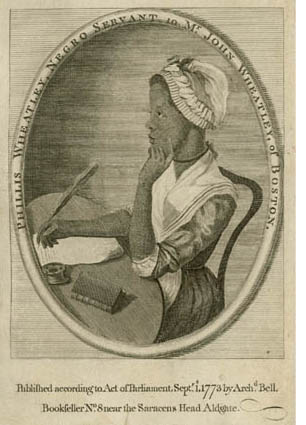 Part of our new website design (well not so new anymore, I can’t believe it debuted in September!) is a rotating “Spotlight” section, where we highlight one of our various digital collections. Currently we’re focusing on Phillis Wheatley: click here to see digital images of manuscript poetry by Wheatley, letters by and about the poet, and information on a writing desk in the Society’s collections believed to have been used by Wheatley.
 Our December
 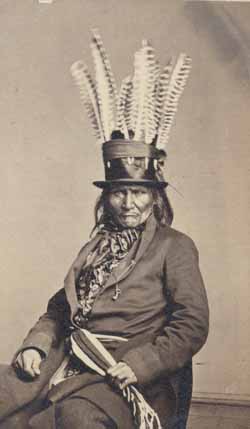 One of the MHS digital collections currently being highlighted on our homepage is