By Kathleen Barker, Education Dept.
Summer has officially turned to fall, which means it’s time once again for leaf peeping, pumpkin carving, and National History Day! Since the Society became the official co-sponsor of Massachusetts History Day earlier this year, I’ve learned a lot about making websites, judging performances for historical accuracy, and spotting student-created content in exhibitions mounted on replicas of everything from the Taj Mahal to the R.M.S. Titanic. I have also discovered that National History Day is a fabulous way to engage students in the process of doing history. For example, creating an NHD project requires that students work individually or in a group to select a topic related to the annual theme; conduct primary and secondary research at libraries, archives, and museums; think critically about sources and draw conclusions about the importance of their topic; and present their research through an exhibit, website, performance, documentary, or research paper. Best of all, students who produce history day projects develop all sorts of reading, writing, thinking, and presentation skills that they can apply to other courses in other disciplines. History Day is about so much more than history!
I was fortunate enough to attend a four-day NHD training session earlier this month. In addition to meeting competition coordinators from all over the world, I also attended a great session that explored the finer points of this year’s theme: Turning Points in American History. So, you might ask, how should we define a broad idea like “turning point?” More than an important event from the past, a turning point is an idea, event, or action that led to some sort of cultural, political, social, or economic change. It could be anything from the changes in Secret Service protocol after President Kennedy’s assassination to the creation of state arts patronage that resulted from the Russian Revolution. Of course, there are plenty of potential turning points in our own backyard. If you’d like to tackle a project that involves Massachusetts or New England history, explore the Society’s collections or contact the library staff (library@masshist.org; 617-646-0532) and start to plan a visit to the Library. For more information about participating in Massachusetts History Day, visit the MHD website. Good luck!
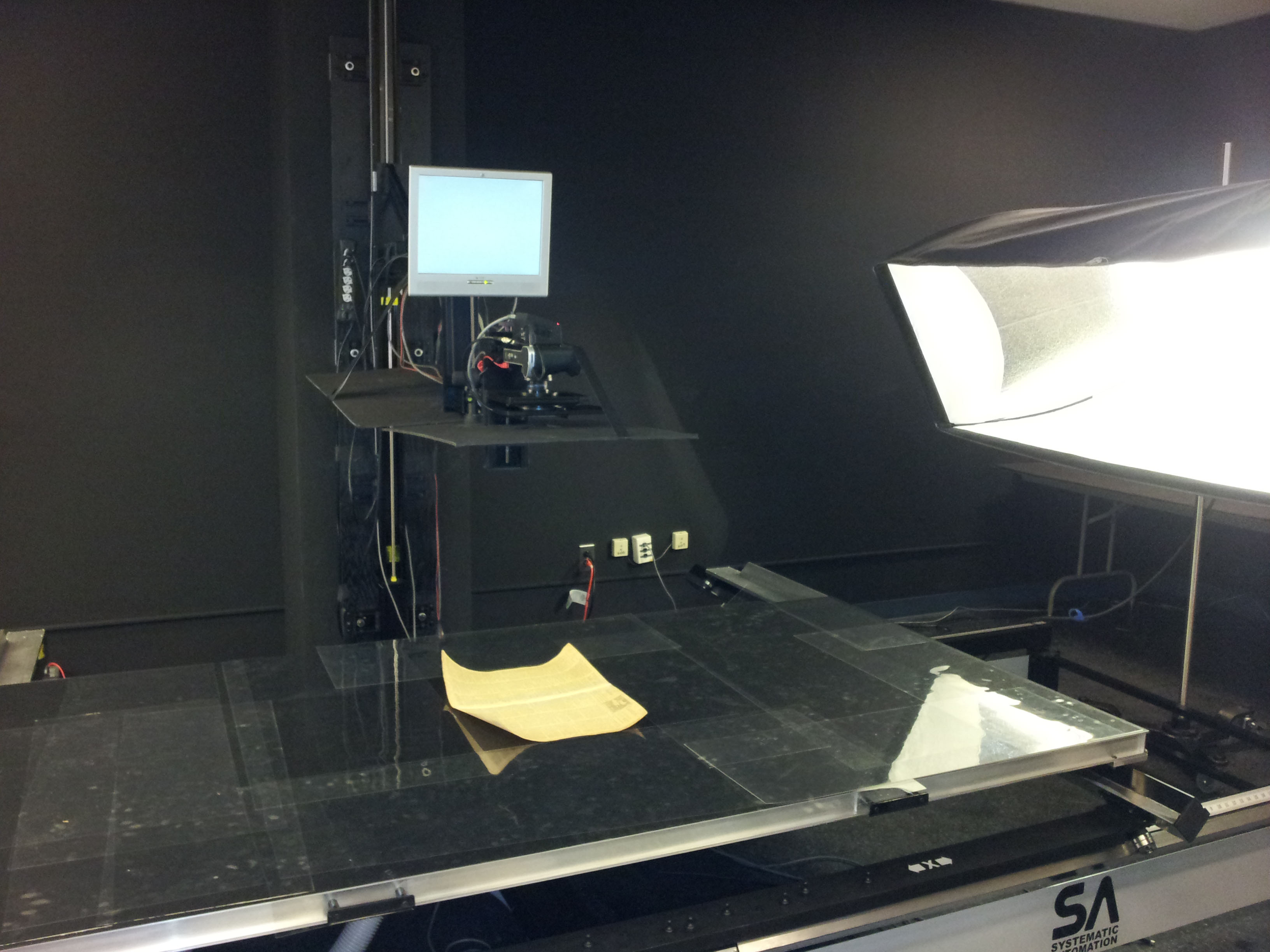
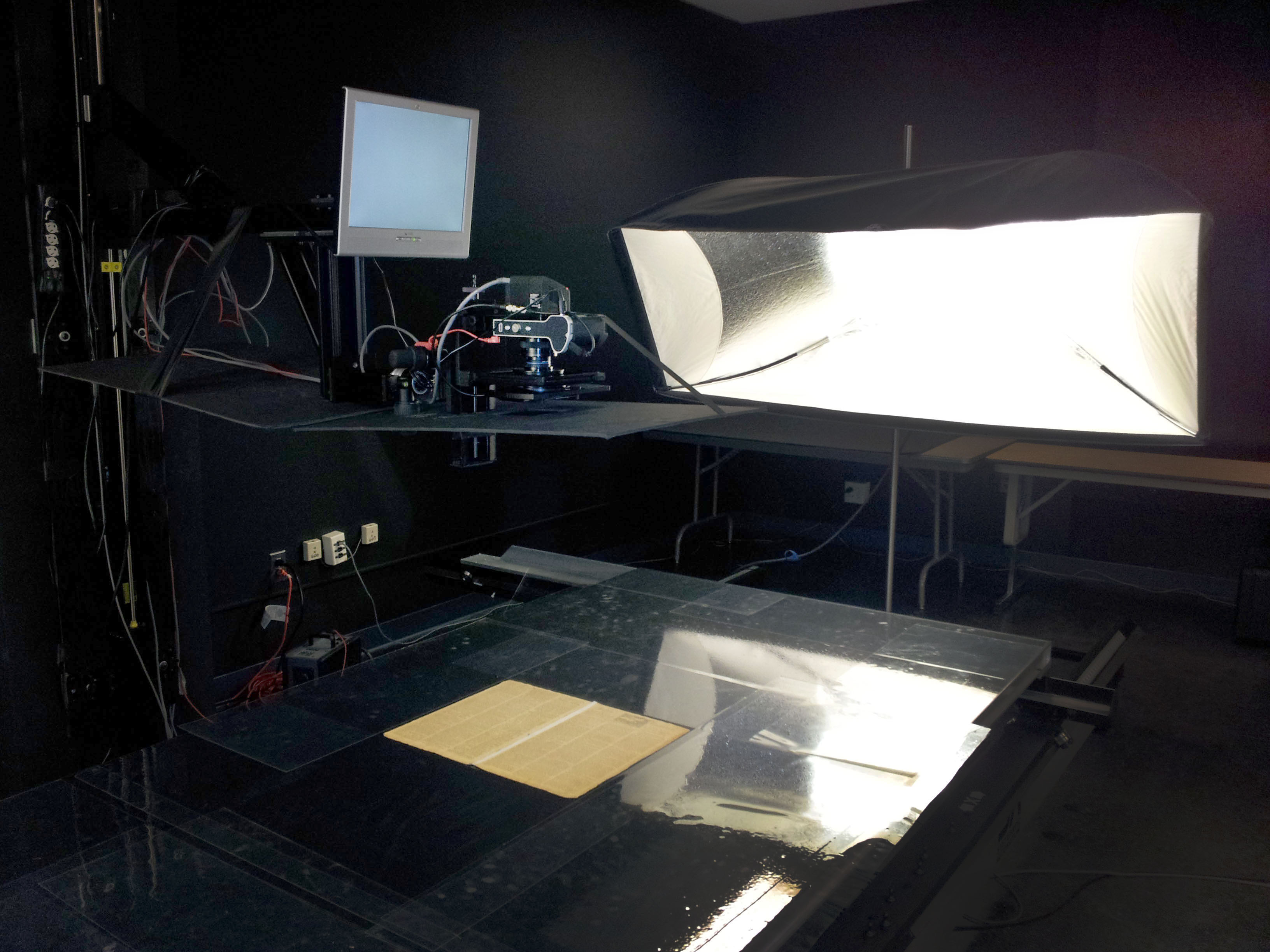
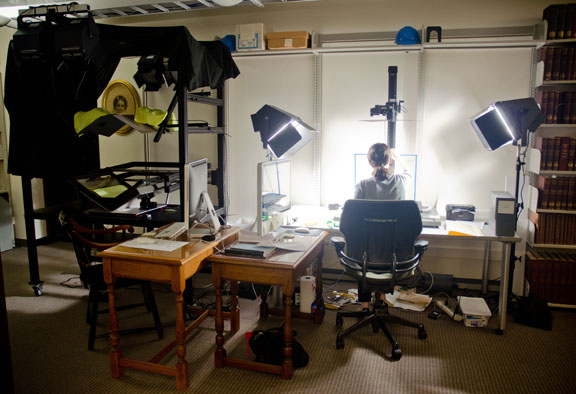 to supply somewhere in the neighborhood of 55,000 manuscript pages to a forthcoming multi-archive digital publication, China, America and the Pacific: Trade and Cultural Exchange. Adam Matthew has contracted, in turn, with Luna Imaging in Los Angeles to do the scanning. In late August, Luna shipped all of the equipment shown here and sent a representative to install and test it and train a scanning technician. The technician, shown here, is now hard at work scanning correspondence, account books, ships’ logs, and letterbooks from multiple collections, including the extensive Forbes Family Papers. Other highlights of the final product, scheduled for release in late 2013, will include the manuscript of Richard Henry Dana’s seminal work, Two Years Before the Mast, and Robert Haswell’s log of the Columbia-Rediviva, the first vessel to circumnavigate the globe
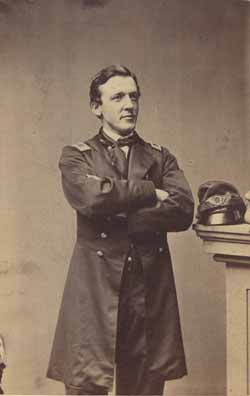 to tell portions of the story. MHS materials feature prominently in two segments of the film. In the segment “Dying” a letter written by Wilder Dwight to his mother Elizabeth Dwight (
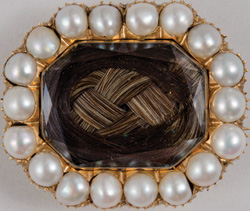 had their own ways of commemorating loved ones. In Death Lamented: The Tradition of Anglo-American Mourning Jewelry, an upcoming exhibition at the MHS by jeweler Sarah Nehama and MHS Curator of Art Anne Bentley, examines the practice from the 17th through the 19th century of commissioning and wearing rings, bracelets, brooches, and other jewels to honor the dead.
 available for purchase on
  A French citizen, Lafayette began his career as a musketeer in the king’s regiment and married into a wealthy, well-connected French family. The reports of Americans fighting for liberty moved him, and in 1777 he bought a ship and sailed for America. Upon arrival, Lafayette earned an honorary commission as major general in the Continental Army. Gen. George Washington became his mentor, and Lafayette was devoted to him. Lafayette earned fame for his courage on the battlefield, and he used his family connections to obtain crucial material aid from France for the American cause. His support for the Revolution, especially as a foreigner, captured the imagination and admiration of Americans. He was beloved in the United States for the rest of his life.
 Lafayette’s legacy is apparent in the Society’s collections, which include correspondence, artifacts, and memorabilia from the time of the American Revolution and his celebrated return trip to the States in 1824-1825. The portrait gallery also features Jospeh Boze’s well-known portrait of Lafayette. Thomas Jefferson commissioned this work for his gallery of American heroes in honor of Lafayette’s contributions to the American Revolution. The portrait depicts Lafayette at the pinnacle of his career. He wears the uniform of the French National Guard and a confident expression as he gazes off into the distance. Even at 255, he still looks good. A happy birthday to him.