
By Emilie Haertsch, Publications
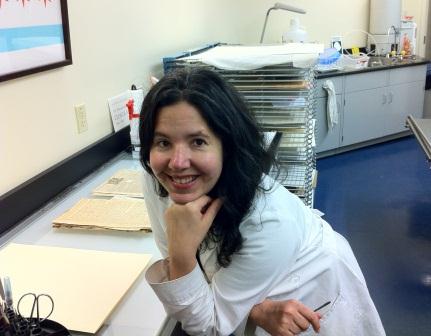
What does a conservation technician do?
My work consists of repairing and cleaning historic documents. I dry clean them by first removing the surface dirt, then testing the ink for solubility, and soaking the pages in purified water. After the soak, I de-acidify the pages and repair any damage with Japanese tissue paper and wheat starch paste that I make myself.
How do you interact with manuscripts and objects in different ways than historians?
The main difference is that I view the documents as physical objects. I don’t focus on the intellectual content, but on the physical aspect of manuscripts.
What does a typical work day look like for you?
My days usually follow a routine, and involve a lot of multi-tasking. I come in, prepare the wheat paste, and begin soaking paper in the sink. Then I’ll dry clean the next batch, or trim excess repair paper while I’m waiting for the paper to finish soaking. Once in a while I’ll get unusual things in the lab that break up the routine. I once worked on cleaning glass plate negatives, and another time I cleaned a very large Civil War banner for an exhibition. The work is always interesting!
What are some common misconceptions about your job?
People always think I get to read all the manuscripts, but if I read every page I would never finish my work! Many also are shocked that I wash the paper. They think that that would ruin the documents, but it’s an important part of the conservation process.
What are you working on right now?
I’m currently working on conserving the final volume of Harbottle Dorr’s annotated Revolutionary-era newspapers (read more about that acquisition here). Dorr, a shopkeeper, collected Boston area newspapers in the years leading up to the Revolutionary War, indexing the contents and making his own notes. It’s a very interesting project because, as with most historic documents in need of conservation, much of the damage is on the edge of the pages. That’s also where Dorr wrote his notes, so the conservation is preventing very valuable information from being lost.
What are some of your favorite projects and why?
I’ve really enjoyed working on the Dorr newspapers. Another one of my favorites was the Sarah Gooll Putnam diaries. She started keeping a diary at a young age and continued until her death. She was an artist, so her diaries contained sketches and fabric swatches – a lot of interesting things for me to look at while I did the work.* I also am a big fan of Thomas Jefferson, so I love working on any documents authored by him.
*See an entry from Sarah Gooll Putnam’s diary here.
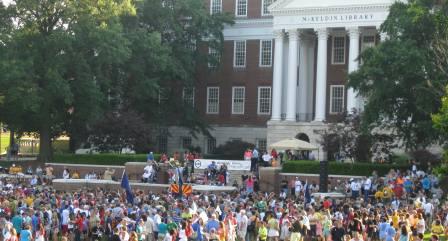 I was fortunate enough to travel with the Massachusetts delegation to this year’s national competition. The festivities began on the evening of Sunday, June 10, with a rousing opening ceremony on the lawn at McKeldin Library. Imagine thousands of students, parents, and teachers cheering, chattering, and trading pins and you’ll have a good sense of what the opening ceremony was like. The competition got down to business on Monday morning, and while in College Park I had the opportunity to serve as a judge along with more than 300 other historians and other education professionals. Anyone who has ever judged at a history day competition can tell you what an amazing experience this is. I met with many talented and enthusiastic students over the course of the three-day competition. They taught me a great deal about topics as diverse as Levittown, the use of helicopters in the Vietnam War, and Nicola Tesla. Thanks to a very well illustrated project on Civil War hospitals, I also have new appreciation for modern medicine.
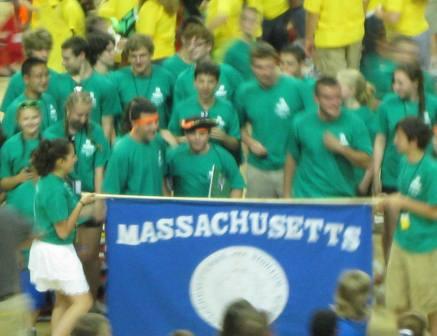 began with the best parade I’ve ever seen: a parade of participating students across the floor of the arena. I watched over 2,000 students circle the arena with everything from state flags to inflatable lobsters! Throughout the morning, dozens of students were singled out for awards and special prizes, and the boisterous crowd made sure that each winner was duly appreciated. Prizes were sponsored not only by NHD but by friends of history like the
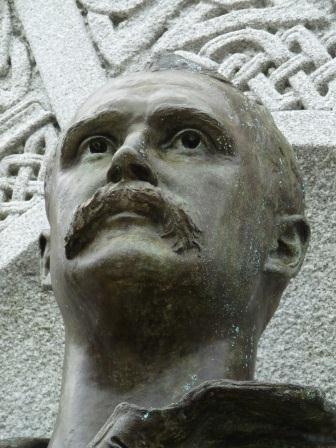
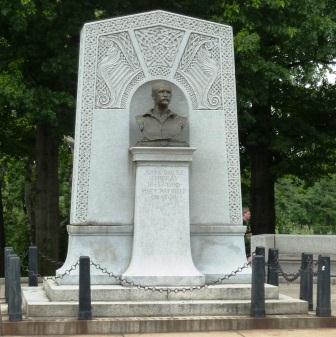 and social activist who brought his passion and patriotism to Boston. He was a giant in the city and won the admiration and respect of all those he met. Upon his death in 1890, thousands of people descended on Tremont Temple to pay their respects.
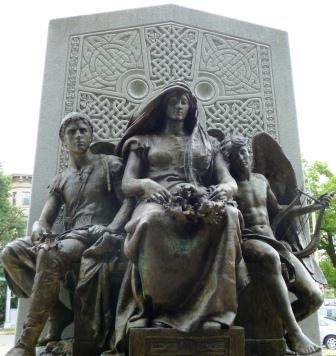 The figures are placed in front of a backdrop composed of a Celtic cross and Celtic knots carved into the stone.
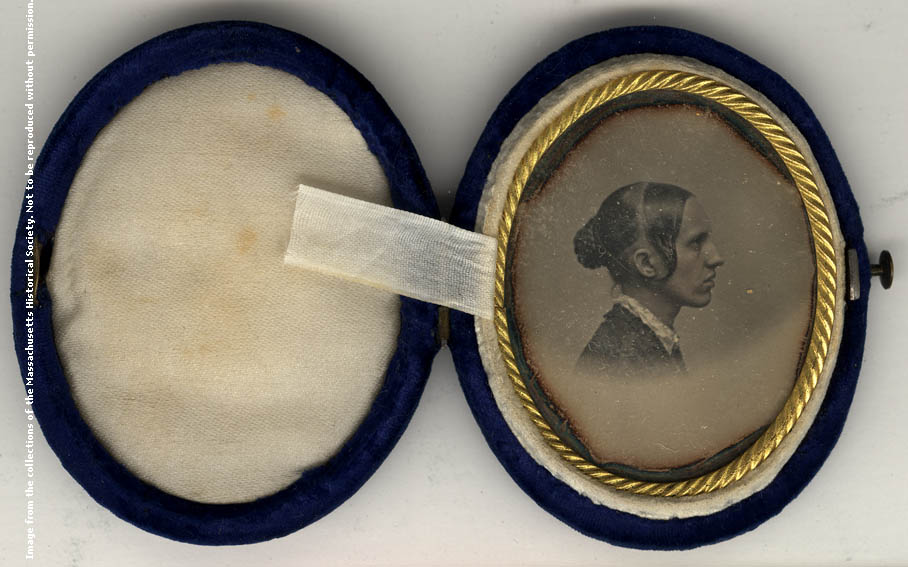

 We are working on a book to coincide with the Society’s upcoming exhibition on mourning jewelry. The book, titled In Death Lamented: The Tradition of Anglo-American Mourning Jewelry, features mourning jewels from the Society’s collection and from the private collection of the author, Sarah Nehama.
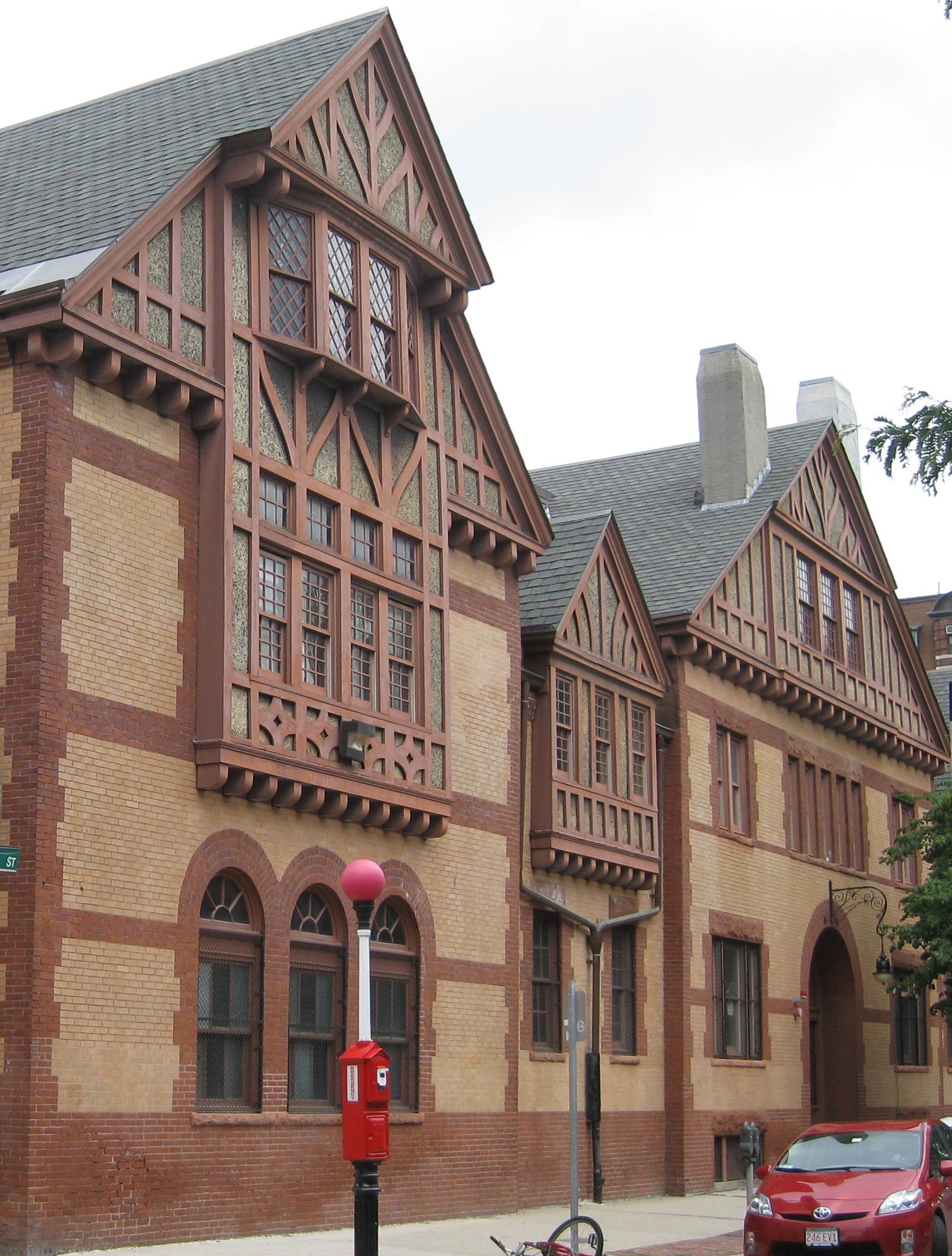 Just think of the variously colored steeples that dot the campus of Harvard in nearby Cambridge; the golden dome of the State House; and of course, the grand brownstones that line Newbury and Beacon Streets and Commonwealth Avenue. One architectural style that is not well represented in Boston, though, is the Tudor Revival style. And yet, just around the corner from the MHS, among the rows of stone and brick apartment buildings, is a fine example of that style.
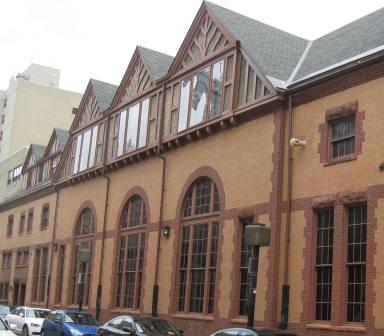 A quick look at the building’s exterior shows one repeated feature that hints to its original use: around the building are several large portals — some arched — resembling modern-day garage doors giving the viewer the impression of stables.