

By Emilie Haertsch, Publications
We need your help identifying the location of this photo! Taken during the Civil War, it was a 1911 gift from Edmund A. Whitman to the Society. The photograph accompanied the materials of his father, Col. Edmund Burke Whitman, a Harvard graduate and army quartermaster in the Civil War. Col. Whitman played a key role in the creation of the cemetery system for the Civil War dead, which was constructed after the war. During the war his career took him many places in the North and South, so it does not narrow the possibilities of this photograph’s location.
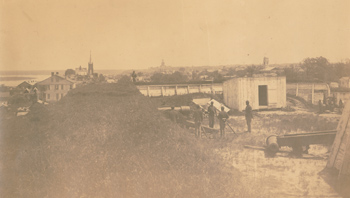
View a larger scan of the image here. It depicts what appear to be four African American soldiers with a cannon, probably a rifled Rodman breech-loading siege gun, a large cannon designed to knock down enemy fortifications. These Rodman guns were used by both the North and South. Since the Rodman gun fired cylindrical shells that looked like enormous modern-day bullets, the round cannon balls depicted were not used for that gun and may indicate that the emplacement had been in use before the arrival of these soldiers.
The fortification in the photograph appears old, and the grass growing over it indicates it was not very well maintained. Churches and other large buildings and a wide, bending river are visible in the background. It is likely that some of the buildings in this photograph still stand and the modern-day view from the same vantage point is somewhat similar.
The soldiers could have been members of one of several U.S. Colored Heavy Artillery Regiments from the Civil War, designated with the numbers 1 and 3-14. They were raised in 1864, although some existed as state units prior to being called into federal service and re-numbered. Some remained in service, occupying the South after the end of the war. If the soldiers were part of these regiments, it would narrow the possibilities of the photo’s location because they often were assigned to border garrisons away from the fighting or to areas of the South occupied by the Union. However, the soldiers depicted in the photograph would not have needed to be members of a heavy artillery battery in order to man a siege gun, and there were African American artillery men not assigned to heavy artillery regiments.
Please help us solve this longstanding mystery! If you think you recognize the location of this photograph or have other related information, please share it in the comments below.
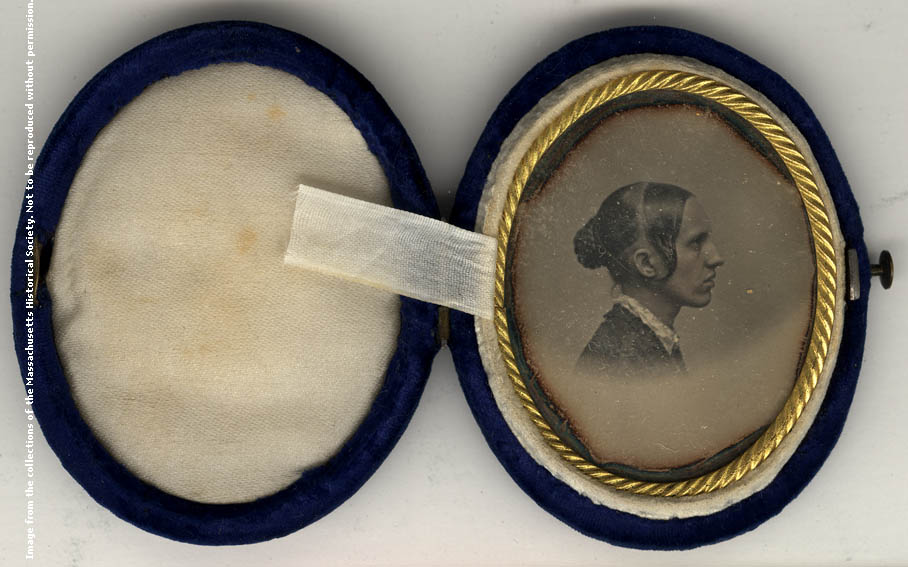

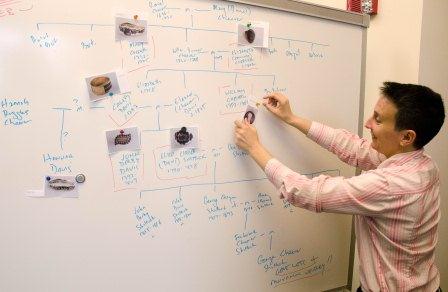 We are working on a book to coincide with the Society’s upcoming exhibition on mourning jewelry. The book, titled In Death Lamented: The Tradition of Anglo-American Mourning Jewelry, features mourning jewels from the Society’s collection and from the private collection of the author, Sarah Nehama.
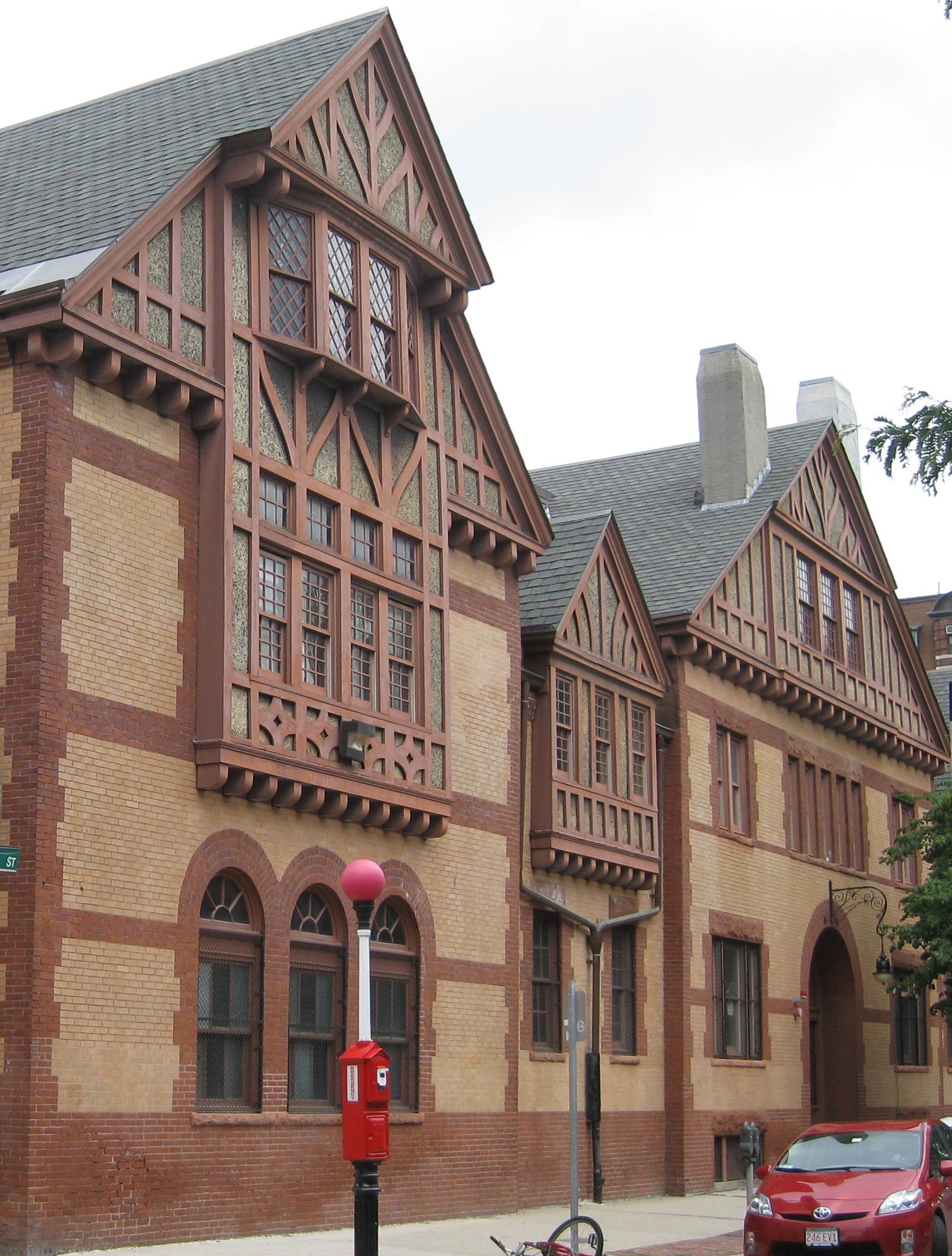 Just think of the variously colored steeples that dot the campus of Harvard in nearby Cambridge; the golden dome of the State House; and of course, the grand brownstones that line Newbury and Beacon Streets and Commonwealth Avenue. One architectural style that is not well represented in Boston, though, is the Tudor Revival style. And yet, just around the corner from the MHS, among the rows of stone and brick apartment buildings, is a fine example of that style.
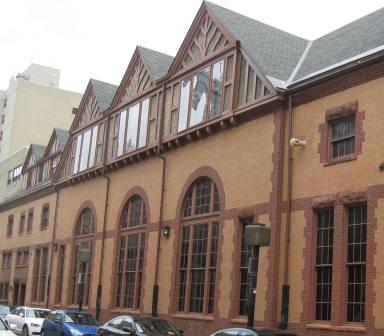 A quick look at the building’s exterior shows one repeated feature that hints to its original use: around the building are several large portals — some arched — resembling modern-day garage doors giving the viewer the impression of stables.
 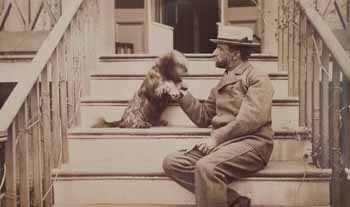 Marian Hooper Adams was nicknamed “Clover” by her mother, who felt that her daughter’s birth was a lucky occurrence. Born into a wealthy, prominent Boston family, Clover was raised in privilege and highly educated. Her mother died when she was five, but Clover remained very close to her father for the rest of her life. In 1872, at the age of 28, she married the historian Henry Adams, who was teaching at Harvard. After five years they moved to Washington, DC, residing near the White House, and began hosting an exclusive salon of politicians, writers, and thinkers. Despite this stimulation, Clover and Henry were bored, and the spark went out of their marriage. Their problems intensified due to the fact that they were unable to have children.
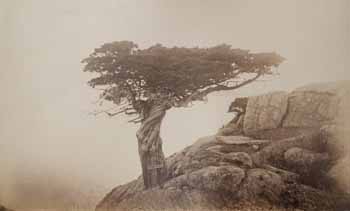 Clover had always been interested in art and she found an outlet for her frustrations in a new camera in 1883. She learned the painstaking development process and began to take photographs of people, landscapes, and animals (she was a great lover of dogs and horses). Although a few of her photographs show traces of humor, including those of her dogs posed at a table set for tea, many of Clover’s photographs convey the melancholy and isolation of her own experience.