This Week @ MHS

By Jeremy Dibbell

Here’s what’s on the calendar for this week:

Today, Monday, 14 June, there will be a brown-bag lunch with Lori Veilleux of Brown University. This event will begin at 12 noon. Lori will speak on “Providence and Prevention: Boston in the 1832 Cholera Epidemic.”

On Tuesday, 15 June, join us at 12 noon for a special lunchtime talk by historian Thomas Fleming to celebrate the 50th anniversary of his classic book Now We Are Enemies: The Story of Bunker Hill.

And on Friday, 18 June, we’ll host a brown-bag lunch at 12 noon with Matthew Hudock of the University of Delaware. Matthew will speak on “African Americans in the Creation of Liberia College.” More info here.

“Extraordinary Living Wonders!”

By Jeremy Dibbell

Our June Object of the Month is an 1862 advertising broadside for a return visit to Boston by the “Aztec Children,” Maximo and Bartola. The pair had made an initial appearance in Boston in 1850, and toured the world for at least four decades, sometimes under the management of P.T. Barnum. They were billed as “descendants and specimens of the Sacerdotal Caste (now nearly extinct) of the Ancient Aztec Founders of the Ruined Temples of that Country,” but were in reality microcephalic siblings from San Salvador whose mother thought she was sending them to America to be cured, not exhibited.

See the broadside, and read the whole story as told by our Senior Cataloger, Mary Fabiszewski, here.

Tea Party Traditions

By Jeremy Dibbell

MHS research fellow and frequent researcher Ben Carp (Associate Professor of History at Tufts University) recently made a guest appearance on the podcast “Backstory with the American History Guys,” to talk about historical “tea parties” in the context of the current political movement. Ben is the author of The Defiance of the Patriots: The Boston Tea Party and the Making of America (to be released this fall).
You can listen to the podcast, plus watch other related events and get some suggestions for further readings, all here.

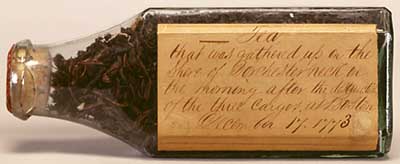
Read more about our bottle of tea (pictured) from the original Boston Tea Party here.

This Week @ MHS

By Jeremy Dibbell

We hope you’ll join us at 1154 Boylston for this week’s public programs:

On Tuesday, 8 June, Leo Damrosch, the Ernest Bernbaum Professor of Literature at Harvard University, will speak on his new book Tocqueville’s Discovery of America, recently published by Farrar, Straus and Giroux. Refreshments will be served at 5:30 p.m., and the talk will begin at 6 p.m. Reservations for this event are requested; please go here for more information and to sign up.

On Wednesday, 9 June, we’ll have a brown-bag lunch with Jim Downs of Connecticut College. His talk is titled “Sick from Freedom: The Unintended Consequences of the Civil War.” The discussion will begin at 12 noon. More info here.

And on Friday, 11 June, also beginning at noon, there will be another brown-bag lunch, this one with Jan Cigliano of Brown University. Jan will speak on “John Hay, Genius of Diplomacy (1838-1905).”

Off to Virginia!

By Jeremy Dibbell

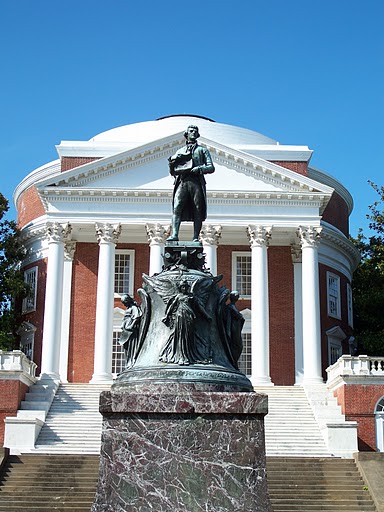
Your regular blog-correspondent will be away from 1154 Boylston Street for the next two weeks, taking part in a fellowship at Rare Book School at the University of Virginia, in Charlottesville. The first week I’ll be taking the course “Printed Books to 1800: Description & Analysis,” with David Whitesell, and for the second week I’ll be assisting the RBS staff with various projects and classes. It’s an exciting opportunity for me, and one I look forward to sharing stories and photos with you all when I return!
In the meantime, I’ve scheduled some posts to run while I’m gone, and others from around the building will be chiming in with posts of their own, which I’m sure you’ll enjoy.


This Week @ MHS

By Jeremy Dibbell

Just one event on the calendar this week, but we hope you’ll join us at 12 noon on Wednesday, 2 June for a brown-bag lunch with Erik Chaput of Syracuse University. Erik will speak on “Thomas Wilson Dorr and the Rhode Island Question.” The effects of the 1842 Dorr Rebellion – a movement in Rhode Island to expand suffrage beyond landowners that culminated in a People’s Convention, armed confrontation, and the extension of voting rights – reverberated throughout the North. In Massachusetts, the Rebellion influenced the results of the 1842 gubernatorial race between Democrat Marcus Morton and Whig John Davis.

Our Newest Arrival

By Jeremy Dibbell

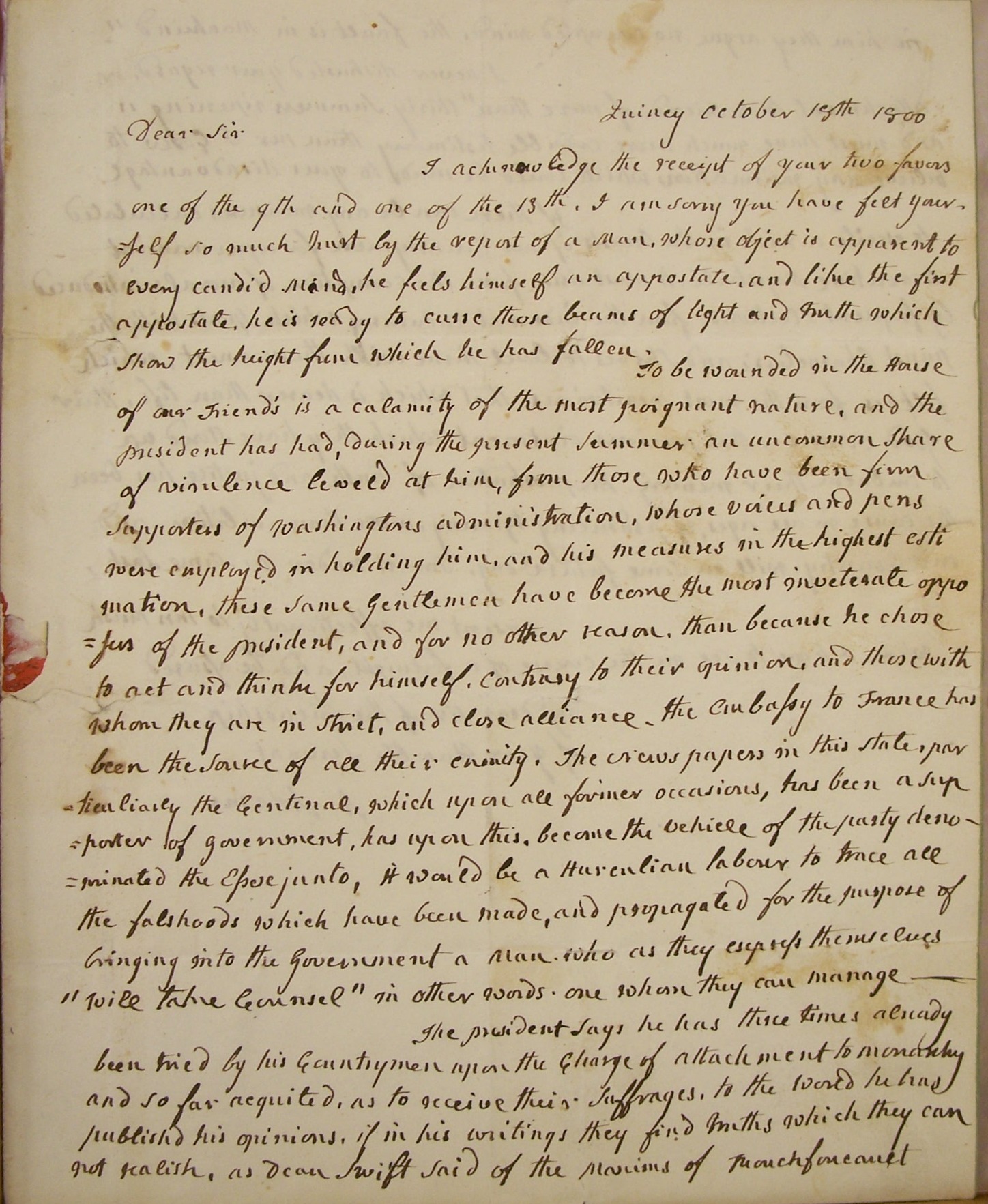
One of the MHS’ most recent acquisitions arrived late last week: it’s an 18 October 1800 letter from Abigail Adams in Quincy to her friend Dr. Benjamin Rush in Philadelphia, responding to political attacks made against John Adams during the presidential election campaign (the first contested presidential race in American history).

The MHS submitted the winning bid for this letter at the 14 April Sotheby’s auction of documents from the James S. Copley Library. Acquisition of the letter was made possible thanks to a gift from an anonymous donor.

Adams Papers Editor-in-Chief Jim Taylor said of the purchase: “The Adams Papers editors at the MHS have been aware of the Abigail Adams letter to Dr. Benjamin Rush for more than fifty years and are thrilled to have it as part of our collection. The document was offered at auction as early as 1943, when the suggested price was a mere $45. It is an excellent example of the first lady’s interest in and knowledge of early national politics. The MHS owns Abigail’s draft of the letter. The document recently obtained by the MHS is the final version that she sent, and is significantly different than the draft. This letter, when compared to the draft, demonstrates the great care that she took in expressing her ideas.”

In the letter, Mrs. Adams takes great exception to the tenor of the campaign against her husband: “If there can be any measures calculated to excite a wish in the breasts of our Countrymen for a permanent executive Majestrate, it must arise from the corruption of morals introduced by frequent Elections, from the indecent calumny which sports with the purest Characters; and strives to level them with the meanest; which filches from the most meritorious, that which is dearer than life their good name—that previous ointment which they have stored up to embalm their memory. the prostration of truth and justice has been the cause in all ages, of producing tyranny, more than ambition, and our Country, will in some future day, smart under the same Lash.”

We’re very happy to welcome this letter to our collections!

Holiday Closure Notice

By Jeremy Dibbell

Please note that the MHS, including the reading room, will be closed on Saturday, 29 May and Monday, 31 May, in observance of Memorial Day.

On the placards we use to announce holiday closures here in the library, our Librarian likes to include a relevant quote. The current one is from Oliver Wendell Holmes Jr.’s 1884 Memorial speech at Keene, New Hampshire (full text here):

“… the generation that carried on the war has been set apart by its experience. Through our great good fortune, in our youth our hearts were touched with fire. It was given to us to learn at the outset that life is a profound and passionate thing.”

This Week @ MHS

By Jeremy Dibbell

Two brown-bag lunches this week: we hope you’ll join us! On Wednesday, 26 May, Richard Rath of the University of Hawaii at Manoa will speak on “Media and the Senses in the New England Psalm Controversy, 1721-1724.” More info here.

And on Friday, 28 May, Alea Henle of the University of Connecticut will speak on “Preserving the Past, Making History: Historical Societies and Editors in the Early Republic.” More info here.

Both events will begin at 12 noon.

Research Recently Published

By Jeremy Dibbell

A few of the recent publications by research fellows and/or friends of the MHS which involved use of our collections or publications:

– Adam Cooke, “‘An Unpardonable Bit of Folly and Impertinence”: Charles Francis Adams Jr., American Anti-Imperialists, and the Philippines.” New England Quarterly 83, no. 2 (June 2010), 313-338.

– Margery M. Heffron, “‘A Fine Romance’: The Courtship Correspondence between Louisa Catherine Johnson and John Quincy Adams.” New England Quarterly 83, no. 2 (June 2010), 200-218.

– Jane T. Merritt, “Beyond Boston:  Prerevolutionary Activism and the Other American Tea Parties,” in Steeped in History: The Art of Tea, ed. Beatrice Hohenegger (Los Angeles: Fowler Museum at UCLA, 2009), 164-175.

– Francesca Morgan, “Lineage as Capital: Genealogy in Antebellum New England.” New England Quarterly 83, no. 2 (June 2010), 250-282.

– L.A. Norton, Captains Contentious: The Dysfunctional Sons of the Brine, (University of South Carolina Press, 2009).

– Mark Valeri, Heavenly Merchandize: How Religion Shaped Commerce in Puritan America (Princeton University Press, 2010).

– Karyn Valerius, “‘So Manifest a Signe from Heaven”: Monstrosity and Heresy in the Antinomian Controversy.” New England Quarterly 83, no. 2 (June 2010), 179-199.

– Kemble Widmer and Joyce King, “The Cabots of Salem & Beverly: A Fondness for the Bombé Form.” Antiques & Fine Art (Spring 2010), 166-174.

– Walter W. Woodward, Prospero’s America: John Winthrop, Jr., Alchemy, and the Creation of New England Culture, 1606-1676 (University of North Carolina Press, 2010).