JQA’s St. Petersburg Reading List (January-March 1810)

By Jeremy Dibbell

John Quincy Adams’ busy social season, ministerial duties, and illnesses in St. Petersburg have continued to keep him away from the books, but he’s mentioned a few of his recent reads. For previous reading lists, see the August, September, October, and November/December posts.

1/28/1810: “Read a sermon of Massillon.” See entry for 8/6. In his long diary entry, JQA adds that the Massillon sermon was “on the immutability of the divine Law.” He adds that he “resumed also the Russian Grammar, and learnt something further of the Characters of the Alphabet.”

2/4/1810: “Read a sermon of Massilon, use of time.” See entry for 8/6. In his long diary entry, JQA adds that the sermon “suggested to me some reflections, and ought to have suggested more.”

2/18/1810: “Read 2 sermons of Massilon.” See entry for 8/6. In his long diary entry, JQA adds that the two sermons were “upon the mortifications of the righteous in this life; and the other upon the character of the Woman which was a sinner. The former of which is one of the most instructive I have yet read. With its principal doctrines I fully agree.”

3/2/1810: JQA writes in his long diary entry that he had planned to go to the “Book Store of the Academy of Sciences” today, but was feeling too ill to go.

3/3/1810: “Mysteries of Udolpho.” We learn more about this in Adams’ long diary entry: being ill in bed, JQA had his sister-in-law Catherine read him “the remainder of the Mysteries of Udolpho, the fourth volume of which I had left unfinished.” Obviously he’d been reading it before, but had not mentioned it in his diary. This is the gothic novel by Ann Radcliffe, The Mysteries of Udolpho, first published at London in 1794. We don’t know which edition JQA was reading, but an 1806 edition is available via Google Books (Volume 1, Volume 2, Volume 3, Volume 4).

3/10/1810: In his long diary entry, JQA notes “I read a small astronomical treatise in German by Bode, lent me by Mr. Six. I read also some pages in the first volume of Robison’s Elements of mechanical philosophy.” There are several possible titles for the astronomical tract; the Robison is John Robison’s Elements of mechanical philosophy (Edinburgh: Printed for Archibald Constable & Co., 1804). The first volume is available online via the Internet Archive, here.

3/14/1810: While he doesn’t mention it in his short diary, JQA reports in his long diary entry “… employed the whole day in reading.”

3/18/1810: “Read Massillon.” See entry for 8/6. In his long diary entry, JQA adds “I read in Coxe’s travels, and also the Sermon and the fragment of Massillon, upon Communion.” William Coxe wrote several travel books, but the one JQA’s reading is almost certainly Travels into Poland, Russia, Sweden and Denmark, first published in 1784, with several editions following. A five-volume edition is available via the Internet Archive (Volume 1, Volume 2, Volume 3, Volume 4, Volume 5).

3/19/1810: “Read Coxe’s Travels, Vol. 3”. See entry for 3/18. In his long diary entry, JQA notes “I read part of the third volume of Coxe’s travels, which are a sort of Salmagundi – a dish of dissertations upon subjects relating to Russia.

3/25/1810: In his long diary entry, JQA writes “I read Massillon’s sermon upon the Passion; and part of a Volume of Coxe’s travels in Russia.” See entry for 8/6 (Massillon) and 3/18 (Coxe).

3/27/1810: In his long diary entry, JQA reports “I read Coxe’s account of the Russian Historians and Poets.” See entry for 3/18.

Coming Attractions

By Jeremy Dibbell

We’ve got a full calendar of special events over the next month or so, which I thought I’d just highlight so you can mark your calendars. We hope to see you often!

On Monday, 22 March our new exhibit opens: “‘A More Interior Revolution’: Elizabeth Peabody, Margaret Fuller, and the Women of the American Renaissance” will be available for viewing Monday through Saturday from 1-4 p.m., and will be up through 30 June. Guest curator Megan Marshall has selected letters and journals written by Fuller and Peabody, together with writings and works of art created by other women who participated in the literary renaissance in New England between 1830 and Fuller’s death in 1850. The exhibition draws upon the collections of the Massachusetts Historical Society and the Concord Free Public Library. You can find more information on the exhibit here.

Some events associated with the show include a special preview of the show for MHS members and fellows (more info here), and two public gallery talks: “The Lost Letters of Margaret Fuller” by Stephen T. Riley Librarian Peter Drummey will be held on Saturday, 27 March, at 11 a.m. and 1 p.m. as part of the MHS Annual Open House.  On Friday, 23 April, at 2 p.m., Leslie Perrin Wilson, Curator of the William Munroe Special Collections at the Concord Free Public Library, will give a talk entitled “‘No Worthless Books'”: Elizabeth Peabody’s Foreign Library and Bookstore, 1840-1852.” The MHS also will sponsor a three-day conference, Margaret Fuller and Her Circles, 8-10 April 2010.  For information on the conference program, please visit the conference webpage. The opening keynote for the Fuller conference, “‘The Measure of my Footprint’: Margaret Fuller’s Unfinished Revolution” will be delivered by Mary Kelley at 6 p.m. on Thursday, 8 April, and is free and open to the public.

I mentioned the Open House above: we do hope you’ll join us on Saturday, 27 March from 10 a.m. – 3 p.m. for the exhibit talks (11 a.m. and 1 p.m.) or for guided tours of the MHS building (10 a.m., 12 p.m., 2 p.m.). You can learn more about MHS programs and events, become a member, and enjoy some special refreshments.

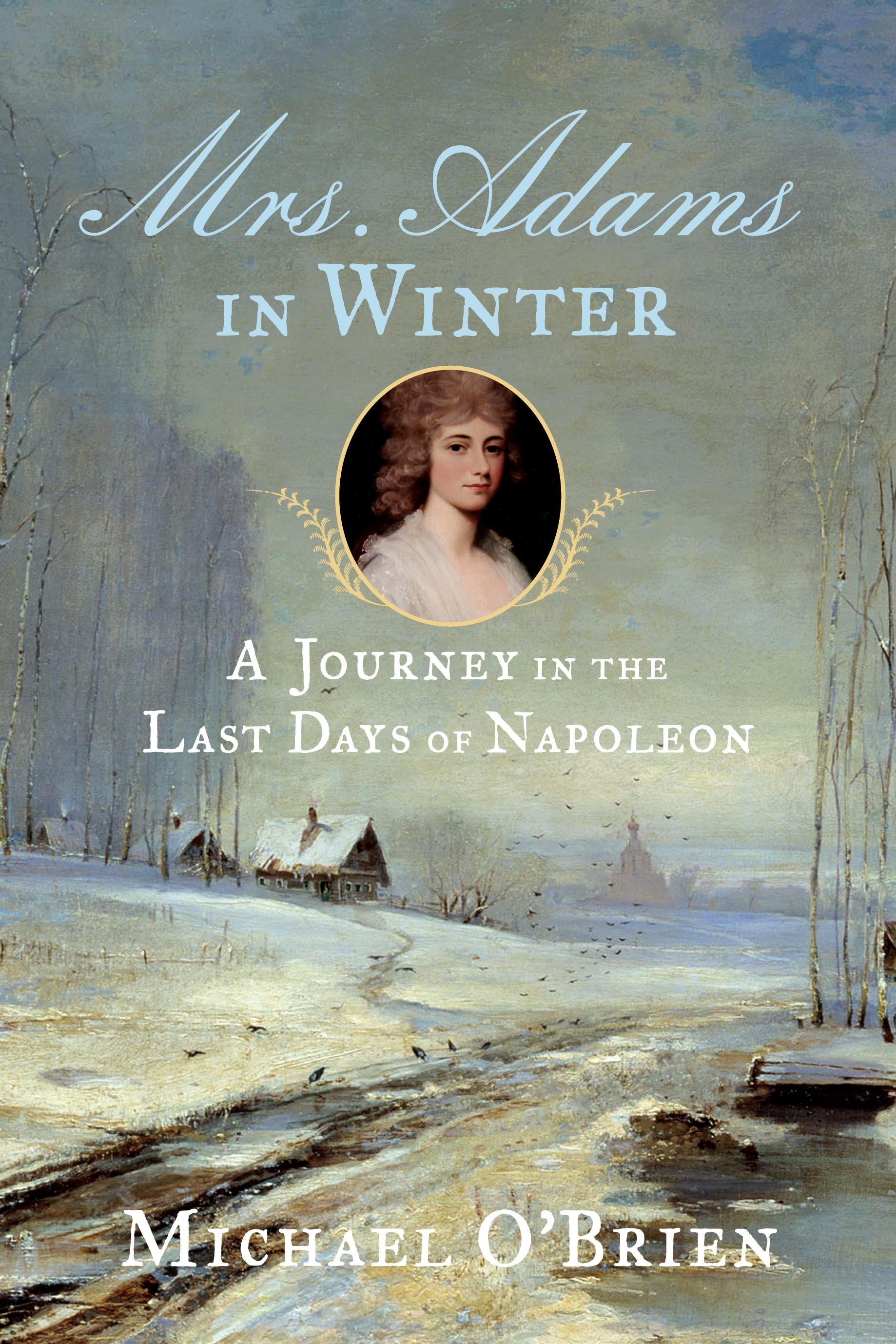
And if you’ve been following along with John Quincy Adams’ tweets from Russia (or even if you haven’t) we hope you’ll join us for a talk by author Michael O’Brien on Wednesday, 31 March. Mr. O’Brien’s new book is Mrs. Adams in Winter: A Journey in the Last Days of Napoleon (Farrar, Straus and Giroux, 2010) about Louisa Catherine Adams’ trek across Europe in early 1815. Refreshments will be served at 5:30 p.m., and the talk will start at 6 p.m. Reservations for this event are requested; please go here for more information or to submit a reservation.


This Week @ MHS

By Jeremy Dibbell

On Tuesday, 9 March, the Boston Environmental History Seminar series continues with a 5:15 p.m. talk by Kevin K. Olsen of Montclair State University, “An Environmental Management History of Jamaica Bay, Brooklyn and Queens Counties, 1849-1938.” Steven T. Moga of MIT will give the comment. Please read the Seminars @ MHS blog post for more information on attending seminars, including how to make reservations and receive the papers in advance.

On Wednesday, 10 March, we’ll host an evening talk by Kirstin Downey, author of The Woman Behind the New Deal: The Life of Frances Perkins. The talk will begin at 6 p.m. Reservations are required for this event: go here for more information.

In Case You Missed It …

By Jeremy Dibbell

If you missed the premiere of “Who Do You Think You Are?” on Friday night, which featured Sarah Jessica Parker researching at the MHS, you can watch the entire show online at Hulu.com here.

Oh, and by the way, we should note that in the scene where Ms. Parker is holding a pen, she is not using an original document (even though the editing sort of makes it look that way).

This Week @ MHS

By Jeremy Dibbell

A busy week this week at MHS, with two brown-bag lunches and an evening seminar:

On Wednesday, 3 March, beginning at 12 noon, research fellow Mazie Harris will give a brown-bag lunch talk on her current project, “Visual Vignettes: Nineteenth Century American Portrait Vignettes and Card Albums.”

On Thursday, 4 March, as part of the Boston Early American History seminar series, Stephen Bullock of WPI will present a talk, “The Princess and the Pinckneys: Children, Affections and Power in Mid-Eighteenth-Century America.” Brendan McConville of Boston University will deliver a comment. Please read the Seminars @ MHS blog post for more information on attending seminars, including how to make reservations and receive the papers in advance. The seminar will begin at 5:15 p.m.

And on Friday, 5 March, another brown-bag lunch at 12 noon, this time with Margaret Higonnet, who will speak on “The World War I Diary of Margaret Hall.” More info here.

MHS in Primetime!

By Elaine Grublin

On 27 January 27 2009 there was a celebrity sighting at the MHS library.  Sarah Jessica Parker, of Sex & the City fame, visited our reading room and worked with material from our manuscript collections. We’ve kept it under wraps for more than a year waiting for the right moment to tell the world, but now we want everyone to know so that they can share in our celebrity experience!

Sarah Jessica visited as part of filming for the inaugural episode of NBC’s new series “Who Do You Think You Are?” This program, an American adaptation of the hit British documentary series by the same title, follows well-known celebrities as they work to discover their proverbial roots, researching their ancestors in an attempt to learn more about their families and themselves. 

During her visit Sarah Jessica registered as a researcher and followed all the rules of the reading room – although we did allow the film crew to follow her in, which is way beyond our norm. I spent some time working with SJP in the catalog room, helping her identify and call for the material she wanted to see and then brought the material to her in the reading room. We can’t tell you which documents she looked at, though – you’ll need to tune in to the show in order to find out!

Sarah Jessica was an eager and interested researcher as well as a gracious celebrity guest. Naturally she was interested in seeing the material we held that was connected to her ancestor, but she also asked questions about the size and scope of our collections and how we preserve our documents. After filming wrapped, she stopped in our lobby to chat with a couple of students from Emerson College that had also been conducting research here and posed for photographs with them. She then stayed on into the evening for a tour of the MHS building and a chance to see some of our treasures. While looking at selected materials from the Adams Family Papers we discovered that March 25, the date Thomas Jefferson wrote his last letter to John Adams, is SJP’s birthday (only off by about 140 years). And she enthusiastically agreed when a staff member pointed out that our portrait of Lieutenant Frederick Hedge Webster, who was killed in action while serving in the Massachusetts 54th Regiment in 1864, bore an uncanny resemblance to her husband Matthew Broderick, who played Colonel Robert Gould Shaw, also of the 54th, in the film “Glory.”

“Who Do You Think You Are?” debuts on NBC on Friday, 5 March 2010 at 8:00 p.m. with the Sara Jessica Parker episode. The MHS is just one of the many stops Parker makes on her journey of genealogical discovery, so be sure to tune in to learn her story and to catch the MHS library and reading room staff during their 15 minutes of fame. 

 You can watch some “preview clips” from the show here.

Presidential Letters Guide Launched

By Tracy Potter

Over the last several months Jeremy Dibbell, Anna Cook, and I have been tantalizing all of you with peeks into the library’s latest project, Presidential Letters at the Massachusetts Historical Society: An Overview.  I am glad to announce that as of the 23 February 2010 the project has finally come to its completion and the completed finding aid is now available online at http://www.masshist.org/findingaids/doc.cfm?fa=fa0329.

This subject guide is an overview of the MHS’ holdings of all known letters written by presidents found in the Society’s manuscript and autograph collections.  The guide now lists over 5,400 letters written by every U.S. president except for William Clinton, George W. Bush, and Barack Obama. This number does not include the letters found in the Adams Family Papers and the Coolidge Collection of Thomas Jefferson Manuscripts for John Adams, John Quincy Adams, and Thomas Jefferson. 

This very large project was completed over a relatively small period of time (five months to be exact), which could not have been done without the assistance of several people. 

 – L. Dennis Shapiro, a Trustee of the Society, who developed the original idea of the project with Peter Drummey, provided funding for the project through the Arzak Foundation, and gave feedback throughout the project. 

– Peter Drummey, the Stephen T. Riley Librarian, who developed the original idea of the project with Trustee L Dennis Shapiro, helped brainstorm formatting and content, provided me with locations of important letters and tidbits of information on presidents. 

– Brenda Lawson, the Director of Collections Services, who helped brainstorm formatting and content and who also edited endless pages of presidential letter descriptions.

– Susan Martin, Manuscript Processor and EAD Coordinator, who helped encode the finding aid and gave both Sarah and me a tutorial on the use of XMetal. 

– Sarah Desmond, Semester Intern from Endicott College, who spent 35 hours a week for three months looking through catalogs and collections, describing presidential letters, and formatting and encoding the finding aid. 

I also would like to mention the assistance of the staff of the MHS who provided me with feedback and locations of letters that fell through the cracks.  

Although the bulk of the guide is complete, please keep in mind that this is an ongoing project. As new collections come in and new collections are processed new letters could be added to the guide. 

It was a pleasure working on this project and I hope all will enjoy it.  

You can browse the guide here.

This Week @ MHS

By Jeremy Dibbell

Join us on Tuesday, 23 February for a lecture by Richard Katula, “Edward Everett, George Washington, and the Power of Ordinary Greatness.” Refreshments will be served at 5:30 p.m., with the talk beginning at 6 p.m. More info here, including registration information.

Please note that the Boston Immigration & Urban History seminar scheduled for Thursday, 25 February has been postponed, and will be rescheduled.

Presidents at the MHS

By Jeremy Dibbell

Back in November Anna Cook recapped a brown-bag event on the progress of the “Presidential Papers Project” at MHS, headed by my colleague Tracy Potter, with assistance last semester by intern Sarah Desmond. The end product of this survey will be a web-accessible subject guide to letters written by U.S. Presidents within the collections of the MHS, which we hope to have available in the near future. Tracy provided me with a few “sneak peeks” into the data, though, so I could offer a Presidents’ Day preview:

Not yet counting the letters of John and John Quincy Adams (of which there are many thousands in our collections), Tracy’s tabulated 12,988 presidential letters at MHS. We have manuscripts from all of the presidents excepting the three most recent (Obama, George W. Bush, Clinton). Our top five holdings (again without the Adamses) are:

5. Eisenhower (386 letters)

4. Theodore Roosevelt (440 letters)

3. Monroe (568 letters)

2. Washington (621 letters)

1. Jefferson (9,446 letters)*

Tracy also highlights just one collection which is particularly rich in presidential manuscripts: the Edward Everett papers contain correspondence from fourteen presidents! That’s each chief executive from Washington to Lincoln except for Madison and William Henry Harrison.

Watch this space for a link to the presidential guide when it’s launched, and many thanks to Tracy for giving us a chance for a preview.


*Note: all numbers may continue to change slightly with the final tabulations.