
A Revolutionary Reunion: Lafayette and John Adams

By Amanda M. Norton, Adams Papers

On August 15, 1824, the General Marquis de Lafayette, one of the great heroes of the American Revolution, returned to the United States for the first time in forty years, kicking off a nearly thirteen-month tour of the entire country. After Lafayette’s arrival in Massachusetts, John Adams greeted him via his grandsons on August 22, “There is not a man in America who more sincerely rejoices in your happiness and in the burst of joy which your presence has diffused through this whole continent than myself.” “I would wait upon you in person,” Adams lamented, “but the total decrepitude and imbecility of eighty nine years has rendered it impossible for me to ride even so far as Governor [William] Eustis’s to enjoy that happiness.” He instead requested that Lafayette spend a day with him in Quincy. Lafayette in turn noted his regret that he had not been able to go straight to Quincy “on [his] Arrival at this Beloved place . . . and Embrace You.”

John’s grandson Charles Francis Adams was present for the meeting of the old revolutionaries in Quincy on August 29 and recorded his impressions in his Diary:

The Marquis met my Grandfather with pleasure and I thought with some surprise, because really, I do not think he expected to see him quite so feeble as he is. It struck me that he was affected somewhat in that manner. Otherwise the meeting was a pleasant one. Grandfather exerted himself more than usual and, as to conversation, appeared exactly as he ever has. I think he is rather more striking now than ever, certainly more agreable, as his asperity of temper is worn away. . . . How many people in this country would have been delighted with my situation at this moment, to see three distinguished men dining at the same table, with the reflections all brought up concerning the old days of the revolution, in which they were conspicuous actors and for their exertions in which, the country is grateful! It is a subject which can excite much thought as it embraces the high feelings of human nature. . . . My grandfather appeared considerably affected and soon rose after dinner was over.

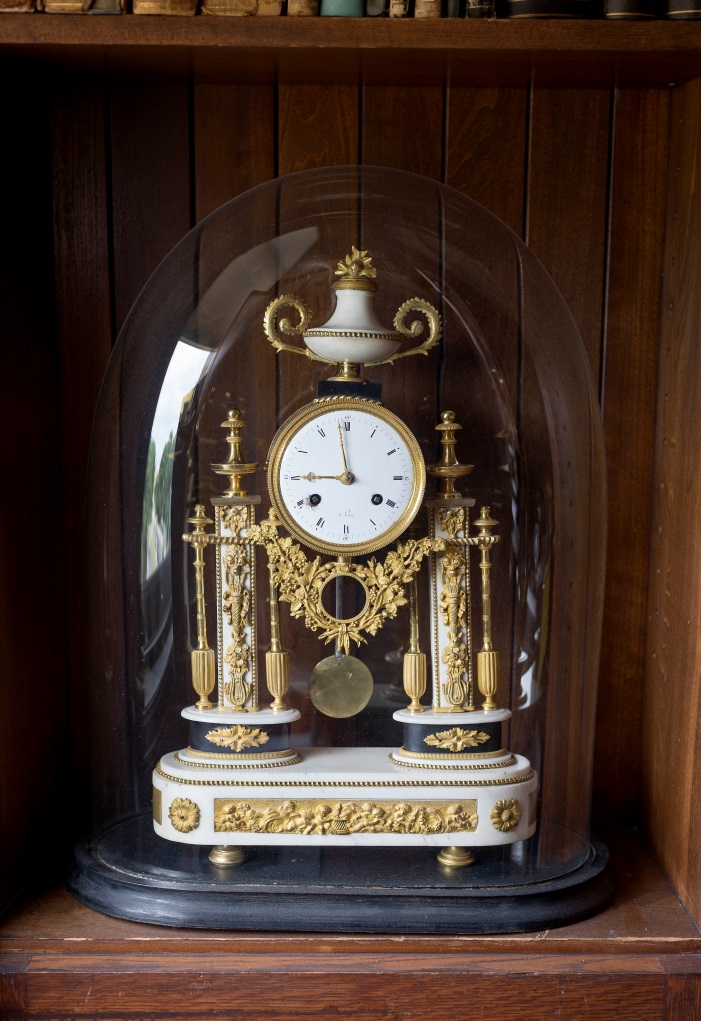
A few weeks after their reunion Lafayette thanked Adams for the visit: “I Have Been Very Happy to See You, and altho’ I Regretted The shortness of My Visit . . . I Have Cordially Enjoy’d, More indeed than I Can Express it, the pleasure to Embrace My old Respected friend and Revolutionary Companion.” A French brass and marble mantle clock that Lafayette gifted to his old friend in honor of this visit now sits in the office of the Editor in Chief of the Adams Papers Editorial Project at the Massachusetts Historical Society.


“A stain of depravity”: John Quincy Adams on Lord Chesterfield

By Gwen Fries, Adams Papers

When Louisa Catherine Johnson wrote to her then-fiancé John Quincy Adams on March 20, 1797, she desired to impress him with her reading of Lord Chesterfield’s Letters to His Son. The reaction she received was not the reaction she expected.

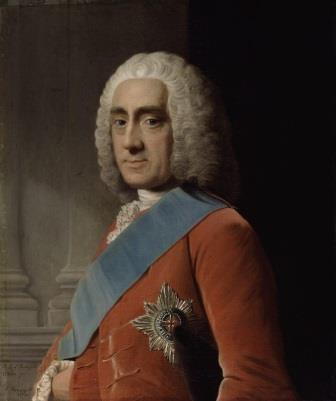
Philip Dormer Stanhope, 4th Earl of Chesterfield

(National Portrait Gallery, London)

Lord Chesterfield’s Letters to His Son is a compilation of 448 letters from Philip Dormer Stanhope, 4th Earl of Chesterfield (1694–1773), to his son, also named Philip (1732–1768), from the time the boy was five until his death. The letters contain lessons on subjects such as history and mythology in the boy’s youth, but the older he gets, the more the lessons relate to what Stanhope constantly refers to as, “the useful and necessary art of pleasing.” When the boy was eleven, Stanhope wrote that he desired he should be “as near perfection as possible” as “never were such pains taken for anybody’s education” and as his opportunities for knowledge and improvement were unparalleled. “The smallest inattention, or error in manners, the minutest inelegancy of diction, the least awkwardness in your dress and carriage, will not escape my observation,” Chesterfield wrote to his son. Understandably, Philip felt the need to keep secrets from his father. Upon his death from edema in 1768, Chesterfield discovered that Philip had been secretly married for ten years and had two sons. While Chesterfield provided for Philip’s two sons during what remained of his life and in his will, he neglected to leave Philip’s wife Eugenia anything, prompting her to publish over thirty years of his letters to his son. The collection of letters, published in 1774, attracted a great deal of notice in Britain and across the Atlantic.

Over twenty years after their original publication, Louisa wrote to her fiancé that she thought the letters “very good” but asked for John Quincy’s opinion on the book. John Quincy responded that he was never permitted to read the letters in his youth and harbored “too much contempt” for the principles within to have dedicated time to its perusal in his adulthood. Furthermore, he told her Chesterfield had a “stain of depravity which pervades all his ideas of morality” and that could only generate an “accomplished knave.” He advised her to read Samuel Johnson instead and leave Chesterfield’s “fraud” and “baseness” alone. (There is a 1779 copy of Stanhope’s work in the Stone Library at Peacefield with John Quincy’s bookplate attached.)

Undoubtedly, John Quincy’s fervent ideas about the book he claimed not to have read came, in part, from his parents. When his mother Abigail requested a copy in 1776, his father dissuaded her, telling her she wouldn’t want it as the letters were, “stained with libertine Morals and base Principles.” Abigail accepted her husband’s advice but got her hands on a copy four years later. After perusing the letters, she agreed that Chesterfield was filling his son’s mind with “the most immoral, pernicious and Libertine principals.”

Though John Quincy was no stranger to a father’s care, attention, and critiques, his relationship with his father little reflected the relationship of the Stanhopes. While John Adams urged his son to study the history of revolutions, Chesterfield outlined the proper way to bid farewell to mistresses. Chesterfield was, and urged his son to be, a chameleon in the world, a far cry from John Adams, the possibly uprooted but never swayed oak. In fact, Chesterfield’s instruction was so opposed to John Quincy’s lifestyle that he admitted to Louisa he felt as though Chesterfield were “personally satyrising” him.

John Quincy’s reaction to the text perhaps realizes his father’s April 15, 1776 wish that his children should “wear mean Cloaths, and work hard, with Chearfull Hearts and free Spirits” and that they would “scorn Injustice, Ingratitude, Cowardice, and Falshood. Let them revere nothing but Religion, Morality, and Liberty.” Nowhere did John Adams mention the useful and necessary art of pleasing.

“He plants trees for the benefit of later generations”: John Quincy Adams’s Motto

By Rhonda Barlow, Adams Papers

In the summer of 1830, John Quincy Adams was preoccupied with two projects: planting trees on his properties in Quincy and reading the works of the Roman statesman and philosopher, Cicero, in the original Latin. Just two years earlier, in an 11 May letter to his son Charles Francis, John Quincy had lamented that he had not planted trees in his youth, for if he had, he could now enjoy their fruits and shade. He likewise wished he had read Cicero (106–43 B.C.) in Latin forty years earlier, when it would have been more profitable for his public service. He kept records of his planting and his reading in his Diary, which he had started in 1779, and by his death in 1848, filled 51 volumes.

On 14 August 1830, he started reading Cicero’s Tusculan Disputations, a philosophical treatise that began with “On the Contempt of Death.” In the midst of Cicero’s moralizing and speculation, a quote from the Roman poet Caecilius Statius leapt off the page:

Serit arbores quae alteri seculo prosint

John Quincy, writing in his Diary, made this translation from the Latin:

“He plants trees, says Statius… for the benefit of another century: for what purpose, if the next century were something to him? The diligent husbandman then shall plant trees, upon which his own eyes shall never see a berry? and shall not a great man plant laws, institutions, a Commonwealth?”

Cicero drew a comparison between the farmer and the statesman; but John Quincy was both. In his Diary, JQA followed his translation with this personal reflection:

“I have had my share in planting Laws and Institutions, according to the measure of my ability and opportunities— I would willingly have had more— My leisure is now imposed upon me by the will of higher powers, to which I cheerfully submit, and I plant trees for the benefit of the next age, and of which my own eyes will never behold a berry— To raise forest trees requires the concurrence of two Generations, and even of my lately planted nuts seeds and Stones, I may never taste the fruit— Sero arbores quae alteri seculo prosint.” Here John Quincy altered the Latin significantly, from Caecilius Statius’ “He plants” to “I plant.”

Having lost the 1828 presidential election to Andrew Jackson, John Quincy faced an early retirement from public life. He had passed from planting a republic to planting a garden. He could not forget the brief quote from Caecilius Statius. “Seculo prosint” kept appearing in his Diary as he cared for his trees. But within three months, he was elected to serve in the U. S. House of Representatives, and given a fresh chance to continue to plant laws for another century, another age, another generation.

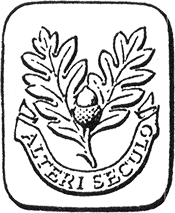
In June 1833, President Andrew Jackson, was in Boston inspecting the local troops. While listening to the roar of the cannons in the distance, John Quincy, alone with his seedlings, proclaimed alteri seculo as his motto. The Latin phrase was a shout of triumph in the midst of defeat. His grandson, Henry Adams, recorded that JQA designed a seal, featuring an acorn and two oak leaves, and began using it to seal his letters. He even made a fob for his watch, and carried it everywhere (Catalogue of the Books of John Quincy Adams, Boston, 1938, p. 144–145).

This seal now adorns every volume of The Adams Papers, and appears on the website for the digital edition.


“Legible only to myself”: John Quincy Adams’s Shorthand

By Gwen Fries, Adams Papers

A line in John Quincy Adams’s 1788 diary is the earliest example of his use of English poet John Byrom’s shorthand system. The system replaces words with symbols to make writing faster and, eventually, easier. Six years later, Adams recorded in his diary that his youngest brother, Thomas Boylston, was attempting to teach himself shorthand and noted that he had once endeavored to learn the system, “but soon gave over the pursuit; not having a very high opinion of the utility of the art.”

Later in life John Quincy changed his mind about shorthand’s usefulness, though he did not strictly adhere to the Byrom system. The symbols, some of which are his own variations, appear in his diary more frequently beginning in 1810. John Quincy penned an entire sonnet in shorthand on October 30, 1826. He wrote, “I record it thus that it may be legible only to myself, or to a reader who will take the trouble to pick it out of the short-hand— If it were better poetry I would have written it at full length.”

Though it at first appears to be a page of scribbles, by using a combination of Byrom’s original structure and the hints John Quincy scattered throughout his papers, it is indeed possible to “pick it out.” The linear symbols represent consonants and digraphs; vowels are represented by dots, if at all. If a symbol stands alone, it represents a commonly used word.


Directly translated, the first line of the sonnet (above) reads, “Da f/v m fthrs brth I hl th y.” Once the vowels and commonly used words are filled in, we get “Day of my father’s birth I hail thee yet.” Let’s examine some of the symbols used here. The first symbol in the line is a “d.” If it stood alone, it would mean “and;” however, it is modified by a dot. The placement of the dot reveals what vowel it represents. From top to bottom, the dots represent A E I O U. Because it sits at the top of the symbol, we can read the letters as “da.” The word is “day.” For longer words, several symbols are combined. You can see the green that represented f or v in the second word is repeated in the fourth; in this case, it represents f. The next symbol, in blue, is the digraph th. The orange dash is r, and the yellow line is s. What is written is “fthrs,” obviously, “father’s.” The r and th are repeated in the following word, with a b at the front, “brth,”—“birth.” Note that even though the th arch is flipped upside down, the meaning remains the same.

Using past examples of John Quincy’s shorthand as a guide, you simply need to write out what you know, use context clues, repeat the process fourteen times, and you’ve picked out the sonnet!

From Hero to Barbarian: The Adamses on Andrew Jackson

By Amanda M. Norton, The Adams Papers

As March 15 marks Andrew Jackson’s 250th birthday it will come as no surprise that this incredibly influential and controversial figure in American history provoked strong and memorable reactions from the Adams family as he entered their circle in the 1820s, eventually clashing with John Quincy for the presidency in 1824 and 1828.

The relationship between the Adamses and Jackson did not begin with hostility however. Louisa Catherine Adams recorded her first impressions of Jackson in her Diary in February 1819: “He is tall and very thin and when he smiles his countenance is very agreeable his manners are those of a Gentleman neither confidant or timid and on the whole he produced the most favourable impression— I heard much astonishment expressed by some persons not friendly to him at his being so polite as they expected to have seen him at least half Savage.” John Adams declared him a “Hero and a Conqueror” and even as the election of 1824 was underway, John asked his grandson John Adams 2d to “give my compliments to General Jackson and tell him, if I had strength enough in my old fabric I would take a “Journey to Washington” and pay my homage to the “deliver[er] of his country.” He also thought that “if General Jackson should be chosen,” that John Quincy should continue as Secretary of State for Jackson “untill he has time to look about him and choose a successor, and for what I care, throughout his whole administration.”

The controversial conclusion to the election of 1824 which saw John Quincy’s elevation to the presidency through the House of Representatives, and even more so, the bitterness and rancor that surrounded the election of 1828, which had included deeply personal attacks, ended forever any positive feelings by the Adams family for the newly elected Andrew Jackson.

This change in attitude and the depth of their animosity toward the man was fully revealed in 1833 in the reaction to Harvard University’s decision to award Jackson an honorary doctorate of laws. Louisa Catherine Adams mocked the idea in rhyme:

            Discerning old Harvard presents the Degree

            Old Hickory asks pray what means LLD?

            The Corporate Sages afraid of excess

            Reserve for themselves that of A.S.S.

John Quincy meanwhile recorded his conversation with the president of the university, Josiah Quincy III, on the matter in his Diary, declaring that as “an affectionate child of our alma Mater, I would not be present to witness her disgrace in conferring her highest Literary honours upon a barbarian, who could not write a sentence of Grammar, and hardly could spell his own name.” To Charles Francis Adams the event marked “the climax of absurdity in General Jackson’s elevation.”

A political feud too personal to overcome, even forgiveness was difficult and the Adamses and Jackson would have “no intercourse of a friendly character” ever again.

“A solid Judiciary”: John Adams and John Marshall

By Amanda M. Norton, Adams Papers

John Adams’s administration was in its waning days as January 1801 closed. While Thomas Jefferson had not yet been officially elected, Adams knew for certain that he was not going to continue in office and would soon head home. In the meantime, however, there was still plenty of work to be done.

The empty seat on the Supreme Court, the Chief Justice’s chair in fact, was one of his more pressing issues as the previous chief justice, Oliver Ellsworth, had resigned his seat in October. John Adams had no doubts about the importance of the high court in the young republic: “The firmest Security We can have against the Effects of visionary Schemes or fluctuating Theories, will be in a solid Judiciary,” however his first choice to replace Ellsworth, former chief justice John Jay, declined to serve in the position again. With only a few weeks left in his administration, Adams made one of the most significant and long-lasting decisions of his entire public career. On January 20, Adams formally submitted the nomination of his secretary of state, John Marshall, to serve as chief justice, to which the Senate consented one week later.

Adams sent Marshall his commission on the 31st, likely with a letter in which he requested that Marshall prepare letters of recall for John Quincy Adams to return home from his position as minister plenipotentiary to Prussia. Although Adams believed his son deserved to have his position upgraded with an appointment to Great Britain or France, he recognized that was not possible; “Besides it is my opinion that it is my duty to call him home,” Adams confessed.

Marshall accepted the role on February 4, writing to Adams, “I pray you to accept my grateful acknowledgements for the honor conferd on me in appointing me chief Justice of the United States. This additional & flattering mark of your good opinion has made an impression on my mind which time will not efface. I shall enter immediately on the duties of the office & hope never to give you occasion to regret having made this appointment.” Adams replied the same day, thanking Marshall for his acceptance but requesting that given the “Circumstances . . . of the times” he stay on as secretary of state for the remainder of Adams’s term. Chief Justice Marshall would serve for the next 34 years and profoundly influence and define the role and place of the Supreme Court in the nation in ways that endure to the present.


An Adams Homecoming

By Amanda M. Norton, Adams Papers

On September 4, 1801, John Quincy Adams stepped ashore in Philadelphia, returning to the United States almost exactly seven years after he had left on his diplomatic mission to the Netherlands. He was not returning alone however; now his wife, Louisa Catherine Adams, and their first son, five-month-old George Washington Adams, accompanied him. Greeted by his brother Thomas Boylston Adams who was living in the city, the reunion was a happy but brief one. Both Louisa and John Quincy were anxious to see their parents once more but as the Johnsons lived in Washington, D.C., and the Adamses in Quincy, going together would mean a long wait for one of them. Neither wanted to put off greeting their families and so they went in opposite directions for the first time in their marriage. Louisa departed on the stage on September 12 with their son headed south, and John headed first to New York to see his sister, Nabby, before completing the journey to Massachusetts.

The decision to go independently was not without its concerns, however. Although her father was American, Louisa was “yet a forlorn stranger in the land of my Fathers” and ultimately in an unfamiliar country with an infant. John Quincy noted his distress over the separation in his Diary: “I parted from her and my child with pain and no small concern and anxiety.”

In her Autobiography, Louisa recalled reuniting with her parents for the first time in four years: “When I arrived after a tedious and dangerous journey, my Father was standing on the steps at the door of the house, expecting his Child, yet he did not know me— After he had recovered from the shock at first seeing me; he kept exclaiming that ‘he did not know his own Child,’ and it was sometime before he could calm his feelings, and talk with me.” John Quincy’s experience on the other had was quite different; on the 21st he recorded the event: “Here I had the inexpressible delight of finding once more my parents. After an absence of seven years— This pleasure would have been unalloyed but for the feeble and infirm state of my mother’s health. My parents received me with a welcome of the tenderest affection.”

As both John Quincy and Louisa settled in, they reunited with old friends and wrote to each other from afar. Although the plan was for Louisa to once again travel alone and meet John Quincy in Massachusetts, John Quincy agreed to meet Louisa and escort her and their son northward for one more significant homecoming—on November 25 John Quincy “had the pleasure of introducing my wife and child to my parents.” For her part, Louisa acknowledged that she had been received “very kindly,” but after London and Berlin, Quincy was quite an adjustment, and indeed Louisa declared, “Had I steped into Noah’s Ark I do-not think I could have been more utterly astonished.” It would take time for this homecoming to feel like home.


Fathers of the American Navy: John Paul Jones and John Adams

By Amanda M. Norton, Adams Papers

On July 6, 1747, John Paul Jones was born in Scotland. He is widely credited as the father of the American Navy for his successful campaigns as a captain during Revolutionary War. It would be fair, however, to say that John Adams might deserve a share in that title as well. From his role in drafting the original rules for the Continental Navy in 1775 to his organization of the newly created Department of the Navy as president in 1798, Adams had been a strong advocate of “Floating Batteries and Wooden Walls” as the primary system of war and defense for the young nation.

Jones and Adams got to know each other in the late 1770s while Adams was in Europe, and no one who is familiar with the Adamses will be surprised to learn that both John, and later Abigail, formed strong opinions about Jones.

John Adams noted his impression in his diary entry for May, 13 1779: “This is the most ambitious and intriguing Officer in the American Navy. Jones has Art, and Secrecy, and aspires very high. . . . Excentricities, and Irregularities are to be expected from him— they are in his Character, they are visible in his Eyes. His Voice is soft and still and small, his Eye has keenness, and Wildness and Softness in it.”

Abigail met Jones when she joined John in Europe after the war had ended, but he was nothing like she had imagined the naval hero to be: “Chevalier Jones you have heard much of. He is a most uncommon Character. I dare Say you would be as much dissapointed in him as I was. From the intrepid Character he justly Supported in the American Navy, I expected to have seen a Rough Stout warlike Roman. Instead of that, I should sooner think of wraping him up in cotton wool and putting him into my pocket, than sending him to contend with Cannon Ball,” she wrote. “He is small of stature, well proportioned, soft in his Speach easy in his address polite in his manners, vastly civil, understands all the Etiquette of a Ladys Toilite as perfectly as he does the Masts Sails and rigging of a Ship. Under all this appearence of softness he is Bold enterprizing ambitious and active.”


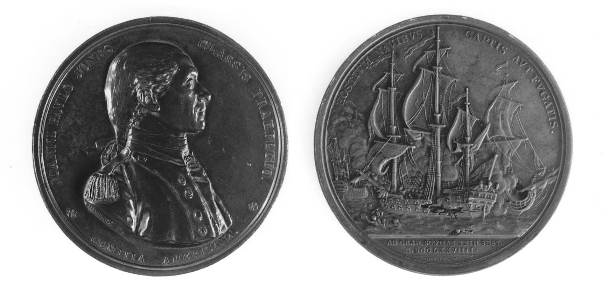
While they did not become close friends, John Paul Jones did offer JA his bust, and to the end of his life, JA remembered Jones as intelligent, a good letter writer, and “gentlemanly in his dress & manner.” As both men regarded the American Navy as central to the success of the nation, Adams never failed to respect Jones’ naval ability or the “glorious success” of Jones’ famous capture of the British frigate Serapis, for which the Continental Congress awarded Jones a medal, the first to commemorate a naval victory. A restrike of that medal is housed within the collections of the Massachusetts Historical Society. 


Beyond John and John Quincy: Thomas Boylston Adams’ Letters and Diary

By Christopher F. Minty, Adams Papers

Thomas Boylston Adams, John and Abigail Adams’ youngest son, spent the majority of his life in the shadows of his father and his eldest brother, John Quincy. In part because of this—and much like his other brother, Charles—writers often overlook Thomas Boylston. Yet he might have been the most interesting of all.

In the next volume of Adams Family Correspondence, however, Thomas Boylston is a central figure. Thomas Boylston wrote fantastically detailed letters to family members. He also wrote to prominent Americans, including editor Joseph Dennie Jr. and U.S. diplomat Joseph Pitcairn. He offers detailed commentaries on not only Franco-American relations and the Quasi-War, but also on the French Revolution, the pageantry and partisanship of domestic politics, print culture, George Washington’s deification, and the intricacies of eighteenth-century travel, all of which he does with a certain panache not typically associated with the Adams men. When discussing allegations of Napoleon Bonaparte’s death on 2 March 1799, he noted, “I believe, nor care a whit about it.” In September 1799, after being presented with German documents, he told John Quincy: “I will never decypher a page of German writing without payment or the prospect of it. It begins to cost me money merely to profess myself a lawyer and I should very soon be insolvent if I practised it without reward or the hope of it.”

His diary is similar. It’s neither as comprehensive nor as prolonged as other Adams diaries, but it’s just as detailed and it’s written in the same style as his letters. Taken together, Thomas Boylston’s writings offer readers a unique picture of elite life in late eighteenth-century America.

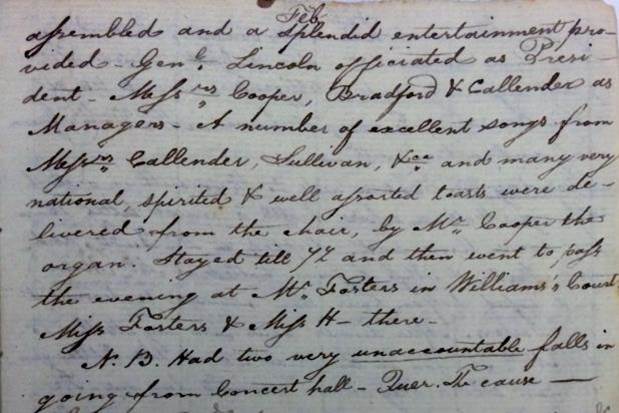
On February 22, 1799, for instance, Thomas Boylston noted in his diary that he attended an event to commemorate “the birth day of ‘Columbia’s pride & boast,’” that is, George Washington. On 1 March, Thomas Boylston offered his father a brief summary of the event. He described himself as “animated by the glow of patriotism” and noted that he delivered a toast to “Miss Nelly Custis,” who had recently married Washington’s nephew, Lawrence Lewis. His diary, however, contains a far more effusive description, and, unlike in his letter, he detailed how many people were at the event and, more important, where it was held. Adams noted that about 250 people descended upon Concert Hall in Boston for “a Splendid entertainment.” The occasion was so “Splendid,” in fact, that he had “Had two very unaccountable falls in going home from Concert hall.” More than seventeen “national, spirited & well assorted toasts” were delivered that evening; it’s not hard to guess why he twice lost his footing. “Quer. The cause,” he ended the entry.

Most of Thomas Boylston’s letters and diary entries are similar—wonderfully written, full of personality, imagination, and memory. Perhaps upon the publication of the next Adams Family Correspondence volume, someone interested in Thomas Boylston Adams might put him in the spotlight.

“Thomas Jefferson Survives”: The Last Letters of Jefferson and Adams

By Amanda Norton, Adams Papers

As we celebrate Thomas Jefferson’s 273rd birthday today, we also celebrate his renowned friendship with John Adams. Revolutionary partners turned bitter political enemies, they reconciled in their retirement, and their final words to each other, written just months before their coincident deaths on July 4, 1826, serve as a fitting capstone to a correspondence that has so justly become famous.

Writing to “Ex-President Adams” on March 25, Jefferson introduced his grandson, Thomas Jefferson Randolph, who would deliver the letter when he visited Boston, noting that Randolph “would think he had seen nothing were he to leave it without having seen you.”

In this final letter, Jefferson poetically contrasted the present age with the one he and Adams had lived through:

“Like other young people, he wishes to be able, in the winter nights of old age, to recount to those around him what he has heard and learnt of the Heroic age preceding his birth, and which of the Argonauts particularly he was in time to have seen. it was the lot of our early years to witness nothing but the dull monotony of Colonial subservience, and of our riper ones to breast the labors and perils of working out of it. theirs are the Halcyon calms succeeding the storm which our Argosy had so stoutly weathered.”


Replying on April 17, Adams opened with his characteristic good-natured humor:

“Your letter of March 25th. has been a cordial to me, and the more consoling as it was brought by your Grandsons Mr. Randolph and Mr. Coolidge. every body connected with you is snatched up, so that I cannot get any of them to dine with me, they are always engaged— how happens it that you Virginians are all sons of Anak, we New Englanders, are but Pygmies by the side of Mr. Randolph…. Your letter is one of the most beautiful and delightful I have ever received.”

Adams, however, was never quite as optimistic as Jefferson was and did not entirely concur with the characterization of the present age as “Halcyon calms.” Seeing the attacks levelled on his son John Quincy’s presidency, Adams viewed the political landscape cynically: “Public affairs go on pretty much as usual, perpetual chicanery and rather more personal abuse than there used to be…. Our American Chivalry is the worst in the World. it has no Laws, no bounds, no definitions, it seems to be all a Caprice.”


Adams could only be so pessimistic, however. In spite of the wide differences between the men, the friendship between Adams and Jefferson had endured, as had the independence they fought for. And on that Jubilee when both Adams and Jefferson passed, John Quincy Adams recorded in his diary that his father’s last words were “Thomas Jefferson survives.”

Adams was without a doubt correct that Jefferson would survive as a monumental figure for the nation. If you want to learn more about the Jefferson that survived beyond the statesman, there’s still time to experience The Private Jefferson here at the MHS.