
By Laura Wulf, Collection Services
This is the third online post about our collection of pre-Revolutionary War newspapers annotated by Boston shopkeeper Harbottle Dorr, Jr. In the first post Nancy Heywood introduced you to Dorr. In the second post Peter Steinberg highlighted some of the more humorous phrases we ran across in Dorr’s indexes. In this post, I thought I would share a behind-the-scenes look at the work that went into creating the digital images that will appear on our website in early 2013.
The four volumes that make up this collection began their digitization journey in the conservation lab where they were cleaned and rehoused in individual acid-free folders to insure their longevity. You can read about the conservation work in our Spring 2012 issue of the Society’s newsletter Miscellany.
Once the conservation work was complete, the four-volume set, containing 3,674 pages, moved into the hands of the MHS Digital Projects team. Our very first task was to create spreadsheets itemizing each page so that we could standardize the digital file names, organize the sequencing, and track and account for every page of every newspaper.
Next, volumes 1 and 2 were delivered to the Digital Services Department of the Boston Public Library (BPL) for imaging. As a member of Digital Commonwealth (a Web portal and fee-based repository service for online cultural heritage materials held by Massachusetts libraries, museums, historical societies, and archives), the MHS is eligible for free digitization services provided by the BPL as part of a grant funded by the Library Services and Technology Act (LSTA) and administered by the Commonwealth of Massachusetts Board of Library Commissioners (MBLC).
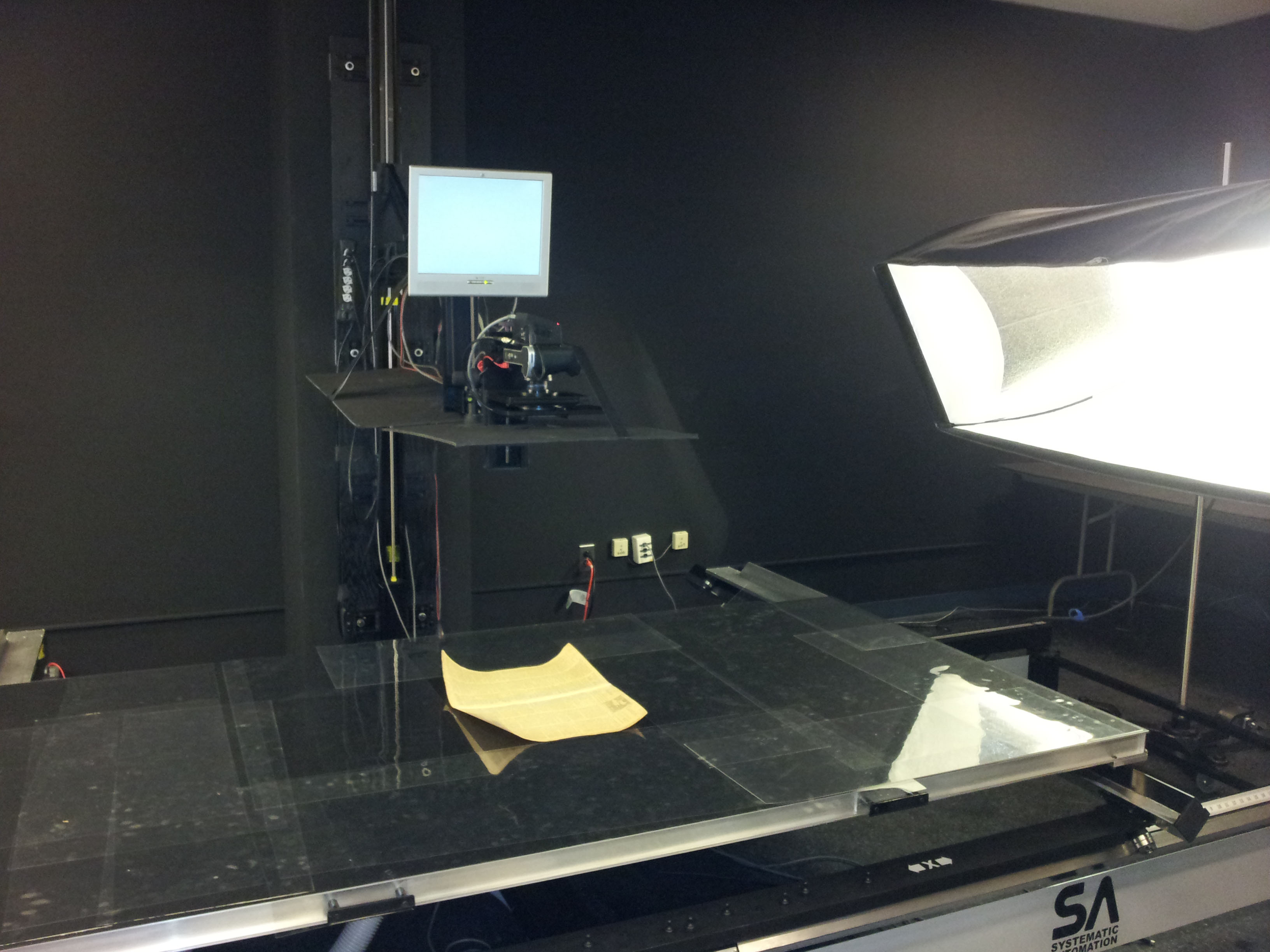
The BPL’s photography studio is equipped with 3 high-end digital camera systems, a copystand, and a vacuum table that holds items flat and perfectly parallel to the camera sensor. This equipment allows the technicians to create much higher quality digital images of the newspapers than we could create with our digital single lense reflex (DSLR) camera and copystand. Here’s what the set-up at the BPL looks like. Notice how, before the vacuum table is turned on, the corners of the newspaper are curled up:
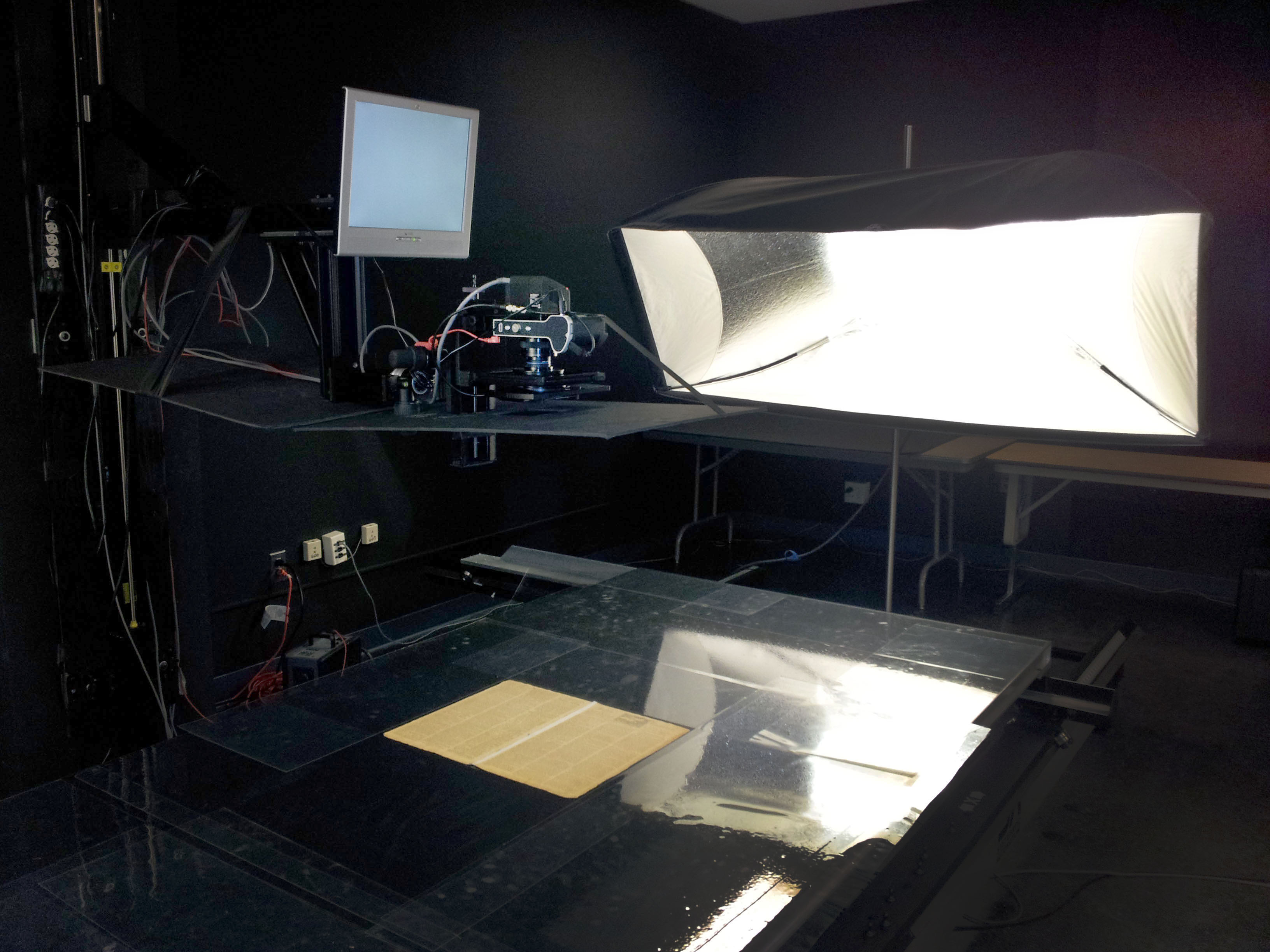
And here is the same set up with the vacuum table turned on and the newspaper held down flat by the suction. Without the suction of the table the technicians would have to place a large piece of glass on top of the newspaper to hold it down flat, which is cumbersome, slows production and creates glare problems from the light source:
The BPL spent close to three weeks completing the digitization and file preparation. Volumes 1 and 2 were then returned to MHS along with a hard drive holding 1627 high resolution TIFF files, one for each page. We are currently working on figuring out what size images will work best on our website (given the capacity of our server, the large number of images to be presented, and the need for clear, readable text), what size repository statement will make it clear that the images come from our collection but not interfere with the online users’ ability to read the material, how to structure the website so that it will work efficiently, and how to design the interface so that it will be easy for people to use.
Once we have made these decisions, we will begin the process of creating the smaller images for display, uploading them onto our server, fine-tuning the website based on feedback from usability testing, and documenting our procedures so that the remaining images of volumes 3 and 4 can be created the same way for a consistent and high quality online presentation. The project is time consuming and labor intensive but we’re excited about this most unusual collection and hope that you’ll take the time to enjoy it once it’s up and running early next year.

 Martha Hodes
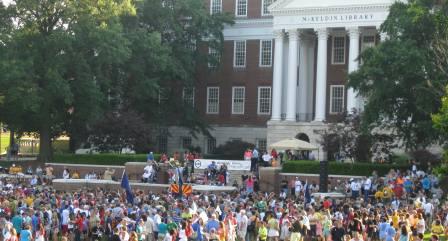 I was fortunate enough to travel with the Massachusetts delegation to this year’s national competition. The festivities began on the evening of Sunday, June 10, with a rousing opening ceremony on the lawn at McKeldin Library. Imagine thousands of students, parents, and teachers cheering, chattering, and trading pins and you’ll have a good sense of what the opening ceremony was like. The competition got down to business on Monday morning, and while in College Park I had the opportunity to serve as a judge along with more than 300 other historians and other education professionals. Anyone who has ever judged at a history day competition can tell you what an amazing experience this is. I met with many talented and enthusiastic students over the course of the three-day competition. They taught me a great deal about topics as diverse as Levittown, the use of helicopters in the Vietnam War, and Nicola Tesla. Thanks to a very well illustrated project on Civil War hospitals, I also have new appreciation for modern medicine.
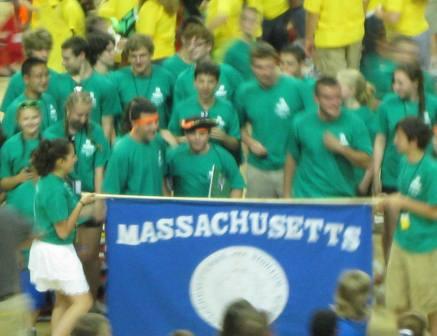 began with the best parade I’ve ever seen: a parade of participating students across the floor of the arena. I watched over 2,000 students circle the arena with everything from state flags to inflatable lobsters! Throughout the morning, dozens of students were singled out for awards and special prizes, and the boisterous crowd made sure that each winner was duly appreciated. Prizes were sponsored not only by NHD but by friends of history like the
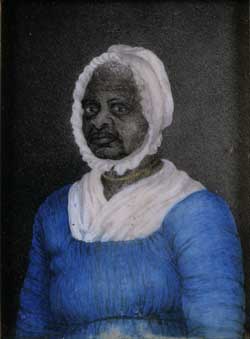 If you are interested in learning more about the end of slavery here in Massachusetts, visit our web feature