By Andrea Cronin, Reader Services
The molasses trade has a long and sticky history in Massachusetts. Though sugar is far more common in the kitchen cupboard today, molasses lingers in the cultural lore of Boston. Looking back over that tradition one sees how far back those roots go. In a letter to Judge William Tudor on 11 August 1818 John Adams credited molasses as helping usher in American independence:
Witts may laugh at our fondness for Molasses & we ought all join in the laugh with as much good humour as General Lincoln did, Genal Washington however always asserted & proved that Virginians loved Molasses as well as New Englandmen did. I know not why we should blush to confess that Molasses was an essential Ingredient in American Independence. Many great Events have proceeded from much smaller causes.
How could the secret ingredient in pot roasts have influenced the course of history in Massachusetts and the nation? In the 18th century, the Sugar Islands experienced an exponential demand for sugar from European colonizers. There was profit not only in sugar but in distilling the by-product of sugar production, molasses, into rum. The abundance of molasses gave rise in part to the ‘Triangle Trade’ exchange: New England rum to West Africa and Europe, West African slaves to the Sugar Islands, and Sugar Islands’ molasses to New England rum distilleries. With the Molasses Act of 1733 Great Britain imposed a tax on molasses imported from foreign colonies, such as the French or Dutch West Indies. Some point to this act as the stirrings of the beginning of the American Revolution, as the tax struck fear in the northern colonies by affecting their rum trade.
Oh, the rum! With incoming shipments of Sugar Islands’ molasses, Massachusetts entertained a booming rum industry. There were over 25 distilleries in Boston alone by the mid-eighteenth century. The surrounding cities, including Watertown, Haverhill, Charlestown, and Medford soon followed the “city upon a hill” into rum distillation.
Then, nearly a century after Adams wrote to Judge Tudor molasses literally engulfed part of Boston. Yesterday marked the 94th anniversary of the great Boston molasses flood, affecting Commercial Street in the North End on 15 January 1919. It was on this unusually warm day that the US Industrial Alcohol/Purity Distilling Company tank filled with 2,300,000 gallons of molasses spilled into the streets and harbor. The flood killed 21 individuals and injured more than 150 others while damaging an estimated $100,000,000 of property. The 1919 tragedy inundated the newpapers with conspiracies and conjecture about how the tank had failed so epically. It is said that even now it is not uncommon to hear that on a hot summer day there is a lingering scent of molasses in the North End.
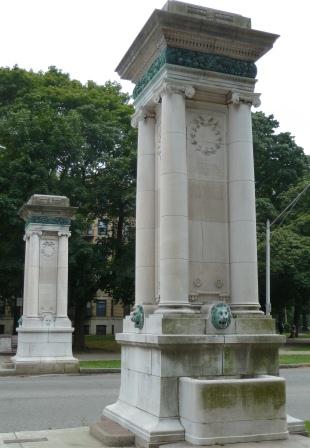 Erected in 1905, the Westland Gate is composed of a pair of large marble piers with columns on each corner and bronze lion head fountain spouts on each face. Beneath two of the spouts are marble basins. Flanking the piers are balustrades and two marble benches. The piers are constructed of white marble, while the balustrades and benches are Tennessee pink marble. While the fountains used to function and served as a water trough for animals, this use discontinued in 1919 due to an epidemic among horses.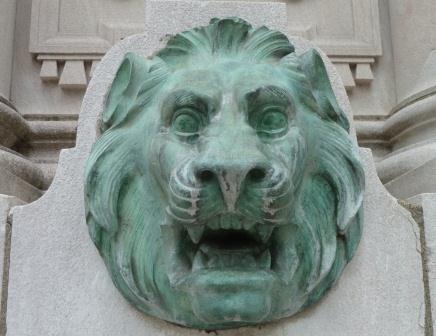
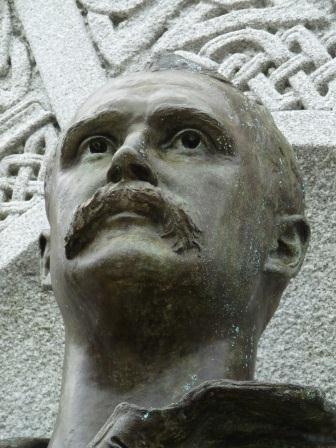
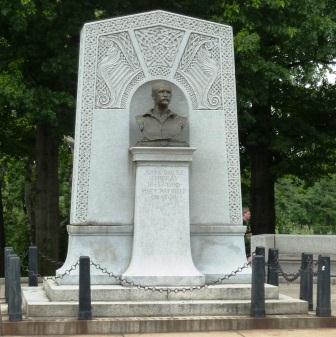 and social activist who brought his passion and patriotism to Boston. He was a giant in the city and won the admiration and respect of all those he met. Upon his death in 1890, thousands of people descended on Tremont Temple to pay their respects.
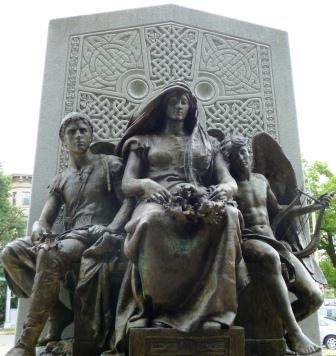 The figures are placed in front of a backdrop composed of a Celtic cross and Celtic knots carved into the stone.
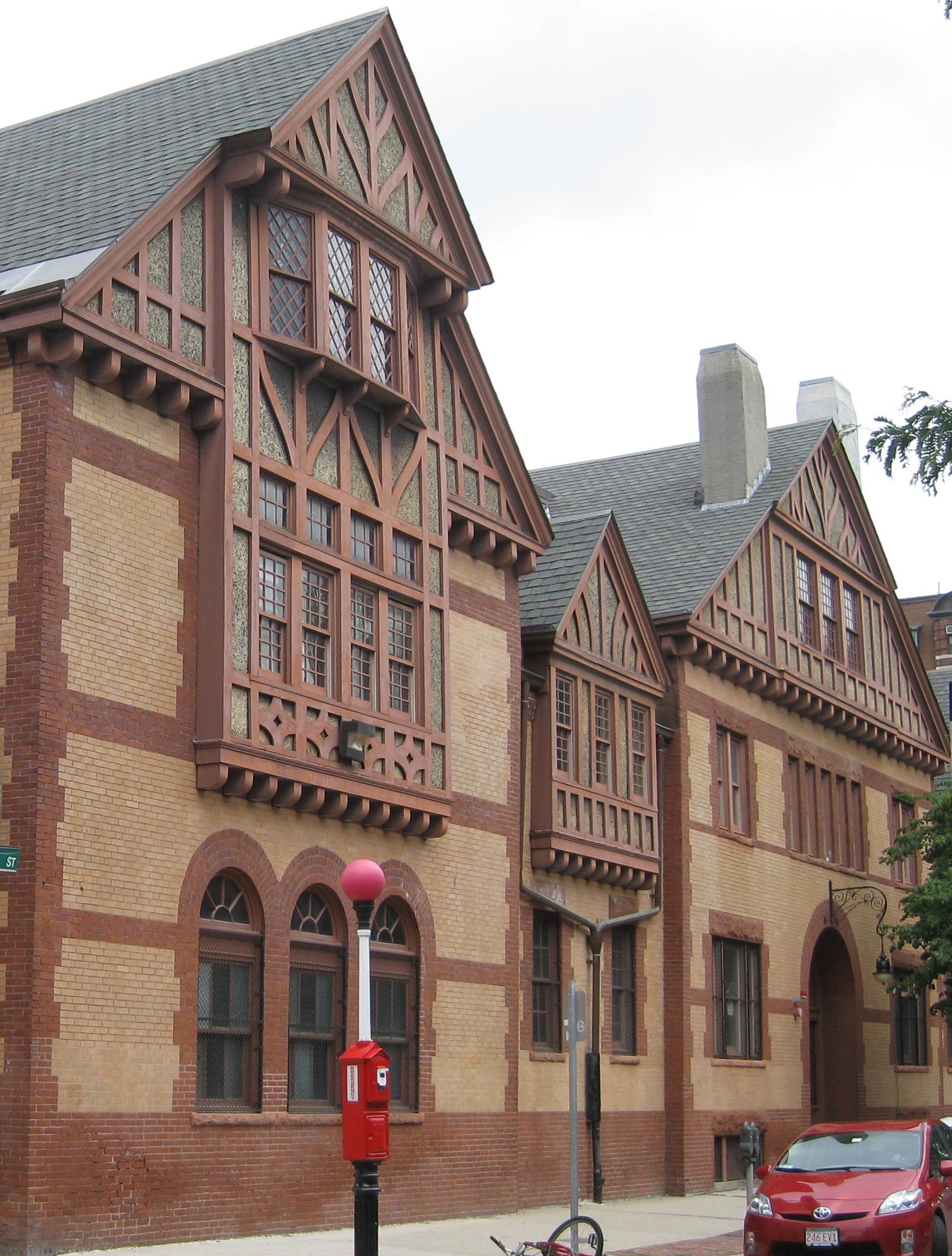 Just think of the variously colored steeples that dot the campus of Harvard in nearby Cambridge; the golden dome of the State House; and of course, the grand brownstones that line Newbury and Beacon Streets and Commonwealth Avenue. One architectural style that is not well represented in Boston, though, is the Tudor Revival style. And yet, just around the corner from the MHS, among the rows of stone and brick apartment buildings, is a fine example of that style.
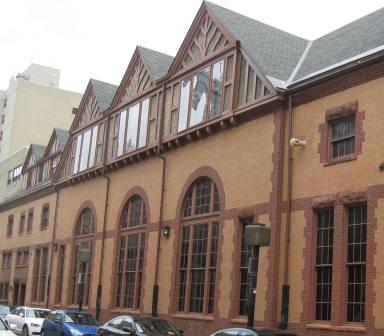 A quick look at the building’s exterior shows one repeated feature that hints to its original use: around the building are several large portals — some arched — resembling modern-day garage doors giving the viewer the impression of stables.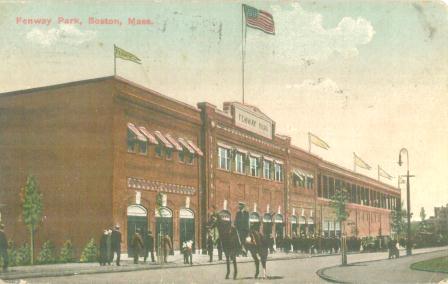
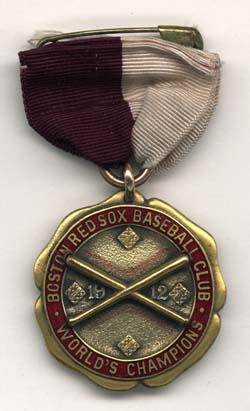
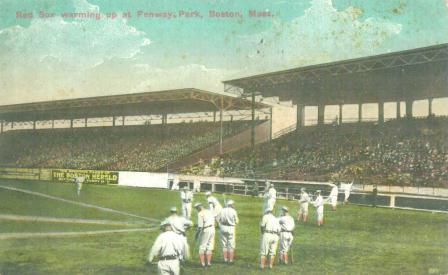 We at the MHS are lucky. Being just a short walk from the ball park allows us to watch as a sea of red and blue outfitted fans make their way down Boylston Street toward the park for each home game. This morning, I was struck by the fact that the MHS has stood at 1154 Boylston since 1898, more than a decade before the park opened. It made me wonder if Charles Francis Adams, MHS president from 1895 to 1915, and other MHS members stood before one of the large first floor windows and watched folks make their way to Fenway Park 100 years ago today. If they did, I would imagine they did not worry so much if the end of the day game coincided with quitting time at the MHS — as the current staff, anticipating traffic woes, now does.