
By Nancy Heywood, Collection Services
What do you remember learning about the Boston Massacre? Did you learn the event took place outside the Old State House (at that time called the Town House) in Boston? Was it presented to you as a key event leading up to the American Revolution? Do you remember learning that five people (including Crispus Attucks) lost their lives? If you think of a visual image, do you think of the engraving by Paul Revere depicting townspeople being fired upon by an orderly row of British soldiers? Are you curious to explore how various primary sources describe the chaotic confrontation that took place on 5 March 1770?
It is interesting to read the words of people who were either at the scene or were able to comment on the overall atmosphere of the town after the event. Thanks to funding from the Massachusetts Society of the Cincinnati, the MHS has created a new web presentation, Perspectives on the Boston Massacre, featuring letters, pamphlets, diary entries, legal notes, and engravings relating to the Boston Massacre.
Some examples of the manuscripts that are available for browsing and reading include diary entries written by merchant John Rowe who observed, “the Inhabitants are greatly enraged and not without Reason” and a letter dated 6 March 1770 by Loyalist Andrew Oliver, Jr. who wrote, “Terrible as well as strange things have happen’d in this Town.” The website also includes printed materials; some convey the Patriot perspective of the event (A Short Narrative of the Horrid Massacre in Boston and On the Trial of the Inhuman Murderers) and some the Loyalist view (A Fair Account of the Late Unhappy Disturbance at Boston).
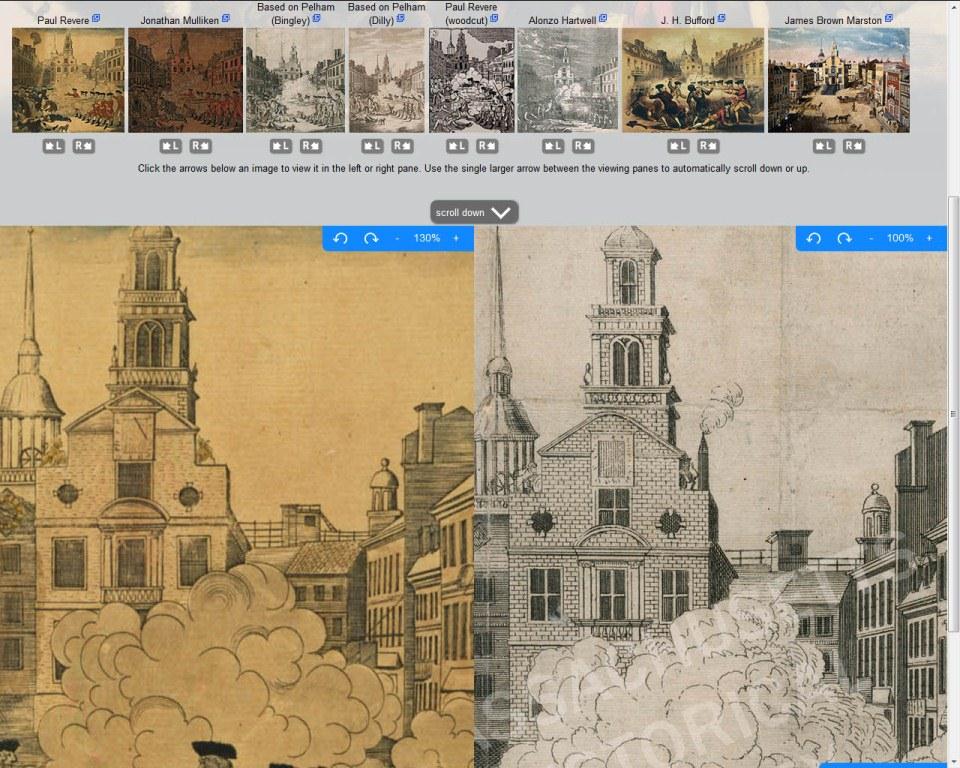
One section of the new web presentation focuses on visual representations of the Boston Massacre. Seven prints of the event, as well as one painting showing the same location in Boston in 1801, are available for close examination. Website visitors can use a comparison tool to view any two of the featured images side by side.
The website also features some selected documents relating to the two legal cases (the trial of Captain Thomas Preston and trial of the eight soldiers). John Adams served as one of the defense attorneys and the website includes page images of some of John Adams’s handwritten legal notes as well as links to the digital edition of The Legal Papers of John Adams, Volume 3, edited by L. Kinvin Wroth and Hiller B. Zobel, part of the Adams Papers Editorial Project.
The Boston Massacre was recognized as a pivotal event and supporters of the Revolutionary cause organized anniversary commemorations. The website includes published versions of orations given between 1771 and 1775 by noted figures including James Warren and John Hancock as well as a manuscript copy of an oration given by someone on the opposite side of the political spectrum who ridiculed many Patriot leaders.
Please visit www.masshist.org/features/massacre.

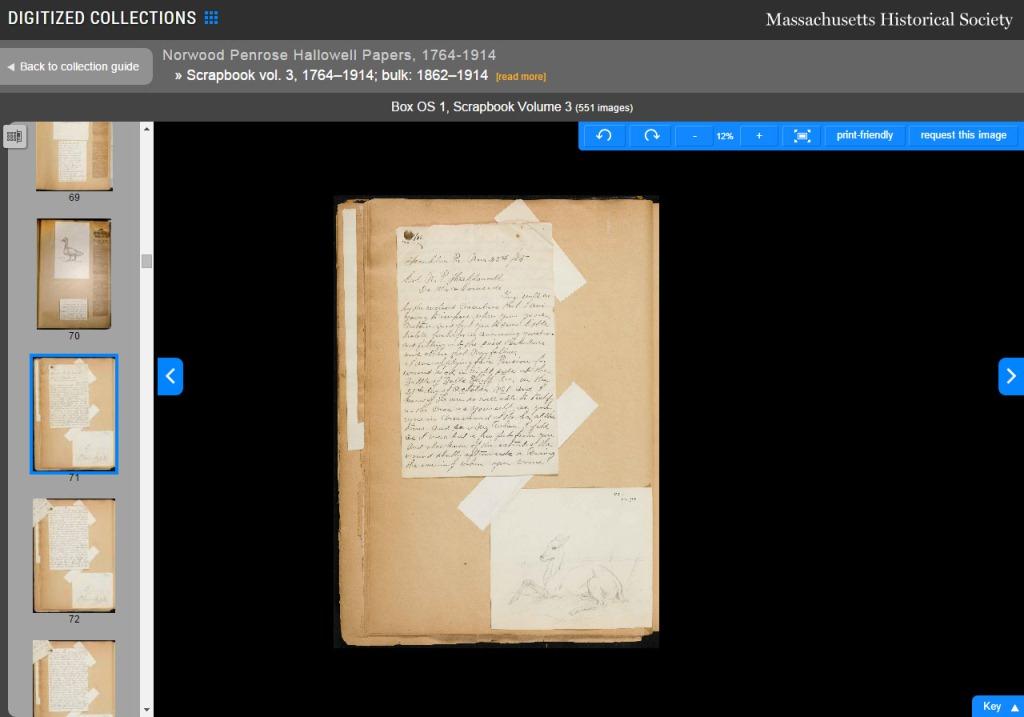
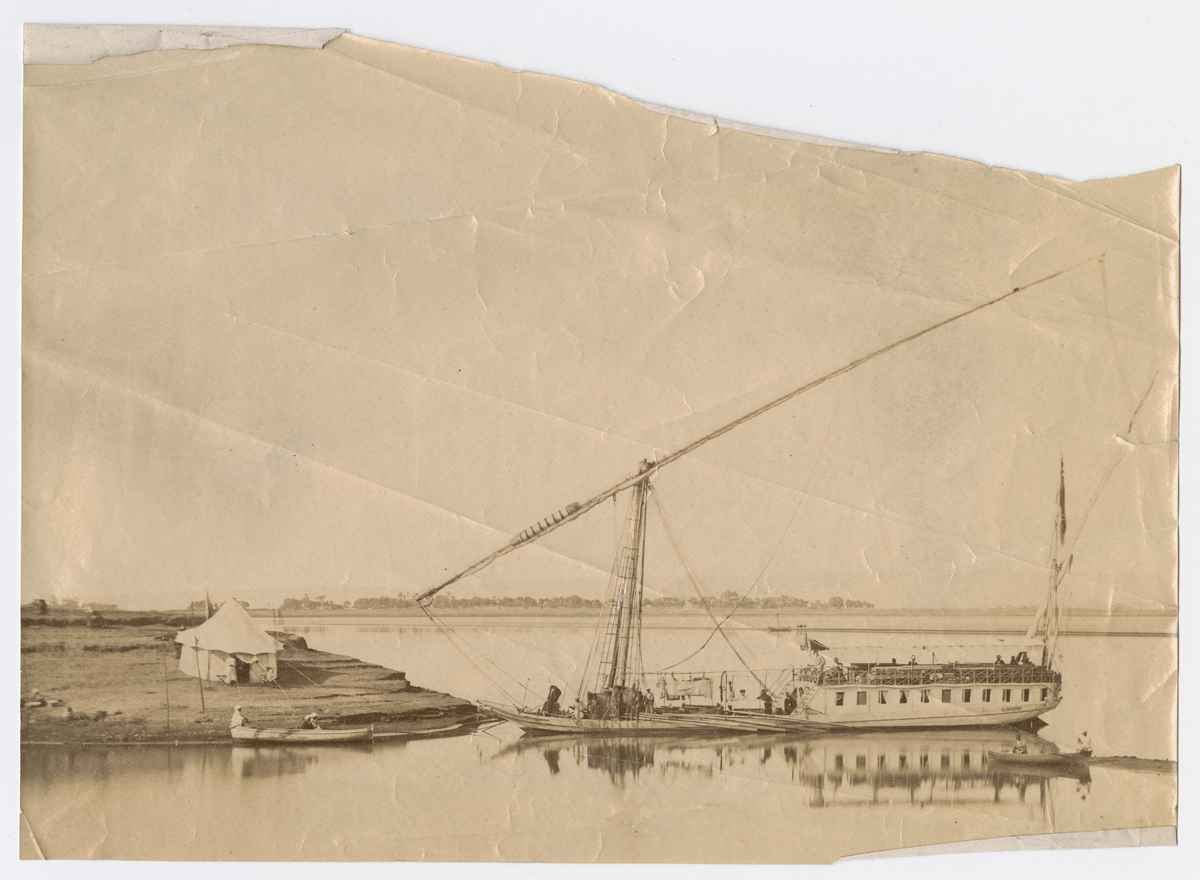
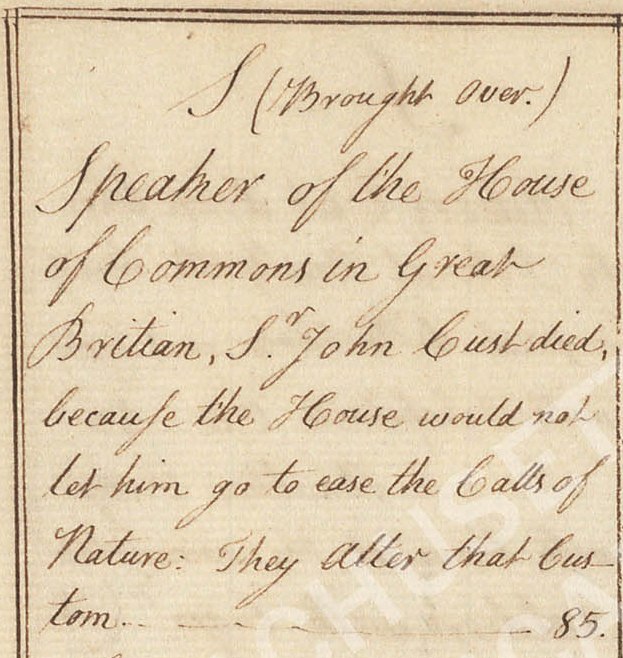
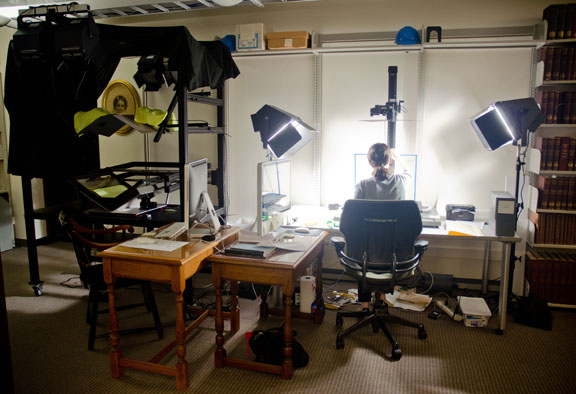 to supply somewhere in the neighborhood of 55,000 manuscript pages to a forthcoming multi-archive digital publication, China, America and the Pacific: Trade and Cultural Exchange. Adam Matthew has contracted, in turn, with Luna Imaging in Los Angeles to do the scanning. In late August, Luna shipped all of the equipment shown here and sent a representative to install and test it and train a scanning technician. The technician, shown here, is now hard at work scanning correspondence, account books, ships’ logs, and letterbooks from multiple collections, including the extensive Forbes Family Papers. Other highlights of the final product, scheduled for release in late 2013, will include the manuscript of Richard Henry Dana’s seminal work, Two Years Before the Mast, and Robert Haswell’s log of the Columbia-Rediviva, the first vessel to circumnavigate the globe
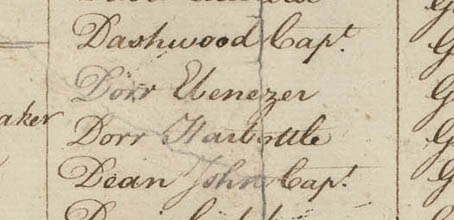 attended a dinner of the Sons of Liberty at Liberty Tree Tavern in Dorchester. A
 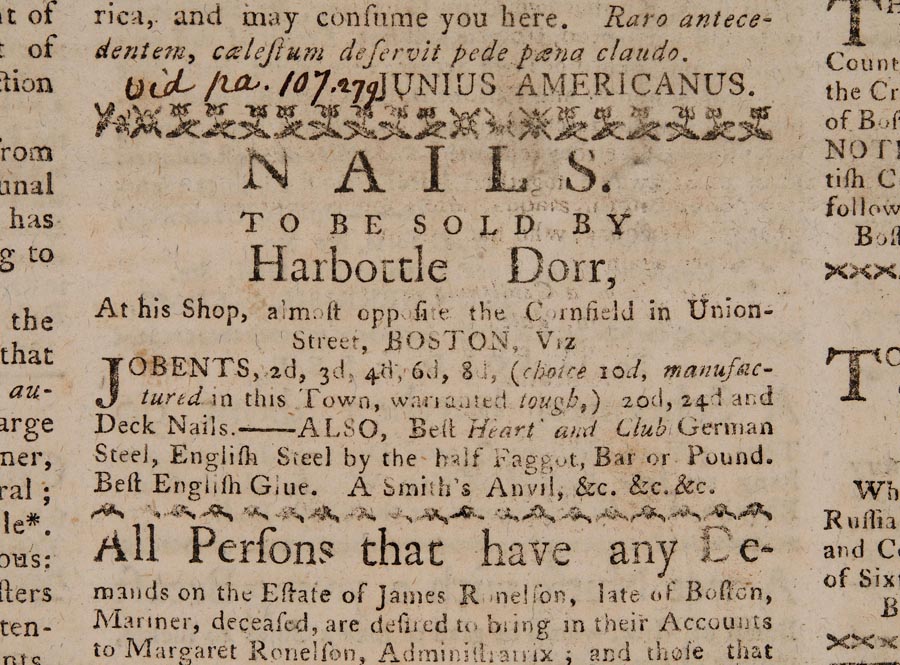 A newspaper advertisement appearing in the 15 January 1770 issue of the Boston-Gazette, and Country Journal (on page 3) indicates that Dorr sold many kinds of nails and different types of steel in his shop located on Union Street. His inventory included jobents (nails used to fasten hinges and/or other thin iron plates to doors and window frames), deck nails (nails used to fasten planks to the decks of ships), German steel, and English steel. These details help us formulate a picture of Harbottle Dorr–at the counter of his shop, surrounded by hardware, with a newspaper open in front of him, writing in the margins in between transactions with customers.
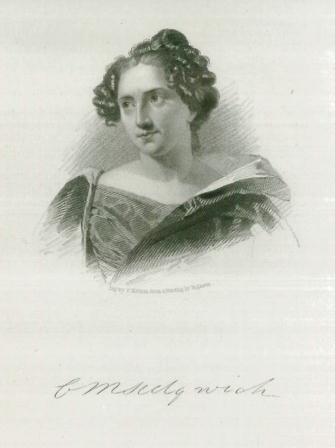 Catharine Maria Sedgwick (1789-1867) was a member of the illustrious Sedgwick family of western Massachusetts and a prolific antebellum author. She wrote many novels and short stories between 1822 and 1862, including A New-England Tale, Redwood, Hope Leslie, Clarence, The Linwoods, and Married or Single? Very popular in her time and praised by many of her contemporaries, including William Cullen Bryant, James Fenimore Cooper, Ralph Waldo Emerson, Harriet Martineau, and Edgar Allan Poe, Sedgwick was largely overlooked by scholars in the century following her death, and most of her books were out of print for decades. Recently, however, there has been a resurgence of interest in her life and work.