
Reflections of an Education Intern

By Heather Baxter, Education Intern

Over the last six months I have had the incredible opportunity of working with the Massachusetts Historical Society education department as a Northeastern University co-op student intern. In my time here I have been able to help out with National History Day, Professional Development teacher workshops, class visits, and creating digital education materials. I’ve learned so much and gained so much new experience in my time here, and will be forever grateful to the incredible people I’ve had the pleasure of working with.

The Education team puts so much hard work into organizing National History Day and making it a truly special experience for the students that participate. It was so amazing interacting with students and watching them light up as they spoke about their project topics that they had so thoroughly researched. Although I helped out with a bit of everything, during the State contest my personal responsibility was creating and running a Kahoot contest for students. Kahoot is a game-based learning platform popular in schools. I sent out a form to students in advance where they could submit Kahoot questions related to their project topics, and by the time of the contest we had received over 90 responses. I was so impressed with the thoughtful questions students had submitted and really enjoyed putting together the final Kahoot games.
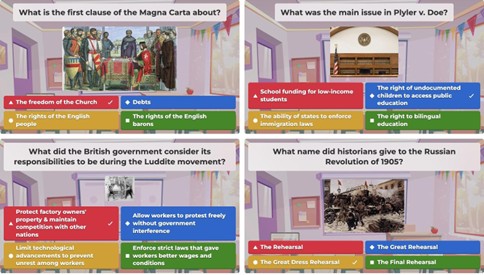
four screens showing history questions with multiple choice answers
Some of the Massachusetts History Day student-submitted Kahoot questions

On contest day, I ran two Kahoot contests and was amazed as students rushed into the previously empty cafeteria in order to participate. Our second game completely filled up to capacity. It was such a special experience and the students had so much fun battling for Dunkin gift cards and Hershey kisses.
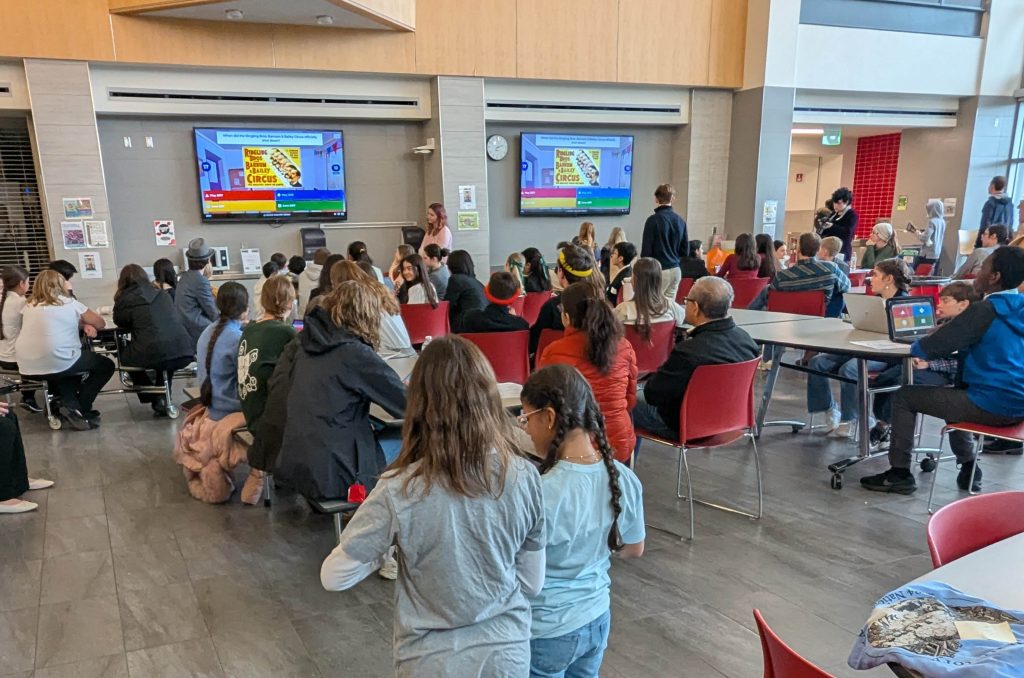
In a large
Students playing Kahoot trivia

My largest long-term project that I worked on throughout my co-op was writing an encyclopedia of abolitionists to be featured on our website. I wrote eight biographies of prominent Black abolitionists Ellen Craft, Charles Lenox Remond, John Van Surley DeGrasse, Joshua Bowen Smith, Philis Wheatley, Frederick Douglass, Eliza Gardner, George T. Downing, and William Wells Brown. It was so incredible getting to do in-depth research on each of these important figures and include relevant items in our collections into my biographies. It made it all the more special when I was given the opportunity to actually see and handle objects such as a first edition of Phillis Wheatley’s book of poetry or a letter written by Frederick Douglass that I had referenced in his biography. I also really enjoyed learning more about and bringing to light abolitionist figures who might be lesser known in our time but were incredibly influential in their own. I often really struggled to single out quotes to include since there were so many powerful and profound options. I really feel like I learned so much throughout this process and gained a lot of new skills as a writer that will continue to be useful as I return to taking classes at Northeastern.
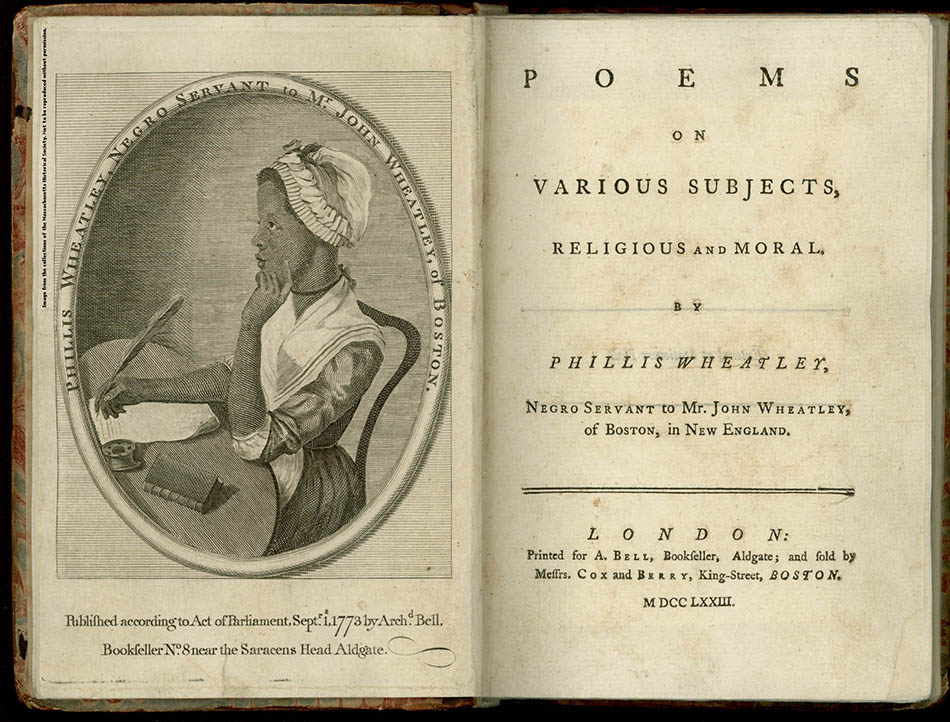
book open to title page of "Poems on Various Subjects, Religious and Moral." On lefthand page is an illustration on Wheatley writing at her desk.
Poems on Various Subjects, Religious and Moral by Phillis Wheatley

I really couldn’t have asked for a better co-op experience with a better team of people and I will miss the MHS so much. The projects I got to work on in my time here have been an absolute dream for a History and English undergraduate student and I will absolutely be using what I’ve learned here going forward both in my academic and professional careers. Thank you for everything!

Stories to Cheer our Spirits: Horses in the Adams Papers

By Kenna Hohmann, Adams Papers Intern

Diving into the vast collections of documents in the Adams Papers has been one of the best parts of my internship at the MHS. Over the past few months, I have endeavored to identify quotations and stories that allow for a greater understanding of and connection to the historical figures from our nation’s past. My research yielded both lighthearted moments—the Adamses’s comments on the seasons—and serious reflection—the family’s thoughts on education. A few had another theme in common— horses—a subject that because of person interest sparked my curiosity and prompted a deeper dive into the documents.

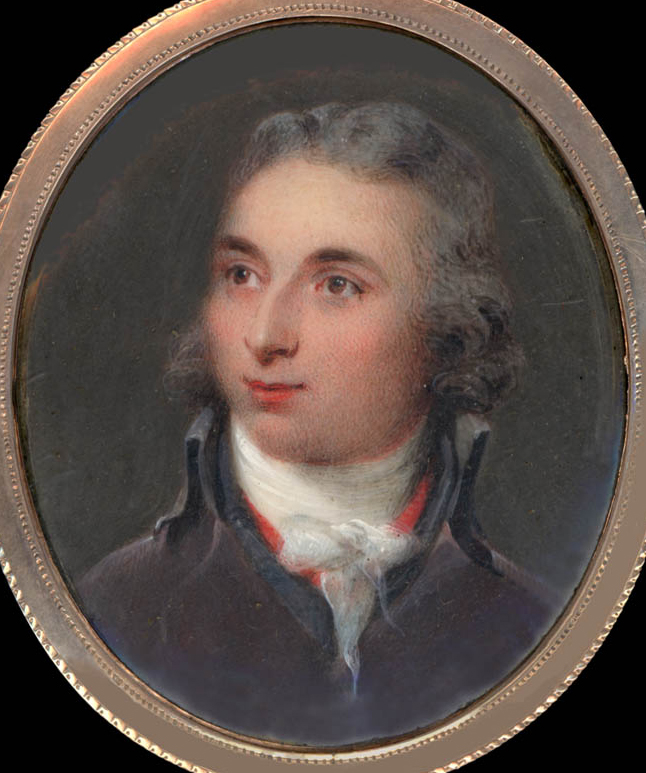
miniature portrait of Thomas Boylston Adams
Thomas Boylston Adams by Mr. Parker, 1795

The first story I found reflects the hardship that sometimes goes along with riding long distances. In the spring of 1794 Thomas Boylston Adams (1772–1832), the youngest son of John and Abigail Adams, spent five weeks traveling through Pennsylvania. Thomas Boylston was 21-years old at the time and trying his best to establish his legal career, in part by taking “a journey into the interior parts of this State upon a Circuit with the Supreme Court.” Writing to his mother in June, Thomas Boylston provided a detailed description of the country he traveled t, commenting to Abigail “The exercise of riding on Horseback so long a Journey was rather more severe than I have been accustomed to, but tho’ it took away some of my flesh, it contributed much to my health.” Thomas Boylston experienced the physical pain caused by long periods of riding but also the benefits of the trip to his health and wellbeing. As someone who has also ridden horses over long distances, I can appreciate how the soreness of riding could be overlooked due to the joy that comes from being in nature. Thomas Boylston Adams was entering a new period of his life. That excitement, along with the beautiful Pennsylvania spring and a good horse and long ride, was enough to lift his spirits.

In a twist on the theme, the second story I found came from John Adams in a February 1795 letter to Abigail Adams. Then vice president, John Adams had been in Philadelphia since the previous November, while Abigail remained in Quincy. John, along with most Americans, was eagerly awaiting the arrival of the Jay Treaty from Britain, although the vice president also feared the treaty might delay his return home. “Oh my Hobby Horse—and my little Horse! I want you both for my Health And Oh my I want you much more, for the delight of my heart and the cheering of my spirits—” John frequently referred to his farm as his “Hobby Horse” and when he wanted a break from the stress of politics he turned his thoughts toward home to lift his spirits. In this selection, his love for Abigail Adams and her importance to him is on full display.

John Adams to Abigail Adams, 1 Feb, 1795
Detail of letter from John Adams to Abigail Adams, 1 February 1795, Adams Papers

My personal interest in horses and subsequent search for related content yielded these two different but interesting anecdotes. The sweet words between John and Abigail Adams and the humorous yet earnest letter that Thomas Boylston Adams sent to his mother would not have come to my attention without my original interest in the theme of horses. Spending time with the expansive collection of the Adams Papers has been a highlight of my internship, and I would recommend that everyone take a bit of time to read a few letters! To get started, visit the Adams Papers Digital Edition.