

By Jolivette Shevitz, Library Assistant
This is the first in a series I am calling “What Only Poetry Can Confess” that will pull out poetry used in diaries or personal letters from the collection and discuss how people have used poetry to express themselves. As an avid poetry writer and reader, I am drawn to exploring how people rely on poetry to say what they may struggle to fully articulate otherwise. Through these poems, whether they are famously well known or have only been seen by their author, we will get a small look into the lives of people in the collection here at the Massachusetts Historical Society.
For this first entry in the series I looked at the Samuel L. Barres papers. Samuel L. Barres has been written about on this blog before, once by Meg Szydlik in her series on disability in the archives and also by Susanna Sigler about Jewish American Soldiers in World War II. Samuel L. Barres trained and served in World War II until his injury during the lead-up to the Battle of the Bulge (Ardennes), losing both of his legs while serving with the 80th Infantry Division. He wrote and received many letters from his future wife Bernice while recovering until they got married in 1946. I want to highlight two poems out of the 10-15 poems that were sent between the two of them in these letters.
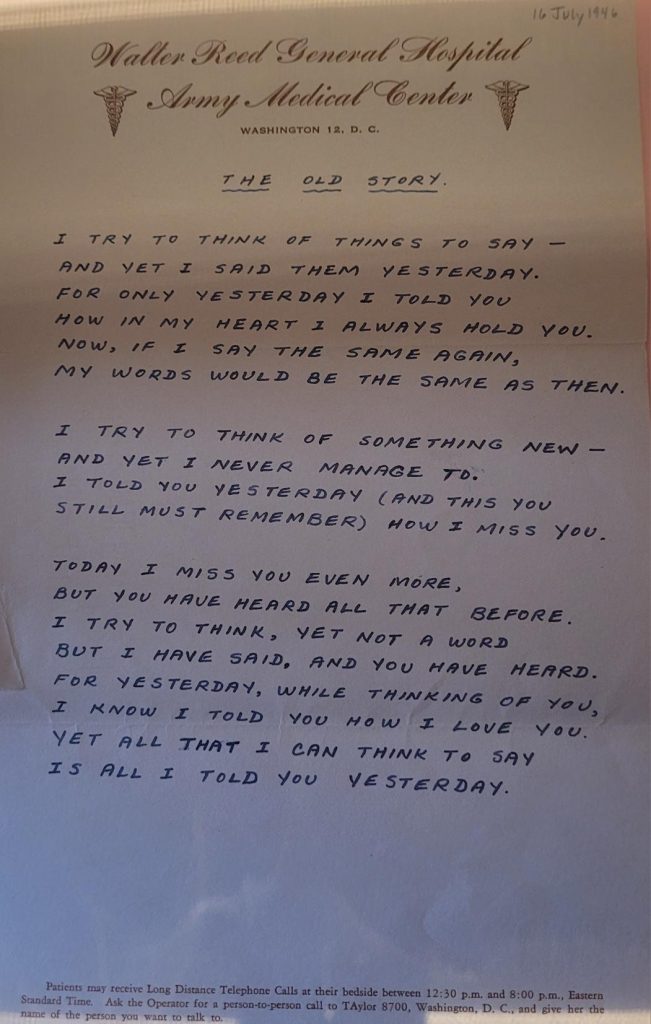
The first poem is from Samuel to Bernice, called “The Old Story”, (author unknown). It discusses how repetitive and insignificant all of these declarations of love and missing one another feel in comparison to how great these feelings are. This poem caught my heart as I also live far away from family and often feel the same way. The poem is a beautiful expression of the fact that even though Samuel might be repeating himself in many of his letters, he wants Bernice to know his feelings extend much more than what words exist to say.
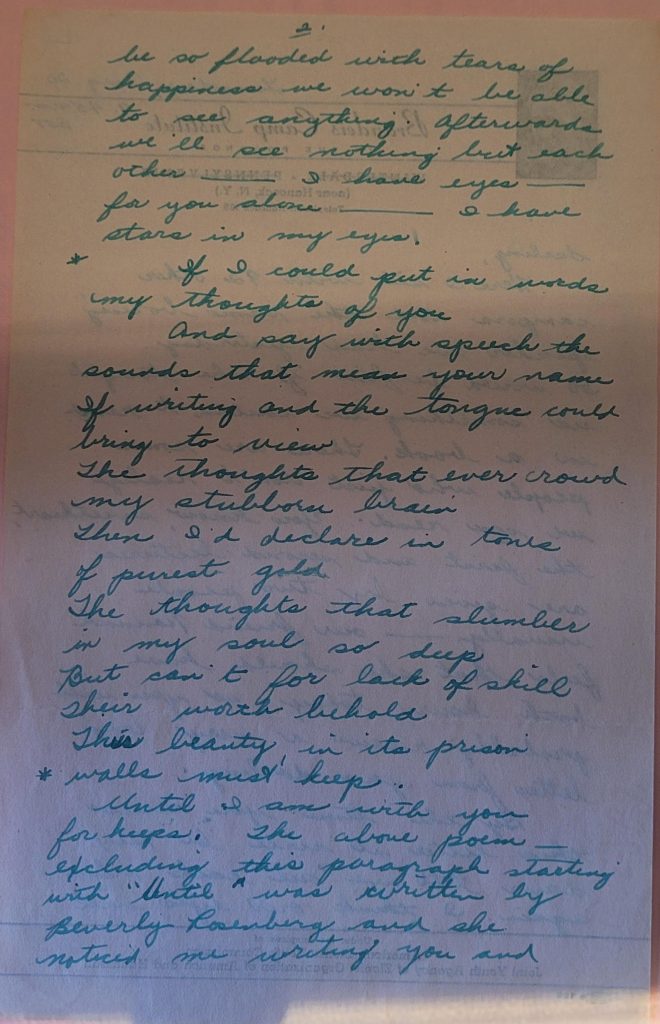
The second poem is from Bernice to Samuel. It’s the only poem that she writes to him that echoes a similar message to poem “The Old Story”. This poem was written by a friend of Bernice, Beverly Rosenburg, who saw Bernice writing to Samuel and gave her the poem. Once again the poem seeks to attempt and fail at expressing the deepness of the love Bernice feels for Samuel. It’s very sweet how both of them seem to say the same thing to each other at different times, frustrated almost over their inability to find words for their love.
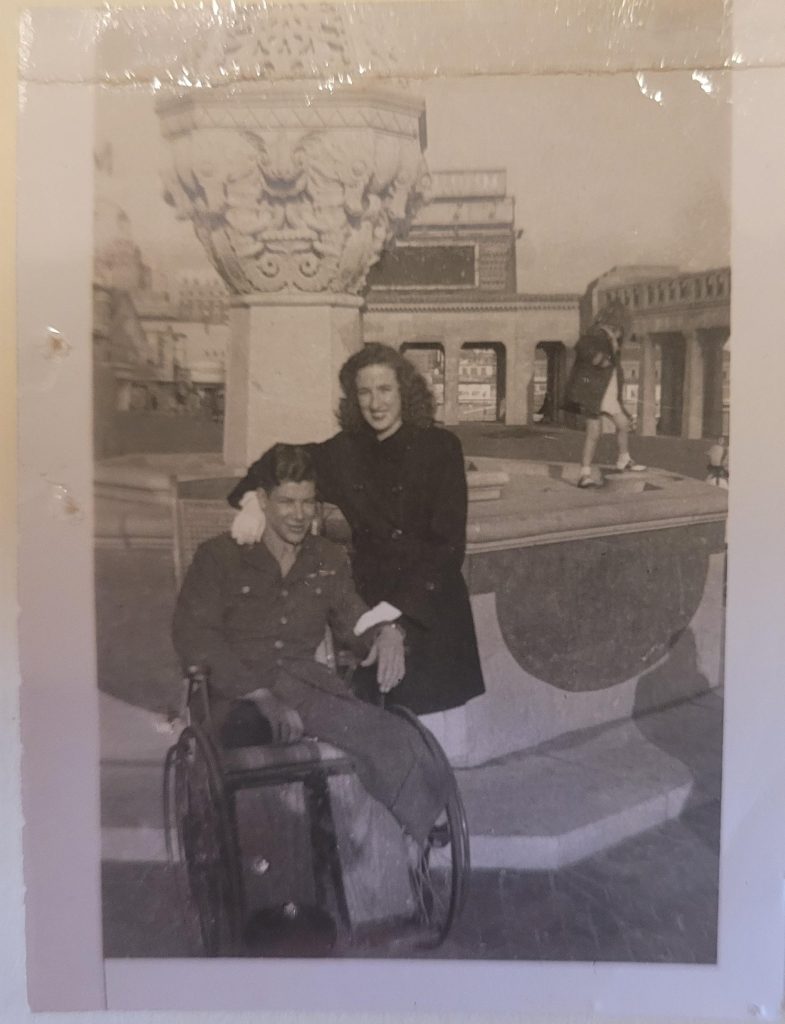
These poems are just a small piece of their writings to each other, and I encourage anyone to come visit the MHS and read through them all. Both of them have so much life in their letters and it truly was a joy to get a glimpse into their lives.