
Our Favorite Things
Objects that Fascinate, Interest, and Inspire
With millions of letters, diaries, photographs, and objects in our holdings, the stories we can tell at the MHS are countless. Our Favorite Things connects a selection of compelling, captivating, and amusing items from our collection to the backgrounds, interests, and memories of the MHS staff. Grouped into six categories, we invite you to explore these stories.
Liberty's Call History Drawn with Light Freedom & Unfreedom Cabinet of Curiosities From the Battlefield Craft of History
You're MY favorite thing ;)
Cabinet of Curiosities
When founder Jeremy Belknap set out to build the collection of the MHS in 1791, he envisioned a Society not only of “books, pamphlets, manuscripts, maps or plans,” but also material items that could help Americans understand their history. Peek into our cabinet of curiosities, an eclectic cross section of the visual and material culture represented in the MHS holdings, including a wooden screw used to make cheese in the 18th century and a bronze hot dog presented as a campaign gift in the 20th century.
FEATURED ITEM
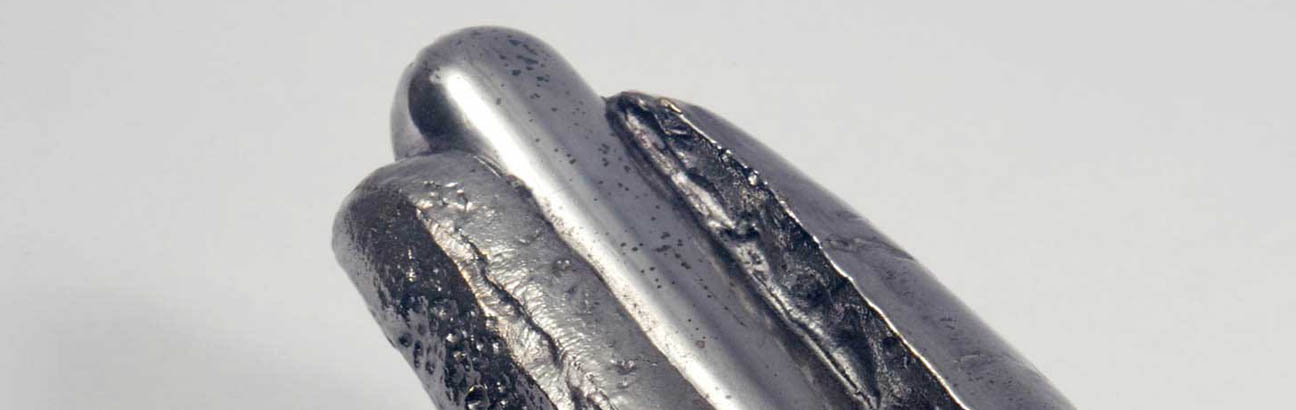
In the mid-20th century, Americans had a great enthusiasm for all manner of keepsakes and mementos cast in bronze. On 17 October 1960, the National Hot Dog Council presented this life-size hot dog cast in bronze on a marble base to Republican vice-presidential candidate Henry Cabot Lodge Jr. The presentation letter read, “A million miles of hot dogs will be consumed in the United States this year and we hope that every one of these hot dog lovers casts a vote for you and Dick Nixon.” In the blur of events during the hard-fought presidential campaign, Lodge came to think that he had received the unusual gift during a visit to Nathan’s, the famous hot dog emporium in New York City.
COMMENTARY
MHS Maintenance Helper and Custodian George Major on Henry Cabot Lodge's Hot dog
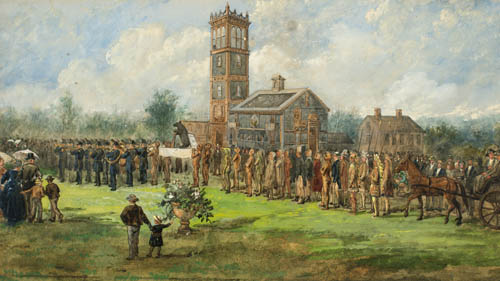 The funeral of Billy Bruin
“A bear hunt ensued after that…”
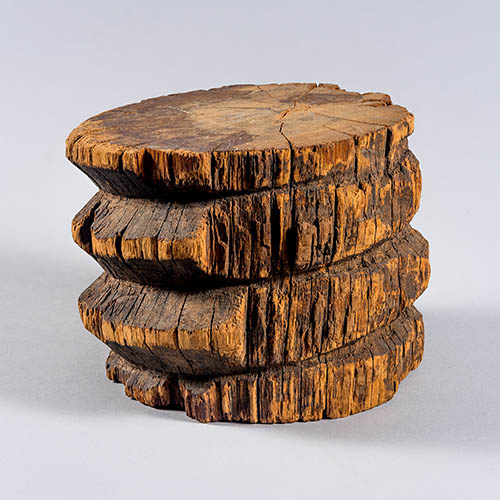 Cider press screw fragment
“You don’t milk 900 cows for nothing.”
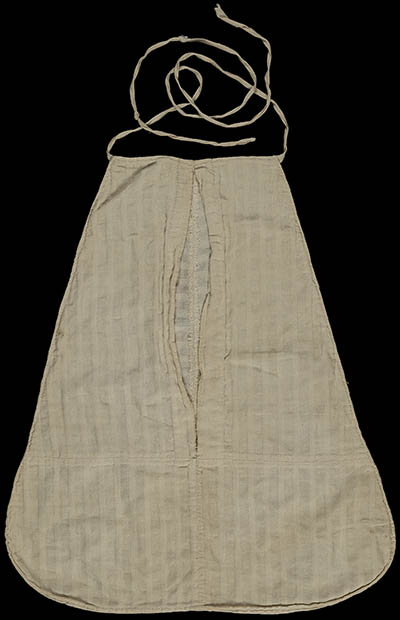 Dimity pocket belonging to Abigail Adams
“A new way of learning about the past…”
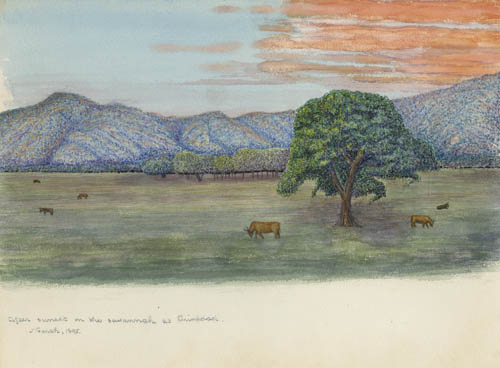 "After sunset on the savannah at Trinidad. March 1895."
“This is someone I could sit down and have a beer with.”
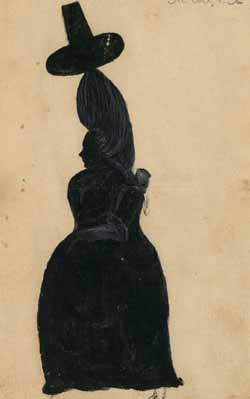 Lucy Flucker Knox
"...this ridiculous, high bouffant hair style."
 James Little mourning needlework
“...it’s just this amazing rabbit hole.”
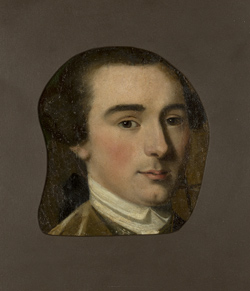 Charles Russell
“What’s going on here? Is this like a modernist trick?”
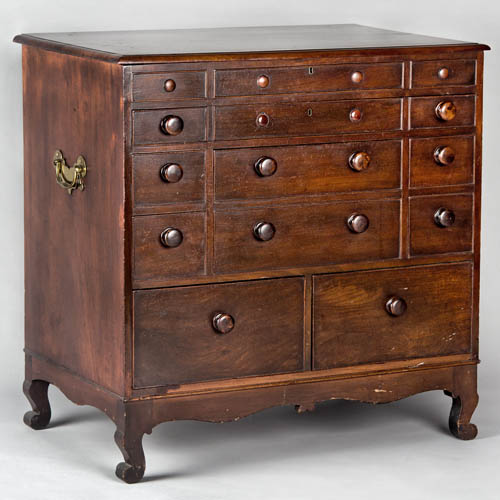 Sea chest belonging to Benjamin Joy
“...the very first connection between the United States of America and India.”
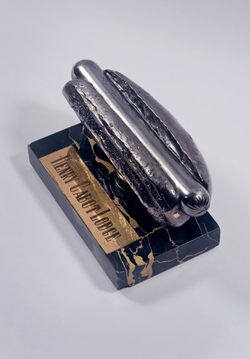 Hot dog
Freedom & Unfreedom
Often proclaimed “the land of the free,” the United States has a long history of unfreedom. Read how Abraham Lincoln grappled with the horrors of slavery. Witness an especially dark moment from World War II through a 1943 painting of a Japanese-American internment camp in Wyoming. Be inspired by a portrait of Elizabeth Freeman, an enslaved person who successfully sued for her freedom. Through these items, and more, we explore the complex nature of American freedom and unfreedom.
FEATURED ITEM
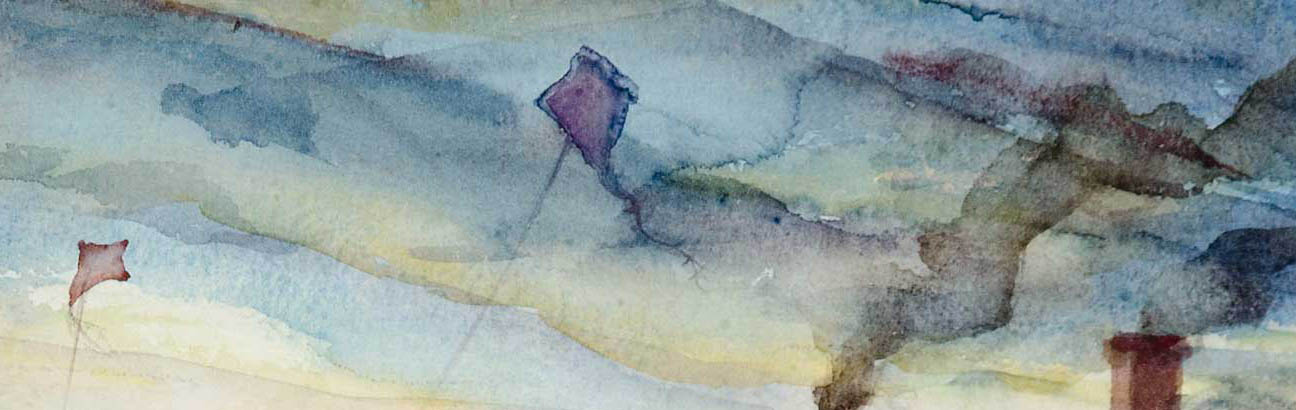
This watercolor painting by Estelle Ishigo depicts the Heart Mountain Relocation Center, one of ten internment camps for Japanese Americans during World War II. Ishigo was recruited as a “Documentary Reporter” for the War Relocation Authority and recorded the internment experience in illustrations, line drawings, oil, and watercolors.
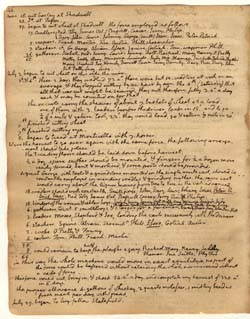 "/>
Agricultural and farming activities, 18 June-29 July 1795 recorded by Thomas Jefferson in his Farm Book, page 46
"/>
Agricultural and farming activities, 18 June-29 July 1795 recorded by Thomas Jefferson in his Farm Book, page 46“...the central dilemma of American history is on almost every one of those pages.”
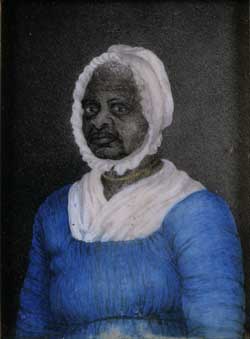 Elizabeth Freeman
“She had an existence... a long life, as a free person in the early decades of the 19th century.”
 "/>
Cheyenne hunting buffalo
"/>
Cheyenne hunting buffalo“...deceptively straightforward and deceptively lighthearted...”
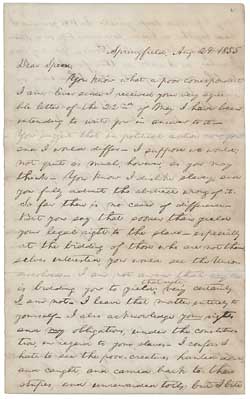 Letter from Abraham Lincoln to Joshua Fry Speed, 24 August 1855
“Everytime I read it, I get goosebumps...”
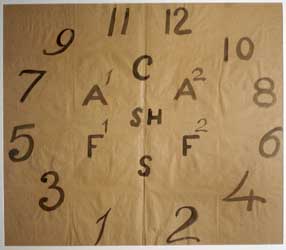 "/>
Diagram to show the drill the Anti-Man-Hunting League had for the running off of a slave or man-hunter
"/>
Diagram to show the drill the Anti-Man-Hunting League had for the running off of a slave or man-hunter“They figured out a plan to kidnap the kidnappers…”
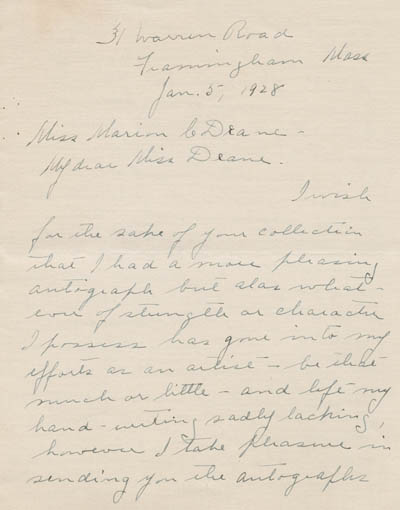 "/>
Letter from Meta Warrick Fuller to Marion Colvin Deane, 5 January 1928
"/>
Letter from Meta Warrick Fuller to Marion Colvin Deane, 5 January 1928“I especially love the flavor she brought to the interaction on the bus…”
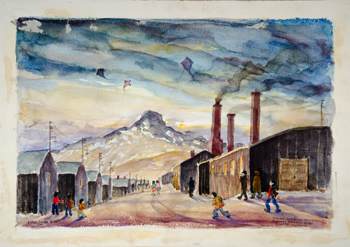 "Mess Hall, Bathroom, Barracks. Japanese Relocation Center. Heart Mt. Wyoming."
“How does this let us think about what it might have been like to be a child?”
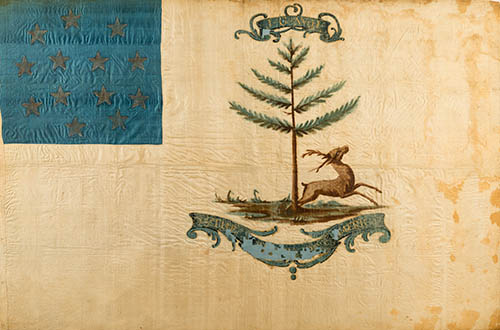 Bucks of America flag
“Those histories actually changed the world…”
From the Battlefield
Born out of revolution and war, the United States has been involved in many military conflicts throughout its history. The MHS houses both artifacts and accounts of the human experience of war. Letters from the battlefields of the Revolutionary War, Civil War, and World War I reveal the emotions of those who lived during those events. Diary entries—from home and abroad—provide glimpses into wartime. Photographs of intrepid African Americans who served in the Civil War preserve the faces of those who fought for freedom.
FEATURED ITEM
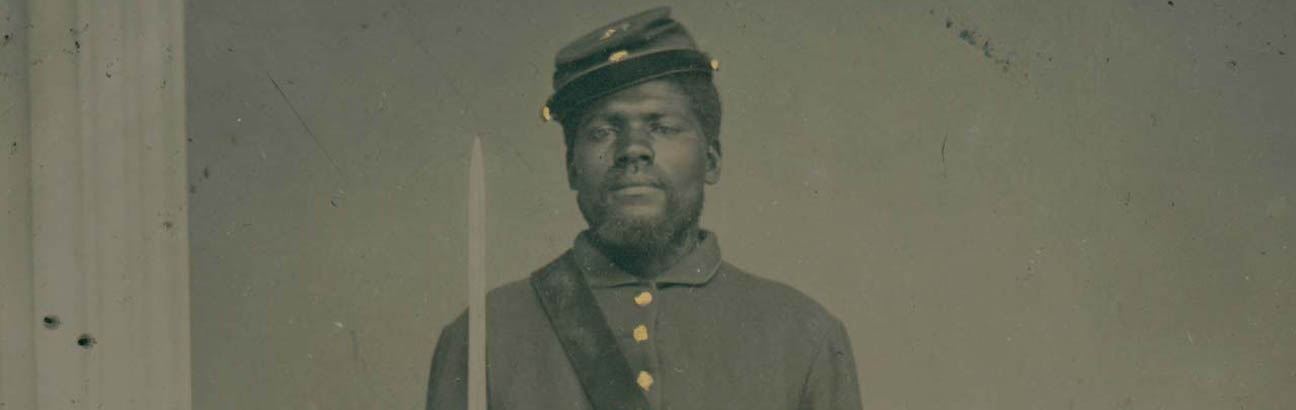
The 54th Massachusetts Volunteer Infantry Regiment was the first military unit consisting of Black soldiers raised in New England during the Civil War. When the announcement of the Emancipation Proclamation on 1 January 1863 made it possible for free Black men to enlist as soldiers, Massachusetts was the first state in the North to form a regiment. Henry F. Steward of Michigan was one of many volunteers to flock to Massachusetts from across the North. Through repeated demonstrations of bravery and honor, the regiment squashed prejudicial doubts about the martial skills of Black men.
COMMENTARY
MHS Director of Research Kanisorn Wongsrichanalai on photographs from the Massachusetts 54th Regiment
COMMENTARY
MHS Operations Assistant Jen Smith on photographs of the 54th Regiment
"When I first started working at MHS, I was part of what is now known as collections services. While doing microfilming/scanning I came across the 54th regiment and scanned them at one point. I've always been interested in the Civil War. Discovering African American contribution to the war has always interested me."
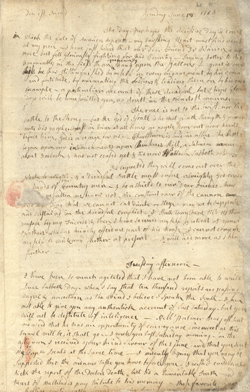 Letter from Abigail Adams to John Adams, 18-20 June 1775
“Witnessing the smoke and the cannon fire…”
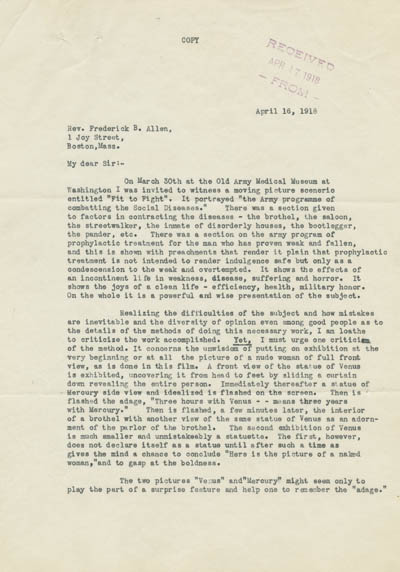 "/>
Letter (retained copy) from J. Frank Chase to Frederick B. Allen, 16 April 1918
"/>
Letter (retained copy) from J. Frank Chase to Frederick B. Allen, 16 April 1918“Did it -- as Chase feared -- encourage soldiers to consider 'chance[ing] disease for a moment’s pleasure'?”
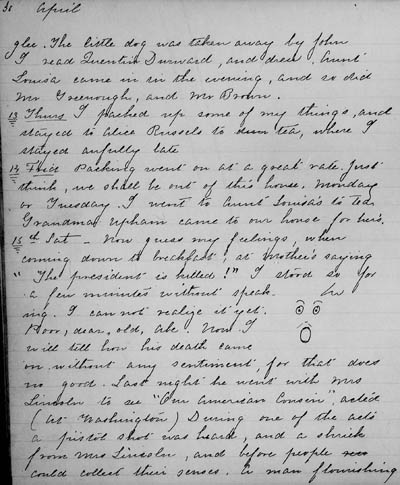 Sarah Gooll Putnam diary 7, pages 56-57 with entry for 15 April 1865
“It’s like she’s talking to you…”
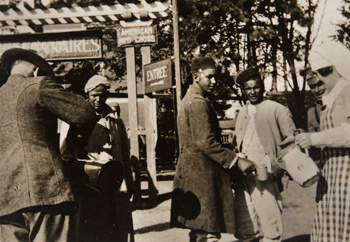 "/>
Red Cross workers offering beverages to soldiers outside a canteen
"/>
Red Cross workers offering beverages to soldiers outside a canteen“New England forthrightness and understatement”
 Letter from Moses Hill to Persis Hill, 26 May 1862
“...you can almost hear his voice as you read.”
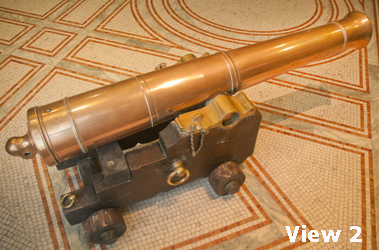 Shepherd Brooks Saltonstall cannon
“Every historical society should have its own cannon.”
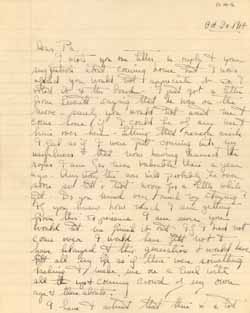 Letter from Eleanor "Nora" Saltonstall to Richard Middlecott Saltonstall, 20 October 1918
“She is a very different young woman than the one who arrived looking for someone to carry her bags.”
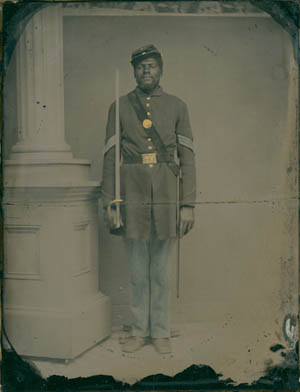 Sergeant Henry F. Steward
“They were willing to fight for America, they were willing to die for America.”
Liberty's Call
In 1775 John Adams wrote that Americans, “under great trials and dangers, have discovered great abilities and virtues, and that nothing is so terrible to them as the loss of their liberties.” And yet the call of liberty was and remains elusive for many Americans. Thus we find meaning in its talismans for their resonance as unrealized ideals. We can imagine Phillis Wheatley at her desk, writing her way into the American literary canon. We can hear George Washington's call to Continental soldiers to remain steadfast to the American cause. We can picture Mary Smith Cranch pulling letters from her pocket or the members of the African Society drafting laws of governance, both declaring that they, too, claim a place in the American republic.
FEATURED ITEM
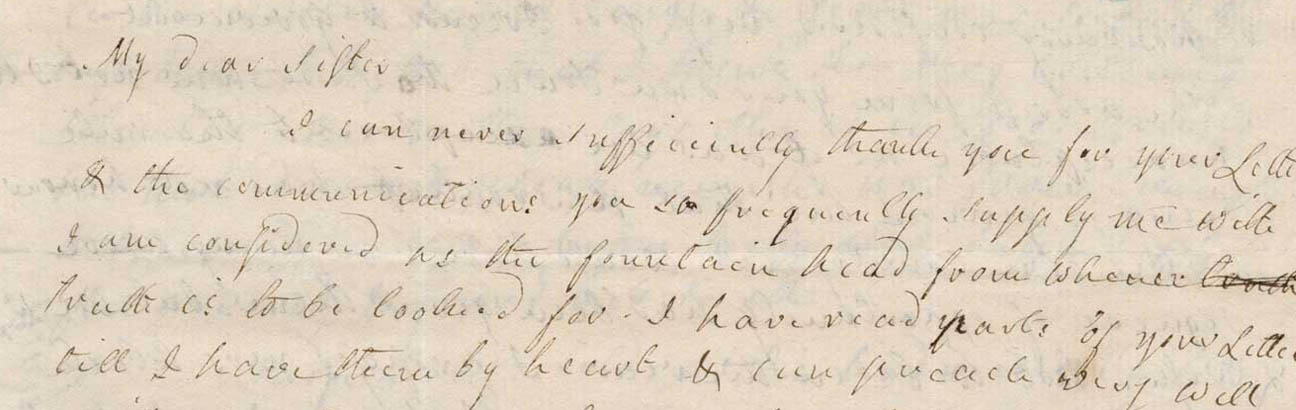
“Wherever I go I am Scarcly welcome without I bring my pocket full of Letters,” Mary Smith Cranch wrote to her younger sister Abigail Adams, hinting at the value of Adams’s letters back home in New England. Her dispatches from Philadelphia illustrate her unparalleled access to political news and her skill in shaping public opinion—Philadelphia was, at that time, the home of the US president, Abigail’s husband, John. Cranch’s letter offers a snapshot of the headlines that captivated Americans in 1798. She shares word of popular support for the Adams administration in the wake of the XYZ Affair with France and comments on local news and politics in Quincy, Mass.
COMMENTARY
MHS Adams Papers Editor in Chief Sara Martin on Mary Smith Cranch's 1798 letter to Abigail Adams
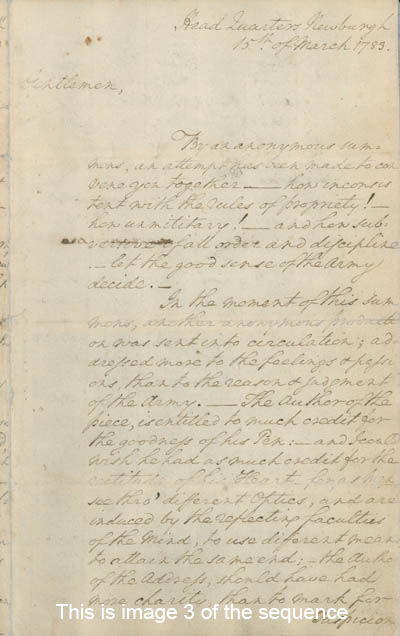 Newburgh Address, 15 March 1783
“Before I loved John Adams, I loved George Washington…”
 Letter from John Adams to John Jay (letterbook copy), 2 June 1785
“...standing outside of George III’s bedchamber...”
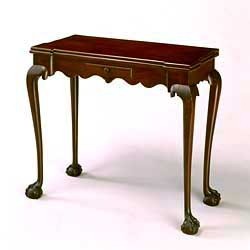 Phillis Wheatley's writing desk
“Phillis Wheatley, who we think we know, but there is so much more work to be done.”
 Fragments taken from the roots of the Liberty Tree
“It was perhaps their most gleeful moment.”
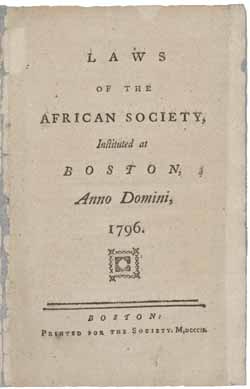 Laws of the African Society, Instituted at Boston, Anno Domini 1796
“It’s impossible to separate the study of history from the present.”
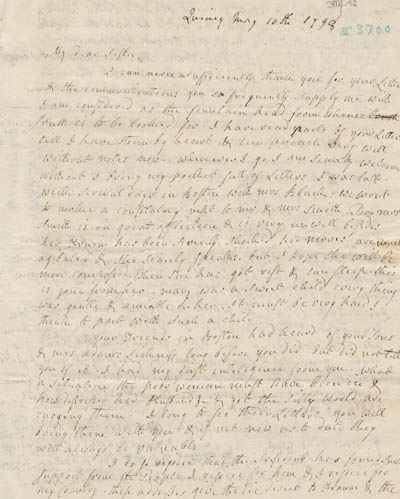 Letter from Mary Smith Cranch to Abigail Adams, 10 May 1798
“For me, it really centers women as political actors.”
History Drawn with Light
From the Greek roots meaning “drawing with light,” photography is the practice of creating images by recording light either electronically or chemically. In 1840, almost as soon as photography arrived in America, the MHS began to collect images of historical sites and then later collected notable figures, artifacts, and landscapes. In fact, the MHS hosted one of the first demonstrations of Louis Daguerre’s new and revolutionary photographic process—the daguerreotype. Explore a selection of works by professional and amateur photographers who documented 19th– and early 20th–century American history as it unfolded.
FEATURED ITEM
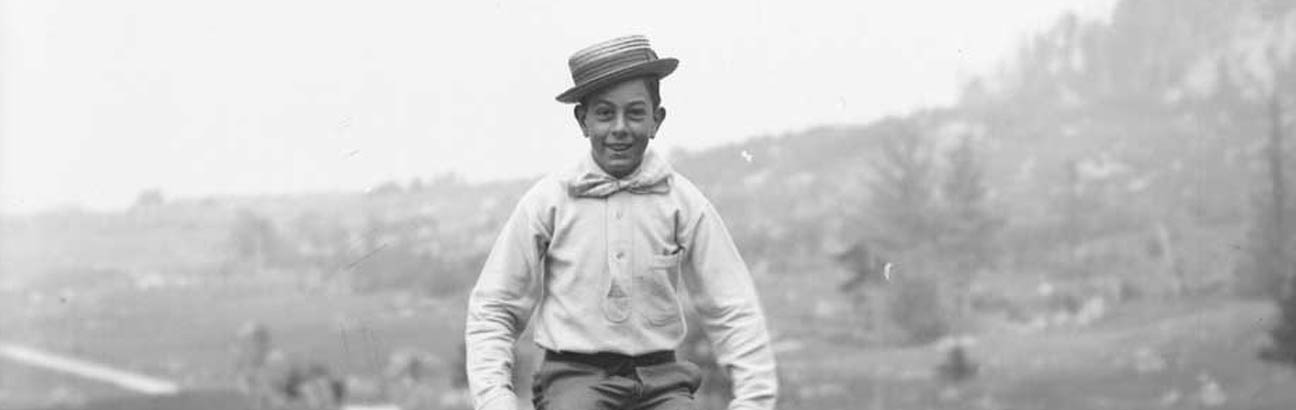
This stop-action photograph of Benjamin Sewall Blake jumping was taken by his father, Francis Blake. Francis Blake was born in Needham, Mass., in 1850. In his early years, he was a scientist who worked on the US Coast Survey and Darien Exploring Expedition. Later in life he became an accomplished inventor—he was known as “Transmitter Blake” because of his work on the development of the telephone—and a skilled photographer. In the mid-1880s, Blake designed a distinctive shutter that allowed him to take photographs with very short exposure times.
COMMENTARY
MHS Adams Papers Production Editor Gwen Fries on the photograph Benjamin Sewall Blake jumping
 Beal’s Photographic View of Boston. From the Top of Grand Junction Elevator, East Boston, 1877
“I love that concept of now and then, standing in the same place and seeing what’s changed and what hasn’t...”
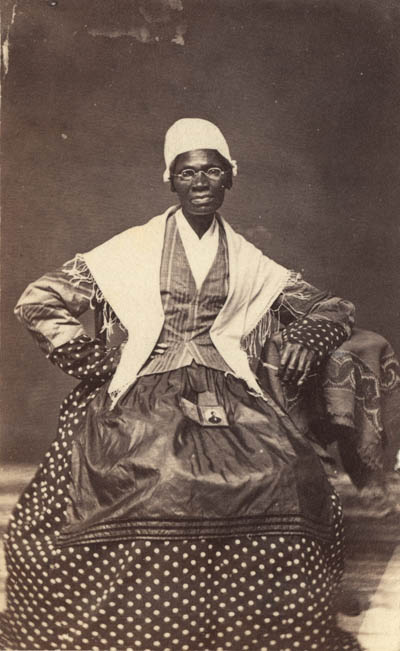 Sojourner Truth
“A lot of historical objects, you think, are important because they’re rare, and hers, it’s the opposite...”
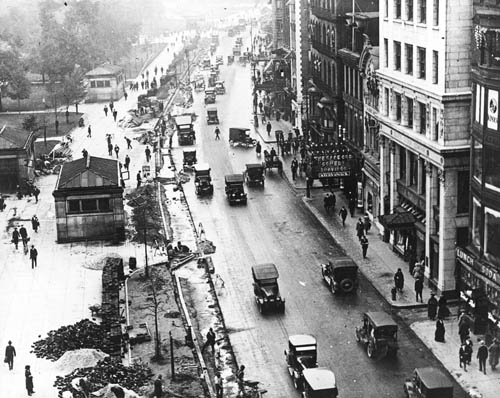 View of Tremont Street looking north-east from the corner of Boylston Street, Boston
“This gigantic collection of twelve-hundred lantern slides was dropped into my lap…”
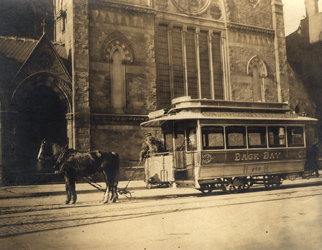 "/>
Last horse-drawn street car in Boston
"/>
Last horse-drawn street car in Boston“I could tell exactly where it was taken.”
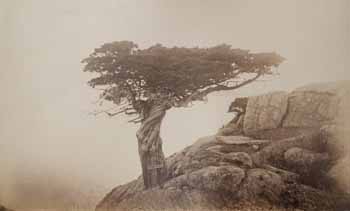 Umbrella tree at Smith's Point [second view]
"There is something that I love about the odd shape of the tree and its twisted trunk."
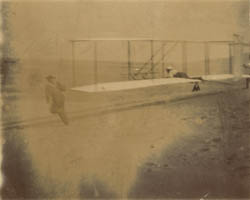 Dan Tate and the Wright brothers launching the Wright glider, Outer Banks, North Carolina, 1903
"Steady winds and soft sand..."
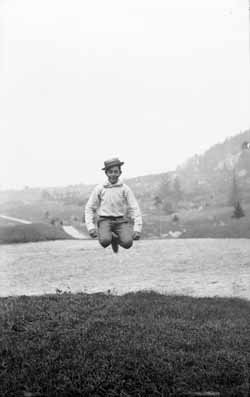 Benjamin Sewall Blake jumping
“I actually did jump up and down...”
Craft of History
Archives like the MHS house materials that provide vital clues about the people who created, used, and preserved them. It is the historian’s job to interpret these materials in order to craft a nuanced, complex picture of the past. Think like a historian as you explore the breadth of stories in our collection. We hope that what you’ll discover—whether it’s a 1692 petition to spare a woman’s life or a portrait of a soldier whose image was preserved but not his name—will inspire you to dig a little deeper.
FEATURED ITEM
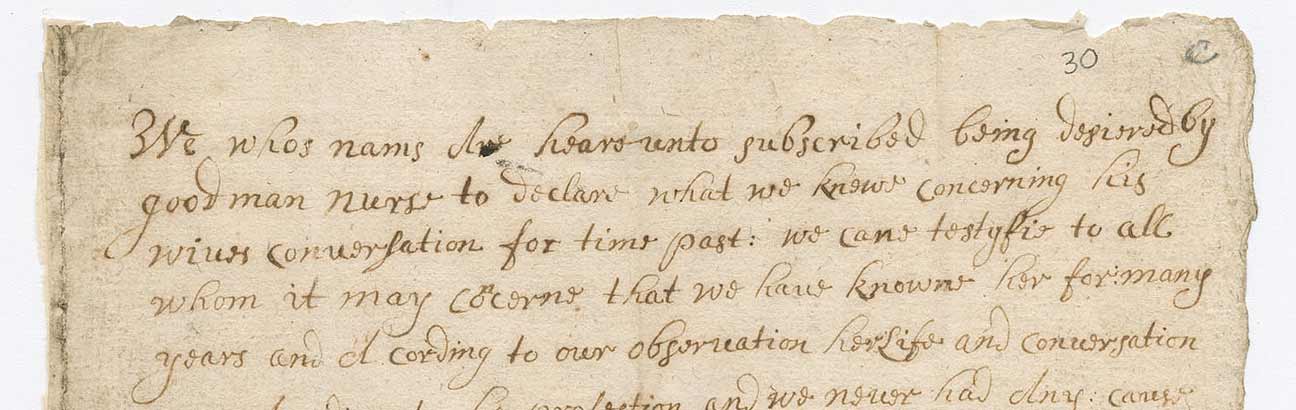
In 1692, when witchcraft accusations, trials, and executions roiled Salem, petitions flooded the Salem court and the colonial government. In this document from 1692, 39 of Rebecca Nurse’s neighbors, both men and women, testified that they “never had Any cause or grounds to suspect her of Any such thing as she is now Acused of.” Nurse herself petitioned the court to admit additional evidence by “wise and skillful” women on her behalf, but she was found guilty and executed. In 1711, her heirs received £25 in compensation.
Not all such items in the documentary record date from 1692. The accused who had survived the hysteria and the relatives of those who had been put to death or died sought justice for almost 20 years, urging the Massachusetts Bay government to overturn the verdicts and provide financial compensation for the victims.
COMMENTARY
MHS Director of Education Elyssa Tardif on a petition for Rebecca Nurse
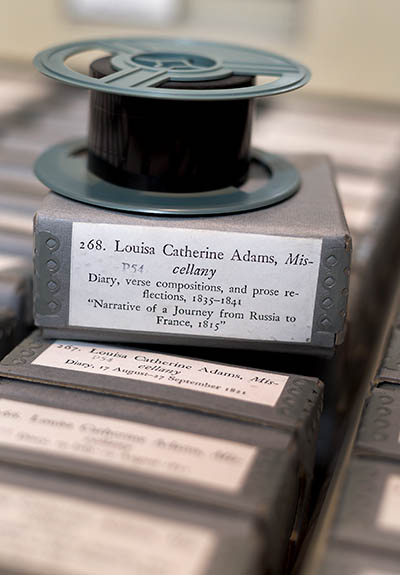 Microfilm reel of Louisa Catherine Adams, Miscellany (papers)
“I have to say, Louisa Catherine Adams made me a historian, and a historian of women.”
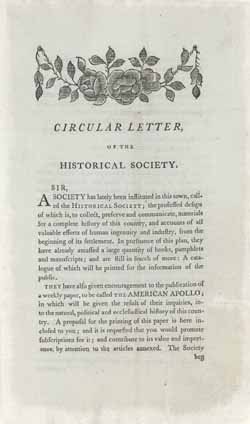 Circular Letter, of the Historical Society
“This letter remains relevant to our work…”
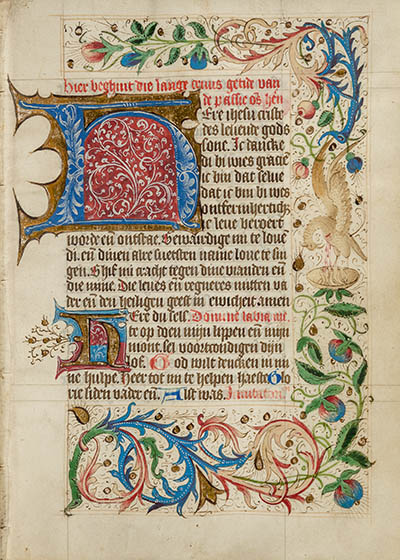 Opening of the Long Hours of the Cross, page from Book of Hours, use of Utrecht, 15th century
“It really has rewarded the digging of trying to figure out why this is here, who is behind it.”
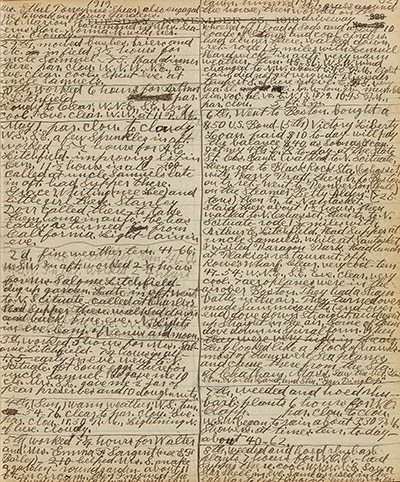 George Hyland diary, page 329 with entries for 29 April to 8 May 1919
“He is the opposite of isolated: He is embedded in family…”
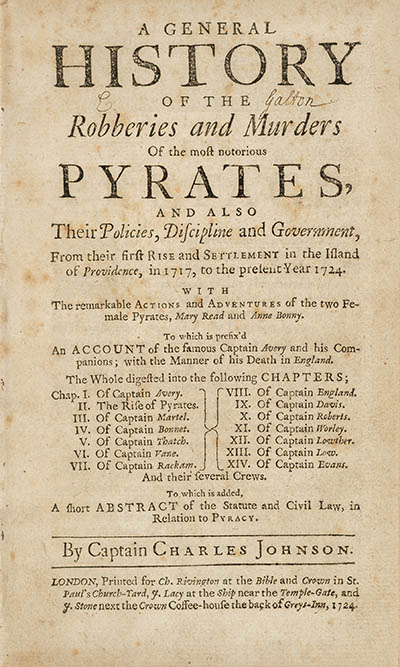 A General History of the Robberies and Murders of the most notorious Pyrates
“Most of our enduring knowledge (and myths) about pirates come from this text.”
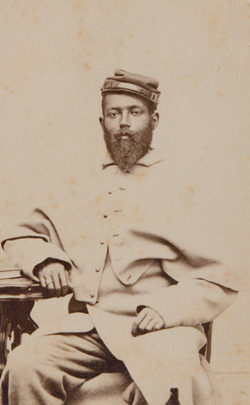 Unidentified black soldier
“I don’t think I’ve ever seen an image like that…”
 Testimony of Israel Porter and 38 others in regard to Rebecca Nurse, 1692
“What are future ages going to think of us?”
COMMENTARY
MHS Web Developer Bill Beck on Estelle Ishigo's painting of Heart Mountain Relocation Center.
COMMENTARY
MHS Assistant Director of Education Kate Melchior on Estelle Ishigo's painting of Heart Mountain Relocation Center.
COMMENTARY
MHS Nora Saltonstall Preservation Librarian Kathy Griffin on Estelle Ishigo's painting of Heart Mountain Relocation Center.