
“The Story of a Tragedy”: murder-suicide at a Fenway finishing school

By Sabina Beauchard, Reader Services

On a rainy Sunday, March 29, 1908, Robert A. Boit of 19 Colchester Street, Brookline sat down to write in his journal after a lapse of around 3 weeks. One of the happenings he reported on was a local murder-suicide that made newspapers across the nation. Boit had a personal connection to it all; he wrote:

On Wednesday morning the 11th of this month a terrible tragedy took place in the Girls Boarding School on Audubon Road facing the Fenway. The two principals of the school Elizabeth Hardee and Miss Weed were killed. Elizabeth was the daughter of my dear old friend Pearson Hardee of Savannah and on that account I was brought into immediate touch with the whole affair. [emphasis added] My letter to Hardee, here in my journal, tells the story so I will not repeat it. Poor Hardee himself came on from Savannah himself to settle up matters and I was glad to be of some assistance and comfort to him, for he was terribly shaken. He arrived on the 21st and remained four or five days. We wanted him to come directly to the house, but he decided that in his condition of mind he had better stay at the St. Botolph Club, where I put him up. But he took many of his meals with us, and I think being with us really did him good. It was a tragic affair and in a lovely spot.

In between journal pages, Boit tucked in a typescript of the letter he mentions sending to his grieving friend William Pearson Hardee on March 15. By the 15th, Boit already sent word alerting Hardee to the incident, but one letter was chosen by Boit to save for posterity; the letter reproduced below. 

I will follow Boit’s sentiments and let his letter to Hardee speak for itself:

[handwritten] The Story of a Tragedy –

Brookline, March 15, ’08.

My dear Pearson:

No doubt you got my last letter and telegrams, and I received your telegrams. I have tried each day to write you, but have been so interrupted I could not do it.

Last Wednesday afternoon, after writing you, I went to the Undertaker’s to whom the Coroner had sent Elizabeth’s body, and arranged for all that at that time could be done, and thence to Dr. Joslin’s [Elliott Proctor Joslin] who was a friend of Elizabeth and had been called to the house at the time of the tragedy. There I met the brother-in-law of Miss Page [Katherine R. Page] – one of the teachers who lived in the house and seemed to have the most authority. His name was Alexander. We three talked the matter over, and decided that the house should be closed at once, that no extra expense might be incurred, and that the teachers might not in any way be held responsible for further orders for the maintenance of the house or its service. To this end Mr. Alexander wished me to go to the school that night and talk matters over with the teachers still living in the house, Miss Page, Miss Chase and Miss Hamilton. This I did, and was with them till half past ten arranged matters. I also got in communication by telephone while there with Dr. Stedman [George Stedman], the Coroner, who was legally in charge of and responsible for everything in the house. I got him to authorize the Teachers to pack up the silver, and a small locked tin box, which he promised to have taken to the safety vaults the next morning, and this was done. There was very little money found in the house or in this tin box which was opened by the officer later. I think, with the two checks, this amounted to less than thirty dollars. The teachers had sent off the pupils that very day, Wednesday, and had sent most of the pupils’ things with them. They also agreed to pack such things of the pupils as still were left and mark the packages with the pupils’ names and leave them in their various rooms. This they did on Thursday before they left the house.

We also found that night (Wednesday) that the servants wages had all been paid up to the preceding Friday, and as it seemed to me you would not wish the servants discharged without their wages, I agreed to send Miss Page the money for this purpose the next day. As the servants had to be retained on Thursday to help pack up and clean and wash, it made a week’s wages due them and in two or three instances two weeks. The amount due was just $51.47, for which Miss Page took their separate receipts, and sent me the statement, which I enclose. The teachers said they were under the impression from what Elizabeth had said, that she was having a hard time to meet her expenses, and that there were probably a good many bills unpaid. 

[page break]

Of course, this cannot be clearly ascertained until the administrator has been appointed, of which I will speak later.

That evening they told me clearly all the circumstances leading to the end, and they were very harrowing. All the teachers and pupils had gone to bed very early that evening except Miss Page, as they were up late the night before. At about half past nine in answer to a ring at the door, Miss Page let in Miss Weed, who had run away from the Sanitorium at Newton. She said she knew she should not have come, but begged that it was so late she should be allowed to pass the night. Miss Page said she had not seen her before so reasonable and quiet and dispassionate and was much impressed by the fact that she consented to let her stay, took her upstairs, prepared a room for her, lent her her own nightgown and dressing gown, and then sat with her till quarter past twelve chatting. She seemed entirely normal and made herself most agreeable and interesting, talking of the school and its interests and almost not at all of herself. 

When she left her she thought of locking her door and then decided it best not to. During their talk Miss Weed had agreed to get up early and take the half past seven train home, so that no one should be disturbed or know she had been there. Miss Page was to get up early and give her her breakfast. No one else knew that she was in the house. Miss Page left her own door open and tried to keep awake and listen but no doubt fell asleep. At about three she heard noises and got up and went to Miss Chase’s or Miss Hamilton’s room where she thought she heard voices. There she found these two in great terror. Miss Hamilton had been wakened by hearing some sound at her door. She got up and found a note thrust under it. In her sleepiness she glanced at it without reading it and thought Elizabeth wanted to speak to her, and went to her room and asked. But Elizabeth said no, she had not sent for her. So rather bewildered, she shut Elizabeth’s door and returned to her own room. Then she read the note for the first time and discovered it was from Miss Weed, and upbraiding her with being false to her charge, etc. She was much frightened, knowing now that Miss Weed must be in the house, and at once went to Miss Chase’s room and waked her. It was this Miss Page had heard, and she found them together and much distressed. While all three were talking in Miss Chase’s room, (first, however, Miss Page had tried three times without success to get the Sanitorium by telephone) they heard a tapping at their door, but by the time Miss Page got there, Miss Weed who had knocked, had run towards Elizabeth’s room. Miss Page, knowing that of late a feeling had grown in Miss Weed’s mind of hostility to Elizabeth, followed immediately and went into Elizabeth’s room, where Miss Weed was standing back of the door. She immediately explained everything to Elizabeth who was entirely calm and tranquil, even tho’ awakened under such circumstances at 3 o’clock at night. Miss Page said her self-control was extraordinary. She talked quietly and dispassionately to Miss Weed, telling her how unwise and thoughtless it was of her to come there and disturb their sleep when they were all so tired, etc, and 

[page break]

arranging, as Miss Page has done, that she should go back to Newton early in the morning. Miss Weed said very little, tho’ she seemed rather frightened, but was soon quieted by Elizabeth and appeared, as she always did with Elizabeth, to be entirely under her influence.

Before she left the room, she heard Elizabeth say – “Why, Susan, (if that was her name), you have not taken down your hair. Take it down and come to bed”. Then she left them and went again to her own room, but left the door open and did not sleep again. This was at about half past three perhaps.

After this all was quiet in the house and at a little before six she got up and dressed. In fact, I think she said that before this, at five or half past, she went to their room, and found them sleeping peacefully, side by side. She went softly to the bed and laid her hand gently on Miss Weed, who did not wake or show any signs of being awake. Afterwards, at a little before six, she dressed as I have said, and at a quarter past six went to their room again to wake them, saying “as Miss Weed was going, it was time for them to get up and that meanwhile she would go down stairs and get some coffee and eggs ready for them”. Elizabeth was lying on her back, and had answered rather drowsily – “Thanks, Miss Page, that’s very nice. We will get up at once”, or words to that effect.

Then she went out of the room into one or two other rooms, and in less than three minutes heard two pistol shots. She rushed to Elizabeth’s room and found them both shot through the head, Elizabeth with her face towards the wall shot through the back of the head, and Miss Weed shot through the temple and with the pistol in or near her hand. Miss Page immediately called for Dr. Joslin, who arrived there within fifteen or twenty minutes and found them both dead.

This dear Pearson, is the exact story as told me Wednesday night by Miss Page and the other teachers, chiefly by Miss Page, who of course had known so much of what had happened.

After leaving the house that night, I went again to Dr. Joslin’s and talked over matters with him. The next morning I arranged with the Undertaker [Frederick L. Briggs] (this was Thursday morning) who had then received his papers from the Coroner, permitting him to send away the body, for everything regarding the shipment, and in the afternoon went there to see that all had been properly done. I saw poor Elizabeth and thought her looking very lovely, with such a quiet, peaceful expression on her face. I do hope every arrived as it should have. If you had seen that face as I did, without one sign of sorrow or suffering in it, with just the gentle restfulness of sleep, I think it must have been a help and consolation to you in your sorrow.

Friday morning I went to the School and found it has been closed entirely as agreed on Thursday, and that the Coroner had put a man in charge who was to pass day and night there until otherwise ordered by him. Friday noon a Mr. Samuel W. Child, Lawyer, 43

[page break]

Tremont St., Boston, came to see me and told me that at the request of Dr. Stedman (the Coroner) the Court had appointed him as Temporary Administrator and made him responsible for everything; that he must examine everything at the house, get together all account books, check books, etc., bills and anything else of value that might be found there. He was most anxious that I, as a friend of yours, should go there with him for this purpose. So I consented and passed several hours at the School with him that afternoon. It was very hard to do it, but I felt you would rather have me there than think of a strange man doing it alone. Indeed it seemed sacrilege and made my heart ache to its depths, and only the thought of you and how I should myself have felt under these circumstances enabled me to do it.

There was little of value among the personal effects, but we concluded from the unpaid bills we saw, that it was most unlikely that the assets would pay the liabilities. I think, my dear friend, there is little doubt the school will prove insolvent. There was a balance at the First National Bank of some six hundred dollars, and it is possible there may be a balance in a Newton Bank in which there appears to be a deposit – how much could not be learned yesterday.

Then there is the furniture of the house, which was bought of the Paine Furniture and by contract was to have been paid for in full on the first of February. This so far as we could judge has not been done. There was an unpaid bill dated the first of this month for either nine or eleven hundred dollars for the draperies of the house. There are two pianos of Chickering, which the teachers seemed to think had not been paid for. There seemed to be some large bills for fuel and food unpaid, etc. Also I learned that there was a considerable amount claimed by the teachers for their salaries, and there is a long lease of the house at $1,000. each quarter. I think the lease runs for 5 years.

Against all these claims, the assets seen to be the $600. at the First National, such balance as there may be in the Newton Bank, the books and such of the furniture as had been paid for. Beyond this there only remain a few little trinkets of Elizabeth’s, her clothes, the linen in the house and the silver. As to this latter, I suppose, unless it could be very clearly proved to belong to some one else, it would have to be held as part of the assets. No doubt if it were sold at auction for this purpose by the Administrator, it could be bought in at a small price compared to its value as family silver. 

The temporary Administrator, who seems to be a very respectable man, told me that he should try to get the books (account books) and papers in order and find out about how matters stood. No doubt he will let me know when he has done so, if he does it. He also told me that the Court would appoint a regular Administrator, but that it would take about three weeks to do this; that then his own duties would be at an end and everything turned over by him.

I regret that I myself am so old and worn out with my own cares and responsibilities, I could not myself accept this position, even if the Court were willing to appoint me. One other thing I forgot to mention. There may be bills

[page break]

owing by the parents of the school, but the teachers knew nothing of them, except that Elizabeth made advances to the girls from time to time. They also told me the regular charge for Tuition, etc. was $1000. per annum, but that a number paid less, owing to the fact that it was the first year of the school.

The temporary Administrator thought there would be little chance of collecting balances that might have been due, owing to the fact of the closing of the school, even if these balances could be determined. Under all those circumstances, and the almost certain insolvency of the school, I don’t know what you may determine to do, or whether it will seem wise for you or your son to incur the expense of coming here and staying a month or two to become the administrator and settle the estate, or arrange for its settlement. If you do not come, no doubt through the Administrator appointed by the Court, all will be effected that can be, and yet, of course, you may prefer to take part in it. 

 If I can give you any information or assistance or advice, of course, you will not hesitate to call upon me, and anything that I hear I will write you.

 With a great deal of love, my dear old friend, and a heart full of sympathy, I am

Most affectionately yours,

Rob. A. Boit


By the time this letter was sent, Elizabeth Hardee’s body had taken its final journey home to Savannah, Georgia by train and had arrived on March 14. The next day, her funeral was held and she was interred in the Hardee family plot in Laurel Grove Cemetery near her mother, Cornelia, who had passed in 1896 [1]. William Pearson Hardee committed suicide in 1917 and was buried in the same plot [2]. 


Elizabeth Bailey Hardee and Sarah Chamberlain Weed as represented in the Wellesley College Legenda, 1894 & 1895, respectively.


Elizabeth Bailey Hardee (1873-1908) and Sarah Chamberlain Weed (1869-1908) both attended Wellesley College; with Elizabeth graduating in 1894 and Sarah in 1895. 

Much of the information about their activities and whereabouts before the opening of their school I gleaned from Wellesley publications; a Baltimore Sun article dated 11 March 1908; and a lengthy article on the murder-suicide in the Boston Post, 11 March 1908. 

The 1899 & 1900 academic years found Elizabeth at her alma mater of Wellesley College as an assistant in mathematics [3]. Elizabeth resurfaces in Wellesley news in the winter of 1902; with both Elizabeth and Sarah listed as teachers in Mathematics and English, respectively, at Newton High School [4]. Years pass until 1906, when the two young women report as having “accepted a share in the management of Miss Chamberlayne’s School for Girls, The Fenway 28, Boston” [5]. Finally, in June of 1907 the women “announce the opening of The Laurens School for Girls, 107 Audubon road, Boston, Massachusetts” [6]. 

The Laurens School for Girls, the boarding school the two women brought to fruition in the Fenway, became the setting of Elizabeth and Sarah’s murder-suicide just 8 months later. According to news reports, the day the school opened to students for the first time on October 1, Sarah Weed suffered a breakdown “due to overwork.” [7] 

Sarah was first confined at “Dr. Norton’s Sanitarium in Norwood”, the Norwood Private Hospital; but was transferred to “Dr. Dutton’s home for convalescents in West Newton” [8] until the night she appeared on the doorstep of the Laurens School.

The above journal entry was taken from volume 14 (1910-1912) of the Robert Apthorp Boit diaries held in the library of the Massachusetts Historical Society. Interested readers may also find letters William Pearson Hardee sent to Boit on March 16, 18, and 28, 1908, tipped into the pages along with Boit’s typescript roughly transcribed above. Learn more about using the library on our website. 

Robert Apthorp Boit (1846-1919) graduated from Harvard in 1868 and shortly thereafter moved to Savannah, Georgia with his parents, and joined his father’s commission business. This is likely when Hardee and Boit met and struck up a friendship. Boit returned to Boston a married man around 1878, and became successful in the insurance business.

I hope to continue this post with what I’ve gleaned on the location of the school. Tune in later!


[1] Aiken Journal and Review, Supplement, November 14, 1917

[2] Letter from William Pearson Hardee to Robert Apthorp Boit, Savannah, 16 March 1908, Robert Apthorp Boit diaries, volume 14, tucked into page 21.

[3] Wellesley College Record, 1875-1900

[4] Wellesley News, (Vol. 1, No. 14) February 6, 1902

[5] Wellesley News, (Vol. 6, No. 1) October 3, 1906 

[6] Wellesley News, (Vol. 6, No. 32) June 12, 1907

[7] The Pensacola Journal, March 13, 1908
The Abbeville Press and Banner, March 18, 1908

[8] The Sun, March 12, 1908

owing by the parents of the school, but the teachers knew nothing of them, except that Elizabeth made advances to the girls from time to time. They also told me the regular charge for Tuition, etc. was $1000. per annum, but that a number paid less, owing to the fact that it was the first year of the school.

                The temporary Administrator thought there would be little chance of collecting balances that might have been due, owing to the fact of the closing of the school, even if these balances could be determined. Under all those circumstances, and the almost certain insolvency of the school, I don’t know what you may determine to do, or whether it will seem wise for you or your son to incur the expense of coming here and staying a month or two to become the administrator and settle the estate, or arrange for its settlement. If you do not come, no doubt through the Administrator appointed by the Court, all will be effected that can be, and yet, of course, you may prefer to take part in it.

                If I can give you any information or assistance or advice, of course, you will not hesitate to call upon me, and anything that I hear I will write you.

                With a great deal of love, my dear old friend, and a heart full of sympathy, I am
 

                                                                Most affectionately yours,

                                                                                                Rob. A. Boit

Of Adamses & Ancestry

By Sara Georgini, The Adams Papers

John A. Grace, Memoranda Respecting the Families of Quincy and Adams, 1841

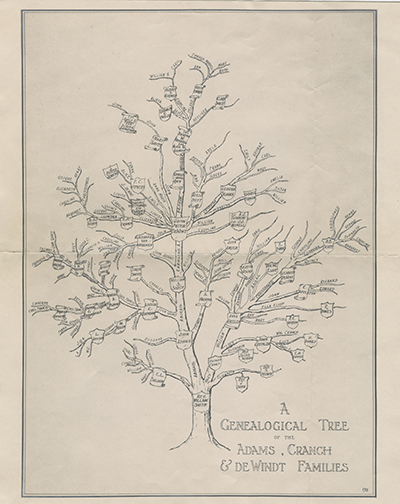
For historian Henry Adams, the morning mail meant a fresh round of research questions. “Here comes your troublesome genealogical cousin again,” Elizabeth Coombs Adams wrote in early 1893. Paging through the Adams archive and sweeping up reminiscences to file, Elizabeth was laboring to compile the family history. She joined a long train of Adamses who devoted time and money to polishing up new accounts of their genealogy. Knee-deep in piles of stray notes and record scraps before the likes of research hubs like Ancestry.com, they turned to wheels, charts, and trees to draft the presidential family’s Anglo-American origins story. Today, let’s take a quick look at the Victorian Adamses’ adventures in genealogy, and who they thought they were.

John Adams and son John Quincy picked through family memories and town records to uncover and curate their version of the early American past. Piecing together shared evidence did not yield the same story. Father and son split over the exact region of their English roots. But both presidents staked claim to a Puritan lineage that played well with constituents. Highlighting their role in the Puritan ordeal of suffering, immigration, and settlement, the Adams statesmen linked themselves to a history of religious toleration and political dissent. When it came to genealogical pursuits, their methods varied, too. The elder Adams’ approach to genealogy was impulsive. He dashed off “minute” memoranda of random finds, listing births and deaths as he encountered them in odd pages of his father’s books. Strategically, he wove Puritan family ties into the revolutionary rationale that powered his Dissertation on the Canon and the Feudal Law (1765).

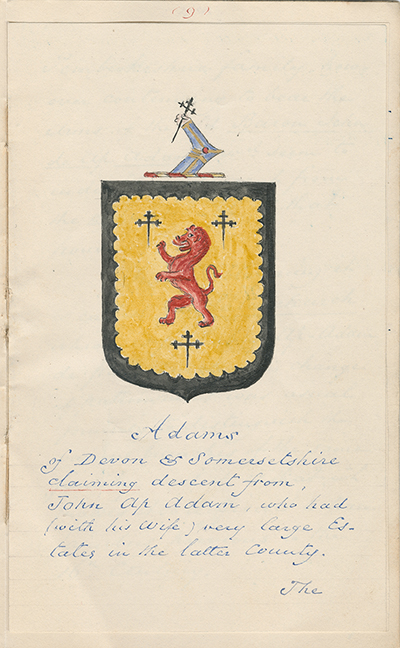
John A. Grace, Memoranda Respecting the Families of Quincy and Adams, 1841

His son, John Quincy, approached the task with trademark rigor and a passion for verification. Highly scientific and systematic in his effort, the sixth president scoured town records and newspapers, copied out church membership lists, and checked material in his family papers against those of other early Americans. John Quincy’s scholarly bent for fact-checking was aided by a rising set of organizations that steered the antebellum practice of personal history, like the Massachusetts Historical Society (1791), the Boston Athenaeum (1807), and the New England Historic Genealogical Society (1845). More than a hobby to fill the diplomat’s rare downtime, genealogy was a way for John Quincy to exercise his skills as a gentleman scholar. It was a task to pass along across the generations, and so he handed it off to his son, Charles Francis, with the family’s large set of seals and copper bookplates. On 28 Feb. 1831, he laid down what he knew of the Adams ancestry and colorful heraldry in a detailed missive. “File this letter away,” John Quincy instructed, “for the age when the passion of genealogy shall take possession of you.”

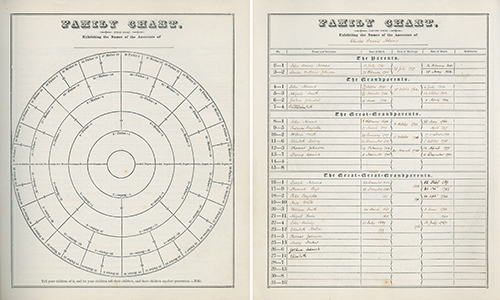
Stoked by his highly successful publication of Abigail Adams’ letters in 1840, Charles’ interest in the family past blossomed steadily throughout his life. Like many Americans, he invested in Lemuel Shattuck’s Family Register book. The blank album featured tidy charts and wheels to organize the machinery of family for presentation. Stocked with a template narrative for each ancestor and stern guidelines for nascent family historians, Shattuck’s book commanded that facts–and not opinions–must guide the process. There were, Shattuck lectured, many kinds of facts to collect, and they should be updated on a monthly basis. His categories veered from the mundane to the moral: health, religious tendencies, phrenological oddities, children’s expenses, real estate descriptions, vaccinations, public offices held, and “plans for private intellectual improvement.” Dutifully, Charles began the book, making lists and skipping the intricate wheels. He never finished it, likely thinking that the family’s cache of letterbooks, correspondence, and diaries filled in the rest.

Charles Francis Adams, entries in Family Register, 1841

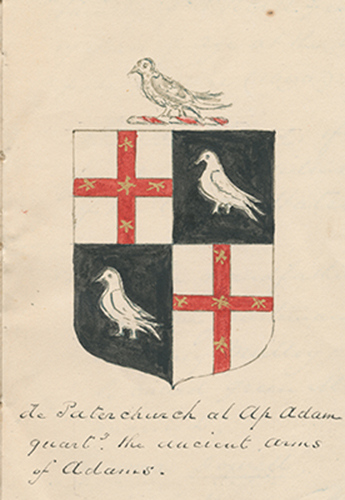
Or maybe Charles realized he didn’t need to do all the research alone. Genealogy had, after all, evolved into a new American pastime. By 1841, at least one reader of Abigail’s published letters reached out (from Havana!) with new clues to the more distant Adamses. John A. Grace delved into the complex English roots of the Adams, Quincy, and Boylston lines. To Charles, he sent a vivid, hand-colored memorandum of the Adamses’ related heraldic arms with details cobbled together from foreign records. Grace put forth an idea that Charles and his children, including Henry, came to champion: that the family descended from the Welsh baronial clan of ap-Adams. Over time, more Adamses went on to swarm the archives, eagerly hunting for familiar faces in history’s mirror. Henry Adams, holding his cousin’s query, sniffed that he did not “invest in the genealogy.” But, as the Adams Papers reveal, Henry made just as many charts as others did, diligently tracing out his great grandparents’ lines on graph paper (see Reel 603 of P-54, the Adams Family Papers microfilm). Even Henry Adams could not resist family history forever.

A Genealogical Tree of the Adams, Cranch, & DeWindt Families, 1928

Rachel Wall’s Confession, the words of a Pirate?

By Rakashi Chand, Reader Services

For Talk Like a Pirate Day we bring you the words of a Pirate!

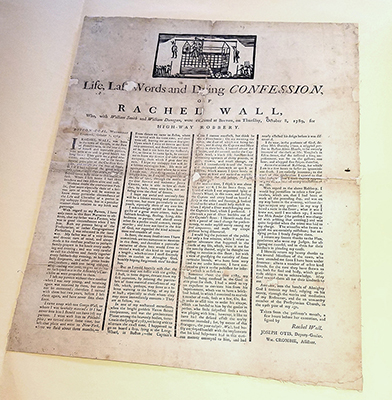
The MHS holds an interesting broadside featuring Massachusetts’ only female Pirate: Life, last words and dying confession, of Rachel Wall : who, with William Smith and William Dunogan, were executed at Boston, on Thursday, October 8, 1789, for high-way robbery

Arrested and convicted of highway robbery, Rachel Wall was the last woman executed by the Commonwealth of Massachusetts, hung on Boston Common for stealing a bonnet. 

The broadside features a fascinating woodcut illustration of three criminals being hung on Boston Common. The middle figure is depicted as a woman wearing a dress. But this confession serves a much greater purpose as it is the autobiography of a very unique woman. Although Rachel’s crimes were dreadful, her life is an undeniable part of Massachusetts history.  A criminal master mind? Perhaps. Ruthless and Vicious?  Certainly. The perfect Halloween Costume? Definitely!

Who was Rachel Wall?

Rachel Wall was born in Pennsylvania, to a good family, by her own description. After running away from home, she met and married George Wall, with whom she moved to Boston. George left Rachel and went off to sea, only to return one day to reunite with Rachel and coax her into being a pirate. In her confession Rachel says, “for, as soon as he came back, he enticed me to leave my service, and take to bad company, from which I might date my ruin.” Supposedly, they attacked ships off the Isles of the Shoals, on the coast of New Hampshire although we do not have actual evidence and this is not mentioned in the Confession. It is believed that after storms, Rachel would stand on the deck of their ship pretending to be distressed and would scream for help; when sailors came to her rescue, George and his men would kill them and plunder their ships. In her confession, Rachel states that she does not know the whereabouts of her husband, “He went off again and left me, and where he is now I know not.” It is believed that George and his crew were washed out to sea. George Wall might have been a privateer during the Revolution, acquiring a taste for plundering ships.

Rachel returned to Boston and worked as a maid but could never fully become a law-abiding citizen. She continued to ‘plunder’ by sneaking aboard docked ships and grabbing what she could. She describes one excursion on Long Wharf in Boston, “On my entering the cabin, the door of which not being fastened, and finding the Captain and Mate asleep in their beds, I hunted about for plunder, and discovered under the Captain’s head, a black silk handkerchief containing upwards of thirty pounds, in gold, crowns, and small change, on which I immediately seized the booty and decamped therewith as quick as possible, which money I spent freely in company as lewd and wicked as myself.” (Does anyone else hear Pirate-speak?) 

Rachel was eventually convicted of highway robbery. Supposedly, she saw a lovely bonnet that she simply couldn’t resist and attacked 17-year-old Margret Bender, the woman wearing the bonnet. Having already been convicted of two counts of robbery, this, the third count, was punishable by death. She could not deny her proven past, so in her confession she lists many petty crimes, carefully avoiding the mention of any that might be a felony. She was wise enough to know that she could not convince people that she was innocent, so instead choose to portray herself as under the influence of her dreadful husband. Attorney General Robert Treat Paine requested “that sentence of death might be given against the said Rachel Wall, the prisoner at the bar” and Governor John Hancock signed the order of execution. One could perhaps speculate that she was being sentenced for crimes far greater than the attempted robbery of a bonnet, tried as a thief, but executed for piracy?

Unfortunate for her, Rachel’s crime came at the height of turmoil for the new Nation, and the courts–which traditionally gave women lesser punishments than men–tried her as an equal sentencing her to hang with two other men also accused of highway robbery. Six years later un-armed burglary was no longer punished by death; the three were the last to be executed in Massachusetts for robbery. If there were ever a spirit to haunt the streets of Boston, It would certainly be Rachel Wall, executed on Boston Common for stealing a bonnet at 29 years of age.

*****

Sources:

Massachusetts Historical Society. Proceedings of the Massachusetts Historical Society, (Boston: The Society 1905) Volume 39, March 1905 p.178-190

Rachel Wall, Pirate by the National Park Service (Accessed September 19, 2018)

http://www.cindyvallar.com/RachelWall.html (Accessed September 19, 2018)


Barbara Hillard Smith’s Diary, September 1918

By Lindsay Bina, Intern and Anna Clutterbuck-Cook, Reader Services

Today we return to the 1918 diary of Newton teenager Barbara Hillard Smith. You may read our introduction to the diary, and Barbara’s previous entries, here:


January | February | March | April

May | June | July | August

September | October | November | December


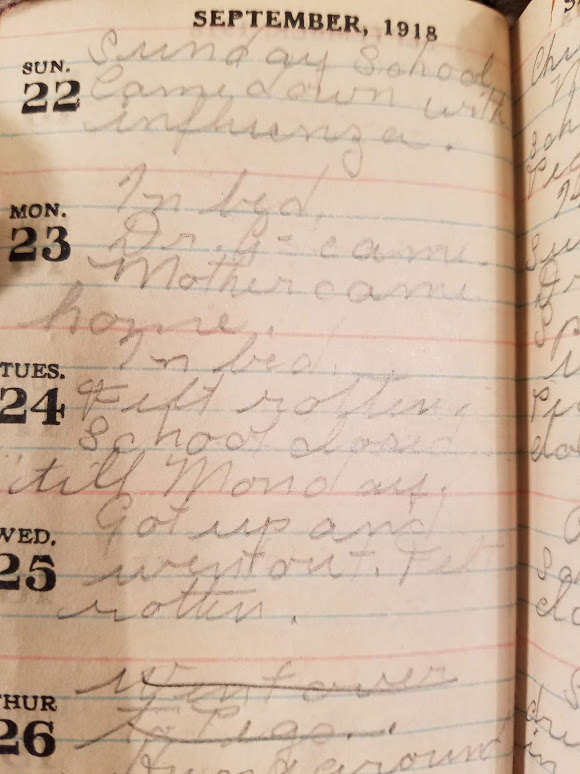
As regular readers of the Beehive know, we are following Barbara throughout 1918 with monthly blog posts that present Barbara’s daily life — going to school, seeing friends, playing basketball, and caring for family members — in the words she wrote a century ago. Here is Barbara’s September, day by day.


* * *

SUN. 1                                    SEPTEMBER

Boys came to church. Park in afternoon. Boys to supper

MON. 2                       LABOR DAY

Went up river with boys. Down to Spuds. K’s in evening.

TUES. 3

In town. Went to Keith’s with the gang. Up to farm with [Spud].

WED. 4

Hung around K’s for lunch. Wendell took us to Revere. Park in evening

THUR. 5

Peg’s for tennis. In town. Babe went home. Hospital with Dr. G-

FRI. 6

Peg came over. Pete is going to Lasell. Hurrah! Sick?

SAT. 7

Hung around. Felt rotten. Saw [Eli].

SUN. 8

Cousin Mildred to dinner. Over to Peg’s for supper. Ben is home.

MON. 9

School. Mrs. Reed’s

TUES. 10

School. Mrs. Reeds

WED. 11

School. In town

THUR. 12

School. Mrs. Reed’s. Played tennis.

FRI. 13

No school. It rained. Movies [+ overnight with] Lane’s. Babe + Mother went

SAT. 14

Took flowers up to Bil Sybil + saw Bob. That boy was awfully sick

SUN. 15

Church and Sunday School. Went up to see Bob with K. Spud to supper

MON. 16

School. Staid at home and studied.

TUES. 17

School. Peg and I went to see Bob.

WED. 18

School. Went over to Pegs. Rained hard

THUR. 19

School. Went to Surgical Dressings.

FRI. 20

School. Went down to Connies. Night at Pegs

SAT. 21

Down at station at 5:45. In town. Pegs for a dance

SUN. 22

Sunday School. Came down with influenza.

MON. 23

In bed. Dr. G- came. Mother came home.

TUES. 24

In bed. Feel rotten. School closed till Monday.

WED. 25

Got up and went out. Felt rotten.

THUR. 26

Went over to Pegs. Hung around. Sick?

FRI. 27

Tenn Went over to Pegs

SAT. 28

Tennis at Pegs

SUN. 29

Church. No Sunday School. Over to Pegs in afternoon

MON. 30

In town. Surgical Dressings. Spud very sick

* * *

If you are interested in viewing the diary in person in our library or have other questions about the collection, please visit the library or contact a member of the library staff for further assistance.


 *Please note that the diary transcription is a rough-and-ready version, not an authoritative transcript. Researchers wishing to use the diary in the course of their own work should verify the version found here with the manuscript original. The catalog record for the Barbara Hillard Smith collection may be found here.


John Quincy Adams and the Allens

By Lindsey Woolcock, Adams Papers Intern

In October 1837, John Quincy Adams was reading the newspaper, when he came across an advertisement for a slave sale.

There was in the National Intelligencer this morning an advertisement, signed James H. Birch … headed Sale of Slaves—A sale at public auction at 4 O’Clock this afternoon, of Dorcas Allen, and her two surviving children aged about 7. and 9. years (the other two having been killed by said Dorcas in a fit of insanity as found by the jury who lately acquitted her)… (23 October 1837)

Dorcas Allen was promised her freedom multiple times by her owners, the Davises. Though informally released from slavery, after multiple deaths and remarriages in the Davis family, Allen was left without the papers she needed to legally secure her freedom. Allen and her four children were taken from the District of Columbia to a slave prison in Alexandria, Virginia; there Allen killed her two youngest children and attempted unsuccessfully to commit suicide. She was put on trial for murder but acquitted on grounds of insanity.

This story deeply affected John Quincy. In his later years, he began taking more of an active stance against slavery. He presented dozens of antislavery petitions to an unresponsive House of Representatives, leading to the establishment of the House’s “gag” rule, where all petitions relating to slavery were laid aside without discussion.

His succeeding diary entries talk about visiting the auction house where Dorcas was to be sold in order to discover more information. He met with Nathan Allen, Dorcas’s husband, who was trying to raise enough money to purchase his wife and the two children from Birch. He also met with Dorcas, who came with her husband to ask for the $50 that John Quincy promised to contribute toward her purchase.

After that meeting, Dorcas and Nathan Allen and their children disappear. John Quincy seems to have never met with them again. We don’t know what happened to Dorcas and her children, yet these brief moments in Adams’s voluminous diary offer small glimpses into the parallel worlds of the black and white communities of Washington, D.C.

Over the summer that I’ve transcribed John Quincy’s diary, I’ve watched many seemingly random people show up in his parlor: a Quaker woman who gave a sermon and advised him to maintain a steady course in the House of Representatives; men visiting “out of curiosity”; a Scottish silkworm breeder who spoke so long about his worms that John Quincy didn’t have time to write letters of introduction for an earlier visitor. You never know who’s going to show up, and these meetings always struck me as odd. How do you just show up at the home of the former President of the United States? Do you just knock on the front door?

But a story like the Allens’s in particular struck me: what was that meeting like? How did Dorcas and Nathan feel? And what happened to their family afterward?

Brief Trip to Revere Beach

By Brendan Kieran, Reader Services

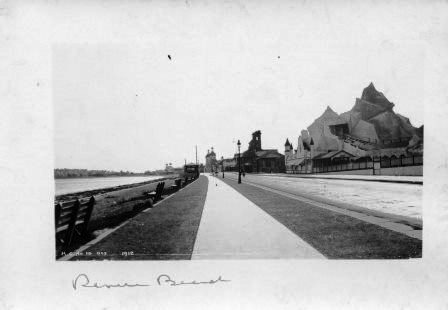
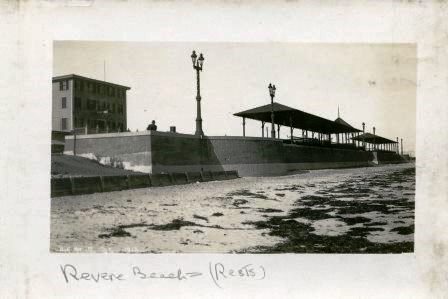
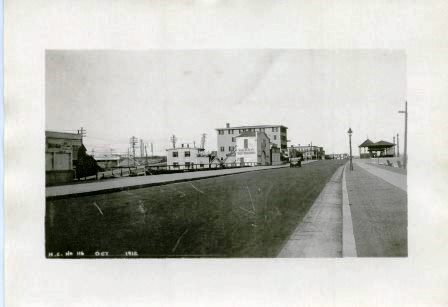
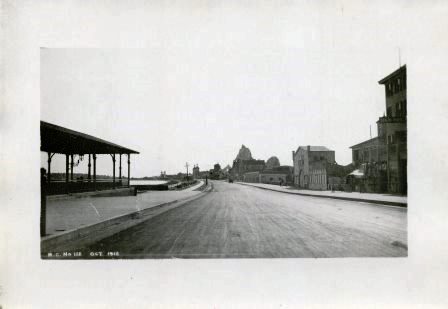
Last summer, I wrote a post for the Beehive based on my exploration of MHS materials relating to Lynn Woods, an outdoor public space I’ve enjoyed in my lifetime that I wanted to look at through a different lens. I decided to continue with that theme this summer by looking at another North Shore recreational area, Revere Beach. The MHS holds a handful of materials relating to the beach, including some of the Arthur Goss photographs. These photos, taken in 1912, provide brief but interesting snapshots of the Revere Beach landscape of the time.

“Revere Beach,” from the Arthur Goss photographs, 1912.


When I looked through these photos, I was struck by the number of rides and attractions that lined the road along the beach. One photo includes the sign for a merry-go-round, and multiple photos include a ride of some sort that looks like a miniature mountain. In Boulevard Landmarks: America’s First Public Beach, a book of postcards edited by Peter McCauley and the Revere Society for Cultural and Historical Preservation ([Revere, Mass.?: s.n., 1996]), this ride is referred to as the Thompson Scenic Mountain Railway.

“Revere Beach   Bath House,” from the Arthur Goss photographs, 1912


The Toronto Harbour Commissioners sent these photographs to the MHS in 1987. Their earlier provenance is not clear, but the Chief Engineer for the Harbour Commissioners, Edward L. Cousins, visited Massachusetts in 1912, the year in which the photos were taken. The waterfront development in Toronto was influenced by beach setups in Massachusetts, including Lynn Beach and Revere Beach.

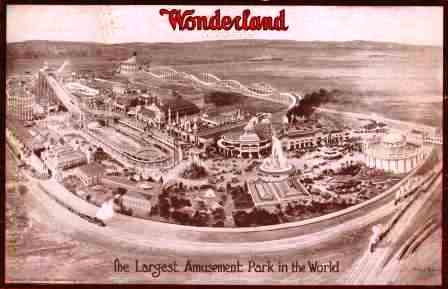
From the cover of the “Wonderland” score, words and music by Thos. S. Allen (Boston, Mass.: Walter Jacobs, 1906)


Additionally, the Revere Beach area was once home to the Wonderland amusement park. The experience of a night at the park with a date was the subject of a 1906 waltz song by Thos. S. Allen. The cover of the published score includes an illustration of Wonderland, which is billed as “The Largest Amusement Park in the World.” 

“Revere Beach = (Rests),” from the Arthur Goss photographs, 1912


A 2003 MHS publication, Faces of Community: Immigrant Massachusetts, 1860-2000, edited by Reed Ueda and Conrad Edick Wright, includes a chapter about Revere Beach. In “Lines in the Sand: Ethnicity, Race, and Culture at Revere Beach,” Mark Herlihy chronicles the development of the Revere Beach Reservation as a public park in the 1890s by the Metropolitan Park Commission (MPC) and the rise of recreational amusements along the beach shortly thereafter. He then explores the dynamics of ethnicity and race over the years at the beach, including the strong roles played by immigrants (mainly Jewish and Italian) in the development and use of the beach environment in the early decades after its conversion into a public space, tensions between immigrants and longer-established residents as well as among different immigrant groups, racism at the beach (including racist attractions along the boardwalk and at Wonderland), and difficulties as well as successes Black beachgoers experienced as they began to use the beach in greater numbers after World War II.

From the Arthur Goss photographs, 1912


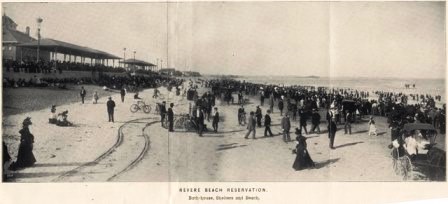
The MHS holds some other items relating to Revere Beach. Revere Beach Chips: Historical Background from the Revere Journal, compiled by McCauley (Revere, Mass.: Revere Society for Cultural and Historic Preservation, 1996), includes transcriptions of Revere Journal newspaper articles relating to Revere Beach, with the earliest article in the book being from 1881 and the latest being from 1974. “Revere Beach Reservation : bath-house, shelters and beach” ([Boston: Metropolitan Park Commission, 1898]), removed  from the Metropolitan Park Commission Report, January 1898, depicts a crowded beach scene (this item was recently featured in a Beehive post by Lindsay Bina and Anna Clutterbuck-Cook).

From the Arthur Goss photographs, 1912


If you would like to catch a glimpse of Revere Beach in earlier periods, these materials are available for research here in the MHS library

100 Years after the Influenza Pandemic

By Rakashi Chand

On this date a century ago, two sailors stationed in Boston went to the sickbay with flu-like symptoms; the next day eight more, the following day 58 more, and this was just the beginning. As we make plans for flu season this autumn, we should remember that this year marks the centennial of the deadliest epidemic of Influenza in modern history. The 1918-1919 influenza, or “Spanish flu,” pandemic killed upwards of fifty million people worldwide and five thousand people in Boston alone, numbers only surpassed by Philadelphia and Pittsburgh. The shocking morbidity pattern killed young, healthy people between 20-40 years of age at an alarming rate, with a rapid disease progression that could lead to multi-organ failure and death within twenty-four hours. The influenza strain was highly contagious and unfortunately spread at exponential rates. Although the origin of the outbreak is still debated, the Spanish media were the first to openly cover the outbreak because they were neutral in WWI. In part because of the war, the U.S. and non-Spanish European press were slow to report accurate information about the epidemic, and the high rate of casualties among military and civilian populations. Some lawmakers also suppressed coverage in an effort to reduce panic. 

At Camp Devens, an army training base for 45,000 soldiers just outside of Boston, the first soldier to come down with the flu was misdiagnosed with meningitis and influenza began spreading rapidly throughout the entire camp.  At the height of the crisis, 1,543 soldiers were reported ill on a single day. A poignant letter by Physician N. Roy Grist stationed at Camp Devens describes the scene in detail and can be read online: www.pbs.org/wgbh/americanexperience/features/influenza-letter/.

The epidemic soon spread to the civilian population of Boston.

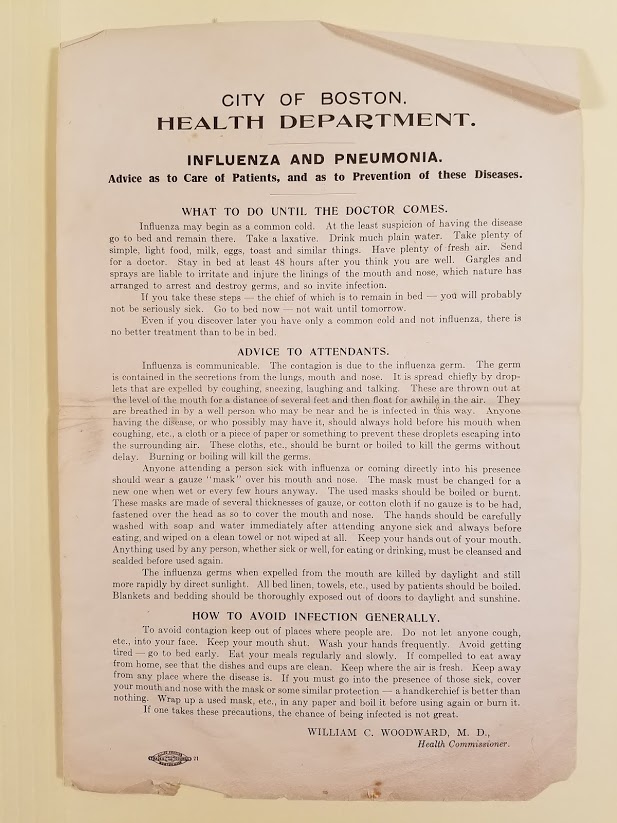
The MHS has a public notice issued by the city for the care and prevention of Influenza. This broadside is an example of the advice given to the people of Boston during the Influenza outbreak by William C. Woodward, the Health Commissioner of Boston from 1918 -1922.  

Influenza broadside

The epidemic took over the lives of all Bostonians. In mid-September, the Boston Globe reported on that the city planned to keep schools open, saying:

Neither Dr. William H. Devine, medical director of the schools, nor Dr. W. C. Woodward, City Health Commissioner, is in favor of closing Boston schools. They say that by remaining at their studies pupils are less likely to become affected, especially since teachers, school physicians and nurses are doing everything in their power to head off the epidemic.

But things turned for the worse very quickly, and people started to panic. No one understood why the disease was spreading so quickly or how to prevent it. Officials in Boston began forbidding public gatherings as they were desperate to try to control the spread of the disease. Finally, the schools were closed, as well as theatres, bars, and even churches were asked to hold not services. City hospitals were flooded with patients, there was an urgent need for doctors and nurses especially since so many were oversees helping the War effort, and, sadly, even coffins could not be supplied at the rate they were needed. 

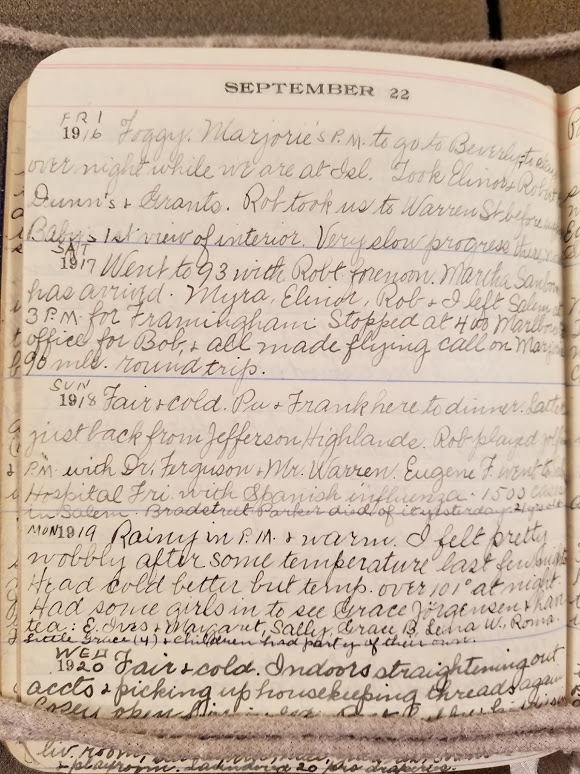
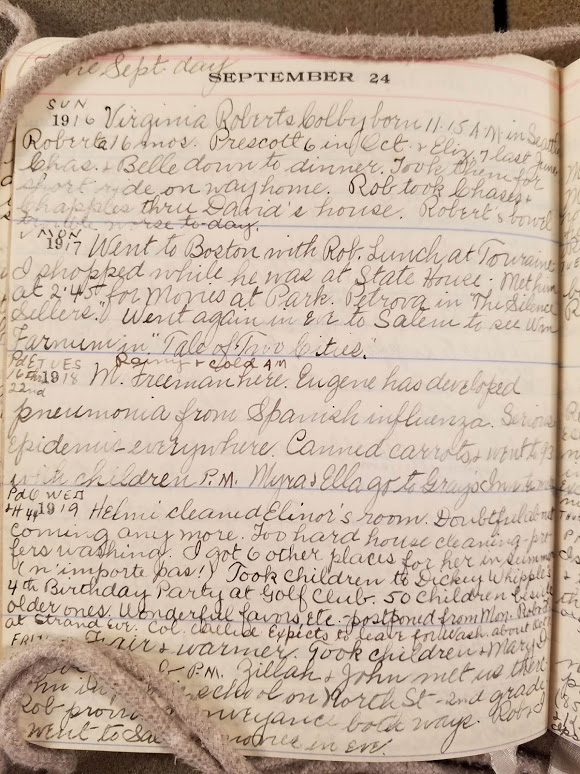
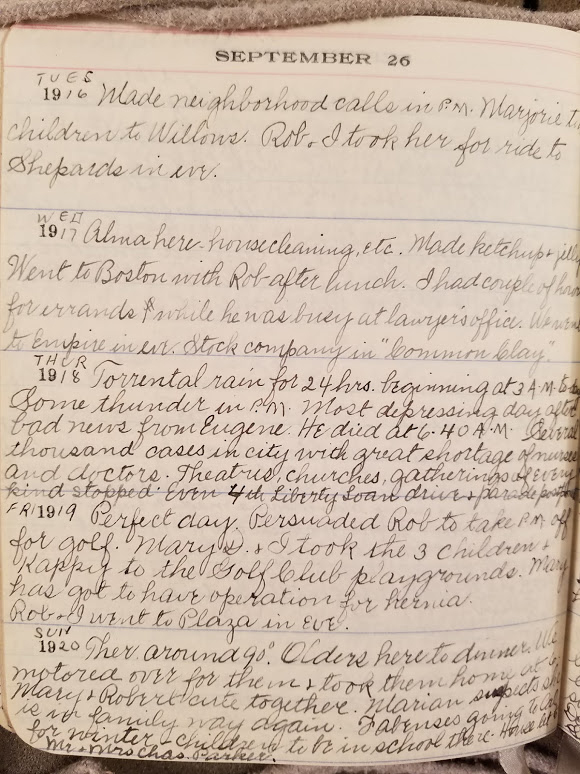
The diaries of Edith Coffin (Colby) Mahoney, from the Colby-Mahoney Family Papers, provide a glimpse of life in Massachusetts during the Influenza Outbreak. The diary Edith keeps is full of descriptions of lovely Golf outings at the Club, picnics, shopping, and friends’ visits during the final days of August, and into September of 1918. But then her daily entries suddenly mention Influenza, and with it, death.

Edith diary 9-22 Edith diary 9-24 Edith diary 0-26

September 22 1918

“Fair & cold. Pa and Frank here to dinner just back from Jefferson Highlands. Rob played golf with Dr. Ferguson and Mr. Warren. Eugene F. went to the hospital Fri. with Spanish influenza. 1500 cases in Salem. Bradstreet Parker died of it yesterday. 21 yrs old.”

September 24 1918

“Mr. Freeman here. Eugene has developed pneumonia from Spanish Influenza. Serious epidemic everywhere. Caned carrots. Went to 93 with children P.M. Myra and Ella go to Gray’s Inn tomorrow.”

September 26 1918 

“Torrential rain for 24 hours beginning at 3am today, some thunder in the P.M.. Most depressing day after bad news from Eugene. He died at 6:40am. Several thousand cases in the city with a great shortage of nurses and doctors. Theatres, churches, gatherings of everykind stopped. Even 4th Liberty Loan drivers parade postponed.”

September 27 1918

“Fair part of day but cold. Had Elwood Noyes get boiler ready and start furnace fire. Out with kiddies in P.M. Called at Ma’s. Belle there with a hoarse cold. Pa here right from office the past three days. Harry at Nasson School to see Agnes who has influenza. Rob home from N. Y. at midnight. Came instead of tomorrow accnt of Eugene’s funeral.”

September 28, 1918

“Beautiful, mild day. Rob in bed all day with high fever, bound up head and aching eye balls, so could not be pall bearer at Eugene’s funeral at grace Church. Prompt measures with hot lemonade, castor oil, aspirin etc.induced god sweat by afternoon so he felt much better in evening. Phoned but did not call Dr. Sargent”

September 29, 1918

“Beautiful, mild day. Rob very much better. Husky throat the only symptom left. Up at noon. Dr. Sargent said to keep him in tomorrow. Met him as I was going to 93 with children in the P.M.. James Tierney died Fri of pneumonia (37yrs). Dr says there is no sign of epidemic abating.”

The MHS houses another diary kept by young Barbara Hillard Smith of Newton, MA, describing her experience during the Influenza epidemic.

Barbara diary

September 21, 1918

“Down at Station at 5:45. In town. Pegs for a dance.”

September 22, 1918

“Sunday School. Came down with Influenza.”

September 23, 1918

“In bed. Dr. G- came. Mother came home.”

September 24, 1918

“In bed. Felt rotten. School closed till Monday.”

September 25, 1918

“Got up and went out. Felt rotten.”

September 26, 1918

“Hung around. Sick.”

September 27, 1918

“Went over to Pegs”

September 29, 1918

“Church. No Sunday school. Over to Pegs in afternoon.”

October 2, 1918

“Over to Pegs. School still closed.”

Luckily, Barbara survived the influenza epidemic, and it seems the greater impact on her family was that of the school closure.

To learn more about the Influenza Epidemic of 1918, or more about diaries and letters from 1918 please visit the Library at the Massachusetts Historical Society. We welcome your questions and research queries at library@masshist.org


Bibliography:

https://www.massmoments.org/moment-details/flu-epidemic-begins-in-boston.html

https://academic.oup.com/cid/article/47/5/668/296225

https://www.influenzaarchive.org/cities/city-boston.html#

https://www.smithsonianmag.com/history/journal-plague-year-180965222/ 

https://www.wgbh.org/news/post/1918-influenza-outbreak-when-boston-was-patient-zero 

https://www.pbs.org/wgbh/americanexperience/features/influenza-letter/

“Long live the line”: An Abolitionist Remembers the Fight Against Slavery

By Susan Martin, Collections Services

On 12 August 1895, Isaac A. Wetherby wrote to the firm F. W. Bird & Son of East Walpole, Mass. for a sample of their roofing material. But Wetherby recognized the name Bird, and what started as a perfunctory business letter became two pages of terrific stream-of-consciousness reminiscences about the “dark days of slavery.” Wetherby dropped so many names and references that I thought I’d create a kind of annotated version of the letter here. I’ll retain his eccentric capitalization, punctuation, and misspellings. Starting a few lines in…

& a Word more. I know your Family well. & it must be you are the Sons & Jr. F. W. Bird. but I still think your Father who I knew so well. as he was about my age which is 74. is yet with us on this Earth.

The recipient of this letter was Charles Sumner Bird, the son of abolitionist Francis William Bird. The elder Bird, unbeknownst to Wetherby, had died over a year earlier, and Charles carried on the family’s manufacturing business. Incidentally, sources indicate that Wetherby would have been 75 when he wrote this letter, not 74. And Francis W. Bird was actually ten years older.

ask him if he does not Rember the dark days of Slavery. when we were double geared Hustlers for Freedom as Free Soilers. at the time of our St Free Soil Convention held at Wocester Mass & Joshua. R. Giddings gave us the Ohio Statesmans Bugl Blast for Freedom. & Chas Sumner made his first Speach. & then our 1st Anty Slavery torch light Parade at Boston same night.

The Free Soil Party, founded in 1848, opposed the extension of slavery into new territories annexed by the United States. Charles Sumner of Massachusetts and Joshua Reed Giddings of Ohio were both prominent Free Soilers, and Worcester had been a hot-bed of anti-slavery sentiment since the early 19th century. Wetherby’s reference to a “bugle blast” may be a call-back to an 1839 poem by John Greenleaf Whittier called “The World’s Convention.”

I am an old Boston Artist. & I Painted & Caried at Head of Procession. (Henery Wilson lead on Horseback) a Cuting Carriacture of Abot Lawrence. as Nothern Doughface. “a Slave Holder had him by the nose &c.”

Wetherby was a portrait and ornamental painter and early photographer. For the parade, he caricatured Abbott Lawrence, a cotton manufacturer, U.S. Congressman, and Massachusetts Whig with ties to Southern enslaver. At the front of the procession rode rising political star Henry Wilson. Wilson’s life story is fascinating—he was born into poverty and went on to serve as the 18th vice president of the United States under Ulysses S. Grant.

& such a Humans nest it stired up at the head of State Str. We could hardly get through the Crowd was so Excited it was red Hot. they tried to shove canes &c through our Banners & &. up by Tremont House we were met by Volleys of Stones Stale Eggs &c. as Harvard Southern Students Club Roomed near there. our Baners were riddled & torn Bad that night. I have that old Banner Packed away.

Tremont House was a luxury hotel located on the southwest corner of Tremont and Beacon Streets. The Harvard Southern Students Club may have been a precursor of the university’s Southern Club, established in 1888, and/or the modern-day Southern Students Association.

soon after this time, “I went west young man” came to Iowa as the Indian & wild deer were just leaving. & John Brown & his men I knew well they slept in my Log Barn with their Sharpe’s Rifles. at Iowa City often as they Passed Through with Contrabands Bound for Canada. I lived at Milton hill & Dorchester.

Wetherby had lived primarily in New England until 1854. He moved to Iowa City with his family in the late 1850s, where he opened a photography studio and became the town’s first recognized commercial photographer. He crossed paths with John Brown as the notorious abolitionist smuggled freedom seekers—i.e., “contrabands”—north via the Underground Railroad. Wetherby’s home in Iowa City is a protected historic site, though the barn no longer exists. And his portrait of Brown, probably painted from a photograph, is part of the collections of the State Historical Museum of Iowa.

we were together Hustling for Speakers & kept Potters Steam Press going Printing Handbills written by Eliza Wright. to wake up the then Sleeping North. with Garrison & his Press. & Edmond Jackson & Co who backed him up.

Wetherby almost certainly meant Elizur Wright, abolitionist, secretary of the American Anti-Slavery Society, and prolific writer and editor of anti-slavery literature. His handbills were produced on a printing press manufactured by Charles Potter. William Lloyd Garrison and Edmund Jackson were also prominent abolitionists.

& I had then Just Returned from the South Ky. & Tenn & Predicted the War. I was drove out a Northen man’s life was nothing at that time there. a young Friend of mine was shot dead in the Streets of Louisville. named Bliss from Vermont. he only reported for Louisville Journal a Burlesque Speach of one Pope a Parasite Lawyer & a Turkey Buzzard Polittian. there never was anything done about it. no more than Shooting a Dog.

In 1842, a young teacher and writer named Leonard Bliss was shot by Godfrey Pope on a Louisville, Ky. street after reporting on a political speech by Pope’s cousin. Bliss died ten days later. The MHS holds a small collection of his letters, dating from 1832-1840. Here’s my favorite excerpt, written three days after his 23rd birthday: “I don’t know that I feel conscious of superior powers, but I feel determined to exert the powers I possess. […] I feel the stirrings of a spirit within me, that will not let me rest till I have made men feel that I have existed.” Godfrey Pope was arrested but acquitted of Bliss’ murder.

but years roll on & finds me in the Miss & Missourie river valleys. & in the Center of Civilization. & new England is on the Verge. & & the Grand Nation united & Slavery wiped out. the Giant West. East. & South a unit. & to remember not to be Caught with no Trained Soldiers. as we were just before the War. & that the German motto is right. “the World rests on the Point of the Sword.”

The rest of Wetherby’s letter consists primarily of information about his family, in which he obviously had great pride. His grandfather Judah Wetherbee (the name was spelled differently by other family members) fought at Bunker Hill. In the second letter of the collection, Isaac also boasted about his sister, Emily Greene Wetherbee, an “Educator, Orator & Poet, master of English Literature” with a school in Lawrence, Mass. named after her.

Isaac A. Wetherby died in 1904. I’ll let him take care of the sign-off…

Say to your Father we belong to Abolition Soldiers of the line

long live the line.

Truly yours for the cause.

I. A. Wetherby.

Barbara Hillard Smith’s Diary, August 1918

By by Lindsay Bina, Intern and Anna Clutterbuck-Cook, Reader Services

Today we return to the 1918 diary of Newton teenager Barbara Hillard Smith. You may read our introduction to the diary, and Barbara’s previous entries, here:


January | February | March | April

May | June | July | August

September | October | November | December


As regular readers of the Beehive know, we are following Barbara throughout 1918 with monthly blog posts that present Barbara’s daily life — going to school, seeing friends, playing basketball, and caring for family members — in the words she wrote a century ago. Here is Barbara’s August, day by day.


Revere Beach Reservation, Boston Metropolitan Park Commission, 1898.


* * *

THUR. 1                      AUGUST

Went to Sandwitch [sic]. K-Dow came. The double wedding

FRI. 2

Basketball. Swimming

SAT. 3

Raspberrying at Governor’s. Swimming. It was awfully rough

SUN. 4

Sailors came. Swimming. Boat Ride.

MON. 5

Rainy. High Jump. Mother went to Boston. The Alden’s came.

TUES. 6

Basketball. The Alden’s took us to the movies. Got in dutch.

WED. 7

Hiked part way to Hillcrest. Hot. Mother came home.

THUR.8

Started on hike. Landed in North Sandwitch

FRI. 9

Rained. Played Hide and Go seek in Barn

SAT. 10

Wrote letters. Sick?

SUN. 11

Rainy. Hike in afternoon. Sang at A.E. Lee’s in morning.

MON. 12

The Kids went for a long walk. They went swimming

TUES. 13

Climbed Mt. Chocorua. Tired as the deuce. Heard Bob had appendicitis.

WED. 14

Hung around. Rested. Wildcat episode. Wrote Bob.

THUR. 15

Climbed Israel. Hurt my knees.

FRI. 16

Came home. Good to get there

SAT. 17

Hung around. Cold as the deuce

SUN. 18

Wrote letters. A lot of company.

MON. 19

Went to Merideth. Swimming

TUES. 20

Got ready for a good time to-morrow. Shore supper. Dr. Johnson came

WED. 21

Edwina’s birthday party

THUR. 22

Breezy Island

FRI. 23

Babe came back to my tent

SAT. 24

Basketball. Dr. Johnson came again. War canoe came

SUN. 25

Lakeport to church. Swimming

MON. 26

Acted like […] the deuce. Swimming

TUES. 27

Mt. Washington. Met Conney and Betty Arnold

WED. 28

Not much doing. Canoe practice. Swimming

THUR. 29

Voted for […]. Hung around. School Party

FRI. 30

Packed. Prizes awarded. I got the cup. I don’t see how

SAT. 31

Came home. Babe with me. Otis and Spud took us up to park

* * *

If you are interested in viewing the diary in person in our library or have other questions about the collection, please visit the library or contact a member of the library staff for further assistance.


 *Please note that the diary transcription is a rough-and-ready version, not an authoritative transcript. Researchers wishing to use the diary in the course of their own work should verify the version found here with the manuscript original. The catalog record for the Barbara Hillard Smith collection may be found here.


Travel Without Moving : Adam Matthew Digital and the History of Tourism

By Katie Loughrey, Reader Services

As summer draws to its inevitable end, I am somewhat grateful (In case you haven’t noticed, it has been a hot one!) and somewhat wistful. Although I’ve been privileged to take several trips this season, I am someone always thinking of the next place left to explore, even if that place is as close as downtown Boston or a small piece of New England I haven’t yet seen in my lifetime of living here. Luckily, as a library assistant here at MHS and an aspiring archivist, I do always have an option to turn to when needing to be transported to a new place: the archives.

Quite the useful tool in my vicarious travels has been the Adam Matthew Digital online database Leisure, Travel and Mass Culture: The History of Tourism. This digital collection – available by subscription – highlights materials from several contributing institutions around the world, including the Massachusetts Historical Society, revolving around the birth and growth of travel and mass tourism between 1850 and 1980. The collection is made up of all sorts of ephemera from photographs, travel brochures, and ads to promotional tourism films. One can explore the collection by curated themes, country or region, contributing institution, or even within a set chronological timeline. It can be accessed online here at the MHS, or within any contributing or subscribing library.

Below I’ve highlighted a few items from our collections available on this database, and how they contribute to our understanding of how Americans traveled and toured New England in the past two centuries.

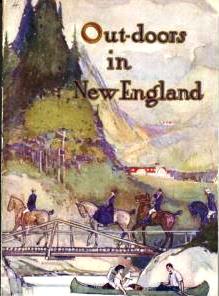
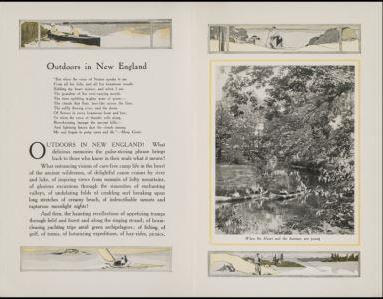
Many of the more eye-catching items are those tourism guides and brochures by transportation and tourism companies trying to entice consumers to be whisked away on a seasonal adventure of a lifetime. A prime example is this guide, Outdoors in New England, published in 1909 by the Boston & Maine Railroad General Passenger Department.


Inside this colorful volume, are nearly 50 pages of enthusiastic prose on the many leisure activities in the different states of New England, “the ideal, the perfect resting-up section of America.” Accompanied by both photographs and tri-colored illustrations of serene activities like boating and fishing, it captures the ever increasing narrative of the commodity of vacation as a respite from the tedium and stress of work and everyday life that was becoming available to the average American as railroads commercialized.


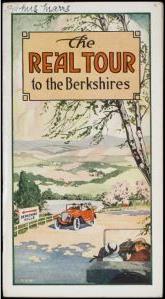
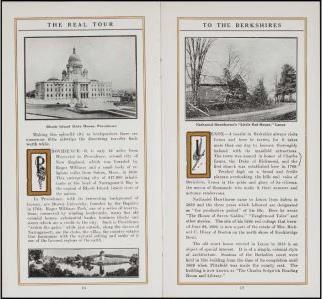
As the next decade approaches, more of these brochures became geared toward automobile travel, such as Real Tour to the Berkshires, published by the Real Tour Association of Lenox, MA. Including a fold-out map of the routes, the guide provides a detailed description of a scenic drive from New York through Connecticut and into the Berkshire area of western Massachusetts, with suggestions of accommodations and activities along the ride.


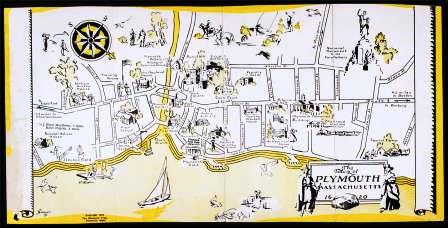
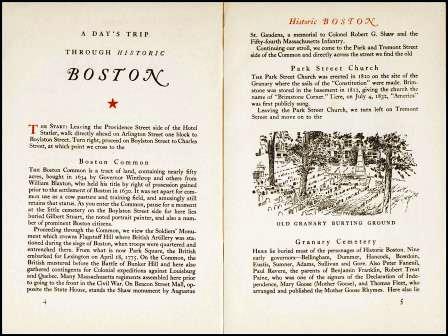
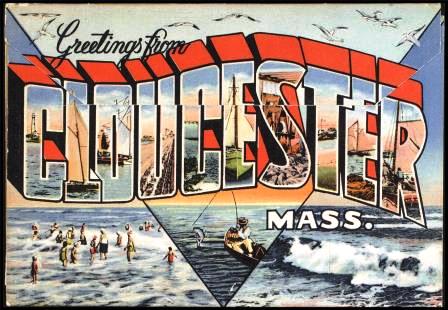
Aside from brochures and advertisements, a large part of our travel related collections on this database, and in general, are travel diaries. The diaries of Eva E. Blackwelder record her travels through Boston and surrounding towns, from winter 1938 to spring 1939. Eva’s entries are quite thorough, noting the weather, the sights seen, town histories learned on her tours and the quality, or lack thereof, of food at each of their accommodations. Not unlike myself, Eva seems to have kept most of the brochures, maps, photos and newspaper clippings collected along her journey to remember these places by. A notable realization as one leafs through these pages is how most of the sites she visited nearly a hundred years ago – the many stops of the Freedom Trail, Plymouth village, the House of Seven Gables in Salem – remain the draw for many tourists to this area today due to eastern Massachusetts’ historic past.

Eva E. Blackwelder Scrapbook [8], c.1938-1957.


Eva E. Blackwelder Scrapbook [Brochures], 1935.


Eva E. Blackwelder Scrapbook [Brochures], c.1938-1957.


Here’s a final nostalgic image from Eva’s journal – soon to be just a faint memory for Massachusetts travelers – physical turnpike tolls. On her way back into Boston at one point she writes:  

The toll houses were constructed with large gates which swing across the way as reminders to the traveler that he must help pay for the road.

The toll rates for passing over the turnpike were 25 cents for one person with a carriage of 4 wheels drawn by four horses. Carts and wagons with 2 horses paid half this amount… horse chaise, 10 cents. A man on horseback 5 cents. Cattle one cent and sheep and swine 3 cents a dozen. According to the general turnpike laws no toll could be collected from a passenger on foot; nor could toll be collected from those going to or from public worship within the limits of any town.

It’s hard to decide which is more surreal – a 25 cent toll or dozens of sheep on I-90! Either way, I hope this post inspires you to venture out on one last day trip before it’s too late.