Untangling North Atlantic Fishing, 1764-1910, Part 4: The Halifax Fisheries Commission, 1877

By Andrea Cronin, Reader Services

The United States abrogated the Reciprocity Treaty of 1854 regarding free trade and inshore fishing on 17 March 1866, as discussed in a prior post. The fishery arrangements then reverted back to the Treaty of 1818 agreement that secured the 3-nautical mile coastal area for resident Canadian fishermen and prohibited further inshore fishing to Americans. Canadian inshore fishing regulation transformed into a licensing business applied to American vessels at per-tonnage fee from 1866 until 1870. When Canadian authorities discarded the licensing system and began seizing American vessels over a two-year period, the need for improved arrangement led in part to the Treaty of Washington in 1871.

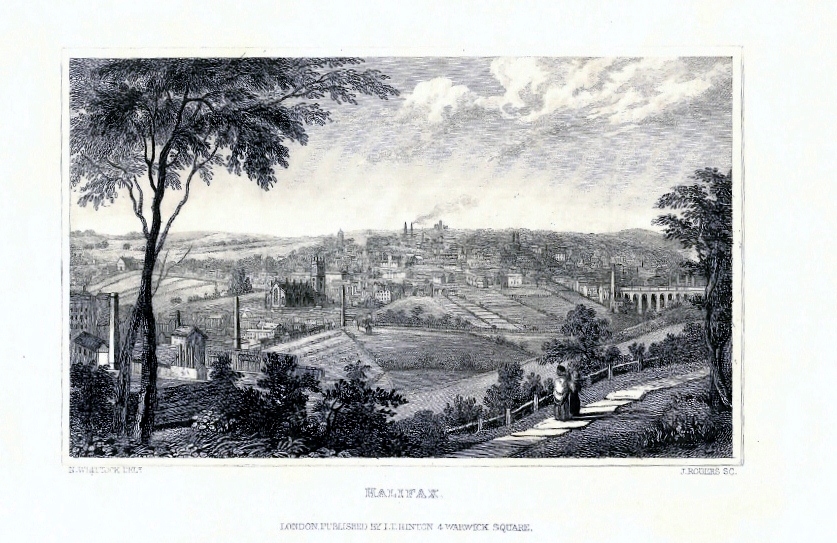
Among other issues of Northwestern border disputes and damages caused by British-built warships in the Civil War, the Treaty of Washington also addressed the future state of fishing rights between the newly formed Dominion of Canadian and the United States. The commissioners settled the issue of rights of American fishermen in Canadian waters by proposing a mixed commission meet in Halifax, Nova Scotia to determine value for reciprocal privileges. The Halifax Fisheries Commission met in June 1877. The representatives included British-Canadian Sir Alexander Tilloch Galt, American Ensign H. Kellogg, and Belgian Minister to the United States, M. Maurice Delfosse. William Henry Trescot and Richard Henry Dana, Jr., represented the United States counsel against a 5-man British-Canadian contingent. 

Richard Henry Dana, Jr. of Boston, Mass. advocated that fishing in Canadian waters should remain free to Americans. “[The Reciprocity Treaty of 1854] made no attempt to exclude us from fishing anywhere within the Gulf of St. Lawrence, and it allowed no geographic limits,” he argued. “And from 1854 to 1866 we continued to enjoy and use the free fishery, as we had enjoyed and used it from 1620 to 1818.” He reasoned that the precedent for the free fishery had been established, that the fish do not adhere to ocean limits, and asked the purpose in establishing these limits:

“The right to fish in the sea is in its nature not real, as the common law has it, nor immovable, as termed by the civil law, but personal. It is a liberty. It is a franchise, or a faculty. It is not property, pertaining to or connected with the land. It is incorporeal. It is aboriginal. … These fish are not property. Nobody owns them … they belong, by right of nature, to those who take them, and every man may take them who can.”

The prose of Dana’s argument did not impress the Commission. In a split decision on 23 November 1877, the Commission determined that the United States was to pay $5,500,000 in gold to the British Government for fishing rights in Canadian waters. Despite Ensign H. Kellogg’s protest, the United States paid this sum to the British Government.


The More Things Change….

By Susan Martin, Collection Services

Today’s media commentators like to decry political polarization and incivility in the United States. It’s become a well-worn cliché: Why can’t we all just get along? Some will even claim that this polarization is worse now than ever before. (Of course, we only have to go back 150 years to find Americans literally at war with other Americans, but let’s put that aside for the moment.) I’d like to present, as evidence for the defense, a letter written in 1813, when this nation was still in its infancy. The letter forms part of the Henry P. Binney family papers at the MHS.

In mid-1813, Benjamin Homans (1765-1823) worked as chief clerk of the Navy Department in Washington, D.C. His friend and colleague Amos Binney (1778-1833) was the Navy Agent at Boston. The United States was a year into the War of 1812, and Boston was a hotbed of dissent. New England Federalists and merchants vehemently opposed “Mr. Madison’s War, largely because of their reliance on trade with England. Binney lived and worked in the belly of the beast as an agent for the federal government, and Homans sympathized. He wrote to Binney on 23 June 1813:

You may be very sure, that I am no stranger to the active operation of evil spirits in Boston, party spirit, selfish spirit, envious spirit, proud spirit, family spirit, mean dirty spirit, assassin spirit, infernal spirit, tory spirit, royal english spirit, pseudo patriot spirit, hypocritical sanctity spirit, professional spirit, Jew spirit & Turk spirit. […] I conceive that every good quality, every moral virtue, and every social principle to be rapidly depreciating in Boston, and that it is at this day the vilest and most profligate spot on Earth, and for myself, my heirs & successors, I would prefer a residence in Algiers, Siberia or Botany Bay, than to live within one hundred miles of the atmosphere tainted by the noxious breath of Ben Russell and the Junto and their satellites.

Wow! Homans certainly didn’t mince words. A little bit of context: Benjamin Russell (1761-1845) was the editor of Boston’s hugely popular and staunchly Federalist Columbian Centinel. He had editorialized against Thomas Jefferson and now regularly attacked his successor James Madison. The “Essex Junto” was a group of hardline New England Federalists, so-called because many of its original members hailed from Essex County, Mass.

It would be difficult to overstate the Junto’s opposition to the Madison administration and the Democratic-Republicans. Governors of Federalist states refused to send their militias to join the war effort. There was even talk of secession. Just before Homans wrote this letter, John Lowell (1769-1840), a prominent member of the movement, published a pamphlet entitled Thoughts in a Series of Letters, in Answer to a Question Respecting the Division of the States. In this pamphlet, Lowell argued that the Louisiana Purchase had been an unconstitutional overreach by Jefferson and a violation of the original compact of the thirteen colonies. In truth, the annexation of all that new territory meant a shift in the balance of power and a dilution of the political and economic influence of the North. Lowell thought the original colonies should expel the western territories from the Union. Russell at the Columbian Centinel agreed.

In his letter, Homans advised Binney to stay strong and ignore the haters:

There is but one course a man can take, and that is to fix the pole star in his mind and steer by his own Compass, without attraction deviation or variation; the privilege of finding fault gives employment to the idle and food to the envious and vicious, and Saint John or Angel Gabriel could not go from the Town House to the head of Long Wharf without having some fault found with them, and even some would be self-righteous enough to cast a stone; in my opinion, no event in the progress of human affairs will ever restore Boston, to a state of social happiness civil liberty & personal independence. Since the Essex Junto took possession of it, every unclean Beast has found an asylum there. 

Homans also referred to the capture of the U.S.S. Chesapeake just three weeks before and took one more swipe at Madison’s domestic adversaries: “We have a desperate, enraged and brutal Enemy to deal with. And their friends & advocates are ten times worse and deserve ten times greater damnation.” Though he didn’t use the word, there’s little doubt that he considered these men traitors. In fact, some people called them “Blue Light Federalists” because they were alleged to use blue signal lights to communicate with British ships from the harbor.

 For better or worse, bitter partisanship and vitriolic attacks have been a part of our political landscape from the beginning. When Homans’ letter was written, the United States was just 37 years old, and acrimonious debates were already raging about vital issues: territorial expansion, states’ rights, international alliances, and regional conflicts between the mercantile North and the agrarian South.

 With only superficial changes, Homans’ words might have been spoken by any number of today’s political commentators. And if Benjamin Russell’s Columbian Centinel were an online publication, it’s easy to imagine what the comments sections would look like!


This Week @ MHS

By Dan Hinchen

It is a shortened week here at the Society with a couple of early closures and a long weekend. 

Please note that the Library closes early on Tuesday, 19 May, at 3:45PM, and on Wednesday, 20 May, at 3:30PM. 

On Tuesday, 19 May, there is an Early American History seminar taking place at 5:15PM. “Slavery in Massachusetts” is a panel discussion featuring Barbara A. Mathews of Historic Deerfield, Gloria McCahon Whiting of Harvard University, and Maria A. Bollettino of Framingham State University. The session considers two papers, Mathews’ “‘Is This Where Titus Lived?’ Researching and Intepreting African-American Presence in 18th-Century Rural New England,” and Whiting’s “The Body of Liberties and Bodies in Bondage: Dorcas the Blackmore, Dorchester’s First Church, and the Legalization of Slavery in the Anglo-Atlantic World.” This event is free and open to the public. 

And on Wednesday, 20 May, is the second installment of the Utopian Settlement series. “Mr. Ripley’s Utopia” consists of a lecture and walking tour at Brook Farm (670 Baker Street in West Roxbury). The event is guided by Peter Drummey, Stephen T. Riley Librarian (MHS) and Maggi Brown, Regional Interpretive Coordinator (DCR). The program begins at 5:30PM – Sold Out

The MHS is CLOSED on Saturday, 23 May – Monday, 25 May, in observance of Memorial Day. Normal hours resume on Tuesday, 26 May.

“Covered with Egyptian Darkness”: New England’s Dark Day of 1780

By Amanda A. Mathews

While the weather in Massachusetts was sunny and beautiful over Mothers’ Day weekend, many other places in the country experienced extreme and severe weather ranging from hail and tornadoes to flooding and blizzards. On 19 May 1780, Massachusetts, along with the rest of New England, experienced a different type of extreme weather event in what became known as the “dark day.”

Abigail Adams, home in Braintree while John continued his diplomatic mission in Europe, recorded her impressions of “a strange Phenomena”:

“On fryday the 19 of May the Sun rose with a thick smoaky atmosphere indicating dry weather which we had for ten days before. Soon after 8 oclock in morning the sun shut in and it rained half an hour, after that there arose Light Luminous clouds from the north west, the wind at south west. They gradually spread over the hemisphere till such a darkness took place as appears in a total Eclipse. By Eleven oclock candles were light up in every House, the cattle retired to the Barns, the fouls to roost and the frogs croaked. The greatest darkness was about one oclock. It was 3 before the Sky assumed its usual look. . . . About 8 oclock in the Evening almost Instantainously the Heavens were covered with Egyptian Darkness, objects the nearest to you could not be discerned tho the Moon was at her full. . . . I hope some of our Philosophical Geniousess will endeavour to investigate so unusual an appearence. It is matter of great consternation to many. It was the most solemn appearence my Eyes ever beheld but the Philosophical Eye can look through and trust the Ruler of the Sky.”

In a letter to John Adams, Abigail’s uncle Cotton Tufts included his own account and noted the various explanations local people were giving for the strange occurrence:

“This uncommon Darkness, greater in Degree and longer in Duration than had ever been before amongst us occasioned much Speculation, some attributed it to the Influence of the Planets, some to the Effects of a Comet and some to an Eruption of a Vulcano. The Vulgar considered it some as portending great Calamities, others as a Prelude to the general Dissolution of all Things. A close Attention to what appeared before and during this Event will help us to (at least) a probable Solution of this Matter, without having Recourse to the Planets &c. for a Cause. Prior to this, The Woods from Ticonderoga for Thirty Miles downwards had been for some Time on Fire. No Rain for many Days, Winds chiefly at West and N. West. By these the Smoak and Vapours were carried to a great Distance, insomuch that in our Vicinity, the Sky was at Times obscurd, the Air crowded with Smoak and Vapours, a disagreable Smell like what proceeds from Swamps on Fire.”

Indeed, Tufts’ explanation of forest fires proved correct; however, it was only recently that examination of tree rings in the forests of Ontario, Canada, indeed confirmed a widespread fire sending smoke far into New England, coupled with fog and cloud cover combined to produce a weather event that was remembered for generations.

This Week @ MHS

By Dan Hinchen

It is a quiet week here at the Society with just two items on the calendar. 

First, on Wednesday, 15 May, there is an author talk beginning at 6:00PM. Join us as Zach Hutchins, Assistant Professor of English at Colorado State University presents “Puritan Paradise: Eden in Massachusetts & Beyond.” In this talk, Hutchins will draw on research conducted for his recently published first book, Inventing Eden: Primitivism, Millenialism, and the Making of New England (Oxford UP, 2014). Preceding the talk is a reception that begins at 5:30PM. This talk is free and open to the public, though registration is required. Please RSVP. This program is the first installment of the Utopian Settlement series, with two more events taking place later in May.

Then, on Saturday, 18 May, stop by at 10:00AM for the History and Collections of the MHS. This 90-minute, docent-led tour explores all of the public space in the Society’s home on Boylston St., touching on the art, collections, history, and architecture of the MHS. The tour is free and open to the public with no need for reservations for individuals or small groups. However, groups of 8 or more should contact Curator of Art Anne Bentley in advance at abentley@masshist.org or 617-646-0508.

Finally, do not forget to come in anytime Monday-Saturday, 10:00AM-4:00PM to view our current exhibition, “God Save the People!: From the Stamp Act to Bunker Hill.”

“A Second Mother”

By Susan Martin, Collection Services

In this post, I’d like to introduce you to a remarkable person from one of our manuscript collections: Frances Elizabeth Gray. Elizabeth, as she was called, was born on 2 July 1811, the oldest child of Henry and Frances (Pierce) Gray, and spent most of her life in Roxbury, Mass.

What makes Elizabeth so remarkable? Her story begins with the tragic and premature death of her mother. Frances Pierce had been just 16 years old when she married Elizabeth’s father Henry in 1810. Twenty years later, just three days after giving birth to a daughter Anna Ellen, she died. She had delivered sixteen children, three of whom died in infancy. With Frances gone and Henry working as a merchant far away in New York, their daughter Elizabeth found herself with twelve—that’s right, twelve—younger siblings to raise. She was 18 years old.

Her siblings were: William (17 years old), John (16), Henry, Jr. (14), Caroline (12), Charles (11), Lydia (10), Mary (8), Frederick (6), Arthur (5), Frances (4), Horatio (15 months), and Anna Ellen (3 days). The Grays received some support from uncles, but the day-to-day care of the family fell on young Elizabeth’s shoulders.

Her diaries begin with entries describing her mother’s death and the events that followed:

1830. On Monday, March 22d, my mother died; was buried on Saturday 27th, the funeral delayed in consequence of my father’s absence, who did not arrive till a few hours, after it had taken place; he had gone to New-York on Saturday, 20th, on business, but being informed of my mothers illness, immediately returned, but was not aware of her death, till he arrived home.

Sat. eve. 27. A scene of trouble. I will not attempt to describe it.

Sunday, April 11th. Horatio, aged 15. mos, & Anna Ellen, the baby, born March 19; were christened; all the children were present, making thirteen.

Anna Ellen put out to nurse, March 22d to Mrs Moncrief.

Henry Gray returned to business in New York and frequently wrote to Elizabeth with news and advice. I was prepared to dislike Henry for his absenteeism, but his letters demonstrate a respect for his daughter that impressed me. He almost always deferred to her in matters related to the children. He wrote with genuine affection and regard for her happiness, as well as confidence in her judgment. For example: “I approve your measures, not only what you have done, but what you may do.”

The rest of the correspondence consists primarily of letters to Elizabeth from her brothers William, John, and Henry, Jr. In the 1830s, the boys were living in various Massachusetts towns, where they were educated and trained for professions. My favorite correspondent, by far, is John. He often wrote to Elizabeth with desperate pleas for money, clothing, and other items, and when she sent them, he was effusive in his gratitude. Here’s part of letter dated 25 Oct. 1831:

I shall simply say I have received what you promised: viz bundle and moneys. A thousand thanks—best feelings—memorys of you—none wrecked. Indeed you have been a second mother. May the Father of Mercies, direct the early beginning of such charity, to terminate in your own personal happiness! I address him for you; for you especially, peculiarly, emphatically for you.

John’s life also ended prematurely, which adds to the pathos of his letters. He was studying law, but struggled with financial and emotional problems. After a failed effort to establish himself in the west, the 23-year-old John was found dead in a hotel in Wheeling, Virginia (now West Virginia) on the morning of 21 Mar. 1837, almost seven years to the day after his mother’s death. He’d taken a fatal dose of opium.

Caption: The last letter in the collection from John Gray, written in Wheeling.

The collection includes many letters related to John’s death, as the family struggled to come to terms with it. Henry felt that John had been the most gifted of his children, and his death was an “irreparable loss.” An inquest established that John had not died by suicide, and Dr. Eoff of Wheeling provided more details on his state of mind in the last days. In a letter to Elizabeth, he explained that John had suffered from delusions and took the opium as a curative:

He believed that one or more living animals were within him & consuming his heart, liver, &c &c & imagined that he could hear them singing &c. These impressions produced great depression of spirits & kept him continually anxious to take some medicine to remove them.

As for the other Gray siblings, my research turned up only the barest outlines of their lives. Elizabeth herself lived to be 82, but never married, though she received offers. In later life, she lived with her youngest sister Anna Ellen and helped care for her nephew, William Gray Brooks. He remembered his aunt Elizabeth fondly, writing: “I owe to her unselfish devotion and love whatever I am or know.”

Another moving tribute appears in a letter to Elizabeth from her troubled brother John, written on 16 Sep. 1834:

You say little to me of Futurity; perhaps you speak the less, because you feel the more. You have acquired fame enough. To illustrate your virtues and tenderness I point to twelve brothers and sisters. Let me partake of your advice often, that my gratitude may be strengthened, if it be capable of it.

This Week @ MHS

By Dan Hinchen

It feels as if spring is finally here to stay. Why not take advantage of the warming and stop by the Society for some public programs?

On Tuesday, 5 May, there is an Early American History seminar beginning at 5:15PM. “‘All Manner of Slavery Servitude Labor Service Bondage and Hire’: Varieties of Indian and African Unfreedom in Colonial New England and Jamaica” is presented by Linford Fisher of Brown University, with Jennifer Anderson of SUNY – Stonybrook providing comment. Seminars are free and open to the public, RSVP required. Subscribe to receive advance copies of the seminar papers. 

Come by on Wednesday, 6 May, for a Brown Bag lunch talk featuring Charlotte Carrington-Farmer of Roger Williams University. Her talk, “Slave Horse: The Narragansett Pacer,” examines the connections among people, colonnies, and nations in the seventeenth and eighteenth centuries, using horses and the horse trade as a lens. 

And on Saturday, 9 May, stop by at 10:00AM for the History and Collections of the Massachusetts Historical Society. This 90-minute docent-led walk through the public rooms at the Society touches on the art, collections, history, and architecture of the MHS. The tour is free and open to the public with no need for reservations for individuals or small groups. Larger parties (8 or more), please contact Curator of Art Anne Bentley at 617-646-0508 or abentley@masshist.org. While you are here you will also have the opportunity to view our current exhibition, “God Save the People! From the Stamp Act to Bunker Hill.”

An American Woman in Egypt, 1914-1915: Asswan to Abu Simbel

By by Anna Clutterbuck-Cook, Reader Services

Today we rejoin our anonymous female diarist as she journeys down the Nile in the winter of 1914-1915. You can read previous installments of this series here (introduction) here (Cairo to Aysut) and here (Aysut to Asswan).

What strikes me about the diary entries for 6-10 December 1914 is that while our American traveler is describing mural reliefs, shopping at outdoor markets, and visiting luxury resorts, Europe is settling in for the first winter of the Great War. During the first week of December, the Austrian army captured Belgrade and the British-Indian army was moving across Mesopotamia toward the Ottoman empire. The Great War YouTube series provides a nine-minute synopsis of the week’s events in newscast form.

Meanwhile, on the Nile:

Dec. 6. Arrived at Komumbu about 10  & walked to temple a few steps away. Temple dedicated to 2 deities, each deity had his own special worship & festivals so there are really 2 temples; the temple was divided & each side had its own gateways, doors & chapels. Crocodiles were worshipped here. Mural reliefs especially beautiful. Fine view of Nile country from temple. After lunch reached Asswan about 3. Took boats from ship & went first to Elephantine island to see the Nilometer & some ancient ruins; then sailed round island by Cataract Hotel to mainland & went through the Bazar with the [illegible word]. Got back to ship for late tea & had fine sunset coming back.

Dec 7. At 9.30 took boat to ships – visited shops & bought [illegible word], then went up to Cataract Hotel & looked at views. Got back just for lunch. Saw Eatons at hotel, who asked us to lunch P.M. At 2.30 went ashore with Miss Phelps took carriages & road out on desert to granite quarries & Bisharin camp where the natives danced for us on the sand. Saw horses raced [illegible] we had to get out and go in other carriages. Lunch in the [illegible word] . Got back for tea after 5. Then packed.

The entry of 7 December 1914 is the first time that local Egyptians, in this case the Beja people of southern Egypt and northern Sudan, have appeared in our narrator’s diary. The portrait of a group of anonymous Bisharin (a subgroup of the Beja people) which appears above, comes from the contemporaneous travel narrative Along the Nile with General Grant by Elbert E. Farman (1904). Farman’s description of the community which he and General Grant visited, like that of our diarist, situates the Bisharin as local color: “It is here that they are best seen in their real native character, habits and dress … Here was the simplicity of nature” (220-221). The brief appearance of the Bisharin in our diarist’s narrative underscores the overall absence of interaction with local Egyptians. Like many tourists today, our diarist’s focus on the ancient history and landscape of the places she passes through renders the inhabitants an often indistinguishable part of the backdrop.

Dec 8. Had early breakfast & left boat at 8.30. Took boat to train & then trains  to [illegible phrase] & there we left our party & went on board the Prince Albert sailing at 9.30 After lunch visited temple of Dendur a very small temple built by Augustus. Later, almost at sunset, landed in boats & visited temple of Gerf-Hosein. Had magnesium light to see inside. In the center some pillars [illegible phrase] burial figures of Ramses II. [illegible phrase] statues of King there [illegible phrase]. Quite dark going back to boat.

Dec. 9. Arrived soon after breakfast at Wadi Sabou & went ashore to visit temple. An [illegible word] of sphinxes leading to the temple. Soon after lunch went ashore again to see temple of Amadu – then at sunset reached Kaer-[illegible word] & climbed to top of ruined fort or castle for the view. Stopped here for the night.

Dec. 10. Reached Abu Simbel just before lunch & after it went ashore & saw the temple – with 4 statues of Ramses II outside 66 ft high – then at the right temple dedicated to his wife. Hathor & his wife. The front ornamented with statues of the king, his wife & some of his children. After dinner went back to see it by moonlight.  Were called at 4.30 A.M. to see [illegible phrase] temple hewn in rocks, to 185 ft deep.

Stay tuned for the next chapter in our diarist’s travels, to be posted mid-June. And, as always, you are welcome to access the diaries for yourself here in the Massachusetts Historical Society’s library reading room


Extinction and Discovery, Denial and Redemption: The Brontosaurus Roller Coaster

By Dan Hinchen

The Brontosaurus is one of the most easily identified dinosaurs in popular culture. Just think about Little Foot, the main character in the animated movie, The Land Before Time, or about Fred Flintstone chowing down on a brontosaurus burger.

Despite this popularity, since 1903 this animal has officially been considered a non-entity. Rather than representing a singular genus of dinosaur, it was believed that the available fossils were actually those of a species of Apatosaurus, that archaeologists misidentified the bones. Thus, the lone species of the genus, Brontosaurus excelsus, was reassigned as A. excelsus.

Earlier this month, though, some members of the scientific community turned an about-face and accepted that the two genera of dinosaur, Apatosaurus and Brontosaurus, are distinct enough from one another to receive individual classification. Once again, Brontosaurus is a valid term. You can read more about the debate in nomenclature and cladistics in the articles listed at the end of this post.

So what does this have to do with the MHS?

Within our holdings is a publication created by Othniel Charles Marsh, the man credited with original identification and description of both the Brontosaurus and Apatosaurus, among many others. The Dinosaurs of North America (1896) is an extract from the 16th annual report of the U.S. Geological Survey.

In this report, Marsh looks at three main time periods in turn, beginning with the Triassic period, then Jurassic, then Cretaceous. In each period he splits his descriptions among three distinct orders of dinosaurs: theropods, sauropods, and predentata. The first part of the book is devoted to narrative description. As he begins a new order of animal he gives brief and broad descriptions of typical characteristics and geographic dispersal. Then he gets more specific, identifying major families and genera within each order.

Theropods were typically bipedal and carnivorous. The most famous of all the theropod dinosaurs must be Tyrannosaurus rex. Marsh, however, looks at some of its smaller cousins that were located in North America, like the Allosaurs and Ceratosaurs.


Sauropods were large four-legged herbivores (mostly), characterized very generally by huge, barrel-shaped bodies with long slender tails and necks, and relatively small heads. It is into this order that the genera Brontosaurus and Apatosaurus fall. Other fairly well-known names in this type are the brachiosaurs and diplodocidae.


The third and most varied order handled by Marsh in this book are the predentata, now known more widely as ornithischia. This order contains the armored stegosaurs and ankylosaurs, the horned ceratopsians, and the duck-billed hadrosaurs.


Following all of this narrative information are dozens of plates featuring detailed drawings of skeletons and individual bones. All of the images in this post come from this volume and are a small sampling of those present.

Unfortunately, when searching our online catalog, ABIGAIL, this item is the only one that comes up under the subject Dinosaurs. Still this volume is wonderful look at the work which laid the foundation for our modern understanding of these long-extinct creatures. Do you have any favorites that appear here? What do you think of the potential resurrection of the Brontosaurus?


For further reading

Choi, Charles. “The Brontosaurus is Back.” Scientific American (2015). Accessed April 25, 2015. http://www.scientificamerican.com/article/the-brontosaurus-is-back1/

– Naish, Darren. “That Brontosaurus Thing.” Scientific American (2015). Accessed April 25, 2015. http://blogs.scientificamerican.com/tetrapod-zoology/2015/04/24/that-brontosaurus-thing/

– Switek, Brian. “Back to Brontosaurus? The Dinosaur Might Deserve Its Own Genus After All.” Smithsonian (2015). Accessed April 25, 2015.  http://www.smithsonianmag.com/science-nature/back-brontosaurus-dinosaur-just-might-deserve-its-own-genus-species-science-180954892/?no-ist

This Week @ MHS

By Dan Hinchen

On Tuesday, 28 April, we have an Immigration and Urban History seminar. “Due Credit: Chinese Workers and the Central Pacific Railroad” is presented by Manu Vimalassery of Barnard College, with Hidetaka Hirota of Columbia University providing comment. The talk begins at 5:15PM and is free and open to the public, RSVP required

And closing out the month on Wednesday, 29 April, there is an author talk with Jasmine Nicole Cobb, Assistant Professor of Communication Studies at Northwestern University. “Picture Freedom” explores the earliest illustrations of free Blacks and reveals the compliated route through visual culture toward a vision of African American citizenship. The talk begins at 6:00PM and is open to the public with a fee of $10 (no charge for Fellows and Members). There is a reception preceding the talk at 5:30PM. Registration is required, so please RSVP.  

Entering the new month, there are two events on Saturday, 2 May. First up, beginning at 10:00AM is the History and Collections of the MHS. This 90-minute docent-led tour explores all of the public spaces in the Society’s home on Boylston Street and is free and open to the public. Larger parties (8 or more), please contact Curator of Art Anne Bentley at 617-646-0508 or abentley@masshist.org in advance. 

Also on 2 May is a rare Saturday evening event. May Day Mayday! is a conversation among three eminent historians – William Fowler, Nathaniel Philbrick, and Michael Tougias – sharing stories of catastrophes at sea. This program is open to the public and registration is required with a fee of $20 (no charge for Fellows and Members). Please RSVP here. There is a reception preceding the talk at 5:30PM with the event starting at 6:00PM.