This Week @ MHS

By Dan Hinchen

Kicking off this week on Monday, 12 May, is a Brown Bag talk from short-term research fellow Katie Booth, University of Pittsburgh. Alexander Graham Bell believed that his most important contribution was not the telephone, but his work to liberate the deaf by destroying their community. He came to Boston in 1871 to teach deaf children through oralism, a method that forbade the use of Sign Language and instead taught deaf children to speak. He quickly became an international leader of the oralist movement, but for the deaf who believed he was robbing them of their language, he became the culture’s greatest enemy. “The Performance of Miracles: Alexander Graham Bell’s Mission to Save the Deaf” begins at noon and is free and open to the public. 

After a couple quiet days, on Thursday, 15 May, is a special talk given by Chief Justice Margaret H. Marshall, former Chief Justice of the Supreme Judicial Court of Massachusetts and the first woman to serve in that role. In her talk, titled “An Historical Look at the Goodridge Same Sex Marriage Decision,” Chief Justice Marshall will talk about the landmark decision reached in Goodridge v. Department of Public Health, which stated that it was unconstitutional to allow only opposite-sex couples to marry. As a result of the ruling same-sex marriage in Massachusetts began on 17 May 2004. A pre-talk reception begins at 5:30PM followed by the program which begins at 6:00PM. Registration is required and there is a $10 fee (no charge for Fellows and Members).  Click here to register online, or call the MHS reservations line at 617-646-0560.

Then, on Friday, 16 May, there is another Brown Bag talk at 12:00PM. “Louisa Catherine Adams: One Woman, Many Voices,” is a panel discussion about what we can learn about Louisa by listening to her different voices that emerged in letters, diaries, poetry, and memoirs. The panelists Judith Graham and Margaret Hogan are editors who have prepared Louisa’s work for publication, and David Michelmore is a biographer who has used it. The discussion will be moderated by Beth Luey. This event is free and open to the public.

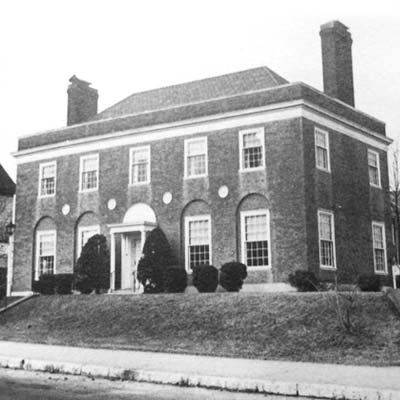
On Saturday, 17 May, is the MHS Tour: The History and Collections of the MHS. This 90-minute docent-led tour explores the public spaces of the Society’s home at 1154 Boylston Street and touches on the art, architecture, history, and collections of the MHS. The tour is free and open to the public. No reservation is required for individuals or small groups. Parties of 8 or more should contact the MHS prior to attending a tour. For more information please contact Curator of Art Anne Bentley at 617-646-0508 or abentley@masshist.org.

Finally, a reminder that time is running out to view our current exhbition, “Tell It with Pride: The 54th Massachusetts Regiment and Augustus Saint-Gaudens’ Shaw Memorial” which officially ends on Friday, 23 May. The exhibit is free and open to the public Monday-Saturday, 10:00AM-4:00PM.

Stephen Greenleaf Bulfinch Diary, Post 32

By Elaine Heavey, Reader Service

The following excerpt is from the diary of Stephen Greenleaf Bulfinch.

Monday, May 9th, 1864

The great campaign has begun; & according to recent news, with a victory which promises still better success. God grant it!

Wednesday, May 18th 1864

The last two weeks have been ‘prodigal of blood.’ We have apparent advantage, but not decisive. Today there was a wicked hoax, a pretended proclamation of the President, ordering a fast, & calling for 400,000 more men.


Love Birds: Ducks, Doves, and Darlings

By Elaine Grublin

Each month I have the pleasure of delving into our rich Civil War era collections seeking just one document to showcase in our “Massachusetts Finds Her Voice” web feature.  It is one of my great pleasures, sitting in the reading room working through page after page of correspondence and diaries, written exactly 150 years ago, that capture the essence of how people from Massachusetts experienced the war.  Each time I sit down I hope to find a document that represents the particular aspect of the war experience I hope to highlight in a coming month. 

Typically, I limit myself to searching the collections of persons from Massachusetts, as the scope of the project only allows for featuring documents authored by men and women from Massachusetts. But earlier this spring, I found myself reading the Lafayette S. Foster Papers. Foster was a lifelong resident of Connecticut. He represented that state in the US Senate from 1855-1867. I turned to this collection hoping Foster may have received letters from members of the Massachusetts congressional delegation. I dreamed of finding something referencing the ongoing debate surrounding the 13th Amendment. I struck out along that line, but a letter Foster had written to his wife grabbed my attention.

I knew that this letter could not be used in the Civil War feature, but as my eyes fell on the final line of the first page, where Foster states “you are a bird, and a duck, and a dove, and a darling,” I simply could not resist reading the letter in its entirety. 

Writing to his “dearest Wife” from the Senate Chamber on Tuesday, 31 May 1864, Foster opens the letter with the lament:

I generally fail to get any letter from you on Tuesday morning – it sometimes reaches me on Tuesday night – It shows me how great is the loss – for it so falls out, that what we have we prize not to the worth, while we enjoy it – but being lost, why then we rack the value – You are a bird, and a duck, and a dove, and a darling, and when your letters fail to come I find how much I lose.

The letter continues on to discuss the progress on a tax bill (slow), the progress of the war (unpredictable), and the prospects for the Republican nominating convention in Baltimore the following month (Lincoln all the way!). 

Being a true reference librarian, I simply had to see what I could discover about the woman who inspired such Audubonian comparison.  Referred to as both Mittie and Mattie in Foster’s letters, Martha Lyman was Foster’s second wife.  His first wife, Joanna, died in 1859 after 22 years of marriage.  Foster and Lyman wed in October 1860, and made their home in Norwich, Connecticut. But it thrilled me to learn that there was a genuine Massachusetts connection in the letters.  Martha Lyman – the bird, duck, and dove, of Foster’s musings – had been born in Northampton, Massachusetts in 1823.  Perhaps I shall go back to the Foster collection and examine Martha’s letters, to determine if any of those missives, written by a Massachusetts native, make a likely candidate to be featured in Massachusetts Finds Her Voice in a future month.   


This Week @ MHS

By Dan Hinchen

It is time once again to run through the events on tap for the week ahead. With five days of programs coming there are plenty of reasons to stop by the Society and get a dose of history. Before we jump into the events, though, please note that the library of the MHS closes early at 2:30PM on Wednesday, 7 May, in preparation for the evening’s event. 

First up on Tuesday, 6 May, is an Early American History seminar presented lead by Hari Vishwanadha of Santa Monica College. “Through Novanglus’s Eyes: Forms of Empire in India” looks at how Yankee merchants in the India trade successfully negotiated the competing claims of Indian society and the British Raj. As the empire flourished, the merchants prospered. The experiences of two prominent men, Henry Lee and Charles Eliot Norton, are representative of the rich and complex relationship among the tree peoples and their cultures and served as a template for subsequent merchants engaged in the India trade during the nineteenth century. Eliga H. Gould of the University of New Hampshire will provide comment for this seminar that begins at 5:15PM. Be sure to RSVP for this program by emailing seminars@masshist.org or phoning 617-646-0568.

Next, on Wednesday, 7 May, swing by at noon for a Brown Bag talk with short-term research fellow Chris Florio of Princeton University. In the mid-nineteenth century, American and British observers struggled to distinguish the poor from the slave. Tracing a key shift in the moral imagination, this dissertation explores how the boundaries of poverty and slavery blurred during the so-called “age of emancipation.” Florio asks the question: how did poverty and slavery, as political categories and social conditions, entangle with one another in locations spanning the United States and the British Empire? “The Poor Always with You: Poverty in an Age of Emancipation, 1833-1879” is free and open to the public and begins at 12:00PM. 

On Wednesday evening there is a special Member Event, the John F. Kennedy Medal Presentation. The John F. Kennedy medal is awarded by the Massachusetts Historical Society to persons who have rendered distinguished service to the cause of history. It is not limited to any field of history or to any particular kind of service to history. MHS Fellows and Members are invited to attend this presentation of the Kennedy Medal to David McCullough. Reception begins at 5:30PM, presentation of the medal and remarks by Mr. McCullough begins at 6:00PM. This event is sold out. If you would like to be placed on the waiting list, please call 617-646-0552.

Join us on Thursday evening, 8 May, for the public program “The Adams Portraits & Other Treats: 18th-Century Artist Benjamin Blyth.” Blyth, the Salem artist of the Society’s iconic portraits of John and Abigail Adams, also left a large, delightful number of other portraits of local families, merchants, and participants in the American Revolution. His brother Samuel, a jack-of-all-trades in the construction and home-decorating businesses, was far more successful. But because of Benjamin’s flight from Salem to Virginia in 1782, he and his brother seemed to swap careers, and therein lies the tale. This talk is presented by retired museum professional, Bettina A. Norton and begins at 6:00PM with a pre-talk reception at 5:30PM. Registration required at no cost. Click here to register online, or call the MHS reservations line at 617-646-0560.

Classroom Currents: Childhood Education Reforms in Nineteenth-Century Boston and Buenos Aires” is a project which traces the origins and evolution of nineteenth-century public educational theories and their significance to nation-building processes within the Americas. Focusing on the Atlantic seaboard cities of Boston in the United States and Buenos Aires in Argentina as case studies, it analyzes how educational ideas traveled and were reshaped by local conditions. The similarities in the nature and scope – and ultimately, the differences in the implementation – of educational policies in each city supports a larger analysis on the transformation of politics and the shaping of distinct national identities in the nineteenth-century Americas. This free program is presented by Carolina Zumaglini of Florida International University and takes place Friday, 9 May, at noon.

And finally, on Saturday, 10 May, there is not one but two tours taking place. The History and Collections of the MHS is a 90-minute docent-led tour of the public spaces in the Society’s building at 1154 Boylston Street. The tour touches on the art, architecture, collections, and history of the MHS and is free and open to the public. No reservation is required for individuals or small groups. Parties of 8 or more should contact the MHS prior to attending a tour. For more information please contact Curator of Art Anne Bentley at 617-646-0508 or abentley@masshist.org. Tour begins at 10:00AM.

Also on Saturday is “Created Equal: Walking Tour of Boston Black Heritage Trail.” This tour is offered in conjunction with the Created Equal Film & Discussion Series and is presented by our partner organization, Boston African American National Historic Site. The tour is scheduled to begin at 10:00AM and last for approximately two hours. For more information, please calle 617-646-0557 or e-mail education@masshist.org

“A disposition to do my duty”: Three Generations of Ministers to Great Britain

By Amanda A. Mathews, Adams Papers

Charles Francis Adams recorded Tuesday, April 30, 1861 as a “soft, springlike day” in Boston in his diary. Nevertheless, as serene as the weather may have been, the political world was far less so. Not yet had three full weeks gone by since the Battle at Fort Sumter—the opening salvos of what would be a long and painfully bloody Civil War. The turbulent present and still unknown future did not solely occupy his thoughts on this day however. Rather, it was to the past that he looked. He could not help but be acutely aware of the knowledge that he was following in the footsteps of both his father, John Quincy Adams in 1815, and grandfather, John Adams in 1785; as he prepared to embark as the third generation of his family to serve as the United States Minister to Great Britain.

As he was to depart Boston the next day, Charles went to take his leave from the Governor of Massachusetts, John Albion Andrew, who surprised him by making a speech before the state’s public officials. Charles recorded the meeting in his Diary:

Soon after ten o’clock Governor Andrew was announced but instead of coming as I supposed with only his immediate Aids and Secretary, there filed in all the heads of bureaus of the Commonwealth…. The Governor rose and made me an address, alluding to the peculiar position which I occupied, to the departure of John Adams eighty four years ago, to the responsibility of my present mission, and closing with the expression of the entire confidence of the State in whose name he spoke as well as his own in my capacity and fidelity in the performance of my duty. For such a speech I was entirely unprepared and yet I saw that a reply was demanded…. I expressed my thanks for this most distinguished honor, my regard for him as the head of the Commonwealth not less than as a man, alluded to the painful circumstance in which I should leave the Country, but took consolation from the fact that as my father and grandfather had both of them left in moments of the greatest national distress, so I might like them return to the hour of restoration of its prosperity.

Nearly 44 years before, a ten-year-old Charles had crossed the Atlantic travelling home with his parents and siblings at the conclusion of his father’s mission to England—now he would be returning to that country with his own wife and children and a very different mission. For his father and grandfather, the threat to the survival of the United States had come from across that ocean; now, the threat lay at home. But like the generations before him, he would ably perform his duty as his country’s minister and would return home in 1868 to a booming and prosperous but still deeply scarred nation.

This Week @ MHS

By Dan Hinchen

It is a quiet week here at the MHS with only two public programs lined up. Of course, that just makes it easier to catch them all!

First, on Tuesday, 29 April, join us for a panel discussion that is part of the Immigration and Urban History seminar series. “American Catholics and U.S. Immigration Policy before the Immigration and Nationaly Act of 1965” features Danielle Battisti of the University of Nebraska and Gráinne McEvoy of Boston College, and Justin Poché of the College of the Holy Cross providing comment. McEvoy’s paper, “‘A Christian and Democratic Attitude’: The Catholic Campaign for Education and Enlightenment on U.S. Immigration Policy, 1952-1957,” examines the Catholic campaign for comprehensive immigration reform during and in the wake of the McCarran-Walter Immigration and Nationality Act of 1952, which removed discrimination on the basis of race from federal immigration policy but retained the national origins quota system. Battisti’s essay, “‘Whom Shall We Welcome?’ Italian Americans and Immigration Reform Campaigns, 1948-1965,” examines the efforts of the Italian Americans who both assisted Italian immigrants to the U.S. after World War II and who joined in a broader movement to abolish the national origins system and thereby reform the nation’s immigration policies in the 1950s and 1960s. Be sure to RSVP for this program by emailing seminars@masshist.org or phoning 617-646-0568.

On Wednesday, 30 April, join us for an author talk presented by John Ferling titled “Jefferson & Hamilton: The Rivalry that Forged a Nation.” Jefferson and Hamiltonis the story of the fierce struggle – both public and, ultimately, bitterly personal – between two titans. Join us as we explore their complicated rivlary. John Ferling, a leading authority on late 19th and early 19th century American history, is the author of many books, including Almost a Miracle: The American Vicotyrin the War for Independence, Adams vs. Jefferson: The Tumultuous Election of 1800, Setting the World Ablaze: Washington, Adams, and Jefferson in the American Revolution, and the award-winning A Leap in the Dark: The Struggle to Create the American Republic. The talk begins at 6:00PM with a pre-talk reception starting at 5:30PM. Registration is required for this event and there is a $10 fee (no charge for Fellows and Members). Click here to register online, or call the MHS reservations line at 617-646-0560.

And be sure to come in and check out our current exhibition, Tell It with Pride: The 54th Massachusetts regiment and Augustus Saint-Gaudens’ Shaw Memorial, which will only be on display  until 23 May. This is exhibit is free and open to the public Monday-Saturday, 10:00AM-4:00PM.

2014-2015 Fellowship Recipients Announced

By Elaine Grublin

Each year the MHS grants a number of research fellowships to scholars from around the country.  For more information about the different fellowship types, click the headings below. 

Our various fellowship programs bring a wide variety of researchers working on a full range of topics into the MHS library. If any of the research topics are particularly interesting to you, keep an eye on our events calendar over the course of the upcoming year, as all research fellows present their research at brown-bag lunch programs as part of their commitment to the MHS. 

A hearty congratulations to all of the fellowship recipients.  We look forward to seeing you all in the MHS library in the upcoming year. 

*******

MHS-NEH Long-term Research Fellowships (thanks to the support of the National Endowment for the Humanities, an independent agency of the U.S. government):

John Stauffer, Harvard University, “Charles Sumner’s America: A Cultural Biography”

Erin Kappeler, University of Maine Farmington, “Everyday Laureates: Poetic Communities in New England, 1865-1900”

Suzanne and Caleb Loring Research Fellowship On the Civil War, Its Origins, and Consequences (with the Boston Athenaeum):

Sarah Beetham, University of Delaware, “Sculpting the Citizen Soldier: Reproduction and National Memory, 1865-1917”

New England Regional Fellowship Consortium (NERFC) Awards (with 20 other institutions; the * indicates that part of fellowship will be completed at the MHS):

*Nicholas Bonneau, University of Notre Dame, “Unspeakable Loss: New England’s Invisible Throat Distemper Epidemic of 1735 – 1740”                             

*Frank Cirillo, University of Virginia, “‘The Time of Sainthood Has Passed’: American Abolitionists and the Civil War, 1861-1865”                               

Sascha Cohen, Brandeis University, “The Comedy of the Culture Wars: American Humor, Feminism, and Gay Liberation, 1969-1989”

Dan Du, University of Georgia, “This World in a Teacup: Sino-American Tea Trade in the Nineteenth Century”

*Amy  Ellison, Boston University, “‘To Bring Liberty to the North’: The Invasion of Canada and the Coming of American Independence, 1774-1776.”  Colonial Society of Massachusetts Fellow 

Mary Fuhrer, Independent Scholar, “The Experience and Meaning of Tuberculosis in Rural New England, 1800-1850”

*Brendan Gillis, Indiana University, “Cosmopolitan Parochialism: Colonial Magistracy and Imperial Revolution, 1760-1800”

Christina Groeger, Harvard University, “Paths to Work: The Rise of Credentials in American Society, 1870-1940”

*Brenton Grom, Case Western Reserve University, “The Death and Transfiguration of New England Psalmody, ca. 1790–1860”

Samira Mehta, Fairfield University, “God Bless the Pill? Contraception, Sexuality, and American Religion from Margaret Sanger to Sandra Fluke”

*Sean Moore, University of New Hampshire, “Slavery and the Making of the Early American Library: British Literature, Political Thought, and the Transatlantic Book Trade”                 

*Jacqueline, Reynoso, Cornell University, “(Dis)Placing the American Revolution: The British Province of Quebec in the Greater Colonial Struggle”

*Gregory Rosenthal, SUNY Stonybrook, Hawaiians who left Hawaiʻi: Work, Body, and Environment in the Pacific World, 1786-1876”

Kate Silbert, University of Michigan, “‘Committed to Memory’: Gender, Literary Engagement, and Commemorative Practice, 1780-1830”

Jordan Smith,  Georgetown University, “The Invention of Rum”

*Rachel Trocchio, University of California Berkeley, “The Puritan Sublime”

*Jordan Watkins, University of Nevada Las Vegas,  “‘Let Every Writer Be Placed in His Own Age’: Slavery, Sacred Texts and the Antebellum Confrontation with History”                              

MHS Short-Term Research Fellowships:

African American Studies Fellow

Westenley Alcenat, Columbia University, “Escape to Zion: Black Emigration and the Elusive Quest for Citizenship, 1816-1868”

Alumni Fellows

Mary Draper, University of Virginia, “The Urban World of the Early Modern British Caribbean”

Jonathan Koefoed, Indiana University – Purdue University Columbus, “Cautious Romantics: Trinitarian Transcendentalists and the Emergence of a Conservative Religious Tradition in America”

Andrew Oliver Fellow

Mark Thompson, University of Groningen,    “Land, Liberty, and Property: Surveyors and the Production of Empire in British North America”

Andrew W. Mellon Fellows

Laurie Dickmeyer, University of California Irvine, “Americans in Chinese Treaty Ports: The Interplay of Trade and Diplomacy in the Nineteenth-Century China and United States”

Mark Dragoni, Syracuse University, “Operating Outside of Empire: Trade and Citizenship in the Atlantic World, 1756-1812”

Jeffrey Egan, University of Connecticut, “Watershed Decisions: The Social and Environmental History of the Quabbin Reservoir, 1860-1941”

David Faflik,   University of Rhode Island, “Passing Transcendental: Harvard, Heresy, and the Modern American Origins of Unbelief”

Alex Jablonski, SUNY Binghamton, “Subjects into Citizens: The Imperial Origins of American Citizenship”

Nathan Jeremie-Brink, Loyola University Chicago, “Gratuitous Distribution: Distributing African-American Antislavery Texts, 1773-1845”

Jordan Smith, Georgetown University, “The Invention of Rum”

Robin Smith, University of North Carolina Chapel Hill, “The Labor of Poetry and the Poetry of Labor: Industrialization and the Place of Poetry in Antebellum America”

Meghan Wadle, Southern Methodist University, “Stray Threads: Industrial Women’s Writings and American Literature, 1826-1920”

Benjamin Franklin Stevens Fellow

Serena Zabin, Carleton College, “Occupying Boston: An Intimate History of the Boston Massacre”

Cushing Environmental Fellow (through the generosity of Cushing Academy, Ashburnham, Massachusetts)

Sean Munger, University of Oregon, “Ten Years of Winter: The Cold Decade and Environmental Consciousness in the Early 19th Century”

Malcolm and Mildred Freiberg Fellow

Kristina Garvin, Ohio State University, “Past and Future States: The Cultural Work of the Serial in U.S. Literature, 1786-1814”

Marc Friedlaender Fellow

Kristen Burton, University of Texas Austin, “John Barleycorn vs. Sir Richard Rum: Alcohol, the Atlantic, and the Distilling of Colonial Identity, 1650-1800”

Massachusetts Society of the Cincinnati Fellow (through the generosity of Massachusetts Society of the Cincinnati)

Daniel Soucier, University of Maine, “Navigating Wilderness and Borderland: The Invasion of Canada, 1775-1776”

Ruth R. and Alyson R. Miller Fellows

Kate Culkin, Bronx Community College, “‘For the Love of Your Sister’: Ellen Tucker Emerson, Edith Emerson Forbes, and the Emerson Legacy”

Rachel Walker, University of Maryland, “A Beautiful Mind: Physiognomy and Female Intellect, 1750-1850”

W.B.H. Dowse Fellows

Melissa Johnson, University of Michigan, “Regulating the Word: Religious Reform and the Politics of Knowledge in the Seventeenth-Century Anglo-Atlantic”

Adrian Weimer, Providence College, “Rumors and the Restoration in Boston”

Harry Adams Hersey’s Bike Ride: Creating a Digital Map from a Nineteenth-Century Travel Diary

By Anna J. Clutterbuck-Cook, Reader Services

When spring arrives in Boston, bicycles return to the streets. No longer are two-wheelers limited to intrepid all-weather cyclists bundled up in scarves, hats, and gloves, navigating their way around ice, snow and potholes — now riders young and old can strap on a helmet, jump on a bike (perhaps borrowed from Hubway?) and set off across the city — or further! — in search of adventure.

As I have written previously here at the Beehive, we modern-day cyclists follow in the path of a trailblazing generation of “wheelmen” (and women) who popularized bicycle riding in America during the late nineteenth century. Many Bostonians were enthusiastic early adopters of the bicycle, including a young Dorchester piano tuner named Harry Adams Hersey (1870-1950). In July 1892, the twenty-two year old set off to ride from Dorchester, Massachusetts, to Boothbay, Maine. He was accompanied to York, Maine, by his cousin Fred Howard and two friends, Arthur Newhall and Fred Ducette. He chronicled the adventure in a diary that he later circulated to friends and family as a “descriptive letter” of his travels. He writes about the weather and the state of the roads, the tourist sights visited, and where the friends found food and shelter.

Consulting this diary in our reading room recently, I was struck by the number of geographic locations Hershey mentions in his brief account. Using the free online tool Mapbox, I created an interactive map sharing quotations from the diary, as transcribed by his daughter, Helen, in the 1990s, mapped onto the locations which the diary describes. Thus, readers can follow Hersey’s journey, geographically as well as narratively, as he moves northward from his Dorchester home to the wilds of coastal Maine.


Seven years after his cycling vacation, Harry Hersey became engaged to a schoolteacher named Lottie May Champlain, shortly after his ordination to the ministry. The couple married in 1906, and raised four children while Hersey served Universalist congregations in Massachusetts, Connecticut, Maine, New York, and Indiana.

According to his daughter Helen, Hersey rode over 100,000 miles over the course of his lifetime, “without a major accident,” riding his bicycle both for pleasure and parish business. Hersey died in 1950 in Somerville, Massachusetts, only three years after completing an ambitious bicycle trip on the coast of California. Helen Hersey Dick donated her father’s memoirs and accompanying photographs to the MHS in the 1990s, where they and her transcripts can be accessed in the Society’s reading room.

This Week @ MHS

By Dan Hinchen

The Society is CLOSED on Monday, 21 April, in observance of Patriot’s Day. Enjoy the Marathon!

Please note that the Tell It With Pride teacher workshop, scheduled for Tuesday and Wednesday, 22-23 April, is CANCELLED.

Despite a shortened week and a cancellation there are still plenty of reasons to stop by the MHS this week and indulge in some public programming!

On Wednesday, 23 April, beginning at noon is a Brown Bag lunch talk given by Marie Stango of the University of Michigan. “‘Pious Females’ and ‘Good Schools’: Transnational Networks of Education in Nineteenth-Century Liberia” examines the networks of men and women who helped support education efforts in the American settlements in Liberia, West Africa. These philanthropists, many of them based in Massachusetts, helped establish formal and informal schools in the former American colonies and planned for a college, which opened for classes as Liberia College (now the University of Liberia) in 1863. How did these American sponsors manage an institution over four thousand miles away? This talk is free and open to the public so pack a lunch and come on by!

And on Wednesday evening is a special public program beginning at 6:00PM in which Mitchell L. Adams will speak about his great-grandfather, “Dr. Zabdiel Boylston Adams: Surgeon & Soldier for the Union.” The Civil War was a watershed and a defining period in the life of Zabdiel Boylston Adams, an 1853 graduate of the Harvard Medical School. On 2 July 1863 the doctor set up a makeshift hospital close to the field of battle. Having noticed how many soldiers were dying during transport from combat to distant medical care, Adams pioneered on-site medical treatments. He labored so long in surgeries at Gettysburg that he was nearly blinded with exhaustion. At the Battle of the Wilderness Adams was severely wounded. Captured by Confederate forces, his shattered left leg useless and gangrenous, he treated himself by pouring pure nitric acid into his wounds, a treatment that must have been as excruciating as it was efficacious. Dr. Adams was a man at the nexus of two distinguished New England families at a particularly dramatic moment in history. Registration is required for this program at no cost. To Reserve: Click here to register online, or call the MHS reservations line at 617-646-0560. Pre-Talk reception begins at 5:30PM.

Then, on Friday, 25 April, there will be an afternoon Gallery Talk beginning at 2:00PM. Staff members from the Museum of African American History will be on hand to discuss items featured in the Society’s current exhibition Tell It with Pride. This event is free and open to the public.  

And on Saturday, 26 April, come by at 10:00AM for The History and Collections of the MHS, a 90-minute docent-led tour of the Society’s home at 1154 Boylston Street. This free tour explores the public spaces of the building and touches on the art, architecture, history, and collections of the MHS. The tour is free and open to the public. No reservation is required for individuals or small groups. Parties of 8 or more should contact the MHS prior to attending a tour. For more information please contact Curator of Art Anne Bentley at 617-646-0508 or abentley@masshist.org.


This Week @ MHS

By Dan Hinchen

On Tuesday, 15 April, Gloria Whiting of Harvard University presents “‘How can the wife submit?’ African Families Negotiate Gender and Slavery in New England.” This seminar is part of the History of Women and Gender series and is rescheduled from 13 February 2014. Whiting’s paper discusses the various ways in which the everyday realities of slavery shaped gender relations in Afro-New England families. While the structure of slave families in the region was unusually matrifocal, these families nonetheless exhibited a number of patriarchal tendencies. Enslaved African families in New England therefore complicate the assumption of much scholarship that the structure of slave families defined their normative values. Barbara Krauthamer of the University of Massachusetts, Amherst, will provide comment. Please note that this seminar takes place at the Schlesinger Library and begins at 5:30PM. Be sure to RSVP for this program by emailing seminars@masshist.org or phoning 617-646-0568.

And on Friday, 18 April, stop by the Society at 2:00PM for a free gallery talk as Samantha Anderson of Northeastern University presents “The Battles of the 54th: Norther Racism and the Unequal Pay Crisis.” When Massachusetts Governor John A. Andrew proposed to raise the first military unit consisting of black soldiers during the Civil War, he was assured by Secretary of War Edwin Stanton that the men would be paid, clothed, and treated in the same way as white troops. As the recruiting posters and newspaper advertisements stated, this included a state bounty and a monthly pay of $13. In July of 1863, an order was issued in Washington fixing the compensation of black soldiers at the laborers’ rate of $10 per month. This amount was offered on several occasions to the men of the 54th, but was continually refused. Governor Andrew and the Massachusetts legislature, feeling responsible for the $3 discrepancy in pay promised to the troops, passed an act in November of 1863 providing the difference from state funds. The men refused to accept this resolution, however, demanding that they receive full soldier pay from the federal government.

Learn more about this pay controversy, and how it was resolved, through items on display in our current exhibition Tell It with Pride: The 54th Massachusetts Regiment and Augustus Saint-Gaudens’ Shaw Memorial.

Finally, please note that the Society is closed on Monday, 21 April, in observance of Patriot’s Day. Normal hours will resume on Tuesday, 22 April.