Happy Birthday, MHS!

By Elaine Grublin

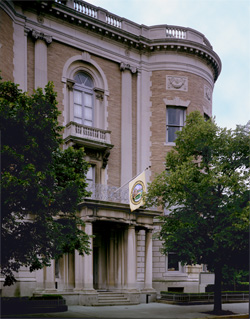
Today marks the 222nd anniversary of the Massachusetts Historical Society, the nation’s oldest historical society.  The Historical Society (being the only one, there was no need for the Massachusetts in the name at the time of our founding) had its first official meeting in the comfortable home of William Tudor in downtown Boston.  Only eight of the ten founding members — the ten being James Sullivan, William Tudor, John Eliot, Peter Thacher, James Winthrop,  George Richards Minot, Thomas Wallcut, Reverend James Freeman Clark, Dr. William Baylies, and Reverend Jeremy Belknap —  attended that first meeting. At that meeting they selected officers, developed a constitution, and set the maximum number of members at 30 resident members and 30 corresponding members. 
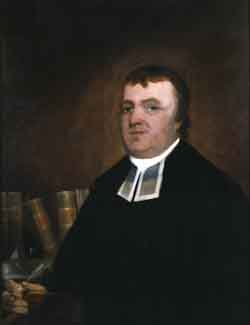
As laid out in a circular letter first disseminated in the fall of 1791, Jeremy Belknap, the catalyst behind the formation of the Society, envisioned both a repository and a publication program — an institution that would collect, preserve, and disseminate resources for the study of American history.The collection, which today boasts over 12 million pages of manuscript documents in addtion to thousands upon thousands of published items, photographs, and artifacts, began at that first meeting through pledges of family papers, books, and artifacts from the founding members personal collections. And with the appearance of their first title at the start of 1792, volume 1 of the still published Collections of the Massachusetts HIstorical Society, they also made the MHS the nation’s first institution of any description to publish in its field.

We are proud to say that 222 years later the MHS is still an active repository and publisher.  Our collection continues to grow and supports the work of thousands of researchers every year, who access our holdings through visiting our library, exploring our website, reading our publications (and the many publications that result from the work of our researchers), and corresponding with our staff members. 

Wishing a very happy birthday to the MHS — and many, many more. 


**For more on the history of the MHS, see Louis Leonard Tucker’s The Massachusetts Historical Society: A Bicentennial History, 1791 – 1991 (Boston: Massachusetts Historical Society, 1995).


“The Sublimest Thing Ever Exhibited in America”: Inauguration Day 1797

By Amanda A. Mathews, Adams Papers

The ceremony and celebration of Inauguration Day such as the nation witnessed this past Monday as President Barack Obama began his second term, has been a long cherished tradition in the United States. Of the 57 inaugurations performed over the past nearly 225 years, the last Inauguration Day of the eighteenth century, while it may not have included star-studded performances, stands out as the first orderly change of leadership under the new Constitution as John Adams became the second president.

This historic occasion, and the last held in the temporary capital at Philadelphia, despite the large crowds, was missing one very important person for the incoming president—his wife, Abigail. He drew a picture of the scene in a letter to her the following day, “In the Chamber of the House of Representatives, was a Multitude as great as the Space could contain, and I believe Scarcely a dry Eye but Washingtons. The Sight of the Sun Setting full orbit and another rising tho less Splendid, was a novelty.”

Aware of the enormous responsibility and hardships that the office held, and the relief Washington must have felt at reaching retirement, Adams remarked, “it was made more affecting to me, by the Presence of the General [Washington], whose Countenance was as serene and unclouded as the day. He Seem’d to me to enjoy a Tryumph over me. Methought I heard him think Ay! I am fairly out and you fairly in! See which of Us will be happiest.”

As he set off in uncharted waters, following the beloved Washington, he lamented his family’s absence, in another letter to Abigail two weeks later, “It would have given me great Pleasure to have had some of my Family present, at my Inauguration which was the most affecting and overpowering Scene I ever acted in— I was very unwell had no sleep the night before, and really did not know but I should have fainted in Presence of all the World.— I was in great doubt whether to Say any Thing or not besides repeating the Oath— And now, the World is as silent as the Grave—” With the celebrations over, the real work began. Still, he could confidently tell her, “All Agree that taken all together it was the sublimest Thing ever exhibited in America.” This triumphant moment of democracy in action remains so for our nation today.

This Week @ MHS

By Dan Hinchen

It is a shortened week at the MHS but there are still some excellent programs to take part in. And with only two more weeks left to see our current exhibition, In Death Lamented: The Tradition of Anglo-American Mourning Jewelry, there are plenty of reasons to make a visit!

On Thursday, 24 January 2013, the next installment of our Biography Seminar series will take place. Join us at 5:30pm for Biographer’s Round Table: A Conversation with Stacy Schiff. Pulitzer Prize-winning author Stacy Schiff will discuss her career as a writer and biographer with Susan Ware moderating the conversation. Stacy Schiff’s most recent book is Cleopatra: A life (2010), which was named one of the top ten books of the year by the New York Times Book Review. Susan Ware is an independent scholar who specializes in 20th century U.S. History, women’s history, and biography, and her most recent book is Game, Set, Match: Billie Jean King and the revolution in women’s sports (2011). Seminars are free and open to the public. RSVP required. .

Then, on Friday, 25 January 2013, Stephen T. Riley Librarian, Peter Drummey, will present The Real Gettysburg Address. This Exhibition Spotlight will focus on orator Edward Everett, the “other” speaker at the commemoration of the National Cemetery at Gettysburg, and will examine who said what, and why, on that famous day. The talk is free and will begin at 2:00pm.

And, in addition to our main exhibit, do not forget that we also have two exhibits commemorating the 150th anniversary of the end of slavery in the United States. Forever Free: Lincoln and the Emancipation Proclamation, and Lincoln in Manuscript & Artifact are both on view until 24 May 2013. Visit our website and take a look at our events calendar to see what other great programs are down the road!


Three Centuries of Molasses in Massachusetts

By Andrea Cronin, Reader Services

The molasses trade has a long and sticky history in Massachusetts. Though sugar is far more common in the kitchen cupboard today, molasses lingers in the cultural lore of Boston. Looking back over that tradition one sees how far back those roots go. In a letter to Judge William Tudor on 11 August 1818 John Adams credited molasses as helping usher in American independence:

Witts may laugh at our fondness for Molasses & we ought all join in the laugh with as much good humour as General Lincoln did, Genal Washington however always asserted & proved that Virginians loved Molasses as well as New Englandmen did. I know not why we should blush to confess that Molasses was an essential Ingredient in American Independence. Many great Events have proceeded from much smaller causes.

How could the secret ingredient in pot roasts have influenced the course of history in Massachusetts and the nation? In the 18th century, the Sugar Islands experienced an exponential demand for sugar from European colonizers. There was profit not only in sugar but in distilling the by-product of sugar production, molasses, into rum. The abundance of molasses gave rise in part to the ‘Triangle Trade’ exchange: New England rum to West Africa and Europe, West African slaves to the Sugar Islands, and Sugar Islands’ molasses to New England rum distilleries. With the Molasses Act of 1733 Great Britain imposed a tax on molasses imported from foreign colonies, such as the French or Dutch West Indies. Some point to this act as the stirrings of the beginning of the American Revolution, as the tax struck fear in the northern colonies by affecting their rum trade.

Oh, the rum! With incoming shipments of Sugar Islands’ molasses, Massachusetts entertained a booming rum industry. There were over 25 distilleries in Boston alone by the mid-eighteenth century. The surrounding cities, including Watertown, Haverhill, Charlestown, and Medford soon followed the “city upon a hill” into rum distillation.

Then, nearly a century after Adams wrote to Judge Tudor molasses literally engulfed part of Boston. Yesterday marked the 94th anniversary of the great Boston molasses flood, affecting Commercial Street in the North End on 15 January 1919. It was on this unusually warm day that the US Industrial Alcohol/Purity Distilling Company tank filled with 2,300,000 gallons of molasses spilled into the streets and harbor. The flood killed 21 individuals and injured more than 150 others while damaging an estimated $100,000,000 of property. The 1919 tragedy inundated the newpapers with conspiracies and conjecture about how the tank had failed so epically. It is said that even now it is not uncommon to hear that on a hot summer day there is a lingering scent of molasses in the North End.

This Week @ MHS

By Dan Hinchen

It is another fairly quiet week here at the MHS but we still have two programs that should not be missed.

On Tuesday, 15 January 2013, join us for the next installment from our Environmental History Seminar Series. John Spiers, Boston College, will present ” ‘Whither Have All the Forests Gone’: A Case of Land Preservation in Suburban Washington.” The seminar addresses the issues and obstacles associated with suburban land preservation in the late 20th century. Comment provided by James Levitt, Harvard Forest. The talk will begin at 5:15pm and is free and open to the public, RSVP required.

Then, on Saturday, 19 January 2013, Len Gougeon, Distinguished University Fellow at the University of Scranton, will present “America’s Second Revolution: New England, Old England,& the Civil War.” Co-sponsored by the New England Quarterly and the MHS Eduation Department, this event will look at the cultural conflict that arose between New England intellectuals and their British counterparts during the Civil War. The talk will begin at 2:00pm and is open to the public at no cost, RSVP required.

And do not forget about our three current exhibitions. “In Death Lamented: the tradition of Anglo-American mourning jewelry” is our main feature and will only last until 31 January so come in soon! In addition, to commemorate the 150th anniversary of the signing of the Emancipation Procalamation, we are happy to present “Forever Free: Lincoln & the Emancipation Proclamation” as well as “Lincoln in Manuscript & Artifact.” Both of these exhibits will be available until May.

Finally, the MHS will be closed on Monday, 21 January 2013, in observance of the Martin Luther King, Jr. holiday. Remember to check our calendar to find out more information about upcoming events. We hope to see you at one of our programs soon!


Stephen Greenleaf Bulfinch, #19

By Elaine Grublin

The following excerpt is from the diary of Stephen Greenleaf Bulfinch.

Saturday, Jan 11th, 1863

The close of the year ’62 brought to mind its course, as one of great public trials, and of some—though tempered with great mercies—in my private relation. The entrance of ’63 was marked by an event which is sublime in the hopes it yields, though not without its great perils, – the definite Proclamation of freedom to the slaves. Who dared to hope for such rapid progress in public sentiment as now to authorize this step, two years ago?

Military events of late, of chief interest, have been the gallant but unfortunate battle of Fredericksburg, the victory at Manfreesboro, and a partial repulse at Vicksburg, – with the landing of Banks’ expedition at New Orleans. At Fredericksburg fell in battle my former neighbor & friend, Rev. Arthur B. Fuller. He was among the volunteers to force a landing. I question the propriety of a clergyman taking the place of the common soldier; but I believe he acted not only by the impulse of his brave heart, but with the feeling that he ought to set an example to others in all things which he encouraged them to do. In the same battle died my young parishioner, John. H. Blackswain, – a good and affectionate boy. W. Edward Blake, another young volunteer from my parish, died in a hospital near the same place, shortly after. His remains were brought on, & his funeral numerously attended, at my church.


This Week @ MHS

By Daniel Hinchen

With only two events on the calendar, this will be a quiet week at the MHS but there is still plenty to see if you step in from the cold!

Join us at 12:00pm on Wednesday, 9 January, for a Brown Bag lunch. Greta LaFleur of the University of Hawai’i at Manoa will present “American Insides: Popular Narrative and the Historiography of Sexuality, 1675-1815.” All of our Brown Bag discussions are free and open to the public so grab a snack and come on in!

On Saturday, 12 January, stop by for a tour of the MHS. “History and Collections of the MHS” is a 90-minute, docent-lead tour which explores all of the public spaces in the MHS, with comments on the art and architecture of the building. These tours are free and open to the public and depart the lobbby promptly at 10:00AM.

And along with these two events we currently have three exhibits on display. “In Death Lamented: the tradition of Anglo-American mourning jewelry” is our main feature and will only last until 31 January so come in soon! In addition, to commemorate the 150th anniversary of the signing of the Emancipation Procalamation, we are happy to present “Forever Free: Lincoln & the Emancipation Proclamation” as well as “Lincoln in Manuscript & Artifact.” Both of these exhibits will be available until May.


The MHS Tweets!

By Emilie Haertsch, Publications

The Massachusetts Historical Society is proud to announce the launch of a new organization-wide Twitter account: @MHS1791. After the success of the John Quincy Adams line-a-day diary tweets, we have similarly high hopes for this venture, which will feature historical tidbits, news on events and happenings, and behind-the-scenes glimpses. We are thrilled to engage in this new way with other historical and cultural institutions, as well as scholars, educators, researchers, visitors, and history enthusiasts. Join the conversation! Follow the Society at @MHS1791. Looking for other ways to interact with the MHS? Follow @JQAdams_MHS to keep up with the Adamses, visit out Facebook page, or check out other posts on the blog.

An Adams New Year’s Reflection

By Emilie Haertsch

Charles Francis AdamsAs the New Year approaches, many people set aside time to reflect upon their lives. What has transpired over the past 12 months? What were our successes? Where could we have improved? Charles Francis Adams, too, used the end of the year as an opportunity to evaluate his life, and the Society has his diary entries on the subject in the Adams Family Papers.

Charles Francis was the grandson of John Adams and son of John Quincy Adams. Hoping to carry on the Adams family legacy of public service after the untimely deaths of his two older brothers, he became a politician, writer, and editor. In this December 31, 1852 diary entry he reflects on the previous year, including both the positive and the negative.

And thus terminates the year 1852. I look back upon it with a great many emotions, in which the leading one is gratitude for unnumbered blessings enjoyed. I have lost in it my last earthly parent, but under circumstances which soften the pain I might have felt for the blow. She lives to me in the agreeable recollection of the profuse affection she uniformly bestowed upon me during her life.   

Charles Francis’s mother, Louisa Catherine Adams, suffered a stroke and died on May 15, 1852. Adams had other difficulties, as well, that year, but he chose to look on them in a positive light, writing, “These things have been given to me to purify my heart and my mind, and to warn me to correct the defects of my own character and temper.” Adams was 45 years old when he wrote this entry but still concerned with improving himself. He hoped to live up to his own expectations and reach his goals before he reached his dotage.

If only all of our year-end reflections were so generous to others and focused on self-improvement. Perhaps Adams’s words will provide us with a little inspiration. Do you take the time to self-assess at the end of the year? What other New Year’s traditions do you keep? Share with us in the comments below.

Commemorating the Emancipation Proclamation

By Elaine Grublin

Tuesday, 1 January marks the 150th anniversary of the signing of the Emancipation Proclamation.  As part of the Society’s ongoing celebration of the sesquicentennial of the Civil War we have staged two related exhibitions, both of which will open on Monday, 1 January with special exhibition hours (12:00 PM to 4:00 PM) and a public program (details below).  

Forever Free, features the pen Abraham Lincoln used to sign the Emancipation Proclamation, and a number of paintings, broadsides, engravings, and manuscripts that tell the story of how Boston celebrated Emancipation.

Lincoln in Manuscript and Artifact offers visitors an opportunity to view Lincoln’s letter to Joshua F. Speed explaining his evolving views on slavery as well as the casts of the life mask and hands of Lincoln made by Leonard Volk in the spring of 1860.

At 2:00 PM on New Years Day, MHS Librarian Peter Drummey and Curator of Art Anne Bentley will guide visitors through the story of when the news arrived in Boston on New Year’s Day 1863 that Lincoln had signed the Emancipation Proclamation, focusing on how this epochal event in American history became an extraordinary moment in Boston history, and how the pen Lincoln used to sign the proclamation became one of the most treasured artifacts in the MHS collection.