
By Kathleen Barker, Education Department
Early on the morning of June 10, 2012, I found myself standing in a parking lot in Woburn, Mass., with dozens of bleary-eyed middle- and high-school students. Despite the early hour there was a touch of excitement in the air, for these talented young ladies and gentlemen were waiting for the buses that would take them to the National History Day (NHD) finals at the University of Maryland in College Park. The 2012 contest was the largest ever in NHD history, and while 2,794 students participated in this year’s national competition, that number represents only a fraction of the students who participated in National History Day during the 2011-2012 school year.
For the students gathered in College Park, the national competition represented the zenith of a process that began nearly nine months earlier. Soon after the 2012 theme, “Revolution, Reaction, Reform in History,” was announced, students began investigating potential topics, exploring local (and not-so-local) libraries and archives, and creating exhibits, performances, documentaries, websites, or papers. Students from across the United States consulted collections at the Massachusetts Historical Society for this year’s competition. The Library Reader Services staff fielded reference calls and emails on topics such as the Boston Tea Party, the Battle of Bunker Hill, Horace Mann and nineteenth-century school reform, Dorthea Dix, and the abolition of slavery.
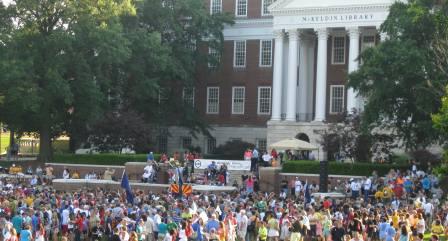 I was fortunate enough to travel with the Massachusetts delegation to this year’s national competition. The festivities began on the evening of Sunday, June 10, with a rousing opening ceremony on the lawn at McKeldin Library. Imagine thousands of students, parents, and teachers cheering, chattering, and trading pins and you’ll have a good sense of what the opening ceremony was like. The competition got down to business on Monday morning, and while in College Park I had the opportunity to serve as a judge along with more than 300 other historians and other education professionals. Anyone who has ever judged at a history day competition can tell you what an amazing experience this is. I met with many talented and enthusiastic students over the course of the three-day competition. They taught me a great deal about topics as diverse as Levittown, the use of helicopters in the Vietnam War, and Nicola Tesla. Thanks to a very well illustrated project on Civil War hospitals, I also have new appreciation for modern medicine.
Alas, the contest did eventually come to end. After three days of intense but rewarding competition, winners were announced at a ceremony at the University’s Comcast Center on June 14, 2012. The event 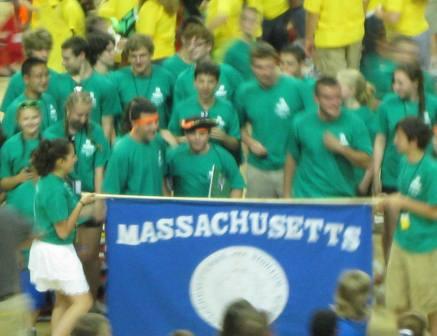 began with the best parade I’ve ever seen: a parade of participating students across the floor of the arena. I watched over 2,000 students circle the arena with everything from state flags to inflatable lobsters! Throughout the morning, dozens of students were singled out for awards and special prizes, and the boisterous crowd made sure that each winner was duly appreciated. Prizes were sponsored not only by NHD but by friends of history like the National Endowment for the Humanities, the History Channel, and the National World War II Museum. Several students from Massachusetts took home special prizes, but a special congratulations goes to our lone award winner, Chad Nowlan of Holyoke Catholic High School, who placed second in the Individual Performance category for his project, “From Revolution to Constitution, Shays’ Rebellion.” (You can find a complete list of winners on the NHD website.)
It takes a cast thousands to make History Day happen every year. Kudos to the national staff for making NHD a successful enterprise for more than 30 years! A special thanks to the Massachusetts History Day co-coordinators, Bill Szachowicz and Bob Jones, as well as all the members of the Massachusetts History Day board, who volunteer many hours to make History Day happen in Massachusetts. Thank you to all of the teachers, librarians, archivists, parents, and other mentors who shepherded students through the historical research process. Last, but certainly not least, a hearty congratulations to all of the students who participated in National History Day this year. These dedicated students gave up their evenings, weekends, and even school vacations to engage with the past. In the end, they are ALL winners!
If History Day sounds like tons of fun (and it is), learn more about the 2012-2013 contest theme, “Turning Points in History” at the NHD website. Visit the Massachusetts History Day website for information about participating in contests in the Commonwealth. Finally, come back to the MHS website in September 2012 to find out how the Society can help you with your History Day research.
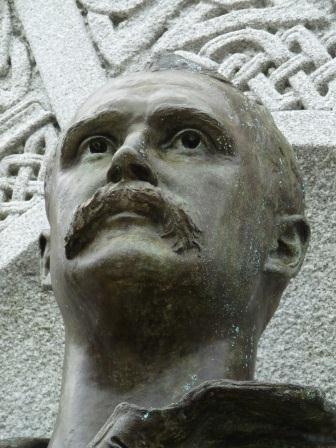
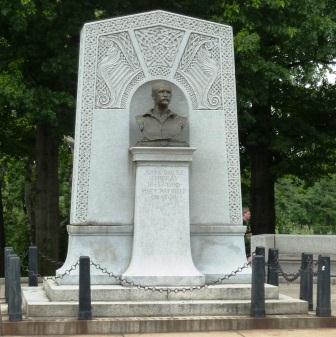 and social activist who brought his passion and patriotism to Boston. He was a giant in the city and won the admiration and respect of all those he met. Upon his death in 1890, thousands of people descended on Tremont Temple to pay their respects.
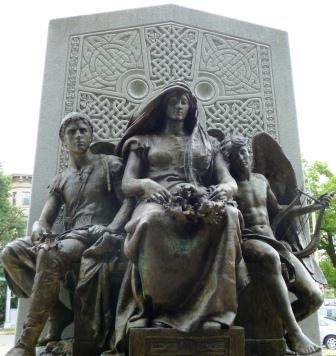 The figures are placed in front of a backdrop composed of a Celtic cross and Celtic knots carved into the stone.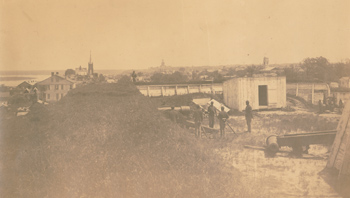
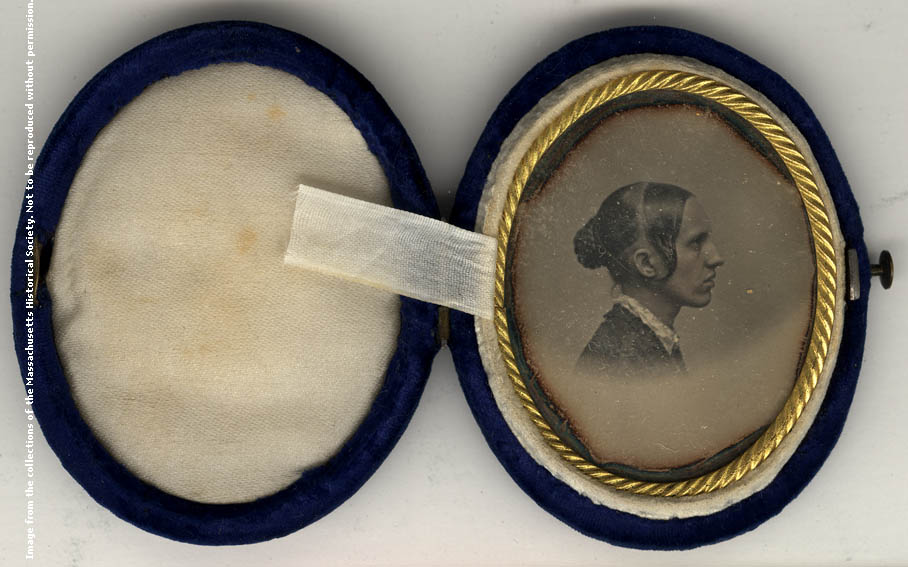

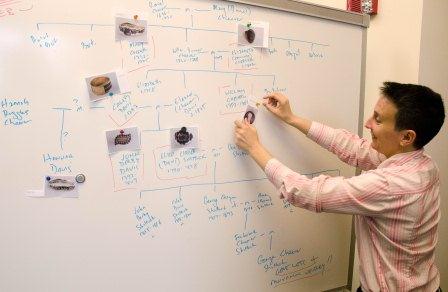 We are working on a book to coincide with the Society’s upcoming exhibition on mourning jewelry. The book, titled In Death Lamented: The Tradition of Anglo-American Mourning Jewelry, features mourning jewels from the Society’s collection and from the private collection of the author, Sarah Nehama.
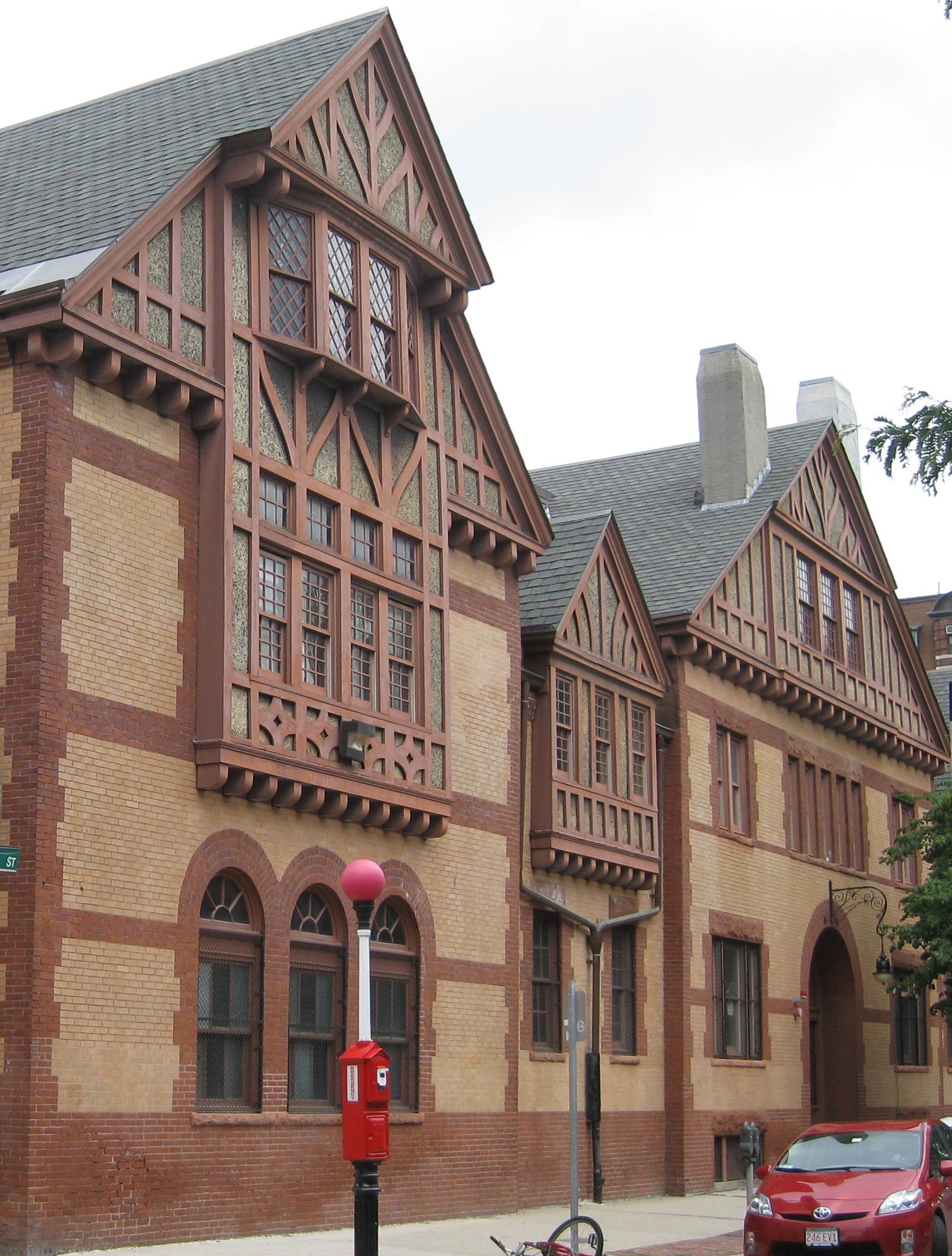 Just think of the variously colored steeples that dot the campus of Harvard in nearby Cambridge; the golden dome of the State House; and of course, the grand brownstones that line Newbury and Beacon Streets and Commonwealth Avenue. One architectural style that is not well represented in Boston, though, is the Tudor Revival style. And yet, just around the corner from the MHS, among the rows of stone and brick apartment buildings, is a fine example of that style.
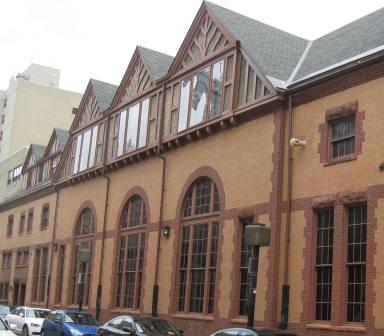 A quick look at the building’s exterior shows one repeated feature that hints to its original use: around the building are several large portals — some arched — resembling modern-day garage doors giving the viewer the impression of stables.