The MHS on a Television Near You . . .

By Elaine Grublin

The Sunday, 8 April 2012, episode of the PBS program Finding Your Roots with Henry Louis Gates, Jr. has a strong “connection” to the MHS. Several items from our collection are featured in the program, which highlighted the genealogy of Hollywood couple Kyra Sedgwick and Kevin Bacon. Kyra Sedgwick is a descendant of Theodore Sedgwick, a man whose family is well represented in the MHS collections. Watch the episode to learn the story of Theodore Sedgwick and the important role he played in Massachusetts history.

While you are watching, keep your eyes peeled for MHS librarian Peter Drummey, along with documents and images from the MHS collection intergral to telling the story of Kyra Sedgwick’s family. Those familiar with our buiding at 1154 Boylson Street will also recognize the Dowse Library as the back-drop in many scenes. 

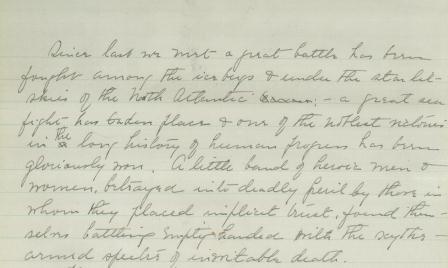
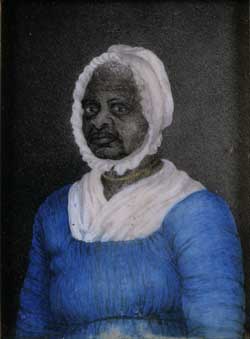
Minature portrait of Elizabeth FreemanIf you are interested in learning more about the end of slavery here in Massachusetts, visit our web feature African Americans and the End of Slavery in Massachusetts. You can learn more about the life of Elizabeth Freeman (“Mumbet”) reading a manuscript draft of the article “Slavery in New England,” published in Bentley’s Miscellany in 1853. The author, Catharine Maria Sedgwick, was the daughter of Theodore Sedgwick. And for those with the time and inclination to dive into a study of the Sedgwicks, the Sedgwick Family Papers, Catharine Maria Sedgwick Papers, and a number of other related collections are all available to researchers in the MHS library


This Week @ MHS

By Elaine Grublin

Looking for stimulting conversation? Plan to attend one of the two seminars offered this week. You will find additional details about each event, and our current exhibitions, on our online calendar.

Tuesday, 10 April at 5:15 PM the Environmental History Seminar continues with Brian J. Payne, Bridgewater State University, presenting “Controlling the Cost of Fish: Weir Fishermen and Price Control in the Sardine Herring Fishery, 1875-1903.” Josh Reid, University of Massachusetts, Boston, will provide the comment. 

Thursday, 12 April at 5:30 PM the History of Women and Gender Seminar concludes its spring series with Stephanie Jones-Rogers, Rutgers University, presenting her paper “‘She thought she could find a better market’: White Women and the Re-Gendering of the Antebellum Slave Market and Slave-Trading Community.” Walter Johnson, Harvard University, will give the comment.

For both seminars advance copies of the papers are available for a small subscription fee. Whether you are a subscriber, or simply plan on attending one of the events, we ask that you RSVP so that we know to expect you. 

On Saturday, 14 April at 10:00 AM our 90 minute tour, The History and Collections of the MHS, departs the front lobby.  All are welcome to attend.

Also, remember that our current exhibitions, A Gilded and Heartbreaking Life: The Photographs of Clover Adams, 1883-1885 and The First Seasons of the Federal Street Theatre, 1794-1798, are free and open to the public Monday through Saturday 10:00 AM to 4:00 PM. 

Finally, make note that Friday, 13 April marks the opening of The Object of History: Colonial Treasures from the Massachusetts Historical Society.  This exhibition, on display at the Concord Museum 13 April through 17 June, is open to the public Monday through Saturday 9:00 AM to 5:00 PM and Sunday 12:00 PM to 5:00 PM.  Visit the Concord Museum’s website for directions and admission fee information. 

Even Civil War Soldiers Played Ball

By Elaine Grublin

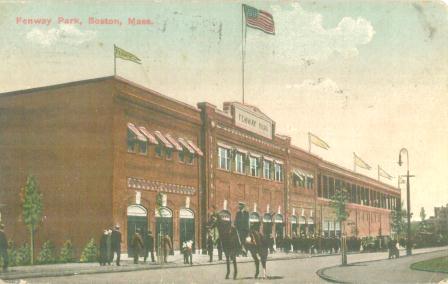
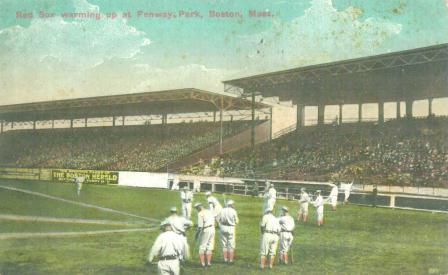
The Boston Red Sox meet the Detroit Tigers today in the first regular season game of the 2012 season. The arrival of baseball season is always a welcome treat in Boston. Getting myself into a baseball frame of mind, my thoughts wandered to a letter one of our volunteers, Joan, had shown to me several months ago. I know I love the distraction of baseball, a game that is simultaneously exciting and relaxing, but until I saw that letter I had not known that baseball was also a welcome distraction for soldiers during the American Civil War. 

In this 3 May 1862 letter Captain Richard Cary of the 2nd Massachusetts Volunteer Infantry Regiment describes for his wife a game played between men from the 2nd and men from the 3rd Wisconsin Volunteer Infantry.  The text reads:

The men of the Wisconsin 3d challenged our men to a game of base ball & this afternoon it was played & at the end the tally stood 75 for our side & 7 for theirs so I hardly think they will care to play a return match; we have some of the best players of quite a celebrated ball club from Medway & some of the playing was admirable. 

The men of the 2nd might have had an advantage, as Cary indicates there were baseball clubs in Massachusetts and some of the men were experienced players. I am not certain how familiar the Wisconsin men would have been with the game — and if the Massachusetts regiment was playing by the rules of the Massachusetts Game (common in the mid-19th century) the Wisconsin team may have been more familiar with a different set of rules.

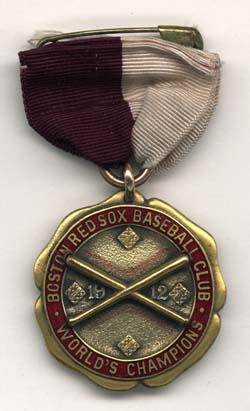
As a final thought, wouldn’t it be splendid if another Massachusetts/Wisconsin match-up brought similar results? A Red Sox 75, Brewers 7 score the final game of the World Series sounds pretty good to me. 


A New Way to Look at an Old (and forgotten) Story

By Peter Drummey

We have just opened a new exhibition, The First Seasons of the Federal Street Theatre: 1794-1798, that complements a larger exhibition, Forgotten Chapters of Boston’s Literary History, at the Boston Public Library. The controversy over a public theater that raged in Boston in the 1790s, an old and largely forgotten story, now has been brought to life through the efforts of Professor Paul Lewis of the English Department of Boston College and his very able students. Thanks to the audio production services of Boston College, it also is the first time that the Society—and the Boston Public Library—have used QR codes in an exhibition. QR codes, the ubiquitous matrix barcodes that appear everywhere in advertisements, now are used increasingly in museum settings so that smartphone users are able to call up additional audio information about what is on display. 

The First Seasons of the Federal Street Theatre will be on display, Monday-Saturday, 10:00 AM-4:00 PM, through July 30, but more than twenty items from the MHS exhibition also are on “virtual” display at the Forgotten Chapters of Boston’s History website, www.bostonliteraryhistory.com. The online version of the First Seasons section of the Forgotten Chapters exhibition will reach a wider audience than those who are able to visit the MHS and be available for a longer period of time, but it also is an informative and engaging introduction to the original materials on show at the Society.

This Week @ MHS

By Elaine Grublin

The April starts off busy, as we offer six free public programs this week. Mark you calendar and be sure to join us for one of the following:

Tuesday, 3 April at 5:15 PM, the Boston Early American History Seminar brings Len Travers, University of Massachusetts, Dartmouth, to the MHS to present his paper “The Court-Martial of Jonathan Barnes.” Colin Calloway, Dartmouth College, will give the comment. 

Wednesday, 4 April at 12:00 PM, join in the conversation at a brown-bag lunch program.  Joanne Melish, University of Kentucky, will present her finding on the topic “Making Black Communities: White Laborers, Black Neighborhoods, and the Evolution of Race and Class in the Post-Revolutionary North.” Then at 6:00 PM join in a second conversation, are our conversation series, Considering the Common Good: What We Give Up/What We Gain, offers its latest installment with Lewis Hyde, Kenyon College and Harvard Berkman Center for Internet and Society, presenting “Common as Air: A Conversation with Lewis Hyde.” A pre-talk reception begins at 5:30 PM.

Friday, 6 April at 12.00 PM, Robert Turner, Center for National Security Law, University of Virginia Law School presents The Jefferson-Hemings Controversy in a lunchtime program. And at 2:00 PM, the MHS’ Stephen T. Riley Librarian Peter Drummey presents a gallery talk “Being Mrs. Adams” in conjunction with a viewing of our current exhibition A Gilded and Heartbreaking Life: The Photographs of Clover Adams, 1883-1885.

And Saturday, 7 April, our 90-minute tour “The History and Collections of the Massachusetts Historical Society” departs the front lobby at 10:00 AM. 

For additional details about all of these events please visit our online calendar

Did John Quincy Adams Have a Sense of Humor?

By Peter K. Steinberg

Did John Quincy Adams (JQA) have a sense of humor? Would he, had it been practiced at the time, conducted April Fool’s hijinks?  Editors and staff of the Adams Papers admit to me that JQA might not have displayed much interest in performing jokes, but that he certainly could enjoy one if it were played in his presence. (If JQA were a conductor of practical jokes, however, I envision he would, if around today and in the current building of the MHS, arrive early on 1 April and place signs on all the bathroom doors saying “Out of order.”)

Since August 2009, MHS staff members have been tweeting JQA’s own line-a-day diary entries that summarize his life and work as a diplomat in St. Petersburg, Russia.  Each tweet contains JQA’s succinct words describing his day exactly 200 years ago.  (The link to JQA’s Twitter account is here: http://twitter.com/#!/JQAdams_MHS and a link to a page describing MHS’s approach to tweeting JQA’s words is here: http://www.masshist.org/adams/jqa.php.)

JQA’s tweets are interesting nuggets of information on their own, but I can’t help but yearn for something out of the ordinary: for something to reach out and slap me in the face.  There was one entry last year (tweet from 12 August 2011 that featured JQA’s summary of events on 12 August 1811) that was so matter of fact that I did LOL given a degree of plainness of JQA’s delivery and the momentous occasion recorded: “My wife gave me a daughter. Galloway came. Montreal here, and Hall. Patterson. Plummer, Ashton, Marks &c.”  It is so matter of fact as to be funny.

And then there is this, from 3 January 1812, which struck me as funny: “VII. Read, wrote and walked before Breakfast. Fruitman here again. Fraud of the Butter woman. Lange here.”  (MHS sent an extra tweet on January 3 to provide a bit of the backstory about the “Butter woman”:  http://twitter.com/#!/JQAdams_MHS/status/154193299073277953 )

Wanting some humor, we have come up with a few summaries that, irrespective of the contemporaneity of time, would have made good tweets as well…

Wednesday. Woodward and Montreal here. Eve at Betancourt’s: Rosenzweig, Brandel, and Strogonoff got the moves like Jagger. 

Saturday. Paid several visits. Fisher dined and spent the Eve here. I took a hot water and Russian vapour bath. Life in the big city.

Tuesday. Montreal here. Explains the affair of the Store-ships. I called on Meyer and Harris. Walk home. Jones here at Eve. Can’t keep up.

Friday. VIII. Löwenhielm here. Read 2. Sermons. de Bray & Emperor at Mrs. Colombi’s at eve: party rockers in the house tonight.

Environmental Change from Baja California to Alaska, 1768-1820s

By Anna J. Cook

Welcome to another installment of our Readers Relate series, in which we ask researchers to share a little bit about the work that brought them to the MHS and what they found when they got here.

Today’s interviewee is Jen Staver, candidate in history at the University of California, Irvine. Ms. Staver’s research looks at the natural and social environment along North America’s Pacific coastline, exploring “the development of new geographies of power and labor in the wake of European and American incursion from the Pacific.”

In her work, Ms. Staver highlights the ways in which MHS collections can support research on topics that seem fairly distant from New England geography and politics!

 1. Can you briefly describe the research project that brought you to the Massachusetts Historical Society?

I am working on a doctoral dissertation in American history. My project interrogates the relationship of the ocean to the social and environmental changes that look place along the North American Pacific Coast (from Baja California to southern Alaska) from about 1768 through the 1820s. My project explores the connections between what happened in, on, and abutting the ocean to the changing demographic, economic, and social relationships amongst the indigenous and foreign peoples in the region. By focusing on who moved through and labored in the waters of the North American Pacific Coast, how and why they did so, and the ways those people interacted with one another and the coastal environment, it explores the development of new geographies of power and labor in the wake of European and American incursion from the Pacific.

2. What specific material in our collections made coming to the MHS important to your research? Was there a specific collection or type of material  that you consulted?

Given that my research is focused on the Pacific coast, many of my family and friends were confused about why I needed to spend time in the archives in Massachusetts. Over the time period I’m studying, a good number of Americans began coming to the Northwest Coast and, later, to California, on merchant ships partaking in the China trade. These American ships were overwhelmingly owned by northeastern merchants and most often sailed out of Boston or other Massachusetts ports. As a result, the logbooks and journals from these voyages, the letters from sailors on them, and the papers of those who financed the trips and owned the boats are largely in New England archives. There are two types of materials at MHS that are quite important to my research. The first are the logbooks, journals, and other writings and drawings of people who actually visited the Pacific Coast. Such records are amongst the only written evidence that exists describing the Pacific Coast in the 1700s (especially the northwestern part, beyond the sustained presence of the Spanish in Alta California), the indigenous people living there, and the type and character of the interactions that took place between foreign sailors and indigenous residents. The second set of materials of interest for my project are the letters, account books, and other papers of merchants who perhaps never themselves sailed to the eastern Pacific but who financed voyages or who were involved in broader trade networks that the region was a part of. Their letters, for example, help me to understand both New England merchants’ perceptions and knowledge of the Pacific Coast as well as how that knowledge was situated within and influenced by the myriad global connections these merchants maintained.

3. While you were working here, was there something you examined that surprised you? What was it, and why was it surprising?

In the papers of Thomas Lamb, a prominent Boston merchant, I found an insurance policy for a ship involved in the China trade (Thomas Lamb Papers, Box 1, Folder: 1802-1816). The existence of the policy itself didn’t surprise me, but an addendum to the standard text of the policy did.

On August 30, 1815, Benjamin Waldo Lamb (brother of Thomas) insured the ship Sultan and its cargo for $3,000. The policy would remain in effect for up to four years or until the ship returned from the Pacific to Boston or another port of discharge in the United States. The standard policy covers dangers encountered at sea, pirates, enemies, and several other potential hazards at sea. However, added into the typed boilerplate policy was the following handwriting:

“The Insurers are liable for seizure for illicit trade on the Coast of California. In case of loss before the arrival of this ship at Canton no proof of property is to be required.”

In 1815, what is now California was still under nominal Spanish control, and Spain generally banned residents of the missions and pueblos of Alta California from partaking in trade with non-Spanish ships. However, the practice was common, despite ongoing if undermanned efforts by the provincial government and military in California to thwart it. Nonetheless, the brazen acknowledgment of American intentions to partake in such trade struck me in this case. That the ship owners felt it needed to be added to the policy indicates the tangible risks that a ship engaging in such “illicit” trade may actually face; on the other hand, that the insurers were liable for risks associated with such “illicit” activity seems to imply it was considered by these Atlantic businessmen to be an acceptable and even normal part of doing business in the Pacific.

4. Is there a particular quote (or visual image) from the material that you consulted that stands out for you? What is the quote (or image) and why is it important?

I am still going through what I was able to gather during my visit to MHS, but there was a passage from the logbook of a merchant ship that particularly caught my eye, even from the microfilm machine (William Sturgis Papers, Reel 4). On July 4, 1814, the Boston-based ship Atahualpa was docked at “Whymea Bay” in “Atooi” (on the island of Kauai in what is now Hawai’i). The sailors celebrated the anniversary of American independence, fortified by Madera wine that was “bountyfully  supply’d” by another American captain. According to the logbook, the men proceeded to partake in more than a dozen “patriotic Toasts” to a variety of honorees – the memory of George Washington, the American Navy, and the King of Atooi, to name a few. But it was the final four that stood out to me:

10th Commerce – while we view with indignation the Injuries done by Britain, may peace never be concluded but by Free Trade + sailors Rights.

11th The Union. May the first wretch who advocates a separation of the States be Tared [sic] + Feathered + banished the country.

12th. The enemies of our country, the enemies of Mankind, may they all be bound up the river Styx, + consigned to Hell.

13th. The Ladies of the Sandwich Islands, while embracing their charms, let us not forget the Yankee fair ones at home.

I find this excerpt important for the ways it elucidates the various worlds the sailors of the Atahualpa inhabited in 1814. On the one hand they felt themselves to very much be Americans, even Unionists – yet their toasts simultaneously reveal the supranational networks and interests (economic and sexual) that they were a part of by virtue of their activity in the Pacific.

5. If you brought a visitor to the MHS and you had a chance to show them ONE item from our collections, what item would it be?

If I were to pick from the materials I viewed on my trip, I would choose the late-eighteenth-century letterbook of the Boston merchants James and Thomas Lamb – a leather-bound, several hundred page book that contains handwritten transcripts of most of the business letters (and a few personal ones) the brothers wrote between 1797 and 1799 (Lamb Family Papers, Box 13). My specific interest in this letterbook was in any notes addressed to captains sailing along the Northwest Coast. But in looking for letters with this particular destination, I came across dozens of others addressed to correspondents located in Havana, St. Croix, Canton, Rotterdam, and London, as well as letters referencing trade, prices, and events in western Africa, Chile, Batavia, and other locales in Asia, South America, and Europe. Historians are increasingly studying and emphasizing the international nature of early America and the early republic, but looking at a letterbook like this one really makes tangible the astoundingly global nature of the business interests and social and political world of this Boston family. In doing so I think it would challenge any viewer to rethink their assumptions about life and knowledge in early national Massachusetts.                       

Asked to provide a few lines about her professional background and current research interests, Jen Staver writes:

I am a PhD candidate in history at the University of California, Irvine. My research and teaching interests lie at the intersection of early American, world, and environmental history. Before beginning my PhD, I got a BA in history and a MS in civil and environmental engineering at Stanford University and worked at an environmental consulting firm in San Francisco.

Stephen Greenleaf Bulfinch, Post 11

By Elaine Grublin

The following excerpt is from the diary of Stephen Greenleaf Bulfinch.

March 2d (Sunday) 1862

Public events approach a crisis. Clarksville & Nashville, Tenn. have been surrendered to the Union forces, and from the Potomac we hear, – after some days’ embargo of the telegraph, – of the advance of General Banks’s Division into Virginia, probably to be accompanied by the rest of the great army. On the other hand, Davis has just been inaugurated president for six years, of the Southern states. We have not ceased to be astonished at public sentiment in England taking so much the Southern side; but signs of a change are visible.


Sunday March 16th, 1862

The war continues with great advantage on our part, especially at the west; but a week since the achievements of the rebel iron-plated steamer “Merrimack” or “Virginia” startled the land. Happily she was met and driven back by the “Monitor.” We are looking with intense interest for further intelligence.

Look for post #12 in April and read Bulfinch’s comments on the anniversary of the attack on Fort Sumter and the abolition of slavery in the District of Columbia.

“A Season of Cold”: The Diary of Persis Seaver (Long) Bartlett

By Susan Martin

As we constantly work to update and improve descriptions of our holdings here at the MHS, we often find interesting and unexpected items buried in large collections, usually items by previously unidentified or misidentified relatives. A staff member recently identified the author of an anonymous diary in the papers of Massachusetts Governor John Davis Long. The diary was kept by Long’s sister, Persis Seaver (Long) Bartlett (1828-1893), from 14 Oct. 1889 to 30 June 1892.

Unfortunately, the circumstances that prompted Persis to write the diary were very sad ones. Her younger son, Percival Temple Bartlett, suffered from tuberculosis, and he and Persis were traveling West in hopes that a change in climate would alleviate his condition. The trip was ultimately unsuccessful, and Percy died in San Antonio, Texas, on 20 May 1890 at the age of 27. The diary documents his deteriorating health and his mother’s feelings at every stage of his illness and after his death. It’s a very personal and fascinating account of loss that still resonates 120 years later.

By 1889, Persis had been a widow for over 20 years. She had also lost her parents, a sister, a brother, and a daughter. Her older son, Stephen Long Bartlett, was a businessman in Boston, and her brother John and his family lived in Hingham, Mass. But writing so many miles from home, Persis described her feelings of isolation, helplessness, and anxiety as the sole caretaker of her weakening son. A typical diary entry reads: “I am thinking of him, so much, as I sit in my room adjoining his, while he sleeps and breathes, too short, and coughs too often….His case looks very discouraging to me. I hope I am mistaken.”

Persis recorded the daily changes in Percy’s symptoms, treatment, appetite, energy, and attitude. At various times, he suffered from the measles, “the grippe,” lameness, depression, and even, for some time, lost his voice entirely. Persis also worried about the weather and its effect on her son’s health. For example: “Clear and cold. Now comes their winter here, frost that has killed the strawberries and vegetables, and stripped the trees of their leaves and blossoms. A season of cold never known here before. Some how bad luck follows us where we go.”

The most poignant diary entries are those containing little details of Percy’s gradual decline. On 10 Mar. 1890, Persis wrote: “Percy and I walk to the Ice factory, a short distance, to be weighed. He weighs 115. I 132. Can it be possible this is my bright, sunny, strong Percy that walk[s] by my side so weak…[?]” The seats on a streetcar “are hard for his poor thin body.” A little later, “Percival and I ride a little way. I can see he reluctantly allows me to get out and open the gate. His shortness of breath and weakness is terrible for me to see, but how much harder for him to bear.”

After Percy’s death and her return to Massachusetts, Persis continued, on every page, to express her longing for him. She noted the monthly anniversaries of his death. Whenever her other son, Stephen, showed any sign of illness, she was overcome with anxiety. (In fact, Stephen would survive her by 44 years.) She also maintained a close relationship with a Miss Minnie Speare, who had been, it seems, Percy’s sweetheart. And although her lost son would never be far from her mind, Persis was able to write, on 3 Mar. 1891: “Sometimes I can bear it better than at others. Some days I am a little braver.”

For more information about the diary of Persis Seaver (Long) Bartlett, see the collection record in our online catalog ABIGAIL. Or visit the library to spend time reading the diary.

This Week @ MHS

By Elaine Grublin

Tuesday, 6 March at 5:15 PM the Boston Early American History Seminar continues with Karin Wulf, College of William and Mary, presenting her paper “Ancestry as Social Practice in Eighteenth-Century New England: The Origins of Early Republic Genealogical Vogue.”  Laurel Ulrich, Harvard University, will give the comment.  Advance copies of the paper are available to all seminar subscribers. The seminars are free and open to the public, but an RSVP is required.  You can RSVP by email or phone at 617-646-0568.

Wednesday, 7 March offers two programs.  At noon, in the Dowse Library, current Andrew W. Mellon fellow Nancy Siegel, Towson University, presents a brown-bag lunch focused on her research “Political Appetites: Revolution, Taste, and Culinary Activism in the Early Republic.”  Then at 6:00 PM, our conversation series, moderated by Steve Marini of Wellesley College, continues with Reclaiming the Commons. Brian Donohue, Brandeis University, will engage in a conversation with the audience in this second installment in our Considering the Common Good: What We Give Up/What We Gain series. The event is free and open to the public. You can pre-register for the event here or by calling 617-646-0560.