By Elaine Grublin & Kate Veins
Each year the MHS grants a number of research fellowships to scholars from around the country. For more information about the different fellowship types, click the headings below.
Our fellowship programs bring a wide variety of researchers working on a full range of topics into the MHS. If any of the research topics are particularly interesting to you, keep an eye on our events calendar. All research fellows present at brown-bag lunch programs as part of their commitment to the MHS.
MHS Short-term Fellowships
African-American Studies Fellowship
Heather Cooper, University of Iowa
“Representing the Race: African American Performances of Slavery and Freedom in the Nineteenth Century”
Alumni Fellowship
Lauri Coleman, William and Mary
“Interpretations of New England Weather in the Revolutionary Era”
Andrew Oliver Fellowship
Katelyn Crawford, University of Virginia
“Mobility and Portrait Painting in the Late Eighteenth-Century British Atlantic World”
Andrew W. Mellon Fellowship
Frances Clarke, University of Sydney
“Minors in the Military: A History of Child Soldiers in America from the Revolution to the Civil War”
Eberhard Faber, Princeton University
“‘Everybody Talks of Visiting That Country’: New England Reactions to the Louisiana Purchase, Territorial Rule, and Louisiana Statehood, 1803-1812”
Michael Hevel, University of Iowa
“‘Betwixt Brewings’: A History of College Students and Alcohol”
Ann K. Johnson, University of Southern California
“Cabinets of Miscellany and Meaning: Managing Information in Antebellum America”
Greta LaFleur, University of Hawai’I at Manoa
“American Insides: Popular Narrative and the Historiography of Sexuality, 1675-1815”
Jen Manion, Connecticut College
“Crossing Gender; Female Masculinity in the 18th and 19th Centuries”
Brooke Newman, Virginia Commonwealth University
“Island Masters: Gender, Race, and Power in the Eighteenth-Century British Caribbean”
Benjamin Park, University of Cambridge
“Localized Nationalisms in Post-Revolutionary America”
Brad Snyder, University of Wisconsin
“The House of Truth: The Men Who Created Modern Progressivism”
Benjamin F. Stevens Fellowship
Sarah Sutton, Brandeis University
“Industrializing the Family Farm: Dairy Farming, Milk Consumption, and the New England Landscape”
Cushing Academy Fellowship in Environmental History
Jennifer Staver, University of California Irvine
“Energy, Work, and Power along the Pacific Coast of North America, 1768 to 1820”
Malcolm and Mildred Freiberg Fellowship
Katherine Grandjean, Wellesley College
“‘Terror ubique tremor’: Communicating Terror in Early New England, 1677-1713”
Marc Friedlaender Fellowship
Rick Kennedy, Point Loma Nazarene University
“Cotton Mather Biblia Americana Volume 8”
Massachusetts Society of the Cincinnati Fellowship
Holger Hoock, University of Pittsburgh
“Scars of Independence: Practices and Representations of Violence in the American Revolutionary War”
Ruth R. & Alyson R. Miller Fellowship
Bonnie Lucero, University of North Carolina Chapel Hill
“Privates, Prostitutes, and Pardos: Women and Racial Conflict in Cienfuegos, Cuba, circa 1898”
Lindsay Moore, Boston University
“Women, Power, and Litigation in the English Atlantic World, 1630-1700”
W. B. H. Dowse Fellowship
Nichole George, University of Notre Dame
“Riots and Remembrance: America’s Idols and the Origins of American Nationalism”
Reiner Smolinski, Georgia State University
“Cotton Mather: The Life of a Puritan Intellectual”
Suzanne and Caleb Loring Fellowship
Ann K. Holder, Pratt Institute
“‘Making the Body Politic’: Sexual Histories, Racial Uncertainties and Vernacular Citizenship in the Post-Emancipation U.S.”
MHS-NEH Long-term Fellowships
Megan Bowman, University of California Santa Barbara
“Networking for Global Perfection: The International Dimension of Nineteenth-Century Fourierism”
Kristen Collins, Boston University School of Law
“Entitling Marriage: A History of Marriage, Public Money, and the Law”
Matthew Dennis, University of Oregon
“American Relics and the Material Politics of Public Memory”
Martha Hodes, New York University
“Mourning Lincoln: Personal Grief and the Meaning of the American Civil War”
New England Regional Fellowship Consortium Fellows
*Denotes scholars whose itineraries include the MHS
Kelly Brennan Arehart, College of William and Mary
“Give Up Your Dead: How Business, Technology, and Culture Separated Americans from their Dearly Departed, 1780-1930”
Justin Clark, University of Southern California*
“Training the Eyes: Romantic Vision and Class Formation in Boston, 1830-1870”
Michael Cohen, Tulane University
“Jews in the Cotton Industry: Ethnic Networks in 19th Century America”
John Dixon, Harvard University*
“Found at Sea: Mapping Ships’ Locations on the Eighteenth-Century Atlantic”
Moira Gillis, University of Oxford*
“The Unique Early Modern American Corporation”
Jared Hardesty, Boston College*
“The Origins of Black Boston, 1700-1775”
Benjamin Hicklin, University of Michigan Ann Arbor*
“‘Neither a Borrower nor a Lender Be’?: The Experience of Credit and Debt in the English Atlantic World, 1660-1750”
Allison Lange, Brandeis University*
“Pictures of Change: Transformative Images of Woman Suffrage, 1776-1920”
Jason Newton, Syracuse University
“Forging Titans: Myth and Masculinity in the Working Forests of the American Northeast, 1880-1920”
Ana Stevenson, University of Queensland*
“The Woman-Slave Analogy: Rhetorical Foundations in American Culture, 1830-1900”
Gloria Whiting, Harvard University
“‘Endearing Ties’: Black Family Life in Early New England”

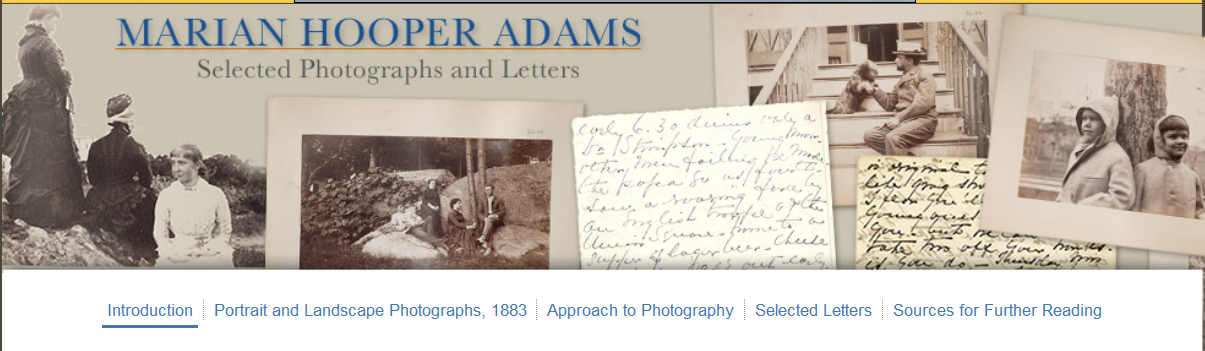
 Marian Hooper Adams was nicknamed “Clover” by her mother, who felt that her daughter’s birth was a lucky occurrence. Born into a wealthy, prominent Boston family, Clover was raised in privilege and highly educated. Her mother died when she was five, but Clover remained very close to her father for the rest of her life. In 1872, at the age of 28, she married the historian Henry Adams, who was teaching at Harvard. After five years they moved to Washington, DC, residing near the White House, and began hosting an exclusive salon of politicians, writers, and thinkers. Despite this stimulation, Clover and Henry were bored, and the spark went out of their marriage. Their problems intensified due to the fact that they were unable to have children.
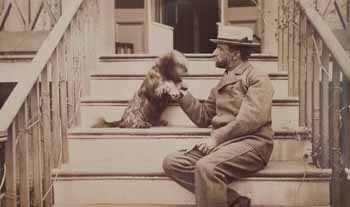
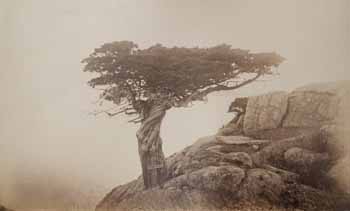 Clover had always been interested in art and she found an outlet for her frustrations in a new camera in 1883. She learned the painstaking development process and began to take photographs of people, landscapes, and animals (she was a great lover of dogs and horses). Although a few of her photographs show traces of humor, including those of her dogs posed at a table set for tea, many of Clover’s photographs convey the melancholy and isolation of her own experience.

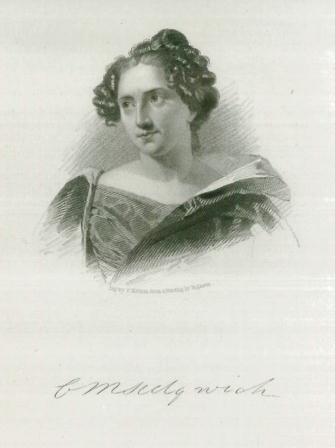 Catharine Maria Sedgwick (1789-1867) was a member of the illustrious Sedgwick family of western Massachusetts and a prolific antebellum author. She wrote many novels and short stories between 1822 and 1862, including A New-England Tale, Redwood, Hope Leslie, Clarence, The Linwoods, and Married or Single? Very popular in her time and praised by many of her contemporaries, including William Cullen Bryant, James Fenimore Cooper, Ralph Waldo Emerson, Harriet Martineau, and Edgar Allan Poe, Sedgwick was largely overlooked by scholars in the century following her death, and most of her books were out of print for decades. Recently, however, there has been a resurgence of interest in her life and work.