
“The most exquisitely drawn tragical character in the whole compass of the drama”: John Quincy Adams’ love of Hamlet

By Emily Ross, Adams Papers

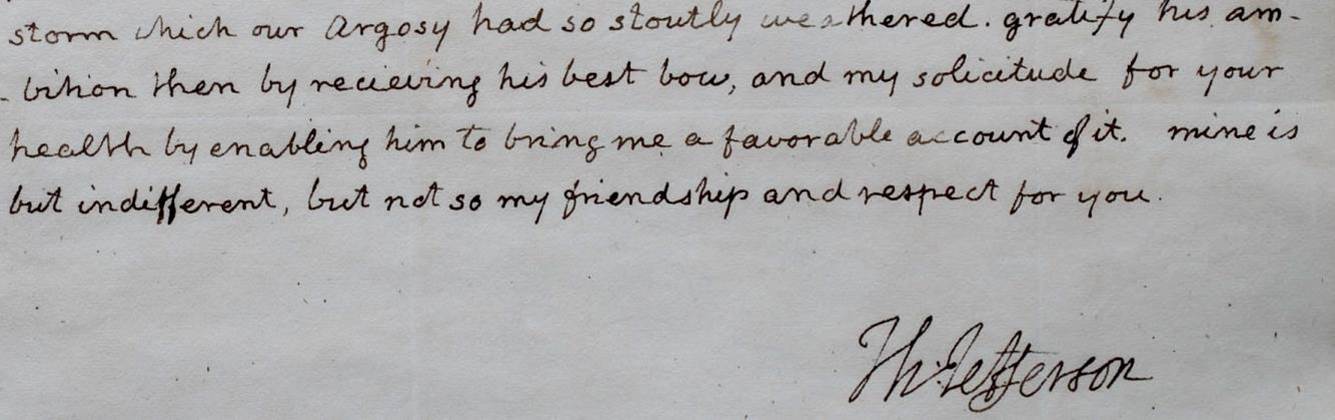
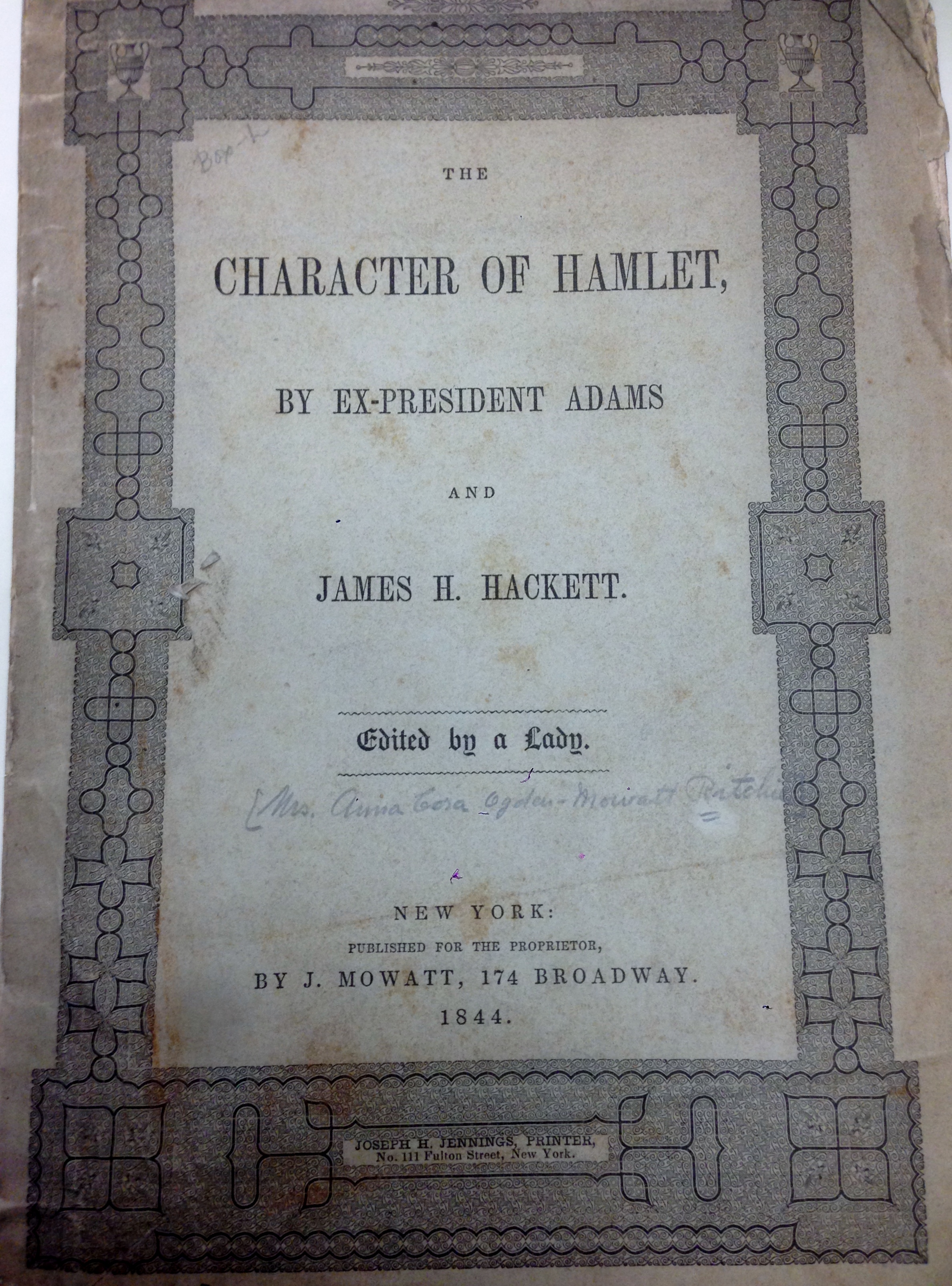
In an 1839 letter, John Quincy Adams stated his view that Shakespeare’s Hamlet was “the Master Piece of the Drama … I had almost said the Master Piece of the Human Mind.” He then gave an analysis of the play sufficiently scholarly and insightful that his letter and his correspondent’s reply were published as a pamphlet in 1844. A copy of this item is among the holdings of the MHS.


The front page of John Quincy Adams’ published interchange of correspondence with James Hackett, regarding the character of Hamlet.


While this publication may be the culmination of John Quincy’s preference for Hamlet, it is certainly not the only evidence of it: his admiration for the play is long-standing.

According to his diary, he saw the play at least seven times, and recalled the productions well enough to contrast the performances of different actors in the leading role. He wrote entries about attending performances on 16 May 1790; 30 November 1792, when the lead actor was “superior to my expectation”; 21 April 1794; 5 October 1797; 18 October 1799, when the lead acted “not well”; 17 April 1809, when the lead actor had “the promise of great powers”; and 13 August 1822, when he judged that the lead actor played Hamlet “indifferently.”

It is notable that the April 1809 Hamlet was the first play that John Quincy and Louisa Catherine took their sons George and John to see, at ages eight and six respectively. A challenging play for children to understand, it is not surprising that the boys had many “remarks and questions” during the performance.

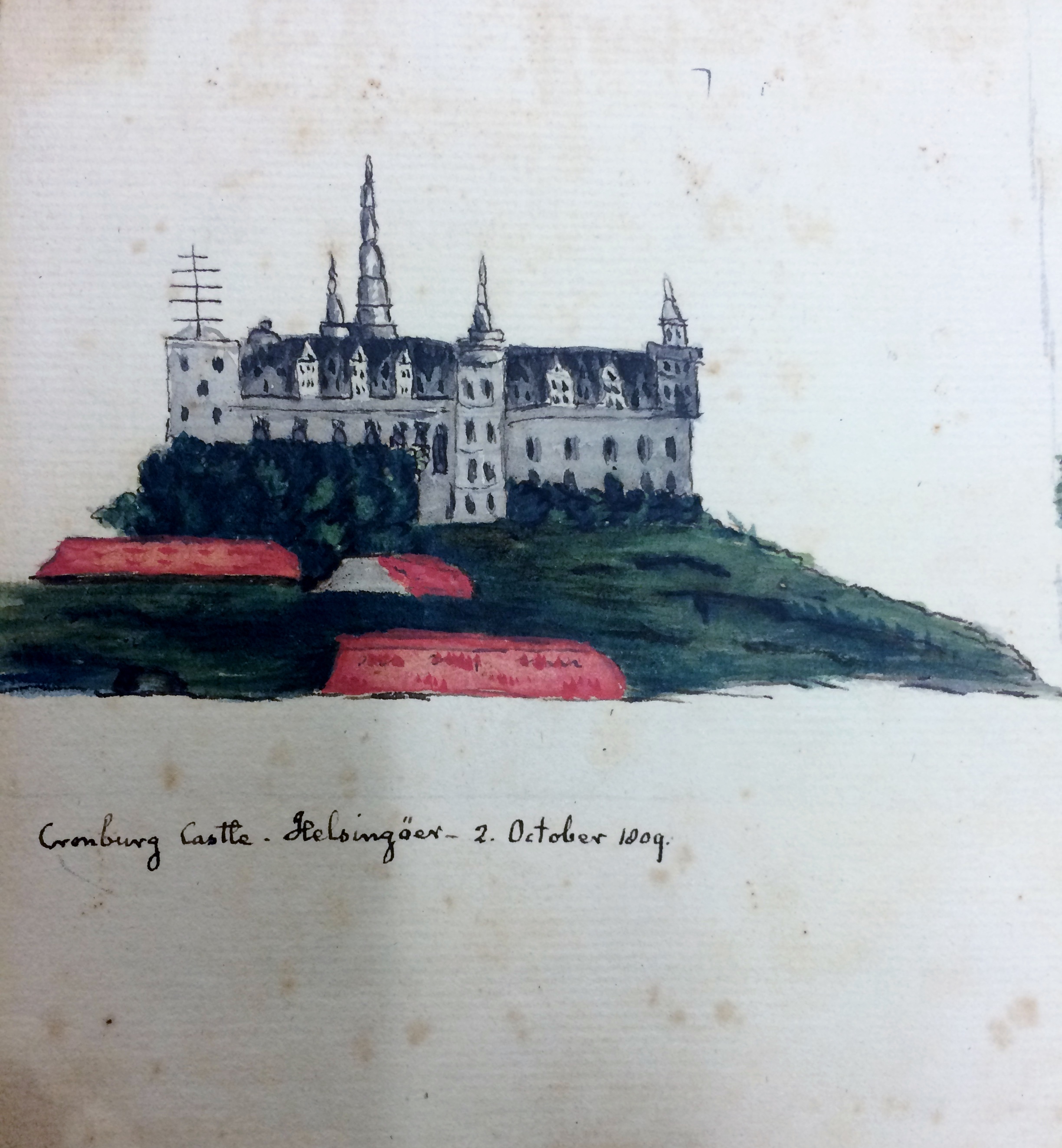
Later that same year, John Quincy and his family took a tour of the Baltic, and he created the following ink and watercolor picture of Cronburg Castle–better know as Shakespeare’s Elsinore.

Kronburg Castle, Helsingør, 2 October 1809, ink and watercolor picture in John Quincy Adams, Miscellany 5, Adams Papers.


It is unclear at what age John Quincy himself first saw Shakespeare on stage, but he had already read some of the works by the time he was ten. An avid reader, he reported to John Adams in October 1774, “I read my Books to Mamma.” While reading aloud was presumably for educational benefit at this point, in adulthood it was instead a form of entertainment—and what better to read than Hamlet? John Quincy Adams noted in his diary that he read Hamlet aloud in 5–6 October 1799, 3–9 August 1802, 16–18 January 1804, and 3–4 March 1823. As the date ranges show, these play readings would extend over several nights, like a mini-series. Twice John Quincy was the only reader, but in 1799 and 1823, he was one of two readers. One wonders how he would have reviewed his own performance…

“He has so damnd himself to everlasting Infamy”: Alexander Hamilton and Abigail Adams

By Amanda Norton, Adams Papers

Between the $10 bill and a smash-hit musical, everybody seems to be talking about Alexander Hamilton. January marks not only the anniversary of Hamilton’s birth, and his resignation as Secretary of the Treasury in 1795, it also marks the anniversary of the most famous, or infamous, insult hurled Hamilton’s way. It was on 25 January 1806 that John Adams memorably referred to Hamilton as the “bastard brat of a Scotch Pedler.”

John Adams’s hostility toward Hamilton late in life is well known and is usually attributed to the role Hamilton played in the Election of 1800, attacking Adams and contributing to his defeat. But the Adamses, both John and Abigail, had expressed distrust of Hamilton long before then, and Abigail was just as colorful as John was. In 1794 when opponents of his economic proposals condemned Hamilton, Abigail noted that while some of the criticism was unwarranted, it was not entirely unfounded. Alluding to William Shakespeare’s Julius Caesar, Abigail cautioned John, “I have ever thought with respect to that Man, ‘beware of that spair Cassius.’”

The next few years did nothing to improve Abigail’s opinion. Hamilton was widely believed to have unsuccessfully meddled in the 1796 Election, attempting to keep Thomas Jefferson out of the vice presidency, even, or perhaps, especially, if it meant sacrificing John Adams’ candidacy. Hearing of Hamilton’s interference in December 1796, Abigail wrote, “I have often said to you, H——n is a Man ambitious as Julius Ceasar, a subtle intriguer. his abilities would make him Dangerous if he was to espouse a wrong side. his thirst for Fame is insatiable. I have ever kept My Eye upon him.”

The revelation of Hamilton’s affair with Maria Reynolds in 1797 was a breaking point for Abigail, leading to some of her most vitriolic comments. As the Quasi-War with France was building and the United States formed a new army, Abigail could not understand those who wanted Hamilton to be commander-in-chief. “That man would in my mind become a second Buonaparty if he was possessd of equal power,” she wrote to her cousin in July 1798. By January 1799, Abigail was increasingly heated. Learning that her son Thomas Boylston Adams who had been in Europe was to return to the United States on board the ship Alexander Hamilton, Abigail sneered, “I dont like even the Name of the ship in which he is to embark” and in letters written to John on 12 and 13 January, she railed against Hamilton. Abigail firmly believed that Hamilton’s failure to uphold his private marriage vow inevitably made any public vow he made suspect. In a Biblical allusion to King David, she warned that with Hamilton in charge of the army, “Every Uriah must tremble for his Bathsheba.”

While John’s acerbity is well known, Abigail Adams was no more timid in her remarks. Throughout the 1790s, Alexander Hamilton was on the receiving end of her barbs, even though Abigail maintained that she saw no “breach of Charity” in her observations.

“The Sublimity of it, charms me!”: John Adams and the Boston Tea Party

By Amanda Norton, Adams Papers

In the fall of 1773, three ships carrying a cargo of tea from the British East India Company were on their way into Boston Harbor. Subject to the Tea Act of 1773, allowing the tea to be unloaded in Boston would have meant the acceptance of the principle of Parliamentary taxation, an idea that Bostonians had been fighting for a decade. After Governor Thomas Hutchinson and the ship owners refused to prevent the ships’ landing, the Sons of Liberty decided to take action, and 242 years ago on the night of December 16, a group of patriots wearing Native American dress snuck on board the three ships and dumped their cargo into the harbor.

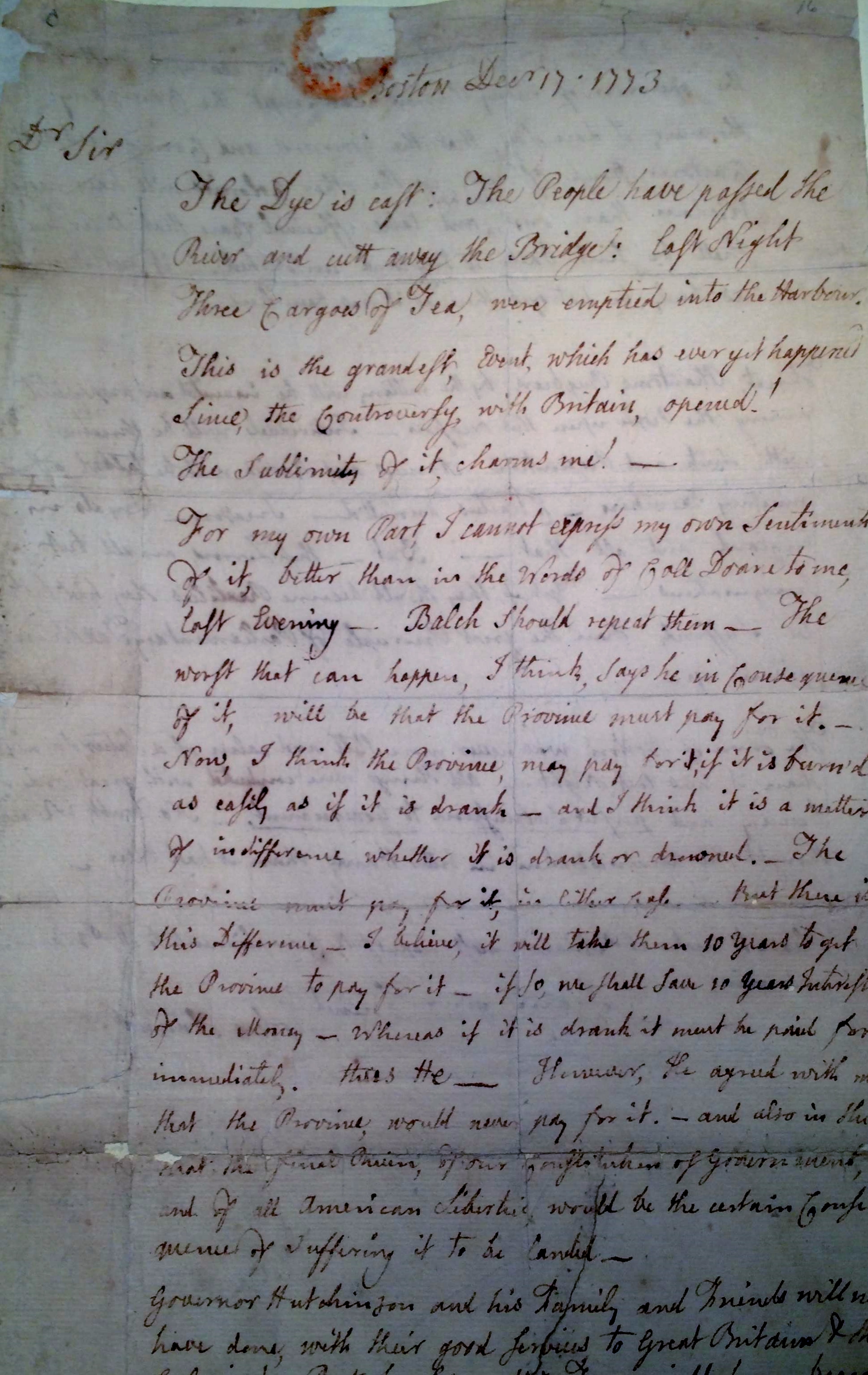
The next day, budding patriot John Adams wrote to his friend James Warren enthusiastically about the audacious stroke: “The Dye is cast: The People have passed the River and cutt away the Bridge: last Night Three Cargoes of Tea, were emptied into the Harbour. This is the grandest, Event, which has ever yet happened Since, the Controversy, with Britain, opened!” He added, “The Sublimity of it, charms me!”

“The People should never rise, without doing something to be remembered—something notable And striking.” he noted in his diary. “This Destruction of the Tea is so bold, so daring, so firm, intrepid and inflexible, and it must have so important Consequences, and so lasting, that I cant but consider it as an Epocha in History.” “The Question is whether the Destruction of this Tea was necessary?” he queried. “I apprehend it was absolutely and indispensably so.”

In his letter to Warren, Adams looked ahead as to what would follow this momentous affair. “Threats, Phantoms, Bugbears, by the million, will be invented and propagated among the People upon this occasion. Individuals will be threatened with Suits and Prosecutions. Armies and Navies will be talked of—military Execution—Charters annull’d—Treason—Tryals in England and all that—But—these Terrors, are all but Imaginations. Yet if they should become Realities they had better be Suffered, than the great Principle, of Parliamentary Taxation given up.”

There were indeed serious consequences for the people of Boston in the form of the Coercive, or Intolerable, Acts levied by Parliament in retaliation. The harsh punishment backfired however. Colonists grew more unified in sentiment, and the calling of the First Continental Congress in 1774 was a pivotal step in the movement toward revolution and eventually, independence.

John Adams to James Warren, 17 December 1773, Warren-Adams Papers


“Three Generations Have Advanced in a Century” : From John Adams to Charles Francis Adams II

By Amanda Norton, Adams Papers

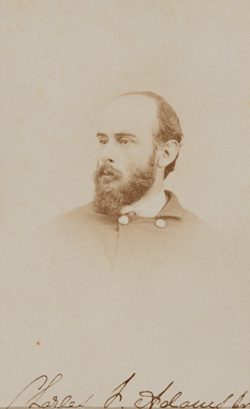
            On October 31, 1835, John Adams’ grandson Charles Francis Adams, along with his wife, Abigail Brooks Adams, had their second son, Charles Francis Adams 2d, baptized at their home in the presence of John Quincy and Louisa Catherine Adams and other close family members. Born in May, the day for the christening had been specially chosen—the centennial of John Adams’ birth. While John Adams’ birthday is recognized as October 30 in the new style Gregorian calendar, John Quincy Adams erroneously believed that the date should be recognized on the 31st and convinced Charles Francis to hold the baptism on that date.

            Charles Francis Adams, who often reflected on his place within his illustrious family, noted the occasion in his diary:

“It was a little singular that a child of mine should be christened just one hundred years from the birth of his great grandfather. Three generations have advanced in a century. May the last who is carrying the name of the family into the next be as honest, as determined and as a conscientious as the first. I trust in a power above us which has for reasons unknown thought fit to make among us instruments for advancing the power, the honor and the prosperity of this Nation, and whose decrees are always just and always wise. My feelings always overpower me when I reflect how unworthy I am. Prosperity has been showered upon me. May I learn to deserve it!”

            John Quincy Adams also linked the events in his diary: “This day is the centurial anniversary of my fathers birth. . . . He was born of Parents in humble life, and has left an illustrious name, for his descendants to sustain by virtues like his own. May it please the disposer of all Events that his great grandson this day devoted to the service of God and man may enjoy as long, as useful and as prosperous a life.”

            The prayers of the father and grandfather were indeed answered in Charles Francis Adams 2d (1835–1915), who was a distinguished Union Army officer, railroad executive, historian, and biographer. Along with these many achievements, Charles Francis served as president of the Massachusetts Historical Society and selected the spot on the Fens Park where the MHS now resides. He was also instrumental in the creation of the Adams Manuscript Trust and the deposit of the Adams Family Papers at the Society, thereby assuring the preservation and propagation of his great grandfather’s legacy and that of the entire family.

            For more on the collection, preservation, and dissemination of the family’s manuscripts and the origins of the Adams Papers Editorial Project, see the introduction to the Diary and Autobiography of John Adams.


Fathers’ Day: Louisa Catherine Adams and Joshua Johnson

By Amanda Mathews Norton, Adams Papers

Fathers have a tremendous impact on the lives of their children; and this is quite evident in the case of the Adams family. While John Adams and John Quincy Adams clearly and significantly influenced their children, I want to highlight the relationship of Louisa Catherine Adams with her father, Joshua Johnson. This relationship not only shaped Louisa’s upbringing, but indeed colored her entire life, and her relationship with the Adamses.

Joshua had moved to London before the Revolutionary War to forward his business interests, and during the 1790s served as the U.S. consul at London. Marrying an English woman, and raising his children in France and England, led some to question his patriotism and Louisa’s need to protect and defend her father’s honor and reputation is evident throughout her writings. This need not only grew out of Joshua Johnson’s long foreign residence but more especially because of her father’s financial circumstances at the period when she married John Quincy Adams. Just as she and John Quincy were married, her father’s business failed. Unable to provide the dowry he had promised and in debt, Joshua Johnson quickly took his family from London back to the United States to attempt to recover his losses. Louisa entered her marriage with the anxiety and shame that her husband and others would think that she and her father had conned John Quincy into marrying her with false promises; it was a sensitivity that never went away.

But for Louisa, her father had been entirely blameless, and this belief she also carried throughout her life. Fortune was unkind. His partners had cheated him. In her Autobiography, “Adventures of a Nobody,” Louisa reminisced:

The qualities of the heart and of the mind, excited a higher aim; and a romantic idea of excellence, the model of which seemed practically to exist before my eyes, in the hourly exhibition of every virtue in my almost idolized Father; had produced an almost mad ambition to be like him; and though fortune has blasted his fair fame; and evil report has assailed his reputation; still while I live I will do honour to his name, and speak of his merit with the honoured love and respect which it deserved— As long as he lived to protect them, his Children were virtuous and happy—amidst poverty and persecution.

Like many adults in times of sorrow or hardship, even at the age of 64, in her Diary in July 1839, she looked back with fondness and nostalgia for her childhood:

My Father! my Dear my honoured my revered Father! In the hour of sickness, of sorrow, of disappointment; memory carries me back to the days of my youth; when on the slightest complaint, I met thy sympathising tenderness, anxious solicitude, and affectionate indulgence to suffering and weakness; and the soothing encouragement which braced the nerves to fortitude, and the spirit to courage! Where in this world is thy likeness to be found! Thou wert not great, but thou wert good!!!

As we celebrate Fathers’ Day, this is yet another reminder that the emotions and relationships, particularly those of parent and child, remain familiar across the centuries.


Hacking John Adams

By Amanda A. Mathews, Adams Papers

At the end of 2014, the hack into Sony Pictures and the subsequent publication of the private communications of Sony employees drew massive public interest. While many decried the methods, and resentful of foreign meddling, many people were still deeply interested in the revelations about the executives’ opinions on various celebrities.

John Adams faced a “hack” of his own in the summer of 1775 when private letters he had written to his wife, Abigail Adams, and to his friend James Warren were intercepted by the British and subsequently published in Boston and London. Adams, participating in the Second Continental Congress in Philadelphia, was growing increasingly frustrated at the reluctance of some of the members to take strong measures of resistance against Great Britain and took to his letters to vent his frustration, in particular against John Dickinson, a member from Pennsylvania who believed that even with hostilities ongoing, reconciliation with Great Britain was still possible and should be pursued. John Adams fed up with this, vented to Warren: “In Confidence,—I am determined to write freely to you this Time. —A certain great Fortune and piddling Genius whose Fame has been trumpeted so loudly, has given a silly Cast to our whole Doings—We are between Hawk and Buzzard.” To Abigail he alluded to his fellow congressmen: “I wish I had given you a compleat History from the Beginning to the End of the Journey, of the Behaviour of my Compatriots.——No Mortal Tale could equal it.——I will tell you in Future, but you shall keep it secret.——The Fidgets, the Whims, the Caprice, the Vanity, the Superstition, the Irritability of some of us, is enough to——” and there broke it off.

Entrusting these private thoughts to Benjamin Hichborn, a young lawyer, making his way back to Boston, Adams had no idea that he had just penned words that would bring him more fame than anything he had written to that point. While at a ferry crossing in Rhode Island, a British naval vessel captured the ferry and took possession of the letters Hichborn carried. Unsurprisingly they found the contents very interesting. The British officers made several copies, some of which were sent off to London, and the letters were also quickly printed in the Massachusetts Gazette and other Boston papers, trying to create division within the patriot cause.

The breach deepened the rift between Adams and Dickinson and occasioned a great deal of gossip on both sides of the Atlantic; however it had no long term effect on John Adams’ reputation in the Congress, continuing to be an influential member, nor did it influence British policy. Still, just as many were fascinated to know what executives really thought about Angelina Jolie, there were many Americans in 1775 fascinated to hear such candid opinions about congressional members.

To read more about the incident and the subsequent reaction see the complete coverage.

“I can do nothing without you”: The 250th Anniversary of John and Abigail Adams

By Amanda A. Mathews, Adams Papers

This month we celebrate the 250th wedding anniversary of John and Abigail Adams. Their marriage endured through separations, long in distance and time, war, partisan politics, and family hardships. Their distance and struggle became our treasure, because it is through their incredible correspondence that we obtain such an intimate look inside their lives—lives that in so many ways, are not so alien to our own.


About a month before their 25 October 1764, wedding, John Adams wrote to Abigail Smith movingly describing how important she was to him:

Oh my dear Girl, I thank Heaven that another Fortnight will restore you to me—after so long a separation. My soul and Body have both been thrown into Disorder, by your Absence, and a Month of two more would make me the most insufferable Cynick, in the World. I see nothing but Faults, Follies, Frailties and Defects in any Body, lately. People have lost all their good Properties or I my Justice, or Discernment.

But you who have always softened and warmed my Heart, shall restore my Benevolence as well as my Health and Tranquility of mind. You shall polish and refine my sentiments of Life and Manners, banish all the unsocial and ill natured Particles in my Composition, and form me to that happy Temper, that can reconcile a quick Discernment with a perfect Candour.

Abigail was that and more for John. His counselor and confidant, the one that even at the age of 61 and President of the United States, he could “do nothing without,” Abigail, while managing his beloved farm and caring for family, provided him with local news and gossip, advice, and a sympathetic ear. Likewise, for Abigail, when faced with trials of her own, she looked forward to a reunion with her dearest friend, where “I come to place my head upon your Bosom and to receive and give that consolation which sympathetick hearts alone know how to communicate.”

When Abigail died on October 28, 1818, just days after their fifty-fourth wedding anniversary, a heartbroken John wrote to his son John Quincy Adams, “My consolations are more than I can number. The Separation cannot be So long as twenty Separations heretofore. The Pangs and the Anguish have not been So great as when you and I embarked for France in 1778. . . . Love to your Wife. May you never experience her Loss.”

If you would like to learn more about this great American love story, the Abigail Adams Historical Society in Weymouth, MA, is holding a multi-day celebration and conference including remarks from Sara Martin, the Series Editor of the Adams Family Correspondence series, on October 24–26, 2014. Click here for more information.


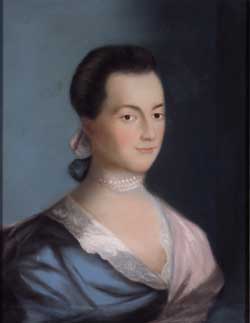
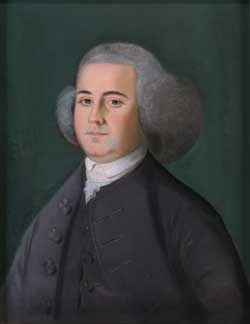
Images:  Abigail Adams. Pastel on paper by Benjamin Blyth, circa 1766. Artwork 01.026; John Adams. Pastel on paper by Benjamin Blyth, circa 1766. Artwork 01.027

“Signed, sealed and delivered”: The Treaty that Ended the Revolutionary War

By Amanda A. Mathews, Adams Papers


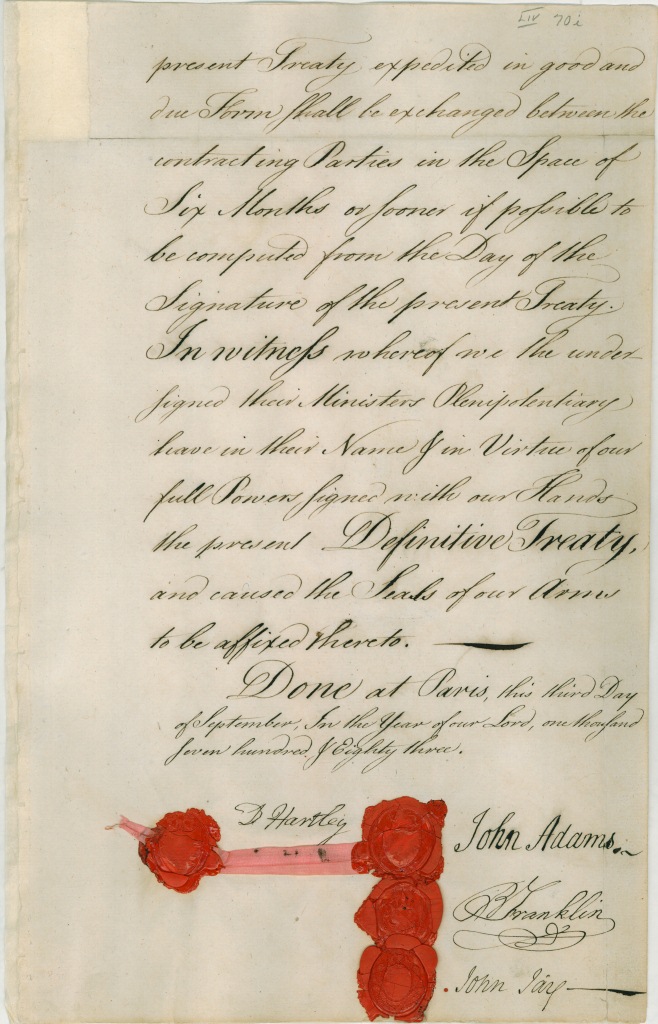
“On Wednesday the third day of this Month, the American Ministers met the British Minister at his Lodgings at the Hôtel de York, and signed, sealed and delivered the Definitive Treaty of Peace between the United States of America and the King of Great Britain.” John Adams reported this news to the President of Congress on September 5, 1783 and congratulated Congress on the “Completion of the work of Peace.”

It was eight o’clock in the morning when John Adams along with Benjamin Franklin and John Jay, met the British peace negotiator, David Hartley, at his residence in Paris and months of negotiations, first the previous year leading to the preliminary peace treaty, and then in earnest from April until the end of August culminated in this definitive treaty.

While this was no doubt a significant moment—after all, eight long years of war were officially ending with complete American independence—the signing was more of an anticlimax for Adams. His immediate feelings, as he revealed to Abigail the following day, were that as the definitive treaty was no more than “a Simple Repetition of the provisional Treaty,” they had “negotiated here, these Six Months for nothing.” Nevertheless, Adams understood that given the political realities of their position relative to Great Britain, “We could do no better Situated as We were.”

The key provisions of the Treaty of Paris guaranteed both nations access to the Mississippi River, defined the boundaries of the United States, called for the British surrender of all posts within U.S. territory, required payment of all debts contracted before the war, and an end to all retaliatory measures against loyalists and their property. Throughout John Adams’s term as minister to Great Britain in the 1780s, he and the British foreign secretary, the Marquis of Carmarthen, regularly discussed the actions each side saw as breaches of and a failure to fulfill the treaty—a debate that went unresolved until the signing of the Jay Treaty in 1794.

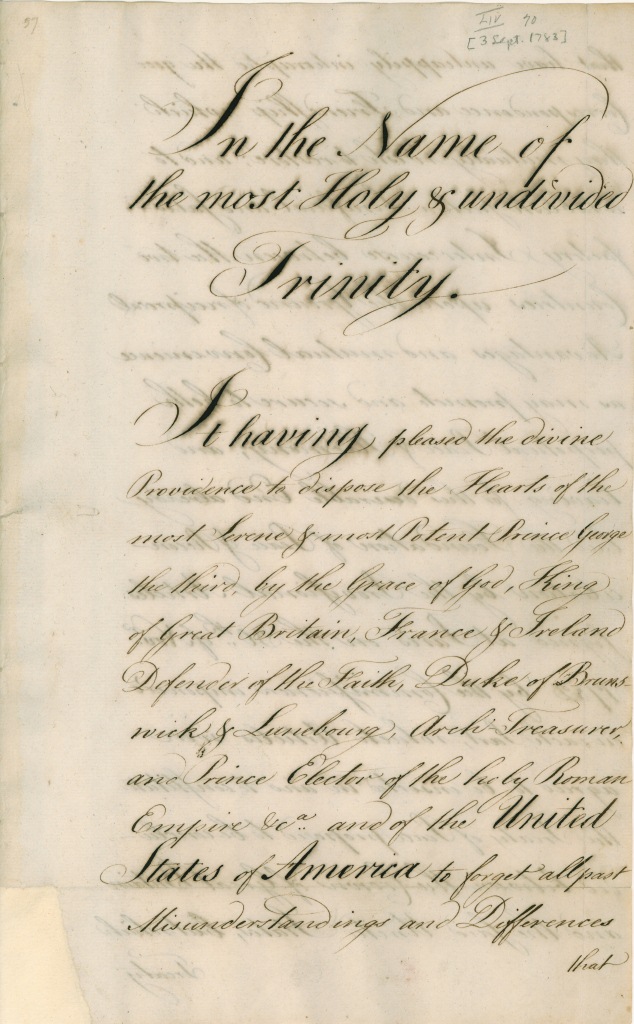
When editors at the Adams Papers Editorial Project are asked to name our favorite document in the immense collection that is the Adams Family Papers, John Adams’s copy of the Treaty of Paris, is certainly a top choice. This duplicate original in the Adams Papers is the only original not in a government archive. One can easily imagine that the legal- and legacy-minded John Adams was keen to retain a copy of this founding document over which he had so long toiled so far from his home for his posterity. Of particular interest are the seals—as there was no official seal for the American commissioners to use, each used whatever was convenient to him. See here for a full discussion of the Boylston family coat of arms, which Adams used as his seal on both the preliminary and definitive treaty and for more on Adams’s thoughts at the conclusion see the newly launched digital edition of Papers of John Adams, volume 15.

Image: First and last pages of the Definitive Peace Treaty between the United States and Great Britain (Treaty of Paris), September 3, 1783, Adams Family Papers.

“For your mutual Happiness and…dedicated to the Public”: The Marriage of John Quincy and Louisa Catherine Adams

By Amanda A. Mathews, Adams Papers

In the upcoming volume of Adams Family Correspondence we reach a pivotal moment in Adams family history—the marriage of Louisa Catherine Johnson to John Quincy Adams.

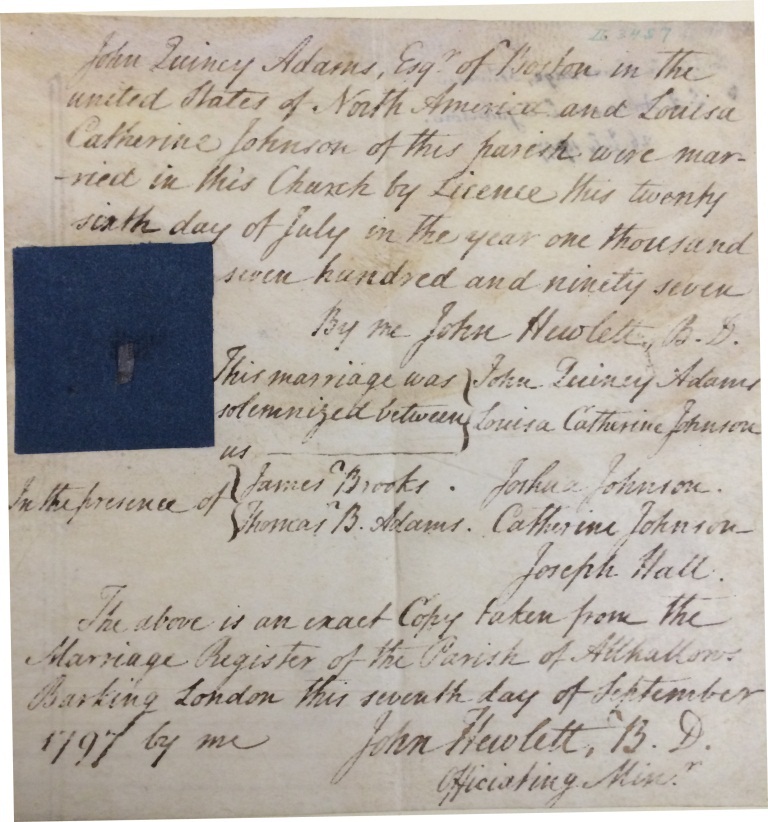
This partnership began quite simply on July 26, 1797. They were married before eleven o’clock in the morning at the Church of All Hallows, Barking, right by the Tower of London and immediately took a tour of country house near London, as JQA reported in his diary entry for the day. Louisa, who kept no diary at the time, wrote in her memoirs nearly thirty years later, and with the knowledge of what was coming quickly around the corner for the newlyweds—the embarrassment of her father’s financial failure—noted it simply, “On the Wednesday 26 of July 1797 I became a bride under as every body thought the happiest auspices—”

Two days after the wedding, the newlyweds sat down to compose a joint letter announcing their marriage to the distant John and Abigail Adams.

John Quincy opened the letter:

I have now the happiness of presenting to you another daughter…. My recommendation of her to your kindness and affection I know will be unnecessary. My sentiment of her merit, will not at this moment especially boast its impartiality, but if there be as I believe an inseparable chain of connection which binds together all the domestic virtues, I have the strongest pledge that she, who has in an amiable and respectable family, adorned the characters of a daughter and Sister, will prove an equal ornament to that of a wife.

Louisa, promising to always act worthily of their “esteem and tenderness,” concluded: “fulfillment of my duties either as wife or daughter, to be respected in these characters, and to meet the approbation of my Husband, and family, is the greatest wish of my heart— Stimulated by these motives (your affection the reward) will prove a sufficient incitement, never to sully the title of subscribing myself your, Dutiful Daughter.”

John Adams replied to the news of his eldest son’s marriage with his blessing: “I congratulate you and your Lady on this Event, which I hope will be for your mutual Happiness and…, for a long Course of years, dedicated to the Public— And may the Blessing of God Almighty be bestowed on this Marriage and all its Connections and Effects.” His blessing on this marriage, one that lasted over fifty years and combined the charm and sociability of Louisa to John Quincy’s dedicated and driven, if sometimes brusque demeanor, was more than fulfilled in the couple serving the public until John Quincy’s death in 1848.


**Image: JQA and LCA’s Marriage Certificate,  26 June 1797, Adams Family Papers.


“He cannot degrade her”: Louisa Catherine Adams on Women’s Natural Equality

By Amanda A. Mathews

While Abigail Adams is often cast into the role of proto-feminist based on her famous “Remember the Ladies” letter to John Adams in March 1776, Louisa Catherine Adams also expressed strong feelings about the natural equality of women, particularly in regards to their intellectual capacity, which were grounded in her understanding of Scripture and Christianity.

In a letter to the abolitionist and women’s rights advocate Sarah Grimké in 1838, Louisa wrote:

When God breathed the breath of life into the nostrils of the creatures of his hand, that breath was an emanation of his own nature! I would modestly enquire how in the simple act of inspiring this vitality into the body of Eve, that unchanging and immutable principle, should take a different form in the spiritual existence of the two human beings, who we are told inhabited Paradise!!!

Ere these bodies received the vital inspiration, they were a mere transcript of death; and liable to corruption, but on the instant the divine inspiration was inhaled, these clods became animated in the perfection of human loveliness, so equal in mind, and in the joys of immortality, but the woman so exquisite in her beauty, that Man next to his God even then worshipped at her shrine! and we no where see an evidence of inferiority in the female; but only the sensitive tenderness of Adam, who in the excess of his love spared her from those toils to which he would not expose her beauty. . . .

The Bible repeatedly asserts, “that a virtuous Woman is above all price”; and this was the result of Solomons wisdom— and it was through the Medium of a Woman, in the emblematic purity of her innocence and loveliness, as this being above all price; that the Messiah came into the world to call Sinners to repentance, and to redeem our degenerate race from Sin and death—

Man may subvert woman for his own purposes. He cannot degrade her in the sight of God, so long as she acts up to those great duties, which her Nature and her Constitution enforce; and which enjoins the highest virtues that combine society, in the relations of daughter, Wife, and Mother: from whence originate all the great characteristics which enoble man from the Cradle to the tomb—

This topic would be a recurring one in Louisa’s writings, both in her diaries and letters, in the last twenty-years of her life, and perhaps inspired her to record her “Narrative of a Journey from Russia to France,” which she prefaced:

It may perhaps at some future day serve to recal the memory of one, who was—and show that many undertakings which appear very difficult and arduous to my Sex, are by no means so trying as imagination forever depicts them— And that energy and discretion, follow the necessity of their exertion, to protect the fancied weakness of feminine imbecility.

Louisa Catherine Adams diary