By Shane Canekeratne, John Winthrop Student Fellow
History has always been an interest of mine, particularly the historical events of World War I and World War II. After I was presented with the opportunity to apply to the John Winthrop Fellowship, I immediately started to look for different articles related to the 1940s on the Massachusetts Historical Society website. This led me to the Bikini Atoll Papers. The Bikini Atoll Papers, part of “Operation Crossroads,” was a research project on the effects of nuclear bombs. Further exploration online guided me in developing my research angle: “In pursuing the Bikini Atoll Papers, I hope to discover how hard it would have been to build and use an atomic bomb. I also would like to learn what decision had to have been made by the government at the time to approve such a deadly weapon for such a horrible use.”
Through my research, I learned a lot about the procedures put in place to ensure safety during such a dangerous project. Vital Information for Operation Crossroads included: “Mail and Telegram 6 cents for air mail; Personal checks cannot be cashed aboard; No liquor available aboard; cameras are allowed except at Bikini.” My research also led me to the booklet entitled Summary Report (Pacific War). The booklet explained the plans for the United States, before and after Pearl Harbor, in considering entering war. The United States’ plan before Pearl Harbor was that the U.S. would join in the event that Germany was first eliminated. However, when the Japanese went on the offensive, and attacked Pearl Harbor, the U.S. wanted to defend the American people. As I researched further, I learned how the members of “Operation Crossroads” gave information to journalists and the public.
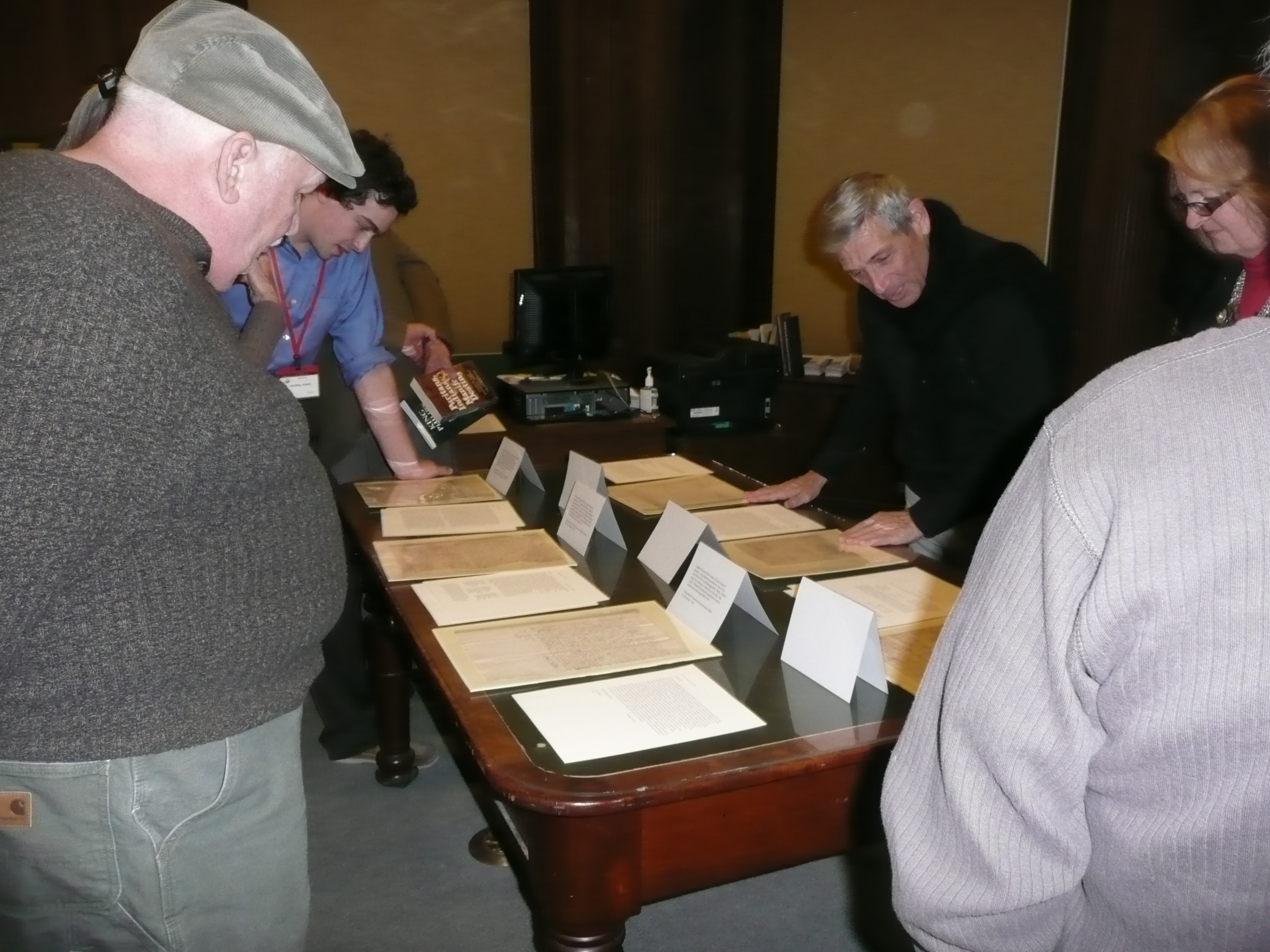
My visit to the Massachusetts Historical Society went very well. Mrs. Waters, Ms. Morrissey, my mother, my grandmother and I started with a tour of the facility. During the visit, we were allowed to see the construction of a new exhibit that will highlight correspondence between John Adams and his family. In addition, we saw an exhibit featuring e.e. cummings’ childhood artwork and some of his first poems. As we made our way through the building we ended up in the archives, where we were shown an old document pertaining to agriculture and Thomas Jefferson’s opinion on the best cider apple in the 13 colonies. I realized during my time spent in the reading library that I was the youngest person in the room. The room was very quiet, and I really enjoyed researching. After I was done researching, I went to another room, where I found a book about my neighborhood. Although the book contained just basic marriage, deaths, and births during the late 1700s, it was interesting to learn that Southborough, Massachusetts only had about 700 residents during the early year of its founding. I really enjoyed the visit, and would like to thank Mrs. Waters, Ms. Morrissey, and Andrea Cronin of the Massachusetts Historical Society for hosting me.
**In 2013, the MHS awarded its first two John Winthrop Fellows. This fellowship encourages high school students to make use of the nationally significant documents of the Society in a research project of their choosing. Please join us in congratulating our fellows: Shane Canekeratne and his teacher Susanna Waters, Brooks School, and Elizabeth Pacelle and her teacher, Christopher Gauthier, Concord-Carlisle High School.
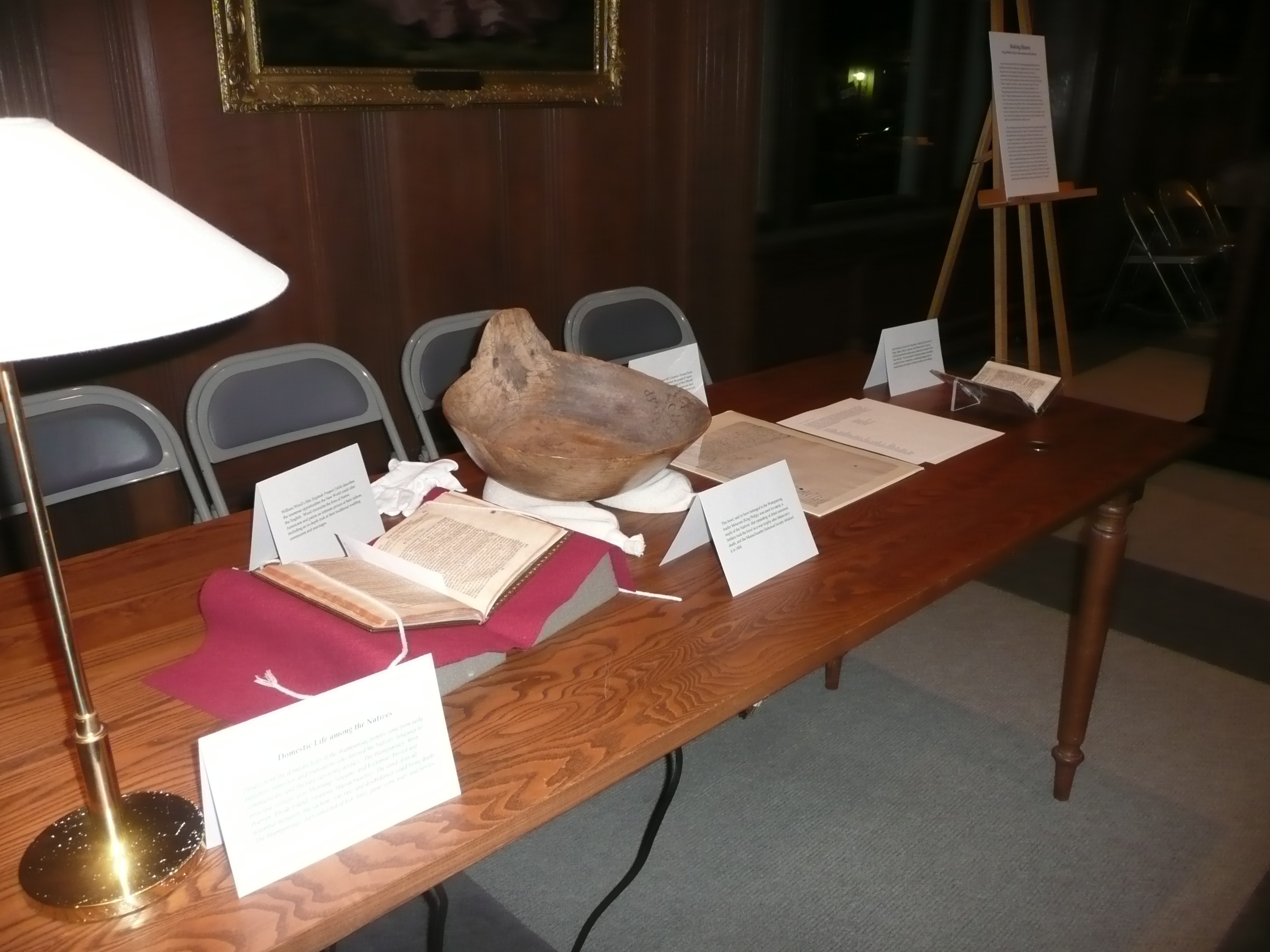 Students visited the MHS several times, both as a class and as individual researchers. They had the opportunity to analyze a series of manuscripts and published documents. Pamphlets such as John Eliot’s Strength Out of Weakness (1652), describe Puritan’s attempts to convert Indians to Christianity, while other works, like William Hubbard’s The Present State of New-England: Being a Narrative of theTroubles with the Indians in New-England (1677) suggest that not all native peoples were willing to adopt English customs or religious principles. Class members also transcribed a number of documents from the Winslow family papers, which include the papers of Edward and Josiah Winslow, colonial governors of Plymouth Colony from 1638-1680. Several letters in the collection detail colonists’attempts to negotiate with Metacom and other native inhabitants, even as native groups began forming alliances against the English settlers.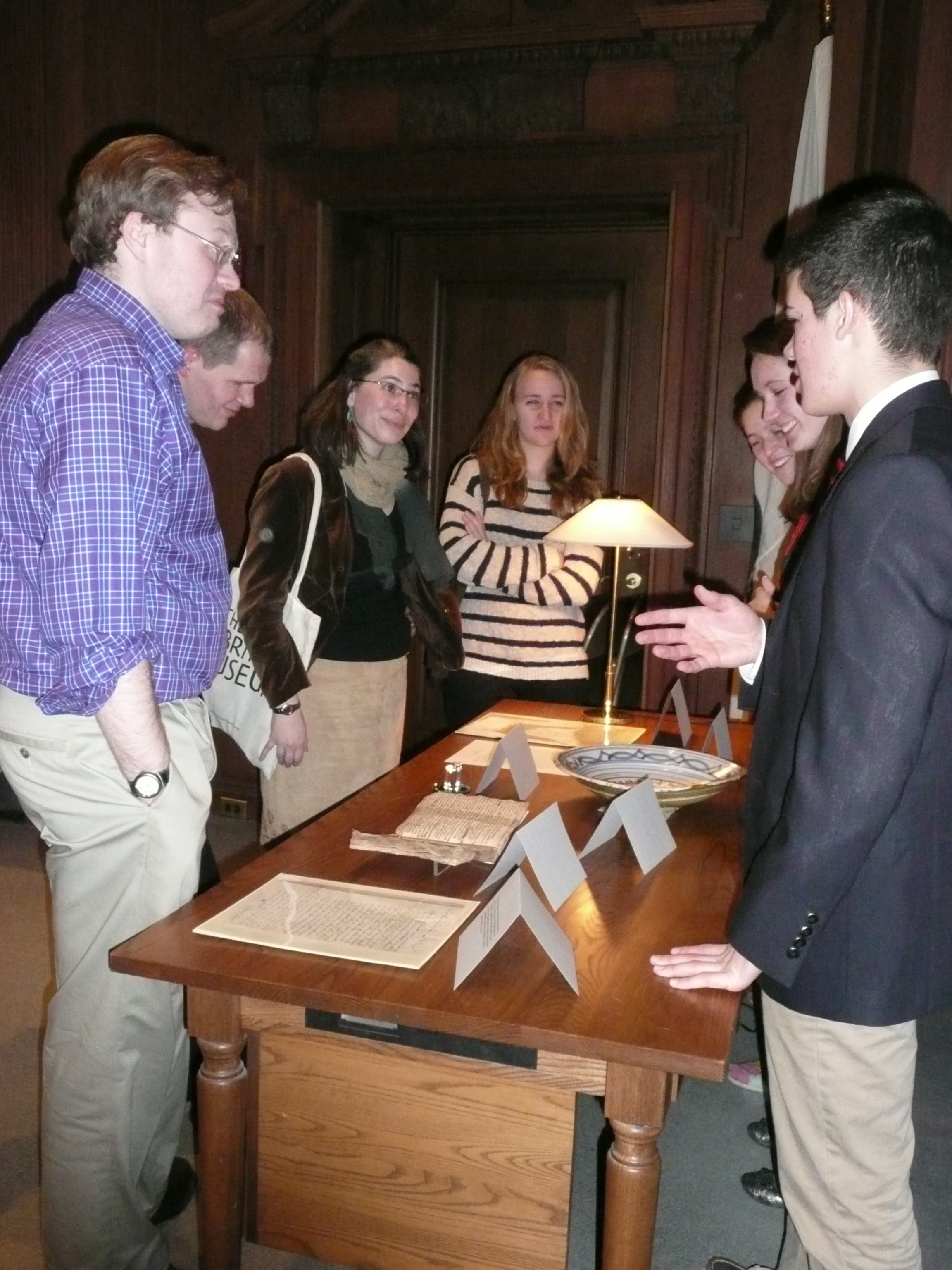

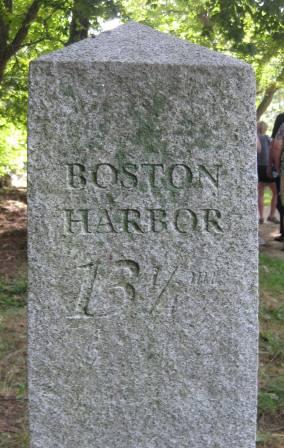 By Wednesday participants were ready to take a closer look at the first day of the revolution. We toured many different sites, including Lexington Green, Paul Revere’s capture site, and the North Bridge in Concord, as we
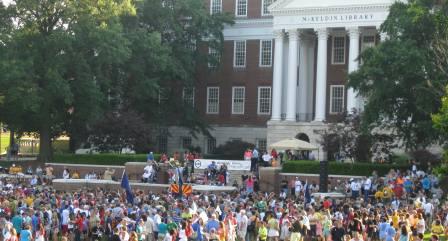 I was fortunate enough to travel with the Massachusetts delegation to this year’s national competition. The festivities began on the evening of Sunday, June 10, with a rousing opening ceremony on the lawn at McKeldin Library. Imagine thousands of students, parents, and teachers cheering, chattering, and trading pins and you’ll have a good sense of what the opening ceremony was like. The competition got down to business on Monday morning, and while in College Park I had the opportunity to serve as a judge along with more than 300 other historians and other education professionals. Anyone who has ever judged at a history day competition can tell you what an amazing experience this is. I met with many talented and enthusiastic students over the course of the three-day competition. They taught me a great deal about topics as diverse as Levittown, the use of helicopters in the Vietnam War, and Nicola Tesla. Thanks to a very well illustrated project on Civil War hospitals, I also have new appreciation for modern medicine.
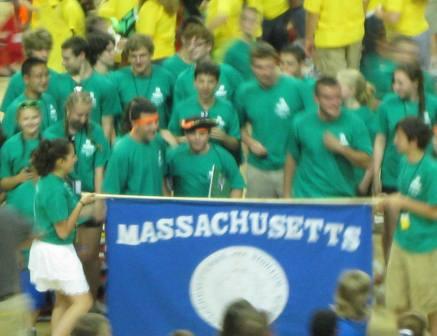 began with the best parade I’ve ever seen: a parade of participating students across the floor of the arena. I watched over 2,000 students circle the arena with everything from state flags to inflatable lobsters! Throughout the morning, dozens of students were singled out for awards and special prizes, and the boisterous crowd made sure that each winner was duly appreciated. Prizes were sponsored not only by NHD but by friends of history like the