The Civil War and Citizenship @ Fort Warren

By Kathleen Barker

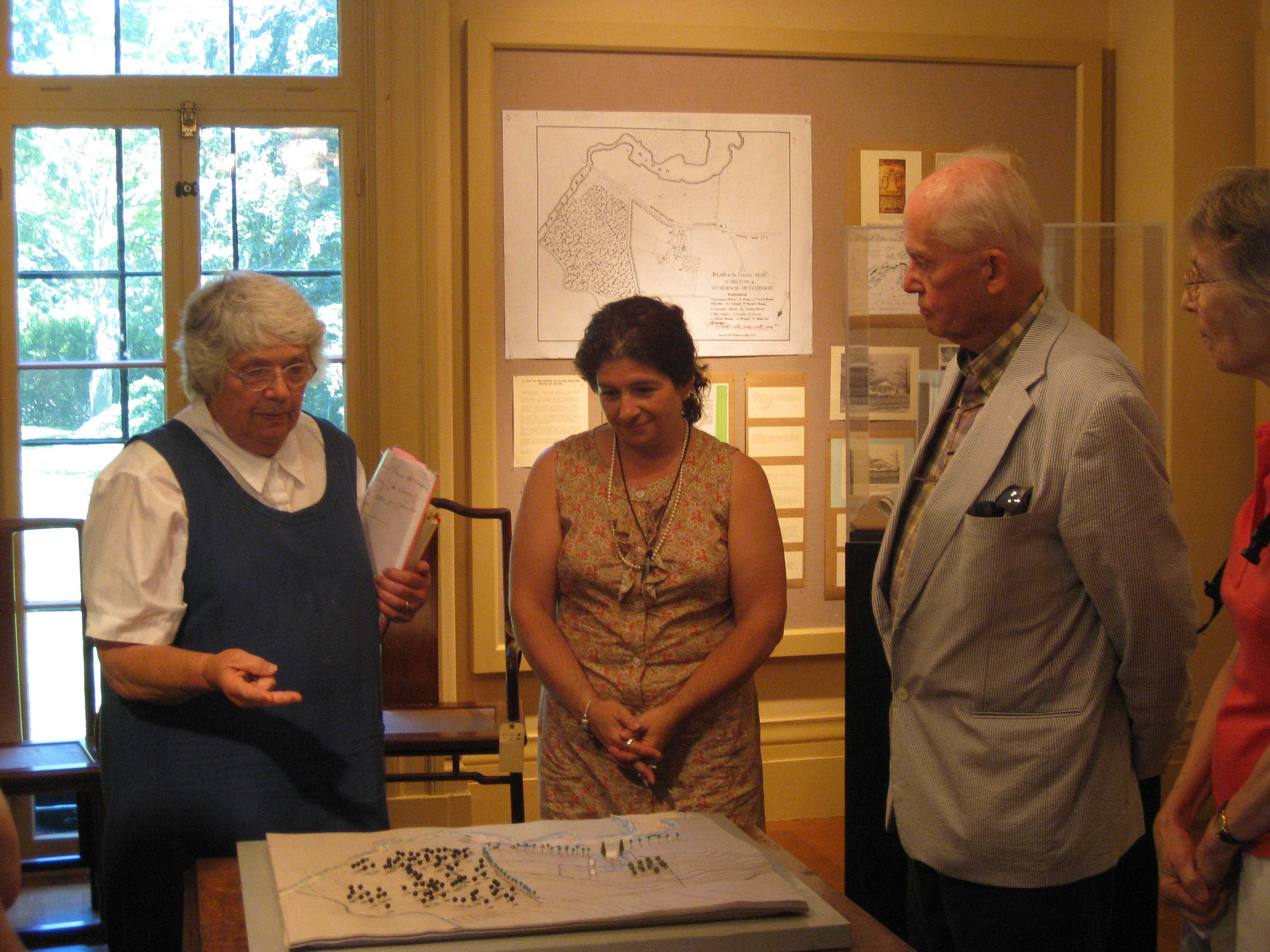
On 13 August 2011, members of the Education Department spent a beautiful day on Georges Island, part of the Boston Harbor Islands National Recreation Area.

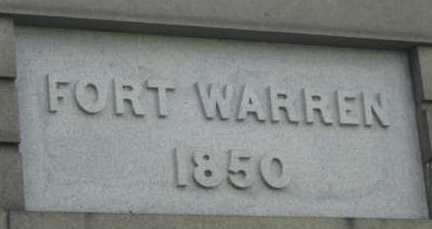
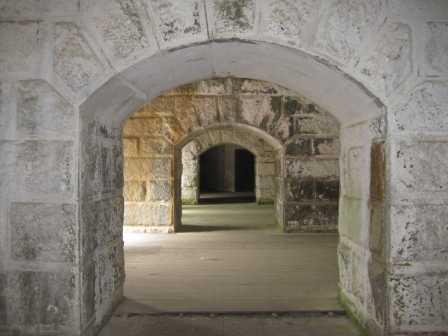
Our day began with an exploration of Fort Warren, a National Historic Landmark built between 1834 and 1860.  Thanks to its strategic location overlooking the shipping channel into Boston’s inner harbor, the fort became a crucial part of Boston’s coastal defense plan during the Civil War. Fort Warren also served as a recruiting and training camp for Massachusetts regiments of the Union Army, as well as a Confederate prisoner-of-war camp. The first prisoners of war, including 155 political prisoners and over 600 military prisoners, arrived in October 1861. Perhaps the most famous Civil War prisoner held at Fort Warren was Alexander H. Stephens, Vice-President of the Confederacy, who was held there from 25 May – 13 October 1865. Enthusiastic visitors can still take a peek into the cell occupied by Stephens during his stay on the island.  Other interesting nooks and crannies to explore include the fort’s bakery, the old hospital, and a powder magazine. Brave souls can also explore the dark arch (Bastion A), a former storage area and recreation hall full of mysterious rooms and dim corners best explored by flashlight!

In addition to roaming the fort, we also enjoyed a fantastic talk by Dr. Christian Samito, a practicing lawyer and a faculty member at Boston University School of Law, where he teaches courses on the legal history of the Civil War and Reconstruction eras. Education staff members have been working with Chris throughout the summer on a series of public programs and teacher workshops related to issues of citizenship and Civil War military service. During this particular talk, which was co-sponsored by the MHS, Chris discussed how African American and Irish American soldiers influenced the modern vision of national citizenship that developed during the Civil War era. By serving in the Union Army, African Americans and Irish Americans demonstrated their loyalty to the United States and strengthened their American identity. While their experiences differed greatly, both groups cited their participation in Union efforts as they advocated for the expansion of citizenship rights after 1865. In the years following the war’s end, African Americans gained access to legal and political processes from which they had previously been excluded on the basis of race, and Irish Americans helped to cement recognition of their full citizenship through naturalization. For more information about this topic, pick up a copy of Chris’s recent book, Becoming American under Fire: Irish Americans, African Americans, and the Politics of Citizenship during the Civil War Era, published by Cornell University Press.

To learn more about Boston and Fort Warren’s role as a site of diplomatic intrigue, join MHS staff members on Georges Island at 1:45 P.M. on Saturday, September 17th, when we present “The Trent Affair.” In the fall of 1861, Jefferson Davis sent diplomats James Mason of Virginia and John Slidell of Louisiana to Europe seeking support and recognition for the Confederacy. Eluding the Union blockade, the Southerners reached Cuba, where they boarded a British mail steamer, the Trent, for passage across the Atlantic Ocean. On 8 November 1861, the ship was seized and its Confederate diplomats imprisoned at Fort Warren.  MHS Education and Library staff members will discuss the details of the event; Mason, Slidell and prisoner life at Fort Warren; and the important role the Trent Affair played in Anglo-American relations. We hope to see you there!

This event will take place on Georges Island. For information about ferry tickets and schedules, please visit the Boston Harbor Islands Partnership website.

Summer Fellowship Opportunities for K-12 Educators

By Kathleen Barker

Are you (or do you know) a K-12 educator in search of a fun and rewarding summer opportunity? The MHS is offering at least three fellowships to public and/or parochial schoolteachers and library media specialists during the summer of 2011. The fellowships carry a stipend of $4,000 for four weeks of on-site research at the MHS. Applications are welcome from any K-12 teacher or library media specialist who has a serious interest in using the collections at the MHS to prepare primary-source-based curricula, supported by documents and visual aids, in the fields of American history, world history, or English/language arts. For more information about teacher fellowship, including application guidelines, visit our Swensrud Teacher Fellowship webpage, or contact Kathleen Barker, Education Coordinator, at kbaker@masshist.org or 617-646-0557.

Since 2001, the MHS has offered more than 50 fellowships to teachers representing school districts throughout Massachusetts and New England. These talented men and women have created projects on dozens of fascinating topics, including “Eighteenth-Century Broadsides,” “Massachusetts Soldiers and the Civil War Experience,” and “The Good Government Association and Political Reform in Early-Twentieth-Century Boston.” Look here to view examples of curriculum projects created by former teacher fellows.


Poetry with a Purpose: A Workshop for History and English Language Arts Teachers

By Kathleen Barker

What can poems tell us about Bostonians and their ideas about liberty, responsibility, and rebellion, prior to the American Revolution? How was the American Revolution invoked in poems to critique the Civil War? Join us on August 10 and 11, 2010, as we explore these (and many other) fascinating questions related to the persuasive power of poetry! This workshop, designed for 5th-8th grade teachers, will examine the work of local eighteenth- and nineteenth-century poets while offering tools for using poems in the classroom.

Workshop sessions will take place across Boston and Cambridge at the Massachusetts Historical Society, the Paul Revere House, Old North Church, Old South Meeting House, and Longfellow National Historic Site. Registration for this two-day workshop is $60, which includes course readings and lunches (both days). Participants can earn 12 professional development points by attending the course and creating a singe lesson plan. One graduate credit is available for an additional fee. Registration forms are due by June 30, 2010.

For more information, including a schedule of the workshop events, or to download the registration form, please visit our online calendar: http://www.masshist.org/events/more_info.cfm?eventID=518.

Local Teachers Meet Edith Holliday, WWI Volunteer

By Elaine Grublin

On Monday, June 7, nine teachers from Bridgewater-Raynham Regional High School in Bridgewater, MA visited the MHS to attended a fullday workshop entitled “American Women in Europe: Red Cross Canteen Service in WWI.” The workshop, which aimed to give teachers primary source material to work into their lesson plans, focused on Edith Holliday, a Boston area native that volunteered for service in the American National Red Cross in 1918.

The visit began with a presentation of WWI materials held by the MHS. This presentation, including propaganda posters, maps, manuscript letters and diaries, scrapbooks, and artifacts, demonstrated the wide range of WWI era resources teachers can draw from in creating content for their classroom lessons. The presentation was followed by a demonstration of a sample lesson plan utilizing primary source material from the Edith Holliday Papers. The lesson focused on the service of American women in the Red Cross with special attention given to the canteen workers that worked to provide comfort, rest, and a good meal to soldiers on their way to and back from the front. The WWI letters of Edith Holliday were used to give students first hand insight into the work of the Red Cross workers and to illustrate why women would volunteer for such service at that time.

Writing to her husband in August 1918 Edith states, “That is the highest duty we of our generation have to do, to work with all our hearts for a world fit for our children to live in.” The proposed lesson asked students to contemplate the work Edith and her fellow volunteers did in France, examining the successes and shortcomings of the canteen program and considering how the role of women changed as the war went on — both at home and abroad.

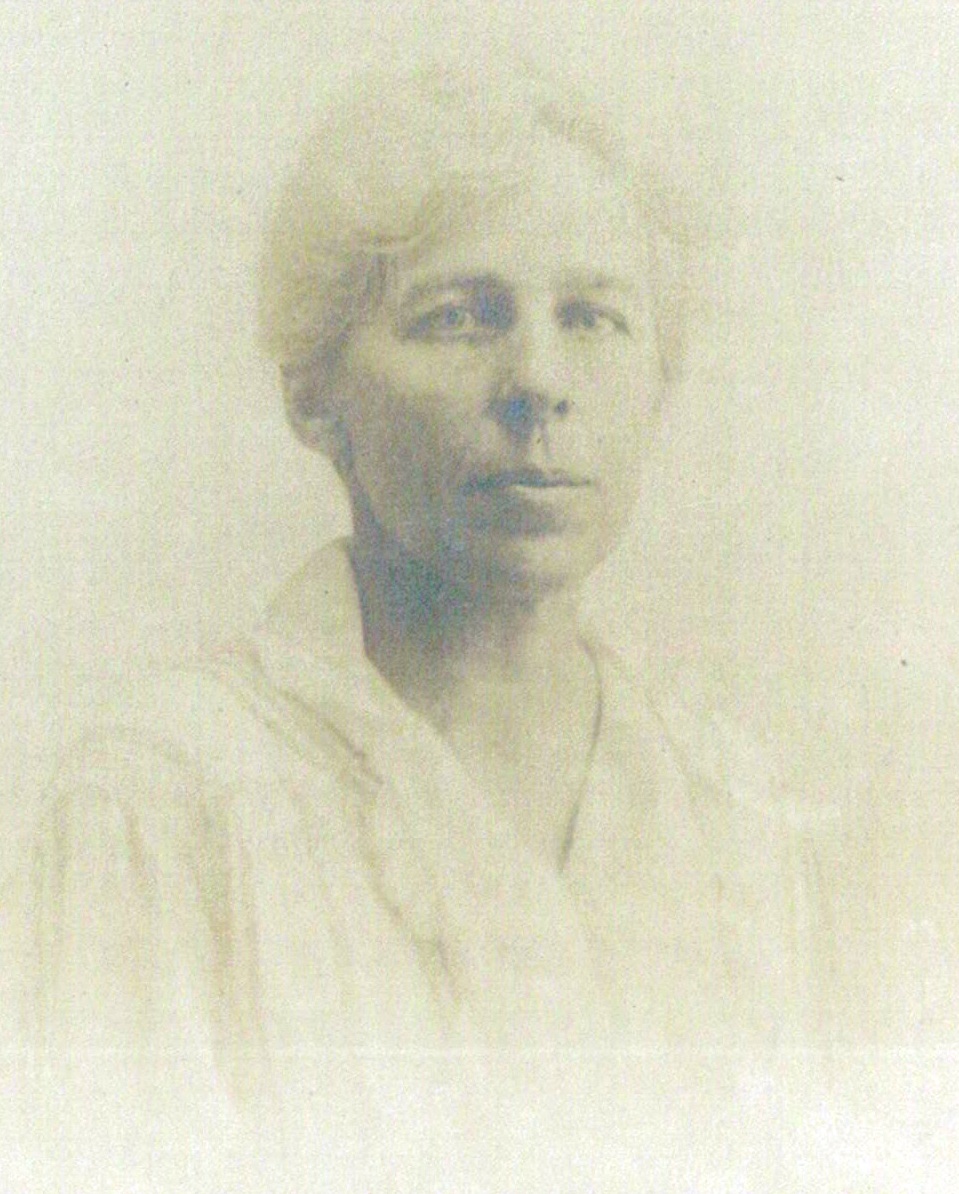
At the age of 49, Edith Hovey Holliday set sail for France as a volunteer in the American National Red Cross. She left her husband and two teenage daughters behind in Boston. Her oldest child, her son Harold, had volunteered for service in the Yankee Division and would follow her to France a short time later. In the almost eleven months she spent in France Edith served in two Red Cross canteens, in Nevers and St. Germain des Fosses. With the end of hostilities in November 1918 she relocated to Perigueux in southwestern France, completing her service as a searcher — assembling information on wounded, missing, and killed-in-action soldiers. She departed France to return to Boston in March 1919.

The MHS holds a collection of Edith Holliday’s personal letter, written primarily to her brother Carl, her husband Guy, and her children Harold, Beatrice, and Beckie. This collection chronicles her efforts to become a volunteer and her journey to and through France. There is also a small collection of photographs, including images of Edith and her children.

If you are a teacher or school administrator interested in finding out more about teacher workshop and professional development opportunities at the MHS contact Kathleen Barker in our education department at education@masshist.org.