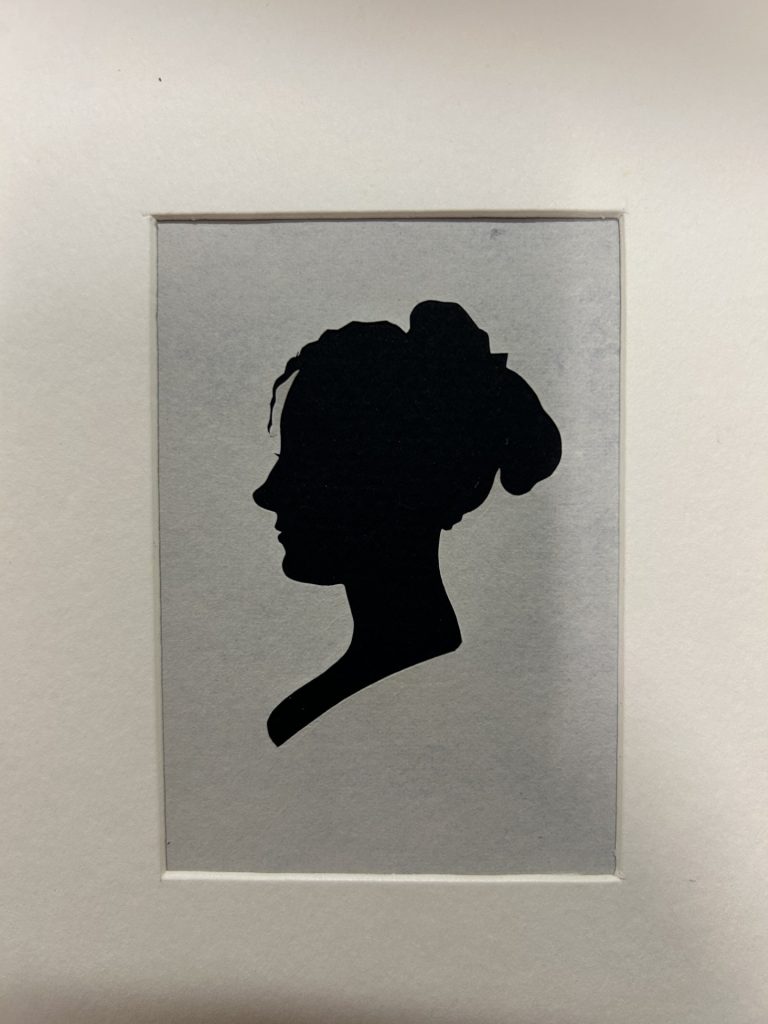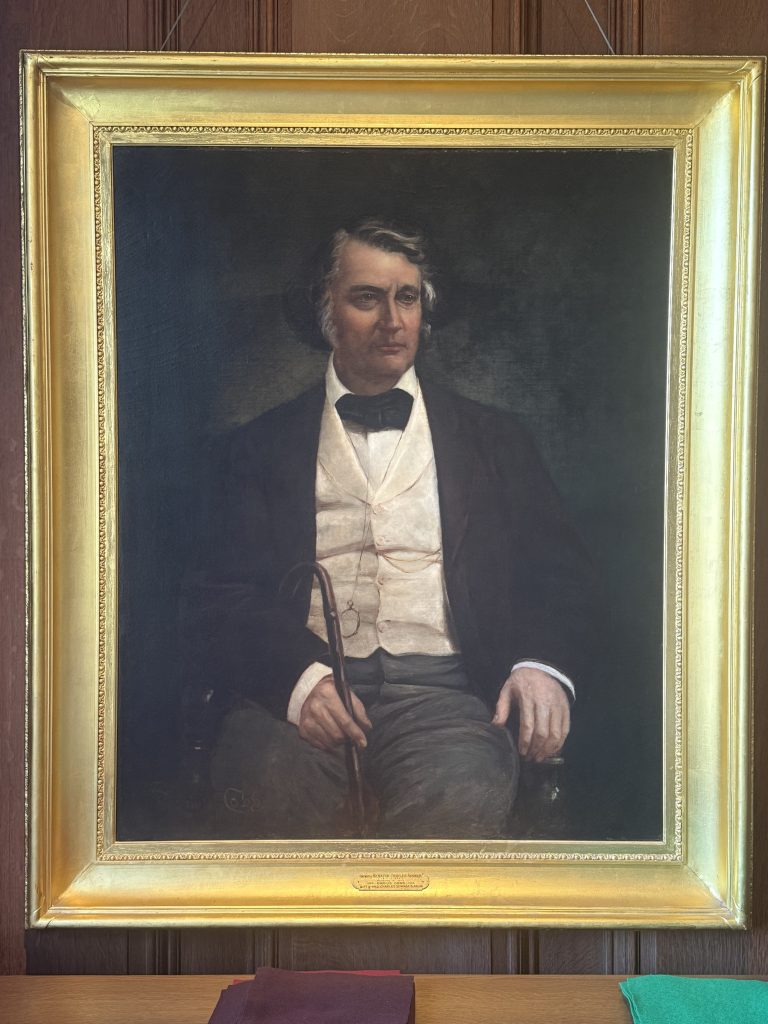

By Bianca Laliberté, Andrew Oliver Fellow, 2025-2026
I have not yet encountered a philosopher dealing with the reality of archival research who has not confessed to me the ache and discomfort they experienced once actually immersed in the work. Fair enough: the Foucauldian confrontation of the philosophical tradition with the messy realm of the archives would not come about without irritation. Archival research breaks the flow of the tightly configured reading processes that inform this tradition. It cracks open the philosophical experience, leaving much room for emotional and cognitive dissonance, opening the door to a sort of chaotic sentiment.
I wish to bring attention to the fact that such a Western philosophical narrative holds space for a rather European point of view. Unless we think of the development of American thought as a mere extension of European thought—which I can’t resign myself to doing for critical reasons analogous to the ones put forward by Ned Blackhawk, we must admit that, on the other side of the Atlantic, the logic of archival research somewhat follows an inverted logic. When facing the intellectual history of early America, one could argue that the chaotic sentiment is not experienced as the product of a philosophical breakthrough. It appears to me to be much more accurately perceived as the effect of an intrinsic quality. For researchers looking into materials from the seventeenth and eighteen centuries, the cognitive need to confront and defeat the dispersion of what we could call “American thought” through the grey world of archives and documents tends to feel rather unavoidable. Chronologically speaking, first comes the dissemination of the body of modern American thought, then come its otherwise structured forms.
Gérard Deledalle, the French philosopher who introduced American pragmatism in France during the golden years of continental philosophy, did not share these preoccupations. His framing of the beginnings of American philosophy (1954) led him no further back than to written oeuvres that could arguably be compared to textual forms that are familiar to the philosophical tradition. After rapidly covering contributions from individual thinkers like Samuel Johnson, Jonathan Edwards, or Thomas Jefferson, he rushes to address the emergence of American transcendentalism. Many early Americanists, on the other hand, have tended to be much more generous—sometimes too much so. Following patterns observable in early American discourses, many of them willingly identify the unarticulated philosophies of the seventeenth and eighteen-century American context as “practical” and even as “pragmatic” ones, sometimes without giving the notion of philosophy itself any further thought. This loosening of the notion of philosophy is not only the fruit of academic developments, however. The approaches to knowledge that drove eighteenth-century-born American learned societies certainly contributed to it.
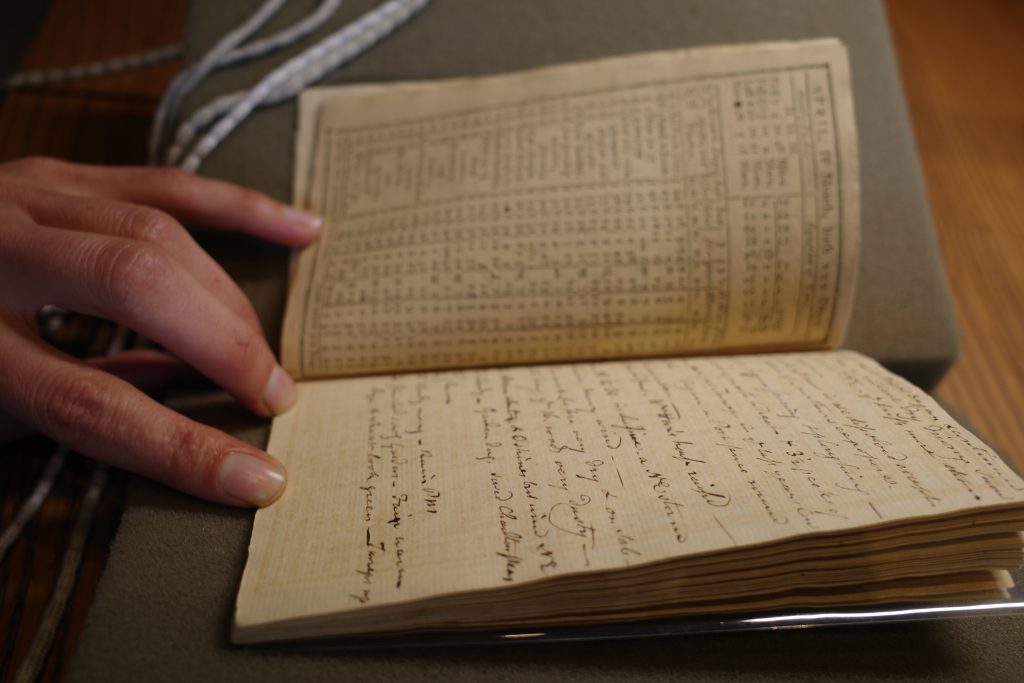
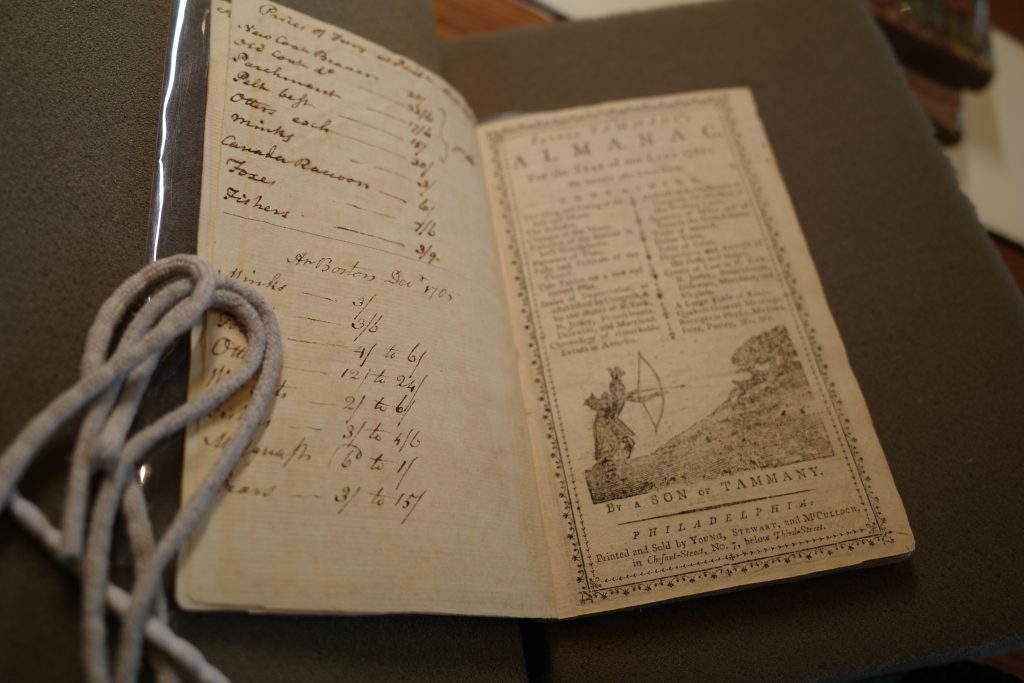
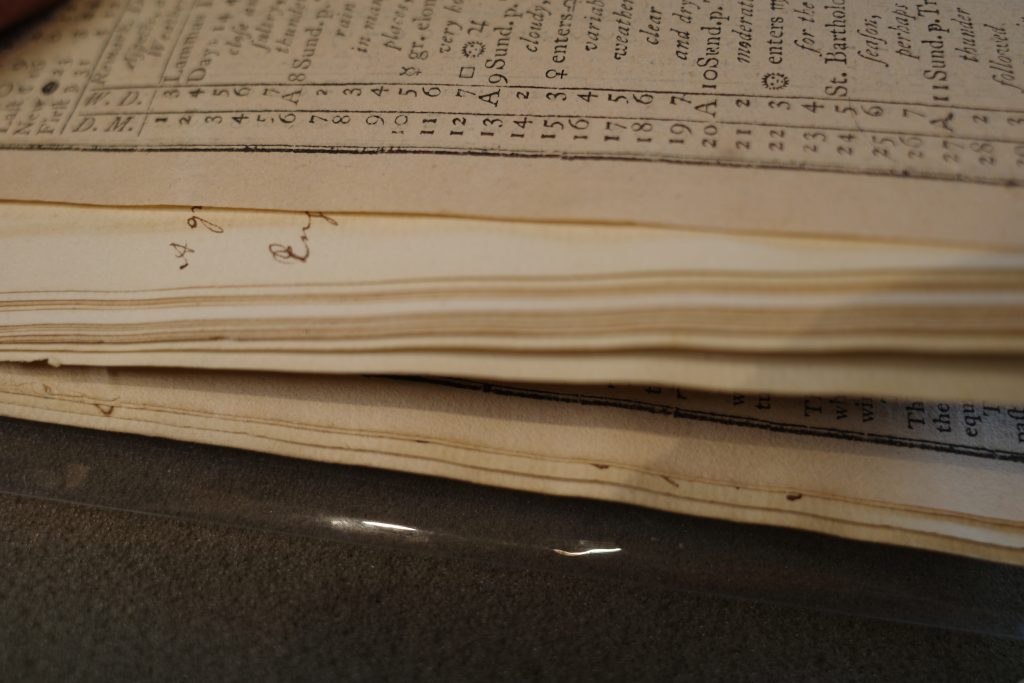
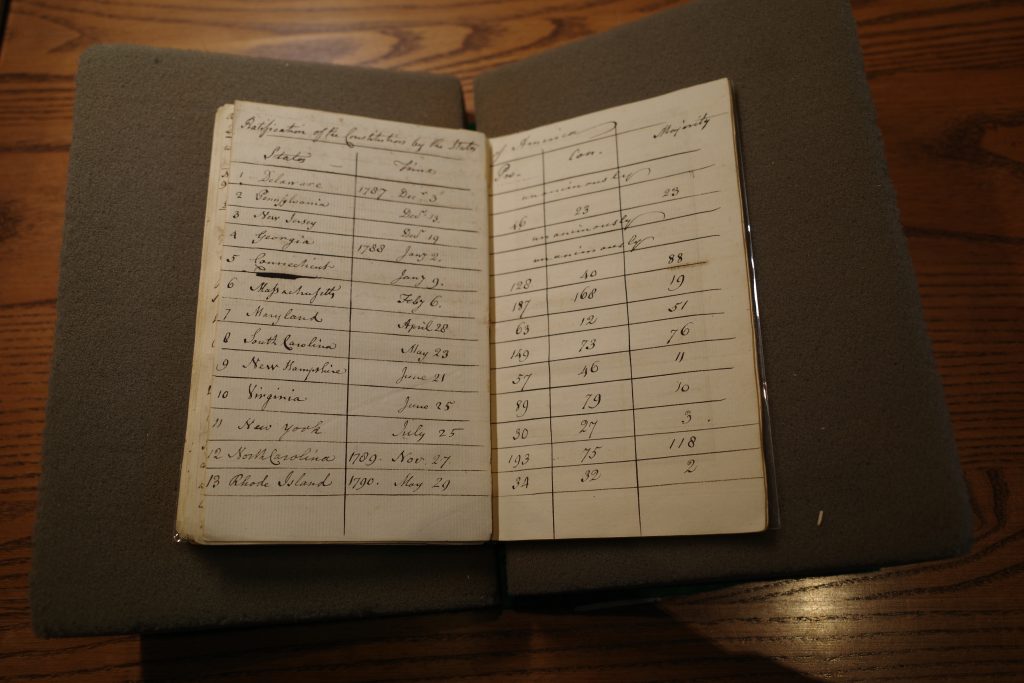
In Jeremy Belknap’s annotated almanacs, calendar pages and blank pages covered with manuscript notes drastically alternate (Figures 1–4). These artefacts convey a powerful image of his personal experience of the disruption of continuous time. And so does the gathering of the first collections of the MHS, through which he certainly dealt with the interrupting rhythm of archival dissemination, even more so given that the organizing principles that led his endeavor surpassed the bibliographical and archival categories. His approach could, in that sense, be called “intermedial”: the spectrum of material he embraced included objects, maps, images, and so-called “curiosities”. Belknap never bestowed his collecting philosophy with a formal theorization, and it would be quite dubious to frame him as a philosopher. However, to build on a statement articulated by Abram C. Van Engen (2023) in relation to the discipline of history, the impact that individuals like Belknap, Ebenezer Hazard, and John Pintard have had on the development of American intellectual history at large has yet been overlooked by scholars attached to the various disciplines that draw on the gigantic pool of early texts and artefacts that they collected. This postulate includes—or should include—philosophy and intellectual history.
One way to think of this interdisciplinary phenomenon in general terms would be to verify to what extent it sheds light on the horizon of a troubling possibility, which Van Engen touches upon: the disseminative logic that determines the making of the various fields of Early America to this day stood at the heart of Belknap’s nationalist project. This is, at least, what I want to leave for the reader of this blog post to think about. Continental standpoints of philosophy fed the critique of American nationalism from the 1970s on. We need a philosophy of archival research which recognizes that the unreflective application of these standpoints to the American proto-imperial context runs the risk of blinding us to the task here at hand. From the perspective of the study of Early America, the study of institutional history and the critique of structures of power that motivated Michel Foucault’s engagement with archival research cannot target a monolithic form of philosophy alone. It must be capable of weighing the fact that the American nationalist metaphysic, which Belknap and his associates translated into a practice of gathering, embodies a sort of democratic and inclusive quality. One could speak, using the terms of Jacques Rancière—and not without a touch of irony—of a democracy of the sensible, where sheets of paper, records, images, and Indigenous art pieces, are put together for the State’s and citizen’s eye to see and exhibit. This invites us to acknowledge that our defense of democratic approaches to research thus requires deeper thinking and renewed forms of investigation, which might prove necessary to face the symptomatic return of nationalism.
And of course, following this path, one should expect to experience a certain level of ache and discomfort.
Further Reading:
For a critique of the denial of the cost of political and imperial “independence” of the United States, view Blackhawk, Ned. The Rediscovery of America. Native Peoples and the Unmaking of U.S. History. New Haven, Yale University, 2023—and p.1 in particular, where he writes: “Historians have largely followed suit in focusing on Europeans and their descendants: Puritans governing a commonwealth in a wilderness; pioneers settling western frontiers; and European immigrants huddled upon Atlantic shores. Scholars have long conflated U.S. history with Europeans, maintaining that the United States evolved from its British settlements”.
Deledalle, Gérard. Histoire de la philosophie américaine, Presses universitaires de France, Paris, 1954.
For a critique of unreflective applications of philosophical interpretation to the Early American context, view Beard, Charles. The Supreme Court and the Constitution. New York, Paisley Press, 1912. On p.79, Beard argued that the Founding Fathers and the Framers of the Constitution, “were not philosophers, but men of business and property . . . and had no problem with the system of class rule and the strong centralization of government which existed in England”.
Van Engen, Abram C. (2023). “Pursuing the “True History” of America” in The Massachusetts Historical Review, Published by the Massachusetts Historical Society, Vol 21, 2020. I wish to thank Ondine Le Blanc for referring this brilliant article to me.