By Andrea Cronin
On 7 February 1870, Henry H. Warden, of the Russell & Company trade firm in Shanghai, wrote to colleague John Cunningham. Cunningham served as an agent in Boston for the Walsh, Hall & Company of Nagasaki in the tea trade. In this particular letter, Warden replied to an inquiry Cunningham had made concerning a potential shoe business in China.
“Thanks for yours of Nov 30 –
As to the McKay Machine. If it
is capable of turning out 4 @ 5000
shoes a day (those are your figures)
I should say it might be run
here to advantage for a week,
the Leather coming with it, and
supply China and the regions
round about for a year, I
fancy it is only adapted to making
foreign shoes. E. C. will be able
to give you a better opinion
than I can – He will be able
also to say whether you are
likely to find anything here
worth your while. I did not
forget to speak to him about
it-“
What is the McKay machine that Henry Warden references in this letter from John Cunningham papers?
The McKay stitcher was a sewing machine created by inventor Lyman Reed Blake and improved by businessman and self-educated engineer Gordon McKay. Prior to the introduction of this stitcher, shoes were hand stitched in a time-consuming and piecemeal manner. The machine revolutionized the speed of footwear production by machine sewing the uppers to the soles.
In 1858, Lyman Reed Blake initially invented an interesting, but not entirely functional, sewing machine. Foreseeing a future in shoe machinery, Gordon McKay bought the patent from Lyman Reed Blake in 1858 for an immediate $8,000. An agreement was reached that Lyman Reed Blake would receive a $72,000 share of future profits. The entrepreneurial engineer for whom the machine is named then improved upon the design until submitting an enhanced patent in 1862. The McKay machine produced finished shoes far faster than hand stitching; it is often credited with giving the North a material edge during the Civil War while the Confederates went without proper footwear.
After the war, having found his market in shoe machinery, Gordon McKay made all moves to retain his profits. In 1866, he designed a leasing system for the McKay machinery which demanded royalties for each pair of shoes made. The low cost of leasing the machines allowed manufacturers to engage in the production of shoes. This production in turn furthered Gordon McKay’s business as he secured a profit for each pair made by his machines.
In his letter, Warden refers Cunningham to the expertise of his brother, Edward Cunningham (“E. C.”), a senior partner of the Russell & Company trade firm in Hong Kong. The John Cunningham papers at the Society do not contain information about further footwear business plans in China or correspondence between the brothers about the McKay stitcher. However, it is still a true mark of global prowess that Henry H. Warden and John Cunningham discussed the introduction of the McKay machine to Asian markets less than a decade after its invention.
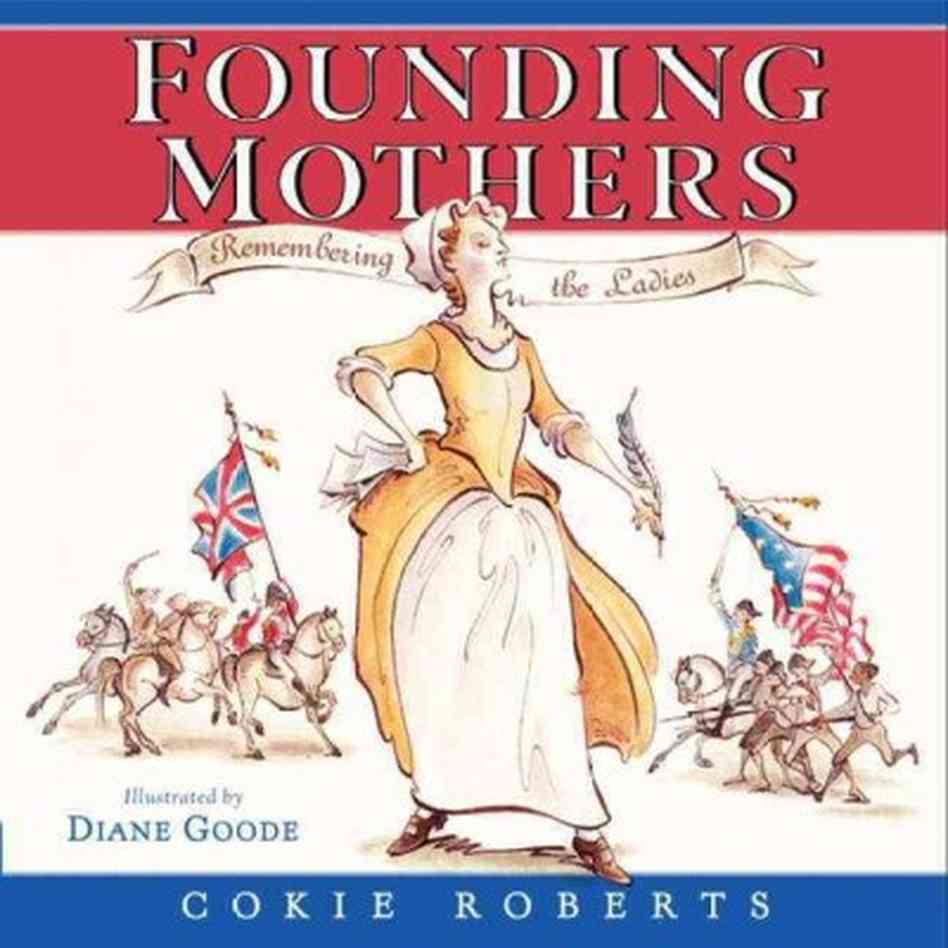 On 29 January, the Society hosted a special author talk for a very lucky group of middle-school students. The star of the show was none other than Cokie Roberts: MHS Fellow, journalist, political commentator, and author of the new children’s book Founding Mothers: Remembering the Ladies. The book, which is based on her 2004 bestseller Founding Mothers: The Women Who Raised Our Nation, chronicles the lives of the women who helped to found and nurture the United States. Abigail Adams is duly represented, as are Martha Washington, Phillis Wheatley, and Mercy Otis Warren. The book also introduces young readers to characters who might be less familiar: women like Deborah Sampson, the Massachusetts native who disguised herself as a man and fought in the Revolution, or Esther DeBerdt Reed, who raised more than $300,000 to purchase supplies for the underfunded Continental Army.
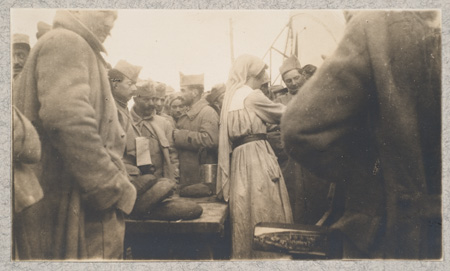 This photograph of a fellow worker illustrates the hectic pace of Hall’s canteen work.
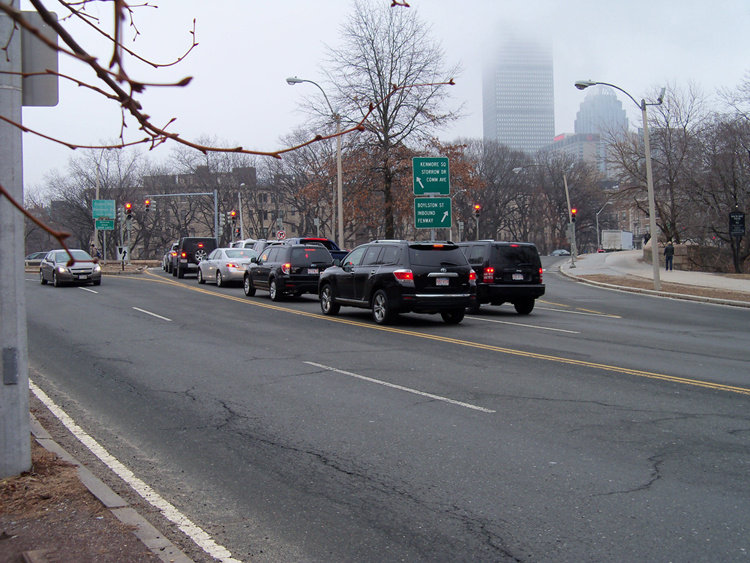 “Intersection of Boylston Street and Charlesgate from the West. Photograph by Anna J. Clutterbuck-Cook, January 2014.”
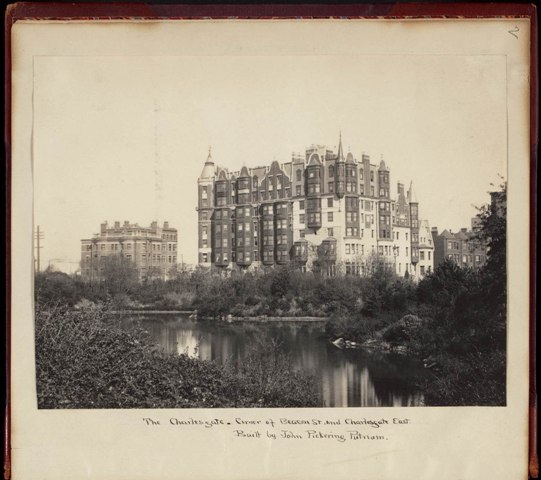 “Charlesgate Park. Photograph by unknown photographer, circa 1893-1896. Sarah Gooll Putnam Diaries, vol 20, MHS.”
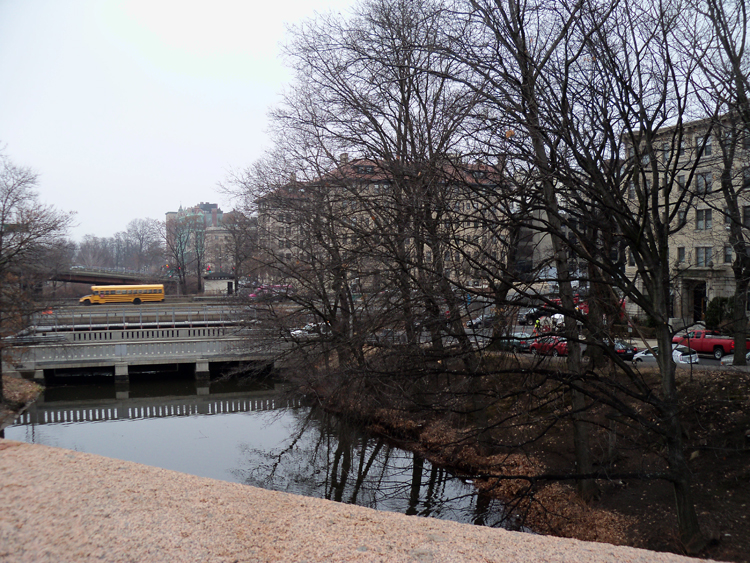 “Charlesgate Park from the corner of Boylston Street and Charlesgate East. Photograph by Anna J. Clutterbuck-Cook, January 2014.”