Making History @ MHS

By Kathleen Barker, Education Department

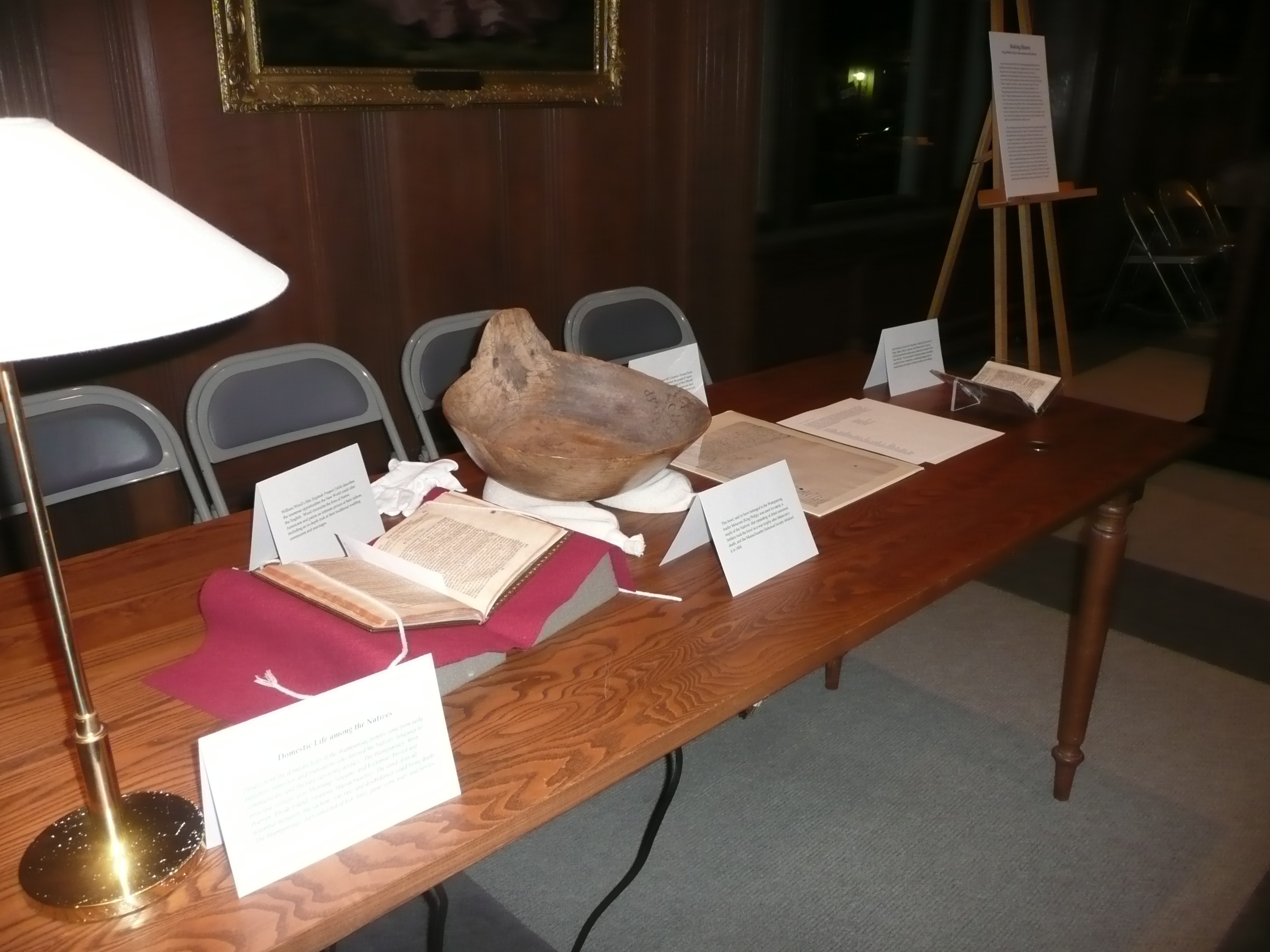
Pop Quiz! Which bloody seventeenth-century skirmish brought English settlers into conflict with local Wampanoags? The answer, of course, is King Philip’s War, a series of attacks that killed many colonists and Native American in 1675 and 1676, destroyed several New England towns, and cost the life of Wampanoag leader Metacom (or King Philip). Over the past few months, thirty-plus students from Boston University have been scouring the Society’s collections to learn more about this intriguing episode from Massachusetts’s past. Under the tutelage of Professor James Johnson, students became historians as they examined artifacts, transcribed documents, and tried to make sense of the relationships forged between colonists and native inhabitants, and where those relationships disintegrated.

Students visited the MHS several times, both as a class and as individual researchers. They had the opportunity to analyze a series of manuscripts and published documents. Pamphlets such as John Eliot’s Strength Out of Weakness (1652), describe Puritan’s attempts to convert Indians to Christianity, while other works, like William Hubbard’s The Present State of New-England: Being a Narrative of theTroubles with the Indians in New-England (1677) suggest that not all native peoples were willing to adopt English customs or religious principles. Class members also transcribed a number of documents from the Winslow family papers, which include the papers of Edward and Josiah Winslow, colonial governors of Plymouth Colony from 1638-1680. Several letters in the collection detail colonists’attempts to negotiate with Metacom and other native inhabitants, even as native groups began forming alliances against the English settlers.
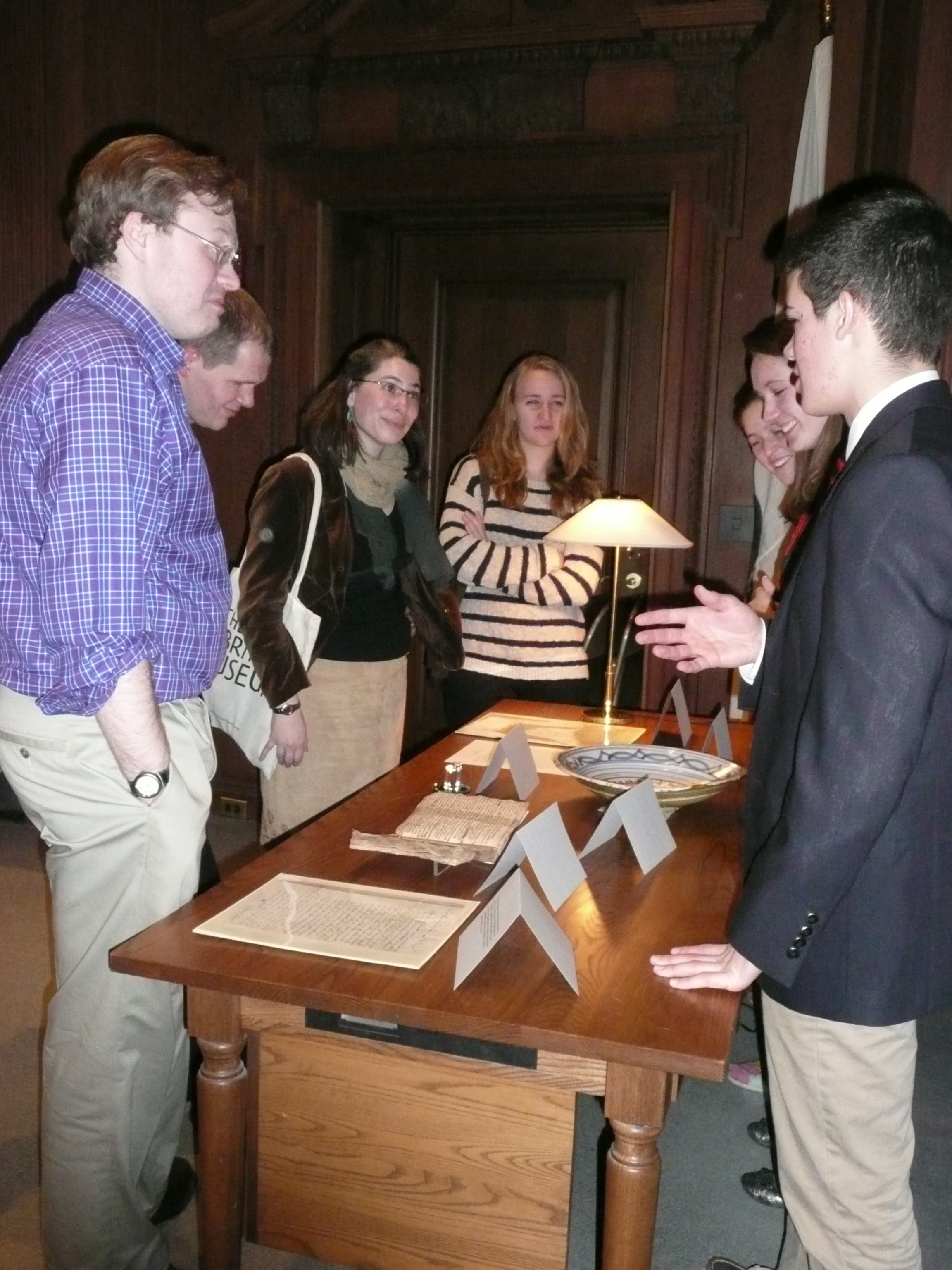
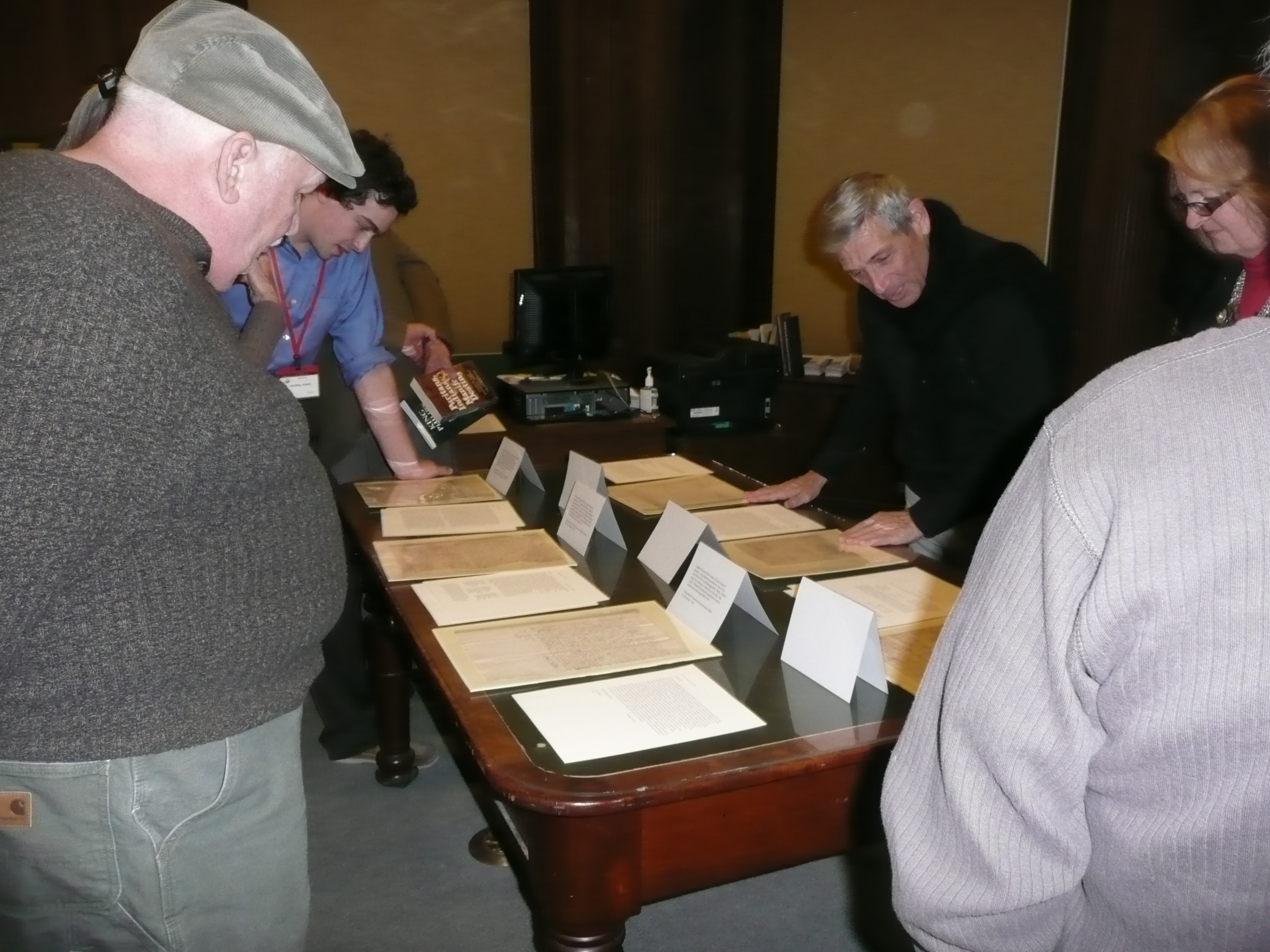
All of this hard work culminated in an exhibition and public program hosted by the MHS on 13 December 2012. More than 100 guests visited the MHS that evening to hear the students talk about their discoveries. The program began with Professor Johnson and his students providing a brief introduction to the principles of the course, as well as colonial-native relations, growing tensions,and the war itself. Students then became docents as program attendees viewed a special exhibition assembled by the class. Small groups of students discussed the particular materials they had studied, while also answering questions about their experiences as budding history detectives.

Ultimately, this program combined many of the things that we love to do here at the MHS: we introduced a new group of people to our collections through our research library; we piqued the interest of young historians; and we provided history enthusiasts with an entertaining and informative program. For more information about visiting our library to conduct your own research, checkout our visiting the library page. You can also visit our web calendar for information about upcoming education & public programs.

When Adams Met Lincoln

By Amanda A. Mathews, Adams Papers

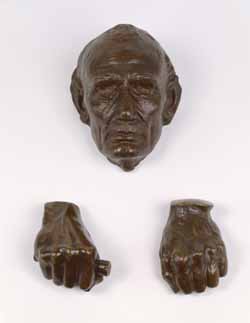
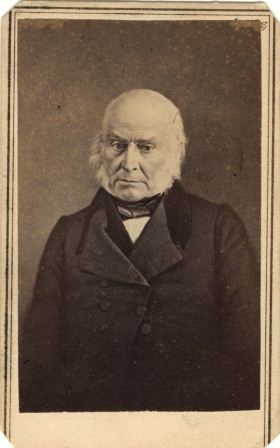
Recent viewers of Steven Spielberg’s film Lincoln may be wondering whether an Adams-Lincoln connection exists as the Adamses always seem connected to the major figures of American history. John Quincy Adams and Abraham Lincoln indeed served together in the 30th Congress for three months before John Quincy Adams died on February 23, 1848. Lincoln served on the Committee of Arrangements for Adams’s funeral, but that is the only conclusive connection between the two. They shared similar political outlooks, particularly on slavery, but what Adams thought about the young Lincoln, history does not record.
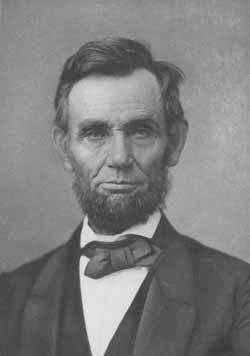
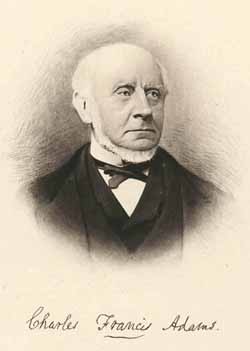
We do know, however, what John Quincy Adams’s son Charles Francis Adams, minister to Great Britain during the Civil War, thought of President Lincoln. “Mr Lincoln is a tall, illformed man,” Adams wrote in his diary after their first meeting in February 1861, “with little grace of manner or polish of appearance, but with a plain, goodnatured, frank expression which rather attracts one to him.” Adams, part of the Boston elite, had little respect for his ability as a social host or leader. Shaking hands with Lincoln at his inauguration ball on March 4, Lincoln appeared to have forgotten him. “Were it any body but a Western man I should have construed it as an intentional slight,” Adams wrote.

Lincoln’s handling of the Civil War only partially softened Adams’s impression. “Mr Lincoln has certainly in some respects acquitted himself with honor,” Adams wrote on March 30, 1865, “But nothing could ever make him a gentleman, or a sagacious administrator in the selection of agents.”

Upon hearing of Lincoln’s assassination in April 1865, Adams’s final assessment is in true Adams style, accurately recognizing Lincoln’s larger place in history as well as the questions left unanswered:

To the country, the loss of Lincoln is hardly reparable. There was a grandeur about the national movement under his direction which even he might not have been able fully to sustain, but which his successor will not attempt to continue. For his own fame, the President could not have selected a more happy close. The just doubts about his capacity for reconstruction are scattered to the winds in the solemnity of the termination. From that moment his fame becomes like that of Washington the priceless treasure of the Nation.


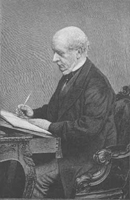
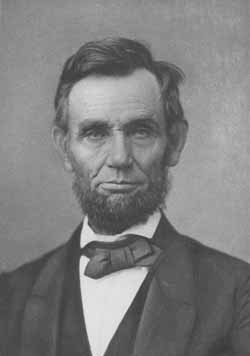
Images: Top, John Quincy Adams (17 -1848), carte de visite of daguerrotype (1847) by Brady’s National Photographic Portrait Galleries, [Matthew B. Brady], after 1860; Middle, Abraham Lincoln (1809-1865), photomechanical, from Portraits of American Abolitionists, MHS photograph #81.410; Bottom, Charles Francis Adams (1807-1886), photogravure, from Portraits of American Abolitionists, MHS photograph #81.2

This Week @ MHS

By Elaine Grublin

As the holidays draw near, 2012 is winding down here at the MHS.  We have one last week jam packed with quality programs.  If you have not fulfilled last year’s resolution of attending a program at the MHS, be sure to visit us this week. 

Tuesday, 11 December at 5:15 PM, the final Environmental History Seminar brings Brown University’s Strother Roberts to the MHS to present “Changes in the Water: Early Modern Settler Society Impacts on the Connecticut River and Long Island Sound.” This paper explores how the commodity production activities of early settlers impacted the land and waterscapes of New England’s longest river. John T. Cumbler, University of Louisville, will provide the comment. Please email if you you would like to attend.

Wednesday, 12 December at 6:00 PM, Fellows and Members of the MHS are invited to celebrate the season with the Trustees and staff of the MHS at the Holiday Party.  All guests must register in advance.

Thursday, 13 December at 6:00 PM, a semester long collaboration with a class of undergraduate students at Boston University commences with “Making History: King Philip’s War in Documents & Artifacts,” with a presentation and exhibition put on by the students. A pre-talk reception begins at 5:30 PM.  Please RSVP if you plan to attend.    

Finally, there are two more building tours remaining this year.  Join us either Saturday, 15 December or Saturday, 22 December at 10:00 AM for “The History and Collections of the MHS.” This 90-minute tour departs our front lobby and explores all the public space in the building. 


Our great programming resumes early in 2013.  Be sure to check back at the Beehive, or look ahead on our online calendar.


Immigrants Not Such a “Problem” in 1914 Report

By Emilie Haertsch, Publications

In 1914 the Massachusetts Commission on Immigration issued a report titled The Problem of Immigration in Massachusetts (there is a copy in the Society’s collections, and you can also view it here on Google Books), but it is not what you might think. The “problem” is not how to prevent immigrants from entering Massachusetts or how to deport immigrants already residing in the Commonwealth. Rather, it is how to ensure proper care and treatment of new immigrants to the state. The report outlines the commission’s findings on the current living and working conditions of immigrants residing in Massachusetts and suggests ways in which the government can improve their lives.

Immigration has been a hot button issue since the early days of the Commonwealth, but the government has not always played a kindly role. In the 17th century, laws were enacted to discourage non-Puritan and non-English immigrants from settling in the colony. The government began encouraging the immigration of other ethnic and religious groups to aid the state’s growth in the 18th century, but by the 19th century the continuing influx of immigrants fueled a growing anti-immigrant sentiment and the rise of nativist parties in the state. This history makes the contents of this early-20th-century report even more striking

The commission identifies two main goals, “the welfare of the State and the welfare of the immigrant,” but actually focuses chiefly on the latter. Particularly remarkable is the section on education, which shows sensitivity to preserving traditional cultures in immigrant children who are assimilating. The commission recommends that teachers adopt a method that ensures “that the immigrant child shall not, through his Americanization, lose respect for his parents and for the traditions which they revere.” It also recommends offering more educational opportunities for older children and adults through evening classes, even suggesting “lectures in the various languages…to inform the immigrant about labor laws, sanitary regulations and other things he needs to know immediately upon arrival.”

Protecting immigrants from exploitation, scams, and unsafe conditions is a strong theme of the report. At the time immigrants often fell prey to negligent landlords, medical charlatans, “shyster lawyers,” and phony bankers. The commission recommends government oversight to prevent people from taking advantage of immigrants, especially those just arrived in the United States. The overall content of the report presumes two key beliefs: that the immigrant deserves to be welcomed and given the opportunity of a decent standard of living, and that the Massachusetts government has an obligation to protect and foster them.

If a modern-day Massachusetts Commission on Immigration issued a report on “The Problem of Immigration in Massachusetts,” what would it say? How might it be similar and how might it be different from this 1914 report? Share your comments below!

This Week @ MHS

By Elaine Grublin

The weather this week is predicted to be lovely!  Why not walk down to the MHS to attend a program.  We are offering two evening seminars, two afternoon public talks, and a morning tour — so there is a bit of something for everyone! And all events this week are free and open to the public.

Tuesday, 4 December, at 5:15 catch the final Early American History Seminar of 2012. Alejandra Dubcovsky, Yale University, will present “ ‘To know if it is true’: Spies, Sentinels, and Prisoners of War in the South Carolina-Florida Borderland.” This seminar paper, available to series subscribers prior to the event, describes how the Spanish created a new network of information that consisted of mobile and trusted informers in the colonial South. Seminars are free and open to the public. An RSVP is required.

Wednesday, 5 December at noon enjoy listening to MHS-NEH Long-term Fellow Kristen Collins, Boston University, discuss her research “Entitling Marriage: A History of Marriage, Public Money, and the Law.” After a brief presentation Collins will entertain questions from the audience.  Bring a brown-bag lunch if you wish. Coffee & softdrinks are provided.

Thursday, 6 December brings the final History of Women and Gender Seminar of the year. Beginning at 5:30 PM, Premilla Nadasen, Queens College, presents “The Origins of the Domestic Worker Rights Movement.” The seminar paper is part of a book-length project that follows four women and examines how and why they launched local campaigns for the rights of domestic workers. Ruth Milkman, City University of New York and Radcliffe Institute for Advanced Stud, will provide the comment.  An RSVP  is required. And remember to subscribe to received an advance copy of the seminar paper.

Friday, 7 December at 2:00 PM, the Society’s own art curator, Anne Bentley, offers her gallery talk “A Family Remembers: The Cheever, Davis, & Shattuck Memorial Jewels.” This hour-long talk allows guests to take an in-depth look at the half a dozen mourning jewels that George Cheever Shattuck gifted to the Society in 1971.  The jewels are part of our ongoing exhibition In Death Lamented: The Tradition of Anglo-American Mourning Jewlery.

And finally our Saturday tour “The History and Collections of the MHS” departs the front lobby promptly at 10:00 AM.  This 90-minute tour is free and open to the public. No reservation is required for individuals or small groups. Parties of 8 or more should contact Curator of Art Anne Bentley at 617-646-0508 or via email. 


Massachusetts Historical Review Volume 14 on Its Way

By Jim Connolly, Publications

It’s the most wonderful time of the year: that time when a new volume of the Massachusetts Historical Review goes to press! Print subscribers will receive Volume 14 by mail in the early days of the new year, and the electronic version will be published simultaneously through JSTOR’s Current Scholarship Program. Learn more about subscription here. The journal is also a benefit of MHS membership—learn more about membership here!

The upcoming volume treats a diversity of fascinating topics:

“Boston’s Historic Smallpox Epidemic” by Amalie M. Kass
Cotton Mather’s advocacy for inoculation—a practice then unheard of in the colonies—stirred up a controversy in 18th-century Boston. Insults and accusations flew in the partisan newspapers as inoculation’s champions and opponents fought for public health—and personal glory. The source of Mather’s knowledge of inoculation may surprise you.

“The Newbury Prayer Bill Hoax: Devotion and Deception in New England’s Era of Great Awakenings” by Douglas L. Winiarski
This article explores the phenomenon of the prayer bill or prayer note in colonial religious practices, and how a satirical prayer bill was crafted to injure the reputation of Newbury Congregational minister Rev. Christopher Toppan, who vehemently opposed the popular religious revivals of the Great Awakening.

“A Prince among Pretending Free Men: Runaway Slaves in Colonial New England Revisited” by Antonio T. Bly
Bly sheds light on the lives and characteristics of runaway slaves through in-depth analysis and explication of runaway notices in newspapers. Clues within these notices tell us how fugitive slaves employed quick wits and savvy under extraordinary duress. Bly, who has compiled a database of runaway slave notices, crunches the numbers on a variety of characteristics, illuminating the most common months for escape, the race, linguistic ability, and work backgrounds of runaways, and more.

“Boston, the Boston Indian Citizenship Committee, and the Poncas” by Valerie Sherer Mathes
When the Ponca Indians of Nebraska were forced from their homeland in 1877 and sent to the inhospitable Indian Territory (modern-day Oklahoma), many Americans sympathized with their plight. Among those who took up the cause was the Boston Indian Citizenship Committee, a group of philanthropists, described in detail for the first time in this article. Mathes also chronicles the speaking tours in support of the Poncas, including the tour of Ponca chief Standing Bear.

The new volume also includes review articles by Sarah Phillips and Chernoh Sesay concerning environmental history and books about Phillis Wheatley and Venture Smith, respectively.

Every issue of the MHR offers pieces rich in narrative detail and thoughtful analysis, and Volume 14 is no different. The MHS looks forward to its publication.

Making the Body Politic

By Anna J. Cook, Reader Services

On the Wednesday before Thanksgiving, Suzanne and Caleb Loring Research Fellow Ann Holder of the Pratt Institute discussed her research on post-Civil War citizenship, race, and public spaces in a presentation titled “Making the Body Politic: Sexual Histories, Racial Uncertainties, and Vernacular Citizenship in the Post-Emancipation U.S.” The presentation drew on one chapter from a book-length project exploring “public space as a battleground for citizenship.” In this particular chapter, Holder focuses on segregation debates and practices on streetcars and railways from the late 1860s into the early 20th century. She looks comparatively at Boston, Richmond (Virginia), and New Orleans in order to explore how the public space of streetcars and railway carriages were negotiated with regards to race, class, and sexuality, as these public transit systems developed and became necessary for urban life over the course of the 19th century.

Historians have often assumed that, following emancipation, the categories of black/white were easily mapped onto American society as a substitute for slave/free. Holder argues instead that racial segregation, in custom and law, actually rose in response to the uncertainty of racial categories in the Reconstruction era.  Inter-racial sexual relationships during the era of slavery had created racial ambiguity that slavery regulated; once slavery ended, the instability of racial identities exposed the fallacy of a clear demarcation between black and white. Segregation, she suggests, was a “newly-created borderland” between white and black communities, and one which required new mechanisms for enforcement – such as physical segregation in public spaces. Where once whites were relatively free to travel “at will” in black spaces, in the latter half of the 19th century they became subject to new laws restricting them to white spaces. This led to complaints, for example, by whites about crowded whites-only streetcars (particularly when black cars passed by relatively empty, as during organized boycotts), and the rise in arrests of whites for violating segregation laws. In other words, whites had to be disciplined into the “white role” in a similar (though lesser, less violent) fashion as blacks.

Here at the MHS, Holder is exploring the history of segregation in Boston transit, which was practiced customarily in the early 19th century before it fell victim to the campaigns to “strip the legal system of reference to race” in the early 19th century, and to repeal laws banning inter-racial marriage. She notes how the “forced democratization” of crowded public spaces, and the “physicality of encounters with the ‘other’” whether of another class, sex, and/or race, often discomfited those of higher social standing and introduced an unmistakable undertone of sexuality to the experience of traveling. In her presentation, she quoted an anonymous diarist who recounted his unhappy experience of traveling from New York to Boston on the railway, using the word “amalgamation” to describe class mixing in train cars – a word that would, in the Reconstruction era, come to mean inter-racial sexual relations.

Discussion following Holder’s presentation explored the various ways in which imposed order was attempted on the disorganization of public transit, whether by the creation of “first class” rail cars, smoking cars, women-only cars, or racially-segregated trolleys and trains.

We look forward to seeing where Anne Holder takes her research from here, and are very pleased to have her with us throughout the academic year pursuing her work in our Reading Room.

This Week @ MHS

By Elaine Grublin

Bouncing back from the November holidays, we have a very busy week ahead at the MHS.

Tuesday, 27 November at 6:00 PM, Waite Rawls, Museum of the Confederacy, presents The Confederacy in History, Myth, & Memory.  A pre-event reception begins at 5:30 PM. Reservations are requested for this free event. To RSVP call 617-646-0560 or click here.

Immediately following the program, current and prospective associate members (age 40 and under) are invited to adjorn to The Hawthorne in Kenmore Square to continue the conversation at our first historical happy hour from 8:00 PM to 9:00 PM.  A separate reservation is required for this event and can be made by calling 617-646-0560 or clicking here.

Friday, 30 November, we close out the month with our signature fundraising event.  Tickets are still available for Cocktails with ClioThe evening begins at 6:00 PM with an elegant cocktail buffet at the Society’s building, followed by a trip to the Harvard Club for dessert and a conversation with cultural critic, Harvard scholar, host of PBS series Finding Your Roots, and MHS Overseer Henry Louis Gates, Jr.  Tickets cost $200 per person. All net proceeds from the event will support the Society’s outreach efforts. For more information or to purchase tickets, please contact Carol Knauff at cknauff@masshist.org or 617-646-0554.

Please note that in order to transform our building for the event, the library and exhibition galleries will close at 2:00 PM on Friday, 30 November.

Credit Where Credit Is Due: Thank You from the MHS

By Emilie Haertsch

At this time of giving thanks, we at the Society reflect on all of those friends who have made our work possible. As part of the recent renovations to the building, we installed plaques to honor our supporters, both past and present, and we take the time now to thank them and all who have become part of our community at the MHS.

On January 24, 1791, the Rev. Jeremy Belknap convened a meeting with nine like-minded gentlemen with the goal of gathering and protecting the basic sources of American history. By the end of that meeting, and through their pledges of manuscripts, books, pamphlets, newspapers, and historical artifacts, the “Historical Society,” the nation’s first, was formed. A lot has changed since then. Today we have many more Members and a beautiful home at 1154 Boylston Street. But what hasn’t changed is our dedication to the Society’s original purpose of serving as a repository and a publisher, collecting, preserving, and disseminating resources for the study of American history. Through exhibitions, our library, lending to other institutions, online resources, publications, public programming, and film and television, the Society’s collections reach local, national, and international audiences.

None of this work would be conceivable without the countless numbers of people who have supported the Society’s work intellectually, financially, and through the contribution of documents and objects. Our first recorded gift was $20 from Ebenezer Hazard in 1798, and many others followed, both financial and material. Due to many generous donations, we hold in our collections millions of letters and diary entries, as well as photographs, maps, broadsides, artifacts, works of art, prints, and early newspapers. As a sign of our gratitude and respect, the First Two Centuries plaque on the right wall  of the lobby honors the top 100 donors to the MHS through 1991. On the opposite wall, the Third Century plaque honors recent major donors and will be updated annually.

New Donor Plaque
Scholars, researchers, Board members, donors, Fellows, staff, and visitors – we couldn’t do it without you! Thank you, from the Massachusetts Historical Society.

Image: MHS Board Chair Charlie Ames and Trustee Bill Cotter pose in front of the new third century donor plaque. Photo by Laura Wulf.

Stephen Greenleaf Bulfinch Diary, Post 18

By Elaine Grublin

The following excerpt is from the diary of Stephen Greenleaf Bulfinch.

Saturday, Nov. 29th, 1862

The election in Massachusetts disappointed the party just named [the People’s party], & maintained the high patriotic position of the state. On the other hand, an opposition ticket has prevailed in New York, Ohio, and other states where it had hardly been anticipated. Among the reasons that account for this are dissatisfaction at the slow progress of the war, and the absence of many in the army who would have voted the Republican ticket. The election was soon followed by the removal of Gen. McClellan, – on the ground of slowness and disobedience of orders, – and the appointment of Gen. Burnside in his place. The country and the army acquiesce in these changes. Burnside, of whom I have a very high opinion from what I hear, has advanced & is encamped before Fredericksburg, Va. The rebel army under Lee is opposite him, & a large rebel force, under ‘Stonewall’ Jackson, is or was in the valley of the Shenandoah. An expedition has been preparing, & is now embarking under Gen. Banks, from Long Island; – destination unknown, – rumor points to Texas or Georgia; but many, of whom I am one, hope that it will cooperate with Burnside in Virginia, and Foster in N.C. against Richmond & its defenders. I have two young parishioners, – the Weymouths -, in the 42d Mass. in this expedition.