

By Nancy Heywood, Collection Services
On 15 September 1812, John Quincy Adams (JQA), then serving in St. Petersburg as U.S. minister plenipotentiary to Russia, and his wife, Louisa Catherine Adams (LCA), suffered a huge loss—the death of their only daughter. Thirteen-month-old Louisa Catherine, named for her mother, had been unwell for weeks. She experienced extreme discomfort due to teething (in his diary, JQA stated she was cutting seven teeth at the same time), had dysentery, and was feverish. JQA sought out the best medical treatment for his daughter in St. Petersburg. The standard medical practices at this time, bleeding and the deliberate creation of boils, were based on the assumption that infections and toxins could be removed from a person by drawing out bodily fluids; however, rather than providing relief, these techniques usually only weakened the patient further.
JQA’s long diary entry for 15 September 1812 includes this passage:
The Lord gave, and the Lord hath taken away— Blessed be the name of the Lord— At twenty-five minutes past one this morning, expired my daughter, Louisa Catherine, as lovely an infant as ever breathed the air of Heaven— … Her last moments were distressing to me and to her mother, beyond expression. (From John Quincy Adams diary 28, 1809–1813, page 413)
The weeks leading up to young Louisa Catherine’s death were stressful for JQA. Following the advice of two doctors, Dr. Galloway and Dr. Simpson, who thought the infant might benefit from fresh country air, JQA made arrangements for his family to move to Ochta, about 7 miles northeast of St. Petersburg. JQA’s diary indicates that he traveled back and forth between the two locations, sometimes making more than one trip each day. Both doctors made frequent visits to check on the young patient. On 8 September, Dr. Galloway “ordered a blister between the shoulders” of young Louisa Catherine. Then, both doctors recommend that JQA and LCA bring their daughter back to St. Petersburg, which they did on 9 September. Two days later, on 11 September, Dr. Gibbs, a surgeon, lanced one of the infant’s gums.
Understandably, JQA was distracted as he did his best to fulfill his duties during this time. On 10 September 1812 JQA wrote:
The agitation of mind occasioned by her illness, is so great that I have neither time for the ordinary occupations of my life, nor recollection of its common incidents. I have had in the course of the few last days several visitors, but have hardly the remembrance of their names, or of the occasions of their visits. (From John Quincy Adams diary 28, 1809 -1813, page 411)
JQA’s diary indicates the toll the baby’s final days took on the whole family. On the afternoon of 13 September, an exhausted and distressed LCA temporarily left her daughter’s side and went into a different chamber. JQA describes how he alternated between checking on his wife and checking on his daughter, who at that time was under the care of a nurse and LCA’s sister, Catherine Johnson. According to JQA’s diary, 14 September was a particularly grueling day for all involved. LCA returned to her daughter’s side, but by evening all hope was gone. Catherine fainted (JQA states that for forty-eight hours she “had scarcely for an instant moved from the side of the Cradle”) and LCA “was suffering little less than her Child.” Young Louisa Catherine died early on the morning of 15 September.
After a funeral service in St. Petersburg’s English Factory Church on 17 September 1812, the infant Louisa Catherine Adams was buried at the Lutheran Cemetery on nearby Vasilevsky Island. Two hundred years later she is still remembered—on 15 September 2012 the Consul General of the United States of America in St. Petersburg will host a ceremony in that cemetery to unveil a new memorial stone for Louisa Catherine Adams.
For some of JQA’s wife’s writings about the death of her daughter, please read, Louisa Catherine Adams: A Mother Reflects on the Death of her Infant Daughter.
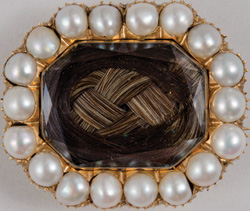 had their own ways of commemorating loved ones. In Death Lamented: The Tradition of Anglo-American Mourning Jewelry, an upcoming exhibition at the MHS by jeweler Sarah Nehama and MHS Curator of Art Anne Bentley, examines the practice from the 17th through the 19th century of commissioning and wearing rings, bracelets, brooches, and other jewels to honor the dead.
 available for purchase on
  A French citizen, Lafayette began his career as a musketeer in the king’s regiment and married into a wealthy, well-connected French family. The reports of Americans fighting for liberty moved him, and in 1777 he bought a ship and sailed for America. Upon arrival, Lafayette earned an honorary commission as major general in the Continental Army. Gen. George Washington became his mentor, and Lafayette was devoted to him. Lafayette earned fame for his courage on the battlefield, and he used his family connections to obtain crucial material aid from France for the American cause. His support for the Revolution, especially as a foreigner, captured the imagination and admiration of Americans. He was beloved in the United States for the rest of his life.
 Lafayette’s legacy is apparent in the Society’s collections, which include correspondence, artifacts, and memorabilia from the time of the American Revolution and his celebrated return trip to the States in 1824-1825. The portrait gallery also features Jospeh Boze’s well-known portrait of Lafayette. Thomas Jefferson commissioned this work for his gallery of American heroes in honor of Lafayette’s contributions to the American Revolution. The portrait depicts Lafayette at the pinnacle of his career. He wears the uniform of the French National Guard and a confident expression as he gazes off into the distance. Even at 255, he still looks good. A happy birthday to him.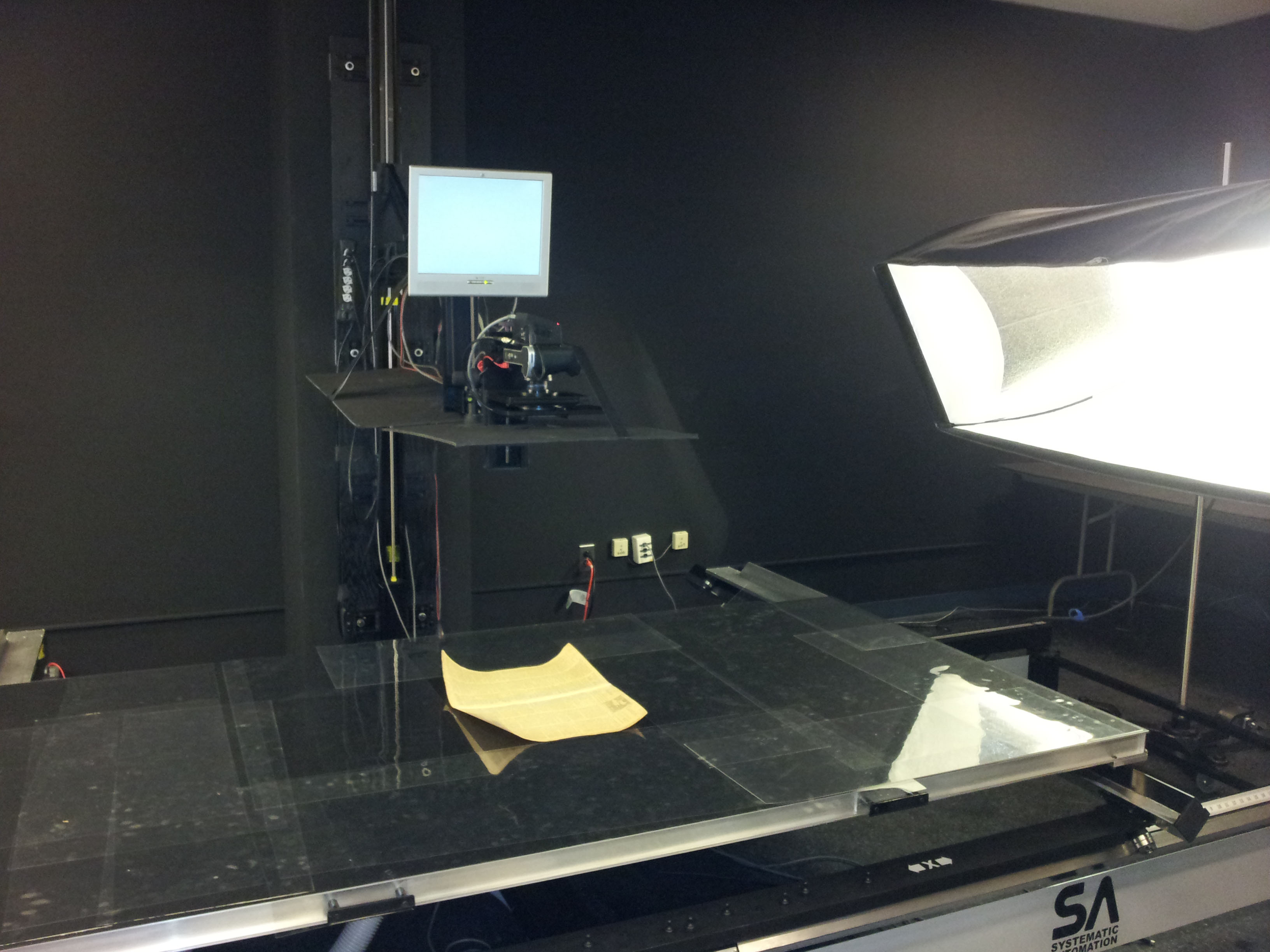
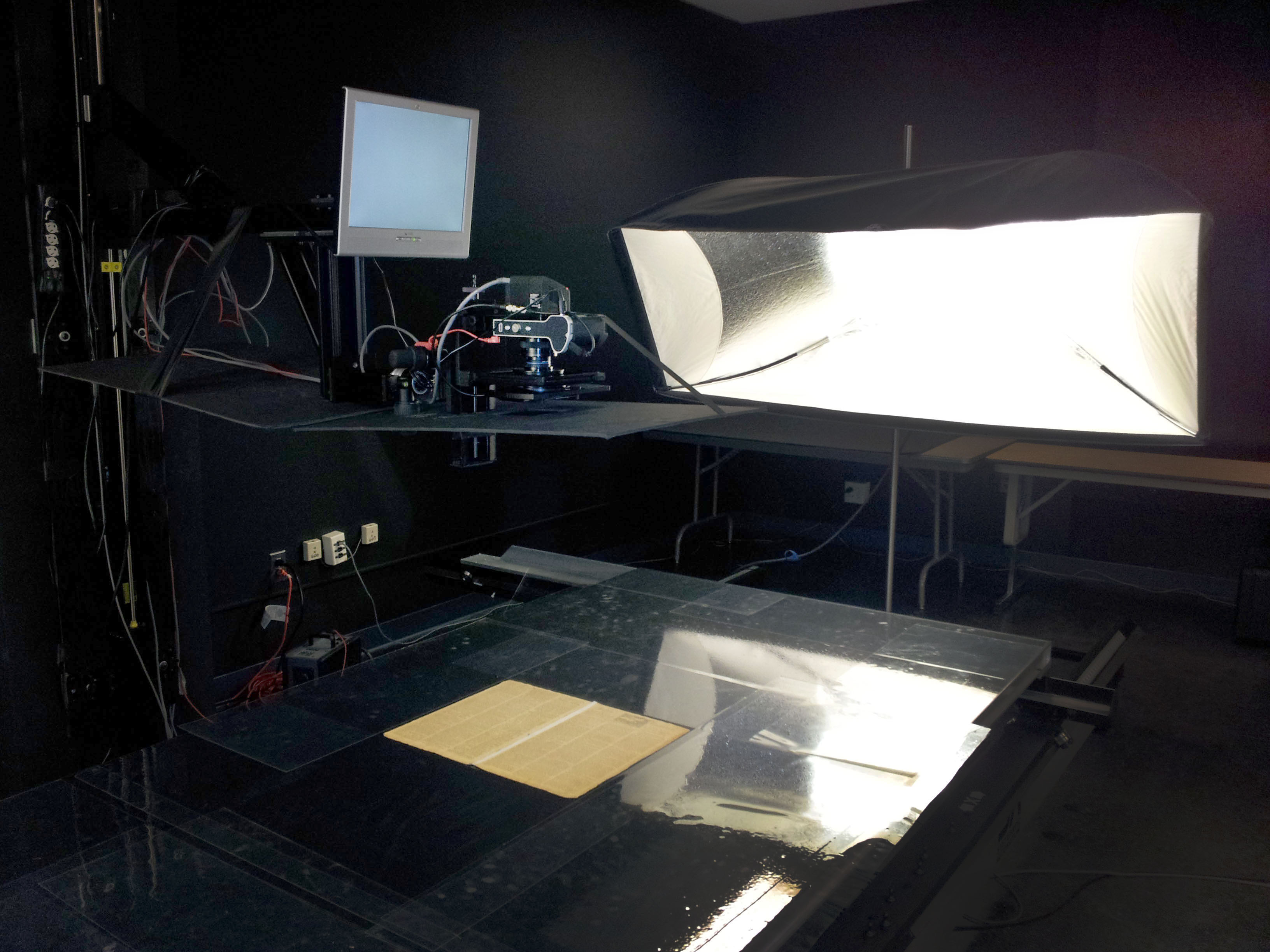
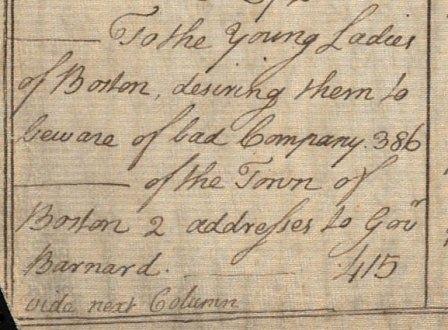 Part of the Harbottle Dorr, Jr. Annotated Newspaper project has been to transcribe and encode for presentation and searching at our website his interesting and detailed indexes. In the process, we took special notice of those subject headings that were quirky, weird, and–to our “modern” sensibilities–humorous.
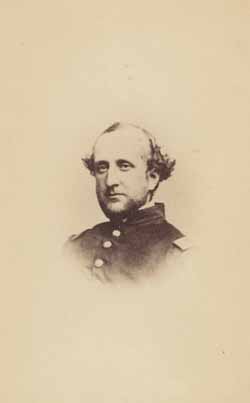 Captain Richard Cary of the Second Massachusetts Volunteer Infantry Regiment, the subject of the