

By Jim Connolly, Publications
I don’t know how your week is going, but Caroline Healey Dall had a pretty nice one 150 years ago.
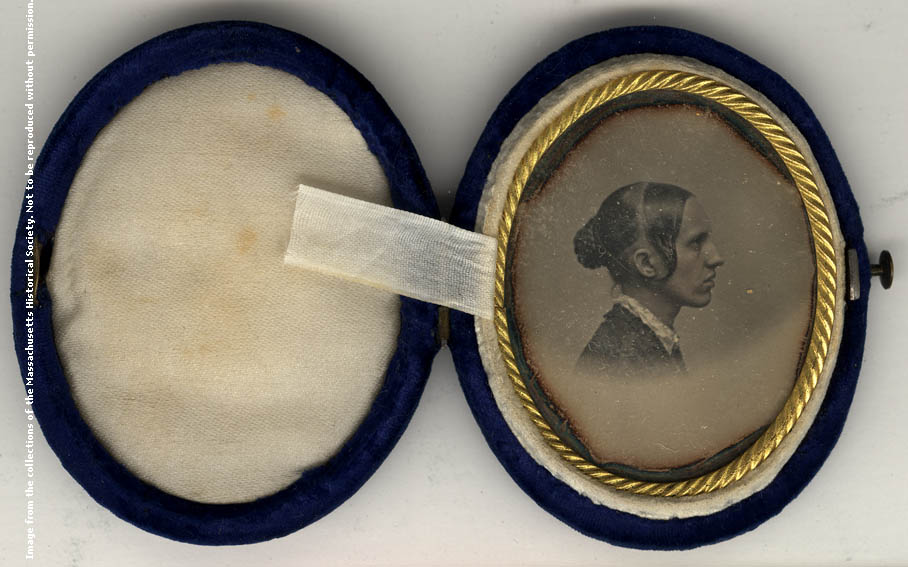 Dall was a leading 19th-century reformer and essayist who played a significant role in the antislavery and women’s suffrage movements. The MHS published the Selected Journals of Caroline Healey Dall, Volume I (1838-1855), edited by Helen R. Deese, in 2006. The second volume, covering 1855 to 1866, is in the works: I am in the midst of preparing Helen’s manuscript for publication next year.
On 11 June 1862, Dall and her twelve-year-old daughter Sarah Keen Dall (“Sadie”) and sixteen-year-old son Willie were living in Medford, Mass. (my hometown, incidentally, and, the site of Lydia Maria Child’s “grandfather’s house,” of “Over the River and through the Woods” fame). She spent time with fellow Medford resident Mary B. Hall, who was apparently in a generous mood. Dall writes:
“Miss Mary gave me a little black silk sack for Sadie, & later with most tender motherly kindness–a bill for 100$–which I am to use now, & repay, if ever I am able to some one who needs it more than either of us, & whom I think Miss Mary would like to help if she were about.”
Not bad. A gift for her daughter and a C-note with instructions to “pay it forward,” if you will. Then Mary’s nieces show up with a nice surprise.
“Came home–& laid a cold tea for Sadie & self. Later Fannie & Anna Hall came with the first strawberries for Mr Towne, & in the eveg I helped him with his Ms.”
Nothing like iced tea and strawberries to prepare oneself for summer–assuming, of course, that her friend, the Unitarian minister Edward Towne, was kind enough to share the sweet fruit in exchange for help with his manuscript. Such help was valuable: Dall was an accomplished writer in many forms, including lectures, articles, and books, such as Woman’s Right to Labor (1860), Woman’s Rights Under the Law (1861), and The College, the Market, and the Court (1867).
An entry from later that week (14 June 1862) finds her in similarly idyllic territory, enjoying a “busy but peaceful morng.” and combing Towne’s hair “till he fell into a light slumber.”

Union and Confederate troops in Virginia, meanwhile, enjoyed no such idylls as the disastrous Peninsula Campaign dragged on, resulting in tens of thousands of deaths. You can learn about the Peninsula Campaign and other aspects of the Civil War at the MHS Civil War web resource page.
Caroline Dall’s personal papers live at the MHS. To learn more about her and her materials, check out the Caroline Wells Healey Dall Papers 1811-1917: Guide to the Microfilm Edition, or pick up a copy of the MHS publication Selected Journals of Caroline Healey Dall, Volume I (1838-1855), mentioned above. Editor Helen R. Deese has also published a one-volume, redacted version of Dall’s diary, Daughter of Boston: The Extraordinary Diary of a Nineteenth-century Woman, Caroline Healey Dall (2005) through Beacon Press.
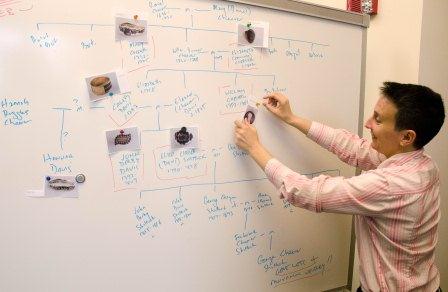 We are working on a book to coincide with the Society’s upcoming exhibition on mourning jewelry. The book, titled In Death Lamented: The Tradition of Anglo-American Mourning Jewelry, features mourning jewels from the Society’s collection and from the private collection of the author, Sarah Nehama.
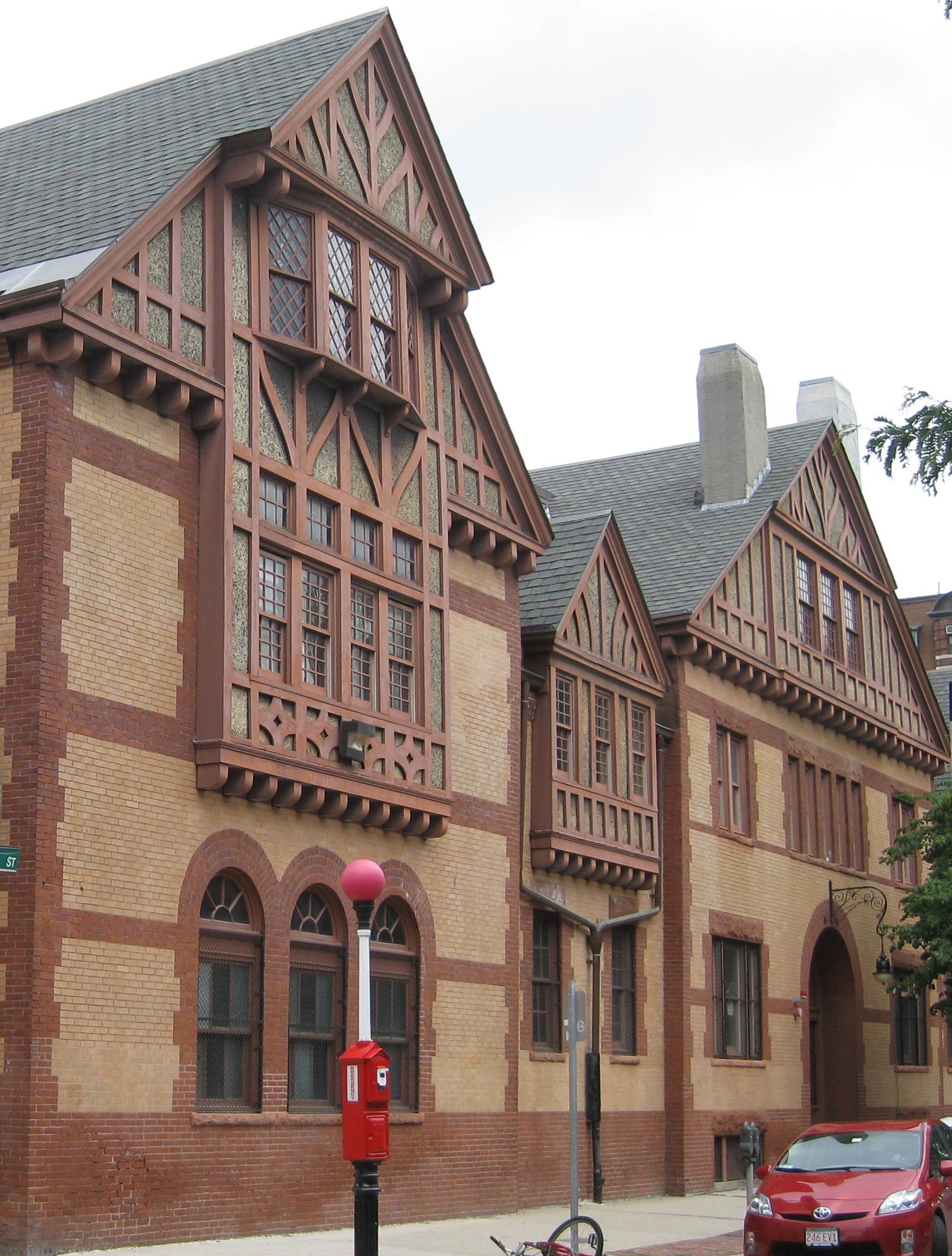 Just think of the variously colored steeples that dot the campus of Harvard in nearby Cambridge; the golden dome of the State House; and of course, the grand brownstones that line Newbury and Beacon Streets and Commonwealth Avenue. One architectural style that is not well represented in Boston, though, is the Tudor Revival style. And yet, just around the corner from the MHS, among the rows of stone and brick apartment buildings, is a fine example of that style.
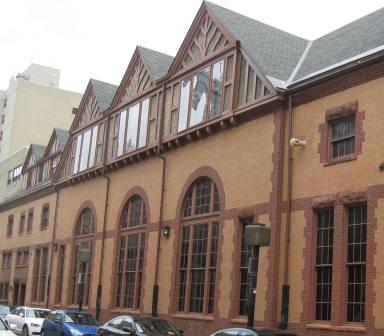 A quick look at the building’s exterior shows one repeated feature that hints to its original use: around the building are several large portals — some arched — resembling modern-day garage doors giving the viewer the impression of stables.
 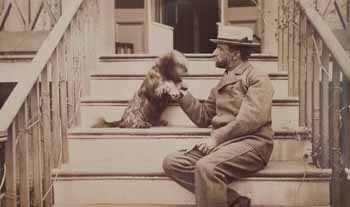 Marian Hooper Adams was nicknamed “Clover” by her mother, who felt that her daughter’s birth was a lucky occurrence. Born into a wealthy, prominent Boston family, Clover was raised in privilege and highly educated. Her mother died when she was five, but Clover remained very close to her father for the rest of her life. In 1872, at the age of 28, she married the historian Henry Adams, who was teaching at Harvard. After five years they moved to Washington, DC, residing near the White House, and began hosting an exclusive salon of politicians, writers, and thinkers. Despite this stimulation, Clover and Henry were bored, and the spark went out of their marriage. Their problems intensified due to the fact that they were unable to have children.
 Clover had always been interested in art and she found an outlet for her frustrations in a new camera in 1883. She learned the painstaking development process and began to take photographs of people, landscapes, and animals (she was a great lover of dogs and horses). Although a few of her photographs show traces of humor, including those of her dogs posed at a table set for tea, many of Clover’s photographs convey the melancholy and isolation of her own experience.