This Week @ MHs

By Dan Hinchen

Looking for a little history in your life? Here is what’s on tap for public consumption at the Society this week…

– Tuesday, 1 November, 5:15PM : Join us for an Early American History seminar with John Wood Sweet of the University of North Carolina at Chapel Hill. “Rape, Recourse, and the Law of Seduction in the Early Republic” looks at the 1793 case of Henry Bedlow, tried but not convicted for the rape of Lanah Sawyer. The case offers a window into the use of civil law in sexual assault cases and prompts readers to consider how women struggling for recourse can become pawns in battles between men over money and masculine honor. Richard D. Brown, University of Connecticut, provides comment. Seminars are free and open to the public; RSVP requiredSubscribe to receive advance copies of the seminar papers.

– Wednesday, 2 November, 12:00PM : Research fellow Franklin Sammons, University of California, Berkeley, offers new insights into the transformation of the Southeastern borderlands and emergence of the Cotton Kingdom with his current project. Come in to hear his Brown Bag talk, “The Long Life of Yazoo: Land Speculation, Finance, and Dispossession in the Southeastern Borderlands, 1789-1840,” and learn more about his research. This talk is free and open to the public. 

– Thursday, 3 November, 6:30PM : “Why Do We Still Have the Electoral College?” With the current election cycle winding down, this is a question that many Americans find themselves asking. Join us for a talk by author and historian Alexander Keyssar, Harvard Kennedy School of Government, as he traces the origins of the Electoral College. This talk is open to the public but registration is required with a fee of $20 (no charge for MHS Fellows and Members). A pre-talk reception begins at 5:30PM and the event starts at 6:30PM. 

– Saturday, 5 November, 9:00AM : Calling all educators! Explore presidential campaign propaganda from our nation’s first election all the way through to twentieth-century battles for the White House. “We Need Your Vote! Election Propaganda from Adams to Roosevelt” is a teacher workshop in which participants will examine documents and artifacts from three different centuries to discuss different strategies used to appeal to voter during specific campaigns. To register, complete this registration form or contact the MHS education department: dbeardsley@masshist.org; 617-646-0570.

– Saturday, 5 November, 1:00PM : Also on Saturday is another installment of Begin at the Beginning, this time looking at the “Lord of Misrule: Thomas Morton’s Battle with Puritan New England.” Writer/illustrator E.J. Barnes leads the discussion through exploration of her comic story of Morton’s conflct with Massachusetts and Plimoth in Colonial Comics: New England, 1620-1750. This talk is free and open to the public, registration required. 

And as always, our current exhibition, Turning Points in American History, is open to the public free of charge. The galleries are open Monday-Saturday, 10:00AM-4:00PM. Come on in!


Margaret Russell’s Diary, October 1916

By Anna J. Clutterbuck Cook, Reader Services

Today, we return to the line-a-day diary of Margaret Russell. You can read previous installments here:

January | February | March | April | May | June | July | August | September

October begins balmy, “really warm,” with lovely days on which to walk and drive. Margaret Russell takes several short motoring tours through Massachusetts, Vermont, and upstate New York, and also begins the relocation back to town for the winter. Columbus Day would not become a federal holiday until 1937, but was already celebrated in Boston for Margaret notes the day on October 12th. “Called at Endicotts & Appletons & Miss Rogers,” she observes. With the return to the city comes a more intense schedule of cultural events — in the last ten days of the month, following the family’s return to town, Margaret attends five concerts which she notes in her diary.

While domestic and social events continue to dominate the chronicle, two political items of note appear in the October entries. On October 9th she writes that a “German submarine off Nantucket sinks nine ships,” one of the first direct mentions of the war now raging in Europe. It was an event that made national news although the Sacramento Union’s account puts the number of ships at six rather than nine. On the 25th of the month, Margaret attends an anti-suffrage (“Anti-S”) meeting — a reminder that in the early decades of the twentieth century women as well as men were deeply invested on both sides of the fight over the “woman suffrage” question. Massachusetts was home to one of the most active anti-suffrage organizations, the Massachusetts Association Opposed to the Further Extension of Suffrage to Women, founded in 1895. While Margaret does not indicate what specific anti-suffrage meeting she attends it is likely that the meeting was an event organized by this group; their records have been recently digitized by the MHS and can be read online at the link above.

Without further ado, here is Margaret.

 * * *

October 1916*

1 Oct. Walked to church & home on State road. Family to dine. Lovely weather.

2 Oct. To town, errands, [illegible], lunch with Marian, to see aunt Emma at Cambridge. 

3 Oct. Started at 9.30 for Jaffrey arrived 1.10. The H.G. C’s not till 2. Started for Walpole at 3. Arrived at 4.45. Went to Cottage tea room. Walpole [illegible] full with people.

4 Oct. Started for Woodstock at 9.30. Got there 12.30. Lovely views. Took a short walk. Started at 2.15 via Rutland wonderful views. Arrived at 5.30 at Equinox.

5 Oct. Thursday – Took a walk with Miss A– to a lake [illegible] of dead [illegible] & 7 live ones. Really warm. Lovely drive to Cambridge N.Y. in P.M. 2 1/2 hours.

6 Oct. Started at 9. Stopped at Williamstown for lunch & walk. On at 1.30 over Mohawk to Greenfield & to Deerfield. Weldon hotel at 4.30. Lovely day.

7 Oct. Saturday. Started at 9.30. Lovely day. Got to Groton at 12.30 and lunched & home by Harvard & Concord. Home at 4.30. Perfect trip, no tire troubles & fine weather.

8 Oct. Sunday – Walked to church & back. Family to dine.

9 Oct. Monday – To town for errands, Mary & lunch with Marian. To see aunt Emma. German submarine off Nantucket sinks nine ships.

10 Oct. Tuesday – Walked over Nahant beach. [illegible] cold & windy. To town for an errand in the P.M.

11 Oct. Wednesday – Went to Rowley in the P.M. to get things at Fairview.

12 Oct. Columbus Day – Walked in A.M. Called at Endicotts & Appletons & Miss Rogers.

13 Oct. Friday – First concert. Perfectly delightful to hear the orchestra. Miss A– went. Lunched at Somerset with Edith.

14 Oct. Saturday – Met H.G.C. & A. at N. Andover. Cold but lovely.

15 Oct. [no entry made]

16 Oct. Monday – Took Miss A– to town & said good-by. Back early.

17 Oct. Tuesday – Packing. Bad gale so did not go out in motor.

18 Oct. Wednesday – Lovely clear & cold. Packing.

19 Oct. Thursday – Packing. To Nahant to see F. P. who had gone to town. Drove to Beverly in P.M.

20 Oct. Friday – Unpacking. Had Edith & Eleanor [illegible] & Mrs. Sears to lunch at Chilton & go to concert. Went to see F. Prince to hear about Norman’s death.

21 Oct. Saturday – Passed the day at Norfolk. E. Walcott & Susy B. – also there for lunch. Lovely weather. Concert in the evening.

22 Oct. Sunday – Went to Cathedral. Lunched at Walcotts’s & went to see Sara Jordan on the way home.

23 Oct. Monday – Dentist, Mary, lunch with Marian. Out to Gray Herbarium with specimens.

24 Oct. Tuesday – Walked all the morning for errands. Went to Milton to pay calls & found everybody in.

25 Oct. Wednesday – Anti S- meeting, lunched at Mayflower, dentist, & then to Swampscott to see Edith & the baby.

26 Oct. Thursday – to hospital & then to lunch at Parkman’s with Mrs. James Parker. Lovely warm day.

27 Oct. Friday. Mrs. Ruelkes lunched & went to concert with [sic]. Edith prevented by changes of [illegible].

28 Oct. Lovely warm day. Met the H.G.C’s at Groton for lunch. Home by Harvard. Splendid concert with Gadeski.

29 Oct. Errands & Mary. Lunched at Mrs. Bell’s with an attractive Mrs. Reed from Charleston. To see aunt Emma & the Greenoughs.

30 Oct. Monday – Lunched at Mrs. Bell’s with Mrs. F. Dexter & Mrs. Reed from the South.

31 Oct. Tuesday – Went to [illegible] concert with Mrs. Reed.

* * *

If you are interested in viewing the diary in person in our library or have other questions about the collection, please visit the library or contact a member of the library staff for further assistance.


*Please note that the diary transcription is a rough-and-ready version, not an authoritative transcript. Researchers wishing to use the diary in the course of their own work should verify the version found here with the manuscript original.


Three Fully Digitized Collections

By Peter K. Steinberg, Collections Services

In 2014, the MHS made available nine fully digitized collections relating to the Civil War. Since that time, we have been at work digitizing more full collections, this time under the topic of “Women in the Public Sphere.” There have been two posts on the Rose Dabney Forbes papers and her involvement in the American peace movement of the early 20th century. Forbes was an officer of the Massachusetts Peace Society, the American Peace Society, the Massachusetts branch of the Woman’s Peace Party, and the World Peace Foundation. Read the first one here and the second one here. The Forbes collection guide is online.

Continuing our review and promotion of these fascinating collections, this third blog post will discuss briefly some of the smaller digitized collections.  


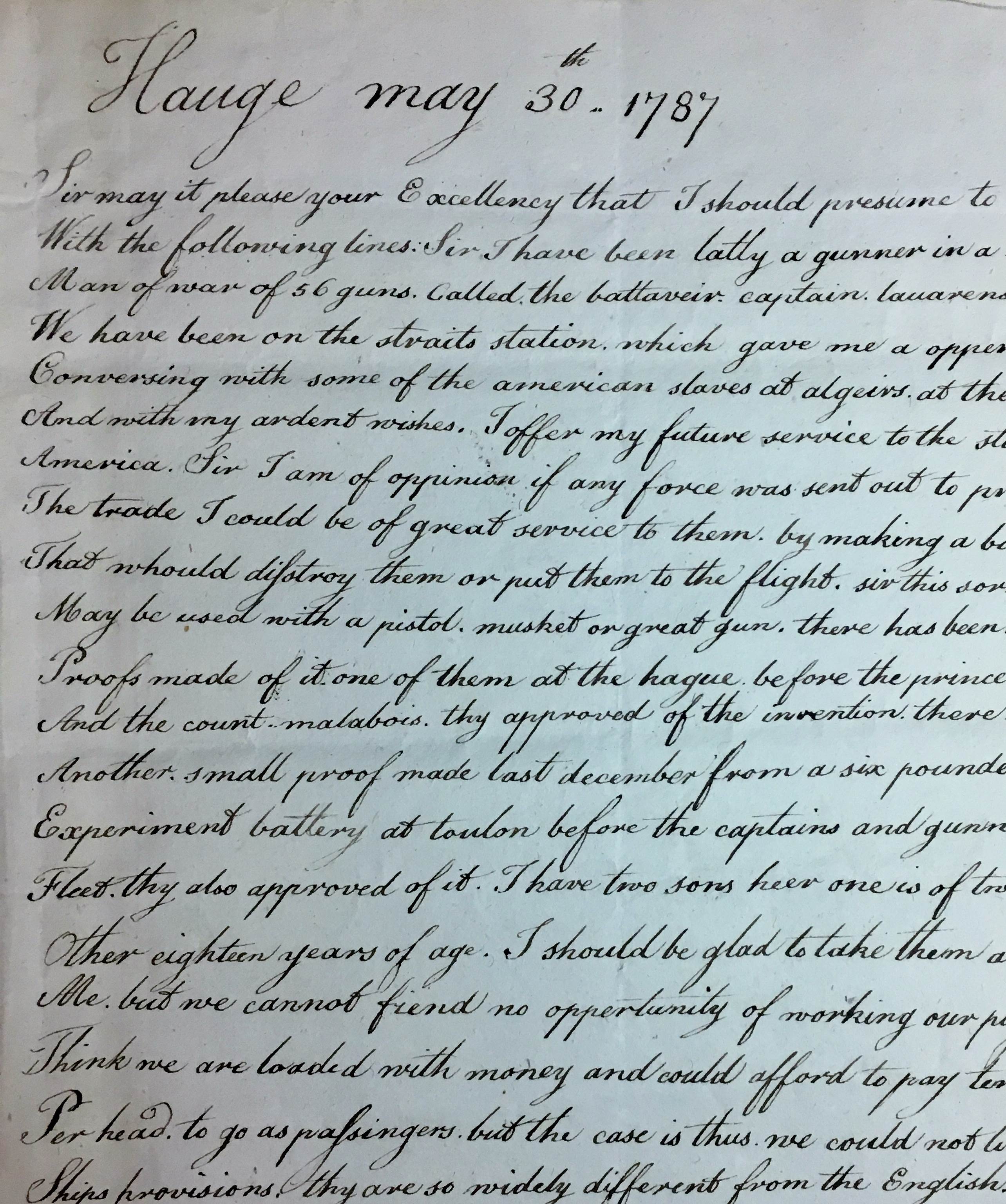
The Twentieth Century Medical Club records, 1897-1914 contain 270 images of meeting minutes of the Twentieth Century Medical Club. Interestingly, at the club’s first meeting, the intention was “to organize a womans club. Its object, mutual improvement and the study of Parlimentary [sic.] Law.” Later in this first meeting, which was attended by thirty-two women, a committee was organized to come up with a name. The minutes discuss business matters, finances, and other special occurrences such as the giving of papers on topics ranging from Placenta Praevia by Dr. Stella Perkins, The Importance of Remedies in Chronic Cases by Dr. Clara E. Gary, and Sexual Hygiene by several speakers.


The Society for the Employment of the Female Poor  provided employment in Boston for poor women. Work duties included washing, ironing, and sewing in addition to the operation of a schoolroom. Early in the volume it is noted that “The business of our Institution continues to prosper and has hitherto more than answered our largest expectations.” Other recorded information concerns funds received and distributed and tracking new employees. Reports on individual cases are also recorded, such as the hiring of Mrs. Dow, Mrs. Ward, and Mrs. Monteith. Dow was “a widow with 4 children, she has washed & ironed here with tolerable success –.” Mrs. Ward they found “difficult to afford aid; she is very poor & sick, but so miserable a seamstress that little work can be trusted to her.” Mrs. Monteith “can do just plain sewing tolerably, her capacity & her circumstances are both moderate.” Troublesome employees are also discussed.

The Juvenile Anti-Slavery Society records, 1837-1838 represent the smallest organization in this digitization project at just eleven images. The monthly meeting minutes and member lists offer vital information concerning society business.


Funding for the digitization of these collections and the creation of preservation microfilms was provided by the Institute of Museum and Library Services under the provisions of the Library Services and Technology Act grant as administered by the Massachusetts Board of Library Commissioners.


This Week @ MHS

By Dan Hinchen

It’s another active week here at the Society, chock full of programs to take in. Here is what we have on tap:

– Tuesday, 25 October, 5:15PM : Drawn from his forthcoming book, Welcome to Fairyland, Julio Capó of the University of Massachusetts, Amherst, presents “‘A Shiftless, Undesirable Class’: The Sexual Policing of Miami’s Bahamian Community in the Early Twentieth Century.” This Modern American Society and Culture Seminar traces how urban authorities policied the perceived “suspect” sexualities of Miami’s temporary and permanent settlers from the Bahamas. Michael Bronski of Harvard University provides comment. Seminars are free and open to the public; RSVP requiredSubscribe to receive advance copies of the seminar papers.

– Wednesday, 26 October, 12:00PM : Stop by for a Brown Bag lunch talk, this time Ross Nedervelt of Florida International University. His talk, titled “The Pull of a Revolutionary America: The British Atlantic Island in the American Revolution” focuses on a research project that examines the political, economic, and social influence the revolutionary American colonies had on the British Atlantic island of Bermuda and the Bahamas from 1763 through the 1780s. This talk is free and open to the public so pack a lunch and come on in!

– Wednesday, 26 October, 6:30PM : The Merriam-Webster Thesaurus lists “prudish,” “straightlaced,” and “puritanical” as synonyms. But historical records challenge the stereotype of Puritans’ repressive views and behaviors. In “Ravishing Affection: Myths and Realities About Puritans and Sex,” author Francis J. Bremer attemps to dispel the myth and set the record straight. This program will take place at the Old South Meeting House, 310 Washington St, Boston. The program is open to the public, free of charge, but registraiton is required. 

– Thursday, 27 October, 6:00PM : Author, historian, and national speaker Jacquline Berger goes behind the scenes with pictures and stories that bring history to life and uncover a remarkable “sorority of women”: First Ladies. This talk is open to the public and registration is required for a fee or $10 (no charge for MHS Members and Fellows). A pre-talk reception begins at 5:30PM and the program beings at 6:00PM. 

– Friday, 28 October, 12:00PM : The second Brown Bag talk this week is presented by Jessica Farrell of the University of Minnesota. “From ‘Indespensible’ to ‘Demoralizing and Obstructive’: Education as a Critical Site for the Assertion and Contestation of American Empire in 19th-Century Liberia” stems from a larger dissertation project which investigates what was at stake in the contestations between LIberian sovereignty and America imperial fomations in Liberia and the United States during the nineteenth century. This talk is free and open to the public. 

Rose Dabney Forbes and women’s suffrage (part 2 of 2)

By Laura Wulf, Collections Services

In an earlier post I gave you a preview of the Rose Dabney Forbes papers. Her papers are one of seven collections that have been fully digitized and are now available on our website as part of an LSTA funded project that we are calling “Women in the Public Sphere.” These collections relate to women’s involvement in social issues of  the 19th and early 20th centuries- the suffrage and anti-suffrage movements, education, poverty, anti-slavery and pacifism.

The papers of Rose Dabney Forbes (1864-1947), the wife of businessman J. Malcolm Forbes (1847-1904), are mostly from her work in in the American peace movement of the early 20th century, but I also found some vivid descriptions of the excitement generated by the ratification of the nineteenth amendment in 1920 giving women the right to vote. In a typewritten draft of an address delivered to the League of Women Voters by Mrs. Forbes on 31 March 1921, she described,

that thrilling day in August when we knew with certainty that Tennessee had stepped forward and that political equality was at last in the grasp of the women of the United States. Our headquarters at Little Building held a continuous reception for several days…and all our members who were not too far off, came to talk over the wonderful news and to help Miss Luscomb and Mrs. Stantial put the final marks on the Suffrage map.

 She continued,

…following the proclamation of the nineteenth amendment by the Secretary of State, bells were rung in many churches all over the land, from the Pacific to the Atlantic, and from Maine to Florida. Five of us had the privilege of ringing the bells at the dear old North Church that Saturday noon, and never shall we forget the thrill of climbing those narrow dusty stairs up to the bell tower, nor of pulling on those big old ropes.


But Mrs. Forbes and her colleagues couldn’t get caught up in the excitement for long.

[A]s we all know voting is a serious business and as soon as our first rapture subsided we had to come down to earth. The work at our office grew more exacting up to the last date for registration in October. By day there were streams of would-be voters coming to the office, or ringing up by telephone, to find out about the mysteries of voting; and we kept open for five successive Monday evenings, in order to give this same opportunity to those women whose duties precluded their coming in the day time-and hundreds availed themselves of it.


It will be fascinating to compare these descriptions with materials from another collection we digitized for this project, one which has the rather unwieldy name of the  Massachusetts Association Opposed to the Extension of Further Suffrage of Women, 1895-1920. We hope that you will take advantage of these newly accessible collections and immerse yourself in the voices and the debates of their time.


Funding for the digitization of this collection and the creation of preservation microfilm was provided by the Institute of Museum and Library Services under the provisions of the Library Services and Technology Act grant as administered by the Massachusetts Board of Library Commissioners.

This Week @ MHS

By Dan Hinchen

Here we are again with the round-up of events in the week to come at the Society.

– Wednesday, 19 October, 12:00PM : “The Nature of Colonization: Natives, Colonists, and the Environment in New England, 1400-1750” examines how the natural world shaped and was shaped by the interactions between Native Americans and English settlers. In this Brown Bag talk, Nathan Fell of the University of Houston also explores how the dynamics of empire influenced English management of the environment in the colonies. This talk is free and open to the public. 

– Wednesday, 19 October, 6:00PM : As we approach an election that promises far-reaching ramifications, we look back at previous periods of tumult in American democracy. “Democracy in Crisis: Four Elections” is a panel discussion that explores the legacies of four previous presidential elections and the question of what this history suggests for our country’s current trajectory. This talk is open only to MHS Fellows and Members, and registration is required. A pre-talk reception begins at 5:30PM and the program commences at 6:00PM. 

– Thursday, 20 October, 6:00PM : Join us for a talk with Nonie Gadsden of the Museum of Fine Arts as she explores and contextualizes the efforts of the Eliot School, exploring how the School related to the rise of manual arts training and the advent of the Arts and Crafts Momvement. “Art, Craft, and Reform: The Eliot School, Manual Arts Training, and the Arts and Crafts Movement” is open to the public for a fee of $10 (no charge for MHS Members or Fellows). A pre-talk reception begins at 5:30PM and the progam begins at 6:00PM. 

– Friday, 21 October, 2:00PM : Come in Friday for a special afternoon public program with Felicity Tsering Chödron Hamer. In a talk entitled “Helen F. Stuart and the Birth of Spirit Photography in Boston,” Hamer argues for a more foundational placement of women within the narrative of personal mourning rituals. This talk is free and open to the public. 

Please note that the teacher workshop scheduled for Saturday, 22 October, was CANCELED. Please consider the next teacher workshop taking place on Saturday, 5 November. 

Mount Auburn: A Guide through the Nation’s First “Rural” Cemetery

By Shelby Wolfe, Reader Services

When friends and family ask me what they should do while visiting the Boston area in the fall, I generally get a strange look after my main recommendation. I tell them to visit Mount Auburn Cemetery, the first landscaped “rural” cemetery in the United States, located between Cambridge and Watertown. It’s a beautiful setting year-round, but there’s something about this season that brings out the best in Mount Auburn.

I’m tempted to list all of the reasons why I love Mount Auburn, but I’ll resist that urge here and tell you what I found out about it while searching our online catalog, ABIGAIL – mainly, that the MHS collections contain a lot more on Mount Auburn than I previously thought. Much of what we have are published materials, including catalogues of proprietors, maps, guides, pocket companions, and anthologies. Then, there are more personal items, such as poems written about Mount Auburn, speeches given at the cemetery, admission tickets, a broadside depicting Mount Auburn “on a delightful day in the Autumn of 1876,” and more. Mention of Mount Auburn arises in manuscript collections as well. Search for yourself in ABIGAIL to see what kinds of materials you can find at the MHS connected to this historic cemetery.

For someone whose interest in maps almost rivals her love of cemeteries, I found the fold-out maps in our copies of Dearborn’s Guide through Mount Auburn, published by Boston-based engraver Nathaniel S. Dearborn, most interesting. The map in the 1857 edition includes small engravings of the Egyptian Revival entrance and Washington Tower, an observation lookout providing panoramic views of Cambridge, Boston, and beyond. The guide in general is full of useful information about the cemetery as it functioned in 1857. Regulations include prohibition of “discharging firearms in the Cemetery,” and a warning of prosecution for anyone “found in possession of flowers or shrubs, within the grounds or before leaving them.” On that note, a poem titled “Touch Not the Flowers” by Mrs. C. W. Hunt adds a lyrical emphasis to the rule (and implores visitors with the ominous last line, “Touch not the flowers. They are the dead’s.”). After all, the cemetery was and remains as much a horticultural gem as a place of burial and memorial.

Among the conditions for proprietors, plot owners are informed that any monument, effigy, or inscription determined to be “offensive or improper” is subject to removal by the Trustees. Engraved illustrations present the cemetery-goer with a sampling of must-see monuments of notable men and women (and pets), including a memorial to Robert Gould Shaw, the impressive tomb of William P. Winchester on Narcissus Path, and a marble sculpture depicting the watchdog of Thomas H. Perkins, “an apparent guard to the remains of the family who were his friends.” Beautiful illustrations of the tower and chapel embellish the guide as well.


For the directionally gifted, the guide lists names of foot paths, avenues, and carriage roads, with rather complicated descriptions of how they are situated – “Willow, with two branches, the 1st branch from Poplar Av., northeasterly. to Narcissus Path, then curving easterly for the 2nd branch, to the south, to Larch Avenue.” I think you can see why Dearborn included a map.


Visitors can find up-to-date maps at the cemetery entrance today, so grab one for yourself and venture among the monuments and mausolea. Then, visit the library to see how the cemetery has changed over the years!


Mount Auburn Cemetery (Cambridge, Mass.)

Mount Auburn Cemetery (Cambridge, Mass.) Maps

Mount Auburn Cemetery (Cambridge, Mass.) Pictorial works.

Mount Auburn Cemetery (Cambridge, Mass.) Poetry.


Letters to Rosamond

By Grace Wagner, Reader Services


For most of her life, Rosamond Gifford was a resident of Boston’s Back Bay neighborhood. However, she was also received bachelor’s and master’s degrees from Radcliffe College, attended the Sorbonne in Paris, and was fluent in French.[i] Clearly, her residency in Boston never limited her worldview, or indeed, the array of individuals who corresponded with her. The Rosamond Gifford papers, 1930-1954, is composed of letters primarily dating from 1931-1946. During this time, Gifford received letters from a Harvard college professor advising her on thesis work for Radcliffe College, former classmates from the Waltham School for Girls, and friends who became soldiers and Red Cross nurses during World War II. Rosamond herself wrote to her family from France while touring abroad and studying at the Sorbonne in Paris. I have decided to highlight some of this correspondence for my blog post this week.


The first of these comes from George L. Lincoln, a professor who worked in the Department of Languages and Literature at Harvard. The letter is dated November 3, 1931, when Rosamond was an undergraduate in her junior year at Radcliffe College. The letter is brief, consisting primarily of several book recommendations for Rosamond’s thesis about French religious history, including The Holiness of Pascal by H.F. Stewart, but there is a note at the end that reads: “It seems to me that this thesis – if favorably commented upon by C.H.C.W. – might well be the basis for your HONOR Thesis next year.” This is an interesting comment, notable in that Lincoln later serves as an academic advisor for Gifford in letters sent between 1931 and 1933, before Radcliffe College and Harvard merged their classrooms, which would not happen until over ten years later.[ii] For Radcliffe women, interaction with Harvard faculty was often conducted through different channels, whether this was separate classes taught later at night, or corresponding with professors about their academic work through postal mail. Despite these interactions, female undergraduate and graduate students would receive degrees only through Radcliffe at this time.

Radcliffe was not the only women’s school where Rosamond studied. The Gifford collection also includes a ‘Round Robin’ correspondence between Rosamond and former classmates from the Waltham School for Girls (the list of names includes Eleanor “Batesy” Bates, Vi Campbell, Rosalie Norris, Janet Lewis, and  Marion Chick). It began on January 22, 1940 with a letter from the organizer and ringleader of this endeavor, Eleanor “Batesy” Bates, who opens her letter with a cheery, ““Dear Round Robinites” and encloses her hopes that 1940 will bring forth a “new and rejuvenated Waltham Round Robin.” In this set of correspondence, Rosamond and her classmates discuss their lives with a refreshing degree of frankness. The letters include inexplicable nicknames and private jokes, slang, political talk, gossip about other classmates, and discussion of professional careers (writing, welfare work, teaching, and librarianship among them). I have included some favorite excerpts below:


“Oh, yes, I saw Gone With the Wind in New York two weeks ago, and liked it so much I sat through it a second time – ten hours in the movie before I left, but I had brought sandwiches with me, and went out during intermission.” – Eleanor “Batesy” Bates

“I do not get around much as my time is so taken up with writing and study, to say nothing of my son, husband and housework.” – Vi Campbell. 

“Will be awfully glad to see you all if we decide to visit Waltham this year en masse so do let me know the place. It would be fun to have a cigarette in North Hall, instead of behind the gym just once.” – Janet Lewis


After World War II, there aren’t many more letters between Rosamond and her various correspondents, but Rosamond continued to live at 340 Commonwealth Ave. until her death in 1997. The Rosamond Gifford collection was a delight and a surprise to stumble across and have the opportunity to explore. Although I have shared words from Rosamond’s various correspondents, I would like to end this post with an excerpt from a letter written by Rosamond herself, dated July 16, 1936, while she was traveling abroad on an Anne Radcliffe fellowship for her graduate studies in France:[iii]


“Dearest Tribe,

We arrived here contrary to your expectations on time, July 13, and depart the twentieth for a dozen days mad scramble through Normandie and Bretagne…From here we went to Ajaccio, one of the most charming cities I ever was in. The atmosphere exhales Napoleon and the house where he was born is most satisfactory. It is located on a little square with a garden, and the interior retains for the most part the original decoration of delicate eighteenth century designs. The main square is lined with palms and slopes down to the harbor which is surrounded by more red mountains – which were glowing in the evening light as we sailed away. I loved Corsica, best of the whole trip.”

She signs the letter, “Ever and ever so much love, Tibbles.”


[i] “Rosamond Gifford, 87, Philanthropist, taught French.” The Boston Sunday Globe, July 20, 1997.

[ii]  Ulrich, Laurel Thatcher. Yards and gates: Gender in Harvard and Radcliffe history. Palgrave Macmillan, 2004, 216. Radcliffe would not officially merge with Harvard until 1977.

[iii] “Radcliffe Gives 42 Fellowships.” Daily Boston Globe, May 12, 1935.


Rose Dabney Forbes and the American Peace Movement (part 1 of 2)

By Laura Wulf, Collections Services

The Digital Projects team here at the MHS has spent much of the past two years working on an LSTA funded project that we are calling “Women in the Public Sphere.” This grant allowed us to fully digitize and make accessible seven collections related to women’s involvement in social issues of  the 19th and early 20th centuries, including the suffrage and anti-suffrage movements, education, poverty, anti-slavery and pacifism. 

The collections range in size from 11 items in the Juvenile Anti-Slavery Society records, 1837-1838 to more than 3000 items in the Rose Dabney Forbes papers, 1902-1935. In this post, I will take a closer look at the Forbes papers, which document the participation of Rose Dabney Forbes (1864-1947), the wife of businessman J. Malcolm Forbes (1847-1904), in the American peace movement of the early 20th century, as an officer of the Massachusetts Peace Society, the American Peace Society, the Massachusetts branch of the Woman’s Peace Party, and the World Peace Foundation. The records of the organizations in which she was involved include governance documents, meeting minutes, and correspondence, as well as printed materials.

In a typescript draft of an address delivered to members of the “Thought Club” in Hyde Park, Mass., by Mrs. Forbes on 1 February 1916, she argues for  the “necessity of extending the reign of law out from the smaller circle of nationalism, to the larger circle of internationalism.” Forbes goes on to write that,

Irrespective of opinions as to the causes, and as to the consequences of this terrible  European war, thinking persons who stand for Twentieth Century ideals are passionately  exclaiming that this shall be the last war between civilized nations; that the world after   this shall not allow such a method for trying to settle international differences.

Speaking as a representative of the Woman’s Peace Party, Forbes asked why the peace movement “is still imperfectly understood even by many persons who are distinctly in sympathy with its fundamental object.” Was it because the war is happening overseas, leading to what she called “[m]ental inertia”? Was it because of a “[l]ack of literature giving authoritative and complete statement of what a great body of leading internationalists believe,” or because, as she suggested, the press ridiculed the ideas as well as the movement? 

She addressed what she calls a misconception that “when we work to banish the war system from earth, we are lowering the heroic ideals of manhood- that we are training our boys to be timid and slothful-to be ‘molly-coddled. No indeed” she exclaimed, “we train our boys to be ready to die for their country, by serving humanity, not by destroying their human brothers.” Lastly she asked whether it could be that the very name of the movement had held it back. “The word Peace,” she wrote, “stands for the result of justice and righteousness; peace is an effect, not a method of working force. Only in a restricted sense of the word is peace simply cessation of war.”

As part of her call to action, Forbes quoted Phillips Brooks, Ralph Waldo Emerson and William Ellery Channing, and she summed up her argument by insisting that

The truth is that the war against war is and has long been an aggressive campaign of  education. The Peace Movement is a determined onslaught on the old and barbarous  system of war, and a persistent pointing of the way to constructive international peace.  The Peace worker must summon all the logic and clearness of thought that he can  command and he must needs stand firm in his faith, not heeding either the ridicule or the sneers of the unconverted.

How do peace movements of today articulate their hopes and strategies? We encourage you to look through these newly digitized collections and make your own comparisons and discoveries.

For more of the story, check out part 2 of Rose Dabney Forbes and the American Peace Movement


*****

Funding for the digitization of this collection and the creation of preservation microfilm was provided by the Institute of Museum and Library Services under the provisions of the Library Services and Technology Act grant as administered by the Massachusetts Board of Library Commissioners.


This Week @ MHS

By Dan Hinchen

It is a holiday-shortened week for the staff here at the Society, but we still have five days of programs to take in. Please note that the library is closed on Monday, 10 October, for Columbus Day, and will re-open on Tuesday, 11 October. Here is what is on tap this week:

– Monday, 10 October, 10:00AM : The MHS again participates in the Opening Our Doors program hosted by the Fenway Alliance. Stop by, 10:00AM-3:00PM to explore our Turning Points exhibition, which explores 15 decisive moments when everything changes or a process began that would change what followed. For more information about Opening Our Doors, please visit http://fenwayculture.org/programming/opening-our-doors/ 

– Tuesday, 11 October, 5:15PM : “Adapting Capitalism to Climates: Entrepreneurs, Stock, and Transcontinental Telegraphy in the United States, 1844-1861,” is part of the Environmental History Seminar series and features Edmund Russell of Boston University. This essay focuses on the models of capital accumulation employed in building the telegraph and on the financial models and environments that made regional telegraph networks with different features. Merritt Roe Smith of MIT provides comments. Seminars are free and open to the public; RSVP requiredSubscribe to receive advance copies of the seminar papers.

– Wednesday, 12 October, 12:00PM : “Henry Cabot Lodge and the Decline of the Eastern Establishment” is the research project of Luke A. Nichter of Texas A&M University. In this Brown Bag talk, Nichter discusses his research into the life of this senator, statesman, presidential advisor, and presidentail candidate by popular demand, whose political career stretched from the 1930s to the 1970s, and who, up to now, has escaped biographical treatment. This talk is free and open to the public. 

– Wednesday, 12 October, 6:00PM : When it comes to transportation, Boston has a history of innovative, amibitious thinking and groundbreaking projects, yet today, Boston’s public transportation is facing serious challenges. “Getting the MBTA Back-on-Track” is a panel discussion which will explore the history of the MBTA, how the current situation came to be, and what we can expect in the future. This program is open to the public for a fee of $20 (no charge for MHS Members and Fellows), and registration is required. A pre-talk reception begins at 5:30PM, followed by the program at 6:00PM. 

– Friday, 14 October, 2:00PM : Stop by Friday afternoon for a gallery talk with Peter Drummey, Stephen T. Riley Librarian of the MHS. “Turning Point: Ether as an Anesthetic” looks at the innovation that led to the its first use in surgery and the revolution it produced. This talk is free and open to the public. 

– Saturday, 15 October, 10:00AM : The History and Collections of the Massachusetts Historical Society Tour is a 90-minute docent-led walk through our public rooms. The tour is free, open to the public, with no need for reservations. If you would like to bring a larger party (8 or more), please contact Curator of Art Anne Bentley at 617-646-0508 or abentley@masshist.org.

While you’re here you will also have the opportunity to view our current exhibition: Turning Points in American History.