This Island, Cuba

By Susan Martin, Collections Services

After President Obama’s historic visit to Cuba, I’d like to take this opportunity to highlight some MHS material related to the island and its history. We hold a number of collections touching on the subject, including the papers of Boston-area merchants engaged in the U.S.-Cuba sugar trade during the 19th and 20th centuries. 

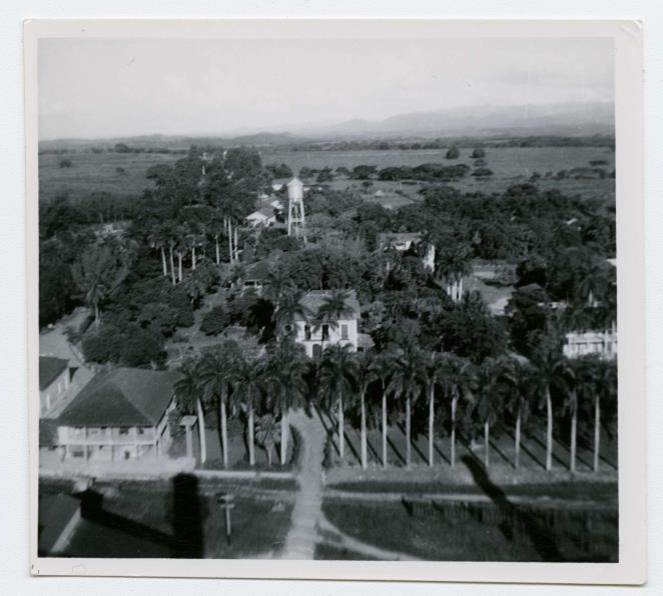
Foremost among these merchant families was the Atkins family. Our popular collection of Atkins family papers spans from 1845 to 1950 and consists almost exclusively of the business papers of Elisha, Edwin F., and Robert W. Atkins, as well as the records of E. Atkins & Co. The Atkins family owned a sugar plantation called the Soledad estate on the southern coast of Cuba near Cienfuegos. By the end of the 19th century, under the leadership of Edwin F. Atkins, the prosperous Soledad had grown to enormous proportions, encompassing about 12,000 acres. Five thousand acres were planted with sugar cane.


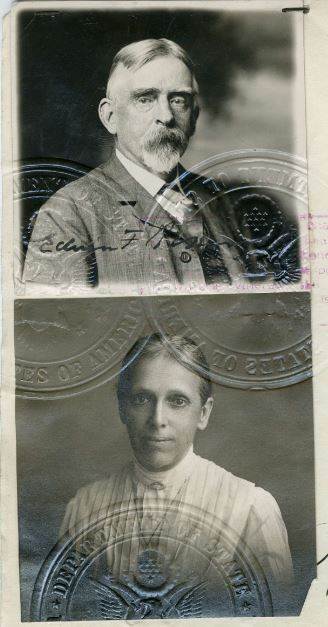
Edwin F. and his wife Katharine W. Atkins, from their Cuban passport, 1917


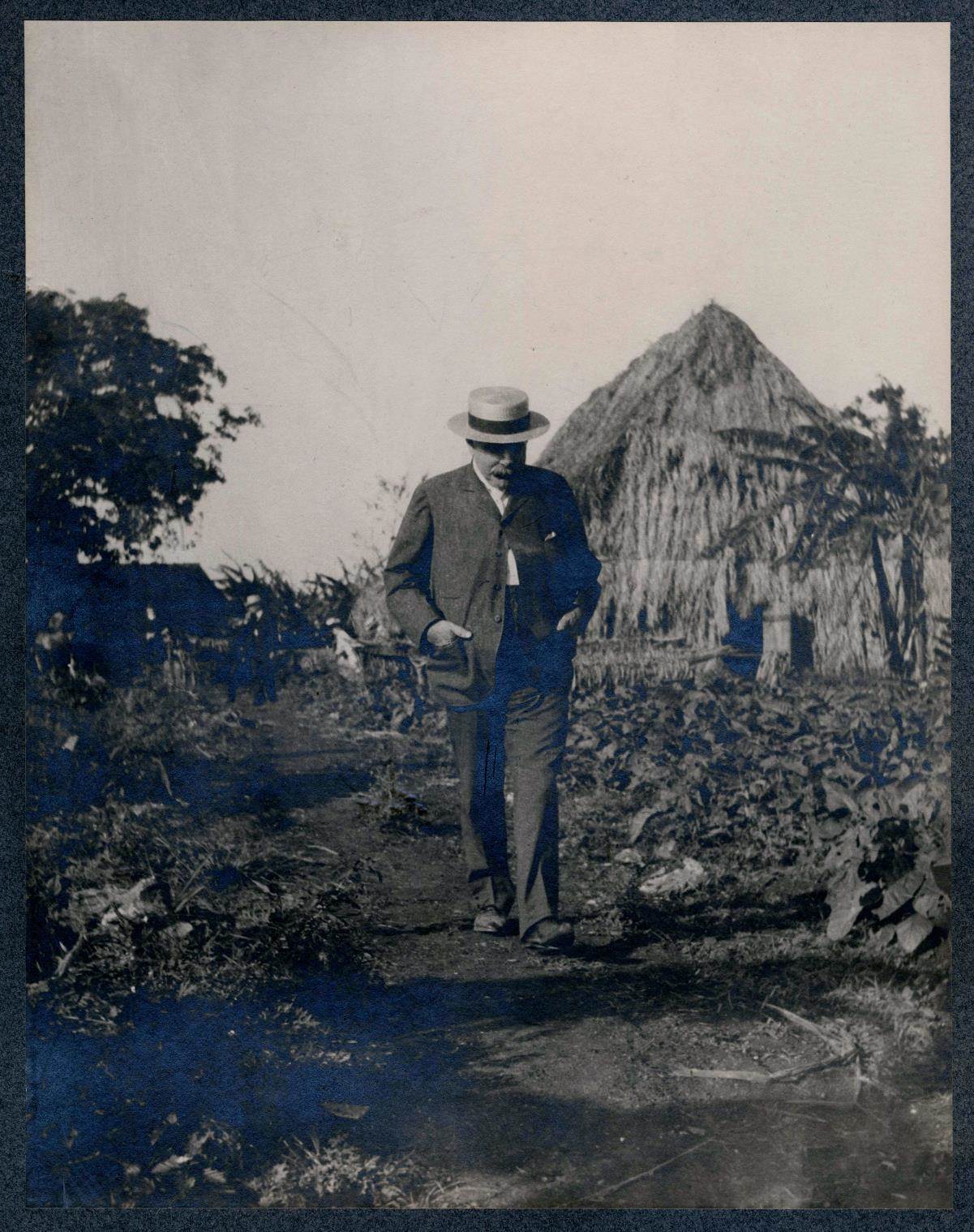
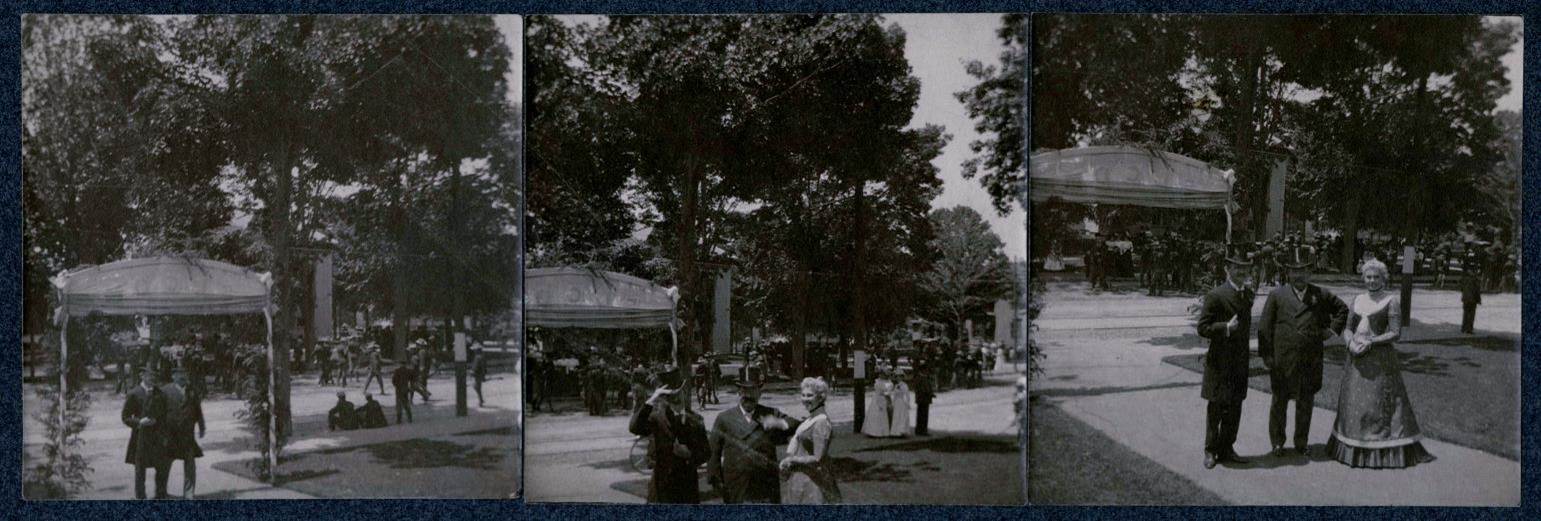
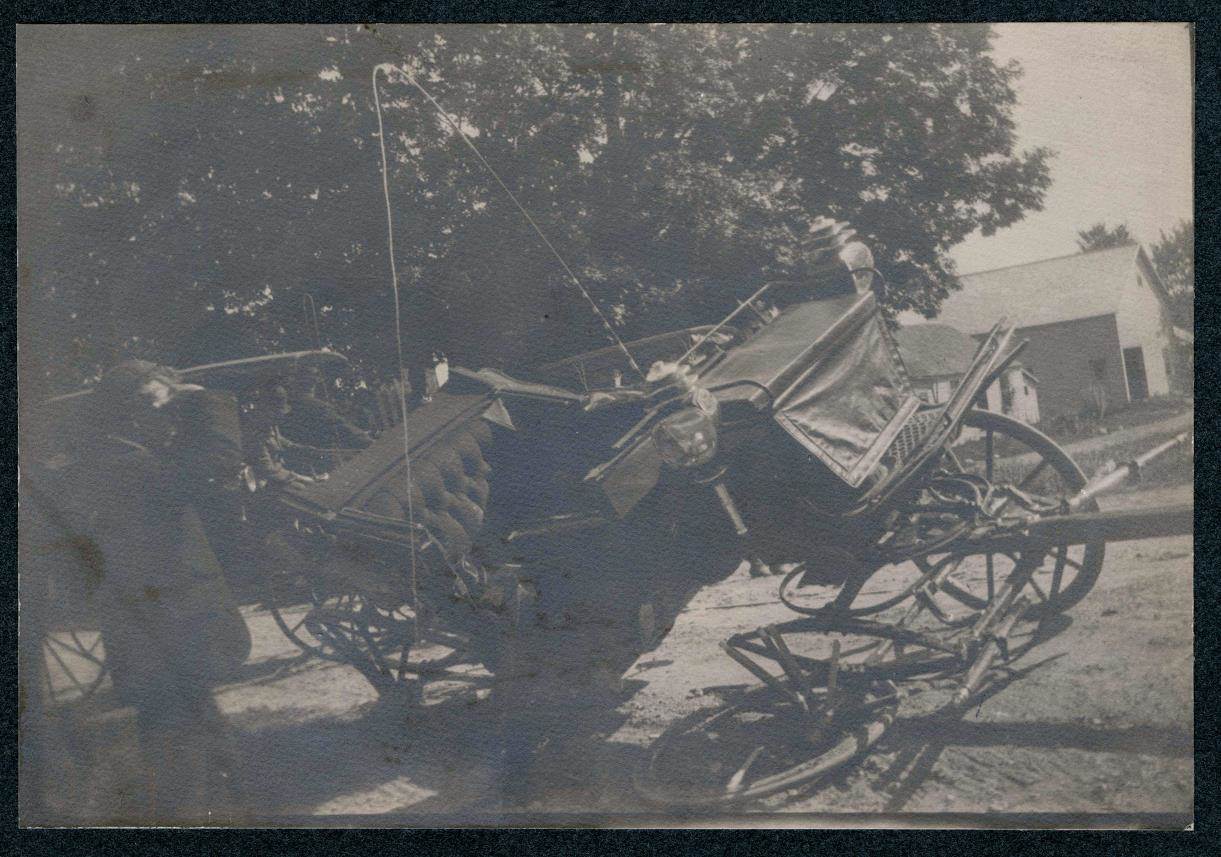
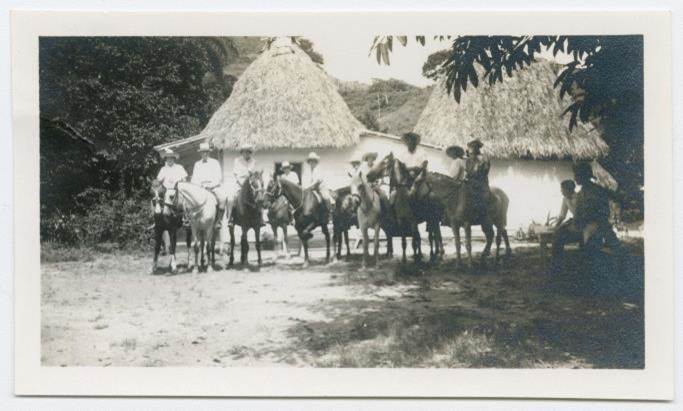
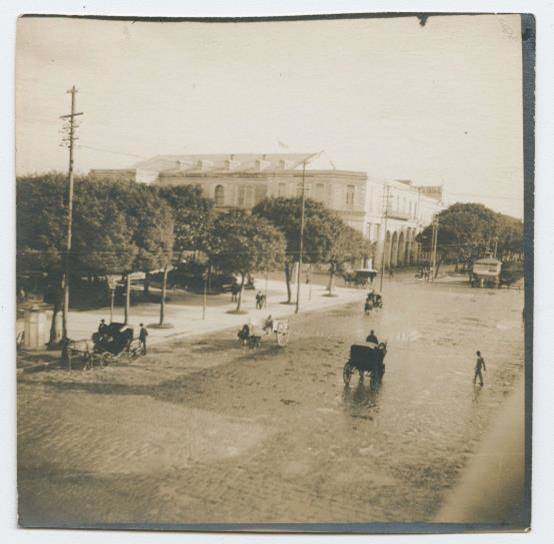
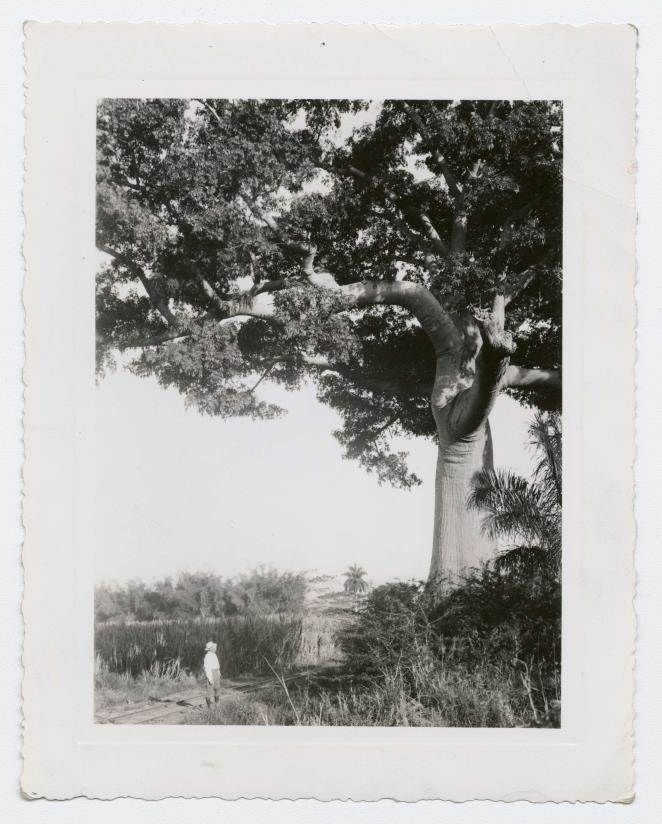
The Atkins family papers came to the MHS with hundreds of photographs depicting life on the estate, as well as scenes of Cuban cities and seaports. It’s difficult to choose from so many terrific images, but here are a few of my favorites. (All of the photographs below are unfortunately undated.)


Soledad


An outing


Cienfuegos


Havana


Havana


Soledad


A big tree!


The MHS website features a digital exhibit of select items from the Atkins family papers, or you may just want to search our website for Cuba material. Other collections related to Cuba include the papers of the Foster, Morse, and Dabney families. Bay Staters also traveled to the island as tourists, and we hold many letters and diaries written during these trips. We hope you’ll visit our library to see what we have!


This Week @ MHS

By Dan Hinchen

The calendar is empty this week with the exception of our Saturday tour:

– Saturday, 26 March, 10:00AM : The History and Collections of the MHS is a docent-led walk through the public spaces in the Society’s home on Boylston Street. The tour is free, open to the public, with no need for reservations. If you would like to bring a larger party (8 or more), please contact Curator of Art Anne Bentley at 617-646-0508 or abentley@masshist.org.

While you’re here you will also have the opportunity to view our current exhibition. The exhibition galleries are open to the public free of charge, Monday-Friday, 10:00AM-4:00PM.

Archivist as Detective, Part II: The Mysterious Woman in John Albee’s Life

By Susan Martin, Collections Services

I hadn’t expected to have the opportunity to indulge in another “investigation” so soon after my last one, but I caught a lucky break. Just a few weeks ago, the MHS acquired a diary of John Albee (1833-1915) that contained an intriguing mystery—the identity of the young woman with whom he shared a passionate, but ultimately unsuccessful, romance. He wrote about her often in his diary, but used her initials: L.A.


I was particularly motivated to solve this mystery because I knew from my research that John Albee—first a Unitarian minister and later a Transcendentalist author—counted among his friends Ralph Waldo Emerson, Henry David Thoreau, and the Alcott family. I wondered if L.A. might be, in fact, Louisa May Alcott. Though she never married, Alcott did have suitors, and she was just about John’s age.

As I looked through John’s diary, kept mostly in Cambridge, Mass. between 1853 and 1861, I found a few clues that seemed to support my initial guess. He referred to some verses written by L.A.—was she an aspiring author? He also slipped up a few times and called her “Lou” and “Louise,” but this was such a common name at the time, I still couldn’t be sure. He didn’t divulge many specific details about her, even the first names of family members.

He did, however, write quite passionately about her. This is one of my favorite passages: “While she listened I could talk, but when she left the room I became silent. The best thoughts of my life came to me to say to her.” His entry of 7 October 1857 recounts a dramatic event. When L.A. declined his invitation to a concert, apparently under pressure from her mother, he went dejected to the hall and tried to enjoy himself, without much success. Then… (cue the music!) looking into the crowd, he saw her there. His “little elf” had raced through the streets to catch up with him.

The diary contains many scenes like this. There’s the couple’s accidental (and symbolic) meeting on West Boston Bridge at a turning point in their relationship. There’s the embarrassing gossip of friends. And of course, there’s a rival for L.A.’s affections. John transcribed into the diary his letter to the other man, J.B.K., which reads in part: “I do not know your sentiments towards L.A. I do not know hers towards you, nor towards myself, and we are all mixed up, and it is a maze.”

The break in my “case” came when I found an entry pairing the names of L.A. and Mrs. Appleton. The context seemed to indicate that L.A. was a member of that family. John also mentioned the related Haven family, as well as Portsmouth, N.H., the home of the Havens and Appletons.

Voila! Sophia Louisa Appleton, who went by her middle name Louisa, was born in 1836. She worked at the Harvard College library in the late 1850s, while John was a student in the Divinity School. She was also an aspiring author and wrote an opera in 1865. And John occasionally mentioned L.A.’s mother in his diary, but not her father. (Charles J. Appleton had died years before, while the other Louisa’s father, Amos Bronson Alcott, was still very much alive.)

I searched other Appleton family papers at the MHS and saw nothing to confirm my identification beyond a reasonable doubt, but I feel fairly confident I’ve found L.A. The MHS holds a few photographs of the woman in question, including this lovely carte de visite from the Haven-Appleton-Cutter family photographs.


December 1859 was full of emotional encounters, romantic angst, and introspection for John, as he and Louisa had split but couldn’t seem to stay apart. He described quarrels, saying to her: “I love you. […] But I can hate too.” However, he concluded the whole affair philosophically: “Life is too much, one must soon see, for any man to undertake seriously. Keep a jester in your house if you would prevent matters from coming to extremities.”

Louisa Appleton married Charles William Bradbury in 1864 and lived into her nineties. John Albee married twice, first in 1864 to Harriet Ryan (1829-1873), then again in 1895 to Helen Rickey (or Ricky). He had four children, but survived them all, dying in 1915. Can you guess his youngest daughter’s name? Louisa.

This Week @ MHS

By Dan Hinchen

It’s time for the weekly round-up of events. Here is what is on the schedule:

– Wednesday, 16 March, 6:00PM : “Republic of Spin: An Inside History of the American Presidency” Join us for this author talk in which David Greenberg is interviewd by Robin Young, co-host of Here & Now on WBUR and NPR, about his new publication. Registration is required for this event with a fee of $20 (no charge for MHS Members and Fellows). A pre-talk reception begins at 5:30PM and the talk begins at 6:00PM. 

– Saturday, 19 March, 10:00AM : The History and Collections of the MHS is a docent-led walk through our public rooms. The tour is free, open to the public, with no need for reservations. If you would like to bring a larger party (8 or more), please contact Curator of Art Anne Bentley at 617-646-0508 or abentley@masshist.org.

While you’re here you will also have the opportunity to view our current exhibition.

Exploration, Encounter, and Exchange in History: Massachusetts History Day 2016

By Anna J. Clutterbuck Cook, Reader Services

Massachusetts History Day 2016, on the theme of “exploration, encounter, and exchange in history” is in full swing across the state of Massachusetts with the MHS as its official sponsor. In recent years, over 7,000 middle and high school students from across the Commonwealth have participated in MHD and — as in the past — winners from the 2016 state competition will have the opportunity to join thousands of other middle and high school students from around the country at The Kenneth E. Behring National History Day Contest in College Park Maryland (June 12-16, 2016).


Sabrina Panetta (Saugus, MA), discusses her submission in the Senior Individual Exhibit category, “Hidden Beneath the Surface,” with three volunteer judges. Photo courtesy of Kerin Shea, Massachusetts History Day.


“It’s like a science fair, but for history,” is how I like to describe the competition to those who have never heard of History Day before. Each year, an annual theme is announced by National History Day (NHD) within which students will select and research a topic, articulate a thesis, and present their historical analysis in one of five categories: documentary film, exhibit board, live performance, research paper, or website. The students present their work on competition day and are interviewed by volunteer judges who evaluate the quality of their historical research, analysis, and presentation.

This year’s theme of “exploration, encounter, and exchange in history” was a broad umbrella underneath which students have explored topics ranging from the economic and cultural exploitation of Hawai’i to the investigative journalism of Nellie Bly to Copernicus’ theory of a heliocentric universe.

There are many different ways to support Massachusetts History Day as individual historians and as cultural institutions. Since 2012, my wife and I have been involved as volunteer judges, getting up early on a Saturday morning to meet with junior historians to give them a chance to share their knowledge and enthusiasm.

There is still time to volunteer as a judge for the 2016 Massachusetts state competition on Saturday, April 9th!

Another option for supporting MHD is by offering special prizes for a best project in a particular topic (for example “labor history”) or type of primary source material (oral histories or photographs, for example). Since 2014 our family has been sponsoring a book prize at the district and state competitions for the best individual project in women’s and gender history. As professional historians, we are excited to encourage the work of those who will be our future colleagues and supporters – and we hope you will consider doing the same!

If you do not live in Massachusetts and are interested in NHD opportunities in your local area, find your state affiliate here. And if you want to watch the competition from afar, be sure to follow @MAHistoryDay for great competition day photos and updates.

Summer Professional Development for Teachers: FAQ

By Kathleen Barker, Public Programs & Education

Summer is right around the corner, which means the MHS education department is busy organizing another round of exciting, hands-on learning opportunities for K-12 teachers. Read on to learn more about what the MHS can offer you (or your favorite teacher) in the coming months!

Does the MHS offer workshop for teachers during the summer months?

Absolutely! You can visit the Teacher Workshop page on the MHS website to find our current program offerings. In the summer of 2016, we will host programs on women in the era of the American Revolution, whaling and maritime history, the Civil War, and the creation of the U.S. Constitution.

What will I do at an MHS teacher workshop?

Workshop participants become historians as they examine original documents and artifacts from the Society’s collections. Many workshop sessions are also designed to model various ways to use primary sources in the classroom. We also like to provide educators with opportunities to discuss current historical scholarship, so most of our workshops include guest speakers who have worked extensively with materials from the MHS. Our visiting scholars understand the demands of classroom teaching, and make every effort to provide content that you can use to enhance your own lessons. We frequently collaborate with other organizations to create programs, so many of our workshops include field trips to partner sites. This summer’s workshops include visits to places like the Museum of Fine Arts, Old North Church, the New Bedford Whaling Museum, and the Cape Ann Museum.

Reading John and Abigail Adams letters at the MHS

Can I earn a stipend through any of your programs?

Yes! Throughout 2016, the Society is celebrating its 225th anniversary. Thanks to funding from the Richard Saltonstall Charitable Foundation, we are offering a special three-day workshop on “Teaching Three Centuries of History through MHS Collections.” The workshop is open to educators and library media specialists of grades 5-12. Participants will engage with items in our collections, learn from guest historians, and investigate different methods for using primary sources in the classroom. We will explore topics such as colonial encounters between English settlers and native peoples, urban politics in the era of the American Revolution, African American poetry and antebellum abolition efforts, and the woman’s suffrage movement. Each participant will be expected to curate a set of classroom resources on a specific topic in exchange for a $500 stipend and two graduate credits. Educators and library media specialists of grades 5-12 are welcome to apply. You can find the application instructions on our website: https://www.masshist.org/education/3centuries.

Can I earn Professional Development Points and/or graduate credit at these workshops?

Yes. The MHS is a registered PDP provider with the Massachusetts Department of Elementary and Secondary Education. Most of our programs also offer the option of graduate credit (for an additional fee.)

How can I learn more?

For information about programs for teachers and students, including workshops, fellowships, and online resources, visit the Education pages of the Society’s website, or contact the education department at education@masshist.org.

Teachers as students on Lexington Green

This Week @ MHS

By Dan Hinchen

So, you’re looking for some history? Well, you came to the right place then. Take a look at what we have to offer this week at the Society:

– Tuesday, 8 March, 5:15PM : “How to Police Your Food: A Story of Controlling Homes and Bodies in the Early Age of Manufactured Foods” is an Environmental History seminar which addresses three concerns of our day: food, knowledge, and control. The seminar features Benjamin R. Cohen of Lafayette College, with Joyce Chaplin of Harvard University providing comment. Seminars are free and open to the public; RSVP requiredSubscribe to receive advance copies of the seminar papers.

– Wednesday, 9 March, 12:00PM : This week’s Brown Bag talk is given by Katlyn M. Carter of Princeton University. Her talk is titled “Practicing Politics in the Revolutionary Atlantic World: Secrecy, Publicity, and the Making of Modern Democracy.” Carter traces how revolutionaries in the United States and France navigated the tension between an Enlightenment imperative to eradicate secrets from the state and a practical need to limit the extent of transparency. Brown Bag talks are free and open to the public. Grab a lunch and come on in!

– Wednesday, 9 March, 6:00PM : “The New Bostonians: How Immigrants Have Transformed the Metro Area since the 1960s,” is a public author talk given by Marilynn S. Johnson of Boston College. Her work examines the confluence of recent immigration and urban transformation in greater Boston as a part of the region rebounding from a dramatic decline after World War II to an astounding renaissance. This talk is open to the public and registration is required at a fee of $10 (free for MHS Members and Fellows). A pre-talk reception begins at 5:30PM. 

– Saturday, 12 March, 10:00AM : The History and Collections of the MHS is a docent-led walk through our public rooms. The tour is free, open to the public, with no need for reservations. If you would like to bring a larger party (8 or more), please contact Curator of Art Anne Bentley at 617-646-0508 or abentley@masshist.org.

While you’re here you will also have the opportunity to view our current exhibition.

The New Look of Science….260 Years Ago

By Dan Hinchen, Reader Services

Between 1752 and 1756 in Paris, Jaques Fabien Gautier, or Gautier d’Agoty (1717-1785) published a six-volume, 18-part set titled Observations sur l’histoire naturelle, sur la physique et sur la peinture… While such publications were not uncommon at the time, what set this one apart was that it contained plates printed in color, the first science periodical to ever do so. He employed a well-established intaglio printmaking process known as mezzotint, a method of engraving in tone.1 

The Society holds two volumes in one of d’Agoty’s Observations sur l’histoire naturelle. In addition to observing specimens of natural history, like plants, mammals, birds, and humans, d’Agoty also included obeservations on physical science as well as art and painting. Below are some of the striking images that appear in the work. Enjoy!

[Disclaimer: If you got squeamish when dissecting a frog in high school, be aware that there are a couple of images of internal anatomy of humans and animals.]


1. Osborne, Harold, The Oxford Companion to Art, Oxford University Press, 1970.

“The most exquisitely drawn tragical character in the whole compass of the drama”: John Quincy Adams’ love of Hamlet

By Emily Ross, Adams Papers

In an 1839 letter, John Quincy Adams stated his view that Shakespeare’s Hamlet was “the Master Piece of the Drama … I had almost said the Master Piece of the Human Mind.” He then gave an analysis of the play sufficiently scholarly and insightful that his letter and his correspondent’s reply were published as a pamphlet in 1844. A copy of this item is among the holdings of the MHS.


The front page of John Quincy Adams’ published interchange of correspondence with James Hackett, regarding the character of Hamlet.


While this publication may be the culmination of John Quincy’s preference for Hamlet, it is certainly not the only evidence of it: his admiration for the play is long-standing.

According to his diary, he saw the play at least seven times, and recalled the productions well enough to contrast the performances of different actors in the leading role. He wrote entries about attending performances on 16 May 1790; 30 November 1792, when the lead actor was “superior to my expectation”; 21 April 1794; 5 October 1797; 18 October 1799, when the lead acted “not well”; 17 April 1809, when the lead actor had “the promise of great powers”; and 13 August 1822, when he judged that the lead actor played Hamlet “indifferently.”

It is notable that the April 1809 Hamlet was the first play that John Quincy and Louisa Catherine took their sons George and John to see, at ages eight and six respectively. A challenging play for children to understand, it is not surprising that the boys had many “remarks and questions” during the performance.

Later that same year, John Quincy and his family took a tour of the Baltic, and he created the following ink and watercolor picture of Cronburg Castle–better know as Shakespeare’s Elsinore.

Kronburg Castle, Helsingør, 2 October 1809, ink and watercolor picture in John Quincy Adams, Miscellany 5, Adams Papers.


It is unclear at what age John Quincy himself first saw Shakespeare on stage, but he had already read some of the works by the time he was ten. An avid reader, he reported to John Adams in October 1774, “I read my Books to Mamma.” While reading aloud was presumably for educational benefit at this point, in adulthood it was instead a form of entertainment—and what better to read than Hamlet? John Quincy Adams noted in his diary that he read Hamlet aloud in 5–6 October 1799, 3–9 August 1802, 16–18 January 1804, and 3–4 March 1823. As the date ranges show, these play readings would extend over several nights, like a mini-series. Twice John Quincy was the only reader, but in 1799 and 1823, he was one of two readers. One wonders how he would have reviewed his own performance…

Second to None: Secondary Sources and a Well-Rounded Research Process

By Kittle Evenson, Reader Services

I usually like to employ my blog space to share newly discovered (by me) primary sources from our manuscript, pamphlet, photograph, or artifact collections. I focus heavily on visually  intriguing or mysterious pieces, striving to draw connections  between discoveries, or explore an element of American history about which I previously knew little.

But this week I’m going to do something a little different.

When sitting down to write this post, I realized that all I wanted to share were these fascinating secondary sources I had had my nose buried in all week. After banging my head against a wall  trying to track down primary sources that would give me an excuse to wax poetically about these more…contemporary publications, I caved and re-focused my efforts.

While none of these books will appear in the Society’s 225th celebratory MHS Madness bracket, or be displayed in our image gallery of 225 Items from our Collections, they nonetheless help to broaden the understanding of our more acclaimed collections’ people, places, and historical context.

Much like winning the Tour de France, the study of history is often an independent endeavor that can only be achieved with the help of a team. Our understanding of the past is shaped by the creative exploration of primary sources and vigorous debate about those sources with other historians. This discussion, refutation, and revision plays out in journal articles, monographs, and edited anthologies, and perusing those publications is an integral part of the research process.

It’s also just plain fun.

So here is what has captured my attention lately:


Women Who Kept the Lights: an Illustrated History of Female Lighthouse Keepers, by Mary Louise Clifford and J. Candace Clifford (2000).


I discovered this book while answering an (unrelated) reference question and it was the impetus for this blog post. Hundreds of women are documented as operating lighthouses from 1776-1947, including Hannah Thomas, who took over the Gurnet Point Light Station at the entrance to Plymouth Harbor from her husband when he enlisted to fight in the Revolutionary War. (While we hold the records of Hannah’s husband, John Thomas, Hannah’s place in the collections is described only as the recipient of his letters.) This book follows the careers of 32 of these women and includes some wonderful manuscript, photographic, and cartographic sources from local and national archives throughout the United States.


Shipping & Craft in Silhouette, by Charles G. Davis (1929).


Coincidentally, I found this at the same time as Women Who Kept the Lights and it was actually related to a reference question that had driven me to the V section of our library stacks. Though Shipping & Craft ultimately proved unhelpful in answering the question, I thought the unique use of the silhouette style to identify vessels deserved a wider audience.


I may have stumbled upon the seafaring…fare, listed above, but I actively went searching for this final work.


U.S. Women Writers and the Discourses of Colonialism, 1825-1861, by Etsuko Taketani (2003).


My historical interests tend heavily towards the intersection of female and colonial identities and Taketani’s book is one of the few secondary sources in our library dedicated to that particular Venn diagram. Building off of work I have done examining German women’s expressions of colonial identity (both with and without the physical colonies in which to play out those identities), I was interested to see how American women articulated and shaped similar ideologies.

While admittedly not planned, the three works I chose to share here demonstrate the versatility of secondary sources within the research context. Sometimes you seek them out to inform your understanding of a historical discussion; sometimes you stumble upon them and they catch your eye for a moment; and sometimes they send you careening off on an entirely new path of inquiry. Regardless of purpose or happenstance, secondary sources are worth a primary place in your research process.

You can explore our library collections in greater depth by searching for a favorite topic in our online catalog, ABIGAIL, or by stopping in for a visit