By Kate Melchior, Center for the Teaching of History
December is knockingon the door which means that the Center for the Teaching of History at the MHS is wrapping-up its inaugural semester of class visits! This fall, the MHS hosted a number of programs for middle school, high school, and college students who want to learn about primary sources and experience the work of historians first-hand.
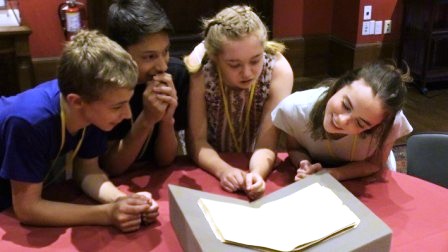
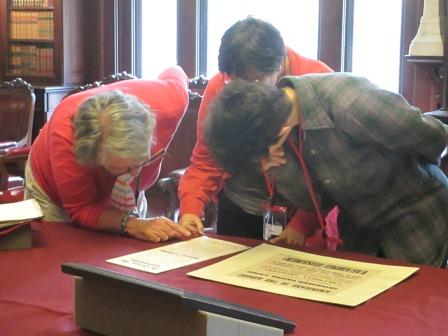
Students getting up close and personal with MHS documents.
Our collection of Revolutionary War-era material is popular with middle and high school classes who come to MHS to learn about the real people behind Boston’s Freedom Trail. For example, Cohasset-based Chris Luvisi’s AP US History class examined artifacts and documents related to the Boston boycott of British goods in the 1760s and 1770s, including the 1767 “Address to the Ladies” which encouraged Boston women to forgo imported British luxuries in order to appear “Fair, charming, true, lovely, and cleaver” to young men. After taking on identities of Boston craft workers, merchants, shopkeepers, and domestic housewives, students voted on whether to support or ignore the nonimportation agreement. While most students supported the boycott in theory, a number of them admitted that they would likely keep buying their imported tea under the table!

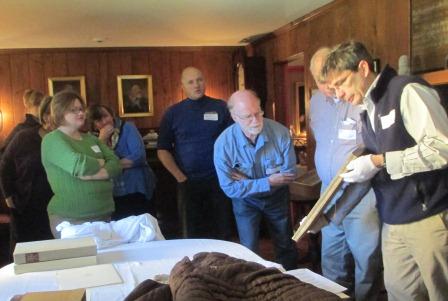
Students were excited to get a close look at a bottle of tea leaves collected from Dorchester Neck the morning after the Boston Tea Party in 1773.
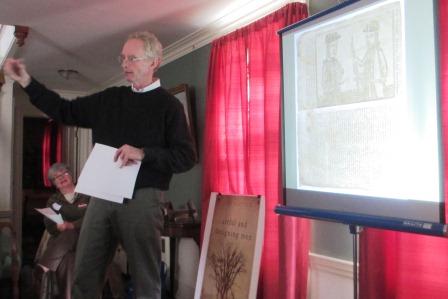
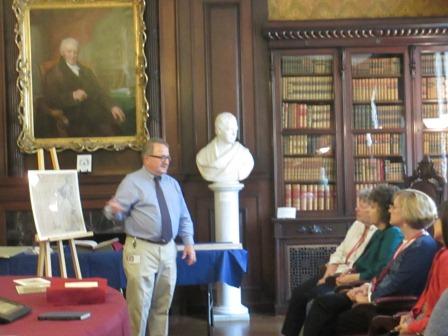
Vincent Bradley’s AP US History class from Catholic Memorial School also engaged with the history of the Revolution, this time through the perspective of John Adams. Students explored how Adams’ views on protest and dissent changed over time by looking at his opinions on the Boston Tea Party, the Boston Massacre, Shay’s Rebellion, and the Alien and Sedition Acts. Bradley’s class also saw historians in action while participating in one of MHS’ Brown Bag Lunches, where they heard Kabria Baumgartner from the University of New Hampshire speak about her current research on Black girlhood and the desegregation of Massachusetts public schools. Catholic Memorial students asked Professor Baumgartner questions about her work and listened as she workshopped her research with other local historians and visitors.
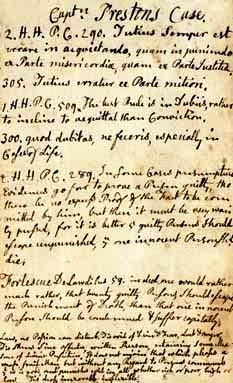
Students deciphered John Adams’s notes from the Boston Massacre trials to learn about his motivation for defending British soldiers.
As the state coordinators for Massachusetts History Day, the Center for the Teaching of History (CTH) also helps many students learn research strategies for their upcoming projects. Megan Brady’s eighth grade history club from the John F. Kennedy School in Somerville came in on a Saturday so that they could learn about the collections at MHS and practice working with primary sources. Her students, whose National History Day interests range from early Pilgrim-Wampanoag relations to LGBTQ History in the 1920s, posed thoughtful questions to Stephen T. Riley Librarian Peter Drummey while looking at Sarah Gooll Putnam’s Civil War-era childhood diary and a daguerreotype of author and reformer Annie Fields, who lived in a “Boston marriage” with her partner Sarah Orne Jewett for decades. You can learn more about National History Day and find inspiration for your own projects at the Massachusetts History Day website, the National History Day site, or at our own Center webpage.
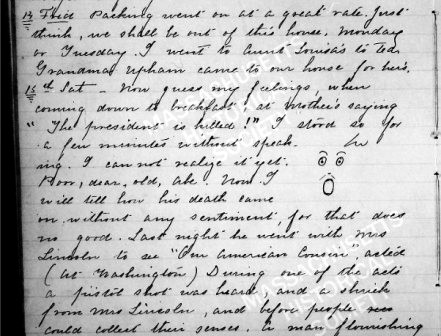
Sarah Gooll Putnam’s diary entry on 14 April 1865. The young artist drew her own expression at hearing of President Lincoln’s asssassination to illustrate how she felt at the news.
The Center sometimes partners with Library Reader Services to help host college visits as well, which gives the perfect excuse to explore more specific and unusual themes in the MHS collections. Erika Boeckeler brought two of her Northeastern University classes this fall to explore Children’s Literature and Shakespeare in America, leading to rediscovery of gems in our stacks such as a homemade morality tale titled “Adventures of a ruffle” that was written by Anne Harrod Adams, John and Abigail’s daughter-in-law! On another day, Cathy McCarron’s class joined us from Middlesex Community College to explore Elizabeth Freeman and Quock Walker’s court petitions for manumission and their leadership in ending slavery in Massachusetts. We discussed the different types of primary sources that illustrate the lives of individuals who previously lacked a voice in traditional historical narratives.
If you would like to bring students to visit us, or have the Center for the Teaching of History come to you, please contact the Center for the Teaching of History at kmelchior@masshist.org. All of our student programs are free of charge, and we would love to work with you to create a memorable program with your class! For more information on our programming, visit the Center at http://www.masshist.org/teaching-history.
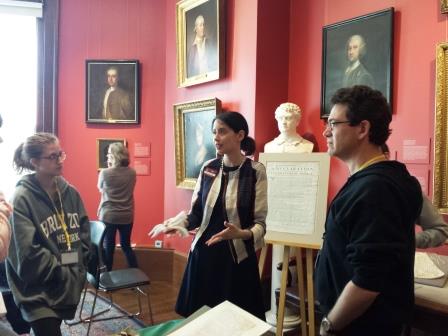
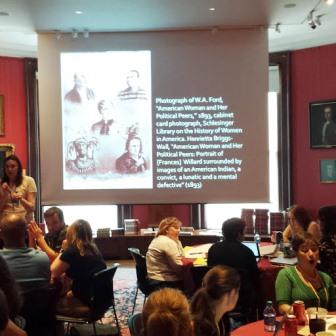
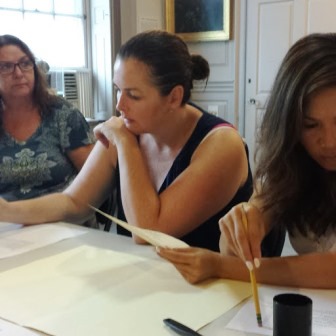
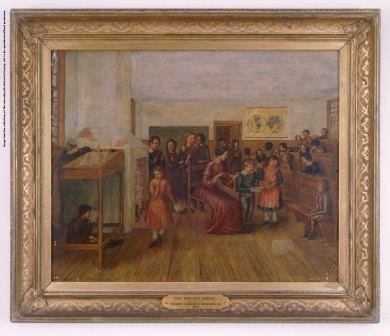
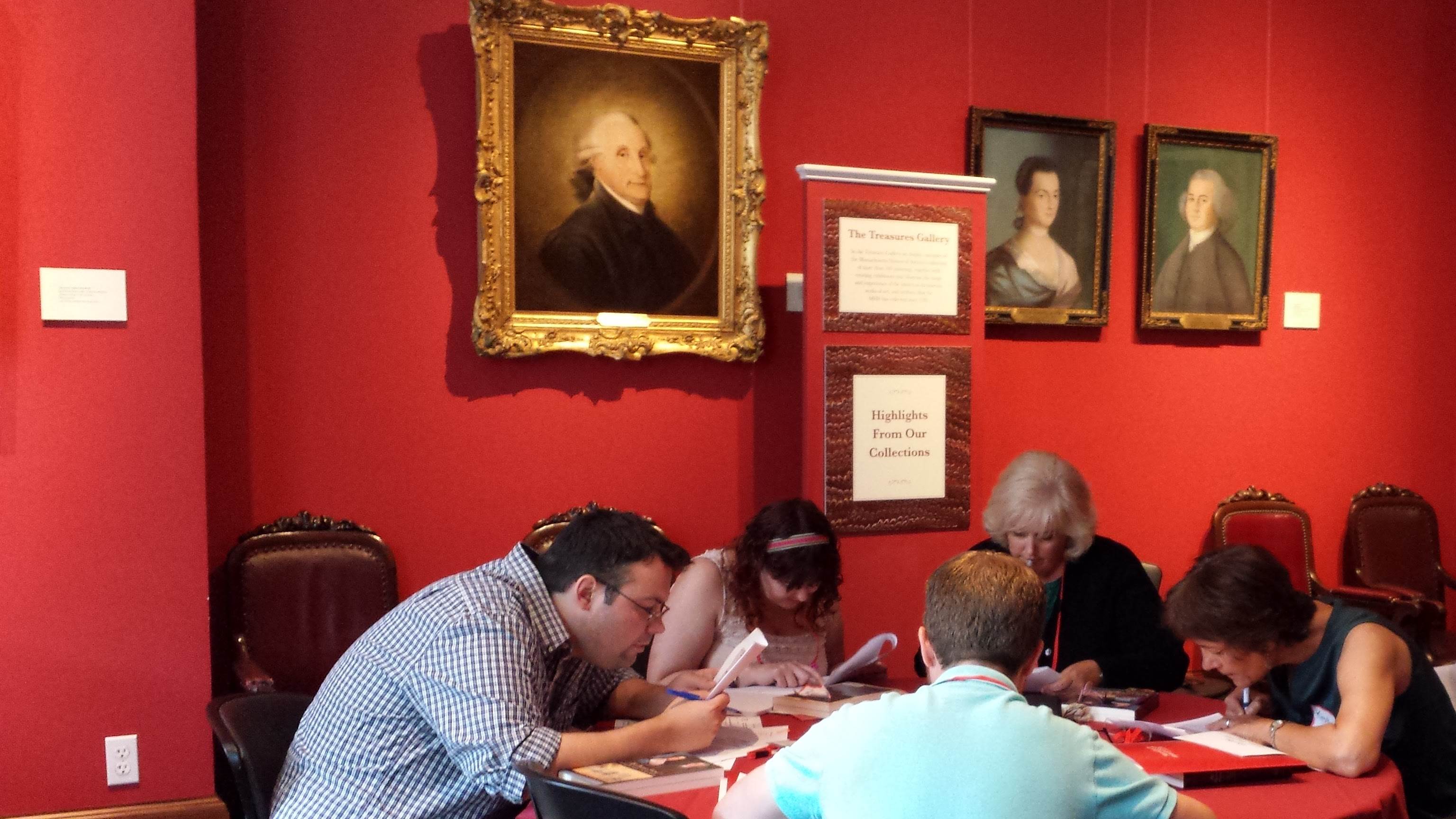
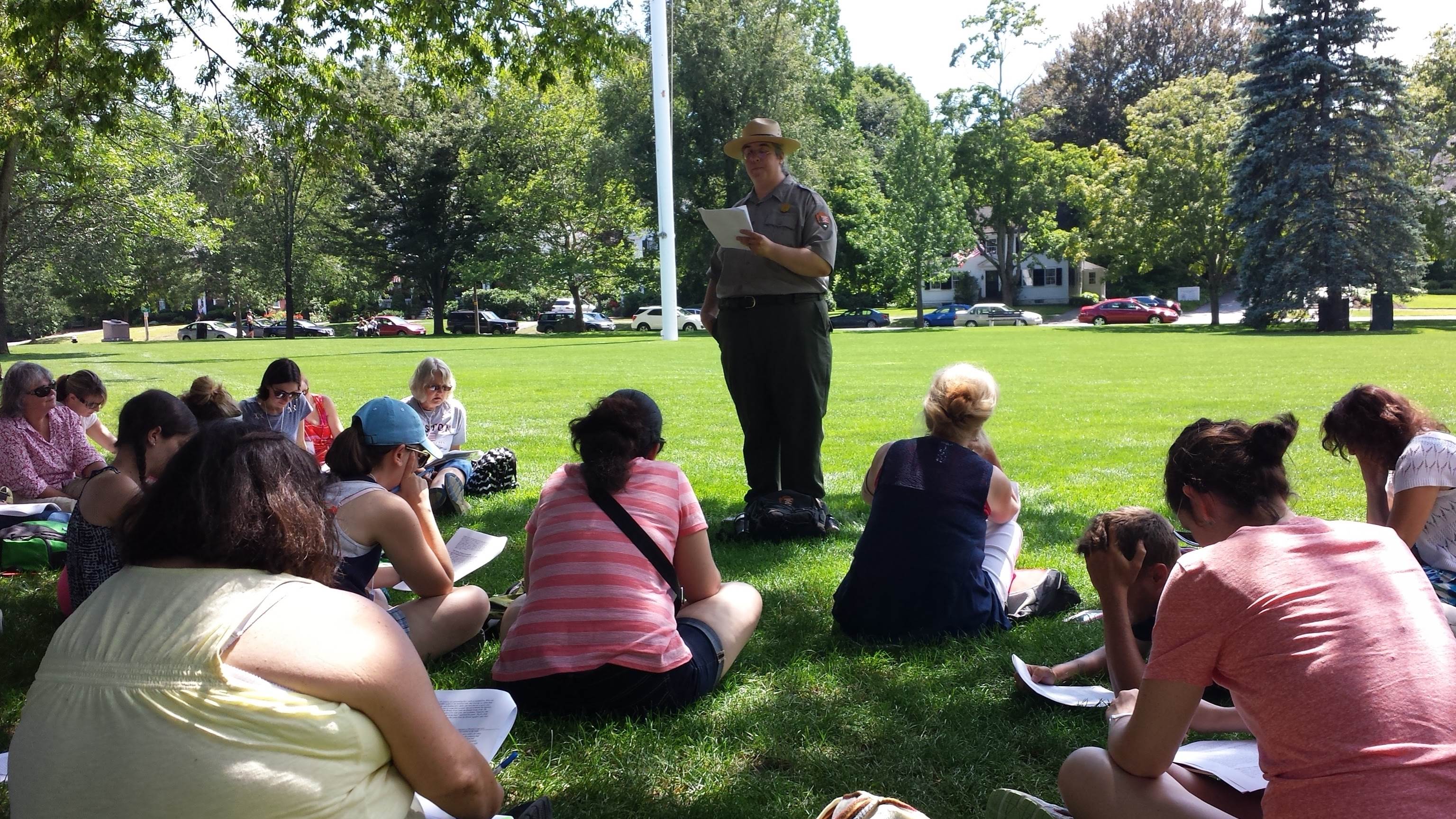
 July brought new partnerships and new friends to the MHS. July 10-11, MHS education staff co-hosted a workshop with the Museum of Fine Arts to celebrate their special exhibition
 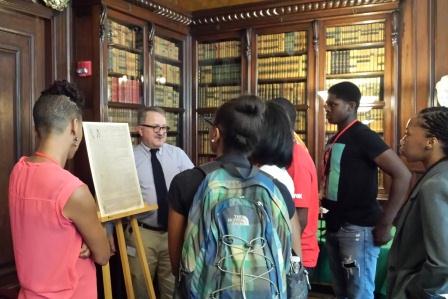 This month also featured a visit from MYTOWN students researching the American Revolution in the Boston area. MYTOWN is a great organization that engages students in the learning and teaching of their local history. These particular student viewed documents from the period pertaining to the Revolution in general (like the Declaration of Independence), as well as materials related specifically to the Dillaway Thomas House in Roxbury. They even
 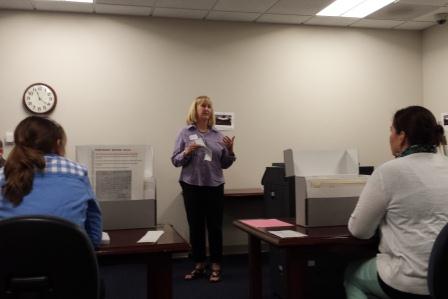 I spent the week of July 18 working with a fun group of educators participating in the Primarily Teaching program at the National Archives in Waltham. Together we researched Boston school desegregation, in particular the records pertaining to Morgan v. Hennigan, the case that prompted Boston Public Schools to adopt busing in order to reverse segregation in its schools and facilities. By the end of the week, I had worked with my counterpart at the Archives, Annie Davis, to develop a new workshop on the changing meanings of equality in education over the last two and a half centuries. (Look for it on our program schedule in 2015.)