This Week @ MHS

By Dan Hinchen

As summer gets into full swing, things are pretty quiet at the MHS with only two items on the calendar for this week. First, on Wednesday, 26 June, the Society will host the next installment of the Brown Bag Lunch series. Come by at 12:00pm to hear Brooke Newman, Virginia Commonwealth University, present “Island Masters: Gender, race, and power in the eighteenth-century British Caribbean.” At its height in the late eighteenth century, Jamaica was the most valuable and productive of Britain’s colonial possessions in the Atlantic world. Yet intertwined with Jamaica’s reputation for unparalleled profit was a growing apprehension of settler degeneration—in manners, morals, bloodlines, and especially life expectancy. The island, as one would-be colonist put it, offers “the most flattering prospect of pecuniary acquisition or death.” Such notions signify Britain’s ambivalent and contradictory relationship with Jamaica, and the West India colonies more generally, during the era of slavery. This event is free and open to the public so pack a lunch and stop on by.

Then, on Saturday, 29 June, visit the Society for The History and Collections of the MHS, a 90-minute docent-led tour that explores all of the public rooms in the building will touching on the art, architecture, history, and collections of the Society. The tour is free and open to the public. No reservation is required for individuals or small groups. Parties of 8 or more should contact the MHS prior to attending a tour. For more information please contact Curator of Art Anne Bentley at 617-646-0508 or abentley@masshist.org.
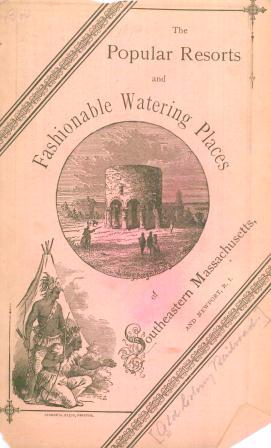
Stephen Greenleaf Bulfinch Diary, Post 22

By Elaine Grublin

The following excerpt is from the diary of Stephen Greenleaf Bulfinch.

June 18th, 1863

So too let me feel in regard to my suffering, bleeding country. We have heard within a few days, of the sudden aggressive movement of the rebel army, & its inroad into Pennsylvania. May the Ruler of nations grant that the pressure of each immediate danger may arouse a spirit that shall not slumber till it brings conquest and peace! The fine, calm eradication by President Lincoln of his course in making arrests, is worth noting at this time. God be thanked for our firm, honest chief magistrate!

This Week @ MHS

By Dan Hinchen

This week is the first full week for the three new exhibitions on display. Among them, the Society is featuring correspondence between John and Abigail Adams that illustrate their views on education for their children in “The Education of our Children is Never out of My Mind.” Also on display are several childhood drawings and early poetic works of e.e. cummings in “Estlin Cummings Wild West Show.” Finally, the new main exhibit on display is “The Object of History: 18th-Century Treasures from the Massachusetts Historical Society,” featuring a range of artifacts from the Society’s holdings, from flint-lock pistols to a pair of spectacles. All of these exhibits are free and open to the public, Monday-Saturday, 10:00am-4:00pm.

In conjunction with the main exhibit, the Society will host a series of conversations with MHS Librarian Peter Drummey about what documents and artifacts from the collections can tell us about the characters, events, and issues of the past, as well as the role of the MHS in documenting the rich history of our state and nation. On Monday, 17 June 2013, join in on the latest in this series as David Wood, Concord Museum, and Peter Drummey discuss early works of art, artifacts, and documents on display. Registration required. Fee $25/$15 (F/M); Free for MHS Fund Giving Circle members. Please contact the education department at 617-646-0557 / education@masshist.org. Register for all three programs in “The Object of History” series and receive a registration discount! Series fee: $60/30 (F/M); Free for MHS Fund Circle members.

Then, on Wednesday, 19 June 2013, the MHS will host another talk in the Brown Bag Lunch series. This week, Jen Manion of Connecticut College presents “19th-Century Narratives of Transgender Experience & the History of Possibility.” In the 1880s, the field of sexology declared masculine women to be inverts—true homosexuals. Prior to this period, representations of gender crossings were more varied and common. Such representations shine a spotlight on some of the most obvious anxieties concerning women’s place in society as well as the constitutive relationships between sex, gender, and sexuality. Brown bag lunches are free and open to the public, beginning at 12:00pm.

Last, on Saturday, 22 June, there will be a free tour of the Society’s home at 1154 Boylston St. The History and Collections of the MHS is a 90-minute docent-led tour that explores all of the public rooms in the building will touching on the art, architecture, history, and collections of the Society. The tour is free and open to the public. No reservation is required for individuals or small groups. Parties of 8 or more should contact the MHS prior to attending a tour. For more information please contact Curator of Art Anne Bentley at 617-646-0508 or abentley@masshist.org.

“A New Constellation”

By Dan Hinchen

Today is a holiday that is often forgotten in between Memorial Day and Independence Day. Yet the reason for this holiday looms large in the celebration of both those other days. It is doubtful that there is any emblem used on those days that is more prominent than the one created on this date.

There are many stories about how the stars and stripes originated. Some believe that John Paul Jones flew the colors above his ship as early as 1775, a variation of the Grand Union Flag. Others say that, in 1776, Betsy Ross presented the first flag to George Washington, drawing special attention to the five-pointed stars used instead of six-pointed. Still others believe that it was Francis Hopkinson, a delegate to the Continental Congress, who came up with the design.

Grand Union Flag

What we do know is that on 14 June 1777, members of the Second Continental Congress passed a resolution which stated “that the Flag of the United States be thirteen stripes, alternate red and white; that the Union be thirteen stars, white in a blue field representing a new constellation.” This set a general design for the flag official. While it is possible that this was meant to apply to maritime vessels because the resolution seems to have been forwarded by the Marine Committee, it was adopted as the flag of the newly independent colonies.

13-Star Flag of the United States (1777-1795)

Despite conflicting opinions on when and where the first iteration of the Stars and Stripes appeared, through the years it became clear that the citizens of the United States hold the flag in an elevated position (pun potentially purposeful) and that it deserves certain respect in its handling and display. It is important that people invoking patriotism with the flag understand and follow through with the proper etiquette meant to foster that same patriotism and reverence.

Betsy Ross variant (1777-1795)

Officially enacted on 30 July 1947, Title 4 of the United States Code (U.S.C.), begins with Chapter 1 – The Flag. Within this chapter are various specifications governing design, proportions, and treatment of the flag. In reading the flag code, it is interesting to note how many of its provisions are often ignored today. For instance, according to Title 4, Chapter 1, Sec.8 (c): “The flag should never be carried flat or horizontally, but always aloft and free.”

20-Star Great Star Flag of the United States (1818-1819)

Similarly, Title 4, Chapter 1, Sec.6 (a) states: “It is the universal custom to display the flag only from sunrise to sunset on buildings and stationary flagstaffs in the open. However, when a patriotic effect is desired, the flag may be displayed 24 hours a day if properly illuminated during the hours of darkness.” And according to Title 4, Chapter 1, Sec.6 (c): “The flag should not be flown during inclement weather, except when an all-weather flag is displayed,” Perhaps my favorite is the reminder, located in Title 4, Chapter 1, Sec.8 (d): “The flag should never be used as wearing apparel, bedding, or drapery…”


38-Star Flag of the United STates (1877-1890)

And so, as we take a moment to honor Flag Day, just remember to call the authorities if you see the flag being used in advertising, because anyone engaged in such an action “shall be deemed guilty of a misdemeanor and shall be punished by a fine not exceeding $100 or by imprisonment for not more than thirty days, or both, in the discretion of the court.” (Title 4, Chapter 3)


50-Star Flag of the United States (1960-Present)

If you are interested in finding out more about the history of the flag of the United States, or the people responsible for it, visit our online catalog, ABIGAIL, and search for “flags” as a subject.

To see the Flag Code in its entirety, visit http://www.gpo.gov/fdsys/pkg/USCODE-2011-title4/pdf/USCODE-2011-title4-chap1.pdf


All flag images from https://en.wikipedia.org/wiki/Flag_of_the_United_States


“We are doing a great deal here”: The Letters of Civil War Sharpshooter Moses Hill, Part 3

By Susan Martin, Collection Services

I hope you’ve been enjoying the letters of Moses Hill as much as I have. After last month’s installment, we pick up his story in April 1862 at the beginning of the siege at Yorktown, Va. Moses anticipated a hard fight: “I dred it for I know there must be a great loss of life on both sides.”

Now eight months into his service, Moses wrote candidly about the realities of war, describing some of the fighting in wrenching detail. Sharpshooters played an important role in battle by picking off enemy soldiers from a distance to provide cover for their own troops. Moses told his wife Eliza how, at Yorktown, he and his company kept the Rebels from reloading their guns by firing at them every time they rose above the fortifications. While he was proud of his company’s skill, he refused to kill gratuitously:

I do not shoot Rebels for money or by the head. I shal not nor I have not shot any one unless it is agoing to do some good for the Countery. I have had balls come around me very close when I did not return a shot for as to slowtering men when it does no good I cannot do. When we fight for a victory then is my time if any. Some take pride in going out and shoot a man from the Rebel brest work when it does now good at all, but I cannot slawter in that way nor I will not.

Moses also disapproved of his fellow soldiers’ predilection for drinking, gambling, and swearing. He felt too much was at stake to tolerate poor discipline, with the enemy so close and an attack expected at any moment. He described sleeping with his rifle by his head and frequently waking in the middle of the night to the “rower [roar] of musketery.”

The most poignant and evocative passages in Moses’s letters are those juxtaposing these combat experiences with peaceful memories of his home in Medway, Mass. He painted vivid pictures of life after the war:

Eliza you do not know how much I think of home you and the Children. It seems as if the summer could not pass off without my seeing home. Tell Asahell Lovell that I would like to be at home so I could go a fishing with him this spring but I cannot. I would like to go down on the River bank where all is still and where I should not be oblige to look on all sides to see if some Rifle or a musket was pointing at me, or to not listen to here if there was a shell coming over my head so that I could drop on the ground before it bursts, or to lay myself down at night to sleep where I knew I should not be attacked before morning….There is cannonading now within a 1/4 of a mile of us. I stop my pen to listen to here where the shells burst.

The sound of gunfire was nearly constant, but all around him were signs of spring. Moses was sitting under a blossoming apple tree when he wrote: “If I ever come home…I shal know how to apreaceate home more then I ever did before. Men living in Mass dont know what home is.”

Confederate forces withdrew from Yorktown during the night of May 3-4, and Union troops, including the 1st Massachusetts Sharpshooters, followed them west to Richmond. Come back to the Beehive.

Mysteries Solved! Using Harbottle Dorr’s Index to Find Missing Pamphlets

By Peter Steinberg, Collection Services

The newly-launched website presenting MHS’s collection of Harbottle Dorr, Jr.’s annotated newspapers includes transcriptions of the indexes he created for each of the four volumes he assembled. The task of transcribing these indexes proved inspirational and provoked inquiry. The Massachusetts Historical Society has held the first three volumes, covering the years 1765-1771, for many years. The first volume contained no extra material other than a brief two-page Appendix. However, in both Volumes Two and Three Dorr included contemporarily published pamphlets on topics related to the articles he annotated.

We do not know when this happened, but the volumes were disbound at some point for, among other reasons, preservation. As part of this process, the pamphlets originally collected by Dorr for Volumes Two and Three were removed and added to the Society’s general collection of printed materials. These two volumes came to the MHS in 1798 and have been in use for more than 210 years. This means there is a long period of time in which some of the documents Dorr collected may have been separated and moved around. In 2011, the MHS acquired the fourth volume of Dorr’s Annotated Newspapers via auction. Working at the MHS when this fourth volume arrived, and seeing how it looked in its original organization and binding, I became intrigued about the existence of those pamphlets that had been separated from the earlier volumes, and where they might be located within the building.

You may be wondering: What does the removal of the pamphlets have to do with the index? In transcribing the index, we grew to be familiar with the pagination of the volumes. The newspapers collected and page-numbered by hand by Dorr went only so high. For example, Volume Two’s last newspaper page number is 788 (The Boston-Gazette, and Country Journal, 25 December 1769). However, in the index for this volume there were entries for page numbers higher than page 788. This was an indication that there were supplemental items (i.e. pamphlets) that had been removed and the same was true for Volume Three.

I began to track those index terms where the page number is higher than page 788 (for Volume Two) and page 642 (for Volume Three) in order to try and gauge the subjects of the pamphlets. Then, using these extracted terms in conjunction the library’s ABIGAIL catalog, Google, and WorldCat, a global catalog of library collections, I was able to eventually track down six pamphlets and a broadside formerly included in these volumes. The tell-tale sign that these pamphlets belonged to the collection was the presence of Dorr’s distinctive numbering at the top-center of each page. Once found, these items were photographed in-house and are digitally reassembled with their original volumes via the Harbottle Dorr, Jr. Annotated Newspapers website. Each pamphlet found felt like a significant accomplishment. In finding the pamphlets and having access to them, it has led to a better understanding of how Dorr’s collection originally looked. Finding some encouraged me to look for the others, which were harder to locate.

As I worked on this this blog post, I continued searching for missing pamphlet’s and in the process, uncovered addition items. In browsing Dorr’s Index to Volume Two for indexed terms for which we had no pages, I found the entry “Statute De Tallagio non concedendo.” This term appears on Index page 13 and refers to page 814, which fell within a page range, 789-830, that was still absent from the collection. I searched ABIGAIL for “Tallagio,” as it is a word that would likely yield few if any hits, and was presented with three records: two printed editions of Henry Care’s English liberties, or The free-born subject’s inheritance. Containing Magna Charta, Charta de Foresta, the statute De Tallagio non Concedendo, the Habeas Corpus Act, and several other statutes (1721 and 1774) and one small manuscript: “Appendix of an unidentified manuscript, ca. 1790-1810.” I was familiar enough with Dorr’s Index to know that many of documents contained in Care’s book appear as terms (though largely Anglicized). Could it be that Dorr copied some of the text from Care’s book? The printed books had none of those tell-tale signs of being annotated by Harbottle Dorr. However, the small manuscript was indeed an original Dorr manuscript: the previously unknown “Appendix” to Volume Two! You might say I developed Appendix-itis as a result!

There are currently two page ranges within Volume Two for which we still do not have images: 939 to 946 and 1041-1098.  However, from an index entry and research, I have concluded that the first range (939-946) is the breathtakingly titled pamphlet: A Third extraordinary budget of epistles and memorials between Sir Francis Bernard of Nettleham, Baronet, some natives of Boston, New-England, and the present Ministry; against N. America, the true interest of the British Empire, and the rights of mankind by Sir Francis Bernard (1769). Likewise, index terms for the second range listed above (1041-1098) lead us to conclude that this span consisted of parts of three separate almanacs published in 1768 and 1769. See the Collection Outline for Volume Two for details. While we currently do not know where Dorr’s copies are, we at least know what they are… Also unaccounted for are seven pages (996-1003) from Volume Three, which deals with the Boston Massacre trial of and verdict for Edward Manwaring, John Monru, Hammond Green, and Thomas Greenwood. Research uncovered this to be an Appendix (pages 211-217) to The Trial of William Wemms, James Hartegan, William M’Cauley, Hugh White, Matthew Killroy, William Warren, John Carrol, and Hugh Montgomery… (1770). The first printing of this book included the Appendix, however, reprints did not (See end of note 1 here). We surmise that Dorr obtained a copy of the Appendix somehow, which explains why it is not a part of the copy he included in Volume Three. The MHS holds copies of these pamphlets and all the almanacs, as we created a page of Explanatory Notes  to help define what’s what.

As stated above, the first volume is the exception to the other three: there were no pamphlets. However, mysteries still abound about the first volume. Dorr’s original page numbering had the index appearing after a two-page Appendix which followed the last newspaper. But, between the Appendix (pages 790-791) and the Index (pages 794-801) there are two pages (792-793) that are missing. There are references in Dorr’s Index to the missing page 792 (see pages 796 and 799). In the latter, “Stamp Act Rise of it, vide a Letter from E Dyar 203 vide Huskes Letter in the Appendix 792,” Huske’s letter was printed originally on the front page of the 29 October 1764 issue of The Boston-Gazette and Country Journal. This is curious in and of itself as the letter was printed in a 1764 newspaper, which is the year prior to the start of Dorr’s first volume.

The recently-found pamphlets for volumes Two and Three, as well as the appendix to volume Two and a short title list of known missing items, are easily accessible via the Collection Outline page within the Dorr website: www.masshist.org/dorr/outline.

This Week @ MHS

By Dan Hinchen

On Wednesday, 12 June, the Society will host its annual business meeting, a special event for elected MHS Fellows. The meeting will begin at 5:00pm and registration is required at no cost.

Following the annual meeting, MHS Fellows along with Members will be invited to a special preview reception for MHS Fellows and Members to get a glimpse of the upcoming exhibition, “The Object of History: 18th-Century Treasures from the Massachusetts Historical Society.” Starting at 6:00pm, the evening will begin with remarks by Peter Drummey, Stephen T Riley Librarian of the Society, followed by a reception and exhibition preview. Registration is required at no cost.

The next day, Thursday 13 June, is the official opening of three concurrent exhibitions. First is “Estlin Cummings Wild West Show.” This small exhibit features childhood writings and drawings of e.e. cummings. Drawings and paintings of zoos, circuses, wild west shows, and house plans, along with a story about life on Joy Farm and the 1914 poem “From a Newspaper” showcase the earliest experiments with words and illustrations by the young poet. This exhibit will be on display from 13 June 2013 until 30 August 2013, 10:00am-4:00pm, Monday-Saturday.

Second, “The Education of Our Children Is Never out of My Mind” will display letters written by John and Abigail Adams to each other, to their children, and to friends and family regarding their views on education. The title of the exhibit comes from a letter that John wrote to Abigail, dated 28 August 1774, in which he exhorts her to train their children to “Fix their Ambition upon great and solid Objects, and their Contempt upon little, frivolous, and useless ones.” This exhibit will be on view until 7 September 2013, 10:00am-4:00pm, Monday-Saturday.

Finally, the Society’s main exhibition will open to the public on 13 June. “The Object of History: 18th-Century Treasures from the Massachusetts Historical Society” explores questions about the meaning of historical objects, why they are preserved, and where their value lay, through the display of 18th-century portraits and objects from the Society’s collections, along with rarely seen engravings, needlwork, maps, weapons, furniture, clothing, scientific instruments, and silver. This exhibit will also run until 7 September and will be on view Monday-Saturday, 10:00am-4:00pm. All of the Society’s exhibitions are free and open to the public during viewing hours.

On Friday, 14 June, stop by for a free public program in conjunction with the new exhibition as J.L. Bell presents the Curator’s Choice.Bell will discuss the provenance, history, and people connected with Ephraim Moors’s powder horn, one of the items featured in The Object of History. Bell will also delve into his investigation into the object’s details and what they tell us about the Siege of Boston. Carvings on the horn include a crude drawing of the Continental Army encampment at Winter Hill, five grenadiers, a mansion house, and the head of a beast. J.L. Bell is a Massachusetts writer specializing in the start of the American Revolution in and around Boston. His blog, Boston1775.net, features “history, analysis, and unabashed gossip about the start of the American Revolution in Massachusetts.” This program will begin at 2:00pm and is free and open to the public.

And on Saturday, 15 June, there will be another free tour of the Society’s home at 1154 Boylston St. The History and Collections of the MHS is a 90-minute docent-led tour that explores all of the public rooms in the building will touching on the art, architecture, history, and collections of the Society. The tour is free and open to the public. No reservation is required for individuals or small groups. Parties of 8 or more should contact the MHS prior to attending a tour. For more information please contact Curator of Art Anne Bentley at 617-646-0508 or abentley@masshist.org.


Discussing Digitization with a Visitor from Serbia

By Nancy Heywood, Collection Services

On May 7, I had the privilege of sharing information about how MHS digitizes its collections with Dr. Andrej Fajgelj, Director of the Cultural Center of Novi Sad.  (Novi Sad is the second largest city in Serbia.) The Cultural Center is embarking on a new project to use information technology in art and culture and Dr. Fajgelj will be overseeing a large digitization effort to present rare books, musical scores, notes and manuscripts. 

The purpose of Dr. Fajgelj’s trip to the United States was to meet with professionals involved with the digitization of library and cultural heritage materials.  Over the course of about one week, he visited many institutions on both coasts including the San Francisco Public Library, Stanford University, the Internet Archive, Harvard University, and the Massachusetts Historical Society.

To help Dr. Fajgelj understand the context in which our digital projects take place, Brenda Lawson, Director of Collections Services, provided a brief overview about the MHS.  Even though MHS is an independent research library (and differs greatly in size from the other institutions he visited), I conveyed how important it is for us to create digital collections according to standards and best practices.  At MHS we always have to work to balance the content and goals for digital projects with the available resources.   We talked about workflows, standards, equipment, encoding, web delivery systems, and budgets.  

Towards the end of our meeting Dr. Andrej Fajgeli made some thought-provoking points about the importance of the Cultural Center’s upcoming digitization activities.  He acknowledged that at the present time, there aren’t significant amounts of digitized Serbian-language material s.  As a former instructor of languages and assistant professor in a university philology department, he is well-aware of the fact that students turn to the Web for research, news, and fun.  Although many Serbs know multiple languages, he wants them to find more Serbian cultural sources online.  He hopes more digitized Serbian materials will inspire Serbs to be creative and write songs, prose, and poetry in their native language. 

Dr. Fajgelj was accompanied by Glenn Carey, a U. S. State Department English Language Officer (who kindly provided the image of the meeting).  Dr. Fajgelj’s trip and itinerary were administered by the U.S. Department of State’s International Visitor Leadership Program and the Massachusetts portion of his visit was arranged by WorldBoston. 

Virtual Field Trip: MHS Staff Interacts with 5th Graders 1,400 Miles Away

By Kathleen Barker, Education Department

Earlier this spring my colleagues and I had the opportunity to spend two fabulous afternoons with a fifth-grade class in Minnesota. Thanks to the magic of Skype, we never had to leave the Society! Our online field trip was facilitated by Laura Tessmer, a teacher at the Clover Ridge Elementary School in Chaska, just outside of Minneapolis. We first met Laura three years ago when she participated in our NEH Landmarks of American History and Culture workshop, “At the Crossroads of Revolution.” Since that summer we have looked for ways to reconnect with Laura and her students, in spite of the 1,400 miles that separate our two institutions. Laura has been experimenting with other distance-learning technologies this year, and in April and May, she added the MHS to her list of virtual classroom visitors.

The Society’s wealth of online resources  allowed Laura’s class to preview many documents and artifacts prior to our discussions. On 4 April, students came prepared to analyze items from our recent exhibition on the War of 1812. Questions and comments flowed nonstop as we discussed documents such as “Huzza for the American Navy!”, a political cartoon published in 1813. Students expertly dissected the saucy puns and plays on words intended to celebrate America’s early naval victories over the British, while commenting on visual details such as the patriotic wings of the wasp and the hornet. Throughout the discussion these young scholars demonstrated their great knowledge of the war, as well as their enthusiasm for the documents and artifacts they explored as part of our visit.

We met with Laura’s class again on 29 May, this time to review events related to the Civil War. We began by discussing the recruitment of soldiers during the first year of the war, and students quickly identified all of the clever tactics used by military propagandists in broadsides such as “Major Gen. Banks’s Grand Expedition!: 2d Mass. Cavalry!” from 1862. We pondered the military pay scale, and discussed the importance of musicians, who often played a vital role in preserving troop morale during and between battles (in spite of their lower pay). Class members also discussed several manuscript documents, including the illustrated diary of Sarah Gooll Putnam. On 3 February 1864, Putnam visited the military camp at Readville (in Boston) where she saw General Burnside on parade with Massachusetts troops. Once again, this great group of budding historians impressed us with their knowledge of the Civil War, making connections between MHS documents and the wartime experiences of men and women from Minnesota.

Since our first experiments with Skype programs were both entertaining and enlightening, we hope to expand our virtual offerings to additional teachers and students in the next school year. The flexibility of this online format allows us to expand our outreach efforts in multiple ways. We are always looking for new opportunities to meet local teachers who might not have the time or the budget to bring students to our headquarters on Boylston Street. Of course, we also enjoy meeting and working with teachers from across the United States through our onsite programs, and virtual field trips will allow us to maintain our many connections in all corner of the nation. If you are a teacher who would like to sample an education program at the Society—either in person or through the web – please contact the education department. Meanwhile, many thanks to Laura Tessmer and our new friends in Minnesota for making our virtual visits such a success!

This Week @ MHS

By Dan Hinchen

Last Friday saw the curtain drop on our three exhibitions relating to slavery, abolitionism, and Emancipation. As the set-change takes place this week in preparation for our next exhibit there are plenty of other public programs happening this week to bring you to the Society.

First, on Monday, 3 June, the MHS will co-sponsor a conference in Worcester at the College of the Holy Cross. Through a series of sessions and roundtables, “Listen my children and you shall hear: balancing history and myth in Massachusetts public history” will examine and present organizations, programs, and projects that have successfully harnessed myths, expanded their narratives, and redefined their mission without losing their identity. There will also be practical sessions/workshops to explore “teaching the problem,” and how to use this model for programming purposes in exciting ways that successfully challenge audiences. The conference for Massachusetts history organizations is presented by the MHS, Mass Humanities, University of Massachusetts Amherst Public History Program, and the University of Massachusetts Boston Public History and Archives Track. Ray Raphael, author of Consitutional Myths: what we get wrong and how to get it right (March 2013) will address “Why myths persists” in his keynote speech. The conference will take place from 9:00am until 4:00pm at the Hogan Campus Center, College of the Holy Cross. For more information, or to register for the conference, visit the Mass Humanities website: http://masshumanities.org/history_conference.

The following day, Tuesday 4 June, pack a lunch and swing by the Society for “What ‘the Federalist Papers’ Are Not,” a Brown Bag Lunch Author Talk. Beginning at 12:00pm, Ray Raphael will consider the questions: When and why did The Federalist become The Federalist Papers? What role did the essays play in the ratification debates? Can Publius be considered an authoritative source for interpreting specific sections of the Constitution – or for discovering its inner meaning? Ray Raphael’s latest book is Constitutional Myths: What We Get Wrong and How To Get It Right. His previous works include Mr. President: How and Why the Founders Created a Chief Executive, Founding Myths, A People’s History of the American Revolution, and The First American Revolution: Before Lexington and Concord. This event is free and open to the public.

On Wednesday, 5 June, come on back for another talk in our Brown Bag series as Michael Hevel, University of Arkansas, presents “Betwixt Brewings: A History of College Students and Alcohol.” Mr. Hevel’s project traces the historical roots of contemporary concerns about college students’ alcohol use, specifically focusing on students and alcohol between 1820 and 1860. Drinking behaviors, meanings that students made from alcohol, and their reactions to and involvement in the temperance movement are all gleaned from antebellum diaires kept by them. The discussion begins at 12:00pm and is free and open to the public.

Finally, on Saturday, 8 June, stop by for a building tour. The History and Collections of the MHS is a 90-minute docent-led tour that explores the public spaces of the Society’s home at 1154 Boylston St. Visitors will learn about the history of the Society, the collections it holds, and see some of the art and architecture of the historic building, listed on the National Register of Historic Places. The tour is free and open to the public. No reservation is required for individuals or small groups. Parties of 8 or more should contact the MHS prior to attending a tour. For more information please contact Curator of Art Anne Bentley at 617-646-0508 or abentley@masshist.org.