Calling All High School Students: Apply for a 2019 John Winthrop Fellowship at the MHS

By Kate Melchior

Are you a student who loves history?  Are you a teacher with students who are intrigued by primary source research?  Want the chance to spend some time in the MHS archives?  Check out the fellowship opportunities at the Center for the Teaching of History! 

John Winthrop Student Fellowship

The John and Elizabeth Winthrop Endowed Fellowship encourages high school students to make use of the nationally significant documents of the MHS in a research project of their choosing. Selected students will be referred to as “Winthrop Fellows”.  Winthrop Fellows and their supervising teacher will each receive a $350 stipend. This fellowship gives students the chance to learn how to navigate an archive, work directly with primary sources, and experience what it is like to be a historian.

Although students are welcome to work at the MHS Reading Room in Boston, online access to hundreds of recently-digitized documents from our collections now makes it possible for students from across the country to identify, incorporate, investigate, and interpret these primary sources in their work. Together with their teacher advisor (a current or past History or English teacher, member of Library/Media staff, etc), students decide on a research project proposal that uses sources from the MHS collections.  This can be a project already assigned in class.  With the support of MHS library and education staff, students then perform research using MHS materials during the spring and must complete their research project to the teacher advisor’s satisfaction by 1 June, and finally write a blog post about their experience.

The John Winthrop Fellowship empowers students to explore a topic of their interest and helps them to access the often intimidating world of historical research. One of the most valuable aspects of this fellowship is the opportunity for students to directly interact with materials from the MHS archives.  In reflecting on their experiences, many students were struck by the immediacy of the artifacts:

“I never expected to be staring at a three hundred year old letter in which Hugh Hall, one of Boston’s prominent slave traders, complains rather vehemently of seasickness. The letter was written in big, loopy handwriting, the polar opposite of Hugh’s brother Richard’s cramped impossibility, on yellowed old paper that felt somewhat slimy. For a moment, I was overcome by the idea that I was touching Hall’s DNA.” (2015 John Winthrop Student Fellow)

“It was incredible to see old newspapers that were transported along the Post Road to relay the world’s current events in the early 1700s, transformed into a computer document and displayed right in front of us.  The only thing that could top it was being able to hold the physical letter that essentially started the Boston Post Road. Oh yeah, we did that too!” (2016 John Winthrop Student Fellow)

Many students appreciated the chance to draw their own impressions of history directly from primary sources rather than interpreted through a textbook:

“At points in the letters, Nora [Saltonstall]’s sense of humor and wittiness were evident which reminded me that she was indeed human and brought to life the events that transpired, in a way that textbooks are unable to.” (2013 John Winthrop Student Fellow)

“I suppose what I liked most was the ability to interpret the original documents on my own and draw my own conclusions around the actual evidence, rather than directly being told a conclusion by a third party.” (2013 John Winthrop Student Fellow)

Students also valued the opportunity to work with MHS staff and librarians, who welcomed them to the archive and made the work of historical research more accessible:

“The staff always took me seriously, and was always ready to help if I had a question. Until now I had never used microfiche, but within two minutes the reference librarian had me set up and I knew all I needed to know to use it. I could even take pictures of the old documents and email them to myself so I could do work at home.” (2014 John Winthrop Student Fellow)

“Although we were entirely new to the MHS, the staff treated us as if we were any other historians. Along with finding great sources, the respect we received from the staff boosted our confidence in our historical research skills.” (2016 John Winthrop Student Fellow)

Most importantly, students walked away from their fellowship opportunity empowered by their experience at the MHS:  

“I have always wanted to be a historian. My time at the Massachusetts Historical Society obliterated any lingering doubts in that ambition. Words cannot describe the joy of these encounters with the past, an opportunity I will never forget.” (2015 John Winthrop Student Fellow)

Applications for 2019 John Winthrop Fellowships should be mailed no later 18 February 2019. Check out our website for more information on the Swensrud Fellowship and how to apply!


Hints to Soldiers on Health: 14 tips for those serving during the Civil War

By Sabina Beauchard, Reader Services

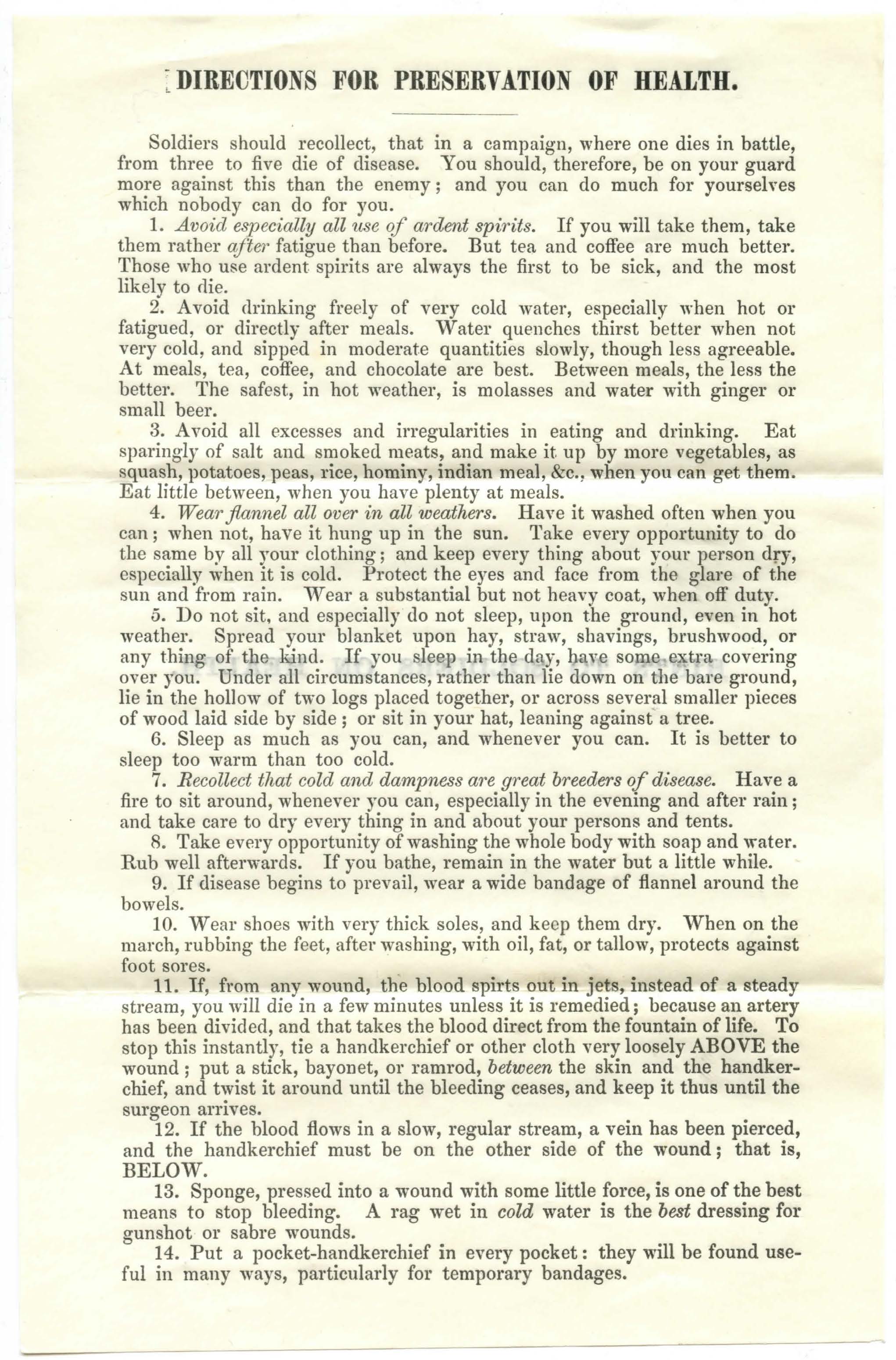
In the Albert Gallatin Browne papers you will find a printed piece of paper entitled, “Hints to Soldiers on Health.” These “Directions for Preservation of Health” give pointers to soldiers serving in the Union Army during the Civil War on how to keep themselves in tip-top shape while living through the worst of conditions and on the move. It includes my favorite tip, number 11, regarding bleeding to death:

If, from any wound, the blood spirts out in jets, instead of a steady
stream, you will die in a few minutes unless it is remedied; because an artery
has been divided and that takes the blood direct from the fountain of life . . .

Aren’t those positive words? If your blood is spurting out, you will most likely die. Don’t forget to wear flannel!

The handout does mention the difference between blood spurting and blood flowing, and what to do in either situation. While it’s necessary to know these things when you are about to enter a battlefield, the rather blunt wording shook me, thinking of all those who did indeed bleed out over the course of the war on both sides.

Number 7 is also a good reminder:

Recollect that cold and dampness are great breeders of disease. Have a 
fire to sit around, whenever you can, especially in the evening and after rain; 
and take care to dry every thing in and about your persons and tents. 

Even in the warmest of climates, it seems like having a fire would still be necessary. As William H. Eastman, a member of the 2nd Battery (Nim’s Battery) of Massachusetts Volunteer Light Artillery writes home to his mother from Bayou Boeuf, Louisiana, 8 May 1863:

. . . the flys are awful thick + as soon as the sun sets 
musquitoes “Oh Dear” tis no use for me to try +
give any idea of their number a swarm of Bees
is no comparison as soon as sundown we build large
fires of corn husks + keep them agoing all night
why if a man has occasion to do a job for himself
after dark he is obliged to take some husks out + build
a fire + sit in the smoke else his rear will be in rather 
a dilapidated condition rather a tough state of things
but such is the case. I am fortunately well off as
I have confiscated the Captains Bed and Musquito bar
that were among the stores but is rather hard for many 
of the poor fellows without bars ^who get up + walk around
half the night to pass the time away.

Well! Hopefully this post has made you feel a little more comfortable with your living conditions, and thankful winter will soon set in and erase mosquitoes from our lives for a short time. Remember, “if disease begins to prevail, wear a wide bandage of flannel around the bowels!”

Meet Some of Our Amazing Archivists

By Rakashi Chand, Reader Services

As a part of American Archives Month, we would like to introduce you to some of our amazing archivists! These are the very talented people that make our collections accessible and make our library work so seamlessly from behind the scenes. We are fortunate to have such an incredible, knowledgeable and dedicated staff, and would like the opportunity to acknowledge the contributions they make every day. 

We asked a handful of our archivists to identify their favorite collection/item at the MHS, indicate their area of expertise or interest, and share fun facts about themselves. 

Anna Clutterbuck-Cook
Reference Librarian


What is your favorite collection or item at the MHS? 

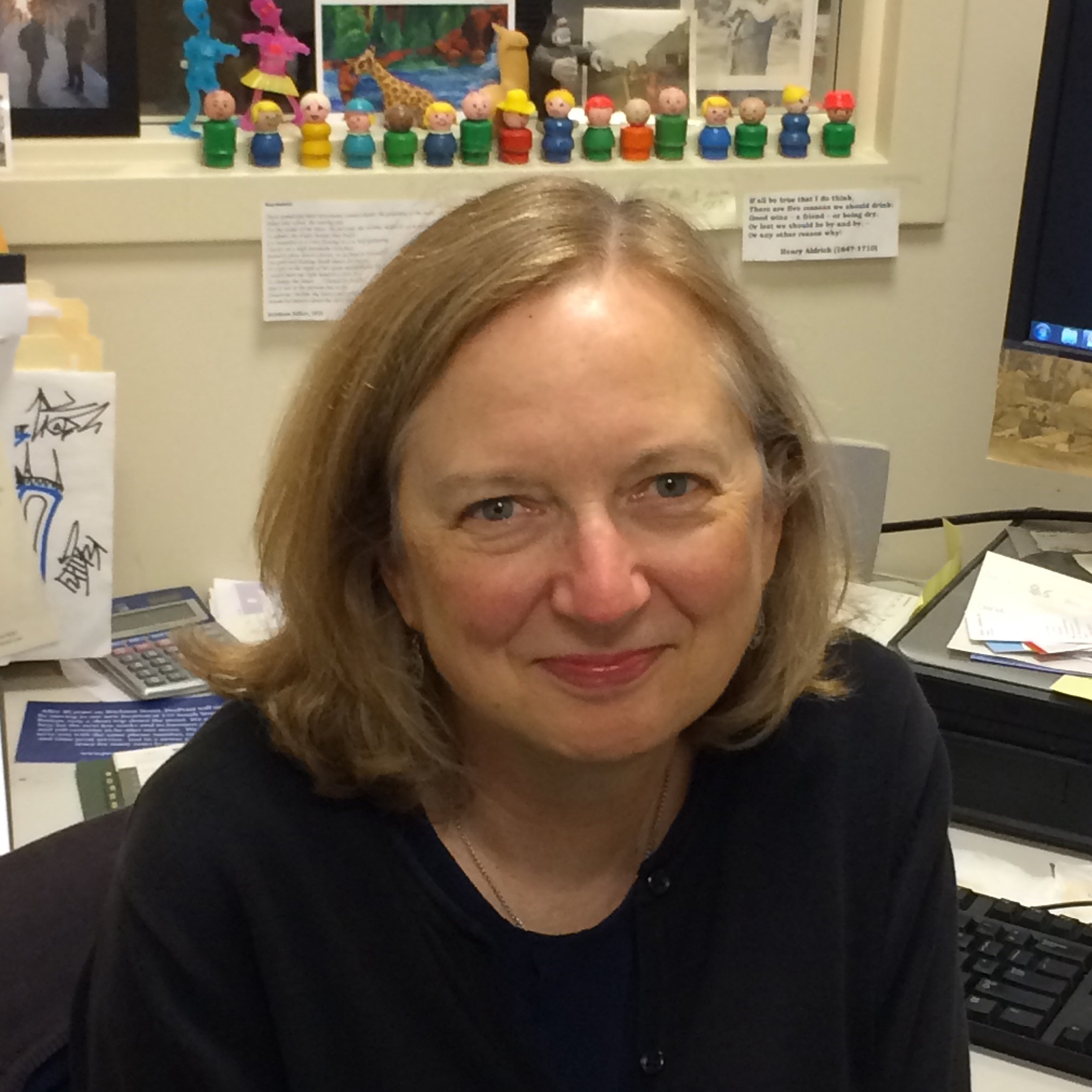
 One of my favorite items in the collection is a letter written from Rev. T. M. C. Birmingham to Margaret C. Robinson on 17 May 1923. In this letter, conservative preacher Thomas M. C. Birmingham of Milford, Nebraska, writes to Margaret C. Robinson, the head of the Massachusetts Public Interests League, seeking an ally in the fight against the “radical propaganda” being disseminated through women’s colleges such as Bryn Mawr, Smith, and Wellesley — propaganda turning “wholesome American girl[s]” away from patriotism and the Constitution, preaching “Communist sex standards,” calling the literal truth of the Bible into question, and exposing young women to the theories of Freud and Marx.  The MHS featured this document as one of our Objects of the Month in February 2011. 

Please describe your area of historical interest.

My research as a historian focuses on 20th century American religious and cultural history, particularly the ways in which American Protestants engaged with (and helped to create) new ways of thinking about gender, sex, and sexuality. I am interested in mainline and left-leaning Protestant participation in the feminist and gay liberation movements during the 1970s. I have also become interested in the (not at all unrelated) ways that American reproductive politics have been shaped by conservative Christian and white supremacist ideas about white womanhood and white women’s sexuality, reproductive decisions, and actions. 

What is a fun fact about you?

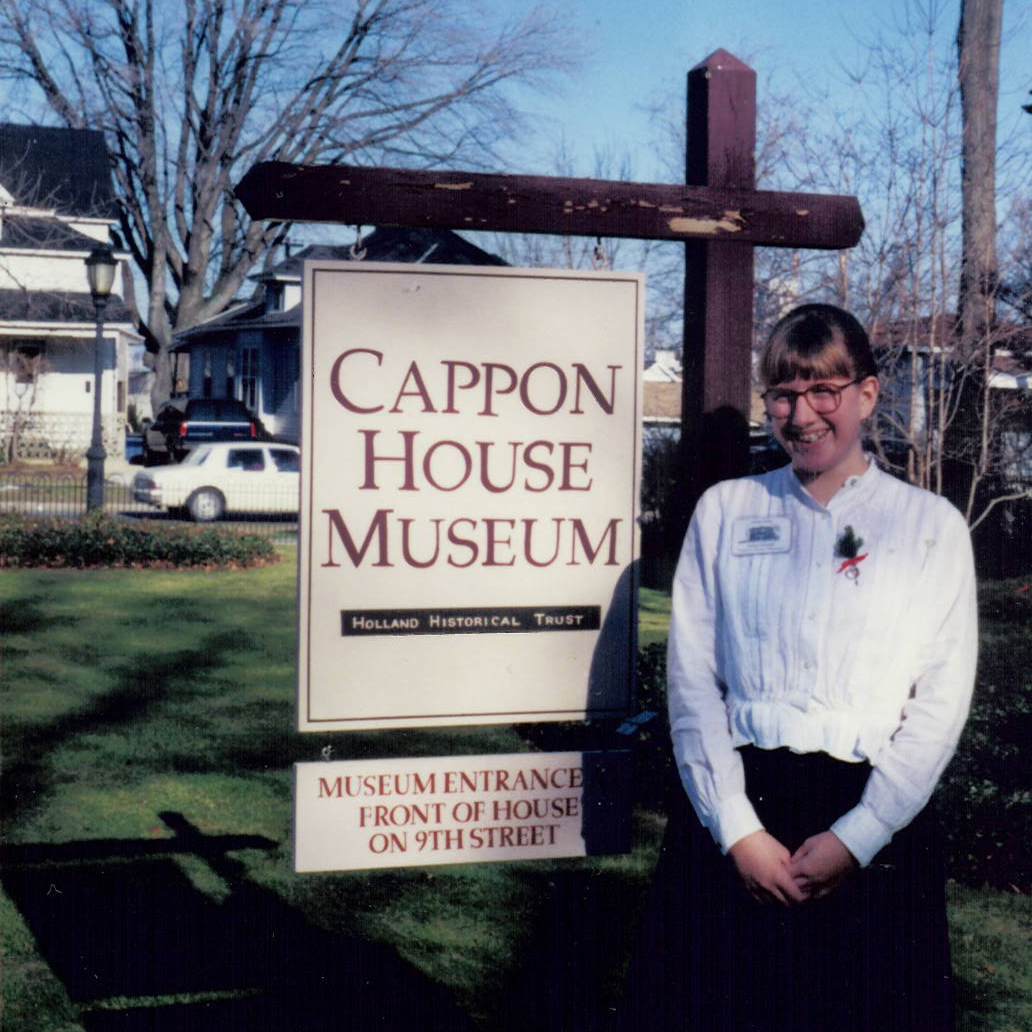
My first job in public history was volunteering as a tour guide at the Cappon House (Holland, Mich.) a historic home built in 1874 to house my hometown’s first mayor, his second wife, and some of his eleven children! The photograph above is me on my first day as a volunteer in the autumn of 1993, when I was twelve years old. 


Katherine H. Griffin
Nora Saltonstall Preservation Librarian


What is your favorite collection or item at the MHS?  

 Forbes family papers and other China trade collections, plus any ships’ logs.

What is a fun fact about you?

When I started working here, women staff members were expected to wear dresses or skirts always (no pants allowed).


Hannah Elder
Library Assistant


What is your favorite collection or item at the MHS? 

At the moment, my favorite collection is the Massachusetts Audubon Society Records. Mass Audubon was founded in the 1890s by two women, Harriet Hemenway and Minna Hall, who used their social influence to protect birds by encouraging women to stop wearing feathered hats. Their work led to many protections for birds and Mass Audubon is still around today! 

Please describe your area of historical interest.

My historical passion is the Medieval period, but I’m very interested in the American colonial period as well. I also love the study of material culture and the way it can inform our understanding of history. 

What is a fun fact about you?

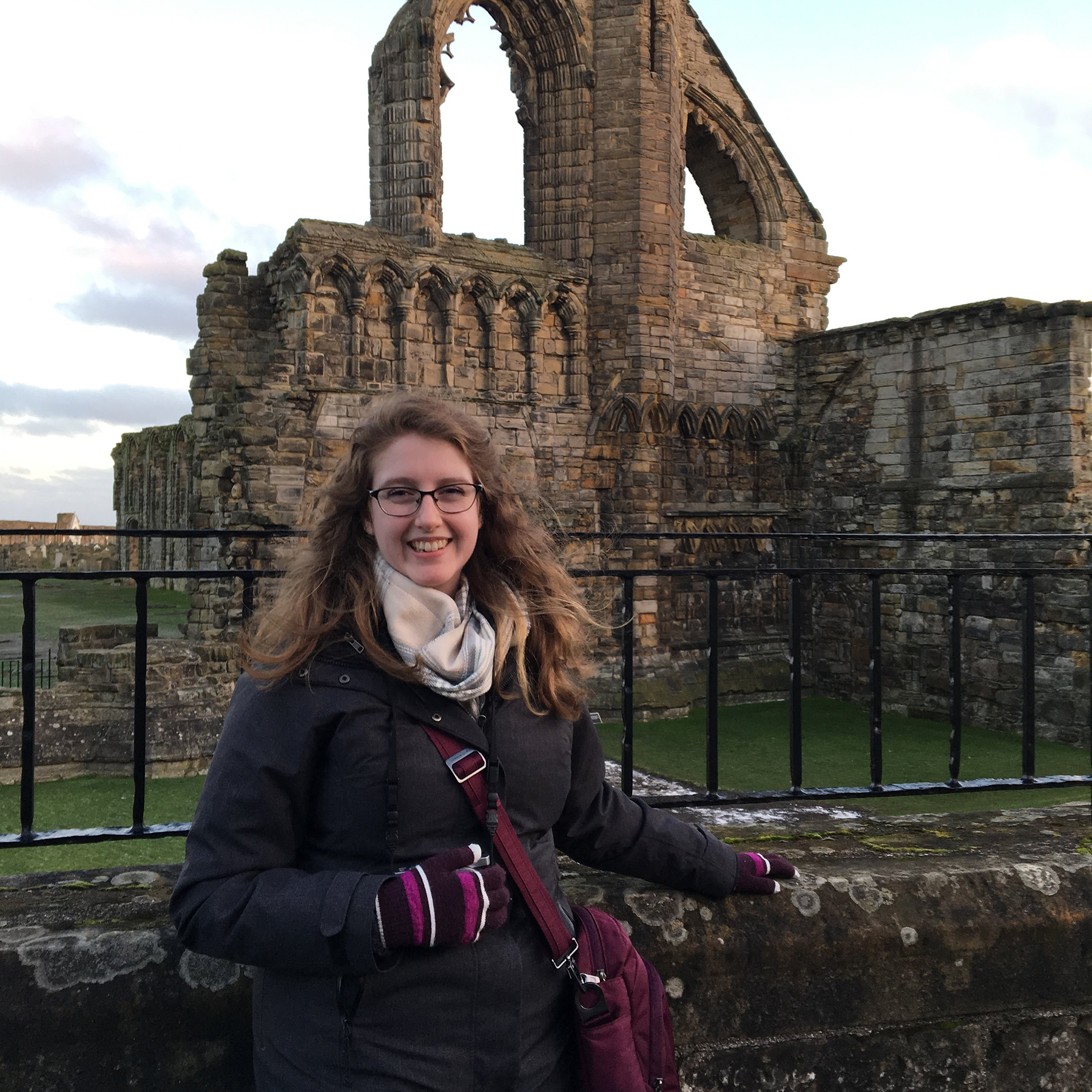
I spent a semester at the University of St Andrews in Scotland, where I learned Scottish Country Dancing! 


Ashley Williams
Library Assistant


What is your favorite collection or item at the MHS? 

My favorite item at the MHS is probably The Identity of Napoleon and Antichrist completely demonstrated… which is an essay we have on microfilm that I wrote a blog about last year. The unknown author sets out to prove Napoleon Bonaparte is the Antichrist by comparing excerpts from Revelations to significant aspects of his reign. 

Please describe your area of historical interest.

My historical interests include French History from the reign of the Bourbons through the reign of Napoleon, WWII history, and Jewish History.

What is a fun fact about you?

I was once in a college production of Sweeney Todd the Demon Barber of Fleet Street.


Brendan Kieran
Library Assistant


What is your favorite collection or item at the MHS? 

I really like Lilian Freeman Clarke’s 1864 diary, particularly her candid entries about and addressed to Emily Russell.

Please describe your area of historical interest.

My interests include late 19th- and early 20th-century U.S. history and the history of gender and sexuality.

What is a fun fact about you?

I contribute 90s music knowledge on my trivia team.


Do you have a question for one of our staff members? Please contact us at library@masshist.org

Every month is American Archives month at the MHS! Continue to celebrate with us throughout the year and join us in thanking our amazing archivists for what they do every day!


This Week @MHS

This week we have a pair of Brown Bag talks, two evening programs, the first seminar in a new series, and a sold out tour. Details below:

– Monday, 15 October, 12:00 PM: Examining Land Ownership in the Praying Towns of New England with Taylor Kirsch, University of California, Santa Cruz. Across the tumultuous borderlands of 17th-century Southern New England, a diverse indigenous population numbering in the thousands carved out space for themselves via an unlikely colonial project, “praying towns.” This talk explores the complexities of indigenous land tenure within these communities, and its role in shaping the cultural, political, and spiritual landscape of New England.

Monday, 15 October, 6:00 PM: “All Legislative Powers…” Article 1 of the U.S. Constitution Then & Now with Margaret H. Marshall, Choate, Hall, & Stewart, and former Chief Justice of the Supreme Judicial Court of Massachusetts; Jack N. Rakove, Stanford University, and Pulitzer Prize recipient. Join us for a thought-provoking conversation on the history surrounding the issues that are framed by Article 1 of the Constitution, which established the U.S. Congress and defined its powers, including the rights to tax, raise armies, and regulate commerce and naturalization. Marshall and Rakove will discuss the historical context in which the article was drafted in the 1780s, as well as the current meaning and impact of the article in contemporary legal thought and practice. The Massachusetts Constitution will serve as counterpoint to the national story. This event will take place at The American Academy of Arts and Sciences, 136 Irving Street, Cambridge, Mass. A pre-talk reception begins at 5:00 PM; the speaking program begins at 6:00 PM. 

– Wednesday, 17 October, 12:00 PM: “Watering of the Olive Plant”: Catechisms & Catechizing in Early New England with Roberto Flores de Apodaca, University of South Carolina. Early New Englanders produced and used an unusually large number of catechisms. These catechisms shaped relations of faith for church membership, provided content for missions to the Indians, and empowered lay persons theologically to critique their ministers. This talk explores the content and the function of these unique, question and answer documents.

– Wednesday, 17 October, 6:00 PM: The Field of Blood: Violence in Congress & the Road to Civil War with Joanne Freeman, Yale University. Joanne B. Freeman recovers the long-lost story of physical violence on the floor of the U.S. Congress. Drawing on an extraordinary range of sources, she shows that the Capitol was rife with conflict in the decades before the Civil War. Legislative sessions were often punctuated by mortal threats, canings, flipped desks, and all-out slugfests. Pistols were drawn and knives brandished in an attempt to intimidate fellow congressmen into compliance, particularly on the issue of slavery. A pre-talk reception begins at 5:30 PM; the speaking program begins at 6:00 PM. There is a $10 per person fee (no charge for MHS Fellows and Members or EBT cardholders). 

– Thursday, 18 October, 5:15 PM: Losing Laroche: The Story of the Titanic’s Only Black Passenger with Kellie Carter Jackson, Wellesley College, and comment by Saje Mathieu, University of Minnesota. Losing Laroche is the first in-depth study of the only black family on board the RMS Titanic. The story of the Haitian Joseph Philippe Lemercier Laroche and his descendants is largely unknown and troubles the assumption of an all-white Titanic narrative.This paper seeks to understand the possibilities of black advancement in the Titanic moment and throughout the Diaspora. This is part of the Boston Seminar on African American History series. Seminars are free and open to the public. 

– Saturday, 20 October, 10:00 AM: The History & Collections of the MHS. Join us for a 90-minute docent-led tour of our public rooms. The tour is free, open to the public, with no need for reservations. If you would like to bring a larger party (8 or more), please contact Curator of Art Anne Bentley at 617-646-0508 or abentley@masshist.org.

– Saturday, 20 October, 10:00 AM: Tour of Longfellow Bridge with Miguel Rosales. Please note that this program is SOLD OUT. After five years and over $300 million worth of construction and refurbishment, the beautiful and historic Longfellow Bridge is once again fully operational. Constructed at the turn of the 20th century and designed with an eye towards the greatest infrastructure projects of Europe, the Longfellow Bridge has long been one of the most striking and beloved landmarks in Boston. Architect and urban designer Miguel Rosales has been involved in this restoration project for close to 15 years and will lead visitors on an in-depth tour of this exceptional bridge.

Fashioning the New England Family is open Monday through Saturday, from 10:00 AM to 4:00 PM. The exhibition explores the ways in which the multiple meanings of fashion and fashionable goods are reflected in patterns of consumption and refashioning, recycling, and retaining favorite family pieces. Many of the items that will be featured have been out of sight, having never been exhibited for the public or seen in living memory. The exhibition is organized as part of Mass Fashion, a consortium of cultural institutions set up to explore and celebrate the many facets of the culture of fashion in Massachusetts. 

Take a look at our calendar page for information about upcoming programs.

New Transcriptions Released for John Quincy Adams’ Diary

By Neal Millikan, Digital Projects Editor

Amid his daily whirl of diplomatic duties, John Quincy Adams paused to reflect on his latest dispatch to President James Monroe. After several rewrites, Adams had drafted a course of action that would shape American foreign policy for more than a century, and he was proud of it. “I considered this as the most important paper that ever went from my hands,” John Quincy wrote of his role in formulating the Monroe Doctrine, in which the United States called for European non-intervention in the western hemisphere and specifically in the affairs of the newly independent Latin American nations. This week, you can explore the Era of Good Feelings anew, thanks to our release of the next set of transcriptions on The John Quincy Adams Diary Digital Project covering March 1821 to February 1825 when he served as secretary of state for Monroe’s second presidential term.

John Quincy also kept a close eye on the American political landscape during these years. Sectional divisions and the personal rivalries between the men seeking to succeed President Monroe made this a particularly contentious period. The campaign for the 1824 election began in 1821, and eventually four viable candidates emerged: Adams, Representative Henry Clay of Kentucky, Secretary of the Treasury William H. Crawford of Georgia, and General Andrew Jackson of Tennessee. Jackson led the popular as well as the electoral vote; however, no candidate obtained the majority of votes necessary for election. The vote then fell to the House of Representatives where each state, regardless of population, had one vote, and a majority of the states was necessary for election. John Quincy finally won the contest in February 1825.

Throughout this period, John Quincy’s family remained a significant private concern. His three sons—George Washington Adams, John Adams 2d, and Charles Francis Adams—struggled academically at Harvard, and his wife Louisa Catherine Adams suffered from bouts of poor health. He maintained his exercise regimen of swimming in the spring and summer and walking in the fall and winter. He also continued to faithfully keep his diary entries—a difficult task due to his busy work schedule and growing number of daily office visitors: “I never exclude any one. But necessary and important business suffers, by the unavoidable waste of time.” For an overview of John Quincy’s life during these years, read the headnotes for each chronological period or, navigate to the entries to begin reading the diary.

A Mother’s Conviction and A Little Girl’s Courage: Cancer Surgery in 1881

By Rakashi Chand, Reader Services

In honor of Cancer Awareness month, I would like to share with you the extraordinary story of young Mabel Cabot, who underwent cancer surgery in 1881. Mabel’s story is preserved thanks to the careful and detailed diary entries kept by Mabel’s mother, Elizabeth Rogers Mason Cabot. The diary entries document daily activities and events, providing this unique look at cancer care and treatment in the 19th century. 

On 13 October 1880, Mabel fell, and as described in the diary, she suffered a great deal. The fall caused an undetected tumor to move and created new and painful growth, leading to the realization that eight-year-old Mabel Cabot had Ovarian Cancer.

Extracts from the Diary of Elizabeth Rogers Mason Cabot pertaining to Mabel’s cancer:

13 October 1880

“Mabel fell in afternoon and brought in by Marianne suffering a great deal.”

15 October 1880

“…Mabel very sick. Lizzie and I took care of her.”

11 November 1880

“Miss Russell came as a nurse for Mabel.”

9 December 1880

“Mabel celebrated her first dinner downstairs by drinking champagne- looks as well as ever, but leg stiff – Out to drive.”

29 January 1881

“Dr. Sabine has decided that Mabel’s trouble, apparently unchanged for some time, has begun to increase and with it our anxiety.”

2 February 1881

“Consultation of Dr. Bigelow and Dr. Hodges. No hope.”

21 February 1881

“Went to see Dr. Tom Curtis. -Urged us to go abroad.”

22 February 1881

 “Dr. John Homans came to see Mabel. Considers it Sarcoma – a hopeless case.”

 30 March 1881

“Mabel awake a good deal in night tho’ not in pain. I sat up singing to her sometime. . . 

This morning the medicine I gave the children affected them well, but Mabel complains of tenderness whenever she moves. My heart sinks . . .

She feels pain in walking & moves slowly & carefully.”

[American doctors have declared Mabel’s cancer hopeless, so the family departs for London in an attempt to save her, although it is risky. They leave Brookline on 23 March and arrive in London on 4 April.]

5 April 1881

“Mabel felt badly about another examination, but recovered and was her own smiling little self. Dr. Thornton agrees to the probability of sarcoma but advises an examination with the needle.”

7 April 1881

“Wrote in afternoon and shivered with dread. Mr. C. took the children for an hours walk.- At 5, Mr. Spencer Wells, Sir James Paget, Mr. Thornton & Meredith arrived. Mabel agreed to see the latter without much discomfort and when I told her that I wanted her to smell something which I had taken, & would do her no harm, she put her little hand into mine, & never hesitated. Mr. M administered the Bicloid of Methylene which they use instead of Ether. I remained in the room. The needle seemed as if going thro’ soft bone. Mabel came out from the ether very quietly, with no nausea. Physicians decided that it was ovarian in character but also might be malignant but unanimously & decidedly advised an exploratory opening. Give no hope other wise for life longer than 6 months, and probably attended with much suffering.”

10 April 1881

At 8:30 Mr. Thornton arrived for a last talk. He considers it absolutely sure that this is a solid tumor. He came across substances with the needle that could not be pierced, He considers it equally sure that it will enlarge. If left to itself it causes death by disturbance of all the organs, a slow &very suffering death- the most so he thought of all deaths- if it is malignant, death may ensue at any moment by rupture, piercing, of the bowels or similar injury elsewhere. His diagnosis is that this is a dermoid ovarian tumor, ovarian from the position, as first observed by me, dermoid from its hardness (bone, hair, teeth etc being often found). He thinks the hall may have twisted it on its pedicle in such a way to stop the passage of blood, and so arrested the growth. The renewed growth would come from new attachments. These are at fist very delicate and removable by the finger, afterwards become more tough and must be parted with scissors and tied – later are much harder. He proposes making a small opening in the flesh outside the tumor sufficient to insert the finger and lay bare the surface of the tumor. If he discovers the tumor, (and he expects to be able to ascertain) to be malignant, the wound is easily healed and becomes as sound as before with no painful consequences. If he finds no proof of its being malignant he will make a large opening, sufficient to insert the hand, and ascertain if the attachments are such as can be dealt with with any hope of success. This involves more risk, but the tumor will not be pierced except by accident, and that will probably heal well. If. However, the attachments would give any ground for hope of a successful removal, he would complete the operation at once. Danger would then be from death at the time from the great shock to the system, or from bleeding. If she lived through the operation, there would be a good chance for recovery, and she might be well in three weeks.  -Mr. C. & I both said that we wished the operation proceeded with, if there was any hope of success, we should rather she died in the operation, rather than to recover and die by inches. He told us of a nurse and lodgings and we talked over further arrangements. Did not leave until after ten, & refused a fee. Very gentlemanly and very sympathetic.”

14 April 1881

“Rain. This made it easy to keep Mabel contented in not going out. Had her breakfast, of fish and bread and butter, and milk at 8, and at 11 some beef tea and toast. Dressed her etc., and took her after her lunch into the dining room downstairs. Walter had been out early and bought a bag for Elliot and some breastpins for the women. She busied herself writing the names and hers on all the boxes. Miss Matthews hard at work arranging the room upstairs, the curtains, the beds, the fire, the table and carpets etc.

Sent Rose out for a knit jacket. Got home just in time to send her and Mlle. and Walter off in a brougham at 25 minutes after one, as Mr. Thornton arrived, he in his shirtsleeves with carbolic acid, boiling water etc., etc.

At two Meredith arrived. I told her he wanted to see her upstairs, and without hesitation or objection went up with me into the back room and as undressed. Put her on the bed. When she saw him come in with the bottle and tube for giving the methylene hung round his neck, she looked a little wistful, but said nothing and put her hand in mine. In a few moments she was unconscious, and he took her up and carried her to the other room and put her on the table. There were Sir James Paget, Mr. Spencer Wells, Mr. Thornton, Mr. Meredith, an assistant, and the nurse. I came downstairs at ten minutes after two. At twenty minutes of three Sir James P. came down to say that a large dermoid ovarian tumor had been perfectly and beautifully removed with very slight loss of blood, nothing malignant, nothing extraordinarily difficult. I don’t know what I felt, for when I heard his descending steps so soon, all my worst fears I suppose realized, and that he had come to say nothing could be done. He was wonderfully kind. Sir James Paget and Mr. Wells drove off with their carriages and pairs at 4, the whole being completed. They said they thought the chances were ten to one in her favor.”


You will be relieved to know, as I was, that Mabel does indeed survive, and goes on to live a full life. In fact, in 1904 Mabel Cabot marries Ellery Sedgwick, the future Editor of the Atlantic Monthly. Mabel Cabot Sedgwick wrote The Garden Month by Month in 1907, a revered guide to garden plants. At their Long Hill Estate in Beverly MA, Mabel began planning Gardens in 1916; Preserved by the Trustees, those same gardens, The Gardens at Long Hill, can still be seen today: www.thetrustees.org/what-we-care-about/history-culture/gardeners-garden.html

Elizabeth Rogers Mason Cabot was a woman of great conviction, and thankfully for future generations, a fabulous diarist. She documented much of her amazing life, starting when she was only nine years old. Her most captivating and detailed diary entries are from her youth and newlywed years, full of vibrant and extensive detail. Her thoughts on the Role of Women in society and in the home are intriguing, inspiring and insightful. The diaries to which Elizabeth turned to keep her most intimate thoughts, greatest sorrows, fears and speculations, are an incredible look into the lives and times of nineteenth century Bostonians. Elizabeth was born into wealth, and married into wealth, so her daily life is a testament to the lifestyle of the Boston ‘Brahmins’. Elizabeth’s diaries are part of the Rogers-Mason-Cabot Papers held at the MHS. 

The entirety of Elizabeth’s diaries are fascinating and intriguing, and I encourage you to read them fully, as I am only sharing this one part of Elizabeth’s life. The diary is full of descriptions of Concerts, the theatre, friends coming to call, vacations in Newport and New Hampshire, and luxurious shopping excursions… and then the entries when Elizabeth realizes that her young daughter has cancer. I was so touched by these diary entries that I found myself on the verge of tears while consulting them in the Reading Room. Dear little Mabel and her mother heroically fought cancer together in 1881, and against all odds, they won!

Many of Elizabeth Rogers Mason Cabot’s dairy entries can be found transcribed in More than Common Powers of Perception : the Diary of Elizabeth Rogers Mason Cabot edited by P.A.M. Taylor(Boston : Beacon Press, c1991).

This Week @MHS

Here is a look at what is going on at the MHS this week:

– Monday, 8 October, 10:00 AM to 3:00 PM: MHS Open House in conjunction with Opening Our Doors celebration in the Fenway Cultural District. Please note that the library will be closed for the day.

– Tuesday, 9 October, 5:15 PM: Panel: Native American Environmental History with Lisa Brooks, Amherst College; Strother Roberts, Bowdoin College; Ashley Smith, Hampshire College; Thomas Wickman, Trinity College, and moderator Cedric Woods, University of Massachusetts–Boston. This panel will explore the intersections of environmental history and indigenous studies—the questions that each field engenders in the other, as well as the perspectives that native and non-native scholars bring to their research as they traverse both fields. Questions of race, gender, geography, and sources enliven this growing body of scholarship. This is part of the Boston Seminar on Environmental History series. Seminars are free and open to the public. 

– Thursday, 11 October, 6:00 PM: Writing Presidential Biographies with Evan Thomas. The author of 9 books and a former writer and editor for Time and Newsweek, Evan Thomas is the first speaker in our new MHS Speaker Fund annual lecture series. Having published books on Roosevelt, Eisenhower, Nixon, Clinton, and Obama, he will offer his insight into writing presidential biographies. A pre-talk reception begins at 5:30 PM; the speaking program begins at 6:00 PM. There is a $20 per person fee (no charge for MHS Fellows and Members or EBT cardholders).

– Saturday, 13 October, 10:00 AM: The History & Collections of the MHS. Join us for a 90-minute docent-led tour of our public rooms. The tour is free, open to the public, with no need for reservations. If you would like to bring a larger party (8 or more), please contact Curator of Art Anne Bentley at 617-646-0508 or abentley@masshist.org.

Stop by to see our new exhibition Fashioning the New England Family.  

A Yankee in Virginia, 1864

By Susan Martin, Processing Archivist & EAD Coordinator

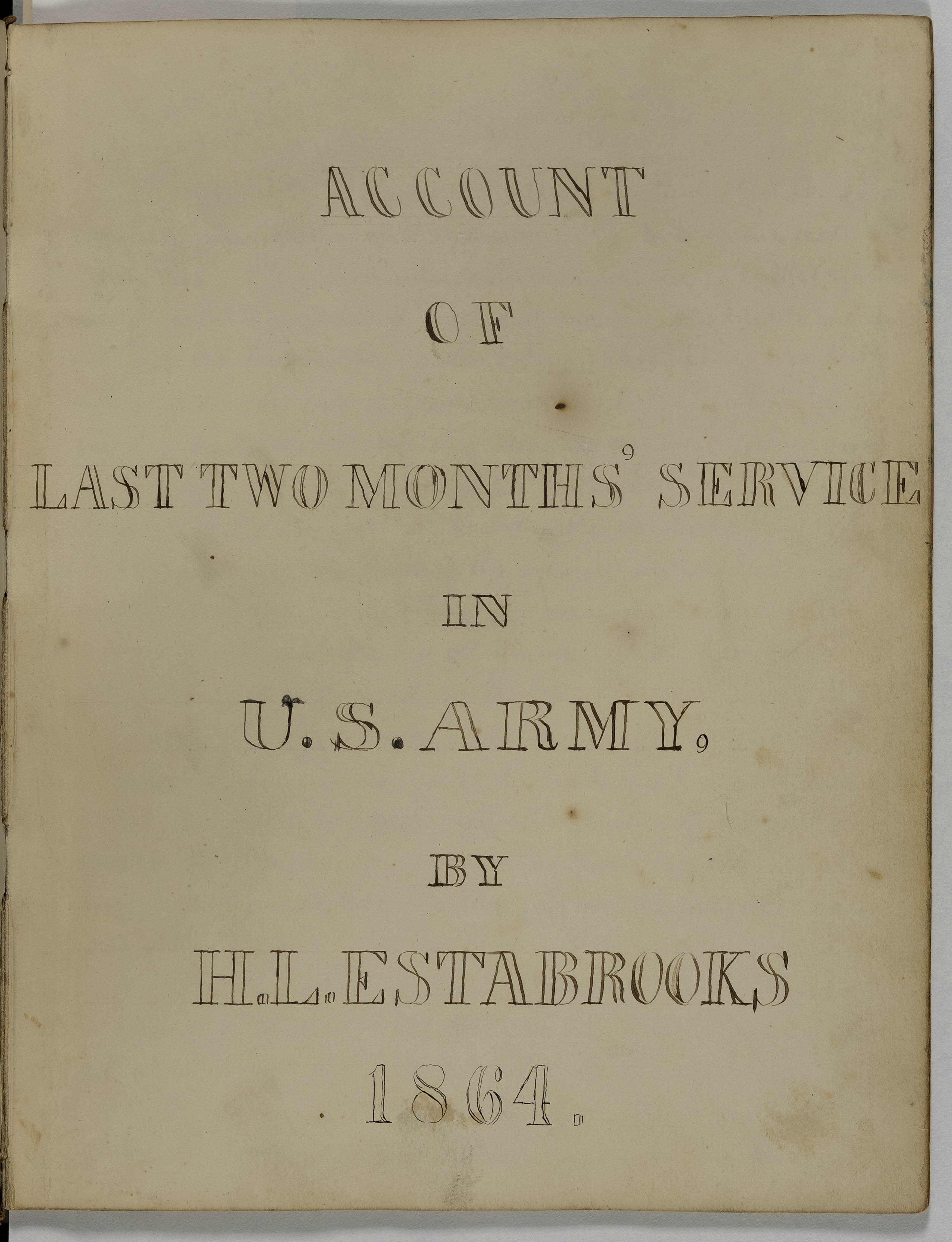
The MHS recently acquired a fascinating manuscript volume by Lt. Henry L. Estabrooks of the 26th Massachusetts Infantry describing his six weeks as a fugitive in Virginia during the Civil War. Estabrooks was captured by the Confederate Army in September 1864, but escaped from a transport train and made his way back to Union lines with the help of a number of slaves and free blacks along the way. These men, women, and children not only hid Estabrooks—at great risk to themselves—from plantation owners and Confederate soldiers, but also gave him food, shelter, clothing, and comfort.

There are too many terrific passages to quote, but here’s what Estabrooks wrote on 17 October 1864.

When it came dark a negro came in and told me to come out to one of the cabins, it was a real neat pleasant one. The old woman looked, dressed, and spoke very much like a nice old quaker lady. Her son was a great jovial fellow of about 20 yrs. He had a spelling book and I, judging from his actions that he wished to make a display of his learning, took the book which opened of itself at the page commencing with “Baker.” He knew the whole page when I asked him the words in regular succession but failed a few times when I skipped about. He was as black as a coal but there was something real good and noble about him.

The next day, he saw something very different on another plantation.

He led me into a squalid cabin where half a dozen wretched looking negroes were crouching over a fire. They were very poorly clad and degraded looking, by far the worst looking negroes I saw in the South. They said their master’s name was Skipper, and that he was a very hard one. […] The negroes were not allowed to leave the island. One young fellow lay on the floor, sick, from the effects of a severe whipping which he had received for going to Clarksville the past Sunday. He showed me his back, still raw from the cuts of the lash. I was too weary to notice much and what I do remember of that night seems like some heavy night mare.

Estabrooks’ account was written shortly after his return home to Dorchester, Mass., then published in 1866 as Adrift in Dixie; or, a Yankee Officer Among the Rebels. 

The man responsible for shepherding the manuscript to publication was Northern abolitionist James Roberts Gilmore, who wrote under the nom de plume Edmund Kirke. According to the introduction to Adrift in Dixie, Estabrooks’ brother brought the story to Gilmore and said it demonstrated “how faithful and kind the Southern negroes were. […] We owe my brother’s life to the negroes.” Gilmore insisted on its publication, arguing that it would prove to readers that black Americans deserved not only freedom, but suffrage.

There are two things in particular that make this volume so fascinating. First, Estabrooks’ original account was revised for publication, probably by Gilmore, and the original text has never been in print. These revisions included not just editorial changes, but also pseudonyms. Many of the names of slaves, free blacks, and white Southerners were changed or removed entirely. For example, here’s how one passage reads in the published version.

Entering [the house], I saw several men; and the sight of one of them made me for the moment think I was betrayed. I turned to fight my way out: but the kindly, amused looks of the negroes re-assured me; and, as I hesitated, the man in question—who was as white as I am, and dressed in a Confederate uniform—took off his hat, and bade me good-evening in a manner which at once satisfied me that he was a slave. A poor white he certainly was not; he was too well-bred and good-looking for one of that class: […] he was the son of the deceased planter by a quadroon house-servant.

But Estabrooks’ original, unrevised manuscript identifies the planter by name.

On entering I saw several men, at sight of one of whom I thought I was betrayed, and turned to fight my way out, but the kindly, amused looks of the negroes stopped me and as I hesitated, the man in question who was dressed very much like some of the Confederate soldiers and who was as white as myself, took off his hat and bade me good evening in a manner which at once assured me he must be a slave. A poor white he certainly was not, he was too well bred and good looking for one of them. […] He was the son of the defunct Bragsley by a quadroon house servant.

Last but definitely not least, Estabrooks was a talented amateur artist, and his manuscript includes six pencil illustrations of scenes in the story. None of these illustrations has been published. Here is Estabrooks’ drawing of his initial escape from the prisoner transport train. You can see him crouching behind a bush in the foreground.

And this drawing shows two young black men who, after guiding Estabrooks to the Dan River, prayed for him on the bank as he rowed away.

Henry L. Estabrooks dedicated this volume to his wife Minnie. He died in 1919 at the age of 77.

Barbara Hillard Smith’s Diary, October 1918

By Lindsay Bina, Intern and Anna Clutterbuck-Cook, Reader Services

Today we return to the 1918 diary of Newton teenager Barbara Hillard Smith. You may read our introduction to the diary, and Barbara’s previous entries, here:

January | February | March | April

May | June | July | August | September

As regular readers of the Beehive know, we are following Barbara throughout 1918 with monthly blog posts that present Barbara’s daily life — going to school, seeing friends, playing basketball, and caring for family members — in the words she wrote a century ago. Here is Barbara’s August, day by day.

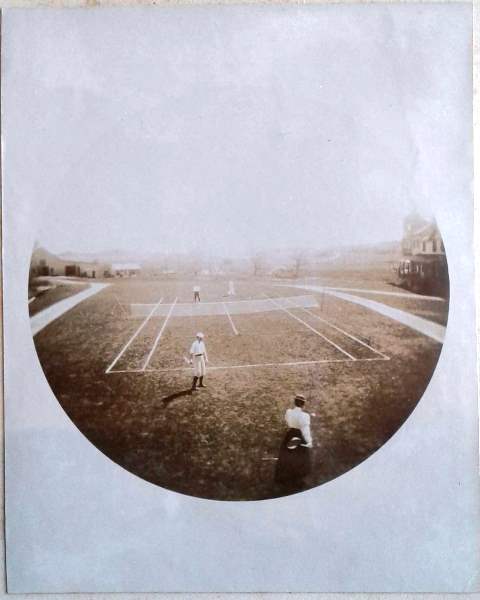
Image: Kodak snapshot of unidentified individuals playing tennis, Glades Club photograph album, ca. 1900-1910. MHS Photo Coll. 270. 

* * *

TUES. 1 OCTOBER
Went over to Pegs. Lasell closed. Tennis

WED. 2
Over to Pegs. School still closed.

THURS. 3
Surgical dressings – morning + evening – shampoo – in town.

FRI. 4
Pegs. Made masks in evening.

SAT. 5
Over to Roxbury in [Hurry]. Made masks.

SUN. 6
Church closed. Ben, Margaret + Wendell to supper

MON. 7
Made masks. Took care of sonny.

TUES. 8
Over to Pegs. Took care of sonny. Pete’s room. Met R. Dirwin

WED. 9
Over to Pegs. Nothing doing.

THUR. 10
Over to Pegs for lunch. Played cards. Pete sick.

FRI. 11
Over at Petes and at Pegs. Took care of sonny.

SAT. 12 COLUMBUS DAY
Went over to Pegs

SUN. 13
Pete to dinner. I had an awful cough

MON. 14
Cough worse. Hung around at Pegs

TUES. 15
Went to Cochituate. Cough Better.

WED. 16
Hung around. Mrs. Reed’s

THUR. 17
Mrs. Spauldlings. Cousin Bert came. Dance at Eli’s. S- is a dear.

FRI. 18
Down town. Wrote letters

SAT. 19
In town. Grandma fell three times. Dr. Godfrey’s.

SUN. 20
Hung around. Walk with Peg. Peg to supper.

MON. 21
School. In town

TUES. 22
School. Up to Babies

WED. 23
School. Up to Babies. Mother went to New York

THUR. 24
School. Down to Muriels. Muriel over night

FRI. 25
School. Babies. Muriel over night. Boil.

SAT. 26
Mother came home. Sick?

SUN. 27
Rally Sunday. Morgen Thalers for supper.

MON. 28
School. Babies.

TUES. 29
School. Peg’s. Came down with flu.

WED. 30
School. Babies. Felix Ranlett wounded

THUR. 31
School. Went swimming. Reed’s in Evening

* * *

If you are interested in viewing the diary in person in our library or have other questions about the collection, please visit the library or contact a member of the library staff for further assistance.

*Please note that the diary transcription is a rough-and-ready version, not an authoritative transcript. Researchers wishing to use the diary in the course of their own work should verify the version found here with the manuscript original. The catalog record for the Barbara Hillard Smith collection may be found here.


This Week @MHS

There is a lot going on at the MHS this week including the opening of our next exhibition Fashioning the New England Family on Friday, 5 October.

Tuesday, 2 October, 5:15 PM: The Protestant Cult of the Dead in New England, 1800-1848 with Erik Seeman, State University of New York at Buffalo, and comment by Kenneth Minkema, Yale University. Many 19th-century Protestants in New England held religious ceremonies venerating deceased family and friends, in addition to their orthodox worship of God. This paper examines women’s desires to connect with their deceased loved ones, and argues that this drove important developments in Protestant belief and practice. It shows how pious Protestants maintaining connections with the dead made séance Spiritualism a transatlantic sensation in 1848. This is part of the Boston Area Seminar on Early American History series. Seminars are free and open to the public.

– Wednesday, 3 October, 12:00 PMNative Citizens: Race, Culture, & the Politics of Belonging, 1884-1924 with Lila Teeters, University of New Hampshire. As the 19th century gave way to the 20th, Native activists played an essential—yet overlooked—role in shaping constructions of American citizenship. Some pushed to harden the political boundaries separating Native nations from their American foil, while others sought to remove those boundaries completely. Still others sought a more permeable relationship. This talk traces those debates from the 1884 Elk v. Wilkins decision through the 1924 Indian Citizenship Act. 

 Wednesday, 3 October, 6:00 PM: American Honor: The Creation of the Nation’s Ideals during the Revolutionary Era with Craig Bruce Smith, William Woods University. The American Revolution was not only a revolution for liberty and freedom; it was also a revolution of ethics, reshaping what colonial Americans understood as “honor” and “virtue.” As Craig Bruce Smith demonstrates, these concepts were crucial aspects of Revolutionary Americans’ ideological break from Europe, shared by all ranks of society. Focusing his study primarily on prominent Americans who came of age before and during the Revolution, Smith shows how a colonial ethical transformation caused and became inseparable from the American Revolution, creating an ethical ideology that still remains. A pre-talk reception begins at 5:30 PM; the speaking program begins at 6:00 PM. There is a $10 per person fee (no charge for MHS Fellows and Members or EBT cardholders).

– Thursday, 4 October, 6:00 PM: Fashioning the New England Family: Sneak Preview ReceptionMHS Fellows and Members are invited to the the opening of Fashioning the New England Family. The exhibition uncovers stories as told by various samples of clothing, fabric, accoutrements, and associated manuscripts—many shown for the first time. Join us and explore several family narratives as well as the cultural, social, and economic history of Massachusetts through the lens of fashion. This event is open only to MHS Members and Fellows.

– Friday, 5 October, 10:00 AM: Fashioning the New England Family opens to the public. The exhibition explores the ways in which the multiple meanings of fashion and fashionable goods are reflected in patterns of consumption and refashioning, recycling, and retaining favorite family pieces. Many of the items that will be featured have been out of sight, having never been exhibited for the public or seen in living memory. The exhibition is organized as part of MASS Fashion, a consortium of cultural institutions set up to explore and celebrate the many facets of the culture of fashion in Massachusetts. 

– Friday, 5 October, 12:00 PM: Liverpool, Slavery, & the Atlantic Cotton Frontier c. 1763-1833 with Alexey Krichtal, Johns Hopkins University. This talk follows the enslaved peoples who toiled on cotton estates in the Caribbean, Northeast Brazil and the American South, the planters who owned cotton plantations, the mariners who crossed the Atlantic basin shipping the fiber to Europe, and the merchants who linked enslaved producers to the Manchester manufacturers and fashion-orientated consumers in the Americas on a scale never see before, helping to usher in the first Industrial Revolution.

– Saturday, 6 October, 10:00 AM: The History & Collections of the MHS. Join us for a 90-minute docent-led tour of our public rooms. The tour is free, open to the public, with no need for reservations. If you would like to bring a larger party (8 or more), please contact Curator of Art Anne Bentley at 617-646-0508 or abentley@masshist.org.

– Saturday, 6 October and Sunday, 7 October: Boston Occupied: The British Are Coming . . . Again! Join us as British Redcoats will land from tall ships at Long Wharf and march up State Street with drums beating and flags flying to “occupy” Boston as they did 250 years ago. Visit www.revolution250.org for more information.

Please note that the Library is closed on Monday, 8 October but the galleries are open from 10:00 AM to 3:00 PM. Stop by our Open House in conjunction with Opening Our Doors celebration in the Fenway Cultural District,