This Week @ MHS

By Dan Hinchen

Here are the public programs on-tap for this ultimate week of April:

– Tuesday, 26 April, 5:15PM : The next installment in the Immigration and Urban History seminar series, featuring Rebecca Marchiel of the University of Mississippi, is called “Communities Must Be Vigilant: The Financial Turn in National Urban Policy.” This chapter from Marchiel’s book project explores the mixed results of 1970s efforts to revitalize neighborhoods through community-bank partnerships. Davarian Baldwin, Trinity College, provides comment. Seminars are free and open to the public; RSVP requiredSubscribe to receive advance copies of the seminar papers.

– Wednesday, 27 April, 12:00PM : Pack a lunch and stopy by on Wednesday for another Brown Bag lunch talk. This time, short-term fellow Christina Carrick, Boston University, presents “Among Strangers in a Distant Climate: Loyalist Exiles Define Empire and Nation, 1775-1783.” Carrick’s project uses Loyalist correspondence networks to examine how exiles crafted and empowered new identities and in the process helped to reshape the British Empire and the United States. This talk is free and open to the public. All are welcome!

– Wednesday, 27 April, 6:00PM : Also on Wednesday is a special author talk titled “‘Most Blessed of the Patriarchs’ Thomas Jefferson and the Empire of the Imagination.” This talk features Pulitzer Prize-winning historian Annette Gordon-Reed of Harvard Law School and University of Virginia’s Peter S. Onuf, the country’s leading Jefferson scholar, as they discuss their absorbing and revealing character study which clarifies the philosophy of Thomas Jefferson. This event is sold out. 

– Saturday, 30 April, 10:00AM : The History and Collections of the Massachusetts Historical Society Tour is a docent-led walk through our public rooms. The tour is free, open to the public, with no need for reservations. If you would like to bring a larger party (8 or more), please contact Curator of Art Anne Bentley at 617-646-0508 or abentley@masshist.org.

While you’re here you will also have the opportunity to view our current exhibition.


Margaret Russell’s Diary, April 1916

By Anna Clutterbuck-Cook, Reader Services

Today, we return to the line-a-day diary of Margaret Russell. You can read previous installments here:

January.

February.

March.

April of 1916 continues to be cold, with Margaret Russell reporting snow and cold temperatures throughout the month — although on an April 25th drive to Swampscott she notes “things coming up well.” Indeed, the messy spring weather does not seem to curtail Margaret’s mobility as she drives to Swampscott, Rowley, and Fairview, walks in the Arnold Arboretum, and takes a short trip to New York City by train.

April is also marked by more domestic matters. Margaret notes attendance every Sunday at the Episcopal Cathedral Church of St. Paul, on Tremont Street overlooking the Boston Common; during the week leading up to Easter Sunday she attends additional services every evening at five. Margaret’s April also sees a sobering number of deaths: “Mary Russell died at three,” “To see Annie whose brother Egerton W- died yesterday,” “Mrs. Wentworth’s funeral at 10.” Perhaps because of this steady stream of passings, Margaret also takes care to note more happy life events: “Went to see Perry to hear about wedding yesterday,” “Minnie Ames engaged to L. Frothingham.”

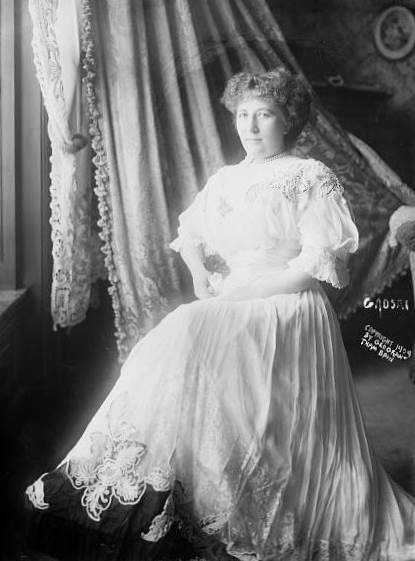
In the midst of these briefly recorded yet significant transitions in others’ lives, Margaret also continues her intense social schedule of club activities, musical performances, botany lessons, and lectures on unidentified topics. Shortly after Patriot’s Day (“holiday”) she attends a performance of Wagner’s Die Meistersinger von Nürnberg, “splendidly given” by a cast that included soprano Johanna Gadski (1870-1932) and Johannes Sembach (1881-1944), both on tour from Germany.

With a view across the first four months of the year, as readers of Margaret Russell’s diary it is becoming steadily clearer exactly how deeply embedded in the upper crust of Boston’s elite society Margaret was.


* * *

April 1916

1 April. Saturday – Walked for errands. Lunched early & went out to see Mrs. Haddes. Lovely warm day.

2 April. Sunday – Early service. Miss A- & I walked through Arboretum & back to Brookline. Lunched at H.G.C’s. Mary Russell died at three. Family to dine.

3 April. Monday – Hospital meeting – [illegible] lunched at Marian’s. Went to see Aunt Emma & Mary Amory.

4 April.Tuesday – Drove Miss Lamb out to funeral which was at the farm. Not many people & all arranged like Harry’s.

5 April. Wednesday – Mrs. Ward’s lecture.

6 April. Thursday – Meeting of M.G.H. Comm. Went for errands. Lunch club at Annie’s. To Dr. Crockett. Out to see Ellen at R[illegible].

7 April. Friday – Went to Swampscott in A.M. Concert – [illegible] – To see Annie whose brother Egerton W- died yesterday.

8 April. Saturday – Went to N. Y.  at 10. Morning did errands – Kate is at Colony Club & we dined together.

9 April. Sunday – Snowing. Went to hear Dr. Parkes. After lunch tried to see Annie Lew. Dined at Mrs. West Roosevelt ^also [illegible]. Went to Mahler symphony. Very nice.

10 April. Monday – Mrs. Wentworth’s funeral at 10 [illegible] chapel. Walked back to club. Home on 10 o’clock. Found Mama very well.

11 April. Tuesday – Walked downtown. Interesting talk at Chilton by Miss Burke. Lunched at Marians. Went to Cambridge & saw Mary Amory.

12 April. Wednesday – Went to see Annie. Took 12.25 for Rowley in time for lunch.

13 April. Thursday – Lovely spring day with lots of birds. Elizabeth & I met to walk. After lunch drove to Fairview & bought a lot of things.

14 April. Friday – E & I met to walk & see the chickens. Raining & then heavy snow. Home after lunch. Still snowing.

15 April. Mrs. Tysen’s reading – drove to Swampscott.

16 April. Sunday – Church at Cathedral with Miss. A- lunch at H.G.C’s – Went to see Perry to hear about wedding yesterday. Edith & E. Ballantine.

17 April. Monday – Dressmaker – Mary  – Lunch with Marian. Botany lesson & a drive. Church at five.

18 April. Tuesday – To see Dr. Haskell. Church at five. The Rev. George Douglas is preaching this week.

19 April. Holiday – Went to see Mrs. Bell & S. Bradley. Botany lesson & to see Aunt Emma. Church at five.

20 April. Thursday – Dentist. Miss Harman to play. Lunch club at Rosamund’s. Lecture on Jap. gardens. Church.

21 April. Friday – Church. Concert.

 22 April. Saturday – Took flowers to Mt. Auburn & Forest Hills. Mrs. Tysen’s. Went to hear Meistersinger with Edith. Splendidly given. Gadski & Sembach.

Johanna Gadski (1872 – 1932), German opera singer, soprano


23 April. Easter – Raining and cold. Church & to see Parkmans. Lunched at H.G.C’s. Family to dine.

24 April. Monday – Meeting of the CD’s [Colonial Dames] going to Wash. Mary. Lunch with Marian. Botany lesson at Cambridge. Still raining.

25 April. Tuesday – Went to Swampscott, things coming up well. Mr. Gibson’s funeral at Mt. Auburn. Back to Tuesday Club. Minnie Ames engaged to L. Frothingham.

26 April. Wednesday – Mrs. Ward’s lecture & then Botany lesson. Mayflower [illegible]. meeting. Musical at Emily Morison’s. Mary Parkman’s reception.

27 April. Thursday – Eye & Ear to see Eliz. Murray & then Errands. Took a drive & went to concert at H. Bigelow’s new house. Nice day but cold wind.

28 April. Friday – Snowing hard.

29 April. Saturday.

30 April. Sunday.

* * *

If you are interested in viewing the diary in person in our library or have other questions about the collection, please visit the library or contact a member of the library staff for further assistance.

*Please note that the diary transcription is a rough-and-ready version, not an authoritative transcript. Researchers wishing to use the diary in the course of their own work should verify the version found here with the manuscript original.


This Week @ MHS

By Dan Hinchen

The Society is CLOSED on Monday, 18 April, in observance of Patriot’s Day. But despite a shortened week, we still have these programs on tap:

– Tuesday, 19 April, 1:00PM : Looking for something fun to do during school vacation week? Look no further! Join us for “Comic History – Making Your Own Comic Explaining the Stamp Act.” This family program features noted historian J.L. Bell and the Boston Comics Roundtable who will engage participants in the history of the Stamp Act through stories of 18th century children and then assist and inspire young historians to create their own comic based on the events. The workshops are free, although space is limited and prior registration is required, please RSVP. The program and the comic book have been made possible through the support of the Society of the Cincinnati and the Massachusetts Historical Society. 

– Wednesday 20 April, 9:00AM : “Teaching Thomas Jefferson” is an interdisiplinary workshop which introduces participants to the Society’s collection of Jeffeson manuscripts. This program is open to educators and history enthusiasts for a fee of $25 per person (to cover materials and lunch). Educators can earn 22.5 PDPs or one graduate credit (for an additional fee). To Register / For more information: complete this registration form, or contact the education department ateducation@masshist.org or 617-646-0557.

– Wednesday, 20 April, 6:00PM : “The Citizen Poets of Boston: A Collection of Forgotten Poems, 1789-1820” is a public author talk featuring Paul Lewis of Boston College. Lewis and his research team completed a 3-year project at Boston College to review about 4,500 poems published in 59 different literary magazines. These mostly forgotten works have been brought back to light in this publication. Mr. Lewis and members of the research team will discuss the project and read from the book. This talk is open to the public, registration required. There is a pre-talk reception at 5:30PM and the talk begins at 6:00PM.

– Saturday, 23 April, 10:00AM : Our Saturday tour returns! After a few weeks off, we are back with The History and Collections of the MHS, a docent-led tour through the public spaces in our building on Boylston St. This tour is free and open to the public, no reservations required for small groups or individuals. Larger parties of 8 or more should contact Curator of Art Anne Bentley in advance at abentley@masshist.org or 617-646-0508.


“Thomas Jefferson Survives”: The Last Letters of Jefferson and Adams

By Amanda Norton, Adams Papers

As we celebrate Thomas Jefferson’s 273rd birthday today, we also celebrate his renowned friendship with John Adams. Revolutionary partners turned bitter political enemies, they reconciled in their retirement, and their final words to each other, written just months before their coincident deaths on July 4, 1826, serve as a fitting capstone to a correspondence that has so justly become famous.

Writing to “Ex-President Adams” on March 25, Jefferson introduced his grandson, Thomas Jefferson Randolph, who would deliver the letter when he visited Boston, noting that Randolph “would think he had seen nothing were he to leave it without having seen you.”

In this final letter, Jefferson poetically contrasted the present age with the one he and Adams had lived through:

“Like other young people, he wishes to be able, in the winter nights of old age, to recount to those around him what he has heard and learnt of the Heroic age preceding his birth, and which of the Argonauts particularly he was in time to have seen. it was the lot of our early years to witness nothing but the dull monotony of Colonial subservience, and of our riper ones to breast the labors and perils of working out of it. theirs are the Halcyon calms succeeding the storm which our Argosy had so stoutly weathered.”


Replying on April 17, Adams opened with his characteristic good-natured humor:

“Your letter of March 25th. has been a cordial to me, and the more consoling as it was brought by your Grandsons Mr. Randolph and Mr. Coolidge. every body connected with you is snatched up, so that I cannot get any of them to dine with me, they are always engaged— how happens it that you Virginians are all sons of Anak, we New Englanders, are but Pygmies by the side of Mr. Randolph…. Your letter is one of the most beautiful and delightful I have ever received.”

Adams, however, was never quite as optimistic as Jefferson was and did not entirely concur with the characterization of the present age as “Halcyon calms.” Seeing the attacks levelled on his son John Quincy’s presidency, Adams viewed the political landscape cynically: “Public affairs go on pretty much as usual, perpetual chicanery and rather more personal abuse than there used to be…. Our American Chivalry is the worst in the World. it has no Laws, no bounds, no definitions, it seems to be all a Caprice.”


Adams could only be so pessimistic, however. In spite of the wide differences between the men, the friendship between Adams and Jefferson had endured, as had the independence they fought for. And on that Jubilee when both Adams and Jefferson passed, John Quincy Adams recorded in his diary that his father’s last words were “Thomas Jefferson survives.”

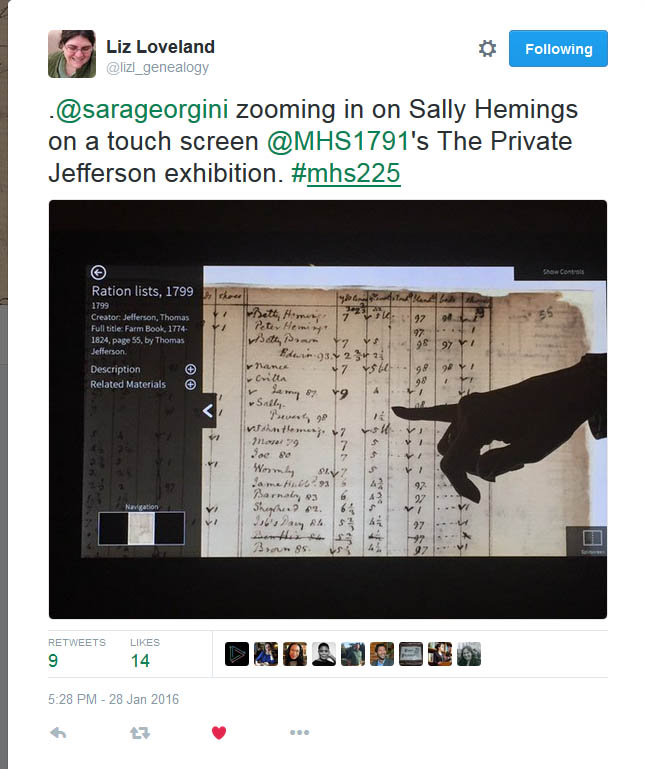
Adams was without a doubt correct that Jefferson would survive as a monumental figure for the nation. If you want to learn more about the Jefferson that survived beyond the statesman, there’s still time to experience The Private Jefferson here at the MHS.

This Week @ MHS

By Dan Hinchen

It’s that time again. Here are the events coming in the week ahead:

– Monday, 11 April, 6:00PM : On Monday evening is a public program featuring former transportation secretary Frederick Salvucci, MIT, who discusses the impact and legacy of the Big Dig. Registration is required with a cost of $20 (no charge for MHS Members and Fellows). A pre-talk reception begins at 5:30PM and the talk begins at 6:00PM.

– Tuesday, 12 April, 5:15PM : Join us on Tuesday evening for an Environmental History seminar. This time, Jennifer Thomson of Bucknell University presents “Surviving the 1970s: The Case of the Friends of the Earth.” The project examines environmental politics amidst de-regulation, economic crisis, and nativism in the 1970s. Chad Montrie of the University of Massachusetts – Lowell provides comment. Seminars are free and open to the public; RSVP requiredSubscribe to receive advance copies of the seminar papers.

– Thursday, 14 April, 5:30PM : The second seminar of the week is from the History of Women and Gender series and is presented by Katherine Marino of the American Academy of Arts and Sciences, with Harvard’s Kristen Weld providing comment. The talk is called “The Origins of ‘Women’s Rights are Human Rights’ : Pan-American Feminism and the 1945 United Nations Charter” and examines what “women’s rights” and “human rights” meant to a group of Latin American activists and how a movement of transnational, Pan-American feminism shaped their ideas and activism.

– Friday, 15 April, 2:00PM : Curator of Art and Artifacts, Anne Bentley, gives a gallery talk titled “The Conservation of the Notes on the State of Virginia,” an item on dispaly at the Society as part of the current exhibition, The Private Jefferson. This talk is free and open to the public.  

There is no Saturday tour scheduled this week. 

Please note that the MHS is closed on Monday, 18 April, in observance of Patriot’s Day. 

Correcting the Record

By Susan Martin, Collection Services

When searching for MHS material about Cuba to coincide with President Obama’s recent trip, I ended up on the trail of another mystery, this time related to the identification of a photograph. In the Winthrop Murray Crane photographs, I found an image identified as Theodore Roosevelt in Havana, Cuba, 2 March 1904. But there was a problem: Roosevelt was serving as president in 1904. News outlets had been consistently reporting that Obama was only the second sitting U.S. president to visit Cuba, Calvin Coolidge being the first. It seemed unlikely that I’d uncovered a previously unknown trip to the island by Theodore Roosevelt!

Here’s the photograph in question. The subject, whoever he is, strolls pensively through the tobacco fields.


In the interests of full disclosure, I’ll admit that I was the one who processed this collection as an MHS intern over ten years ago. I don’t remember what I based my identification on, but it wasn’t far-fetched; Crane was a Republican politician and close friend of Roosevelt’s. In fact, the very same collection includes three photographs of Crane and Roosevelt in Framingham, Mass. in 1902, during Crane’s tenure as governor of Massachusetts.


The puzzling 1904 photograph was apparently sent to Crane by a man named Arthur Plumb, who wrote on the back: “Compliments of Arthur W. Plumb, Havana Cuba March 2d 1904.” No mention of Roosevelt, and the photograph may have been taken at any time and only given to Crane that year. So both subject and date were questionable. (Probably the absence of Roosevelt’s characteristic pince-nez spectacles should have been a clue.)

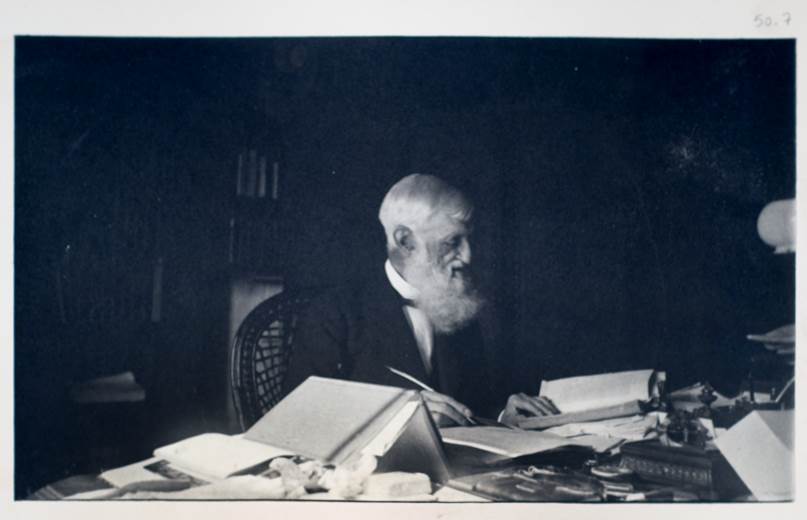
Thankfully we have some great resources here at the MHS library. One of them is our resident walking encyclopedia, Peter Drummey (otherwise known as the Stephen T. Riley Librarian). He immediately identified the subject of the photograph as Charles Francis Adams (1835-1915), great-grandson of John Adams and former president of the Massachusetts Historical Society. Adams was in Cuba in 1890, which may have been when the photograph was taken. I compared it to others in our holdings. Here’s Adams as he appears in our collection of portraits of MHS members, sporting his trademark bushy white mustache. His jacket is even buttoned the same way!


I’ll close with an interesting, though unrelated, anecdote about Governor Winthrop Murray Crane documented in his papers and photographs. On 3 September 1902, Crane and Roosevelt were in a dramatic traffic accident in Pittsfield, Mass., when their horse-drawn carriage was hit by a streetcar. Unfortunately a man named William Craig died in the accident, becoming the first Secret Service agent killed in the line of duty. Here is a photograph of the damaged carriage.


This Week @ MHS

By Dan Hinchen

This coming week is a busy one here at the MHS. Please note that the library closes at 1:00PM on Friday, 8 April. Now, here is the weekly round-up of events ahead:

Tuesday, 5 April, 5:15PM : Join us for an Early American History seminar featuring past MHS research fellow Jared Hardesty of Western Washington University. During this session he presents “Constructing Castle William: An Intimate History of Labor and Empire in Provincial America,” which explores a five-year project fraught with corruption, labor strife, ineptitude, and supply shortages. Eliga H. Gould of the University of New  Hampshire provides comment. Seminars are free and open to the public; RSVP requiredSubscribe to receive advance copies of the seminar papers.

Wednesday, 6 April, 12:00PM :  “The Elusive Quest: African-American Emigration to Haiti and the Struggle for Full Citizenship in the United States, 1815-1865” is a Brown Bag lunch talk presented by MHS research fellow Westenley Alcenat of Columbia Univeristy and MIT. The project explores the exprience and radicalism of the African-American settlers who emigrated to Haiti throughout the nineteenth century and how the migration influenced African-American and Haitian political thought before and during the American Civil War. This talk is free and open to the public. 

Wednesday, 6 April, 6:00PM : “Louisa: The Extraordinary Life of Mrs. Adams” is an author talk featuring Louisa Thomas. The story of Louisa Catherine Adams is one of a woman who forged a sense of self. As the country her husband led found its place in the world, she found a voice. That voice resonates still. Registration is required for this event at a cost of $20 (no charge for MHS Fellows and Members). A pre-talk reception starts at 5:30PM and the talk begins at 6:00PM.

Thursday, 7 April, 5:30PM : The latest installment of the New England Biography Seminar series is here. “BioFictions – Turning ‘Real’ People into Fictional Characters” is a discussion, moderated by Megan Marshall of Emerson College, among novelists Geraldine Brooks, Matthew Pearl, and Alice Hoffman, in which the participants talk about the process, where they draw the line between fact and fiction, and what inspires them to make fiction out of history.  THIS EVENT IS NOW FILLED. Email seminars@masshist.org to be placed on a wait list. You will be contacted in the event of a cancellation.

Saturday, 9 April, 10:00AMThe History and Collections of the MHS is a docent-led walk through the public spaces in the Society’s home on Boylston Street. The tour is free, open to the public, with no need for reservations. If you would like to bring a larger party (8 or more), please contact Curator of Art Anne Bentley at 617-646-0508 or abentley@masshist.org.

While you’re here you will also have the opportunity to view our current exhibition. The exhibition galleries are open to the public free of charge, Monday-Friday, 10:00AM-4:00PM.

Saturday, 9 April, 1:00PM : “Begin at the Beginning: Daniel Gookin, Praying Indians, and America’s Bloodiest War.” Join independent historian Dwight Mackerron and those who love 17th-century history to talk about King Philip’s War. How New England descended into this violence is the subject of our conversation. Participants are invited to share their own knowledge of the war. Registration is required for this event at no cost. This event is co-hosted with the Partnership of Historic Bostons, www.historicbostons.org.

April Fools’ Day, 1864: The Cartoon Antics of Thomas Nast

By Shelby Wolfe, Reader Services

Happy New Year!

…April Fool! Though, according to the Julian calendar developed by Julius Caesar, April 1 was designated the first day of the year. Some believe that when Pope Gregory XIII instituted a new calendar in 1564 with January 1 as the start of the new year, adherents of the Gregorian calendar ridiculed the old-timers who continued to celebrate April 1 as New Year’s Day, labelling them “fools” and heaping pranks upon them. Whether or not this is the actual origin of April Fools’ Day, this tradition of practical jokes and pranks continues today, though in harmless fun and enjoyment for all (hopefully).


Printed in the April 2, 1864 issue of Harper’s Weekly, Thomas Nast’s depiction of “The First of April, 1864incorporates political commentary, Civil War satire, and general foolery. In the top insets, we see the antics of Union soldiers fooling their fellow men regarding the Confederate Army’s nearby whereabouts (top left), and Union sailors likewise blocking their comrades’ view of the enemy (top right). The bottom left inset depicts a husband and wife who have switched appearances, the wife sporting a coat, top hat, and mustache while her husband wears a dress and bonnet. In the center images, people have attached signs and strings with objects to others behind their backs. Nast gives the viewer a sense of his feelings for the Peace Democrats of the North, who were proponents of a cease-fire and negotiated settlement with the Confederacy, by depicting them as geese and donkeys in the top center image.


Thomas Nast, known as the “Father of the American Cartoon,” was a German-born American whose politically-charged cartoons wielded considerable influence over public opinion. His cartoons, many published in Harper’s Weekly, helped bring down the infamous “Boss” Tweed of Tammany Hall and influenced the elections of Abraham Lincoln in 1864 and Ulysses S. Grant in 1868 and 1872. Nast is also noted for creating the Republican Party symbol of the elephant and the modern depiction of Santa Claus.

To view this woodcut print in greater detail, visit the library in person and see if you can decipher more April Fools’ Day trickery in these scenes!

Margaret Russell’s Diary, March 1916

By Anna J. Clutterbuck Cook, Reader Services

Today, we return to the line-a-day diary of Margaret Russell. If you have missed previous installments of the diary you can find January (along with a brief introduction to the series) and February in the blog archive. In contrast to her busy travel schedule in February, Margaret Russell remained in Boston throughout the month of March. The weather continued to be quiet wintery, with Margaret often noting snow and “blowing” wind. Her days were spent socializing with friends, charity work, and cultural activities such as visits to the museum and attendance at lectures.

One of the things that can be most jarring or haunting about reading a line-a-day diary is the way in which meaningful events are sandwiched within otherwise mundane entries. For example, on March 5th Margaret writes that “Henry Curtis is dead” between noting where she ate lunch and how “fine” the Wagner concert she attended that day was.


And even though Margaret spent the month of March in Boston, she was not wanting for high-profile performers and speakers; among the lectures she attended was a speech by former President William Howard Taft and among the concerts she attended were two performances by pianist Ignacy Jan Paderewski (1860-1941) who three years later would become prime minister of Poland.


* * *

March 1916

1 March.* Wednesday – Mrs. Ward’s lecture. Lunched at Club. Art Museum talk. Home to rest. Second lecture of coal by Prof. Jeffrey with Miss A–.

2 March. Thursday. M.G.H. Meeting. Walked down to see Miss Cannon. First [illegible words] England – Individualism. Skating Carnival with Parkman.

3 March. Friday. To Mrs. Dalton’s on C.D. business. Beautiful concert. To hear Pres. Taft speak at Red Cross in the evening.

4 March. Saturday – Mrs. Tyson’s reading. Paid calls & went to musical at Miss Mason’s.

5. March. Sunday – Walked to Cathedral with Miss A. Lunched at HGC’s. Henry Curtis is dead. Fine Wagner concert. Family to dine.

6 March. Monday. Hospital meeting. [illegible word]. Went to Mt. Auburn with CPC for funeral. Botany lecture.

7 March. Tuesday – snowing again. Lunched at Mrs. Mattey’s. Went to hear Mrs. Dupriez on Belgium. Very painful.

8 March. Wednesday – Church. Chilton. Had lunch at Miss Lamb’s. Art museum. Snowing hard.

9 March. Thursday – Chilton meeting. Am back as Gov. Lunch club at Mrs. Hunnewell’s. Power lecture. Dined at Mrs. Crafts.

10 March. Friday – Snowing again. Mrs. W. Charles came to play. Concert with Paderewski. Had dinner of 22 for Ellen at Chilton. Dancing class afterwards.

Ignacy Jan Paderewski

11. March. Saturday. Mrs. Tyson’s reading. Mama sick so stayed at home with Mama. Mrs. Sears to concert as Paderewski played.

12 March. Sunday. Church. Lunched at HGC’s  Family to dine.

13 March. Monday. Errands – [illegible word] – lunched at Marian’s. Botany lesson. Thawing.

14 March. Tuesday. Ear & Eye visit in the A.M. Tuesday Club at M. Ware’s. Red Cross discussion. Had ten people to dine. Seemed pleasant.

15 March. Wednesday. Ward lecture. Lunched at Chilton. Art museum class – Snowing hard & blowing.

16 March. Thursday. Walked down town errands & church. After lunch went out to see Aunt E. Last [illegible word] lecture.

17 March. Friday – Fine day. Walked down town. Mrs. Chandler came to play. Lunch at Mrs. Jack Peabody’s. Drove out to Riverside, road good.

18 March. Saturday – 4 [illegible word] this A.M. – Mrs. Tyson’s. After lunch went down to Swampscott. Badly drifted in places but we did not suffer.

19 March. Sunday – Church to see Parkmans. Lunched at H.G.C’s. Paid calls. Found Mary R. who looks very ill. Family to dine.

20 March. Monday – Mrs. Norcross from [illegible word] Com. came by to see me & I liked her very much. Botany lesson at Cambridge. Was lecture at Mrs. Sears.

21 March. Tuesday – Eye & Ear through the A.M. Dined at the H. Burrs. Streets in awful condition.

22 March. Snowing hard & blowing again. Went out to Fogg museum where Ed. Forbes showed us the [illegible word] pictures.

23 March. Thursday – Walked for errands. Mrs. Charles to play. Lunch club at Jessie’s. Went out to see Aunt Emma.

24 March. Friday – Down town to buy typewriter & to church. Miss Ruelker to lunch & to go to concert. Went to Cambridge to see [illegible word].

25 March. Saturday – Mrs. Tyson’s reading.

26 March. Sunday Church. Lunched at Horatio’s. Family to dine. Went to see Mary Russell but there had been a sudden change.

27 March. Monday – went to walk for errands. Lunch at Marian’s. Visited the Eye & Ear.

28 March. Tuesday – Colonial Dames annual meeting but to Cambridge to lunch at Edith’s. Back to hear Miss Holinau speak at the Allens.

29 March. Wednesday – Interesting lecture from Pres. Taft. Lunched at Mrs. Allen’s with Miss Holinau. F. O. & Mrs. Hay & F. D. Cambridge concert in evening.

30 March. Thursday – Mrs. Charles to play. Went out to see Aunt Emma & there to dine. Mary Russell has had [illegible word].

31 March. Friday – Service at cathedral. Lunched at Chilton’s. Had Miss Reulker & Mrs. Bell, Mrs. Sears E & J. All went to concert. Dined at Georgie’s.


* * *

If you are interested in viewing the diary in person in our library or have other questions about the collection, please visit the library or contact a member of the library staff for further assistance.


*Please note that the diary transcription is a rough-and-ready version, not an authoritative transcript. Researchers wishing to use the diary in the course of their own work should verify the version found here with the manuscript original.


This Week @ MHS

By Dan Hinchen

After a lack of programming last week, we are back this week with a slew of public events to satisfy your hunger for history. Be sure to keep an eye on our monthly calendar in the coming weeks as April has a lot going on! Here’s what’s on as we leave March behind:

– Tuesday,  29 March, 5:15PM : The War on Butchers: San Francisco and the Making of Animal Space, 1850-1870, is a part of the Immigration and Urban History Seminar series. In this paper, Andrew Robichaud of Boston University examines some of the challenges of urban animal life (and death) in cities, while tracing the evolution of animal regulations in San Francisco between 1850 and 1870. Harriet Ritvo of MIT provides comment. Seminars are free and open to the public; RSVP requiredSubscribe to receive advance copies of the seminar papers.

– Wednesday, 30 March, 12:00PM : Pack a lunch and come in at noon to hear Margaret Newell, Ohio State University, talk about her current research project, “William and Ellen Craft and the Transatlantic Battle for Civil Rights in the Nineteenth Century,” a dramatic story of escape from slavery in Georgia on to a life of anti-slavery activism in Boston and London. This Brown Bag talk is free and open to the public, no registration required. 

– Wednesday, 30 March, 6:00PM : Join us for a public author talk presented by Andrew Lipman of Barnard College, recipient of a 2016 Bancroft Prize. The Saltwater Frontier: Indians and the Contest for the American Coast examines the previously untold story of how the ocean became a “frontier” between colonists and Indians. Registration is required for this event with a fee of $20 (no charge for MHS Members and Fellows). A pre-talk reception begins at 5:30PM.

– Friday, 1 April, 2:00PM : Stop by the MHS at 2:00PM for a free gallery talk, “Jefferson and Slavery.” Jefferson was the author of the Declaration of Independence, yet he also owned people as slaves. His experimental farm and garden and his architectural tests were made possible through the uncompensated labor of hundreds. While Jefferson and slavery is not the primary focus of our exhibition, it is present in every room. The curator of the show ,Peter Drummey, will explore this subject.

There is no public tour scheduled for Saturday, 2 April. Please check back next week!