By Andrea Cronin, Reader Services
Several questions burn brightly in my mind when I look through the Elisha W. Smith, Jr. logbook,1853-1857. If curiosity is a wildfire, this particular logbook sets me aflame in that it contains not one but two ship logs and a scrapbook. Elisha W. Smith, Jr., son of Elisha W. Smith and Ruth A. Smith of Wellfleet, Mass., served as a mariner and log keeper for the schooner Flying Dragon in 1853 and the schooner William Freeman in 1857. While these voyages are by no means uninteresting, the myriad mysteries surrounding the physical logbook and its various chroniclers captivate my attention. I will unveil three mysteries I uncovered within this logbook in a series of blog posts.
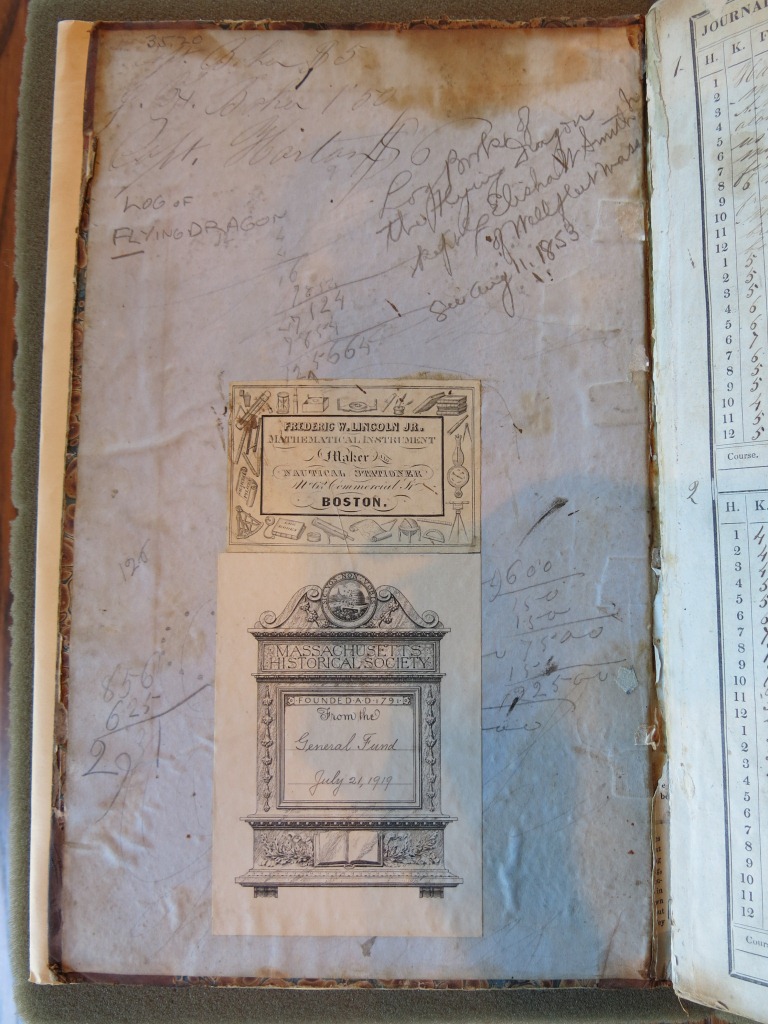
Inside cover of the Elisha W. Smith Jr. Logbook, 1853-1857
The inside cover of the logbook resembles a communal notebook. The cover contains not only the book plates of the MHS General Fund dated 21 July 1919 but also the book plate of nautical stationer Frederick W. Lincoln, Jr. There are several penciled accounting notes as well one fading inked note, but more interesting to me is this message in the top right corner written by a distinctly different hand: “Log book of the Flying Dragon kept by Elisha W. Smith Jr of Wellfleet, Mass. See Aug 11, 1853”.
Immediately I questioned the “see” note. What was important about this particular date in the logbook of the schooner Flying Dragon? The voyage of the Flying Dragon from Boston to San Francisco commenced on 22 July 1853. The log does not, however, confirm that the schooner found safe harbor in San Francisco. The last entry dated 29 September 1853 describes a “Hurricane” during the passage around Cape Horn. The log entry of 11 August 1853 reads:
Commences with light
winds & clear weather
2 P.M. tacked to the East-
ward 6 P.M. furled main
skysail 11 P.M. furled
Royals.
—————————————-
12 might tight
baffling winds, with
heavy rain squalls.
—————————————-
7 A.M. made all sail
This day ends with light
winds & cloudy weather
All draging sail set
by the wind
No Observation.
Elisha W. Smith jr
A brief glance through the pages of the log confirmed that this entry contains the first date on which the log keeper signed his name. The note on the inside cover refers to this entry by date as proof that the log belongs to Elisha W. Smith, Jr. The mystery of the cover note is solved!
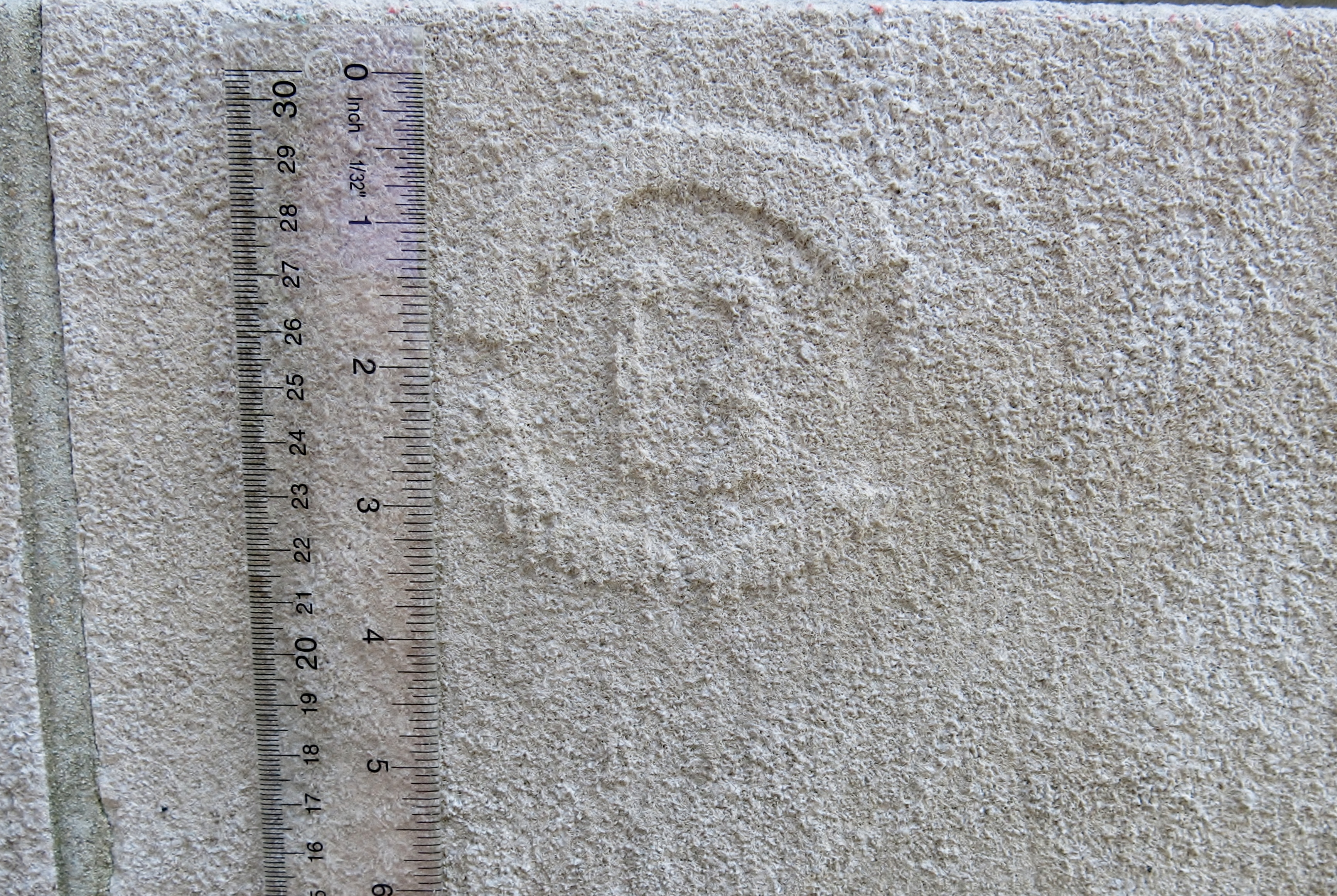
However, I wonder who wrote this particular note. Did a member of the succeeding Smith family write it? Was it inscribed on the logbook by an MHS staff member in 1919? The logbook holds such a curious mix of ship logs, sketches, printed poems, engravings, and literary clippings. Here is a sketch of a ship on the back inside cover. In the next post in this series, I will discuss these sketches, poems, engravings, and literary clippings included within the log. Stay tuned!
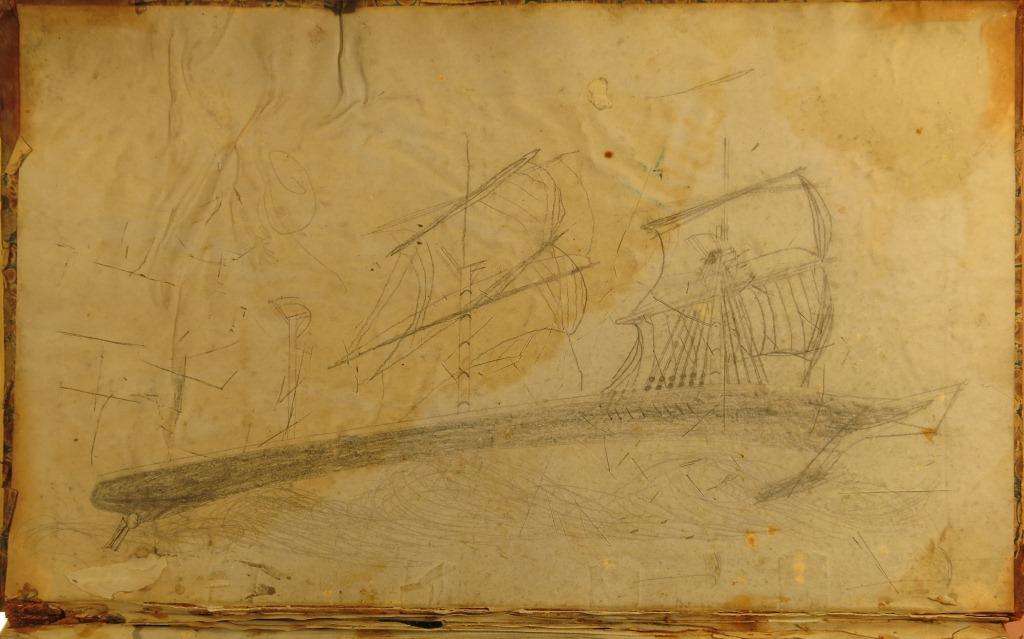
Back cover of the Elisha W. Smith Jr. Logbook, 1853-1857
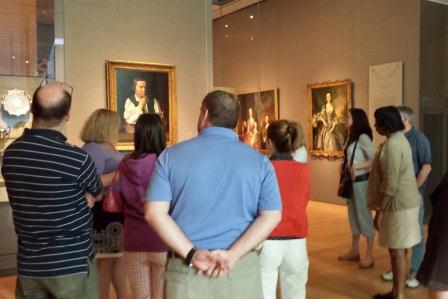 July brought new partnerships and new friends to the MHS. July 10-11, MHS education staff co-hosted a workshop with the Museum of Fine Arts to celebrate their special exhibition
 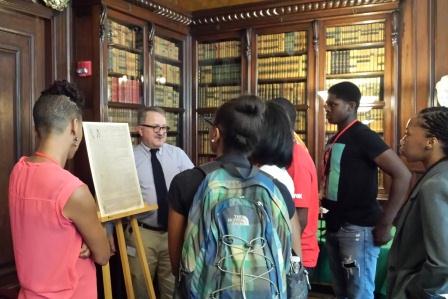 This month also featured a visit from MYTOWN students researching the American Revolution in the Boston area. MYTOWN is a great organization that engages students in the learning and teaching of their local history. These particular student viewed documents from the period pertaining to the Revolution in general (like the Declaration of Independence), as well as materials related specifically to the Dillaway Thomas House in Roxbury. They even
 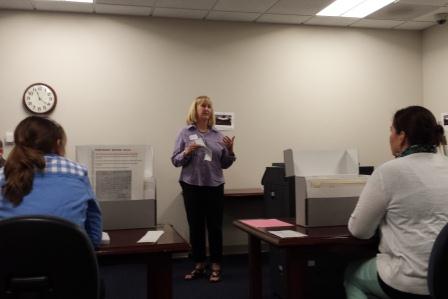 I spent the week of July 18 working with a fun group of educators participating in the Primarily Teaching program at the National Archives in Waltham. Together we researched Boston school desegregation, in particular the records pertaining to Morgan v. Hennigan, the case that prompted Boston Public Schools to adopt busing in order to reverse segregation in its schools and facilities. By the end of the week, I had worked with my counterpart at the Archives, Annie Davis, to develop a new workshop on the changing meanings of equality in education over the last two and a half centuries. (Look for it on our program schedule in 2015.)